Another hiking day! The weather was, as usual, looking uncertain, but in the mountains, that could mean misery or an absolutely beautiful day. If we waited for everything to look perfect, we’d never go anywhere. So, we packed lots of snacks and clothes for any possibility, and off we went.

Our planned hike had a few possible variations built in. We were headed back to Chugach State Park, just one ridge over from where we were for Flattop and Flaketop. This ridge started with Little O’Malley, another peak Olivia had hiked a million times, but after that, we hoped to continue on to Big O’Malley (actually just called O’Malley). After O’Malley, we could turn around or, better yet, continue on past a couple of lakes and turn our hike into a loop, rather than an out-and-back (always more interesting). Later, there was one more opportunity for an add-on, an out-and-back trail off the loop that led to more lake views. We definitely couldn’t do that entire trail, but we figured we’d wait to decide how far to go once we were there and had a better sense of the weather and the timing. We expected the whole thing to be around maybe 12-15 miles (19-24 km), depending on some of those decisions.
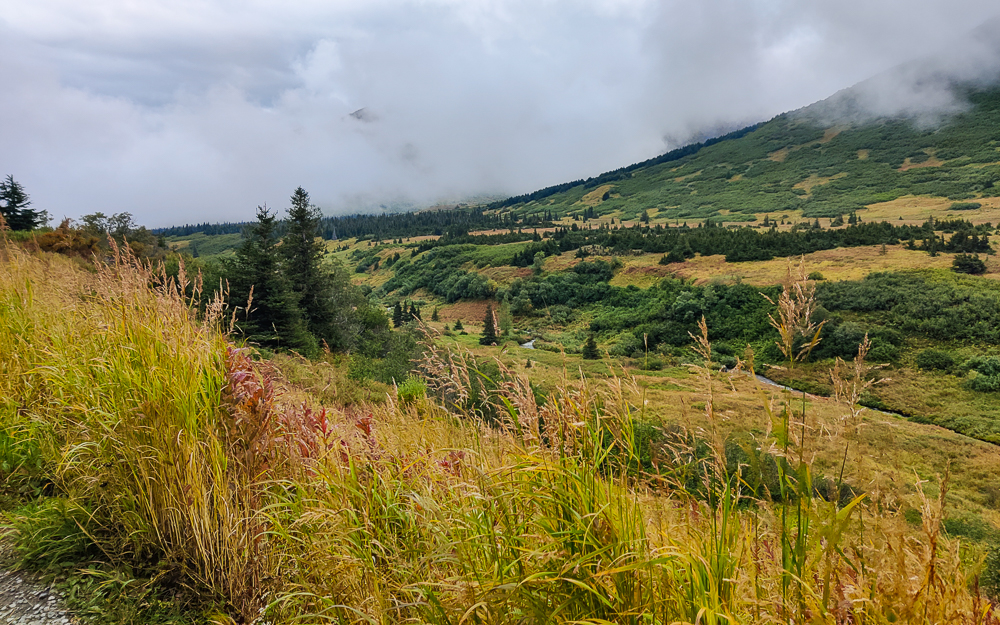
Fair warning… I have a LOT of pictures. You have no idea how hard I worked to winnow them down to the ones I’ve included, and there are still so many.

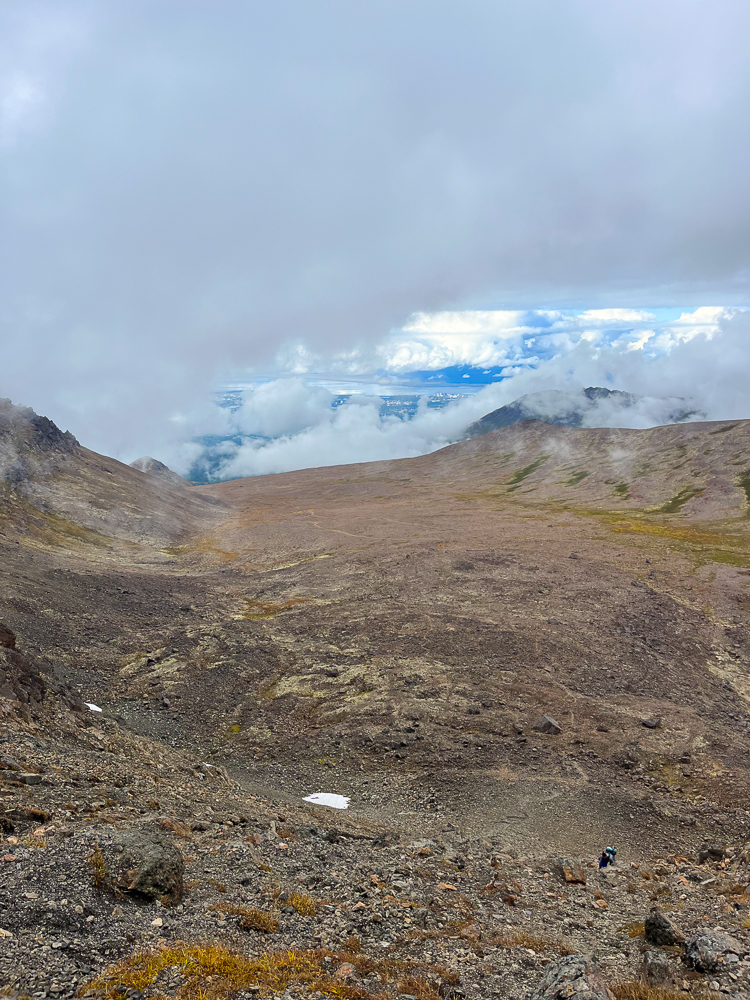
The hike up to Little O’Malley wasn’t bad at all. There was definitely some good elevation gain, but there were nice switchbacks that made it reasonably gradual which was nice. The view from there was… obscured. There was a lot of fog/cloud cover surrounding us. Thankfully, it was moving fast so we did see SOMETHING, but it was moving fast, so you had to keep your eyes peeled and be ready.
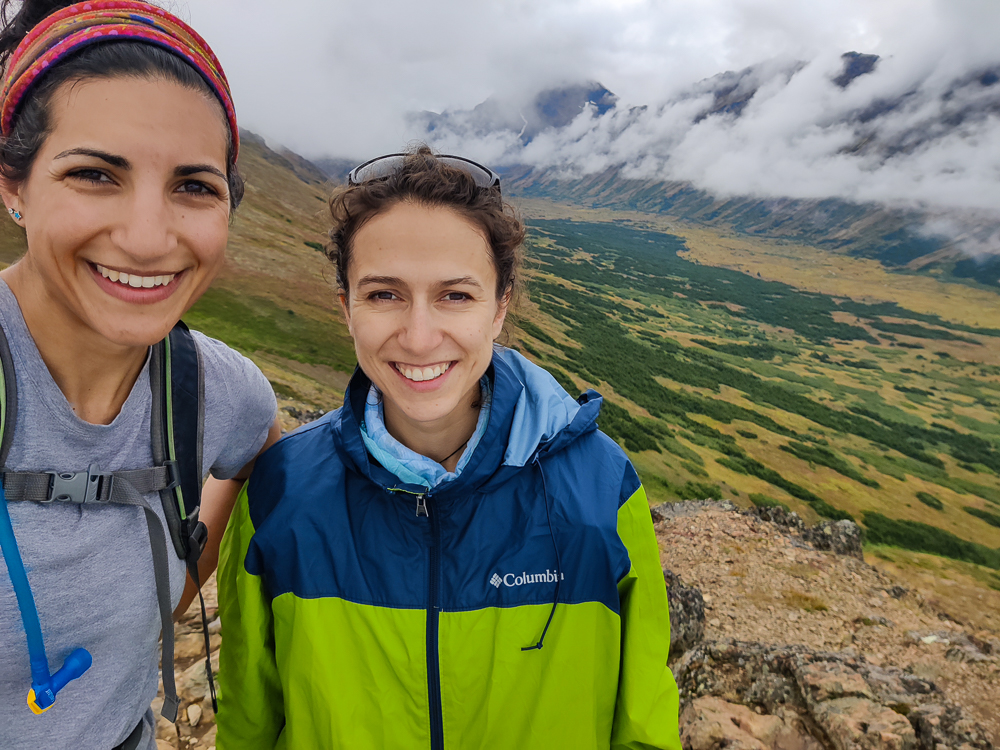
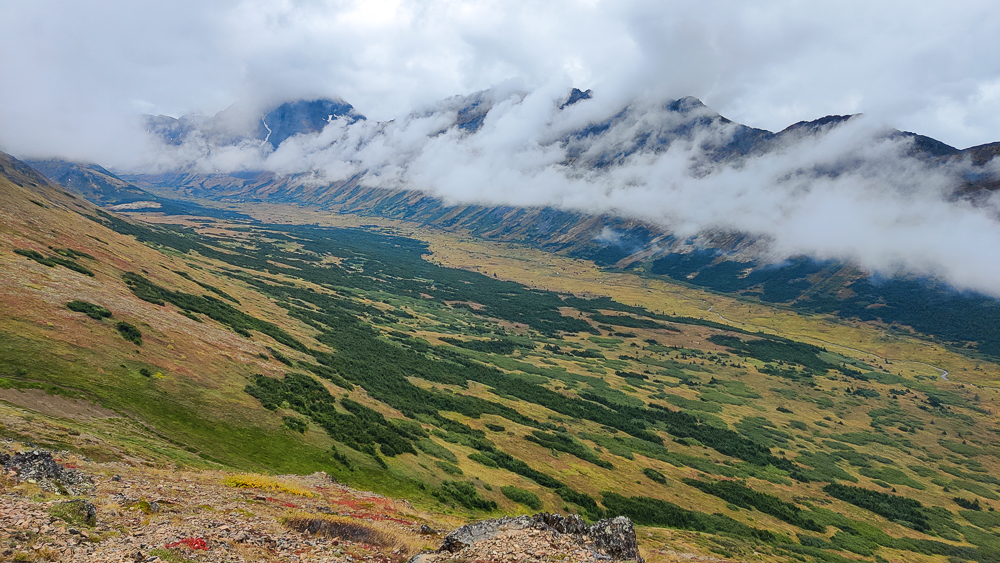
Atop Little O’Malley. Honestly, it didn’t even really feel like a summit, but maybe that’s just because when we were at the tippy top, we were completely surrounded by fog and couldn’t see anything.
Imagine those clouds zooooooming past.

From there, we continued on to O’Malley. Just like with Flattop and Flaketop, once we got past the first peak, we saw very few other people. There were maybe 5 human sightings over the rest of the hike. It felt like we had the place to ourselves. Crazy!

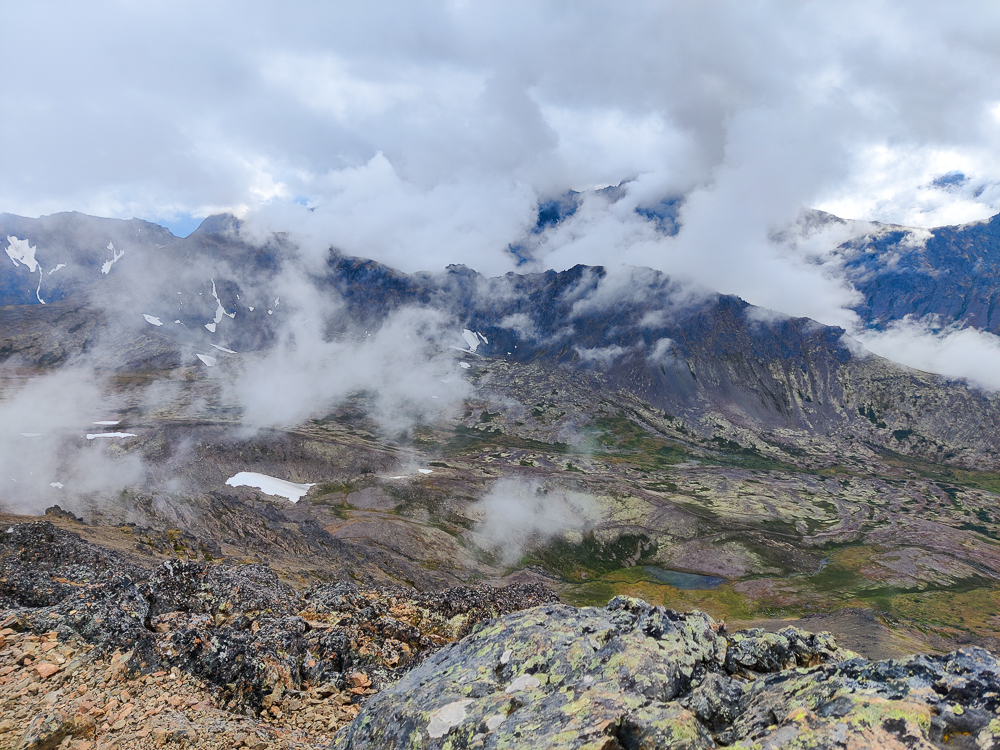
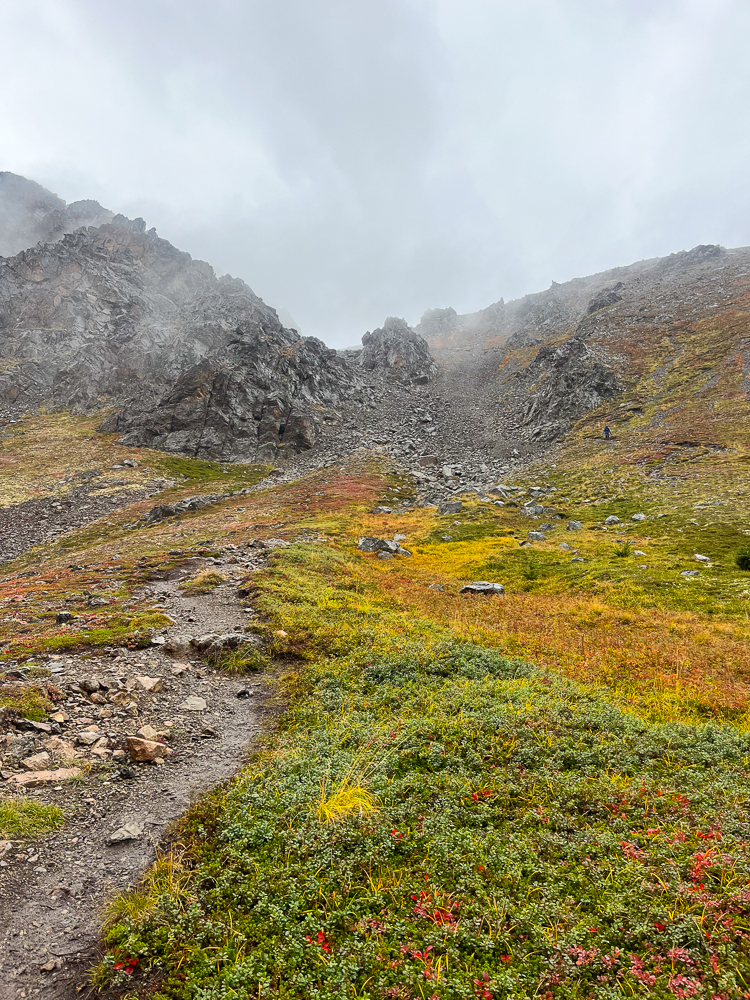
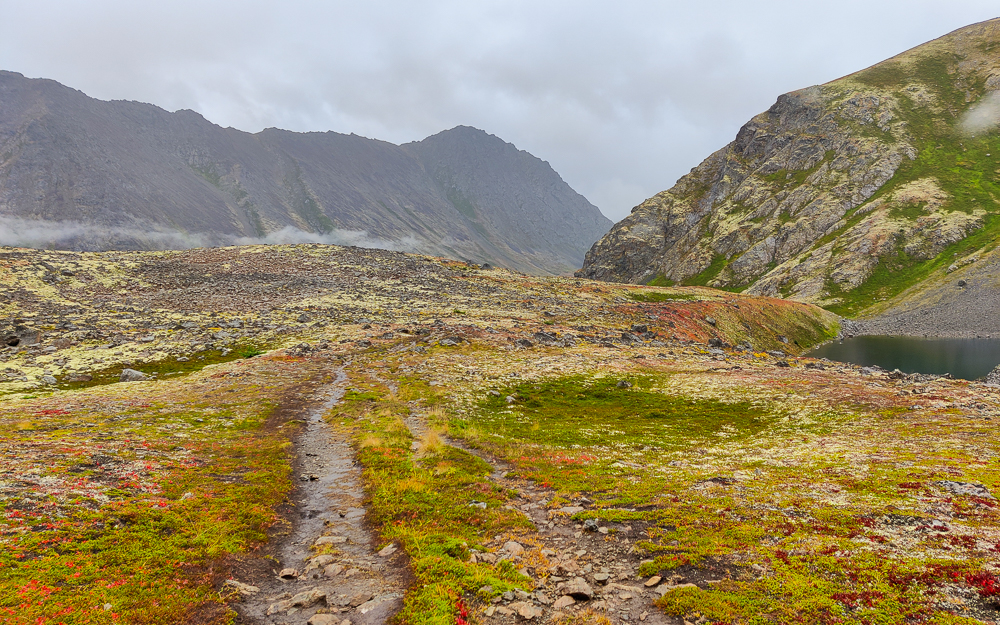
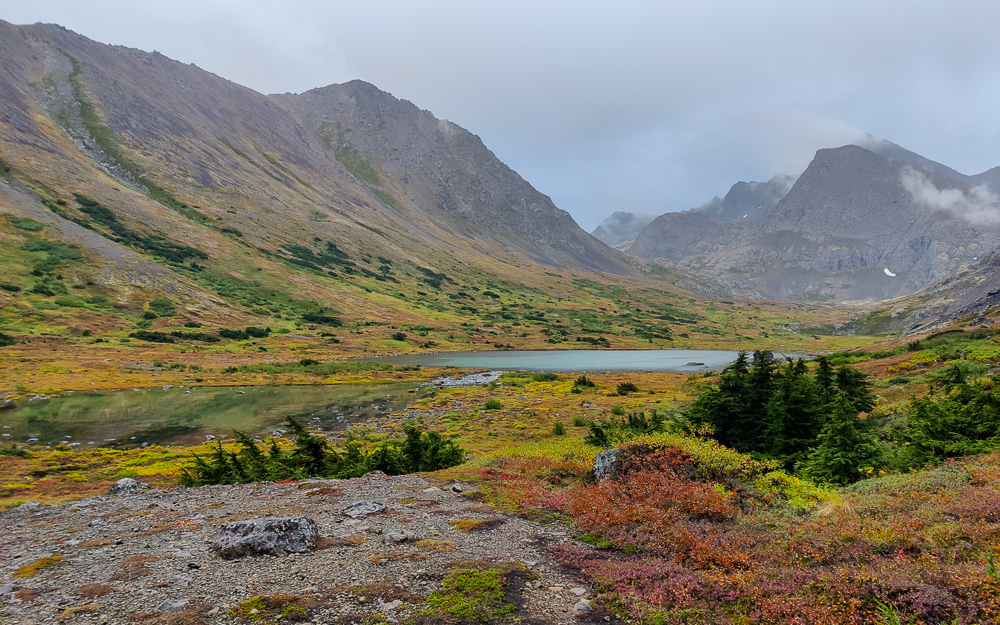
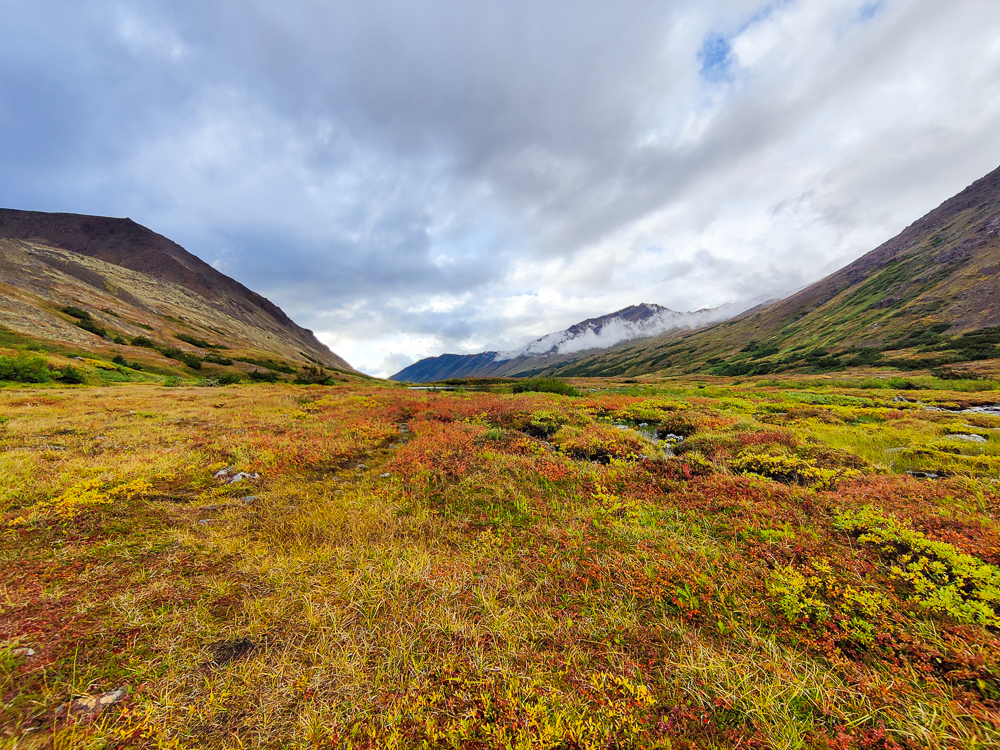
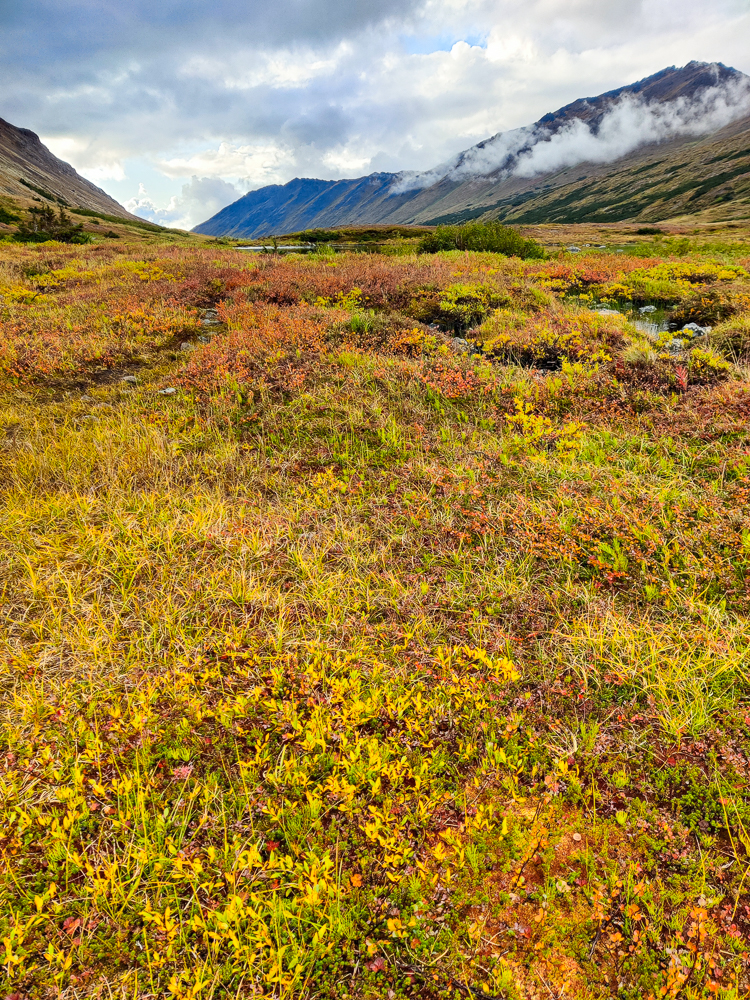
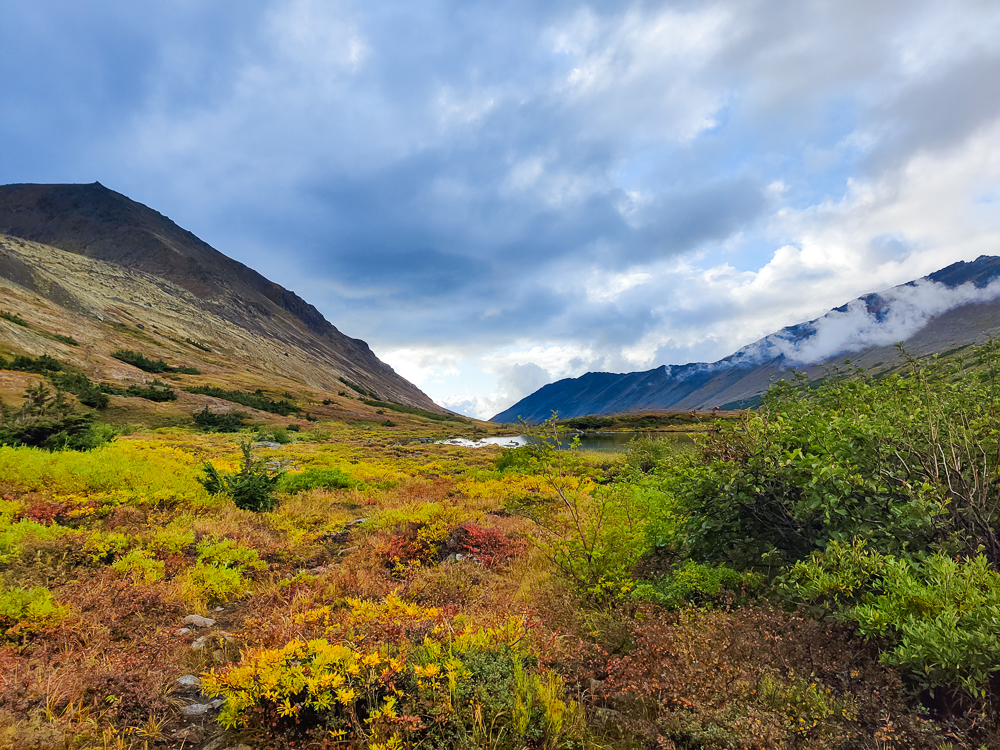
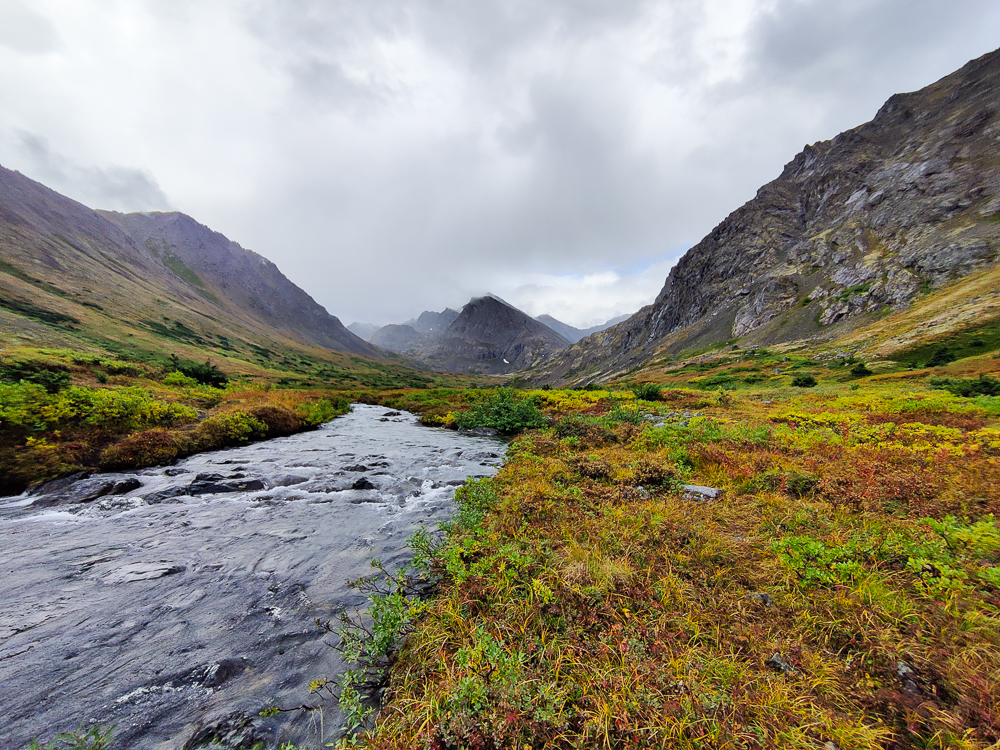
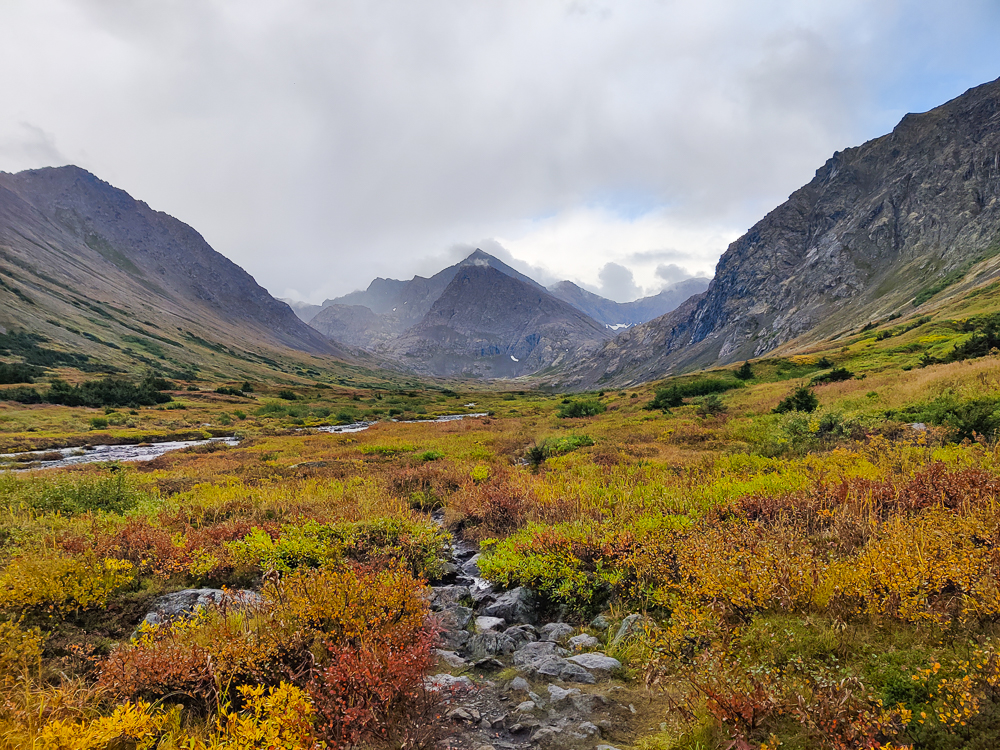
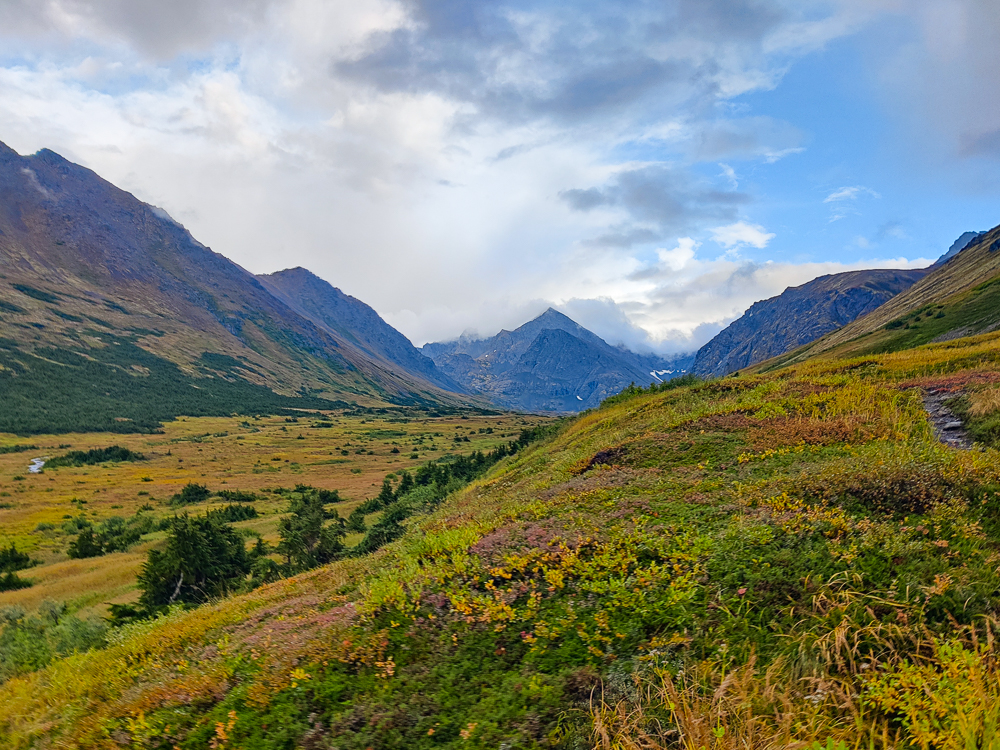
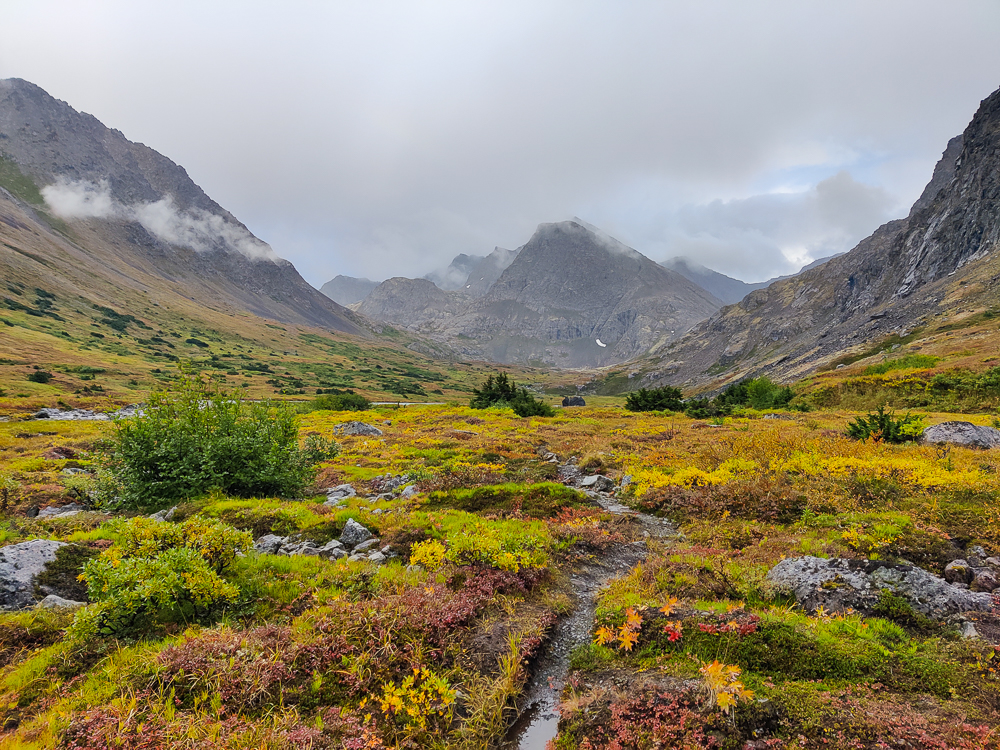
This was also where things got much more challenging. Well, not getting from Little to regular O’Malley. That was pretty flat, and it was very beautiful because of the colors of the valley and the dramatic mountains surrounding us (on the rare occasion when you could actually see them through the clouds… ha).
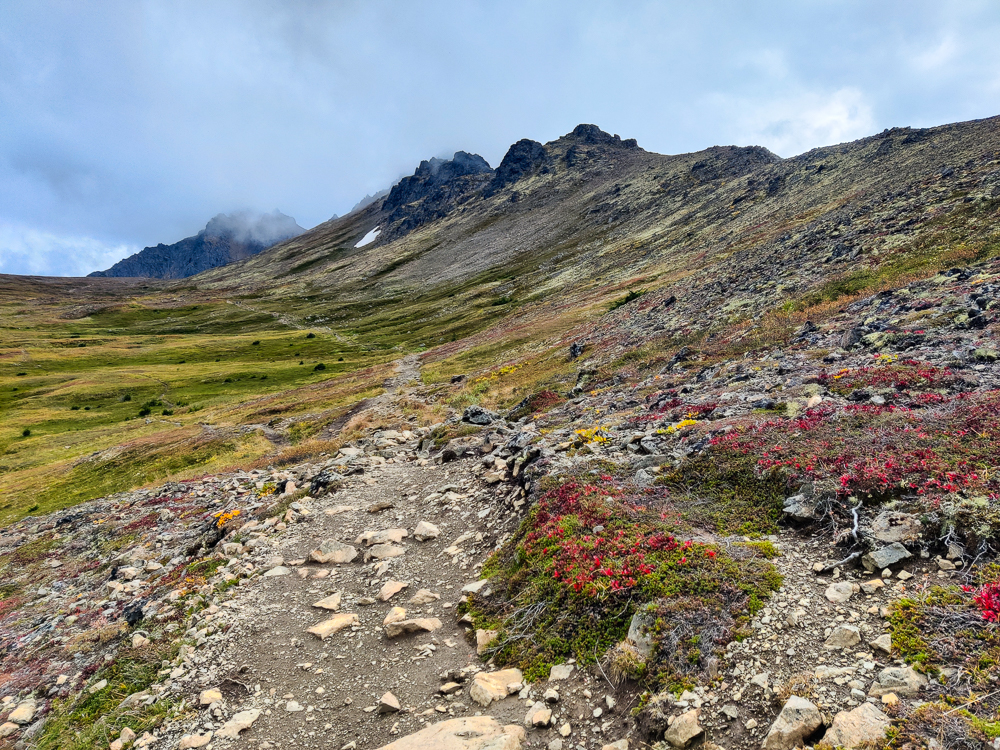
Another warning… the number of times I’m going to caption a photo with just an exclamation about “THE COLORS!!!!”… it will be more than once. But seriously, though… THE COLORS!!!! And we’re just getting started.

When we got to O’Malley, we knew it was going to be a different story. No more easy, flat ground. Our upward trek started out with what felt like an endless scree field. That’s where it’s all shifting and sliding little rocks, and you have to either not care about slipping or take extra time to be sure of your footing. I’m definitely a “take extra time” person. It takes me forever to go up those things because I’m checking and double checking my footing on every step before I commit. I hate the feeling of sliding. There wasn’t a particularly defined path for the up, so Olivia and I each decided for ourselves what seemed least terrible and ended up taking completely different routes.

This was the worst part of the whole hike, but thankfully, despite the slow going, I still felt good, both physically and mentally. There was never a point where I wasn’t sure I would make it. I knew I would be fine; I was just moving slowly. I also didn’t worry about Olivia. I knew she could handle herself, and we’d meet up at the top.
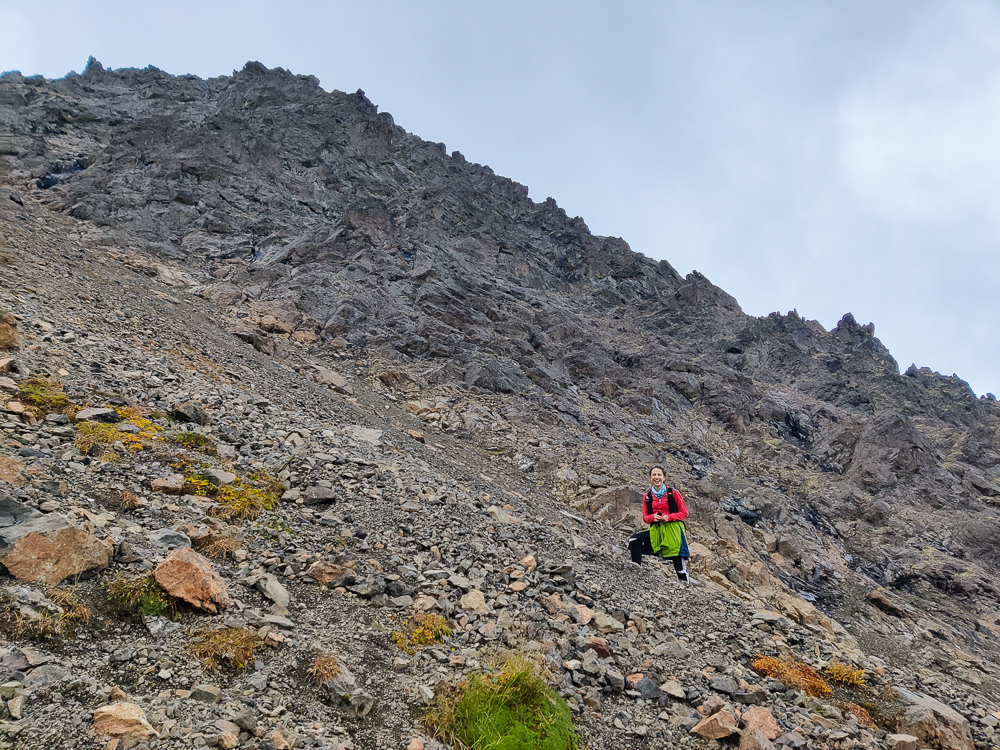
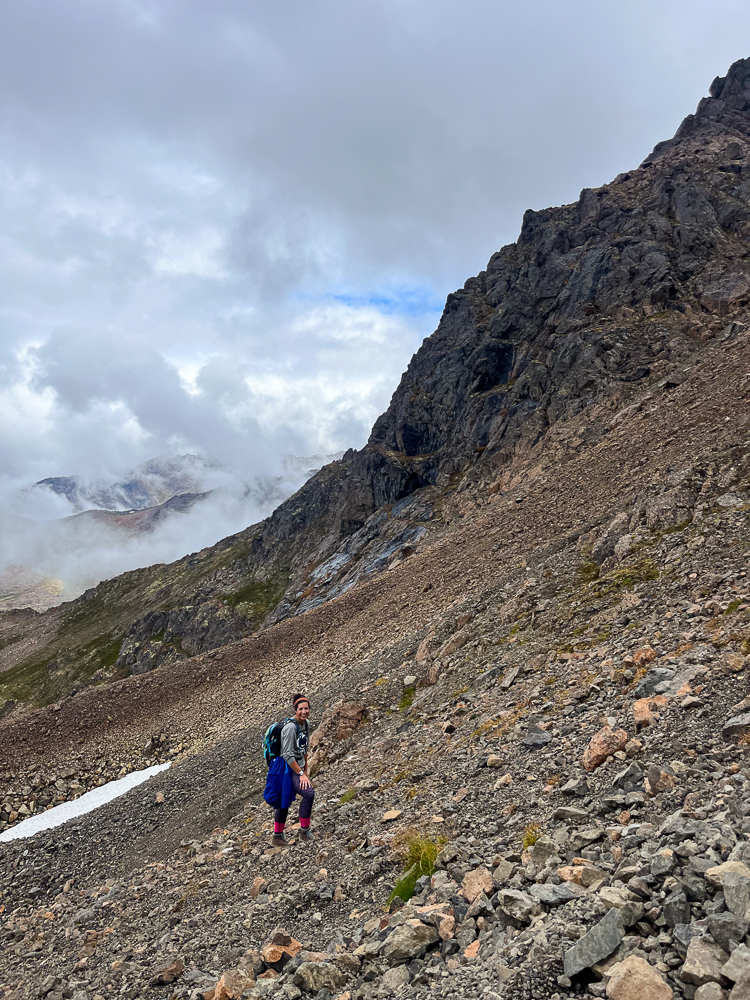
This was the last time I was close enough to Olivia to take a photo. I’m a pokey pokey tortoise.
It just got steeper after this.
Can you spot the little speck Lara in this photo? (If not, see bottom right.) I feel like you can maybe kind of see how steep the uphill was, considering that the world seems to drop off a cliff behind me.

As we wait for slowpoke Lara to crest the scree field, I’d like to pause for a moment of Olivia appreciation. There are MANY things I appreciate about Olivia. She’s fun and interesting and thoughtful. When we met in Armenia, I knew immediately that I wanted to be her friend. I thought she was the coolest (still do). We’d never hiked together before this trip, but I had a good feeling about it. Turns out, we make great hiking buddies because 1. We will never run out of things to talk about, 2. We’re on a similar level, fitness-wise, and have a good sense of our capabilities, 3. We love adventures, 4. We’re up for a challenge, and 5. We’re determined.

I feel pretty confident that if I’m up for something, Olivia will be too. My adventurous side feeds off of that… knowing that she’ll likely say yes makes me push myself a little more (and it’s probably the same for her). It’s not like I would do something I didn’t want to do, but having her as backup lets me say yes to things that my voice of reason would talk me out of I was alone. Like this – doing an unfamiliar, challenging hike with basically no cell service and no other people around. Everyone evaluates these things differently, but for me, doing such a hike solo would have felt like a silly risk. Would I probably be fine? Sure. But there are too many things that can go wrong, and an extra person increases the chance that at least one of you will be able to get help if needed.

Anyway. In conclusion, Olivia is the best. Okay, slowpoke Lara has to be getting close by now…
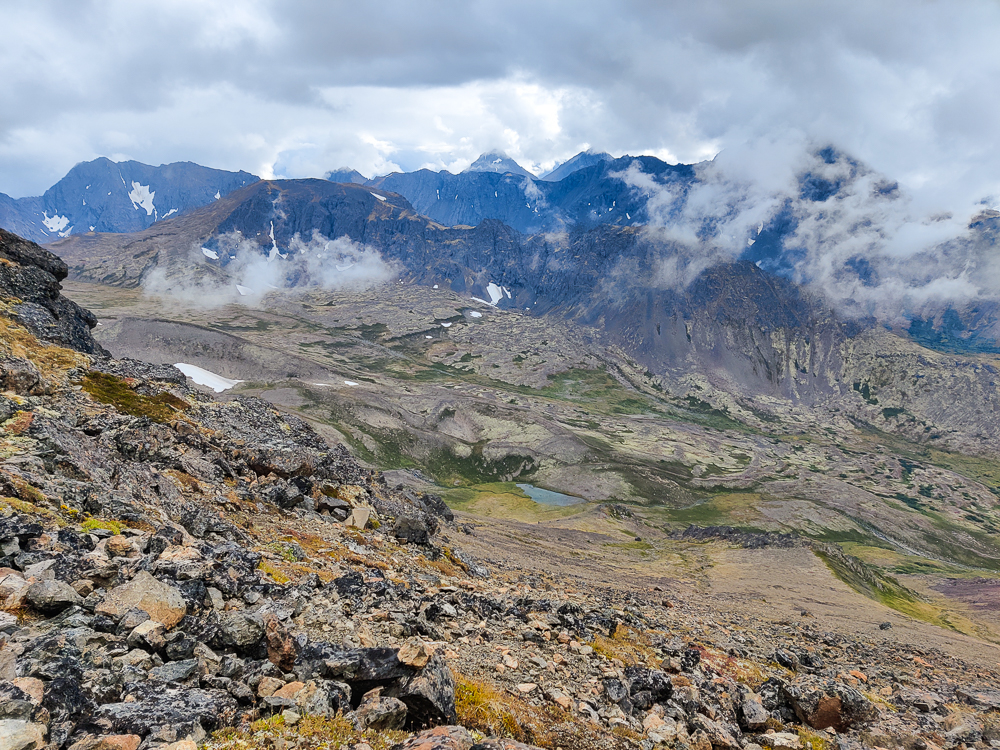
I just love it.

Once I finally tortoised my way to the top of the scree, Olivia and I reunited and continued our trek. From there, we still had about another half mile to the peak with 800 feet of elevation gain, but after what we’d just done, it felt easy. The path was hard to track, but having learned our lesson from the last hike, we were much more diligent with checking the map whenever it seemed like we were getting off course. There were also MANY false peaks. These are high points that look like they’re the summit, but they aren’t. Usually, you get there and then see that the true summit is still ahead. As you might imagine, that can be discouraging. We called them deception peaks because it made us laugh and was also more fun to say when we were yelling at them. Luckily, since we were looking at our maps, we were undeceived. (In case you’re wondering what one yells at a deception peak, it’s just things like, “NICE TRY, deception peak! I’M ON TO YOU!” Um. Anyway. Just trust me when I say it feels therapeutic in the moment.)
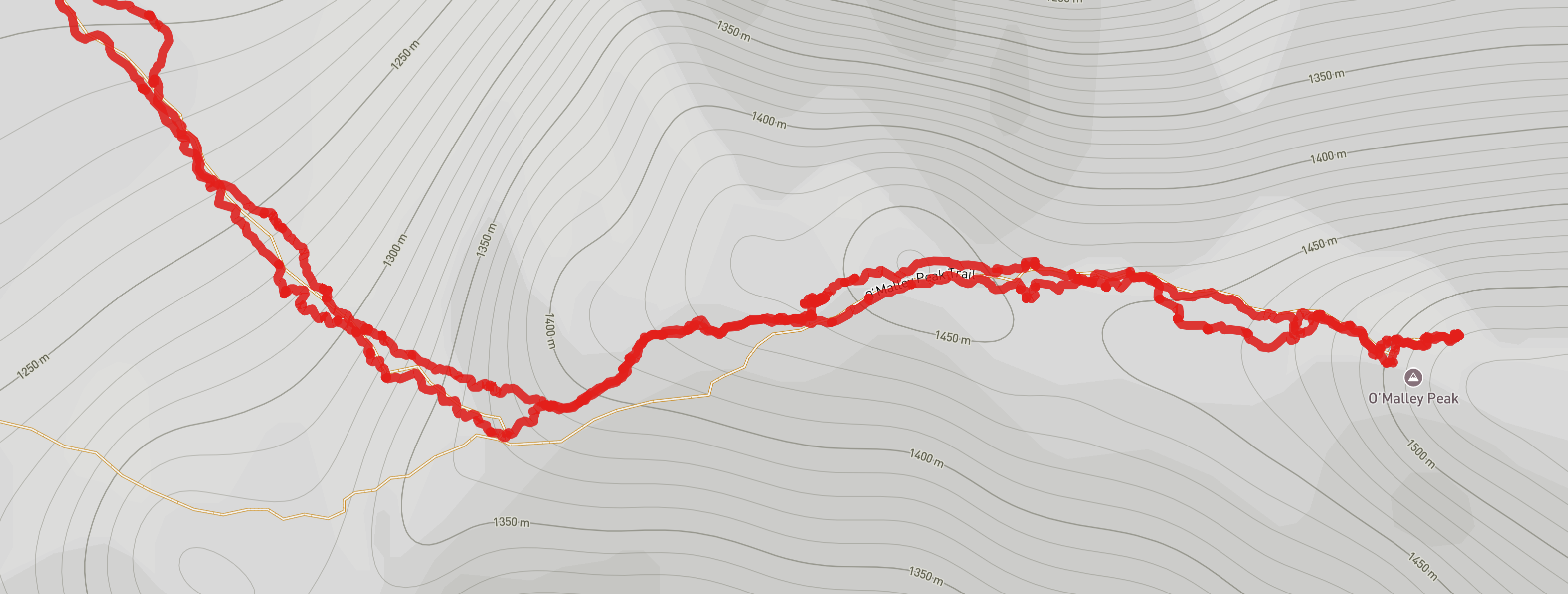
Here’s a snippet of our route up O’Malley. We came in the top left, and that part with the tight contour lines is the scree field. When our route turns more horizontal, that’s where we’re walking the ridge. You can see that our paths out to the peak and back are totally different. Like I said, we tried to follow the path. I’m still not completely confident that there IS a single path. And the one spot where we’re matched up in both directions is completely off the “trail” according to the map. Oh well. Whatever works!

Olivia made it to the actual peak before me, and she popped up holding a metal case. I wasn’t sure what it was… random geocache at the top of the mountain? It contained some random objects and a book where you could sign your name!! That was cool. It made us feel like we’d accomplished something significant.

It was fairly cloudy when we reached the top, but since the clouds were still moving so quickly, we decided to stick around, eat a snack, and see if the view cleared up at all. Eventually, we got a decent view of the valley on the Flattop side of the mountain, but the other side stayed covered. Of course, that was the way we were headed. We just hoped that there was no rain associated with those clouds.
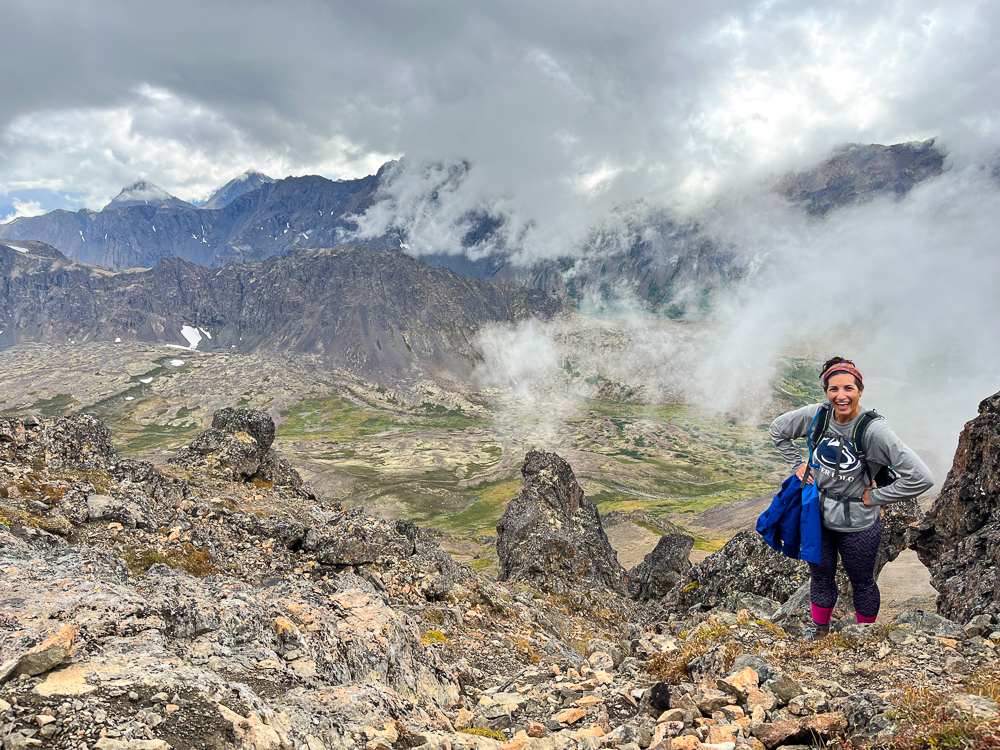
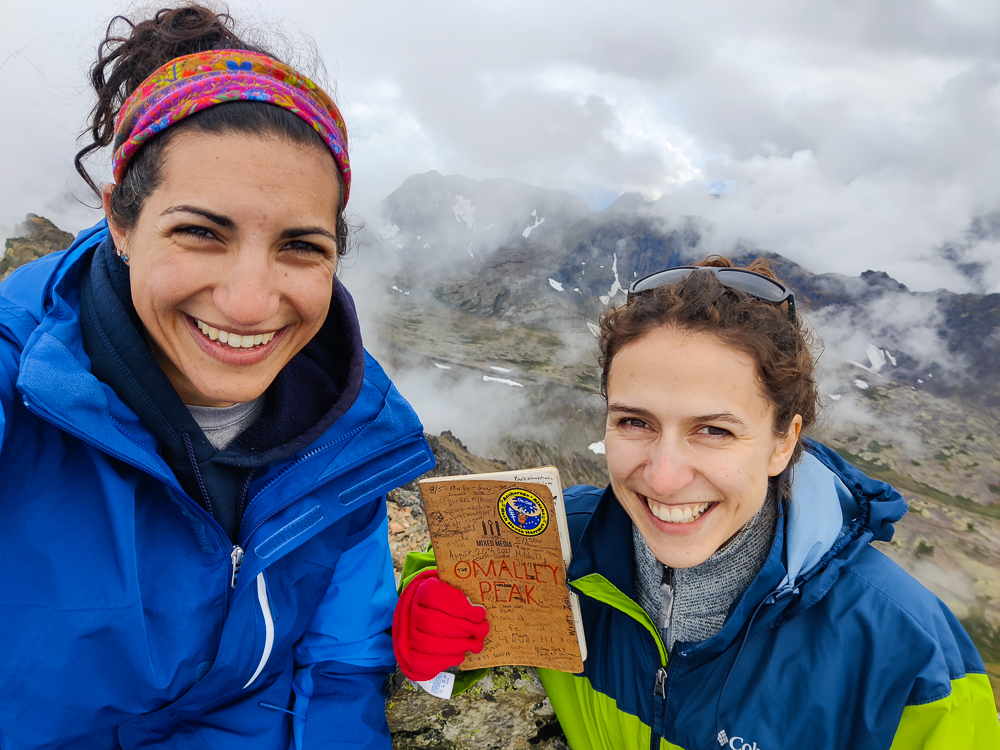
Just happy I’m not hiking up scree anymore.
We did it!
Semi-view from the top.

Once we were thoroughly chilled, we got moving again. We trekked down across the ridge and then were back at the scree field. In case you don’t have a lot of scree experience, let me tell you. Going down a scree field is way easier than going up. I still don’t love doing it, but if you get into the right rhythm, it feels like magic. All you have to do is turn off the part of your brain that thinks sliding = falling = bad. You take long, gliding steps and ride little self-created rockslides down the mountain while also steering yourself around immovable rocks and any scree-free areas. Oh, and remember to keep your weight on your heels so that you don’t tumble down the mountain. And bend your knees. And sit down to reset if you start feeling out of control. And keep a good distance between you and anyone else so that you don’t send any surprises hurtling their way (either a rock or your body). Got it? Easy peasy!
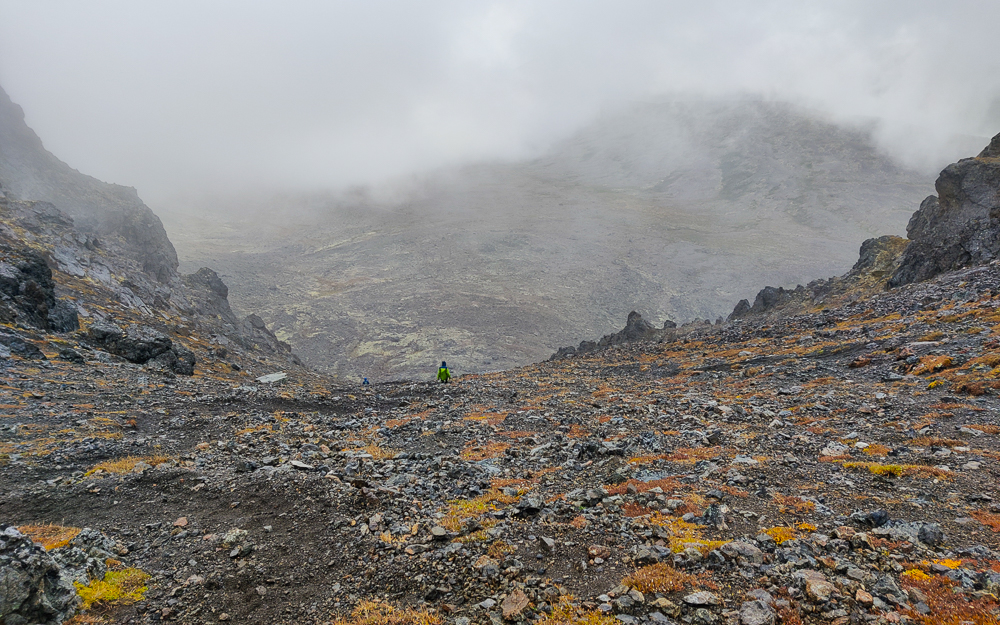
Leaving a healthy distance between me and Olivia. It looks like she’s literally headed off a cliff.

Like I said, when you get into a good groove, it’s kind of awesome. I feel like I’m flying or moonwalking or I don’t know. Floating. Weightless. Like I said, it’s magic. Then, a split second later, that euphoria turns to terror because I’m moving too fast and losing control and there’s a big rock ahead and it’s coming on WAY too quickly. Sit down. Breathe… 1, 2, 3. Recalibrate. Restart. Maybe I lied a little bit when I said I don’t love going down scree fields… I kind of do, but the feelings of terror and euphoria are so interwoven that it’s hard to isolate the joy when thinking about the experience. And the faster you go, the higher the high but also the higher the risk. It’s a fine balance. I took three recalibration breaks, aka panic sits, on the way down.

We took another time out at the bottom, stopping to clean out our shoes which were, shockingly, full of little rocks. I also needed a mental break… you have to stay focused the entire time you’re scree sliding, spotting your path and always having the next few steps planned. It’s exhausting.

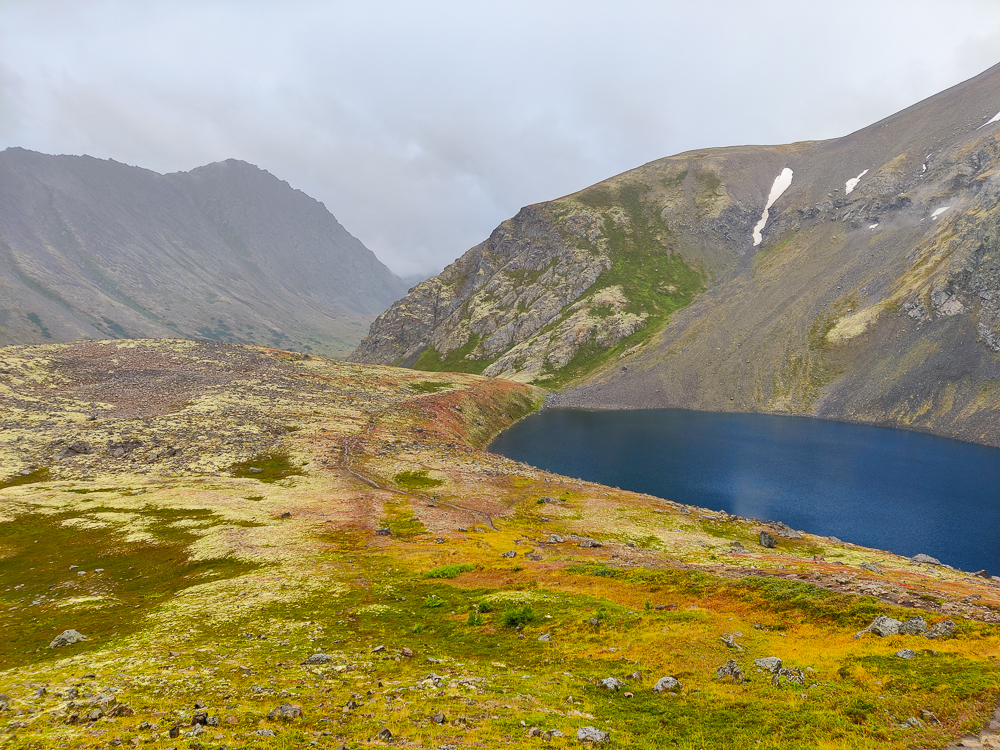
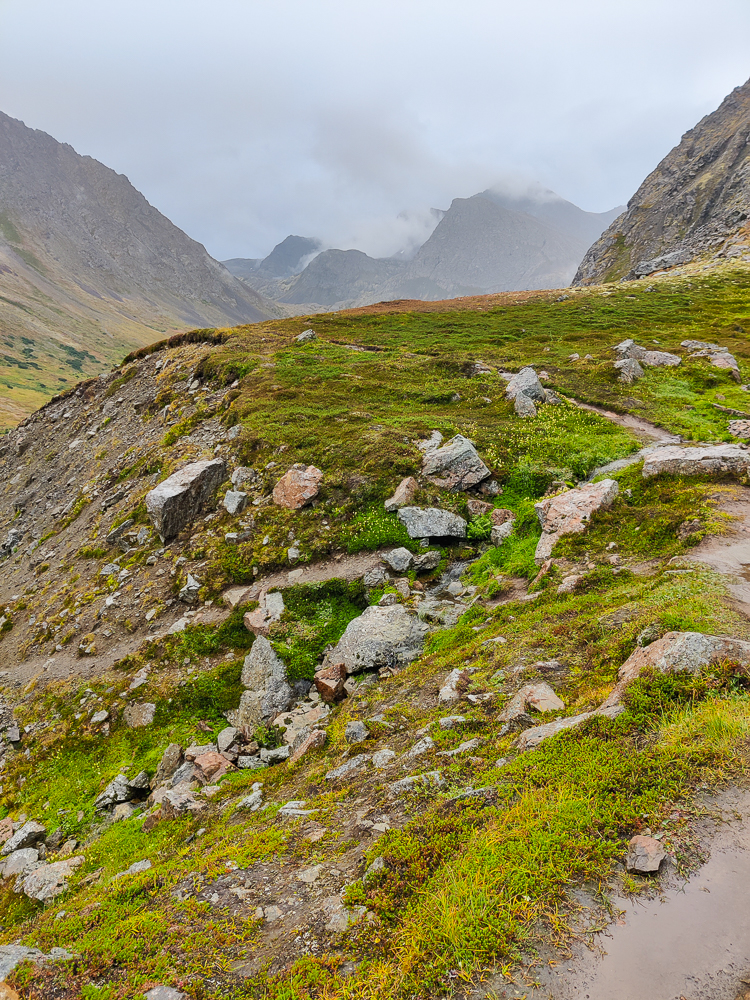
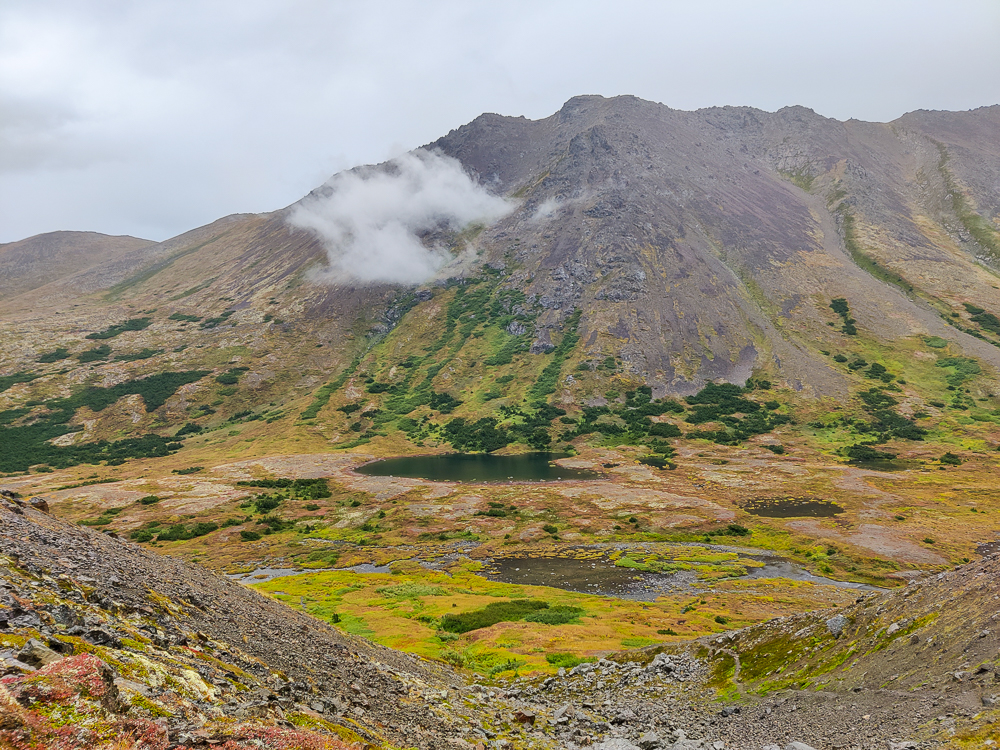
With O’Malley behind us, we reached our first decision point. Keep going, or turn back? We both felt fine physically, and the weather was drizzly but not terrible. We decided to continue on to the lakes. This involved another relatively steep downhill, but it was dirt/mud rather than scree. That’s its own challenge, but slightly less terrifying and also way slower to descend. We didn’t mind, though. The whole way down, there was a beautiful view of the valley and one of the lakes. We kept yelling about how it didn’t even seem real. (If it seems like we did a lot of yelling, well, yes. There was no one else around, so why not?)
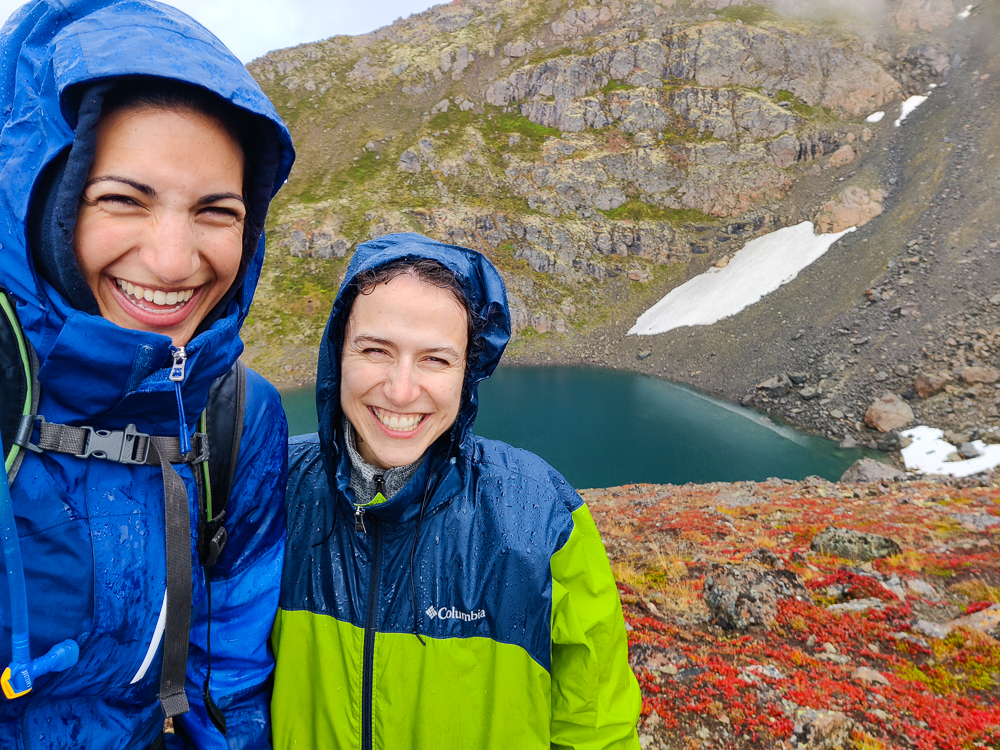
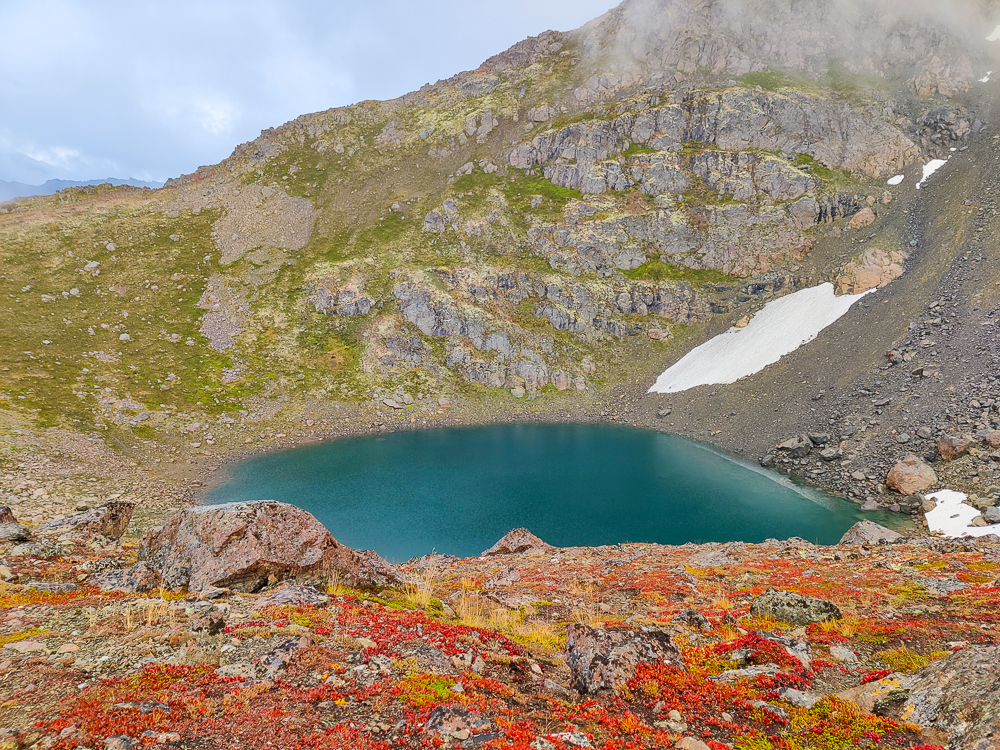
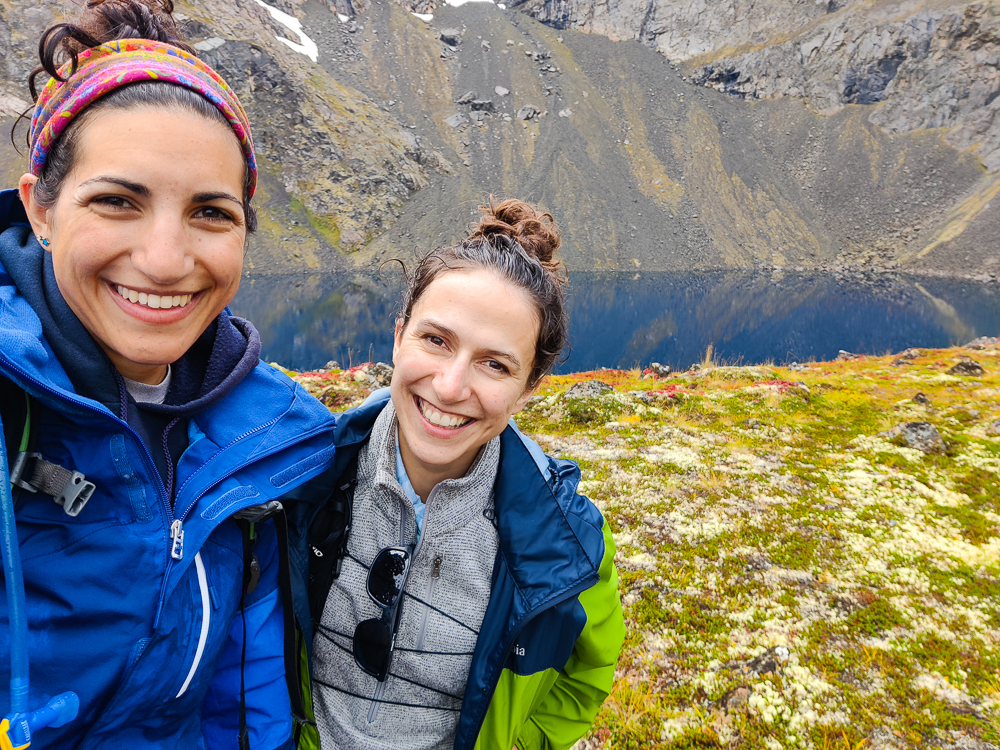
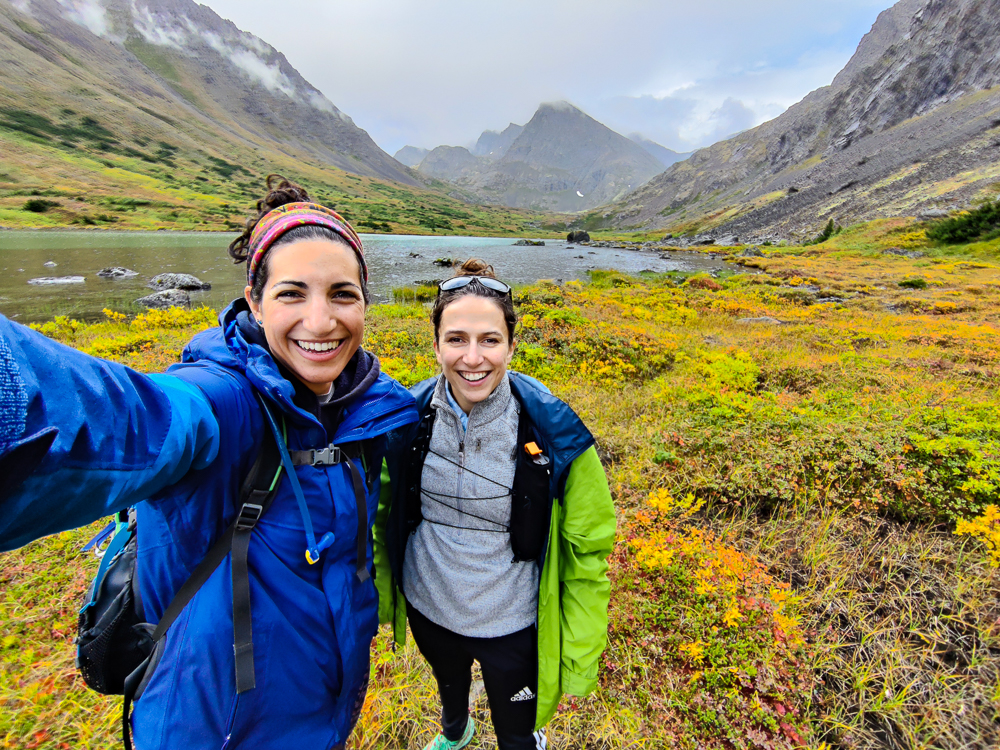
At the decision point. As you can see, we’re a little wet from the rain. We only look happy because we took a picture with miserable faces before this and looked so pathetic that we started cracking up.
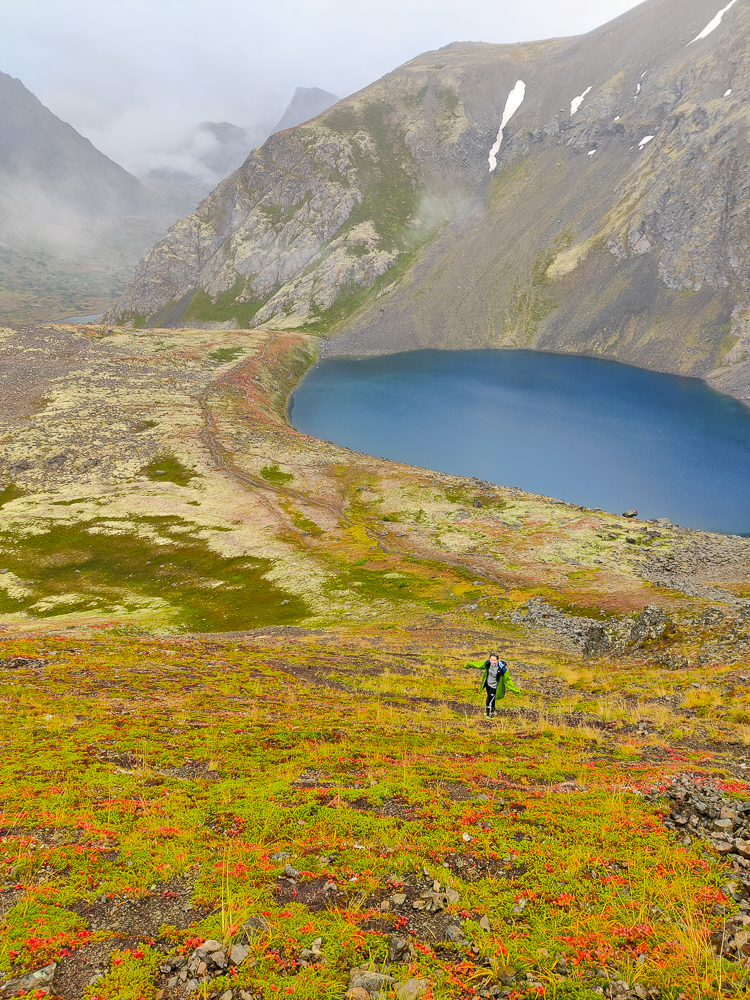
Say it with me now… THE COLORS!
This was the view as we were descending the mud/dirt slope. Unreal.
Spot the little Olivia, running on ahead.
Looking back up the way we came.
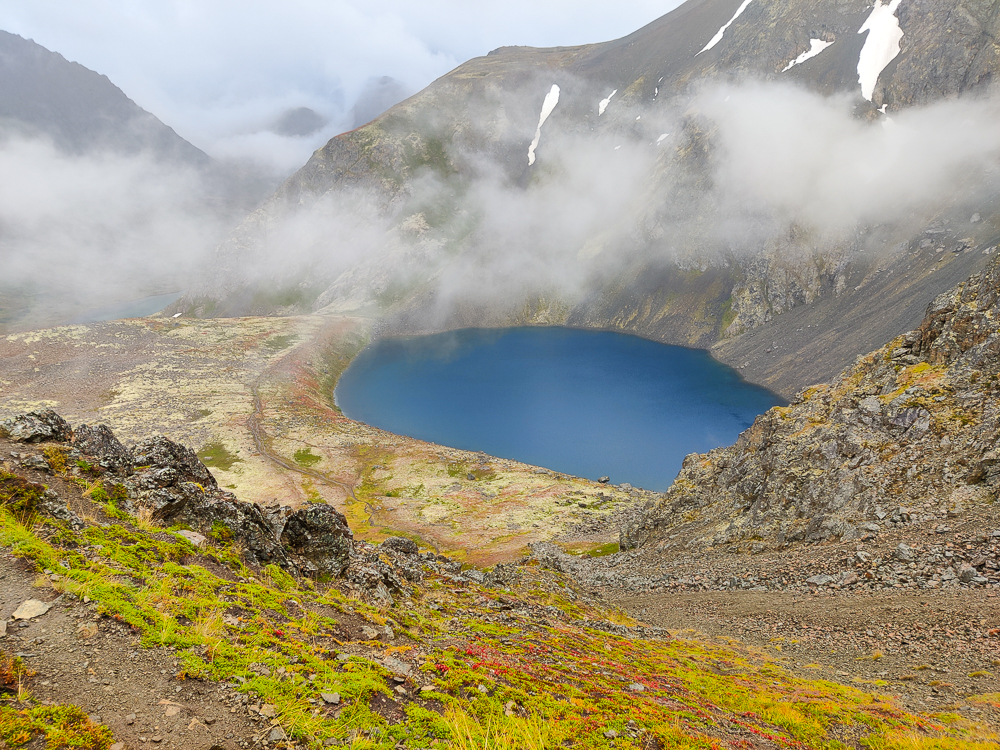
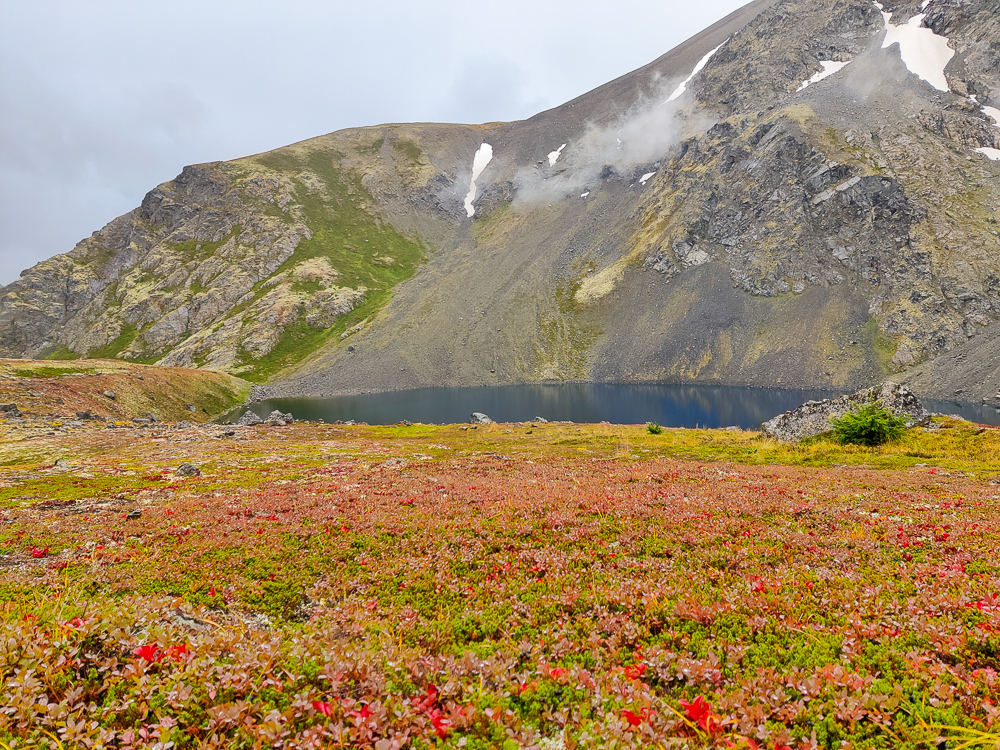
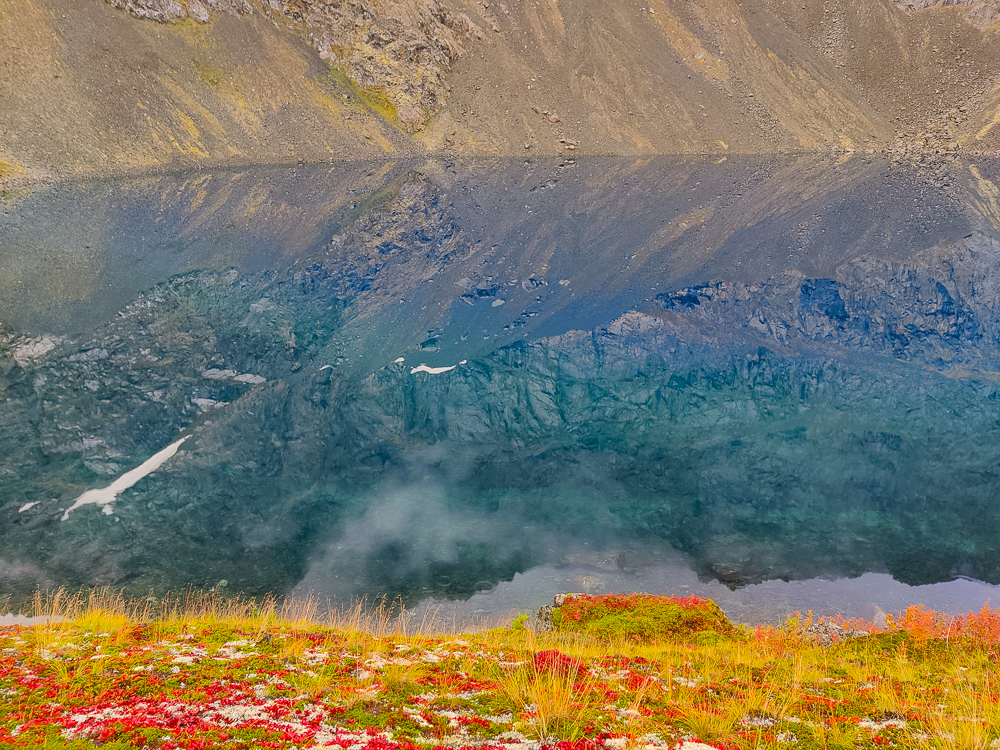
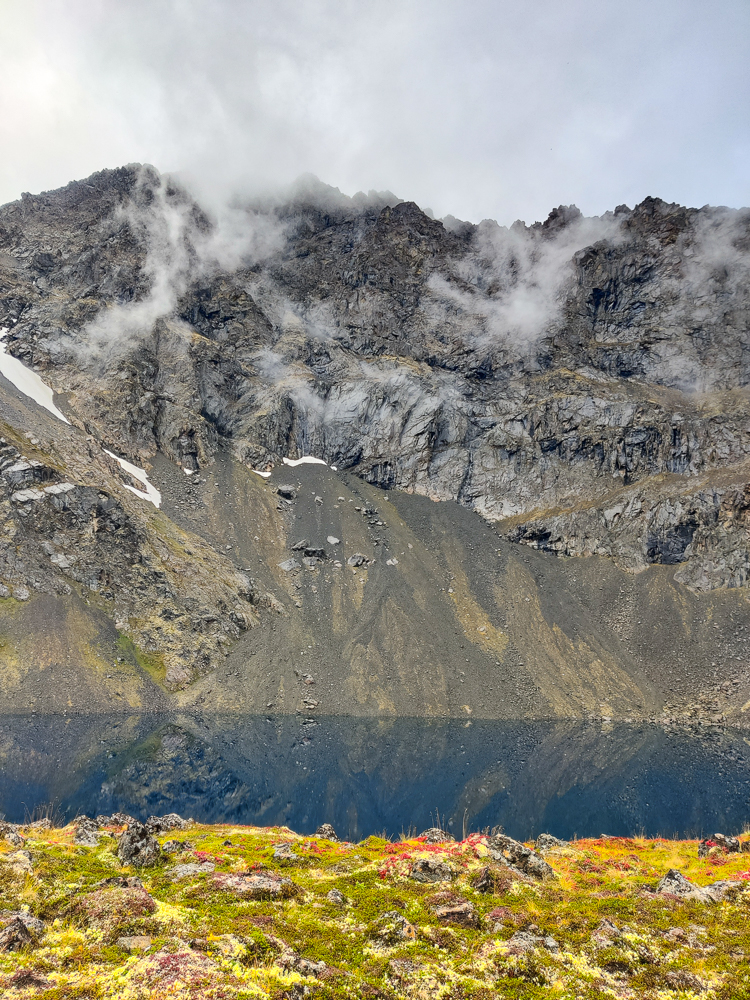
Black Lake. Now brace yourself for approximately 10384024932 photos of kind of the same thing but different.
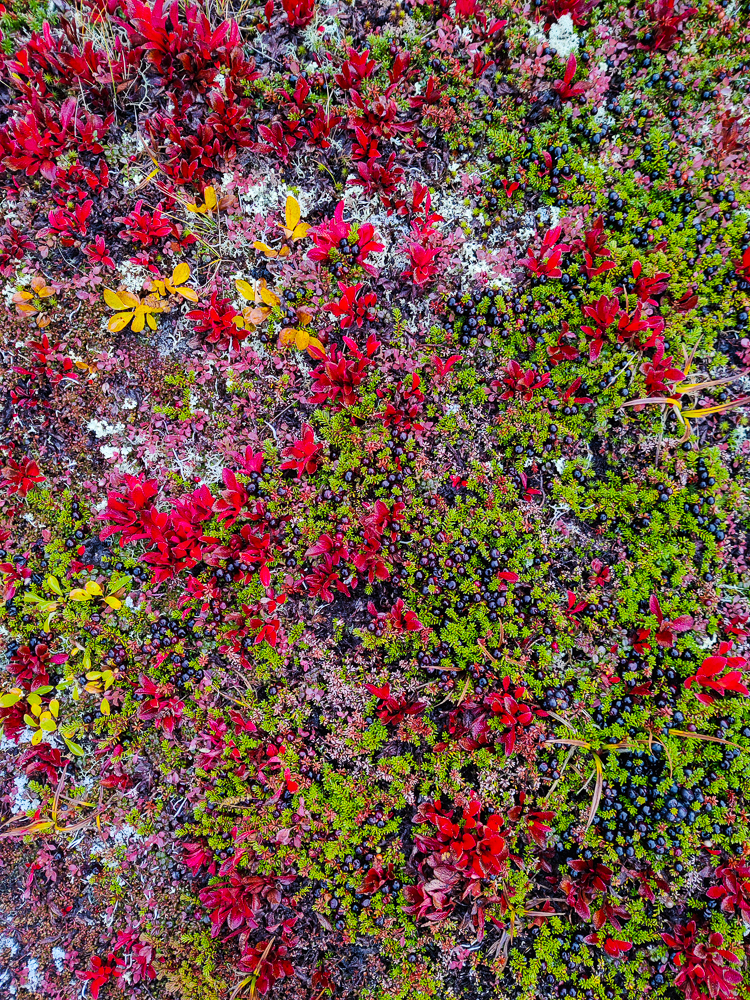
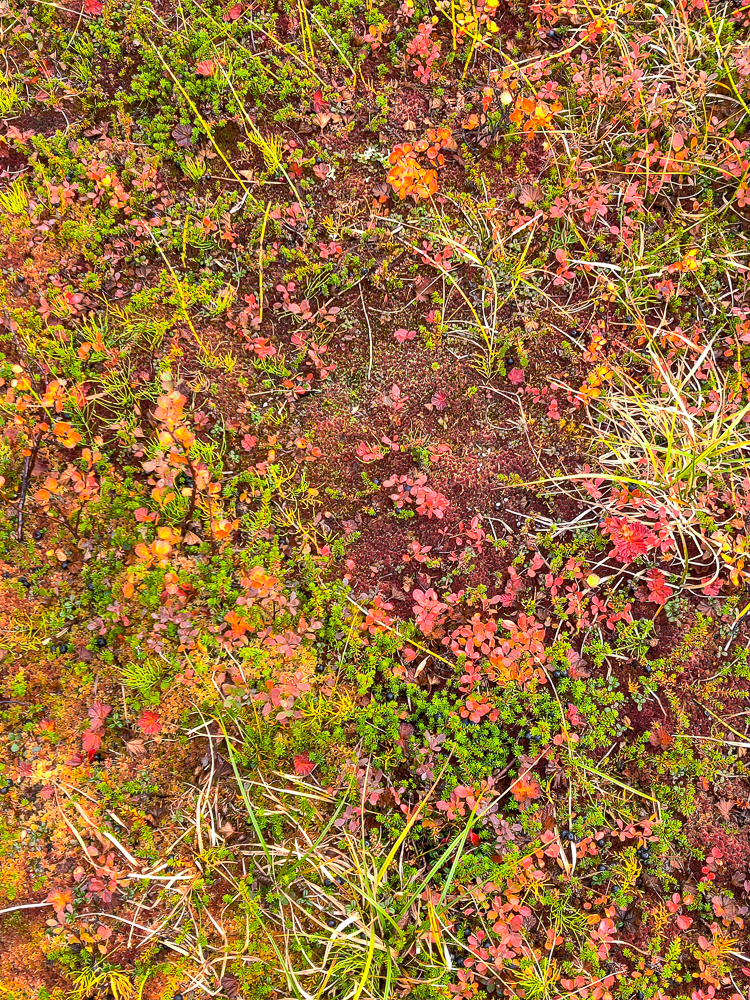
Look at these crazy vivid red plants.
And LOOK AT THIS LAKE.
Just happy to be here!
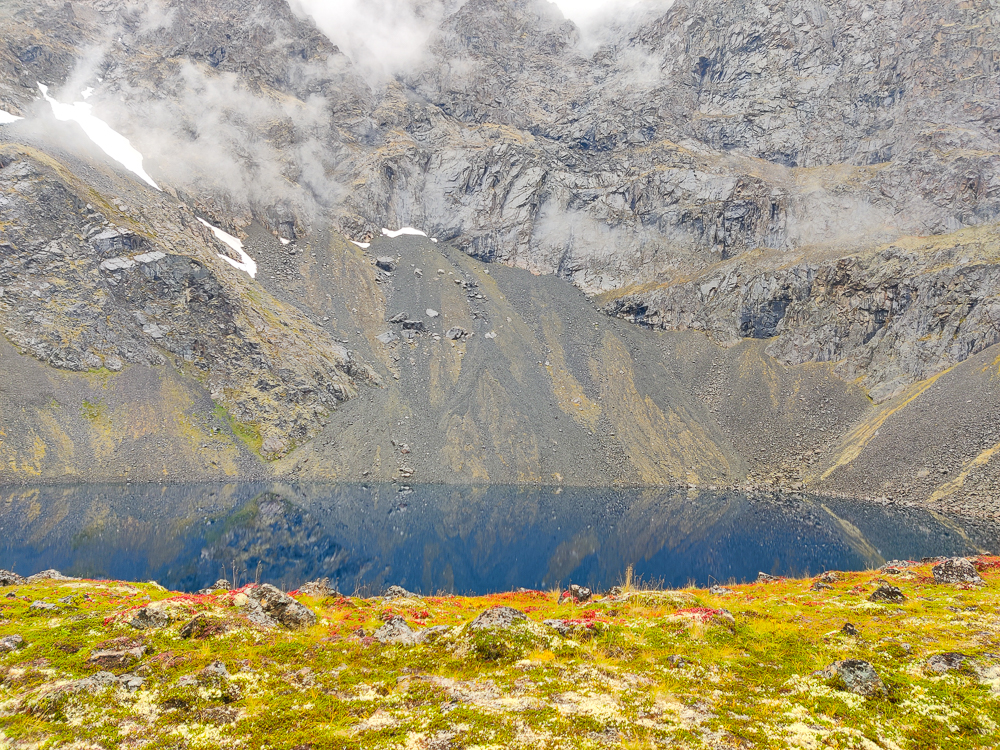
THE REFLECTION.
The little plants on the ground were so pretty. And so many blueberries! Olivia was snacking the entire time we were hiking. This is also why, later when there were more hiding spots, we were on high alert for bears.
Last one! Of this lake, at least. Onward!
I love a nice, flat path.

Eventually, we made it down to the bottom of the valley, and our trail dead-ended into the trail that we planned to follow out. This was our next fork… we could either turn left to go back to the car or turn right for more adventure before turning around. We decided to go right for a bit, just to see where it led, but we quickly hit a river crossing that was definitely too much for Olivia to do without waterproof shoes and probably too much for either of us to do without hiking poles. We settled on a short detour to get a better view of the nearest lake and then turned around and started heading back towards the car. We had about 8 miles to go and only a few more hours of sunlight, so turning around was probably the right choice anyway.

Before we go, though, we should enjoy a few more pictures…
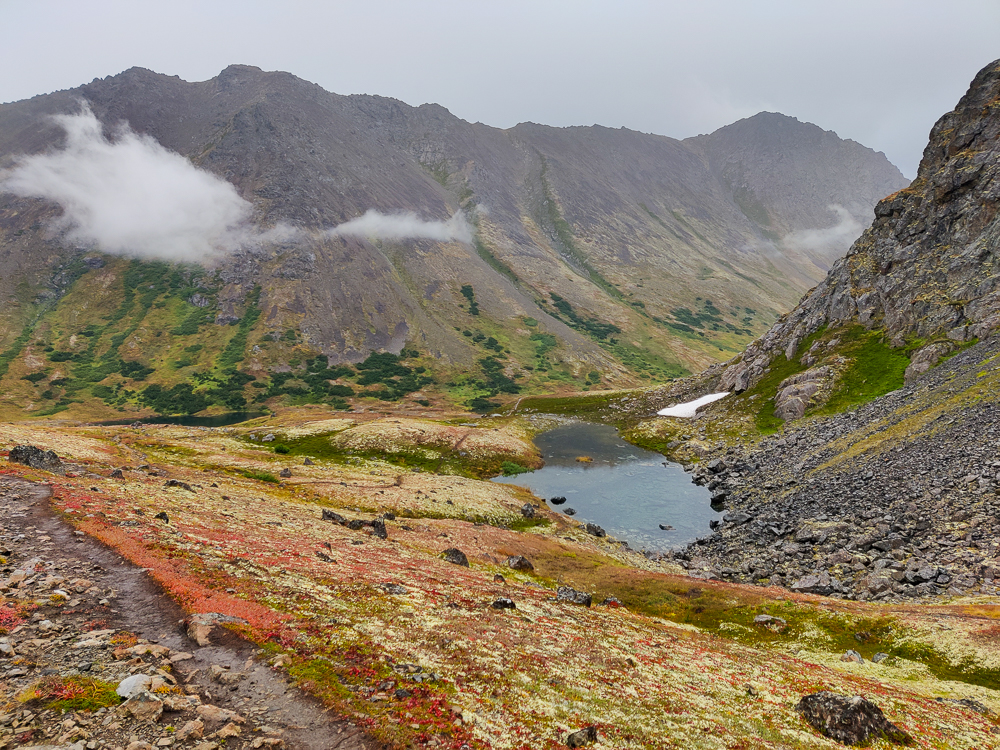
It’s just too much. IT’S SO PRETTY.
Look at that bright green! Trust me when I say that this is actually how it looked in real life.
Obsessed.
I can’t get enough of these views.
Can you?? (If so, sorry… I’m not done.)
Okay now this… this is insane. I have pictures of the same mountains in the background with like 15 different foregrounds because they’re all spectacular and I couldn’t stop taking pictures.
Before we turned around.
Looking towards our way out. THE COLORS. ARE WILD.
Another fabulous groundscape for you.
Awesome.
Just a few more…
Okay, a FEW more….
Here are those identical background, variable foreground pictures I was talking about.
One more. Those mountains are just so photogenic. All of it. Just amazing!!!

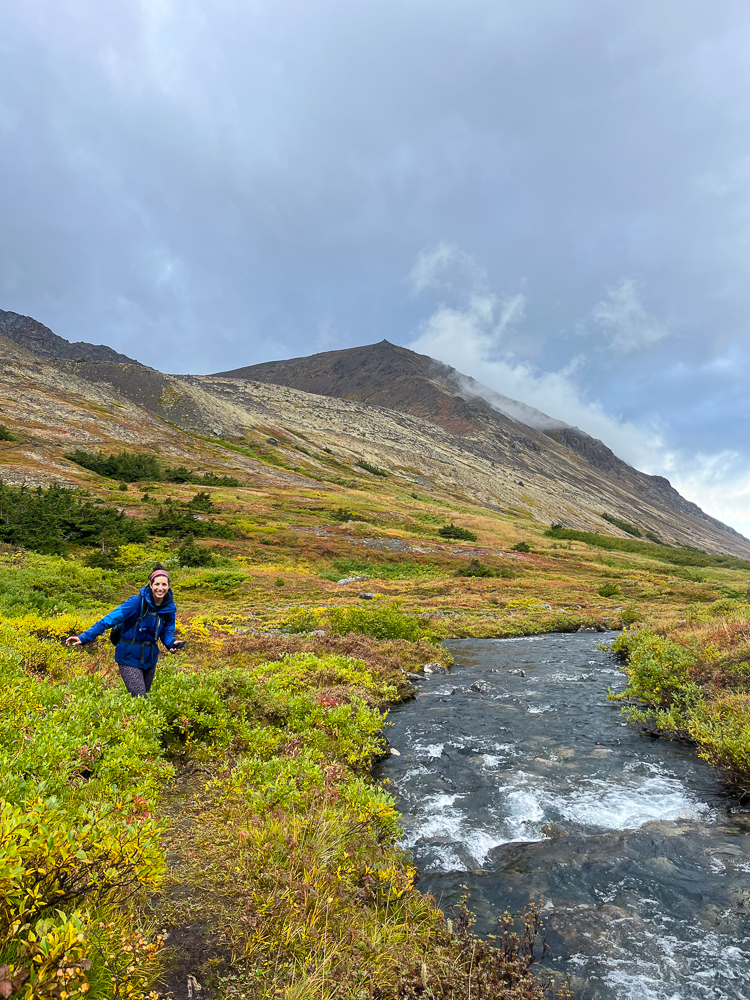
The way back was so much more terrible than I expected. I didn’t expect it to be terrible at all! The maps said that it was mostly flat, and that was good enough for me. And to be fair, at the beginning, it was great! We were in a beautiful valley. We could hear the sounds of the river rushing past. There were some bear-den shrubberies around (aka plants large enough to theoretically conceal a bear), so we made up silly songs about bears and sang them loudly to scare away any potential lurkers. Life was good!

Unfortunately, what we couldn’t see from the elevation profile was that most of the trail was overgrown with tall grasses, AND it was muddy and sometimes completely underwater. Our feet got wet very quickly, and that’s guaranteed misery on a hike. Olivia’s shoes weren’t waterproof, so she had no chance. Mine were once waterproof, but there are some weak spots. So maybe the infiltration took a little longer for me, but barely. Even if our shoes HAD been 100% waterproof, it wouldn’t have mattered. We were walking through waist-height plants that were covered in water and overhanging the path. As we brushed past, it felt like water was pouring down our legs and into our shoes. It was awful. Also, it started raining again. It’s not like it made us much wetter than we already were, but it felt like adding insult to injury. Like really?

I could tell that Olivia was feeling similarly terrible. Neither of us said anything about it because what would that help? But also, neither of us was talking any more than necessary. The creative bear songs faded into Olivia yelling, “Heeeeey, bear,” whenever passing a potential bear den and me just hoping she was making enough noise for the both of us.

I was singularly focused on keeping a good pace, both to end our misery and because we were a little concerned about sunset. That meant I was zero percent focused on the map… if there hadn’t been a couple standing at our crossroads, I would have blown right past our turn. Eek. That would have been very good for morale. But, thankfully, we were saved from that fate, we made our turn, and BAM! There was an insanely vivid rainbow right in front of us! A double, actually! A tiny little boost to keep us going. And man, we needed it. I was holding myself together until we made that turn, but then there were just 2 miles to go and we were so close and I was so over being wet and cold and the end just couldn’t come fast enough.
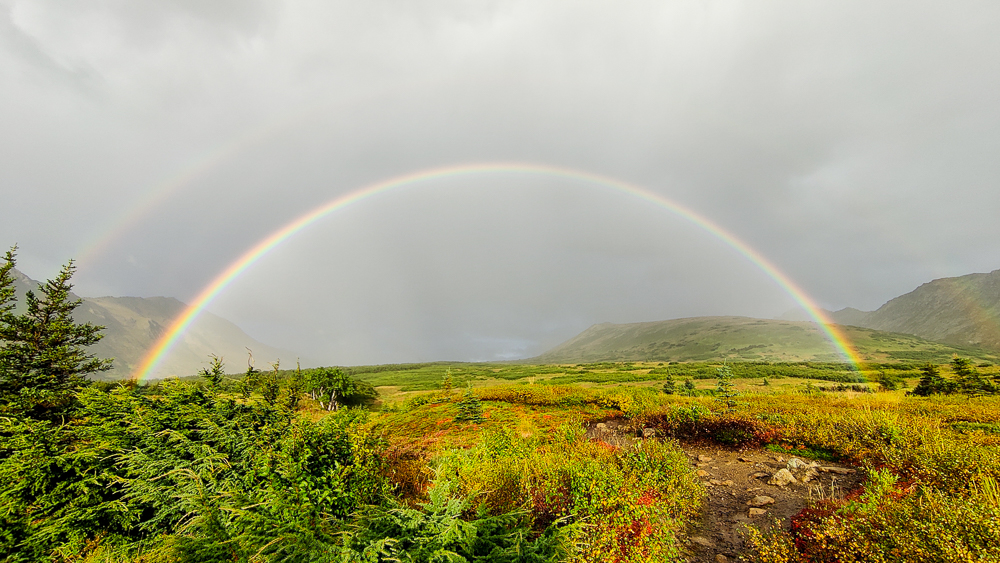
Double rainbow!!! I took zero pictures during the miserable parts of the hike because I was too miserable to think about anything besides walking as quickly as possible.

I practically collapsed from joy when we got back to the car. We both took our shoes off for the drive home, and back at the house, I took a glorious hot shower. Olivia’s mom made pasta for us, and it was the best thing I’ve ever eaten. She also gathered up our wet clothes and shoes and set them up to dry, and I was so thankful to have nothing to do but eat and vegetate and stretch. Moms are the best.

Our final stats for the hike were: 14 miles (22.5 km), 4,000 feet of elevation (1,200 meters), and 8 hours and 40 minutes (total time, not just moving time). Even with the grumpy final miles, it was a good hike.
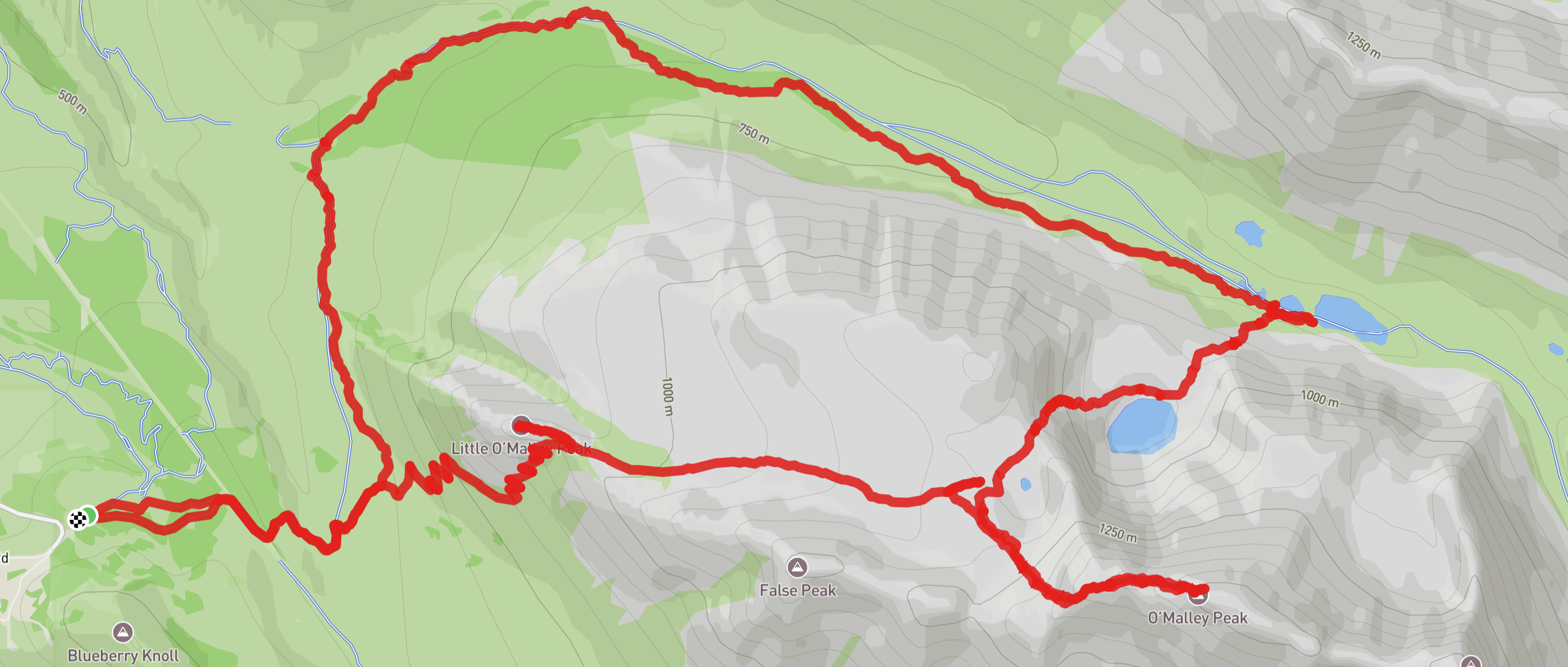
Here’s the final map of our hike. We started at the end of that tail on the left, went along the bottom of the loop to that other tail to O’Malley Peak. Then we went downhill (up on the map) to the lakes, had our tiny little detour to the first lakes (Williwaw Lake) on the lake trail (the others are out of view), and then we made that big loop back around the top to meet back up with our path in for the final little leg back to the parking lot.

On a day when the weather looked particularly questionable, we skipped the hiking and took Olivia’s mom up on her offer of an Anchorage tour! She said that she has a list of places where she likes to take people who are visiting, and I was ready to go wherever she wanted to take us.

Later that day, we were hanging out with some of Olivia’s friends, and they asked where we had gone on our Anchorage tour. They were fascinated by the itinerary, and apparently, they hadn’t even been to many of the places. They definitely didn’t say, “Oh yes! I would take people there,” to most of the stops. Having experienced the tour, all I can say is, those people are all missing out. We decided that this would be considered the “Offbeat Anchorage” tour which is absolutely the tour I would have booked anyway, given the choice (or, paying homage to my favorite travel resource, Atlas Obscura, the “Anchorage Obscura” tour).

So, come along with me on Annie’s Offbeat Anchorage tour! I don’t know what most people see in Anchorage, but it’s probably not this. (Also, a note – the order doesn’t quite match how we visited them. A few are tied to specific historic events, so I shifted those into chronological order, and the more general stops are just mixed in.)

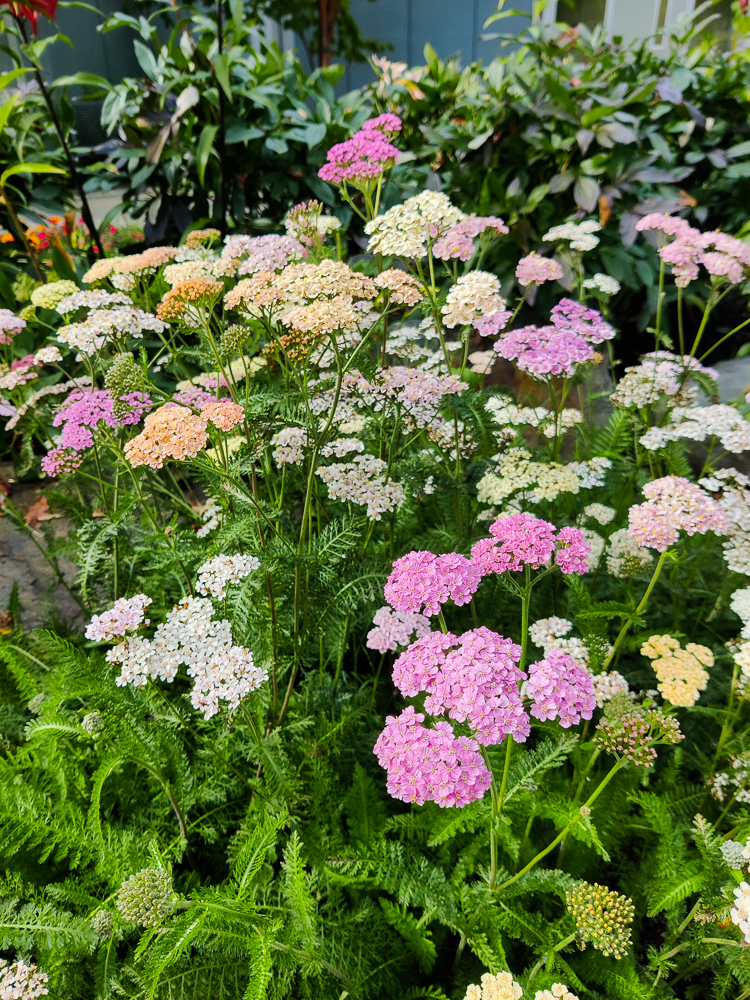
The tour started with a more personal stop at Providence Hospital where Olivia’s mom volunteers. She maintains a flowerbed and also goes in weekly to cuddle premie babies in the NICU. The hospital was opened in 1939 by the Sisters of Providence, hence the name. Anchorage was a late bloomer of Alaskan cities, so by then, they had already started other hospitals in Nome in 1902 and later in Fairbanks (those were big gold rush towns).

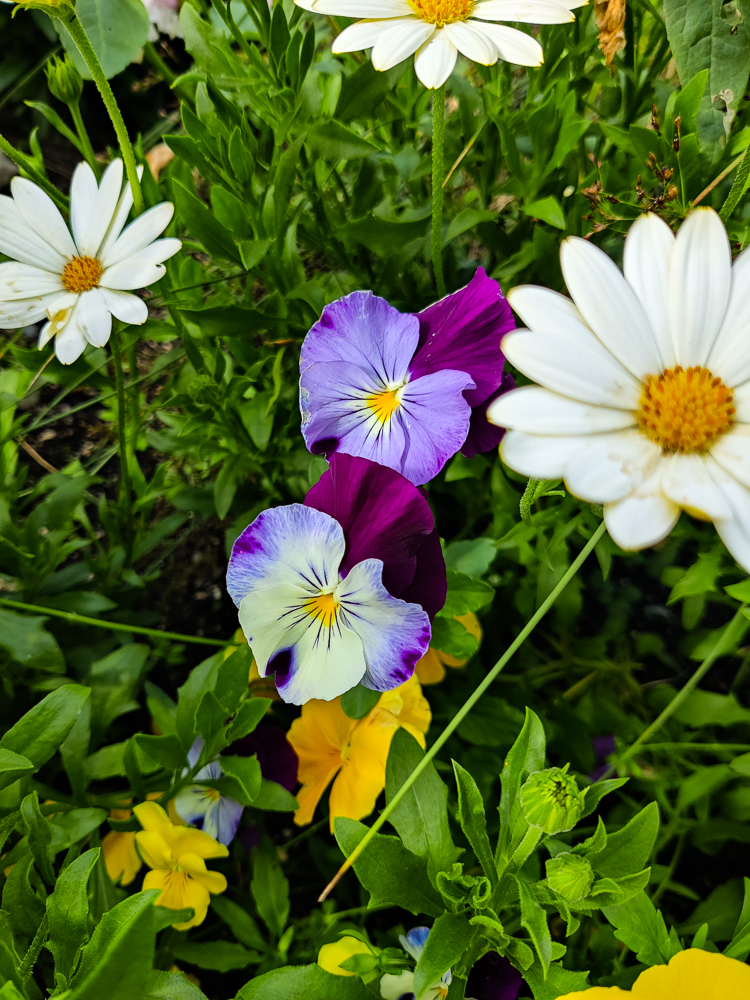
Flowers from Annie’s flowerbed!
Any tour that starts with flowers is destined to be a good one.

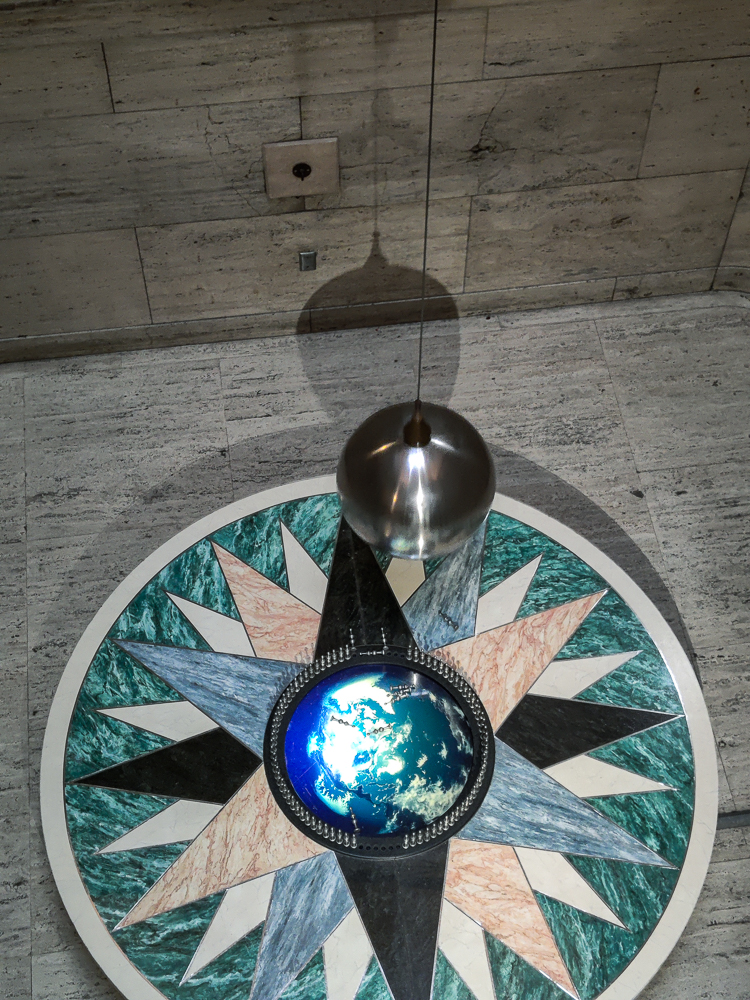
University of Alaska Anchorage’s Foucault Pendulum

From there, we headed to the UAA university library to see one of Annie’s favorite things – a Foucault pendulum! I actually was familiar with the concept because there’s one at a museum in Philadelphia as well, but I was still happy to check it out.

The pendulum demonstrates the Earth’s rotation. By the time it was designed, people knew that the Earth rotated because of astronomical observations, but this showed it in a lab setting. The basic concept is that if the pendulum was located at one of Earth’s poles, it would keep swinging back and forth in the same plane, and the Earth would rotate 360 degrees underneath it each day (or about 15 degrees per hour). If you were tracking which way the pendulum was moving, it would seem like the swing was shifting, but the change would actually be because of the Earth rotating.

I feel like the pole situation is pretty easy to digest, but my brain starts hurting a little once you move away from the poles. When it’s not located at a pole, the Earth is still rotating underneath the pendulum but not a full 360 degrees in a day. (In Paris, where Foucault did his demonstration, it takes nearly 32 hours for a full rotation. In Anchorage, since it’s farther north, it takes about 27.5 hours.) Then, if you were at the equator, it wouldn’t rotate at all. If you crossed the equator, it would appear to be rotating in the other direction!

Apparently, for the best effect, you want a long cable and a heavy, symmetrical bob (the weight at the bottom of the cable). The university’s is 52 feet with a 240 pound, hollow brass bob. It also uses an electromagnet to keep the pendulum swinging since it’s not an ideal pendulum and things like friction, etc. exist.

I didn’t take a picture of the UAA pendulum, but here’s the one at the Franklin Institute in Philadelphia. This one has an 85ft cable and ~175lb bob. It has little metal pegs that get knocked down during the day to help show the rotation.

Train Station/Eisenhower Memorial

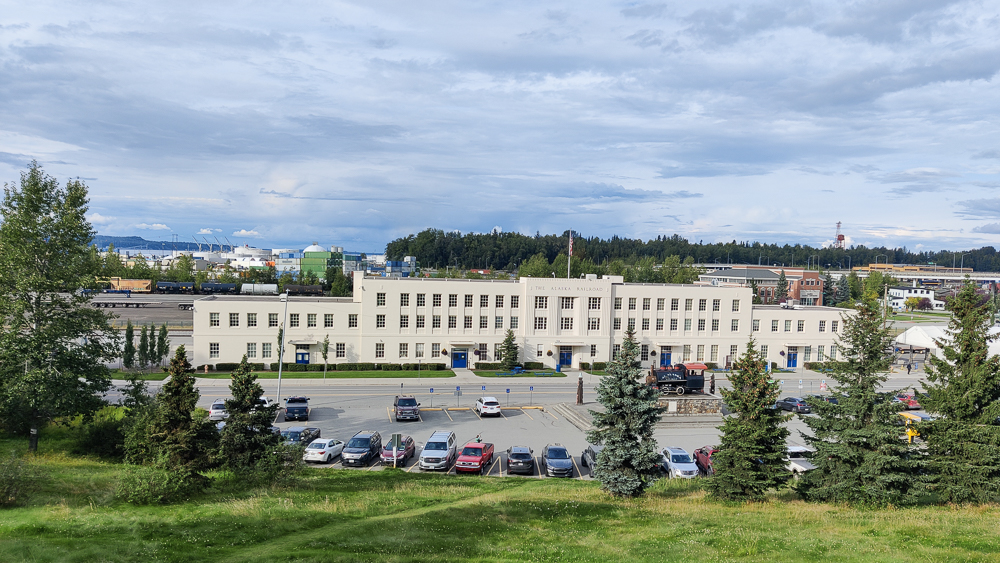
There’s an Eisenhower Memorial in town, and from there, you can see the train station. I didn’t take any pictures of the memorial because it was in depressing shape, but let’s talk about trains!

Anchorage was first settled thanks to the construction of a government railroad, meant to increase access to the resource-rich interior of Alaska. The associated job prospects caused thousands of people to pour into the area, and a tent city of makeshift shelters was erected on the banks of Ship Creek. This “city” only existed for a few months in 1915. Conditions were horrible, and the area taken up by the settlement was needed for the railroad/shipping infrastructure.

A new site was selected for the settlement on higher ground, and over 600 lots were auctioned off. Random fun fact: People wanted to call the city “Alaska City” (they even held a vote to come up with that incredibly creative name). But alas, the postal service decided it should be called Anchorage, and so it is.

Train station!

Elderberry Park & Oscar Anderson House

Our next stop was Elderberry Park which wasn’t particularly interesting in itself, but next to the park is the Oscar Anderson House. Oscar Anderson was Swedish and came to Anchorage back in the Tent City days (he said he was the 18th person to arrive). He bought land in the 1915 land auction and built a house, supposedly the first wood-framed home in the city. It was given to the city in 1976 and was moved about 60 feet from its original site. (I always think that kind of thing is wild. The logistics of relocating a building! I’m sure there was a reason, but all that for 60 feet? Geez.)

The house was closed for renovations when we visited, but I still felt like I got my money’s worth with the stop (zero dollars, but who’s counting). There was an informational panel outside that was written by someone who deserves a raise. Usually, trying to read those things turns my brain to goo. This one, though. From the first two sentences, I knew it was different.

“Oscar lived in this house for nearly 60 years. They say his ghost still lingers on.” TELL ME MORE. It said that after Oscar died, the people who moved in reported strange occurrences and noises that sounded like footsteps. “When they reported these stories to his widow, Elizabeth… she was delighted. She said she always knew Oscar loved the house too much to ever leave it.” That cracked me up. She was DELIGHTED to hear that her husband was haunting their old house. So good.

There was also a fabulous write-up about “Demon Rum”. Before I get into that, some context. Back when they were auctioning off land, “to encourage sobriety and good behavior among construction workers, the rules of the townsite sale stated that all lots would be forfeited if used for gambling, prostitution, or the manufacture and sale of liquor.” (Quoted from an info panel at the Eisenhower Memorial.) In case you’re curious about how that went… enter Demon Rum info panel.

Uncle Sam laid down the law in 1915. There was to be none of that mischief within the new townsite of Anchorage.
Who was he kidding? Some thought the Wild West had had its final fling. But this was a new frontier.
“The only thing more prevalent than the fine dust which clogs the air is the raw whiskey with which they wash it down,” observed one disgusted federal bureaucrat, thoroughly unimpressed by the new railroad town and the moral fiber of its inhabitants.
The laws prohibiting such behavior may have been there on the books. But enforcement was a different matter. Sometimes The Law was in cahoots with The Lawless.

The next paragraph gives a little more detail and a quote from a historian talking about “Characters nicknamed Dago Jim, Creampuff Bill, and The Pale Faced Kid,” and I couldn’t stop laughing about Creampuff Bill. What a nickname!

Anyway, all that to say that I wish I could submit positive feedback about the articles. 10/10

Captain Cook Monument

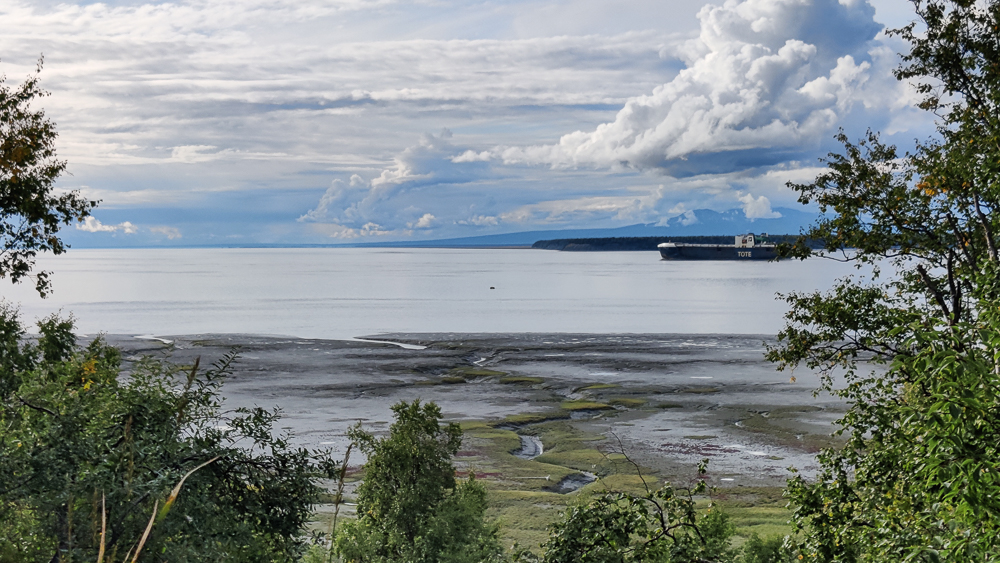
I don’t have much to say about the actual monument… It’s a statue in a little park with a nice view of the water. While we were there, though, we saw a barge cruising past, and that ended up being far more interesting to me.

Annie explained that these big barges come in with supplies a couple of times per week. About 95% of Alaska’s purchased food supply is imported, plus clothing, home goods, vehicles, etc. (On the export side, 75% are fishing and mining related.) It’s probably not surprising that one of Costco’s most successful locations is in Anchorage. It makes sense… people come to town for supply runs, and what better place to bulk shop for supplies than the bulk grocery store?

Annie also said that there are a bunch of food caches hidden around the city in case something happens to the barge supply lines. I couldn’t find anything about this online, but maybe that just means it really is a secret… I guess we’ll never know.

A barge cruising past…

Eleventh Air Force/Americans Home from Siberia – WWII Memorial

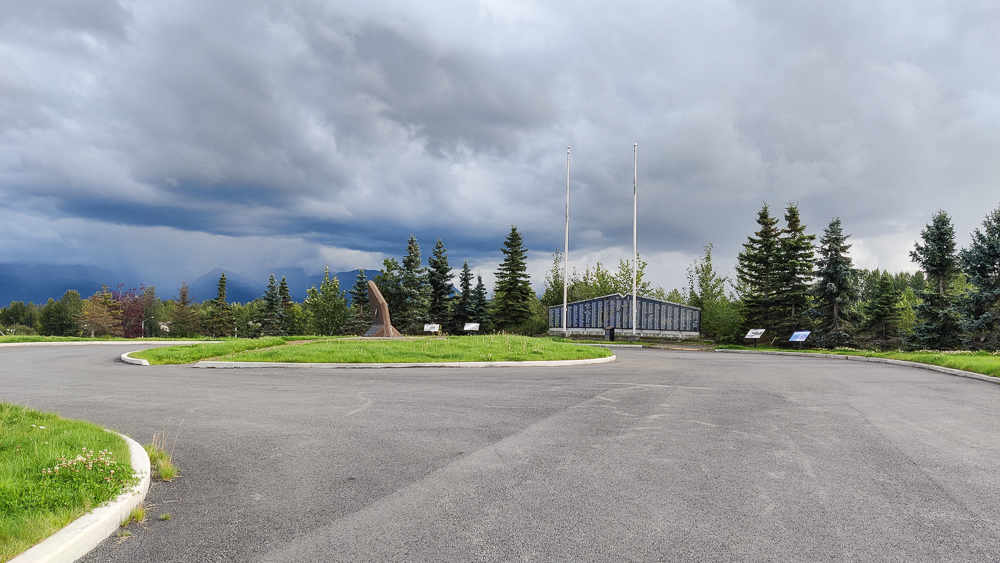
Our next obscure stop was at a WWII memorial which looked practically abandoned. Apparently, Annie stumbled upon it while playing one of those location-based app games during the pandemic. She thought it was interesting, so now it’s a tour stop! It’s in a very weird spot… next to an airport (I guess because of the “Air Force” part), not on a well-traveled road. It’s not surprising that no one seems to know about it.

The driveway into the memorial… weird, right?

Since Alaska was virtually undefended prior to WWII, the U.S. started building military infrastructure there in 1939. The war had a huge impact on Alaska. The population of Anchorage grew from 3,500 in 1940 to 12,000 in 1945!

Did you know that the only WWII campaign fought on North American soil and the only occupied American land was in Alaska? The Japanese occupied two of the Aleutian Islands (the islands that make up Alaska’s long tail) from June 1942 until they were finally driven out in August 1943. The U.S. and Canada lost over 500 men retaking the islands, and over 1,000 were wounded. After that, there weren’t many troops kept in Alaska, but part of the U.S. strategy was convincing the Japanese otherwise. The goal was to make them think that an attack might come from the north, forcing them to keep resources positioned to defend against that possibility.

There was a lot of people-moving happening during the war…

  • The U.S. forced hundreds of native Aleuts to relocate from the islands during the war. About 10% died in camps in southeast Alaska, and 4 out of 6 of their villages ceased to exist.
  • The Japanese captured 43 people from the islands and took them back to Japan. Only 25 returned.
  • The US imprisoned 245 Americans of Japanese descent from Alaska in internment camps in the western U.S.

And this one is what the memorial is specifically about:

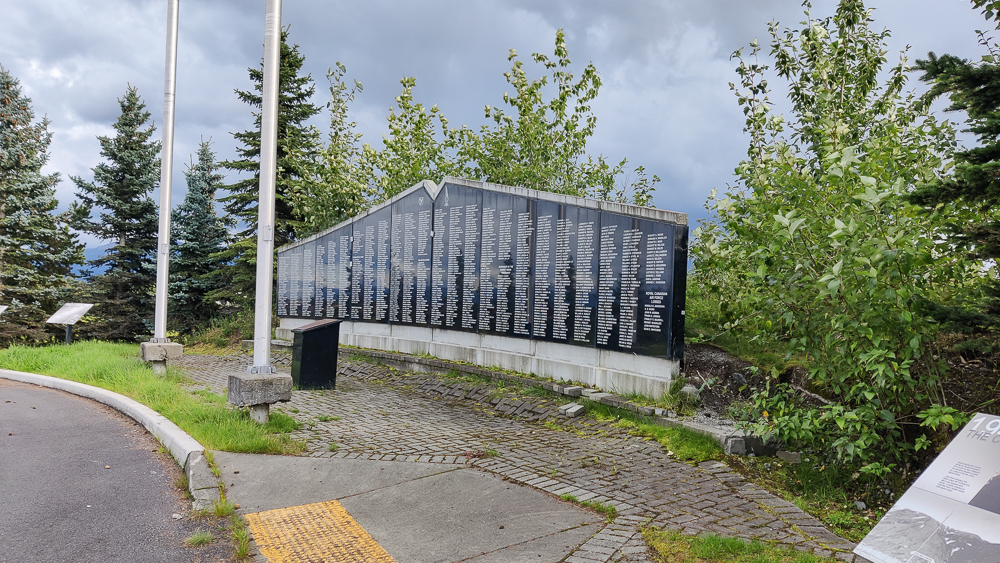
  • The Russians interned hundreds of U.S./Canadian airmen who had to divert to Russian bases after flying missions against Japan. Usually this was because they didn’t have enough fuel to get all the way back to Alaska after running into unforeseen circumstances. Russia was in a complicated spot with these “captured” airmen because the U.S. and Russia were allies against Germany, but Russia and Japan were not at war. The interned airmen were treated fairly well, and some were helped to “escape”. (There’s an interesting article about this linked in the “Sources” section below.)
Memorial name wall

Delaney Park Strip and Star the Reindeer

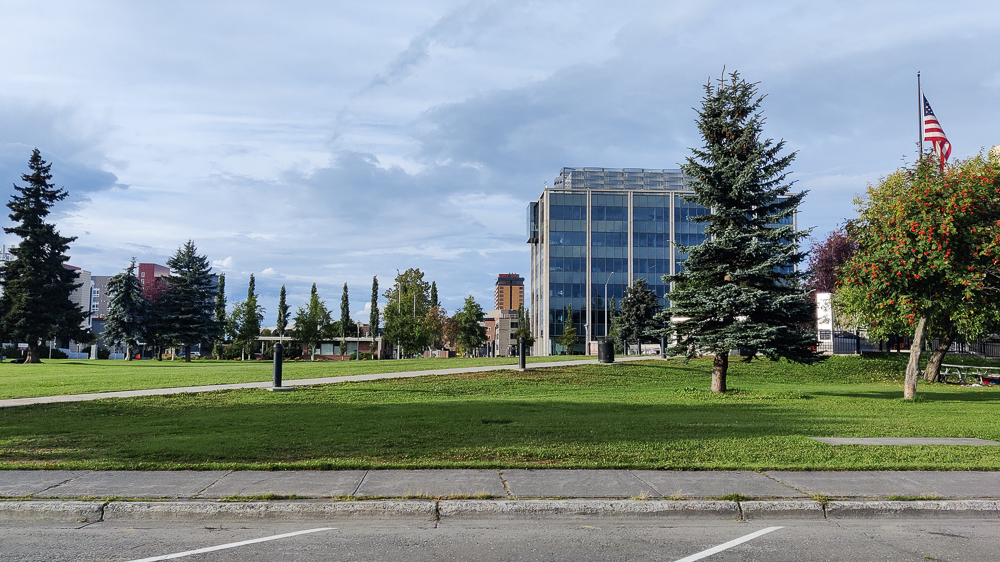
We drove past a park which Annie explained was originally put into the city plan as a fire buffer between the city and the forest. It’s one block wide and ~13 blocks long! In the 1920s, it started being used as a golf course and also an airstrip. (Honestly, it seems like if it was a good airstrip, it would be a terrible golf course, or vice versa. I’m going to go with “terrible golf course” because it is very flat.) Now, it’s a park with fields, memorials, and recreation areas.

Part of the park strip

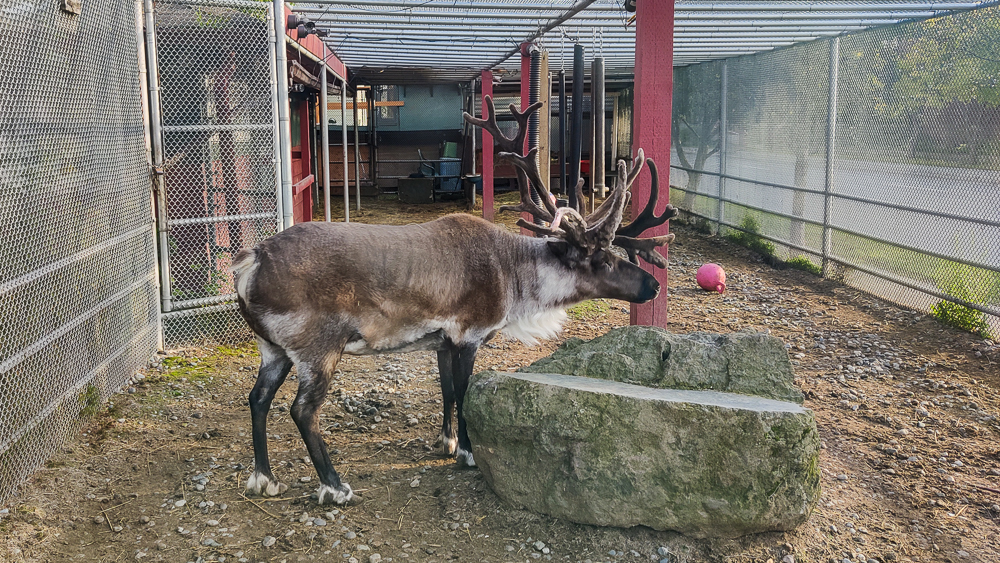
Next to the park strip is the home of Star, the unofficial reindeer mascot of Anchorage, so named because Star #1 had a star-shaped mark on her head. Also, fun fact – “reindeer” are just domesticated caribou.

When I was researching for this post, I learned the unfortunate news that the latest Star (#7) just died earlier this month! They think he might have been poisoned. If that’s the case, he won’t be the only Star iteration to have had a suspicious/sad end. #1 lived a long life. #2 was killed and butchered, and the meat was sold (the perpetrator was caught and spent a year in prison). #3 died after eating plastic bags that someone had shoved into her pen. #4 had arthritis but lived a long life, though it wasn’t without its traumas – someone once climbed into her pen and broke off an antler (seriously, what is wrong with people?). #5 died from a bacterial infection as a calf. #6 lived a long life and died of natural causes, but there was an attempted kidnapping at one point.

Star 7

If you’re wondering if anyone can own a reindeer and keep it in their house in the middle of Anchorage, the answer is no. The keepers of Stars 1-5 got special permission, and it turns out that the permission is linked to the property which is how Stars 6-7 were able to keep the tradition going after the original keepers passed away. ALSO, you’re not allowed to own an Alaska reindeer unless you’re an Alaska Native. Stars 1-5 were leased, but after that, the law was changed so that non-Natives can’t lease Alaska reindeer either. So, where did Stars 6-7 come from? They were, in fact, Canadian reindeer, so the Alaska reindeer law didn’t apply. Technicalities! Another fun fact – Stars 1-6 were female, and Star 7 was male.

Also… the reindeer pen is attached to the house. The current owner would leave the door open in the summer, and Star could wander in and out of the house as he pleased. I think it’s safe to say that it takes a special kind of person to choose a reindeer as a pet…

Earthquake Park

The Great Alaska Earthquake of 1964 is still the most powerful earthquake ever recorded in North America. It had a magnitude of 9.2, lasted for over 4 minutes, and was caused by tension along the fault between the Continental Plate (Asia) and the Pacific Plate. The plates are moving towards each other with the Pacific Plate going underneath the Continental. In this case, the Pacific caught in place, rather than sliding nicely under, and the buildup of stress eventually led to an explosive earthquake.

There were 11 aftershocks over 6.2 magnitude in the first day after the main earthquake, and then there were 9 more over the next 3 weeks. Noticeable aftershocks continued for over a year!

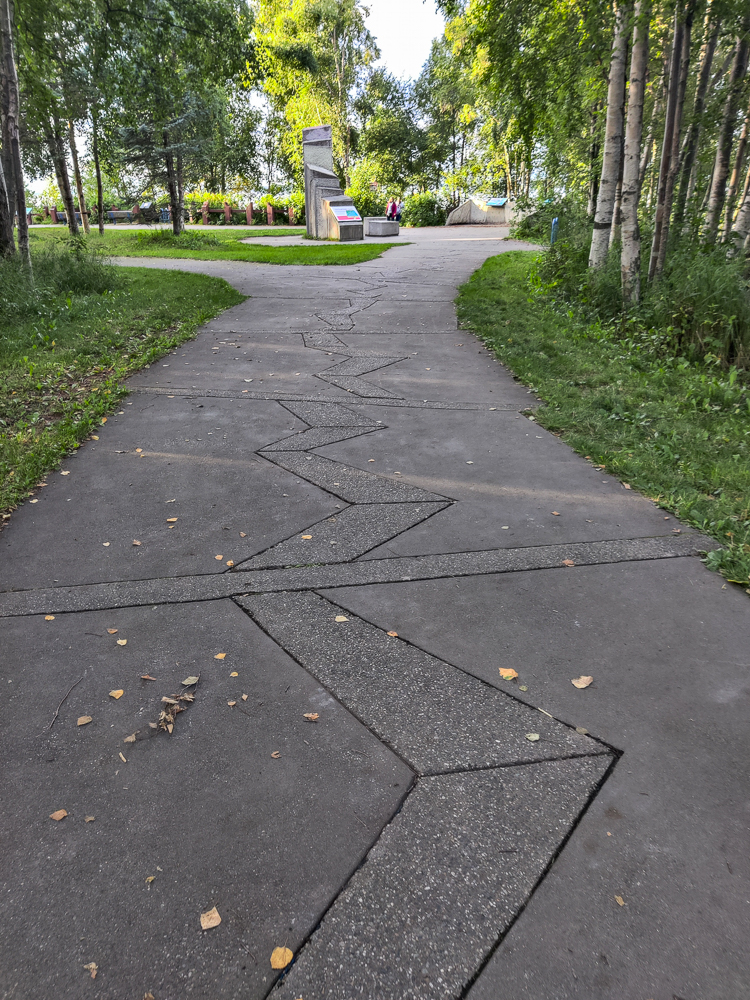
The pathway into Earthquake Park
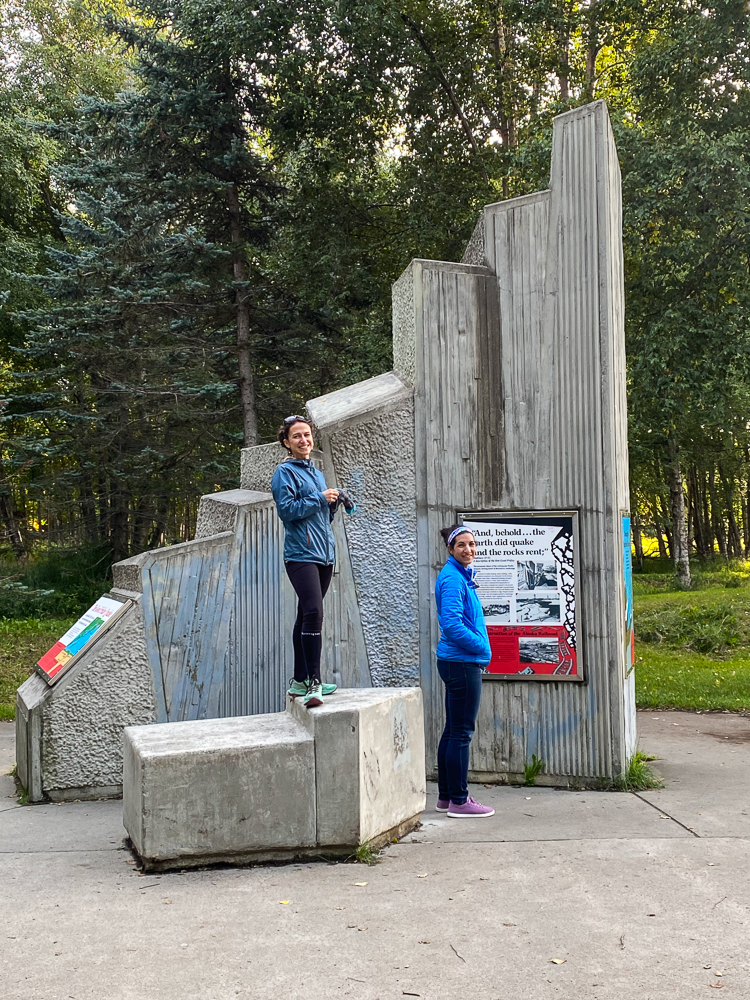
Learning about the earthquake…

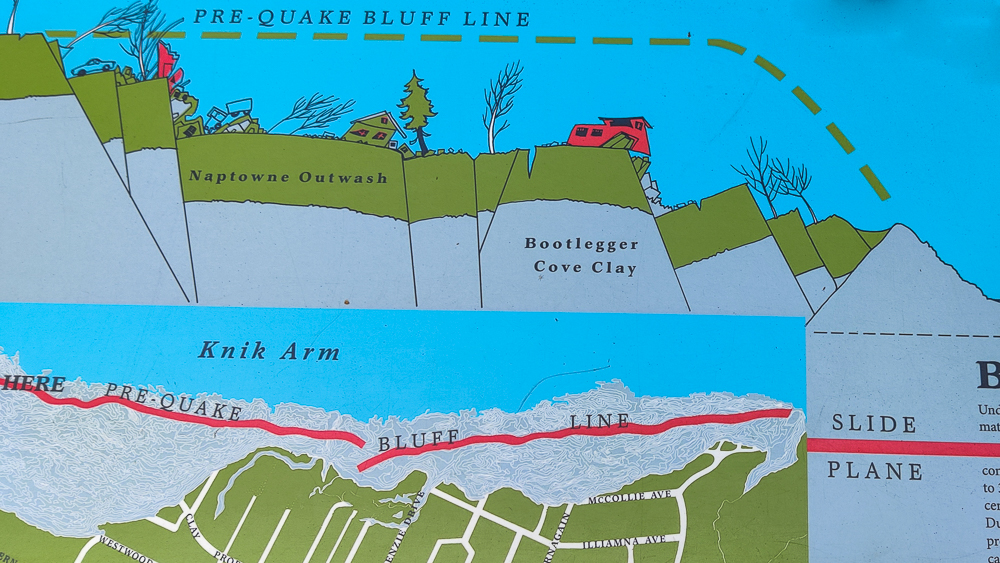
Most Anchorage buildings weren’t designed to withstand earthquakes, so the damage from the quake alone was extensive. Beyond that, though, there were landslides that destroyed even more of the city and caused significant, permanent changes to its geography. Earthquake Park is situated in one of those areas. One of the soil layers was a type of clay that destabilized in the quake. This led to a landslide as the upper layers slid out towards the ocean, destroying 75 homes and killing 4 people.

This shows what happened to the land… that dashed line in the top view shows what the ground looked like before, and the little cartoon rocks/houses below illustrate what happened after the earthquake (the “bootlegger cove clay” is the bad clay layer that caused the sliding). The bottom view shows how the land slid into the water and changed the shoreline.

Anchorage was lucky to escape damage from tsunamis, but other towns, like Seward and Valdez, were completely destroyed by 40-foot waves. Valdez, rather than rebuilding in the same area, decided to move 4 miles away to a less seismically risky area.

The Alaska Railroad was hard-hit with 200 miles of warped track, over 100 destroyed bridges, and other extensive damage to the infrastructure.

It was also catastrophic for the flora and fauna in the area. Thousands of deep water fish in Prince William Sound were killed by underwater shock waves. Mollusks suffocated under the mud and debris carried by tsunamis. Freshwater areas were inundated with saltwater, waterfowl nesting areas were destroyed, and forested areas were stripped bare by waves and landslides.

Coastal Trail

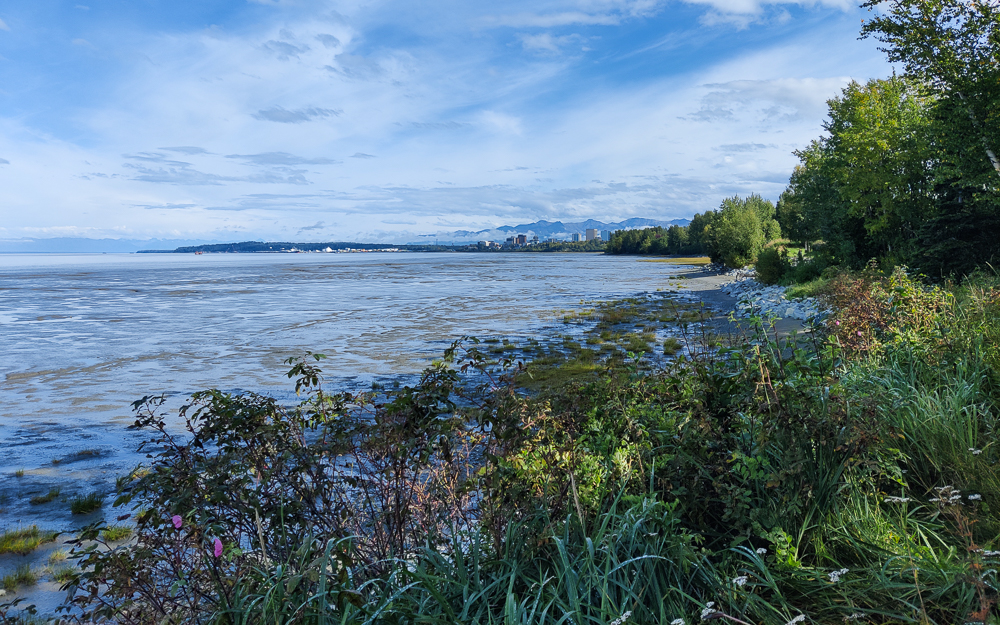
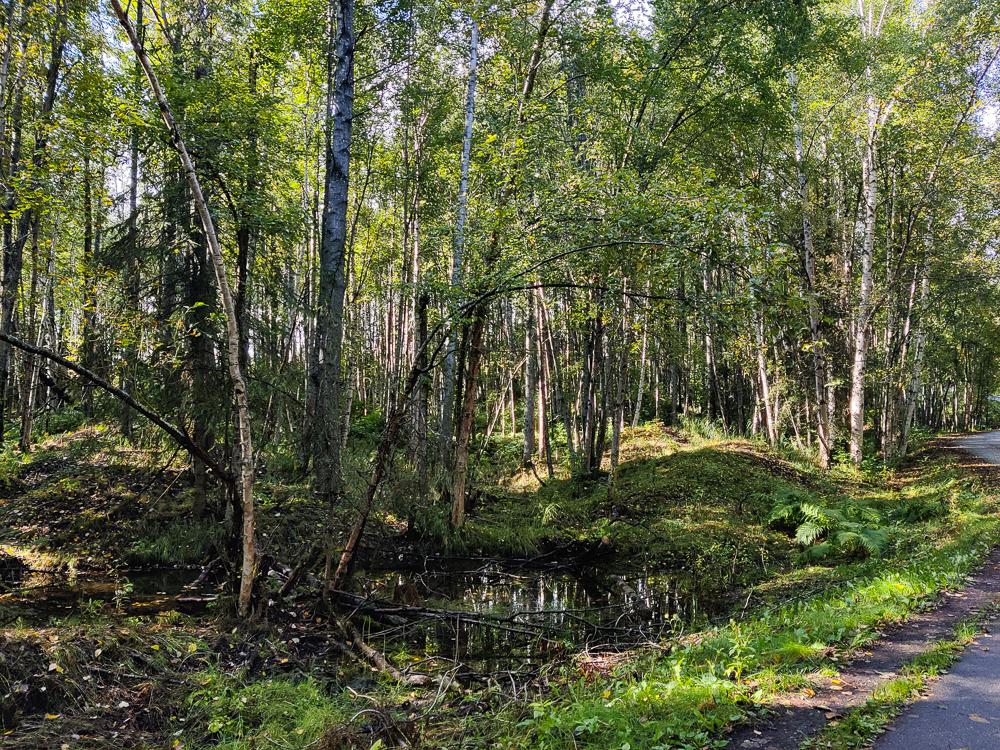
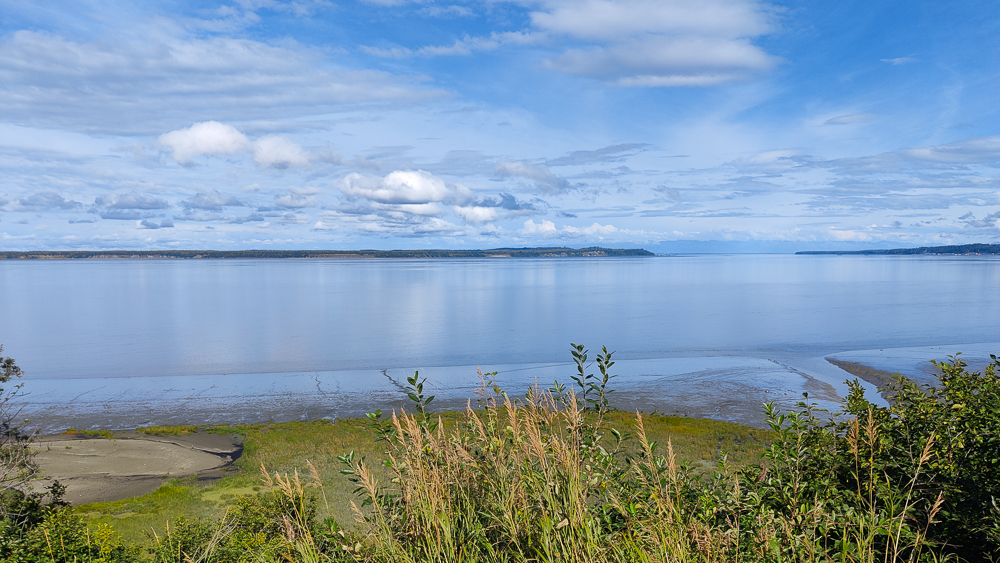
Later in the week, we strolled along the coastal trail, an 11-mile trail that, you guessed it, runs along the coast. It’s a beautiful trail, and people see all sorts of wildlife on it. Like I said in my Welcome to Anchorage post, Olivia saw a family of black bears (eek!) a few days before I got to town… We just saw some beluga whales on our walk. That’s kind of exciting I suppose, but they are maybe the least interesting animal to glimpse from the shore because they don’t have much on their backs to make them particularly visible. Like when you see a dolphin, you KNOW you’ve seen a dolphin. It’s cool even if you only see a fin. The belugas just have a ridge along their backs, so spotting a beluga is basically seeing a flash of white in the water and wondering if it’s a little whitecap or a whale. But anyway. The trail was pretty!

Some coastal trail views
So pretty!
No belugas here, not that you’d be able to see much of anything anyway.

Besides all of those, we also went to:

  • Fish hatchery – I’m going to talk about this in a separate post.
  • Westchester Lagoon – a good spot for birdwatching, I’m told.
  • Olivia’s high school (West Anchorage High) – to see the eagle mural gifted by the class of 1971. They wanted to include “Class of 1971” on it, but that was rejected, so they hid a 71′ in the design. I, of course, didn’t take a picture, but if you’re really interested, you can google it. Apparently it was years before anyone noticed. (Also, they put the apostrophe on the wrong side which would drive me crazy if I was bothered by silly little things like that…)
  • Lake Hood Seaplane Base – I talked about this in my Welcome to Alaska post.
  • Downtown Balto statue – this is also the location of the ceremonial start of the Iditarod.
  • Anchorage Museum – this wasn’t part of our “official” Anchorage tour, but Olivia and I went later in the week and it’s awesome. They have some incredible Alaska Native art… my favorite part was the amazing beading and embroidery. And I loved their landscape painting exhibit!

Sources

Foucault Pendulum – there’s also a link to a PDF with some images to help illustrate how a Foucault Pendulum would behave at different locations on the globe.

 “Foucault Pendulum.” UAA/APU Consortium Library, University of Alaska Anchorage, consortiumlibrary.org/about/building/pendulum.php.

Oscar Anderson House

“The Oscar Anderson House.” Distinctive Destinations, National Trust for Historic Preservation, muni.org/departments/ocpd/planning/documents/oahmbooklet_final_07_02_13.pdf.

Article about Russia returning interned US airmen during WWII

Goldman, Stuart D. “The Soviet Union’s Top Secret Operation to Repatriate Downed U.S. Airmen.” HistoryNet, 6 May 2021, historynet.com/the-soviet-unions-top-secret-operation-to-repatriate-downed-u-s-airmen/.

Star the Reindeer

Berg, Bailey. “Meet Star the Reindeer, Anchorage’s unofficial mascot for 60 years.” Roadtrippers, 18 December 2020, roadtrippers.com/magazine/star-reindeer-alaska/.