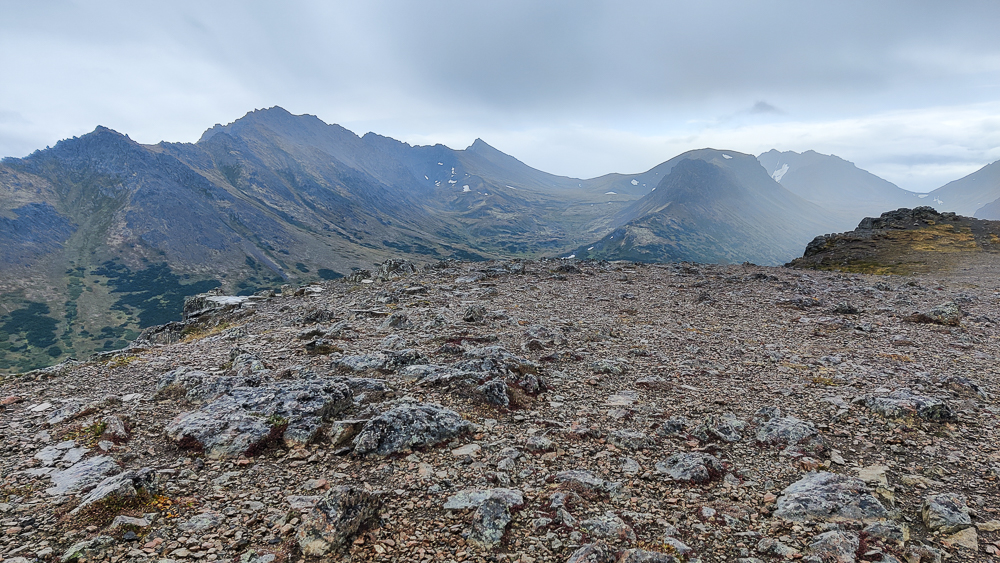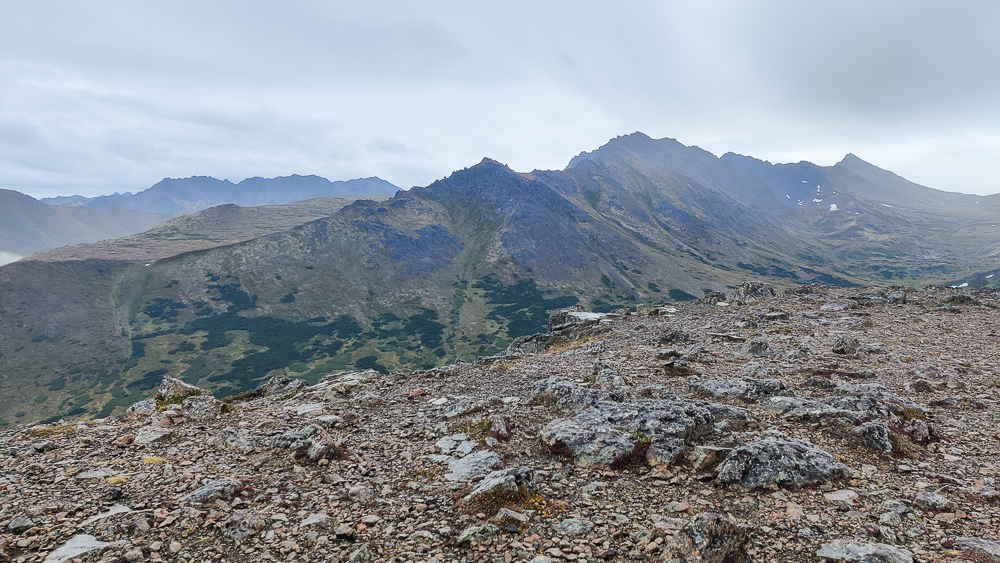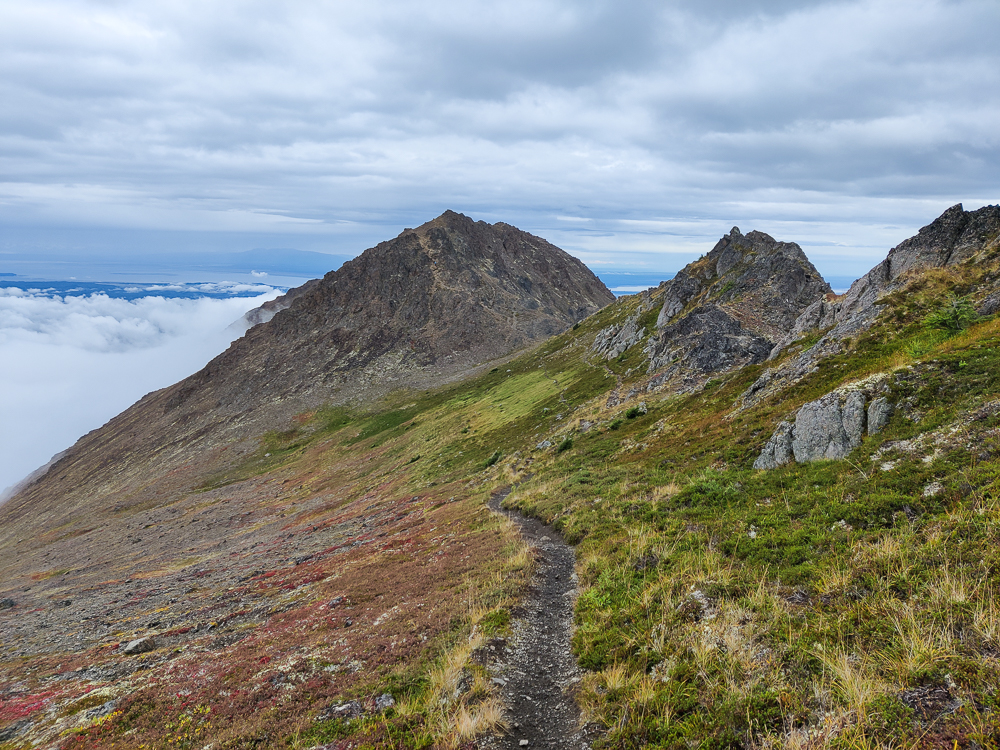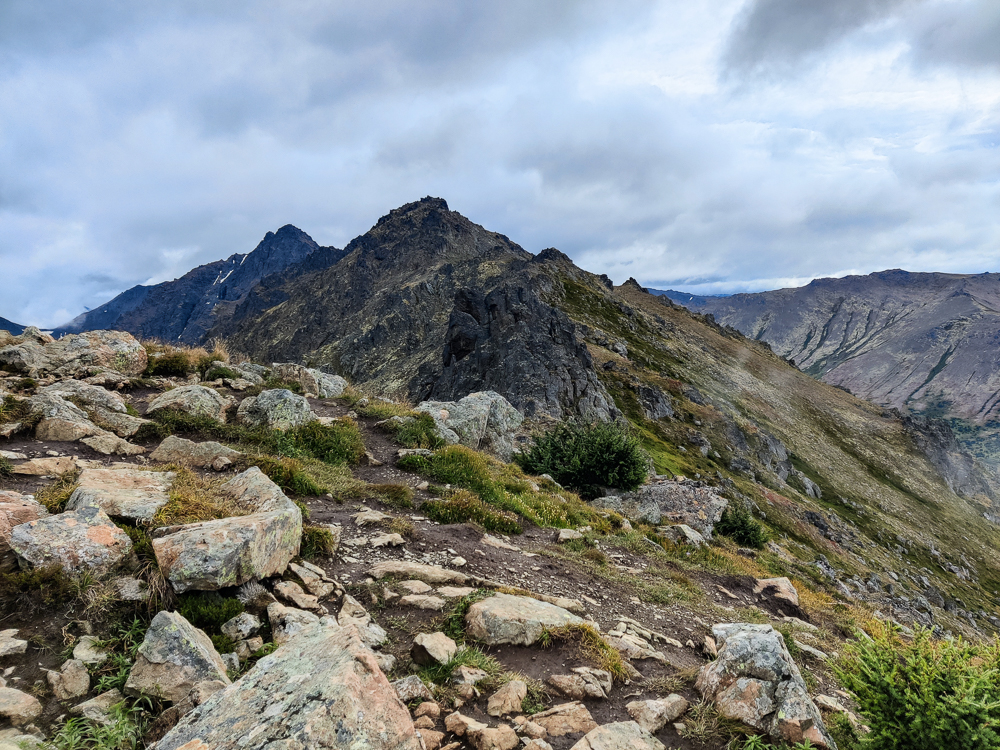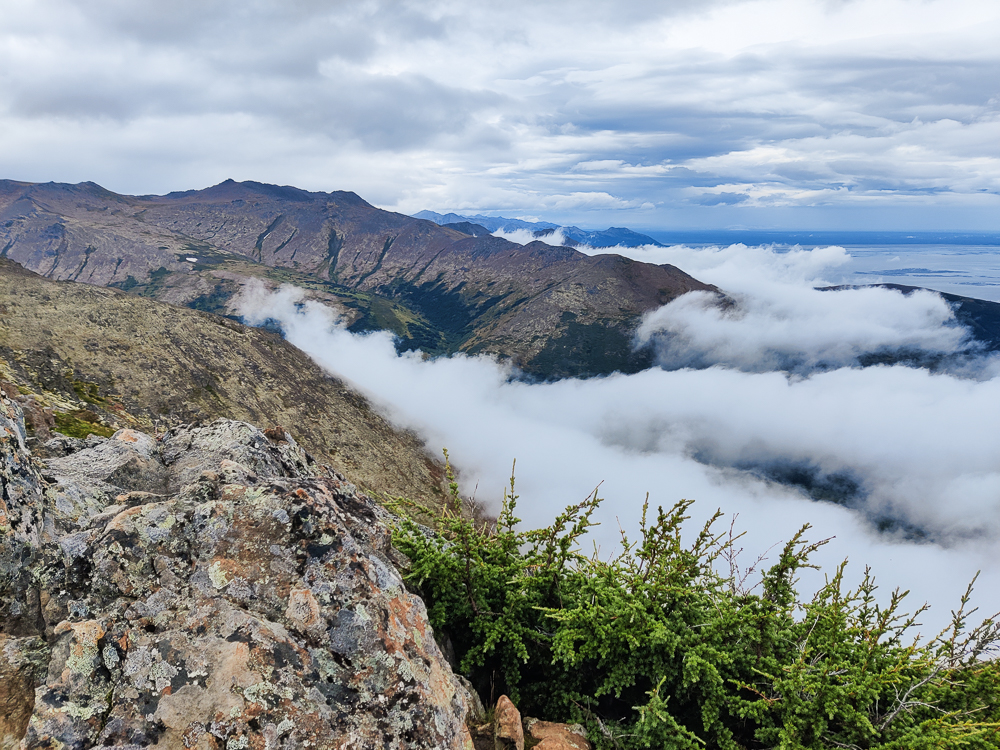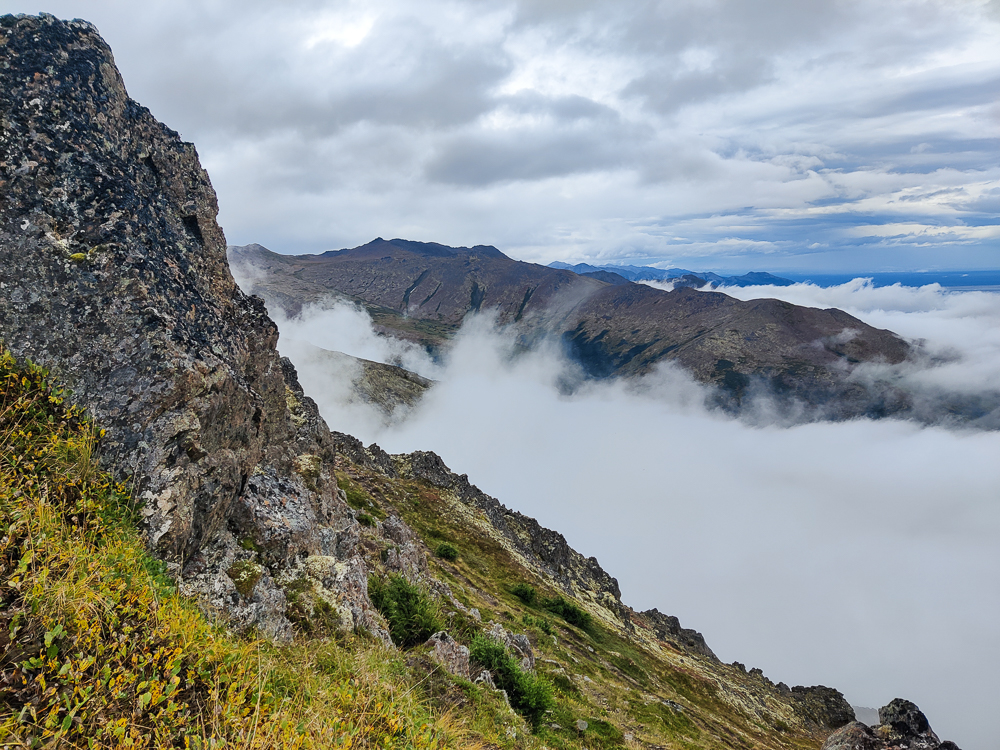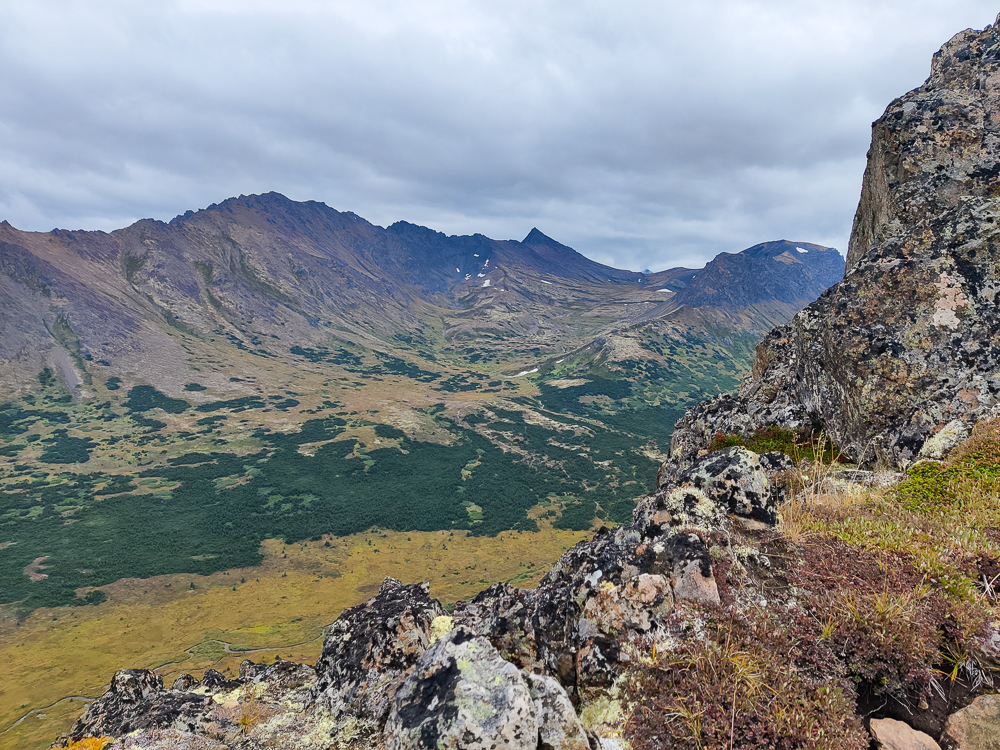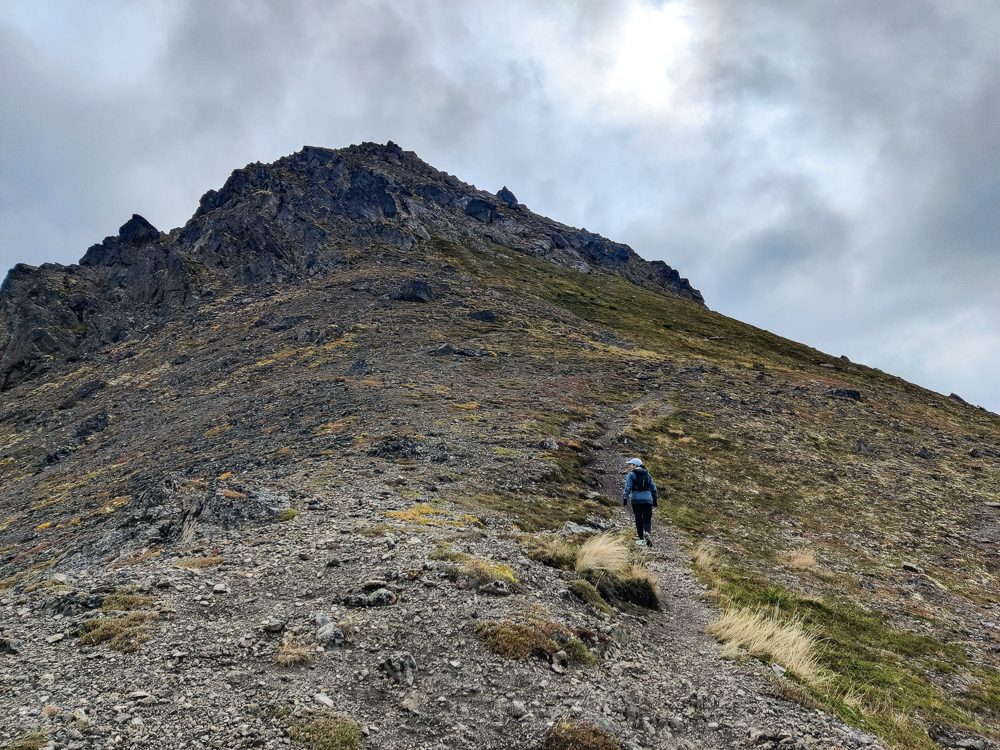
When I signed on to visit Olivia in Alaska, she asked what I wanted to do while I was there. I was up for anything, but I definitely wanted to do some hiking. I love to hike, and Olivia and I are well-matched hiking buddies (the same amount of crazy but also appropriately cautious). We didn’t travel too far from Anchorage, but there are plenty of awesome hikes in and around the city. In fact, Chugach State Park, which supposedly has over 280 miles of maintained hiking trails (you’ll soon see why I say “supposedly”), is mostly located within the municipal limits of Anchorage (a fact that Olivia repeated anytime I said something about hiking near Anchorage. “Actually,” she would say, “did you know that much of it is IN the city of Anchorage?” Thank you for the fact check, Olivia. I will continue to say that it’s near Anchorage).
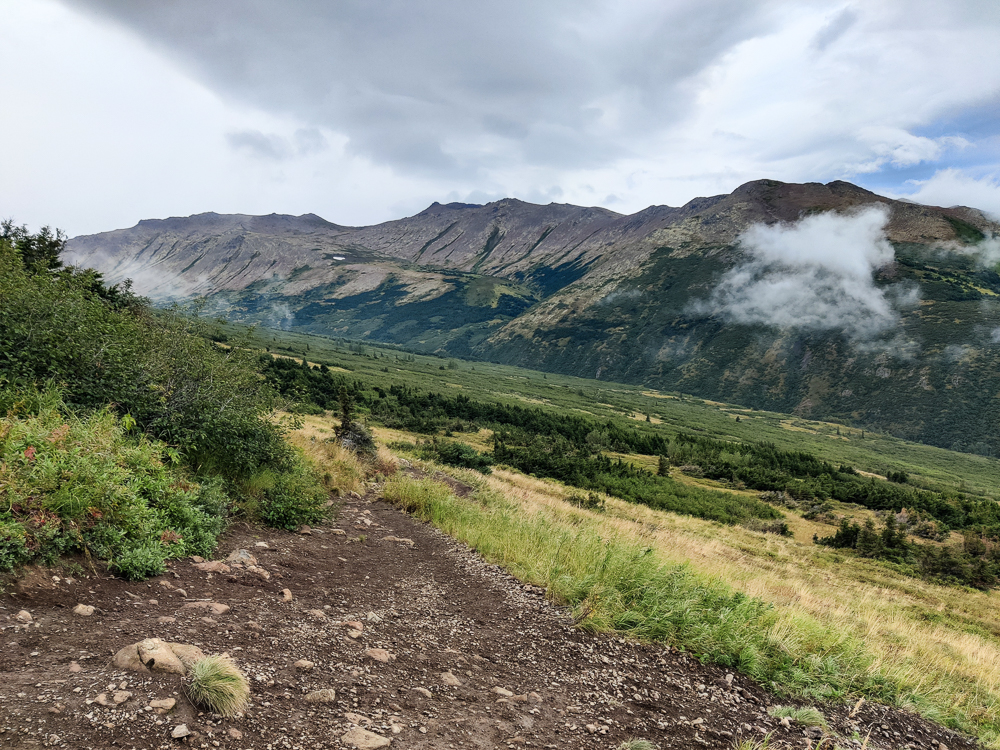
Prepare yourself for LOTS of pictures. And these are the ones that I was left with after really doing my best not to overdo it on photos…
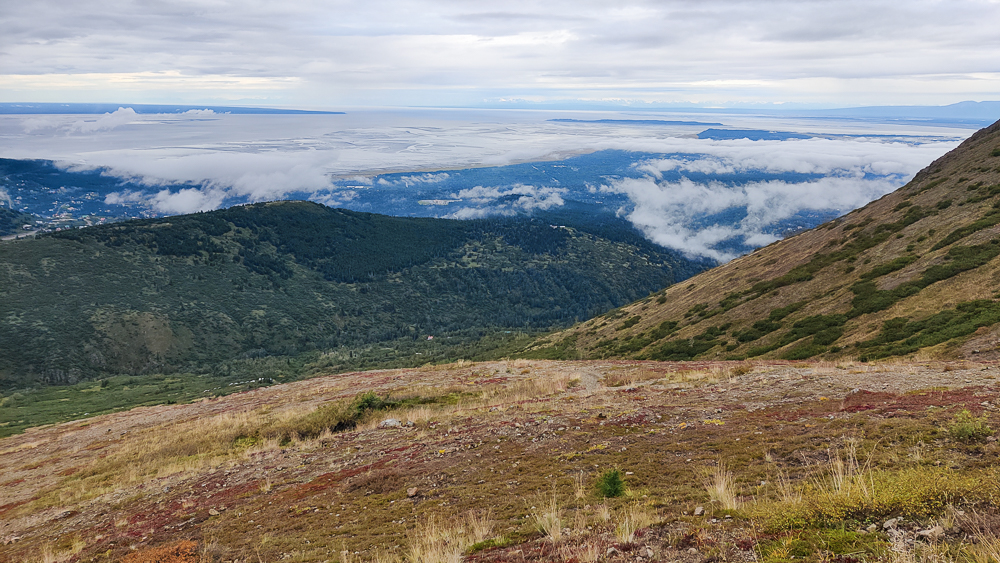
Looking back towards Anchorage on our way up to Flattop.

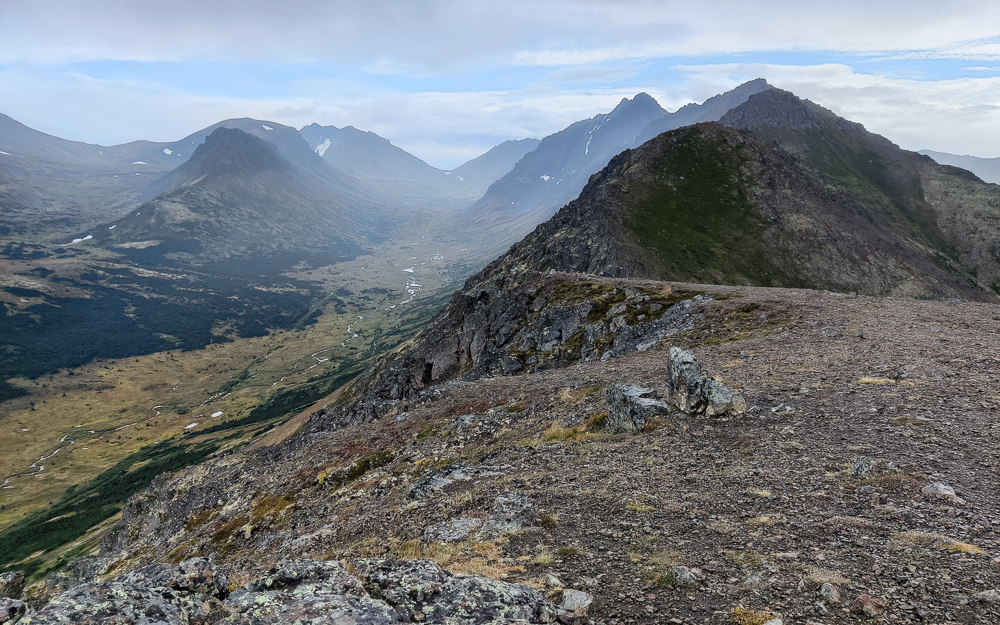
Chugach is enormous (~495,000 acres), so we didn’t explore even a tiny fraction of the park. We stuck to the area most accessible from the city which is basically made up of a few different mountain ridges. We had a couple of hiking days where we followed a ridge, hitting as many peaks as possible along the way. The plan for our first day was to hike around 9 miles and visit four peaks. The first, Flattop, is the most climbed mountain in Alaska. Olivia said she’s been there a million times. From there, though, we kept going which was a first for her. Based on how few people we saw after leaving Flattop, I’d say most people are content to turn around after visiting just that one.
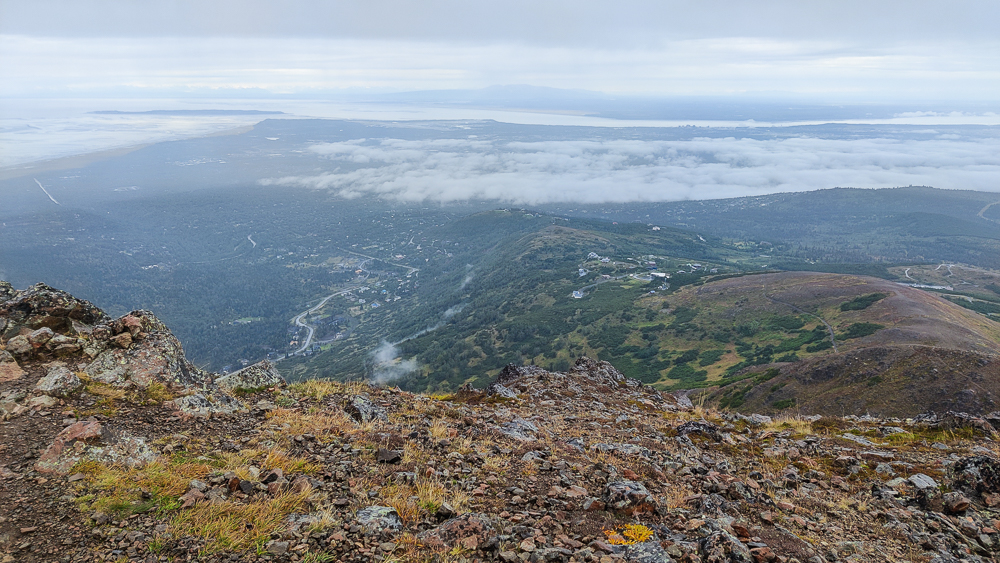
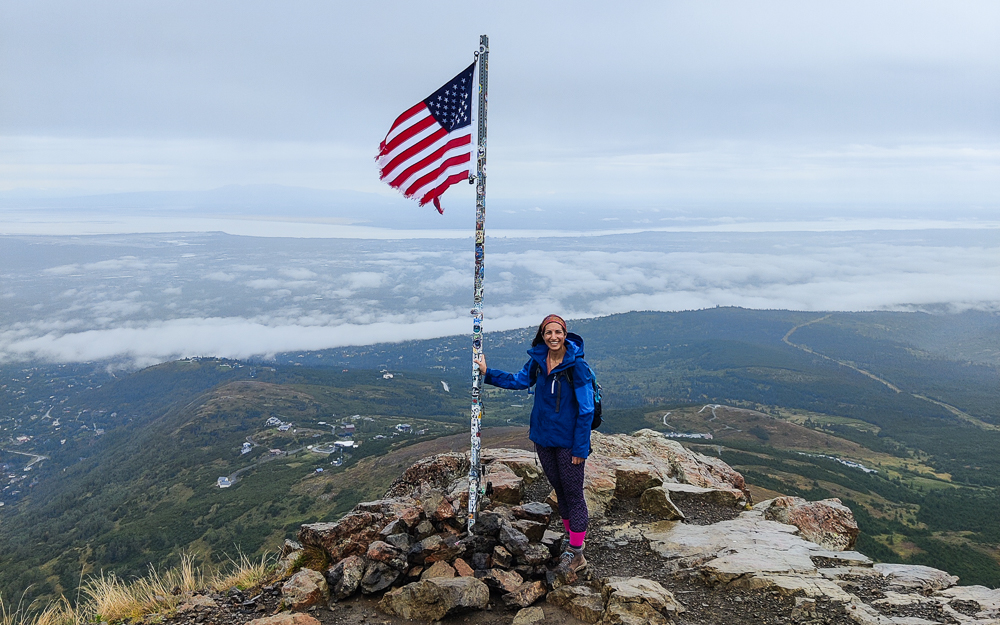
At the top of Flattop!
Obligatory Flattop summit pic
I took this exact same picture about 500 times.
I’m only going to make you look at two of them, though. For now.
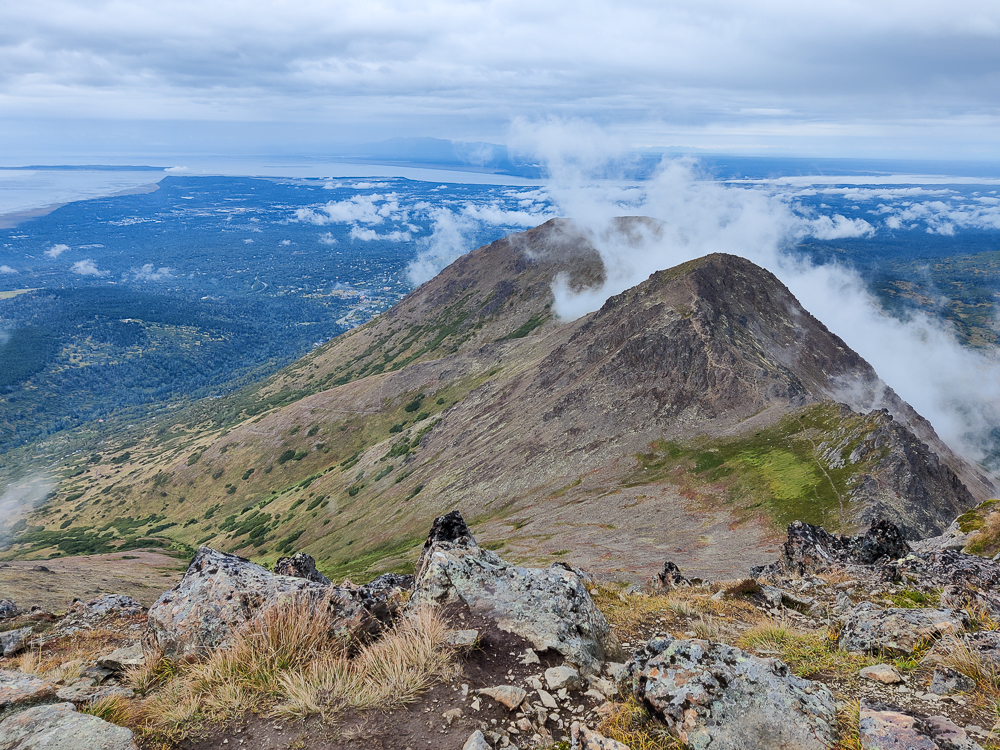
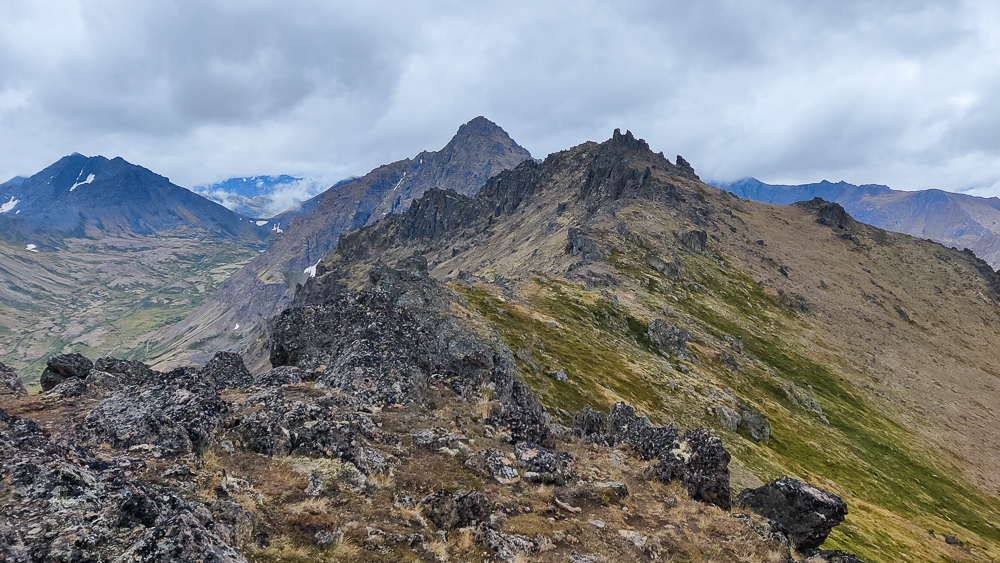
Here’s a good view of our mountain ridge for the day!

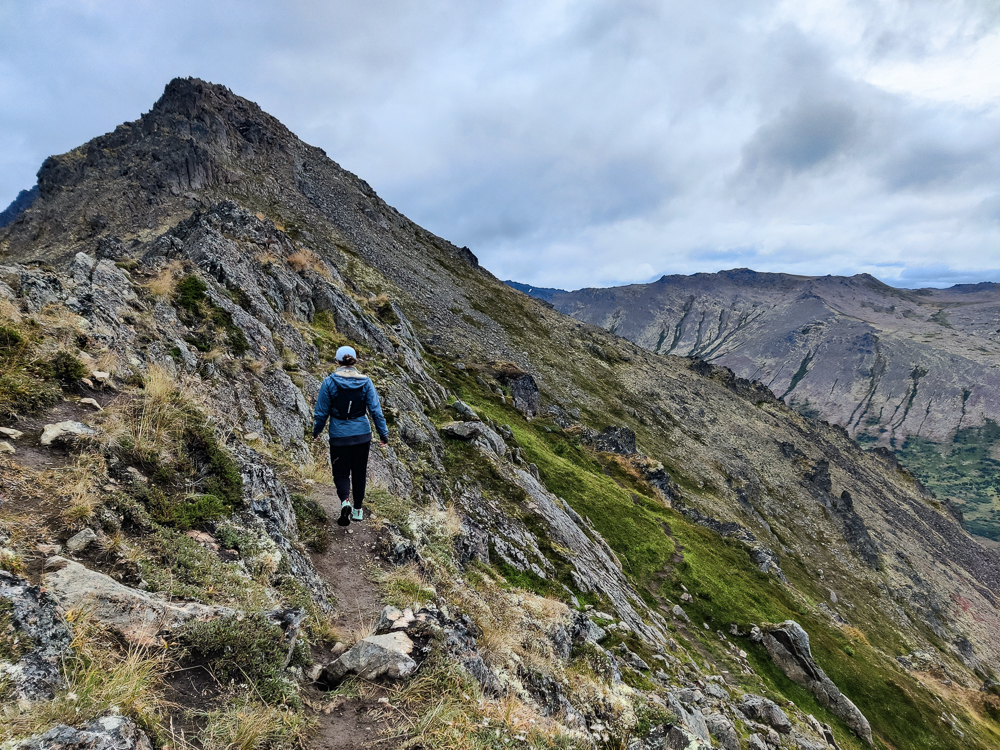
The next two peaks are creatively named “Peak 2” and “Peak 3”, and the last one is Flaketop. To travel between peaks, the trail runs along the ridge. Since this is a less-traveled path, staying on track was a little iffy. Sometimes, the trail was super easy to follow. For example: walking through a grass-covered area and sticking to the non-grass-covered line. Other times, it was less so. For example: walking through a rocky area and trying to determine if this patch of exposed dirt seems like the trail… or is it maybe that patch of exposed dirt over there? I wouldn’t have been opposed to the use of some trail markers. I’m just saying, a couple of paint blazes wouldn’t hurt anyone.
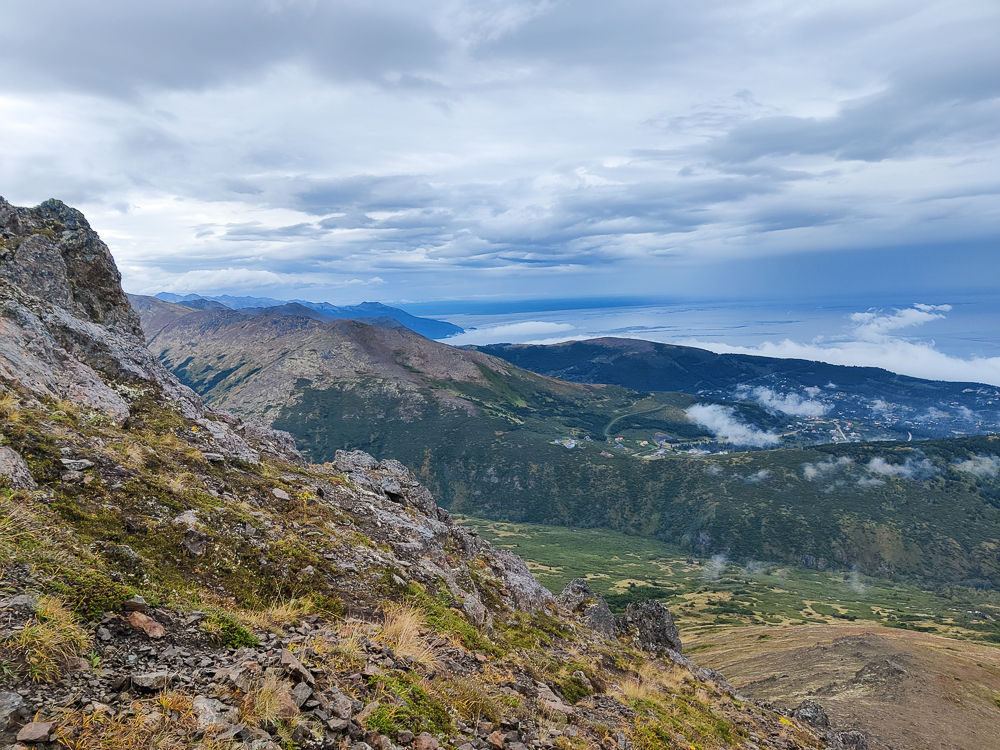
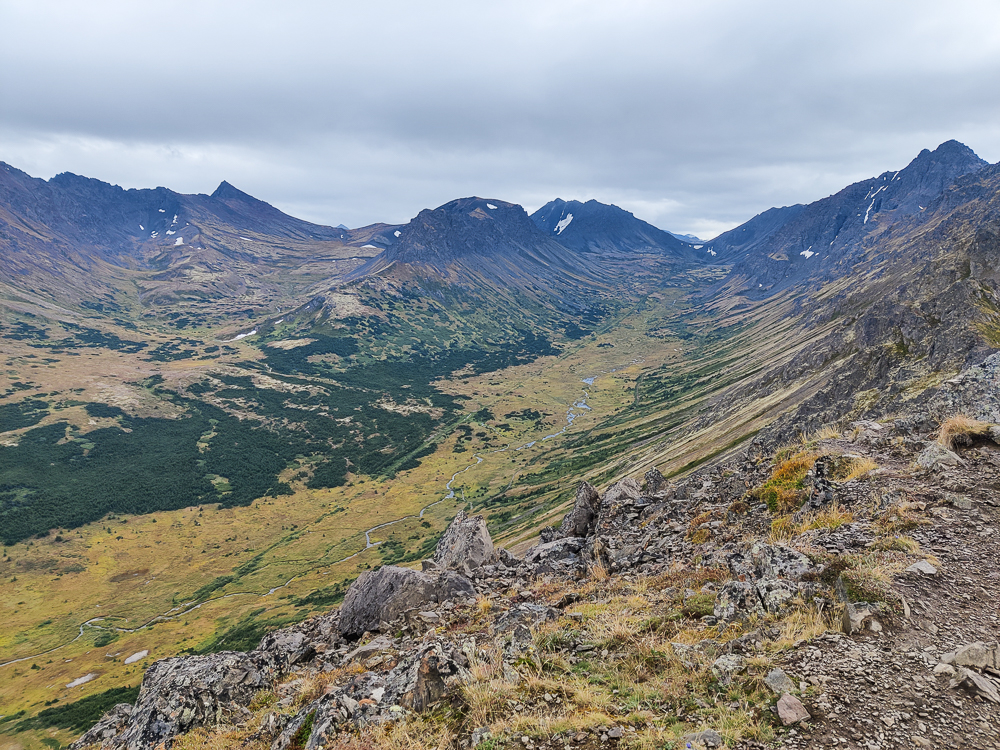
We may not have had a clear path, but we did have awesome views to both sides. Views to the right…
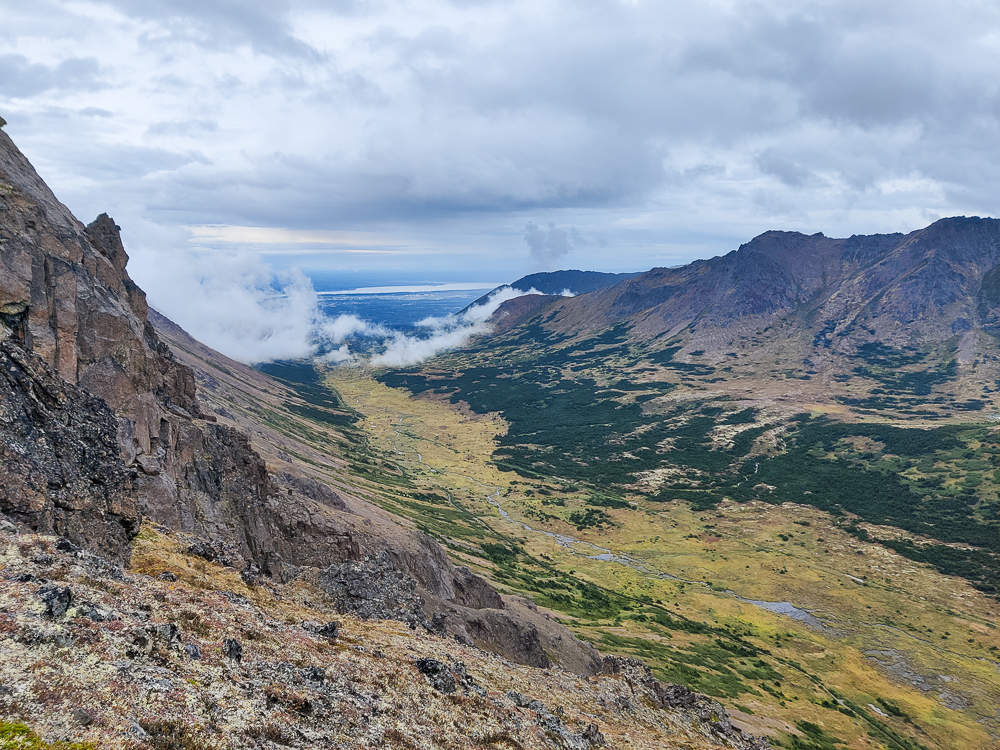
And views to the left!
Here’s one of those well-defined paths…
And here’s a muddy rock path… maybe?

Also, this may come as a surprise, but Peak 2 and Peak 3? Not the most defined peaks I’ve ever encountered. We did some, “Do you think this is the peak?” “No, my GPS is showing it somewhere over here… do you think this is it?” I think we probably found them. Let’s just go with yes.
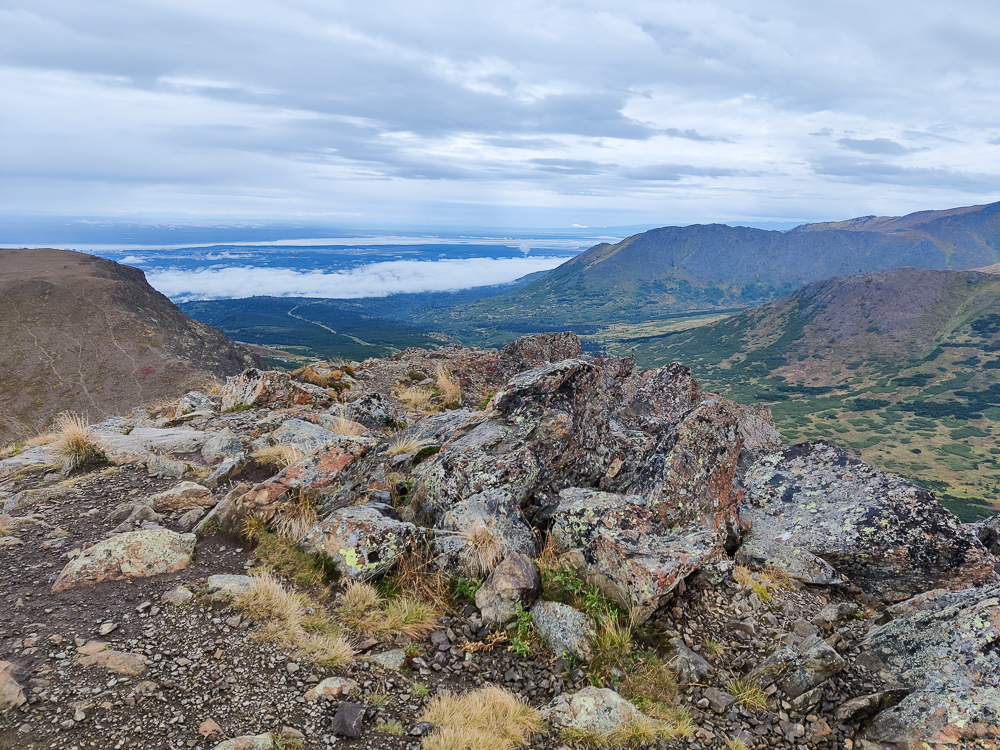
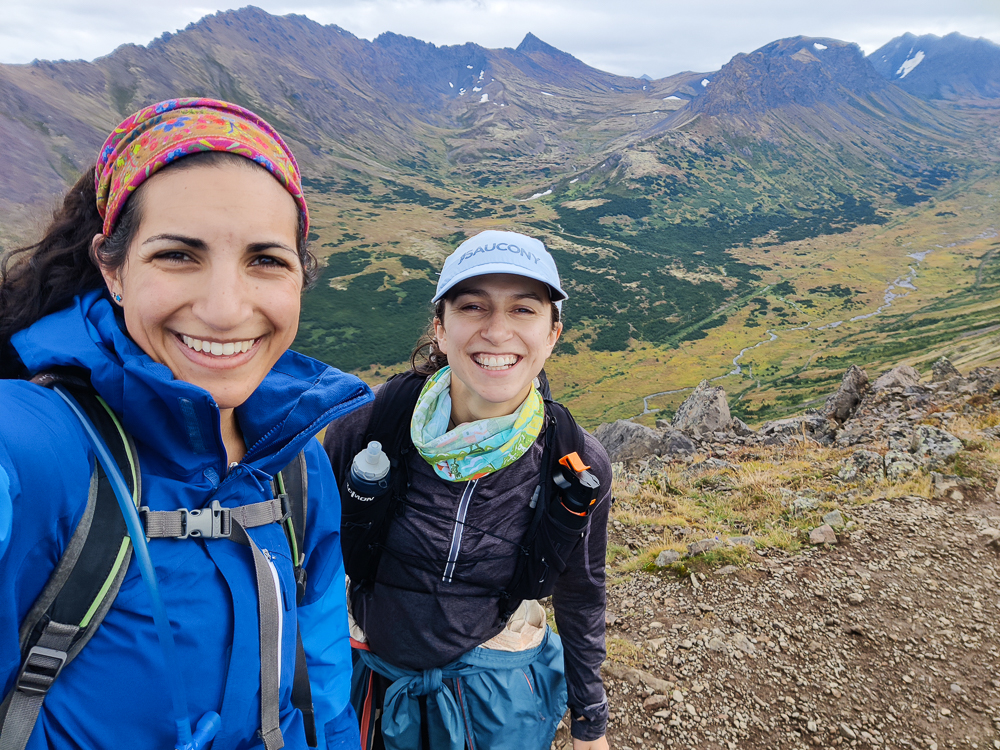
This was possibly taken at Peak 2.
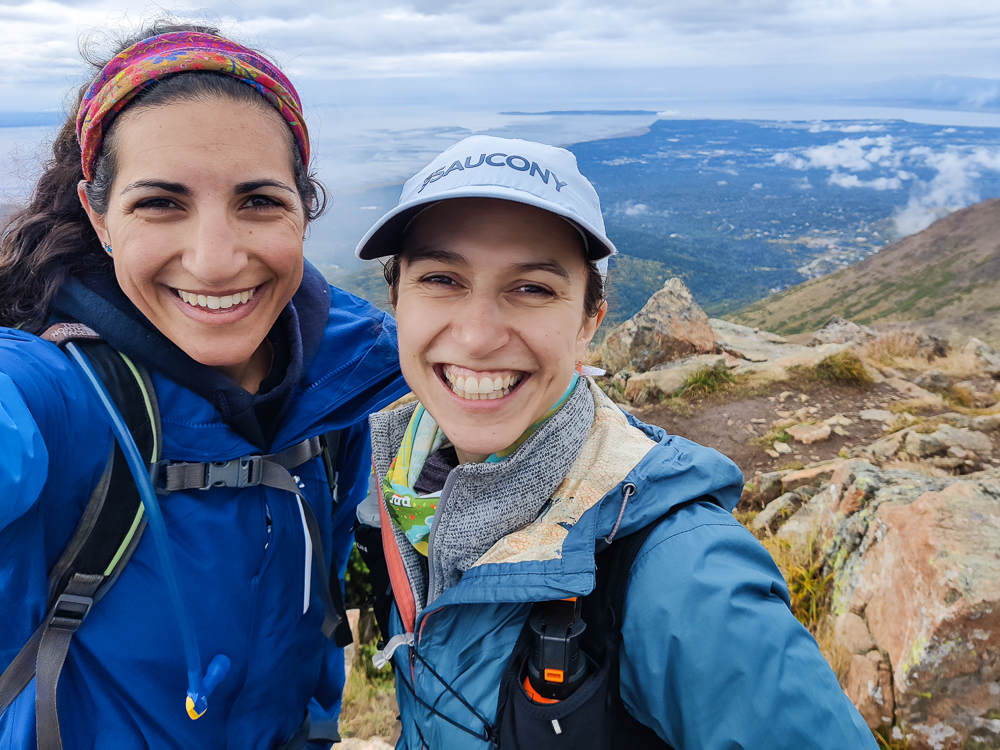
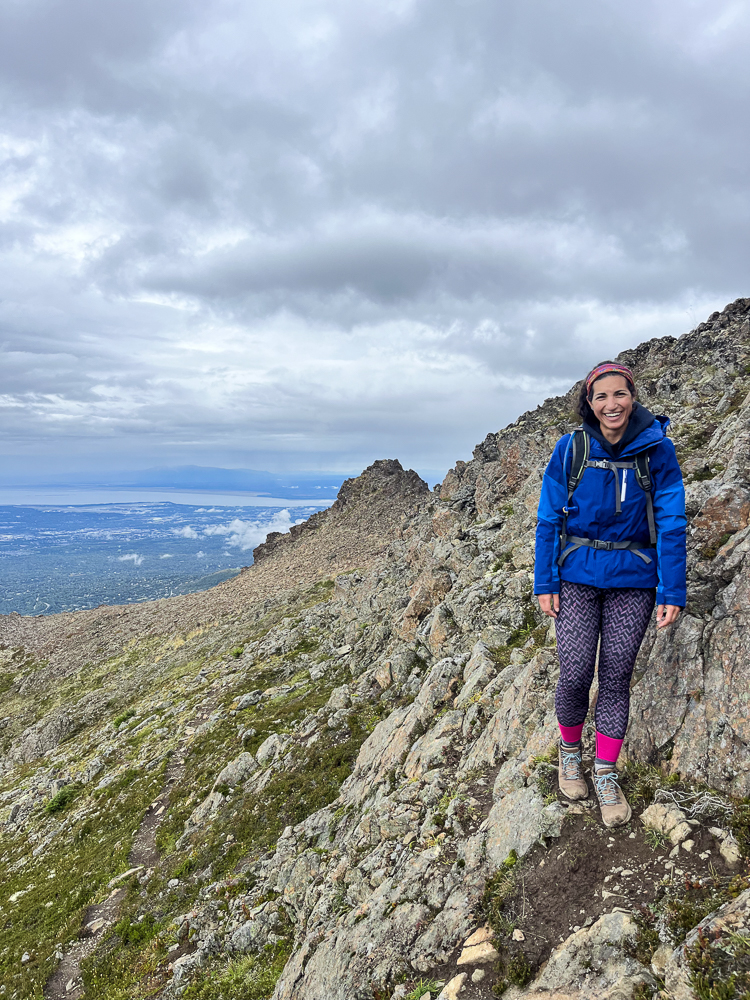
Peak 2 selfie!
There were also some very fast-moving clouds.
Compare this to that last picture! It was crazy how quickly the conditions changed.
And for good measure, let’s put another of these photos in.
Hiking from Peak 2 to Peak 3
Possibly taken from Peak 3? (I feel pretty sure that we made it there.)
Peak 3 selfie!

Ambiguous peaks/trail aside, we did okay getting from Flattop to Flaketop. We certainly didn’t take the most efficient route, but we mostly managed to stay near the trail. There was a lot of map checking and course correcting. This was possible because while the trail wasn’t necessarily CLEAR, it did exist, so if you started walking in the right direction, at some point you’d think, “Ah, yes! Here’s the trail!” and start to follow that. (Was it actually the trail? Who knows. But at least there was something trail-like enough to convince you that you might be in the right place.)
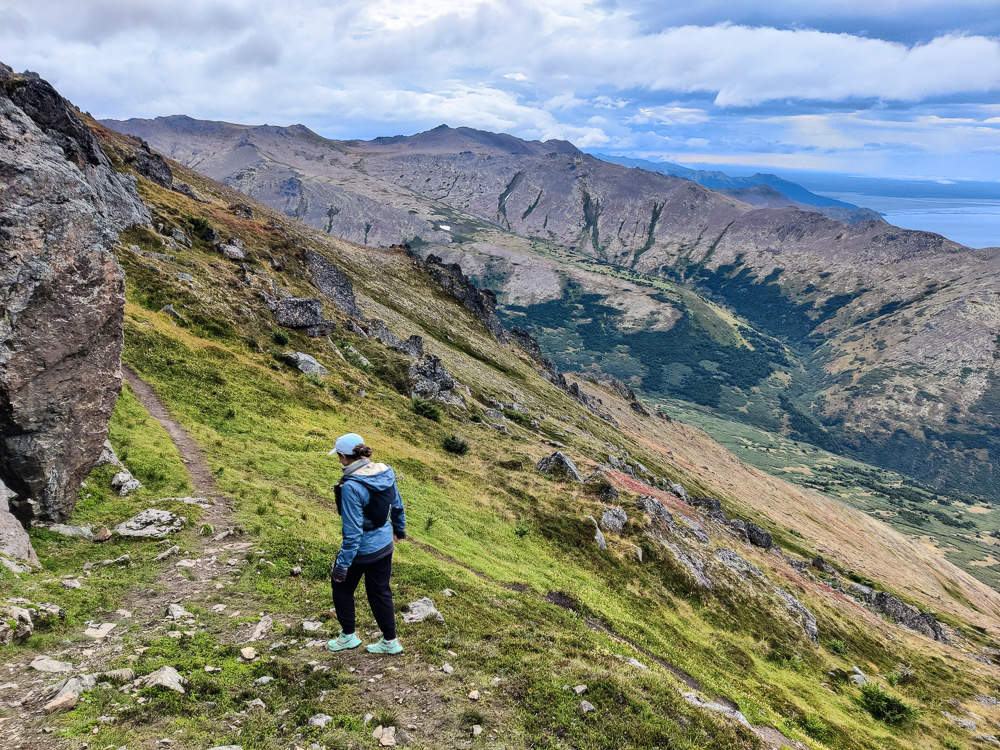
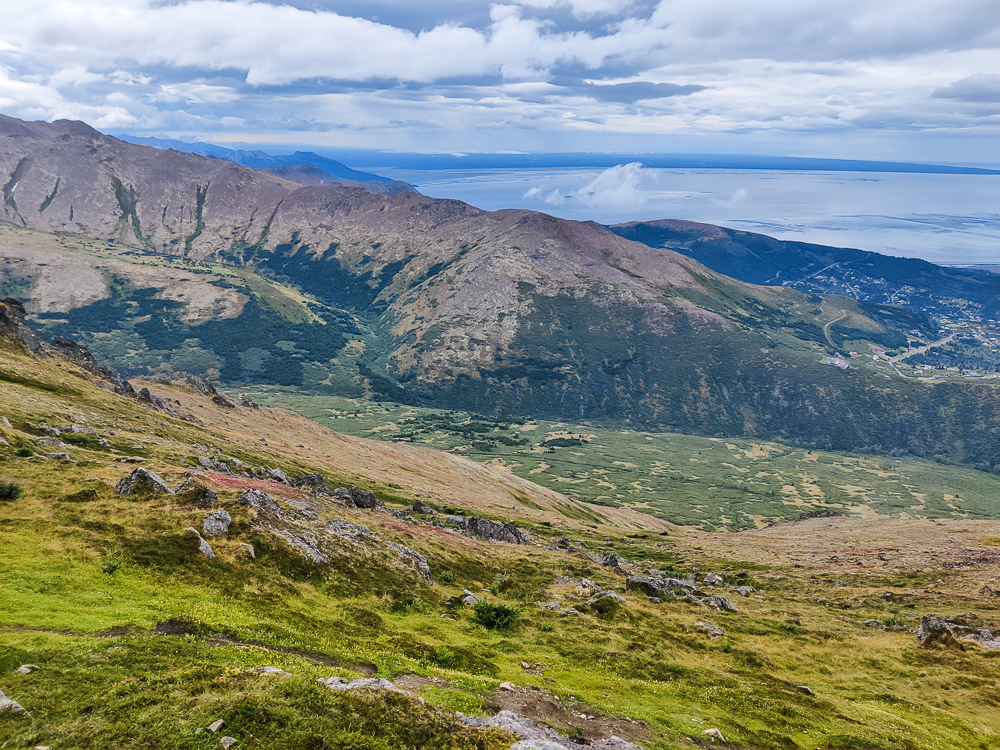
Hiking from Peak 3 to Flaketop
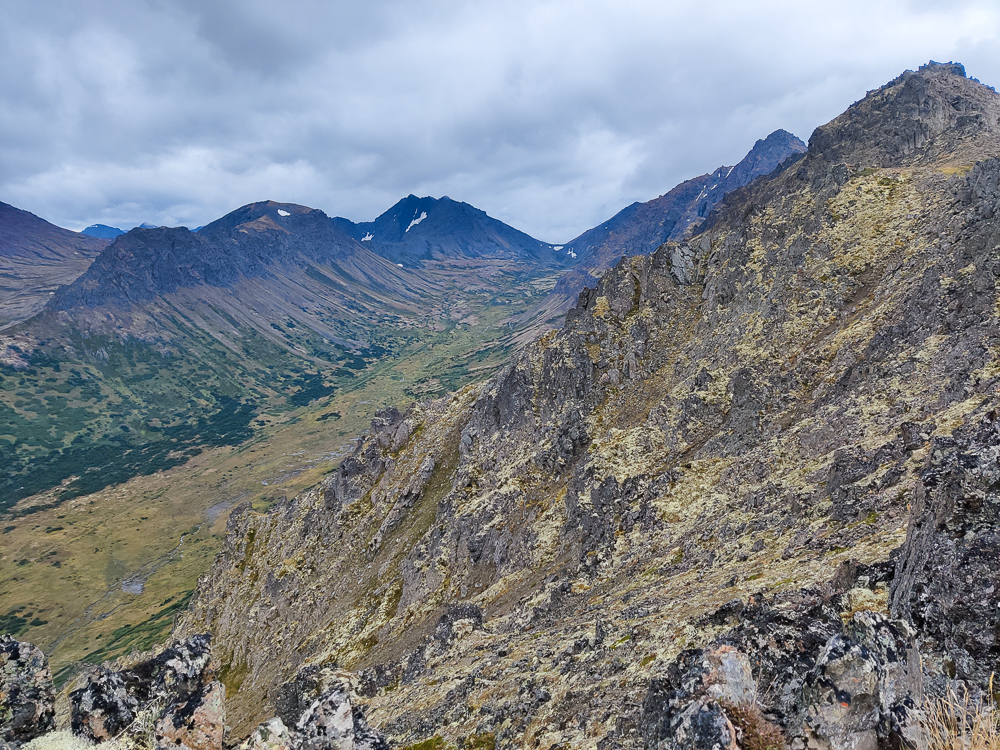
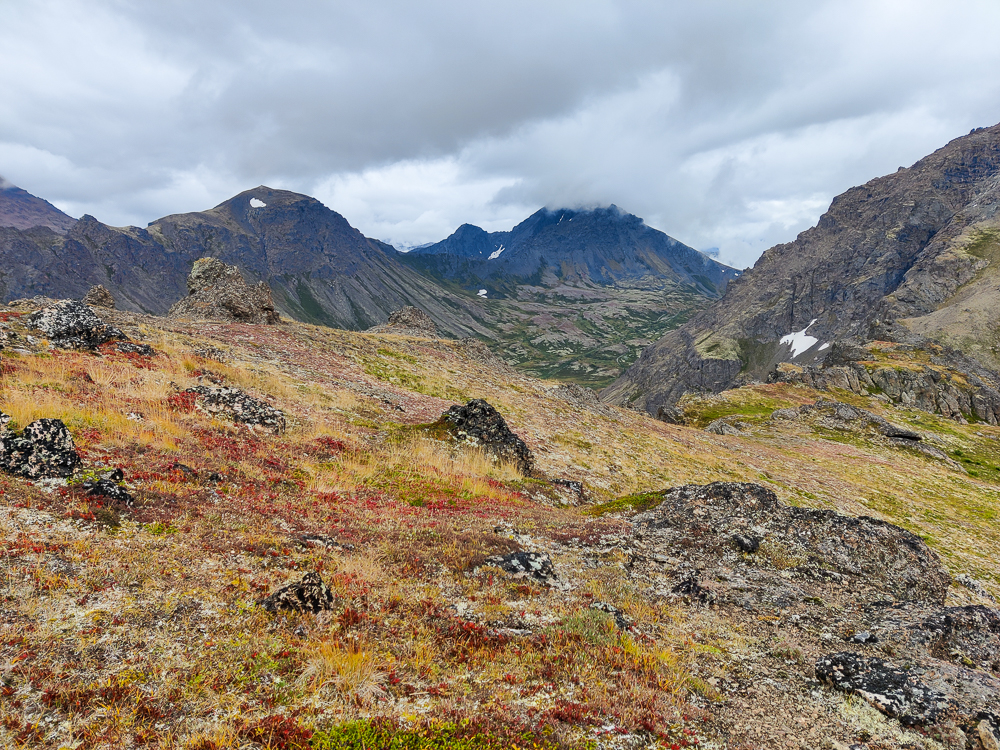
No shortage of amazing views
I love the texture in these mountains.
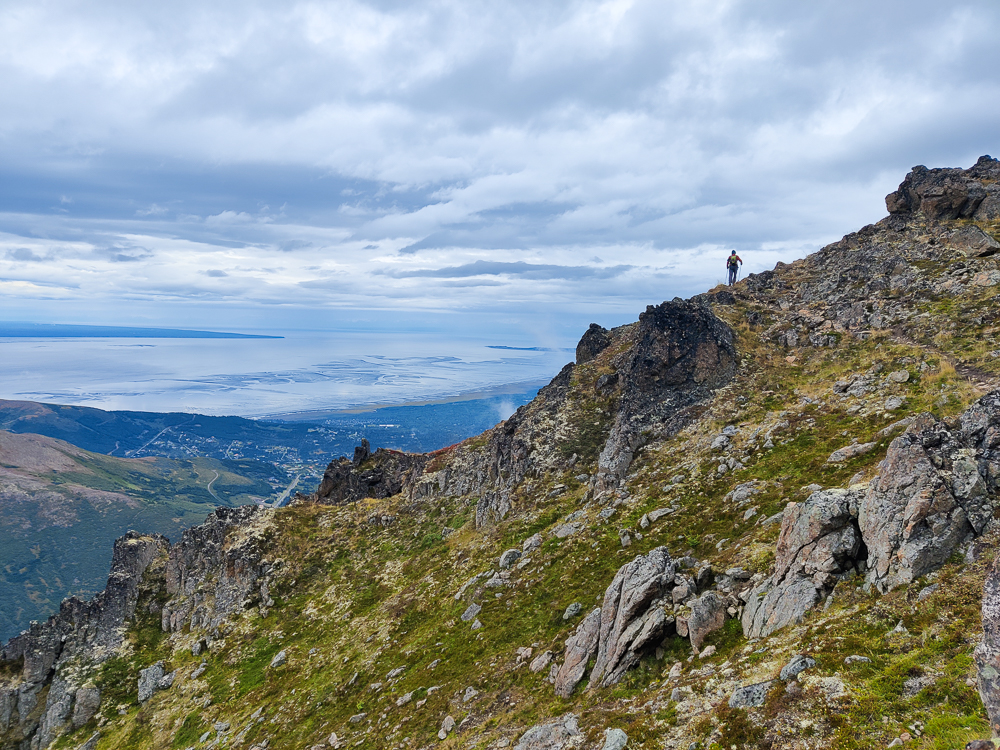
Spot one of the approximately 3 people we saw on our hike post-Flattop.
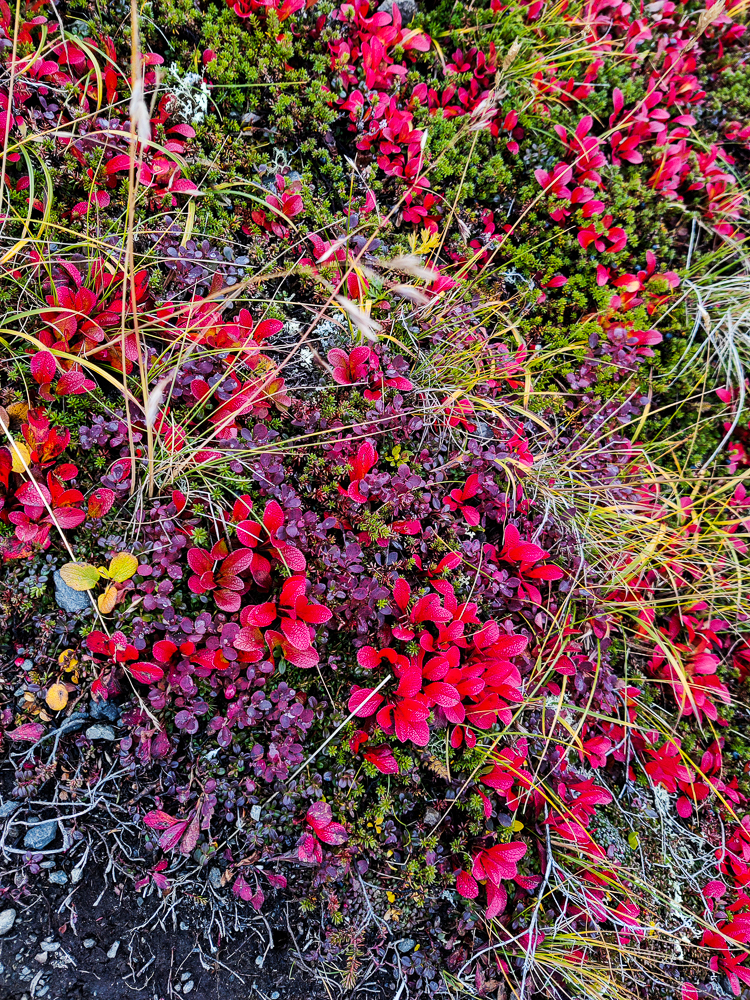
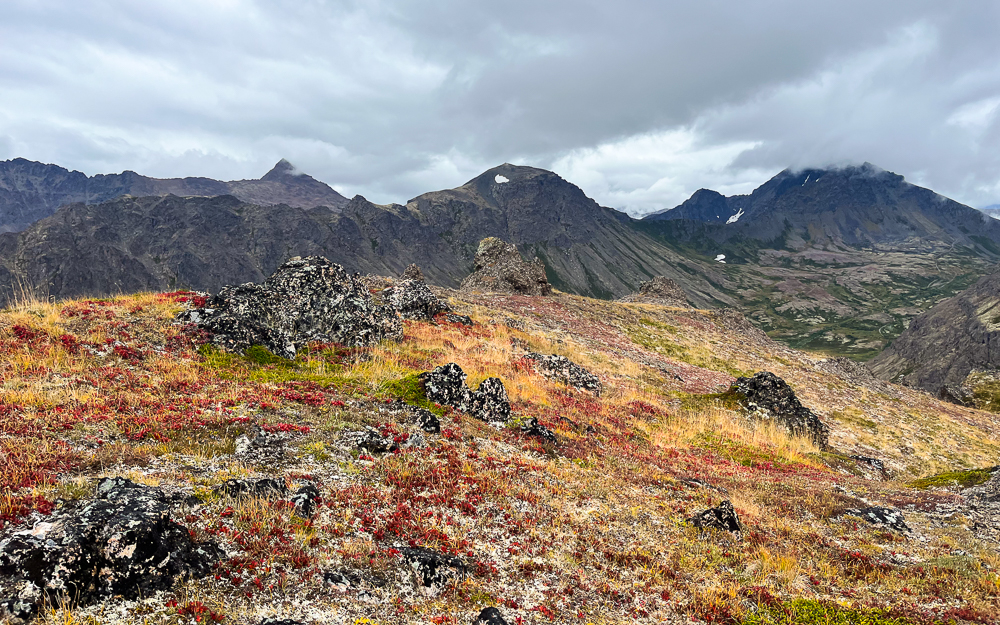
There were some pretty spectacular colors along the way.
Happy to be walking on the trail (maybe).
Look! There’s the trail!
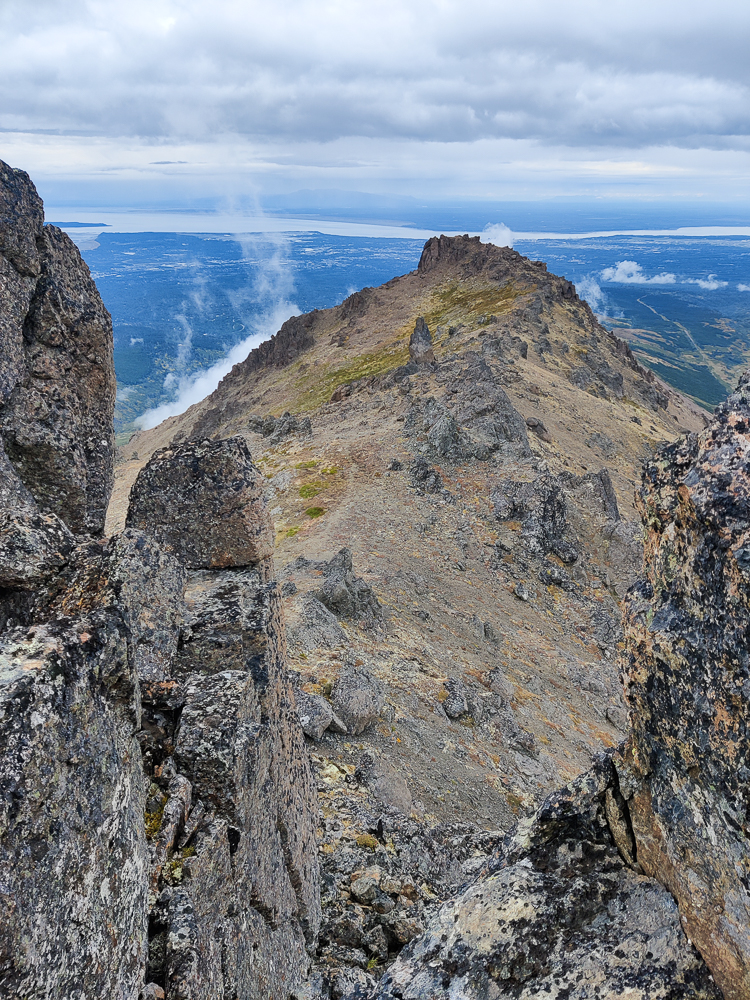
Looking back towards Anchorage.
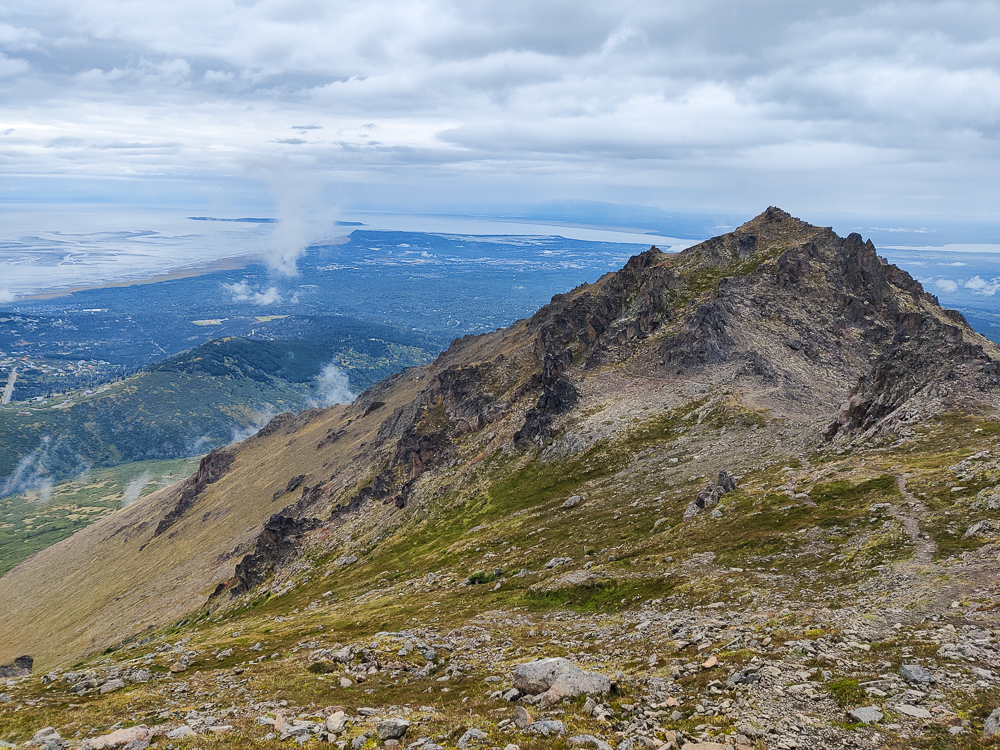
Flaketop is the craggy peak to the right in this photo (not the tallest one).
View from Flaketop
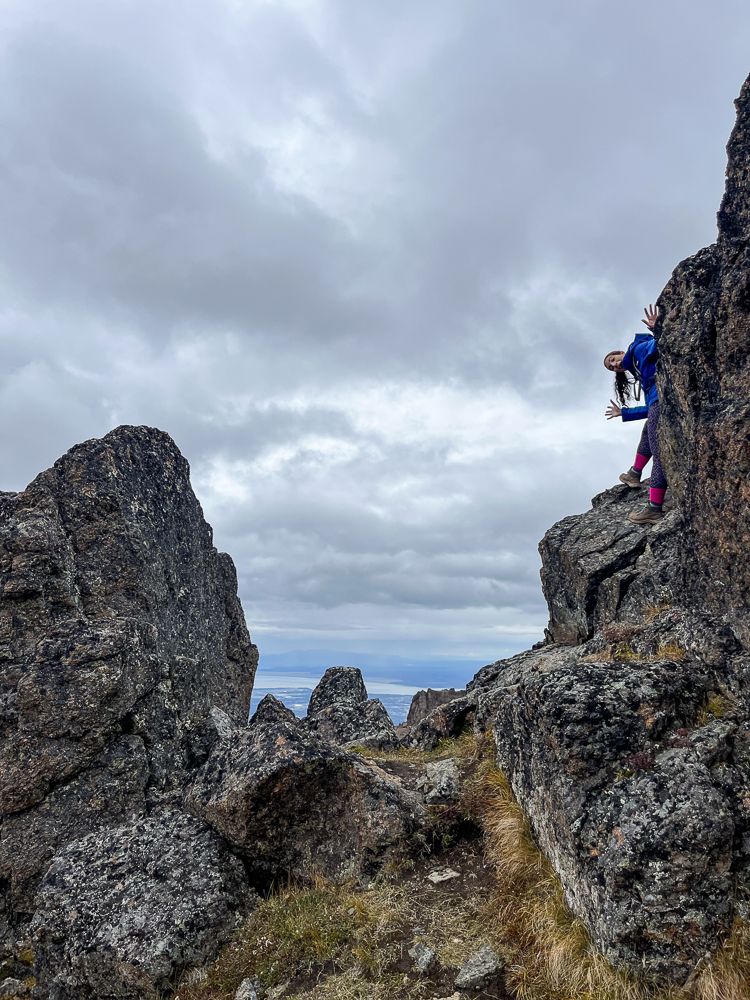
Yay! We made it!

After Flaketop (a much more commanding peak than Peaks 2 & 3), things started going downhill. As in, we began descending, and also as in, the trail quality took a dive. There was just… nothing. We’d follow a maybe-trail until we found ourselves at the top of a sheer drop off saying, “Hm. This is probably not right.” We’d check the map and see that we were WAY off course. Then, we would “find the trail”, but that just meant that our little GPS dots looked like they were in the right place. Sometimes, we would insist that we really did see a trail. “Oh yes! This is totally it!” one of us would say, as the other person nodded with great enthusiasm but weak conviction. Then, one step later, the hint of a trail would be gone again. Repeat. Repeat. Repeat.
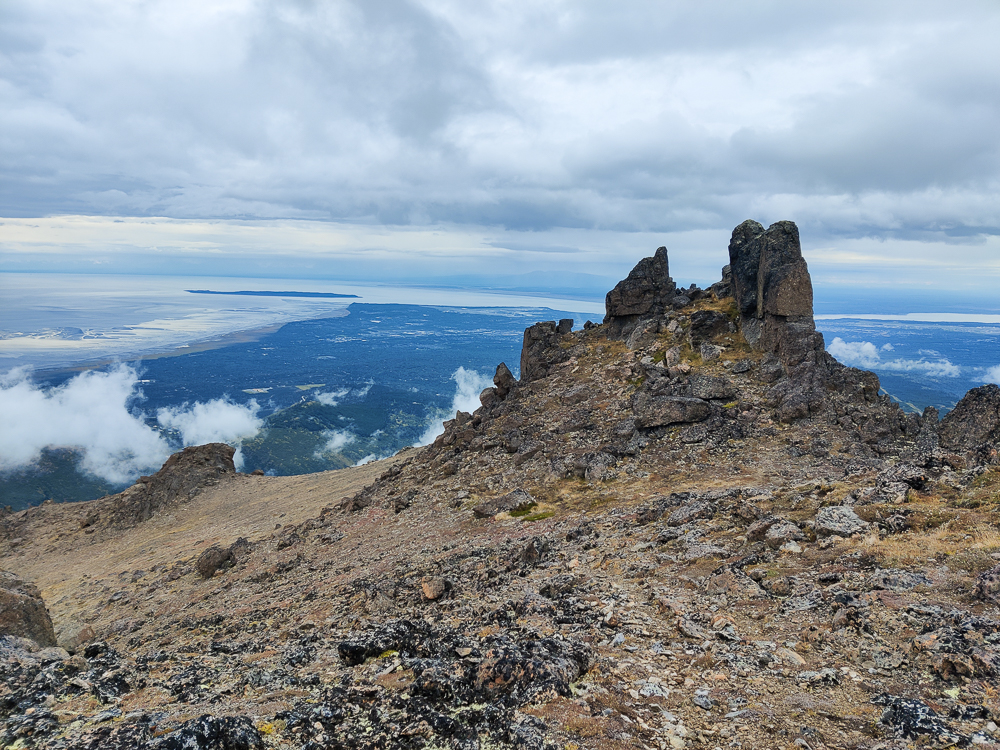
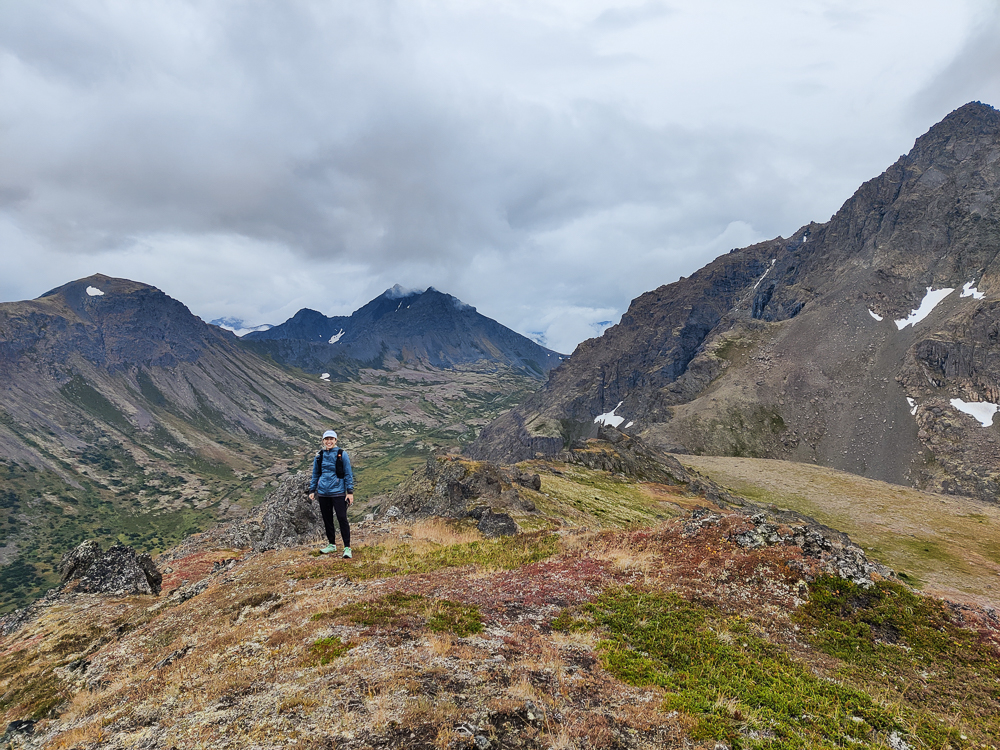
Looking back at Flaketop
Smiling like we know where we’re going…
At least if we were going to be lost forever, it was in a pretty place.
The colors!
I couldn’t get enough of the colors.

According to our maps, we were headed for a junction with Ptarmigan Pass Trail, our route for the next leg of the hike. As we struggled down the mountainside, we staked our hope on that transition. “That one is probably more popular, right?” “It can’t be worse than this, right?” “Don’t let me down, Ptarmigan!” I’m sure you can guess where this is going.

We overshot the imaginary junction. How could we not? We were on an imaginary trail, headed for another imaginary trail. I started yelling about how it should be called Pterodactyl Trail because it was extinct. This felt funny at the time, if that tells you anything about how we were doing mentally.

Olivia and I kept checking our maps. “The trail should be just over here.” “Mine shows it right over here.” I kept thinking that our GPS must just be a little off. It’s never perfect, plus we had no cell service which doesn’t help. Eventually, though, we determined that there was no trail. I wish I could say that we gave up on trying to follow it, but we didn’t. After all, the trail could magically appear at any second! Right? (Spoiler: wrong.)

The more we walked, the loopier we got. My terrible pterodactyl joke apparently wasn’t enough for me, so I kept going, asking Olivia if she was on the trail yet or pointing literally anywhere and saying, “I think that’s the trail there!” or, seeing that my GPS dot was in the “right” place, “Look! Can’t you tell that I’m on the trail?” Olivia was actually laughing at all of the jokes, so again, you can make your own call about how we were doing.
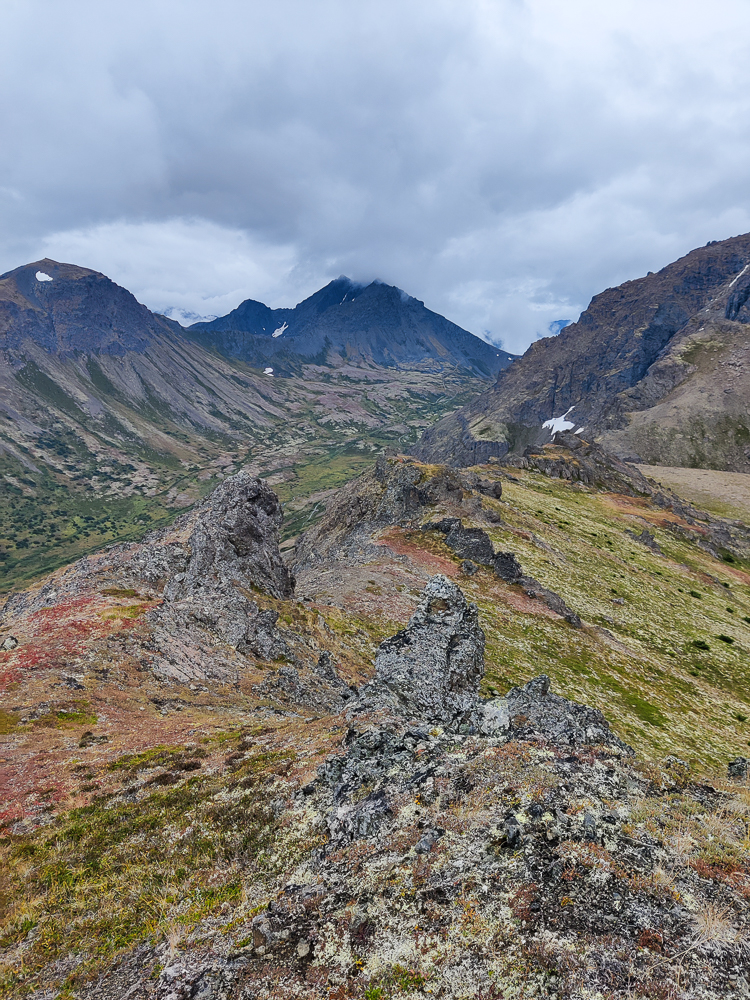
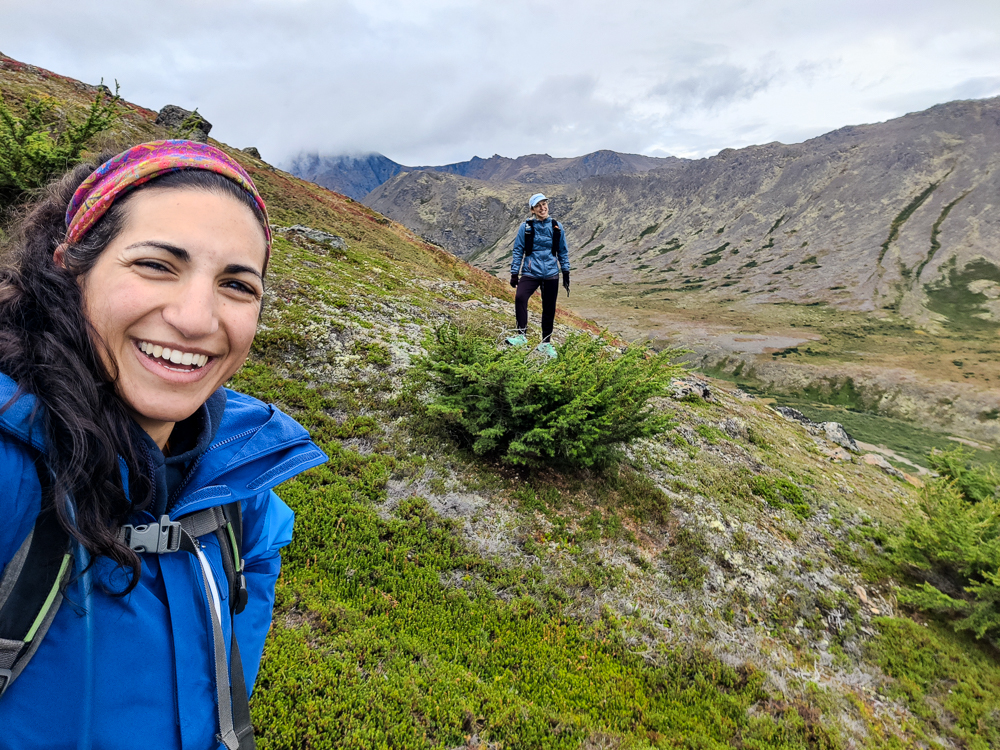
This place. Is unreal.
I look like I’m falling apart, and there’s a good reason for that.
Where’s the trail? Are you on the trail, Olivia?

The only positive I can come up with is that this “trail” was carpeted with little ground-cover-type plants that made the descent really nice on the knees. The negative is that you’re generally discouraged from going off trail to keep from killing things like little ground-cover plants… but we didn’t have much of a choice. We figured that no one was ever going to replicate our steps, so the plants would probably be fine.
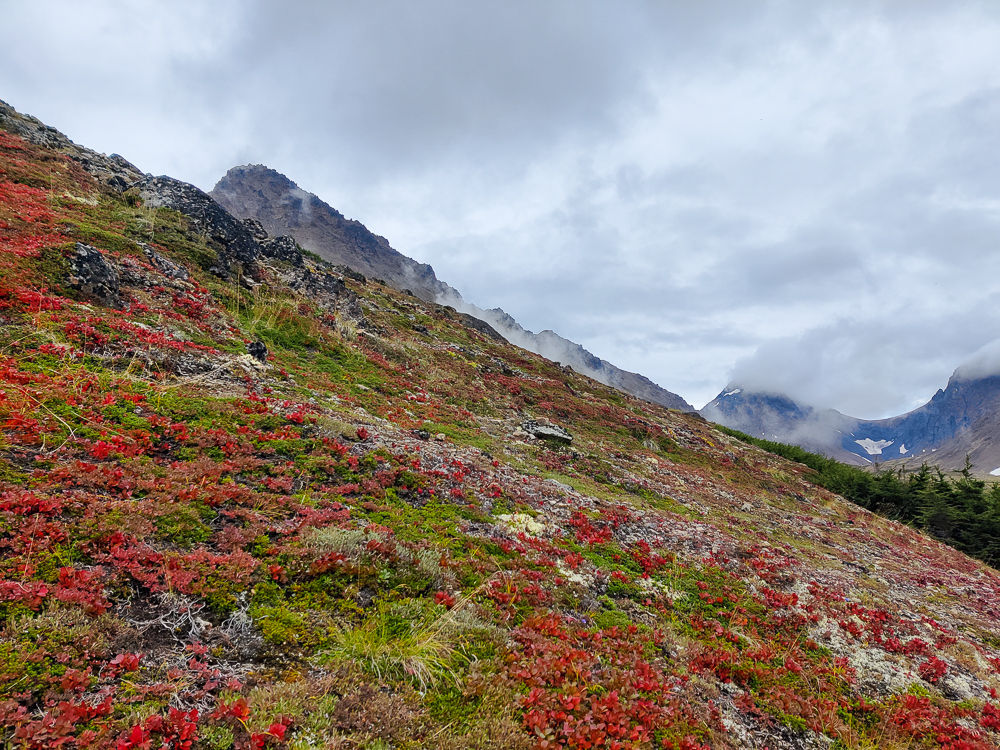
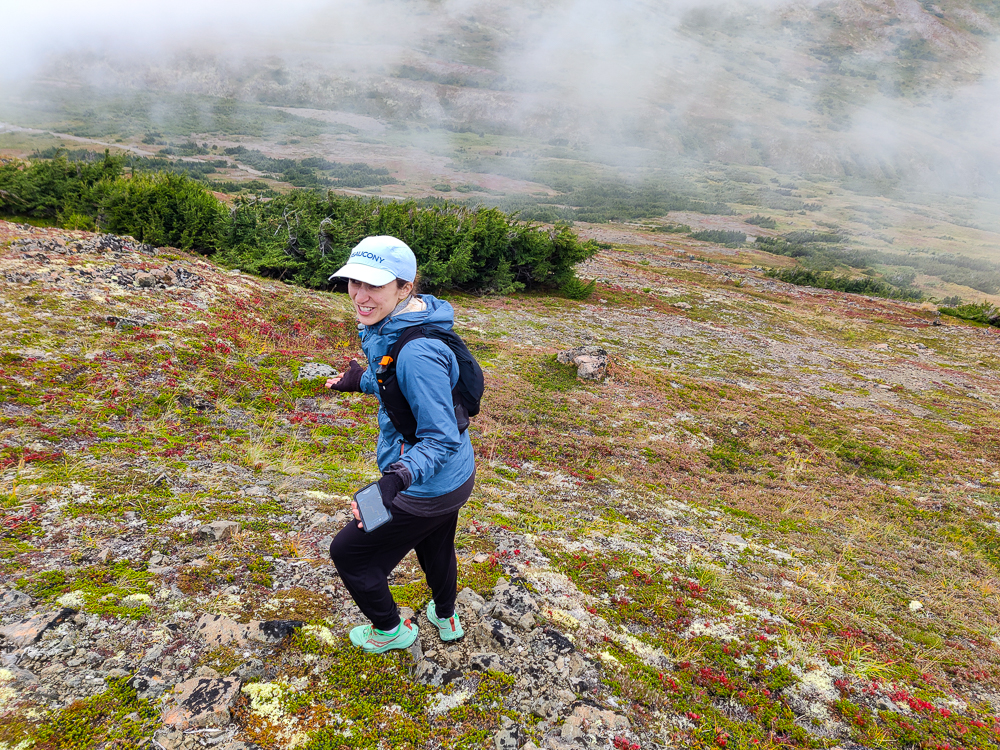
Easy on the knees AND pretty.

There was a small part of me that felt like we were never going to get down to the bottom. Then, out of nowhere, this beautiful, bold trail came snaking up towards us. I was indignant, “HECK NO. There is NO WAY the whole trail was like this, and we just couldn’t find it.” No. It’s impossible. We zigzagged over every part of that mountain. There was nowhere left for it to hide.

Afterwards, it was almost comical to look at the map of our route. When you look at it from afar, it looks fine…
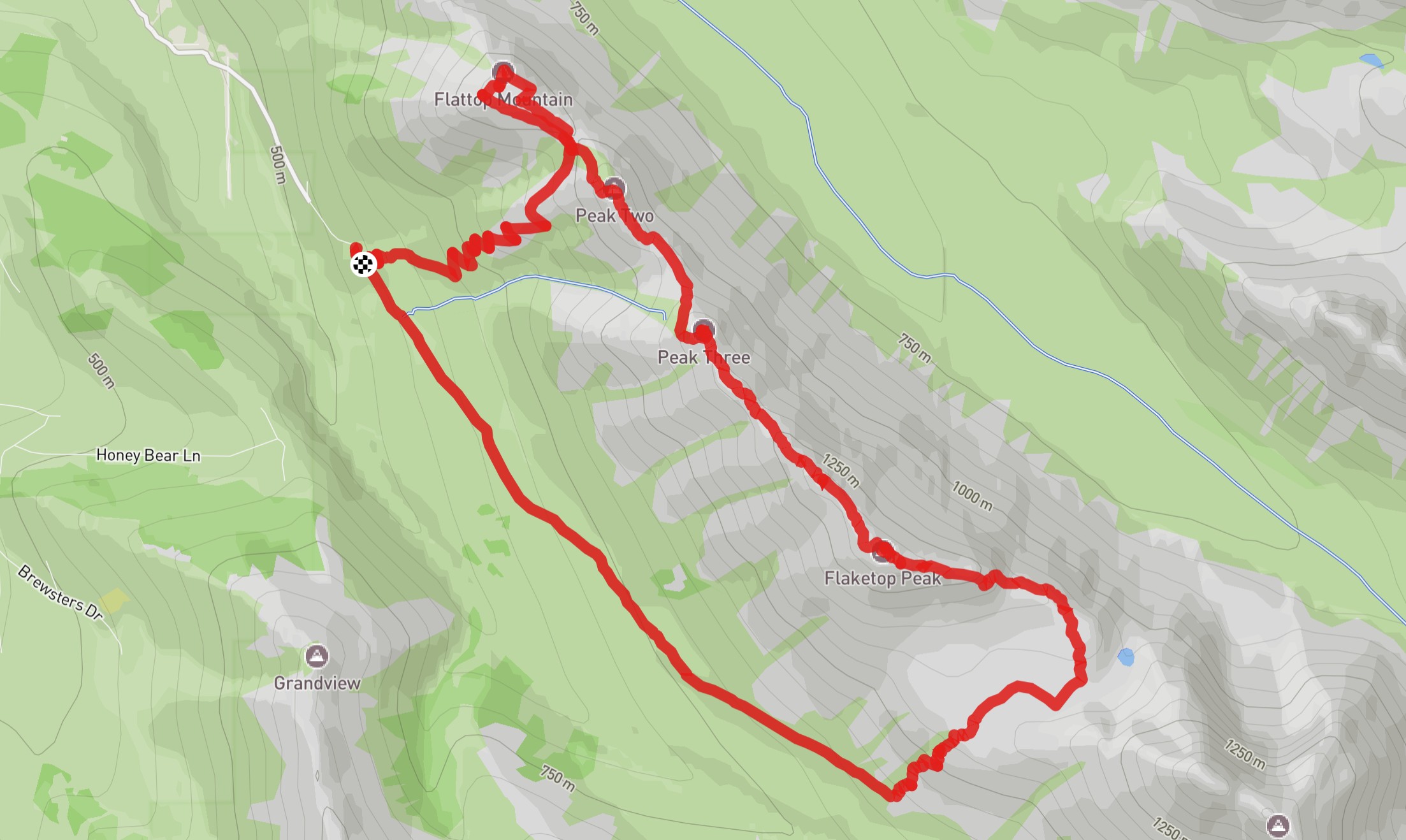
For reference, here’s the overall map of our route.

But if you zoom in, you can see the chaos.
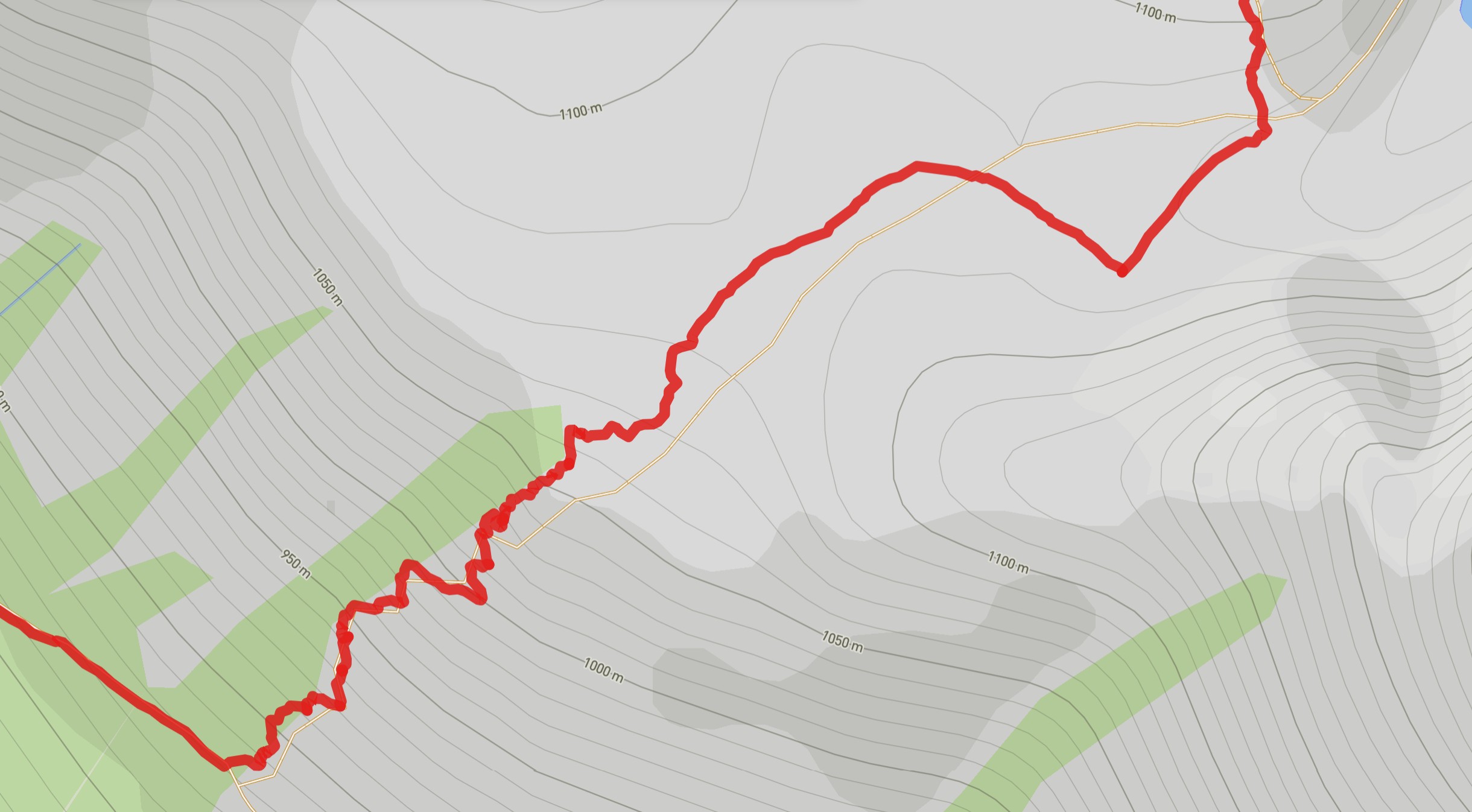
At the top right, you can see the “junction” between the two trails. And then you can see how we absolutely didn’t even almost follow the “trail” (that skinny little yellow/orange line) down (we’re the thick orange line that looks like total nonsense).

The hike ended on a good note. The last trail was glorious – wide and flat, and we couldn’t have gotten lost if we tried. Shout out to Rabbit Lake Trail. You’re my hero. We zoomed back to the car, cranking out the last 2 miles like they were nothing.
On my first day in Alaska, Olivia and I participated in a quintessentially American experience – the state fair. The Alaska State Fair takes place at the end of the summer each year, and when Olivia asked if I’d like to go, it wasn’t a hard decision. Giant produce? Fair food? Random displays and exhibitions? Count me in.

I’d never been to a state fair before, and it was simultaneously exactly what I expected and full of surprises. There were booths selling knick-knacks next to booths selling saunas and hot tubs. We visited the reptile house and saw fish and snakes and lizards. We walked around the craft pavilion and admired the things that people quilted, knitted, crocheted, and cross-stitched. We felt the difference between alpaca and sheep and muskox fibers. We watched performances by various dance groups. And then… we headed to the farm pavilion.

The farm pavilion is where the action happens. It’s where the livestock is kept. The smells are unmatched. We saw sheep and pigs and goats and cows. There was a pregnant pig whose piglets could come at any second! We were a little early to witness the wonder of piglet-birth… 12 piglets were born two days later.

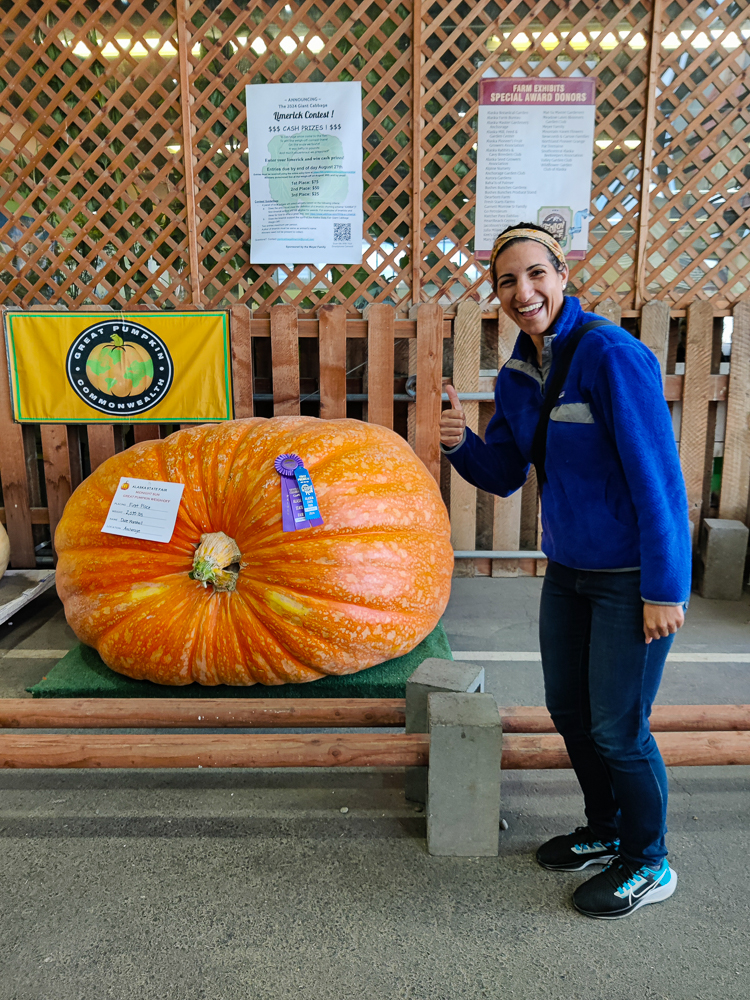
Anyway, the animals weren’t what I wanted to see. I took a look to be polite, but let’s be real – I was there for the giant produce. The pumpkin weigh-off had taken place the day before, so I was looking forward to seeing what a 2,035 lb pumpkin looked like. Olivia told me that it was going to be the size of a small car which was completely overselling it, unless she meant a toy car for children. I have to be honest. I was underwhelmed. I mean, it was an enormous pumpkin, but it wasn’t car-sized. It wasn’t even big enough to take a “James and the Giant Peach”-style adventure in. Oh well.

Even so, the day wasn’t a complete loss. We saw a giant zucchini and a carrot with roots that were at least 4 feet long. Whoever dug that up had some PATIENCE. There was an endless display of regular-sized produce that had been judged to determine the best in show. Best snap peas. Best basil. Apples, potatoes, broccoli, etc. It’s endless. All I could think about was the judges. How long does it take for them to judge all of the entries? How on earth do they determine a winner? The judging criteria was posted – clean, uniform, undamaged, size, color, etc. – but still. It feels very subjective. And after you look at hundreds of snap peas, do they not all start to look the same?

Me with the tiny pumpkin.
Also, apologies for the fact that I have so few pictures from the fair. I hadn’t yet decided that I was going to blog again, so I wasn’t in the same photo-taking mode as I would have been otherwise.
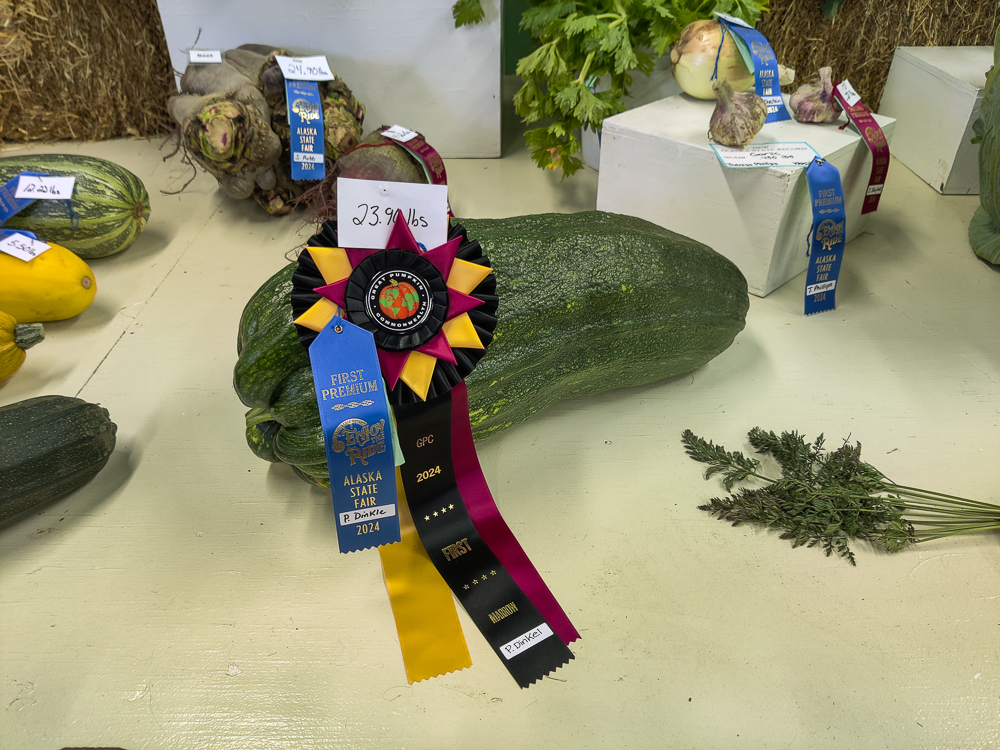
The only reason I have this prize-winning zucchini picture is because my mom also grows zucchini, and I thought she’d be entertained by this 23.9 lb monster.

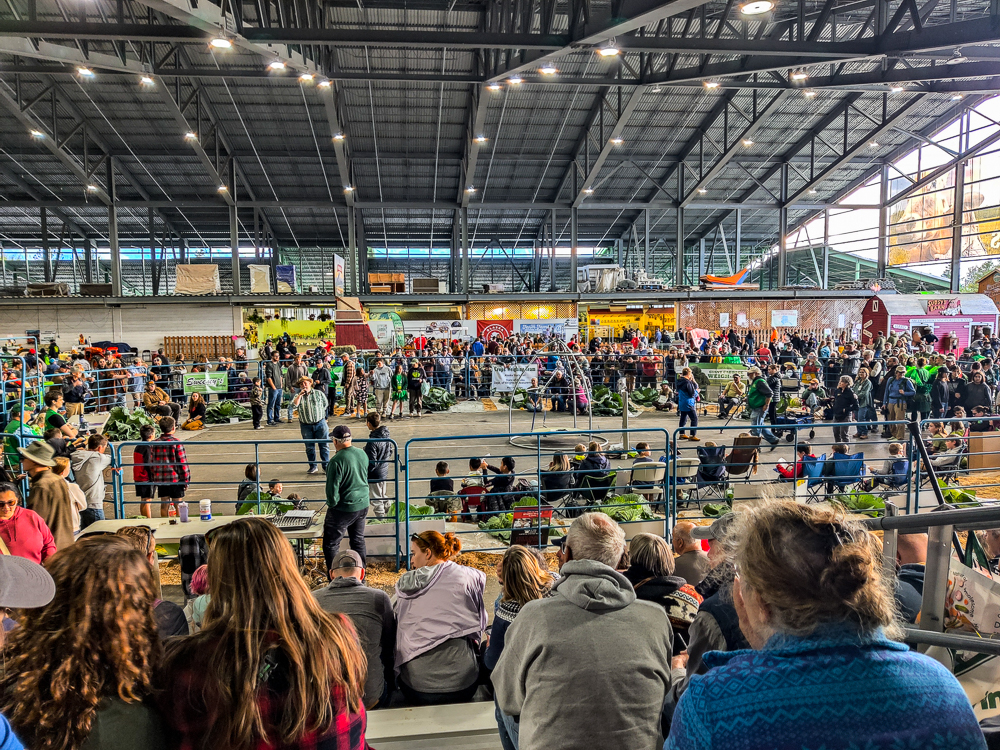
I could go on and on about this, but I have more important things to discuss. We were fortunate to be in attendance on the day of the infamous Cabbage Weigh-Off. I will try to explain, but just know that no words can bring to life the energy, the tension, the excitement that filled the arena.

We sat down on the grandstand overlooking the holding pen. The competitors, seated on large tarps and pieces of plastic, waited around the perimeter with their humans. In the middle, there was a scale, presided over by an official of the Alaska Department of Weights and Measurements. Yes. This is a thing that exists, and contrary to my first thoughts, they do, in fact, have other responsibilities besides weighing large produce at the state fair each year, but none is as important.

This is my only picture of the weigh-off, so for the rest, you’re just going to have to use your imagination. You can see the scale in the middle of the holding pen (FYI no one calls it a holding pen. I just think it’s funny to do so. And no one else considers the cabbages to be the competitors, but really, doesn’t that make the most sense?). The pavilion where this all takes place is enormous. This photo shows probably less than half of its entire length. The livestock is out of frame to the left. You can see a wall straight ahead, and behind that is the rest of the produce, the flower displays, and the rabbits.

As we waited for the festivities to begin, the cabbage fairies (I’m not joking) circulated in the stands with baskets of “cabbage candy” (green-colored white chocolate rosettes). I ate one because I’m always up for some unpackaged candy in a basket that people are reaching into with their definitely clean hands. It’s best not to think too much about these things.

The fairies, though! They were clearly important. I had to know more. I did some quick googling and got the scoop. They are second-generation cabbage fairies. The original fairy group was founded by the mother of the Gen2 lead fairy. She attended the cabbage weigh-off one year and was inspired! (Understandable.) She created this costume that includes a skirt made of cabbage-leaf-shaped placemats. (I read an article about them – see “Sources” below – and that was specifically called out.) I was excited to see what they had planned. I thought that there would maybe be a cabbage-inspired dance or something. You know, a performance. I was a little disappointed to learn that mostly, they just exist. They’re like cabbage ambassadors. They also attend the pumpkin weigh-off, but they don’t dress like pumpkins. They do add some orange into their outfits for the occasion, though. I still think a cabbage dance would be a great addition. I’ll send a suggestion in.

The fairies seem to be one part of a multi-level response to the understanding that watching the weighing of 40 cabbages is not the most thrilling activity. The pumpkin weigh-off involves maneuvering the pumpkins onto the scale using a crane. That sounded exciting! Unfortunately, the cabbages aren’t heavy enough to warrant a crane, so there goes that entertainment option. Some of Olivia’s friends were emceeing the event, helping to move things along by interviewing the cabbages’ humans. Much of the questioning was focused on the cabbage’s name and, if it wasn’t obvious, asking for the provenance of the name. The youth division was up first. We had Dave the cabbage, named as such because “I dunno”. There was also Slug Snack. I liked that one. I wish I had written more down because for some reason, they don’t record the names of the cabbages on the website, just their handlers. That’s not right! Give credit where it’s due.

I expected more from the adults, but honestly, they weren’t much better. I did my own judging, quietly giving each cabbage handler a score for their naming skills. I think that should be an officially judged category in the future. Maybe then, people would take it a little more seriously.

Other side entertainments included the recitation of the top 3 entries to the cabbage limerick competition – yes, you read that right. If you’re interested, you don’t need to be from Alaska to enter! You just need to be struck by the cabbage inspiration fairy. (Link to the winners is below.)

The word is that things weren’t too hostile this year because no one had grown anything close to record-setting size. It was a bad summer (in fact, one cabbage was aptly named “Bad Summer”) – too wet and too much temperature fluctuation. I was told that in ultra-competitive years, the competitors (the cabbages, not the humans) need to be locked up to prevent any possible tampering. Yes, that’s right. Cabbage tampering. Also, apparently, cabbages begin losing body weight the instant they’re harvested, so there’s this balance between waiting as long as possible to harvest and also getting your cabbage to the fair on time.

The biggest cabbages were 90+ pounds. The 2024 winner was 97.35 lbs and its human was also responsible for the winning pumpkin. We learned that looks aren’t everything when it comes to cabbage size. Some of the heaviest ones were not the ones that looked the biggest. It’s all about density.

After the fair is over, the cabbages and other produce are donated to “various Community Services and the Alaska Wildlife Conservation Center” (according to the Alaska State Fair website). So enjoy that mental picture – rescued bears eating prize-winning enormous pumpkins and cabbages. Or google it (or find a link in “Sources” below) and you can find actual videos. Or if you’re in Alaska at the right time, you can go and watch it in person!

After the weigh-in, I felt a bit dazed. Olivia and I wandered around a little longer, checking out the rabbits and a bonsai tree display. We ate some fair food for dinner and more fair food for dessert. I went home with a stomach in revolt which feels like an indication of a successful day at the fair.

Sources

Honestly, I recommend checking out all of these links. I found them all very entertaining, and they’re quick reads.

To learn about the cabbage fairies and see some good pictures…

Bushatz, Amy. “The Alaska State Fair cabbage fairies take a final bow, ushering in a new generation.” Anchorage Daily News, 2 September 2023, https://www.adn.com/alaska-life/2023/09/01/the-alaska-state-fair-cabbage-fairies-take-a-final-bow-ushering-in-a-new-generation/

If you’re wondering what a prize-winning cabbage limerick looks like…

Alaska State Fair. “Giant Cabbage Weigh-Off Limerick Contest – 2024.” https://www.alaskastatefair.org/site/result/giant-cabbage-weigh-off-limerick-contest-2024/

If you’d like to learn more about what goes into growing an award-winning pumpkin (there’s a video!)…

Klecka, Joey. “Alaska State Fair crowns giant pumpkin winner for 2024.” Alaska’s News Source, 26 August 2024, https://www.alaskasnewssource.com/2024/08/26/live-alaska-state-fair-giant-pumpkin-weigh-off/

To see some bears eating large veggies…

Alaska Wildlife Conservation Center. “Big Bears Big Veggies 2024.” https://alaskawildlife.org/event/big-bears-big-veggies-2024/

Note: These external links are not maintained. If they stop working at some point, sorry! They worked once upon a time.

Surprise!! Hello, friends! It’s been a LONG time, but we’re back in action! I must say, I’ve missed this. I’ve been feeling for a while like I wanted to get back to blogging, and hey, 2025 is the year! The real question – what am I going to write about? Yes, I’m a “normal” person again. You know, working a job that actually pays me (weird) but that also limits my vacation time (boo). Despite that, I have taken some fun trips since reentering the real world, and I’ve been itching to write about them. So, here we are! We’re going to talk about some new(er) travels and maybe hopefully someday get back to some unfinished adventures from the past. Let’s not get ahead of ourselves, though. For now…

Welcome to Alaska!! Actually, getting back into things by talking about my Alaska travels is kind of perfect. How did this trip even come about? SO GLAD YOU ASKED. I was catching up with my friend Olivia who, fun fact, you already know! (Well, my faithful readers at least.) Olivia and I met in Armenia while we were both volunteering at Aleppo-NGO. We hit it off, and that was the beginning of a friendship that has survived the six (SIX?!?!) years that we’ve been on opposite sides of the world.

Olivia still lives abroad, and we’d been trying to coordinate a trip together. Schedules are tricky things, and we couldn’t nail anything down. Olivia said, “The only thing I know for sure is that I’ll be on home leave at the end of August.” We paused. I thought, “Wait, her home is…” just as she said, “Wait, my home is Alaska. Do you want to come to Alaska??” I think the “yes” was out of my mouth before she even finished asking. I looked at plane tickets. I bought plane tickets. And 6 weeks later, we were reunited! In Alaska!

I don’t know if you remember how we do things here (I don’t know if I remember how we do things here…), but a new place means a new list of first impressions. And so, here we go! My (very long-winded) Alaska (mostly Anchorage / some season-specific to the end of summer) first impressions…

(I promise all of my posts aren’t going to be this long, but I guess I had some pent-up writing energy after all these years.)

1. Flowers

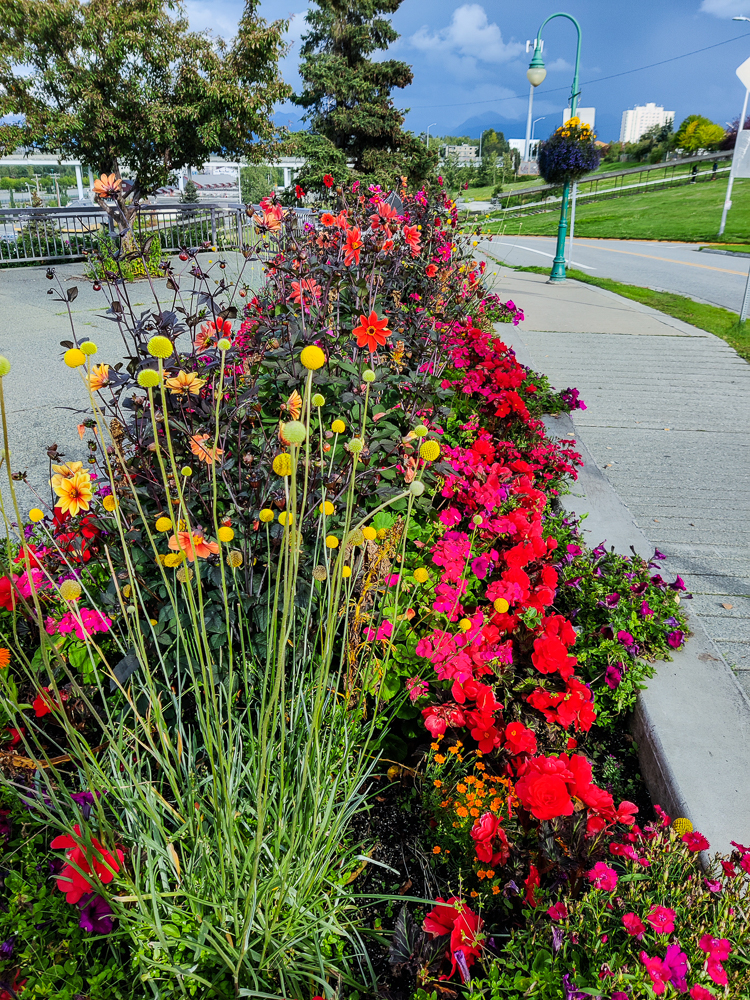
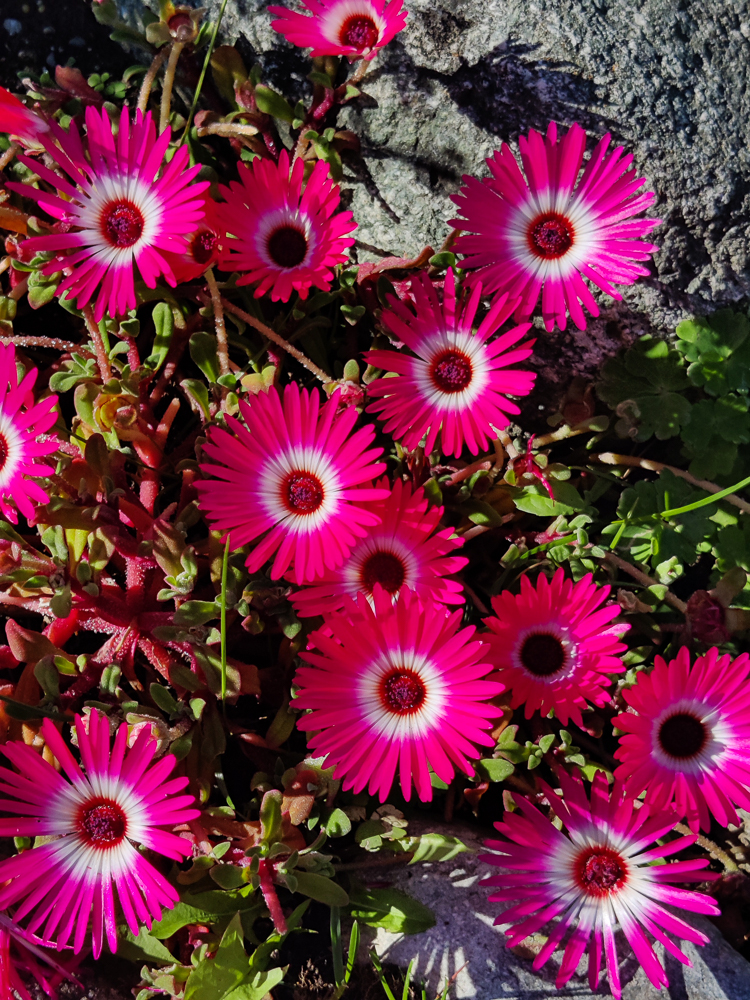
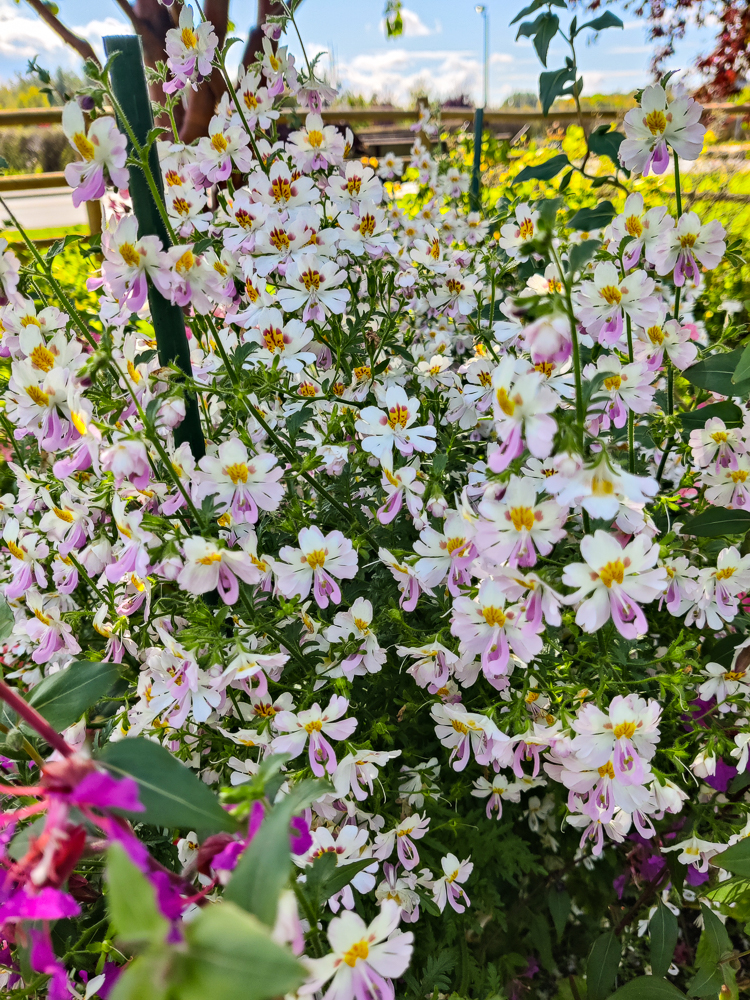
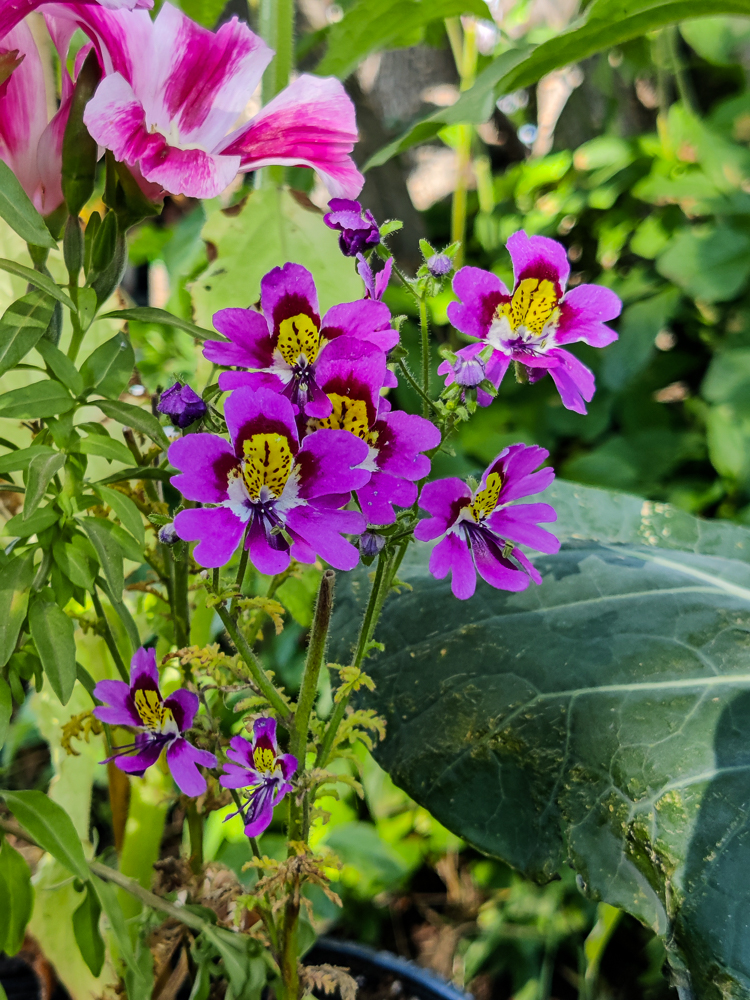
There. Are. Flowers. EVERYWHERE. In people’s yards. In planters. In hanging baskets (we’ll come back to this). In landscaped medians. Sure, flowers aren’t unique to Anchorage, but I’m telling you, whatever people plant other places, there it’s more. It’s like people know that they only have a few months to enjoy them, so they’ve decided to make the most of it.

That’s the other thing. Having that many flowers with the climate what it is… that takes effort and planning. You can’t just wait for nature to make things happen because there’s not enough time. Growing season is late May to September. Those flowers are greenhouse and garage started.

Also, apparently the long daylight hours and summer temperatures make it so that the plants are especially large and vibrant. I believe it.

One of the many flowerbeds in the city. Look at those colors! I’ll include more individual flower pictures for your viewing pleasure as we go.
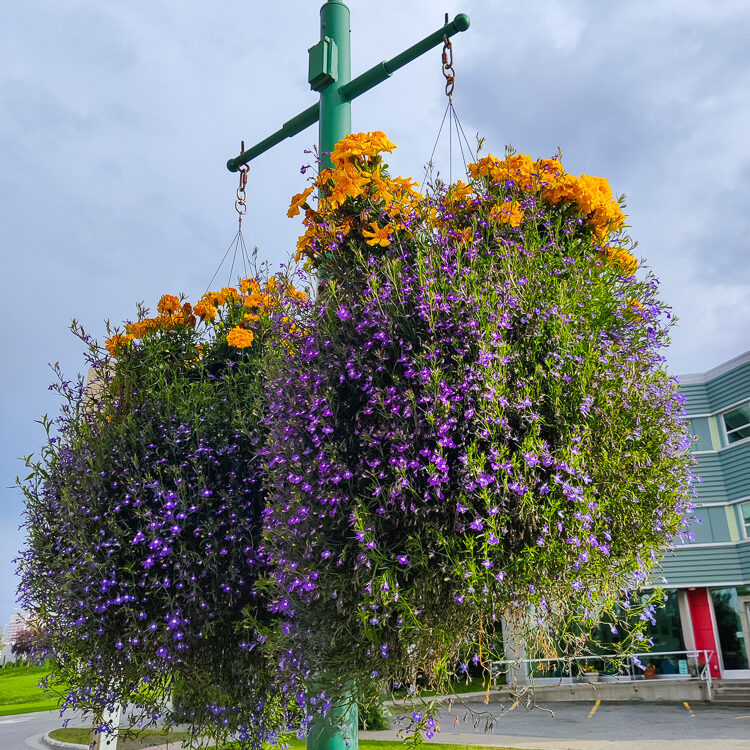
Two of the infamous hanging baskets… at least, I assume there are hanging baskets hiding somewhere in that mass of flowers.

2. Hanging Basket Capital of the World

I think Olivia made this up. What does it even mean? Who is responsible for handing out this honor, and how is it calculated? Quantity of hanging baskets per person? Per square mile?

Questions aside, there is a great volume of hanging baskets, and they’re all filled with flowers. And the flowers are all still alive which means someone is taking good care of them… or, I suppose, many someones, because with 9.5 hanging baskets per capita (invented statistic), everyone needs to be pulling their weight.

Aside from the summer care, people also do the work to keep the plants alive through the winter, either paying to board them at a greenhouse (no joke) or wintering them in a garage or basement until it’s time to get them ready to go outside again.

3. Weather

I have been to at least 5 places where people claim that their weather is more unpredictable than anywhere else in the universe. “We can have all four seasons in one day!” they say. “It’s like nowhere else!” I’m sorry to break it to all of those people, but this situation is not unique. It is, however, annoying, no matter where it’s the case. Alaska makes the list.

In my opinion, weather predictions are semi-useless always (sorry, weatherpeople), but in Anchorage, I don’t know why we even bothered checking. The best plan is to ignore the weather reports, decide what you’re going to do, and do it – while being prepared to dress for every possibility (LAYERS, waterproof everything, sunscreen, etc.).

4. Long days

This one feels obvious, but knowing it and living it are two different things. I wasn’t even there when the days were longest. Our days were around 7AM – 9PM, whereas the longest day has nearly 19.5 hours of daylight with sunrise at 4:20AM and sunset at 11:42PM! We had some late starts, but even so, we still had plenty of daylight and plenty of time for activities.

The negative of this is that you don’t realize how late it is, and then it gets dark and you realize, “Oh no! I need to be in bed, like, NOW.” Which may also explain our leisurely starts each day. So maybe it all cancels itself out.

The flipside of the long summer days is, of course, the short winter days. I’ve been struggling with our 9ish hours of winter sunlight at home. On the shortest day in Anchorage, they only get about 5.5 hours of sunlight (10:14AM – 3:41PM), and apparently, even then it never really feels like full-on daytime because the sun is so low.

5. Comfy college student dress code

I remember when I was looking at universities, I was drawn to Penn State because I saw people wearing sweatpants to class, and that was exactly the dress code intensity I was interested in (is that pathetic? Oh well). Anchorage fashion is absolutely my vibe – leggings, hiking boots or sneakers, an outdoorsy fleece, a puffer jacket, a headband. Count me in.

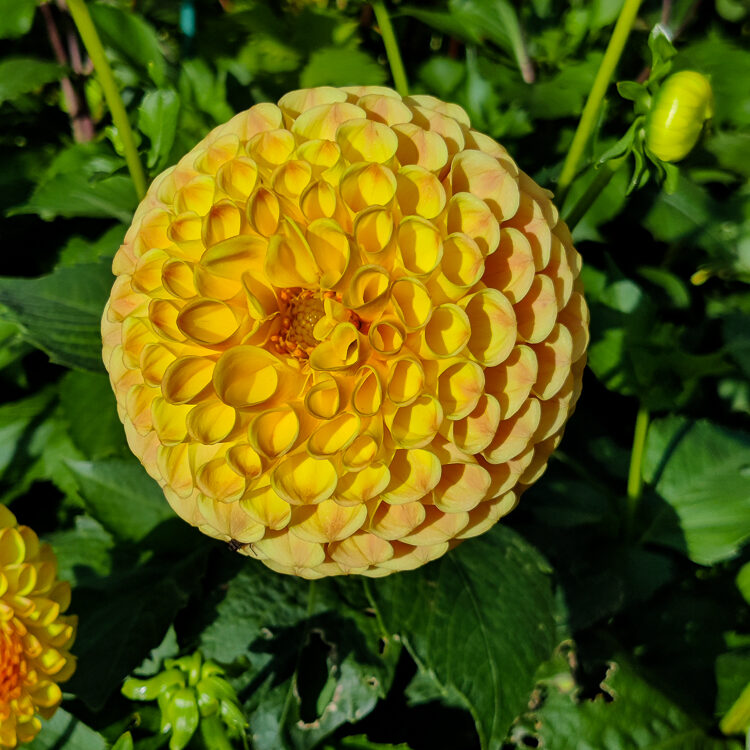
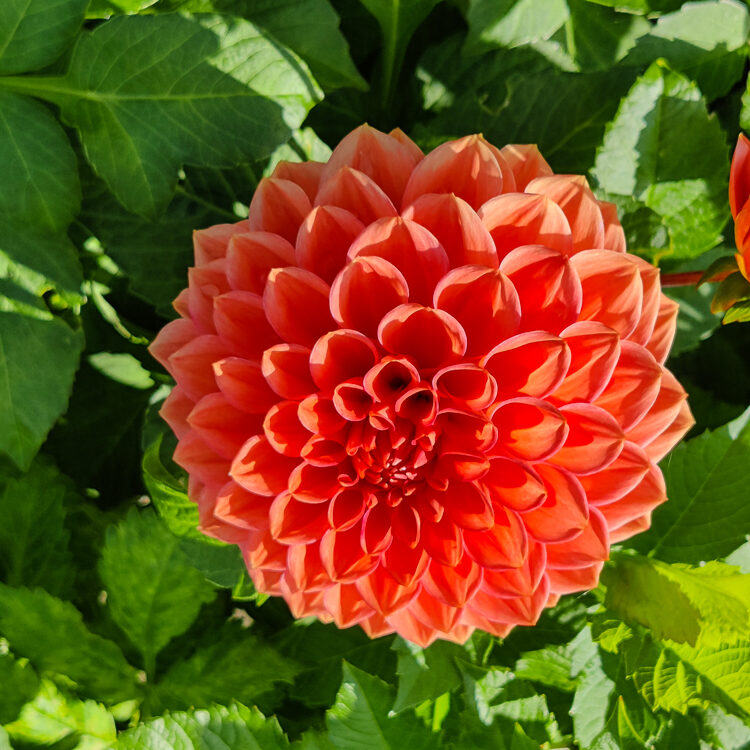
Dahlias are such satisfyingly chunky flowers.
So pretty!
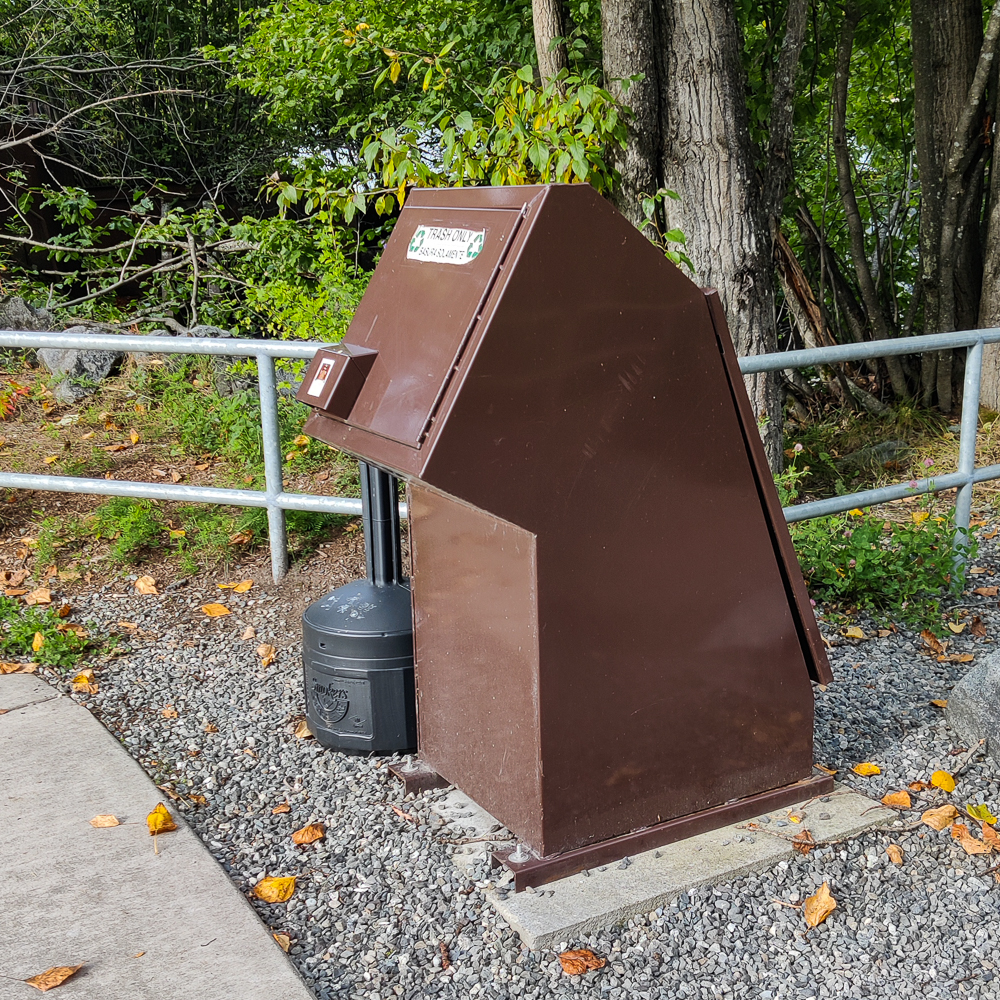
Not quite as pretty as the flowers, but here you go: bear trash can. I should have gotten a picture of one in the city, but just trust me. They’re everywhere.

6. Up close and personal with nature – bear trash cans

If you’ve ever been camping in a bear-y area, you are familiar with bear trash cans. I read somewhere once that the challenge with designing these trash cans is that there’s an overlap between the smartest bears and the dumbest humans… but I digress. The point is, these trash cans are used in areas where bears frequent, and they’re designed with the intent that humans can open them while bears cannot.

Now, I had never seen a bear trash can until maybe college, when I started getting out into the wild more. City trash cans at home are, well, regular trash cans. They’re wide open, just begging squirrels and raccoons to come and feast. In Anchorage, every trash can is a bear trash can. The bears don’t care that it’s a city.

7. Life with animals

The bear trash can thing is linked to another observation – people are used to life being somewhat dictated by wildlife. This was strange to me because there aren’t many wild animals at home that would cause me to change my plans. My presence strikes fear into the hearts of foxes and rabbits and squirrels. Deer flee from me in terror. Sure, if I saw a bear, I would stay out of its way, but there are no bears in my neighborhood. Bears live in the woods where “Be Alert for Bears” signs are posted.

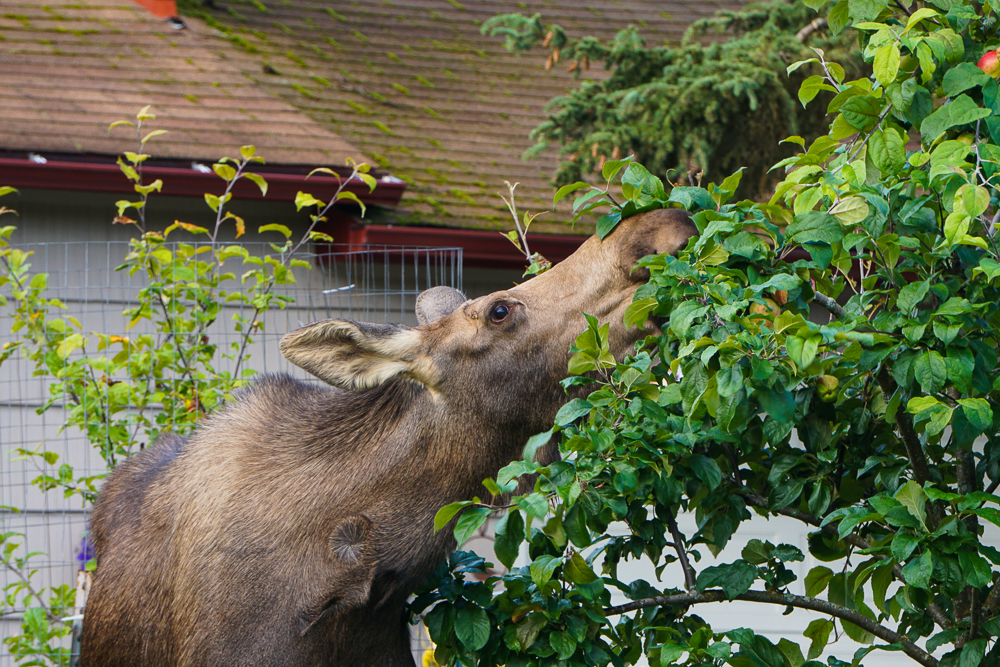
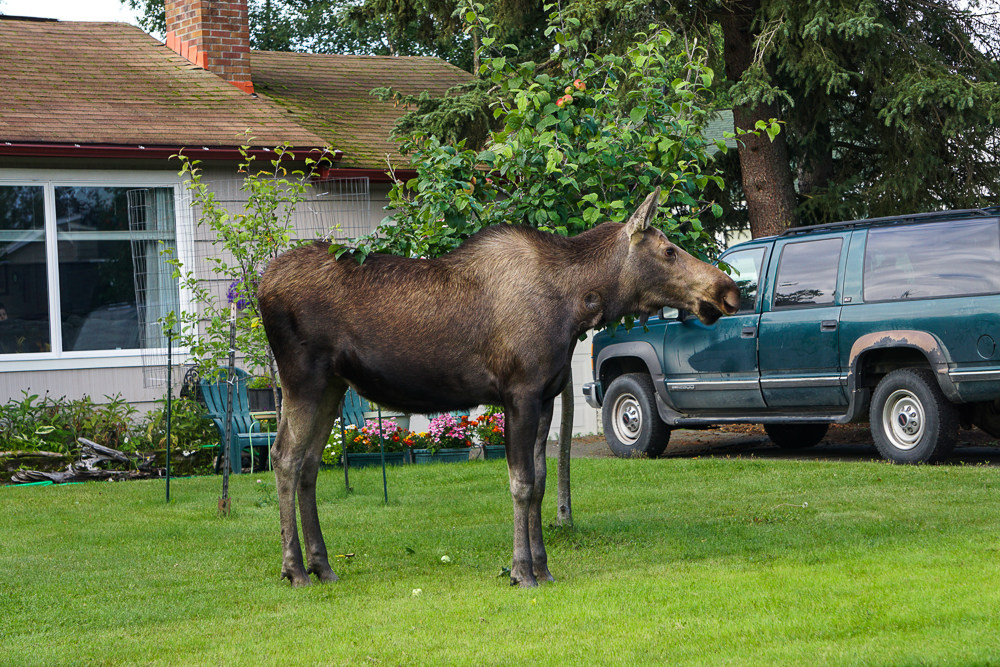
The animals of Anchorage are poorly trained. The bears don’t seem to know that they’re supposed to stay in the woods. Olivia’s mom took me on a field trip to see a “neighborhood moose” (a moose… in the neighborhood). It was eating apples from someone’s tree. She had no sympathy, saying that if those people cared about their apples getting eaten, they would have put up netting around the tree. I guess that’s like having a garden with no fence getting eaten by rabbits. Like, what did you expect?

Neighborhood moose, out for a snack.
“Oh, it’s just a baby!” Olivia’s mom exclaimed when we spotted the moose. Moose. Are. Big.

As we drove away, she rolled down the window to tell some people who were jogging with a dog that there was a moose up ahead. They thanked her and just turned around, rather than taking a chance with the dog/moose combination.

Olivia said that in the week before I came, she was jogging on the coastal trail (a path along the water in downtown Anchorage) and saw three black bear cubs on the trail. Her thoughts went from, “Oh, cute!” to, “Wait, where’s mom?” anddd she turned around and went back the way she came.

Okay, I mean, all of this makes sense to me. Of course you need to respect nature in a different way when you’re living with animals like that. But it’s just something I never have to think about, whereas there it’s a part of life.

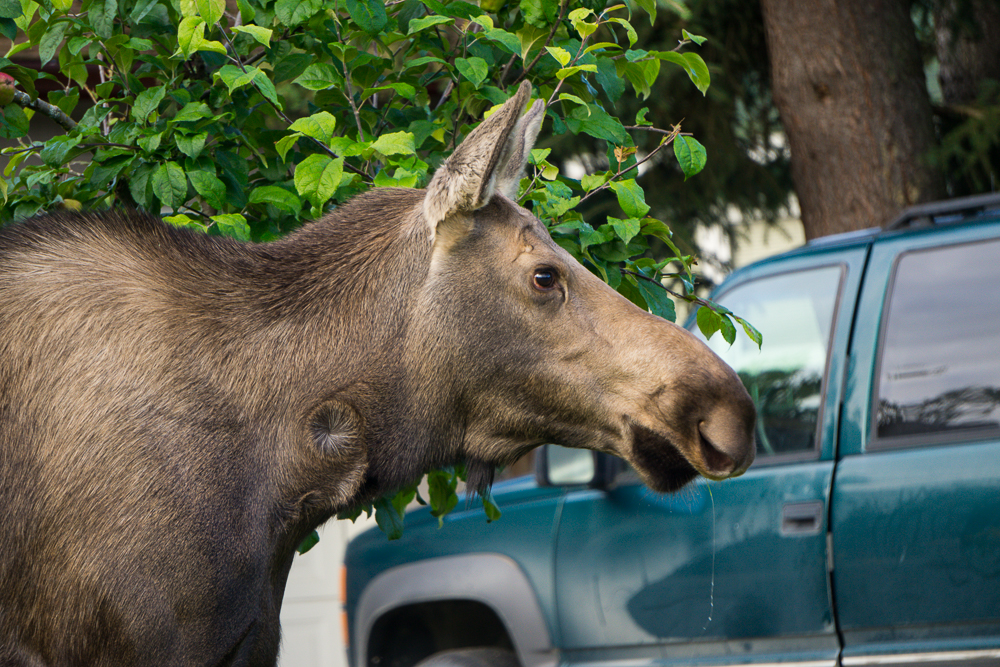
Okay one more moose picture because I’m still not over the whole “seeing a moose in the neighborhood as it eats your neighbor’s apples” thing.

8. “Lower 48”

This is another “makes sense but I’d never thought about before” observation. People are constantly talking about “the lower 48” aka the contiguous USA. I found this fascinating because down here in the lower 48, there is no catch-all term for the rest of the “mainland” states. “The other 47”, perhaps? But when would you ever use it?

I also felt bad (not really) because it’s like Alaska is constantly thinking about us down here, but how often do any of us think about them way up there? Poor Alaska.

9. Acting like Alaska is not far away

People in Alaska, at least the ones who travel to the lower 48, talk about traveling back and forth like Alaska isn’t really that far away. If I didn’t know any better, I would think that Alaska was located smack dab in the middle of the US. People are “just in town for the weekend” or are “back and forth”. So casual. Multiple times, I found myself listening to conversations where I felt like I needed to jump in and clarify, “I’m sorry, we’re talking about LA like Los Angeles? Like the LA that isn’t close to here? You’re going there? For the weekend?”

Anchorage to Seattle is a 3.5 hour flight with an hour time difference. Anchorage to Los Angeles is 5.5 hours. Anchorage to Philadelphia is a 4-hour time difference and at least 11 hours of travel. IT IS NOT CLOSE. Boggles. My. Mind.

Flower break!

10. Private planes and pilot licenses

Alaska has the highest percentage of licensed pilots per capita in the USA. A 2023 article said that 1 in 78 Alaskans is a licensed pilot which is 6x the number anywhere else in the US.

This makes sense because Alaska is not the most accessible place. Only 20% of Alaska is accessible by road. Juneau, the STATE CAPITAL, isn’t accessible by road, only by boat or plane.

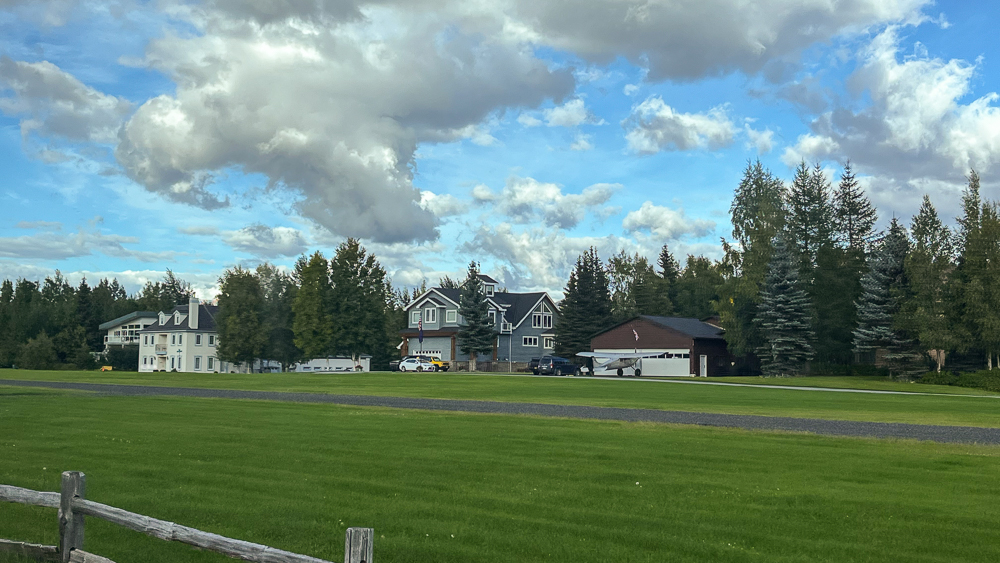
This also means that there are a ton of small, private planes. On a nice day, it sounds like they are constantly flying overhead. There are even some houses with airplane garages and neighborhood runways! Many people have houses outside of Anchorage that they travel to via plane.

Can you spot the runway? Can you spot the AIRPLANE sitting in front of someone’s garage? Can you spot the garage that looks suspiciously big enough to fit said airplane??

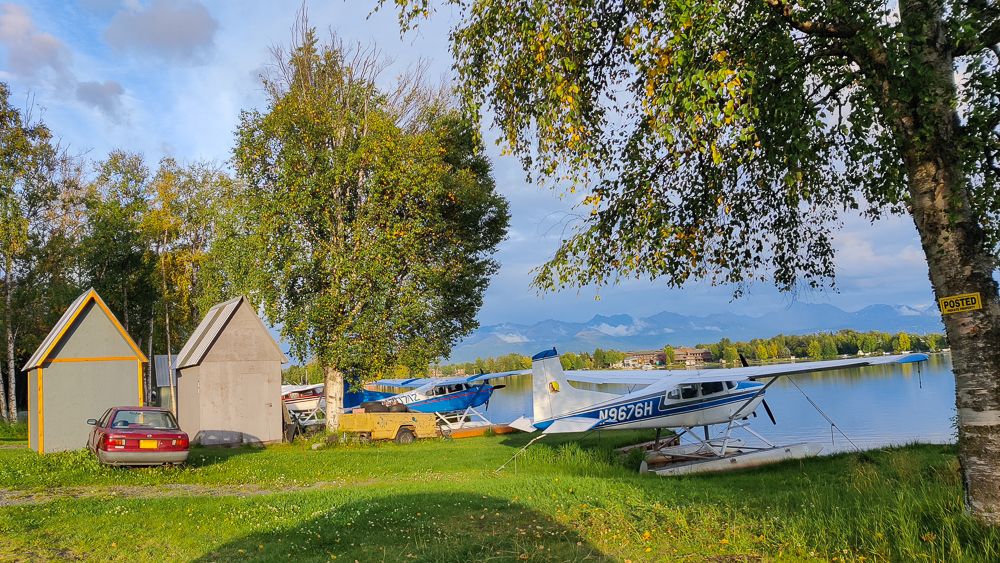
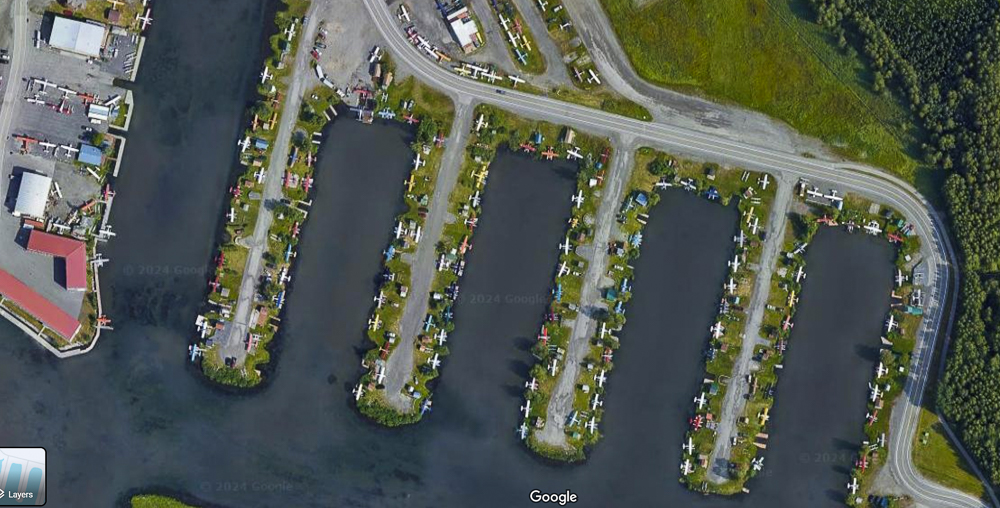
We also drove past the Lake Hood Seaplane Base… I should have taken a better picture but was too busy gaping. There are nonstop seaplanes and little plane huts. It’s wild.

A couple of seaplanes with some huts.
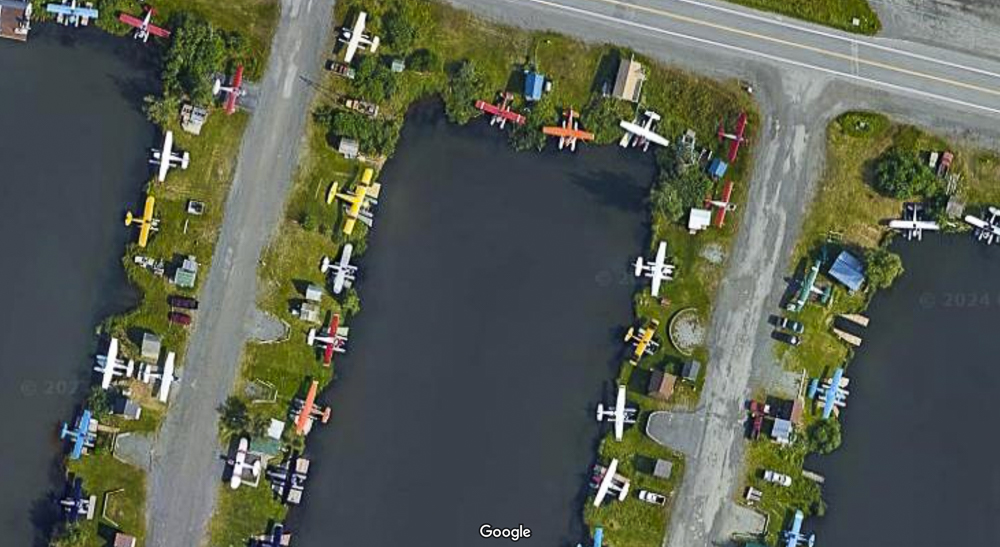
Since I didn’t take a good picture of the full scope of the area, please appreciate this snip from Google maps satellite view. And this isn’t even the whole thing.
In case you’re having trouble seeing what we’re looking at in that last picture… SEAPLANES. SO MANY SEAPLANES.

11. Balto

If you’ve never heard of Balto, the sled dog that saved the town of Nome, Alaska from a 1925 diphtheria epidemic, you need to watch more animated movies.

To summarize, the doctor in town quickly raised the alarm and asked for antitoxin to be sent ASAP. Without it, the entire town could be wiped out. The nearest supply was in Anchorage, but the only way to reach Nome in the winter conditions was by using the dogsled mail route. (The port was closed for the winter, there was no train to Nome, and planes at the time couldn’t handle the trip.) A train took the serum north, but it still needed to travel 674 miles west by dogsled. It was estimated that it would only keep for 6 days on the trail, 3 days fewer than the fastest travel time recorded.

A relay was organized with 20 mushers and over 150 dogs. The conditions were horrible, with temperatures of -50°F and colder, blizzard conditions (snow and wind), and January winter darkness. Multiple mushers got frostbite. Many dogs died along the way. The journey was completed in 5.5 days, and thanks to the quick response, fewer than 10 deaths were recorded in Nome (though there were likely additional unreported deaths in the surrounding Alaska Native communities).

Many people think Balto gets outsized glory considering that he and his team traveled only the final 55 miles. Togo, another lead dog, led his team 170 miles to pick up the serum and then another 90 miles back to hand it off to the next relay team, covering one of the most dangerous parts of the journey. Most other teams traveled 25-40 miles.

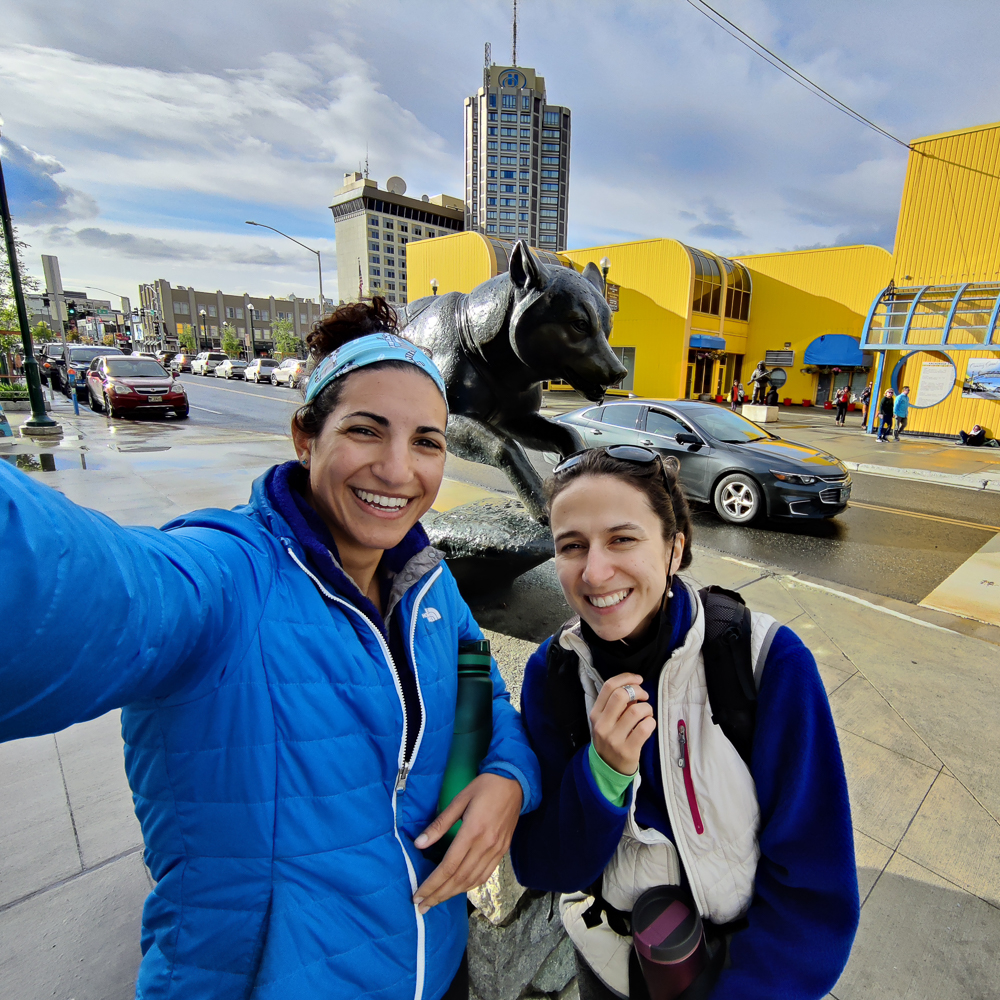
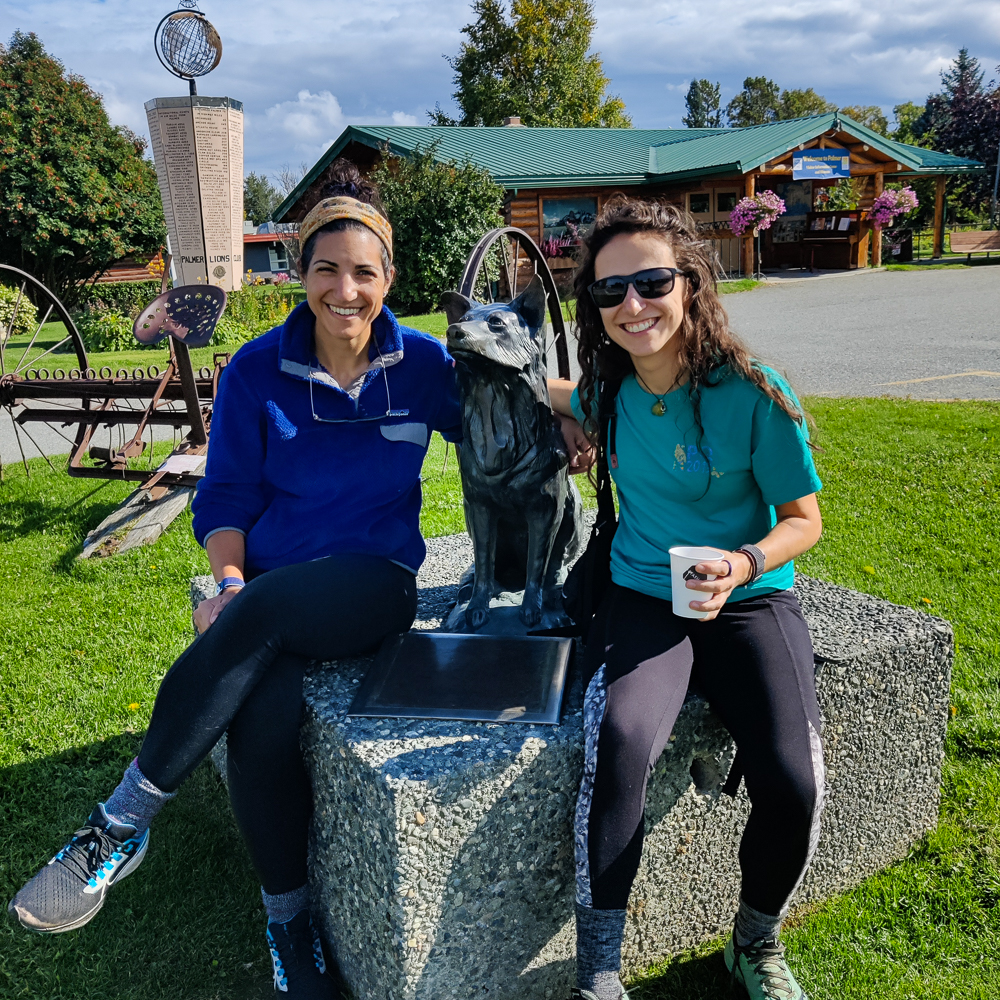
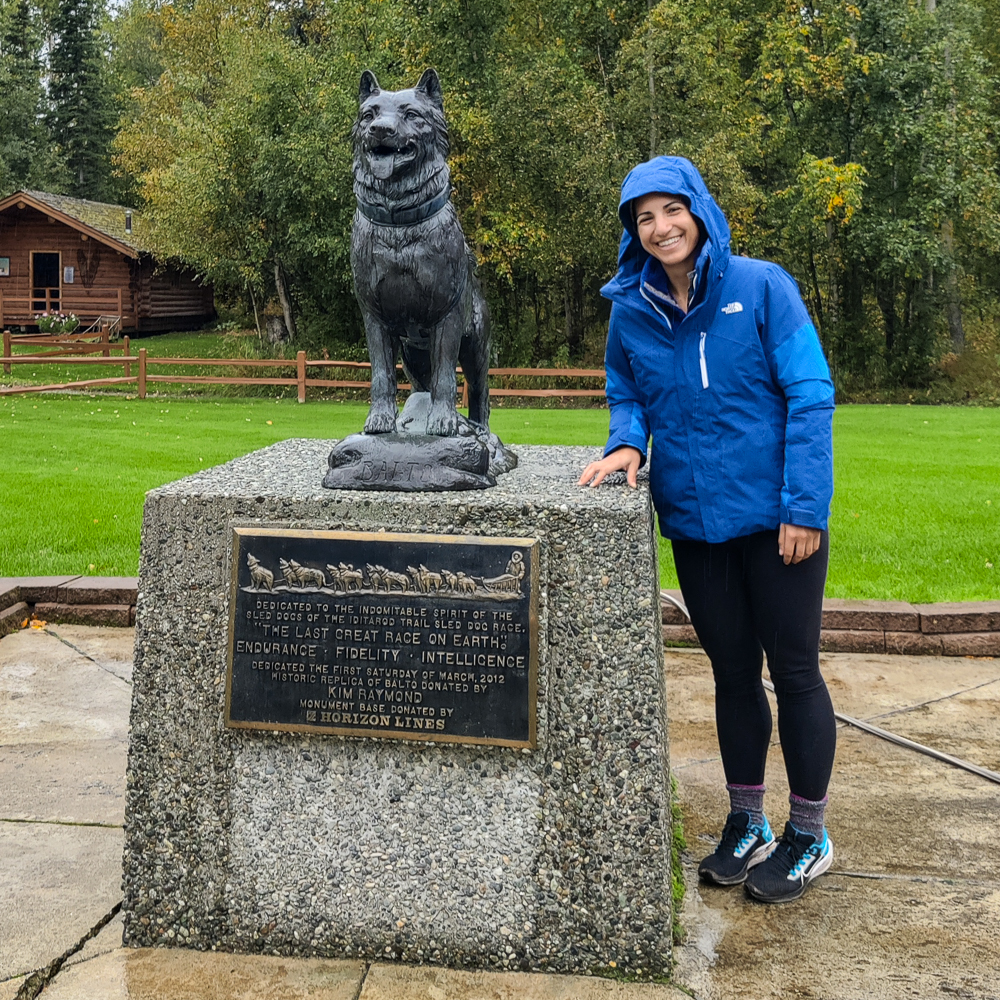
ANYWAY, the point of all of that is: Balto gets a LOT of glory. You can find him everywhere! I have pictures with THREE Balto statues from my time in Alaska. I’m sure that’s only a small sampling of the full supply. If ever you see a statue of a dog (even in NYC Central Park), I bet you $1 it’s Balto.

Whew! Okay, that was a lot. I hope you’re feeling slightly acclimated to Alaska. There’s more to come! Until next time…

Me and Olivia with Balto in downtown Anchorage.
Me and Olivia with Balto at the visitor center in Palmer.
Me with Balto outside the Iditarod museum.

Sources

I decided to start including my research sources in case anyone is interested in some additional reading (or feel free to ignore if you’re not). Some are pretty entertaining. Also, now you can know that, when I post things that seem absolutely insane, I’m not making things up… I’m just believing and re-posting things that other people made up. (English teachers – I know these are improper citations, and I don’t care.)

Flowers/Hanging Baskets

Anchorage Parks and Recreation. “Frequently Asked Questions.” Municipality of Anchorage. www.muni.org/Departments/parks/pages/ghfaq.aspx

Lowenfels, Jeff. “Alaska is the land of hanging baskets. Here’s how to store yours in winter.” Anchorage Daily News, 7 September 2023, www.adn.com/alaska-life/gardening/2023/09/07/alaska-is-a-land-of-hanging-baskets-heres-how-to-store-yours-in-winter/

Planes (I barely used this article, but it was fascinating)

Johnson, Acacia. “The lifeline of flying: the pilots connecting remote communities in Alaska.” The Guardian, 22 May 2023, www.theguardian.com/artanddesign/2023/may/22/its-almost-spiritual-the-female-pilots-connecting-remote-alaska

Balto

National Park Service. “Togo.” www.nps.gov/people/togo.htm#:~:text=Though%20Balto%20received%20the%20credit,at%20the%20age%20of%2016

Alaska Mushing School. “The 1925 Serum Run.” www.alaskamushingschool.com/learn/1925-serum-run-to-nome/

Note: These external links are not maintained. If they stop working at some point, sorry! They worked once upon a time.