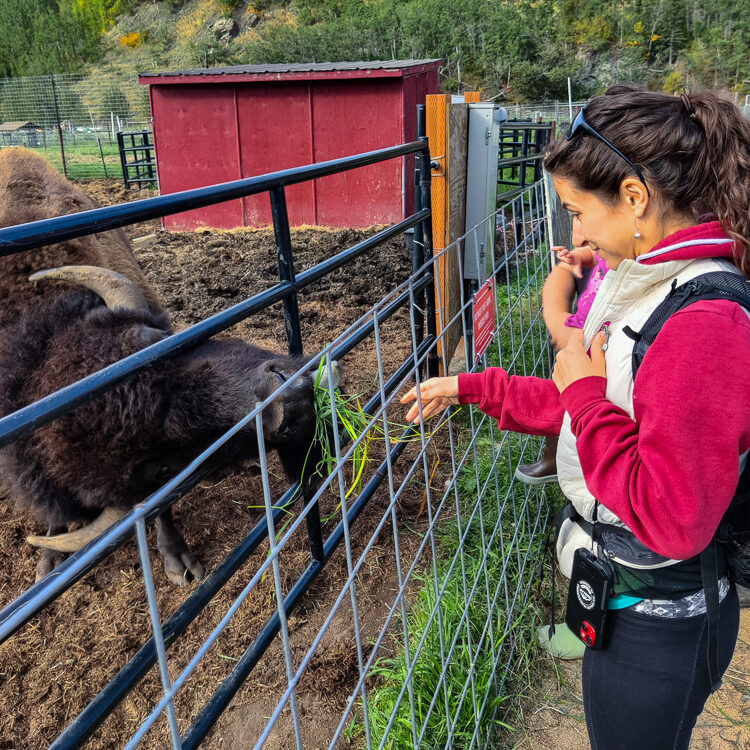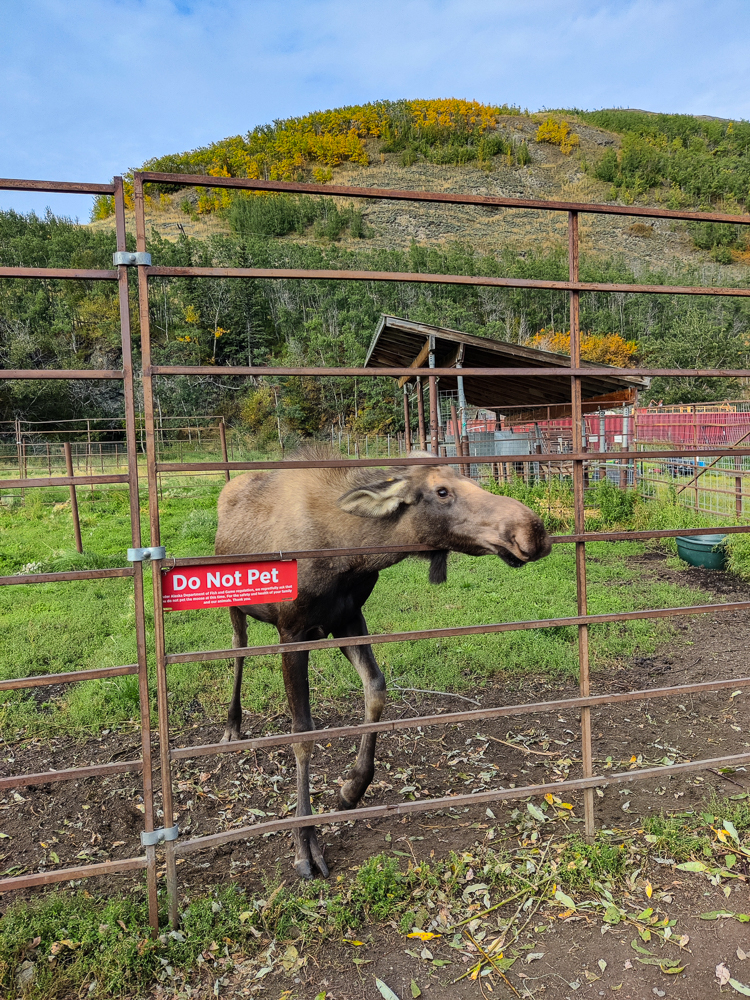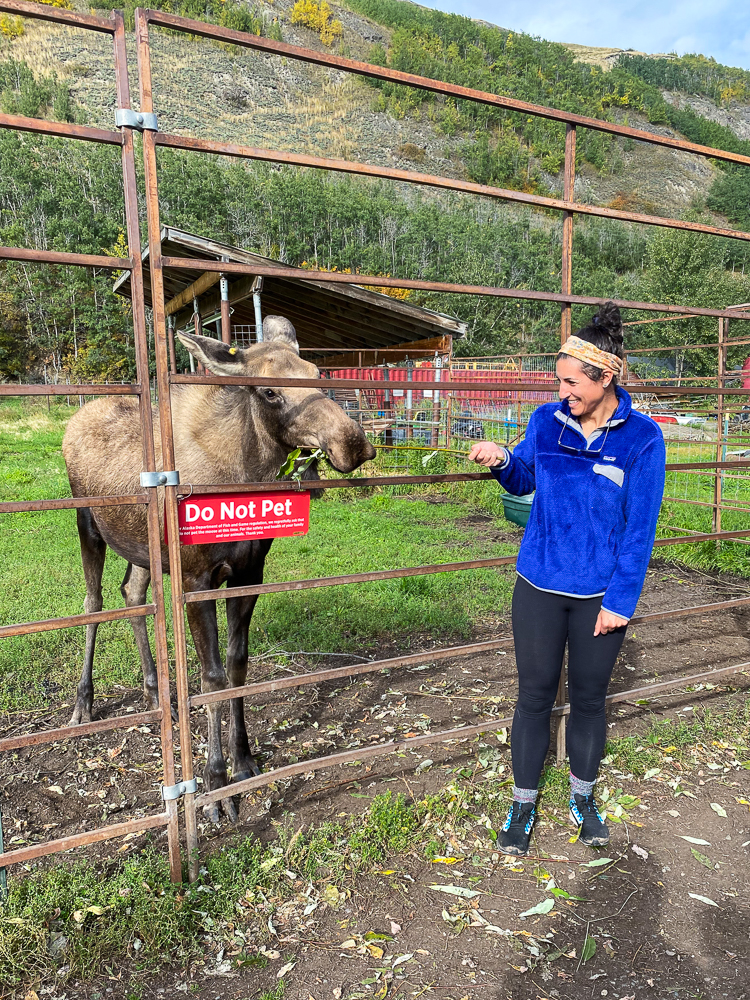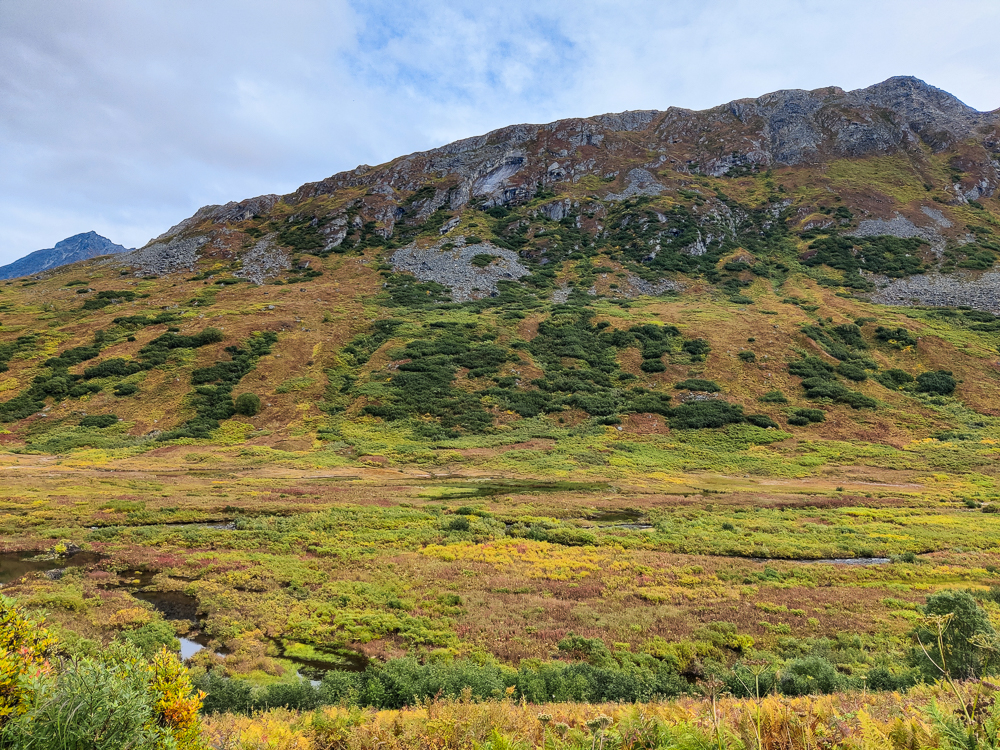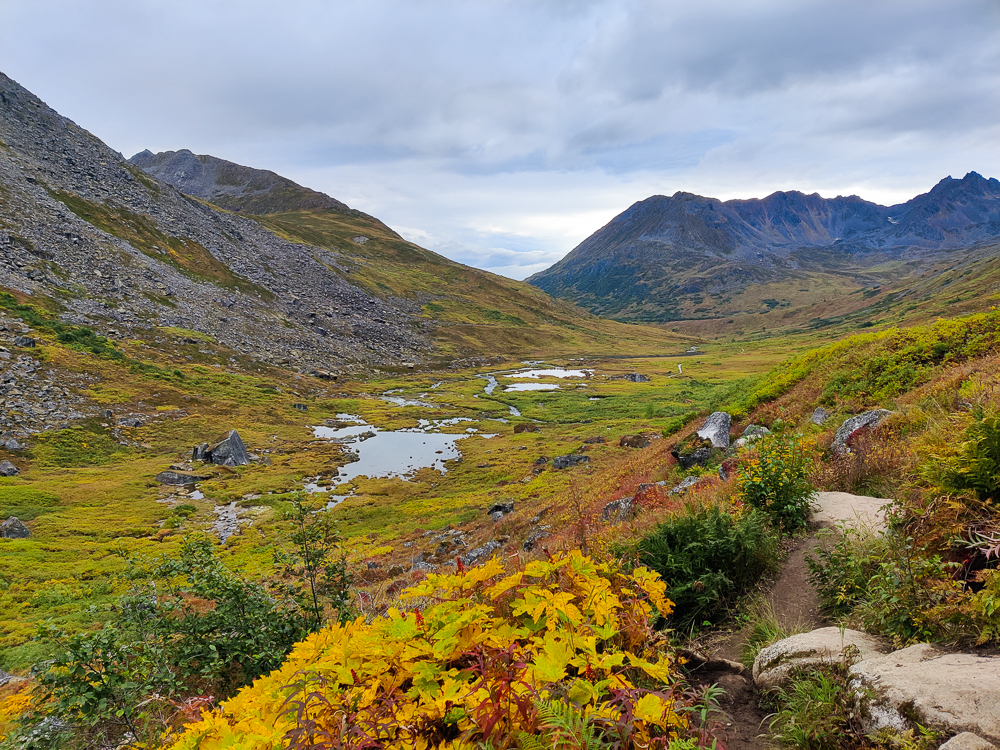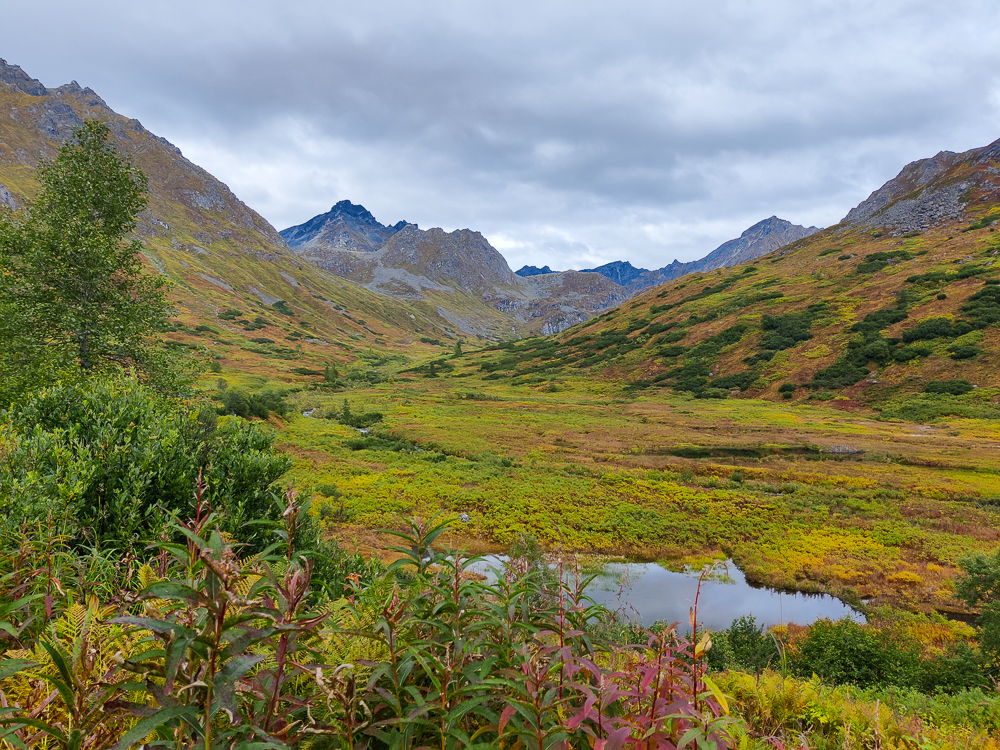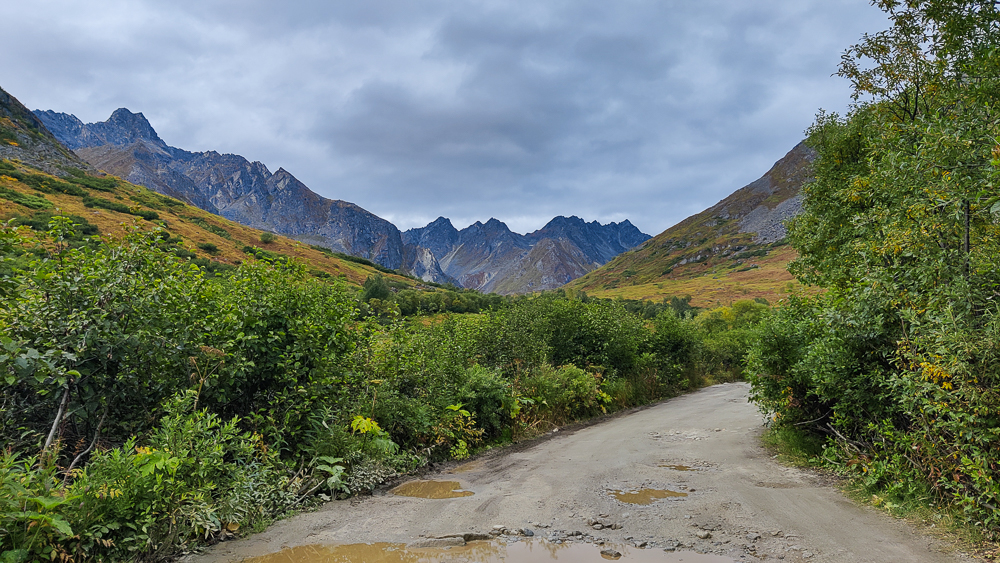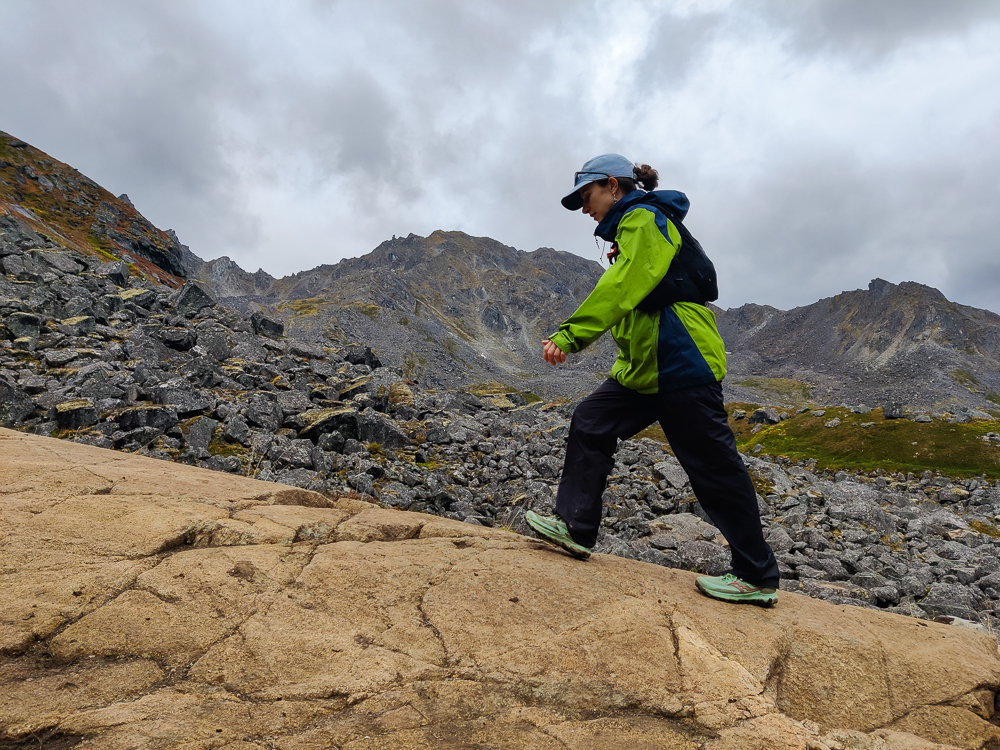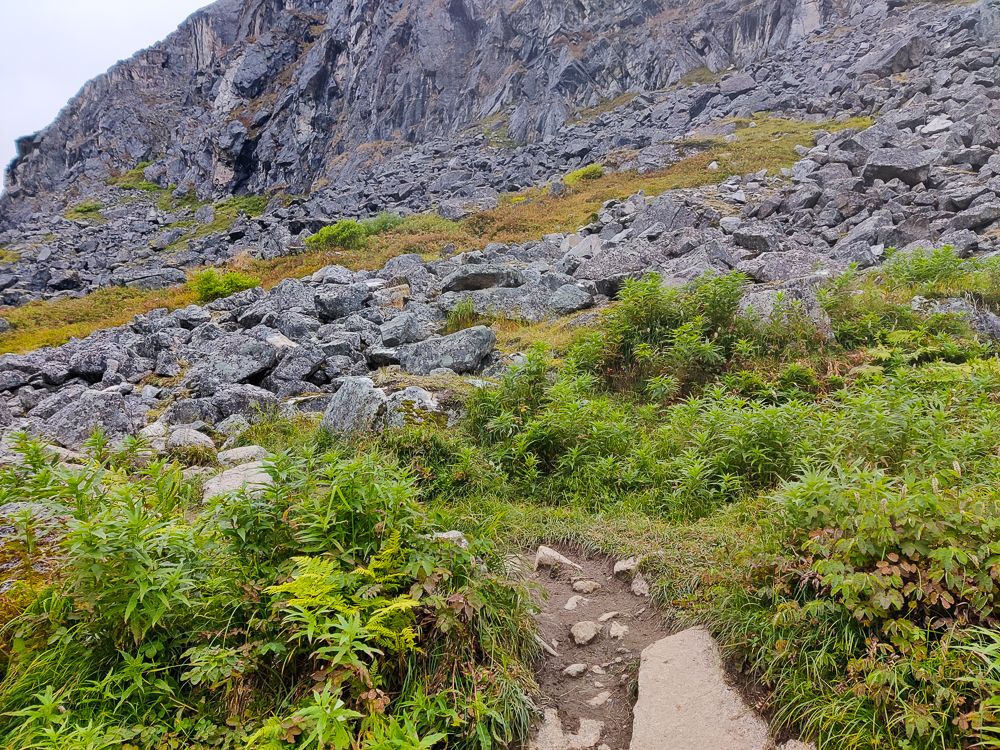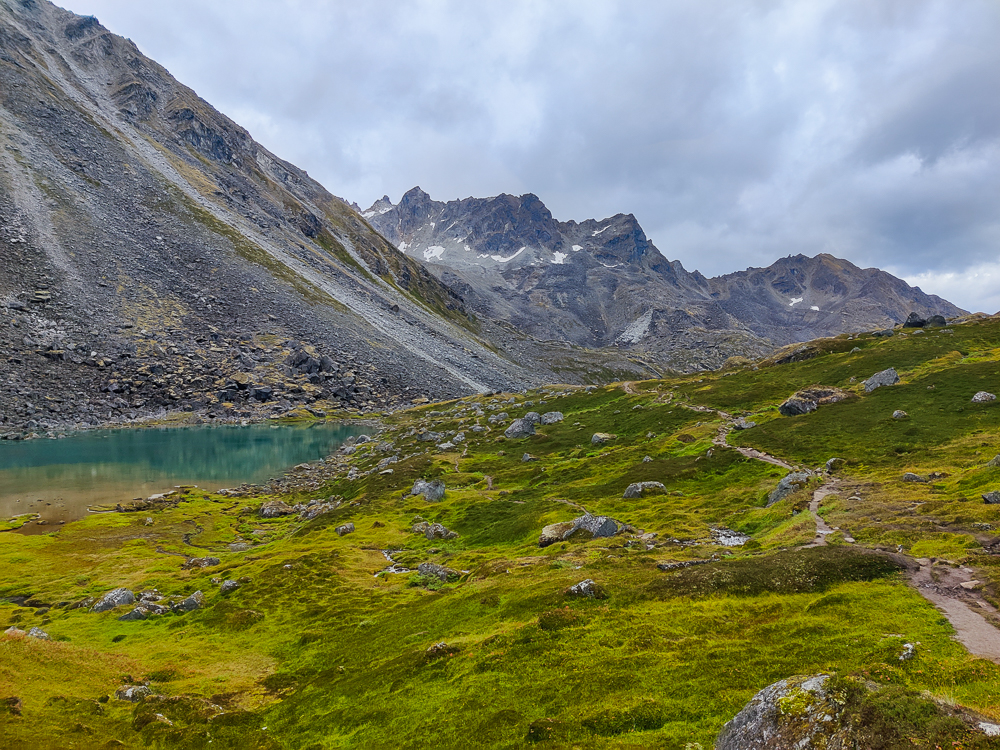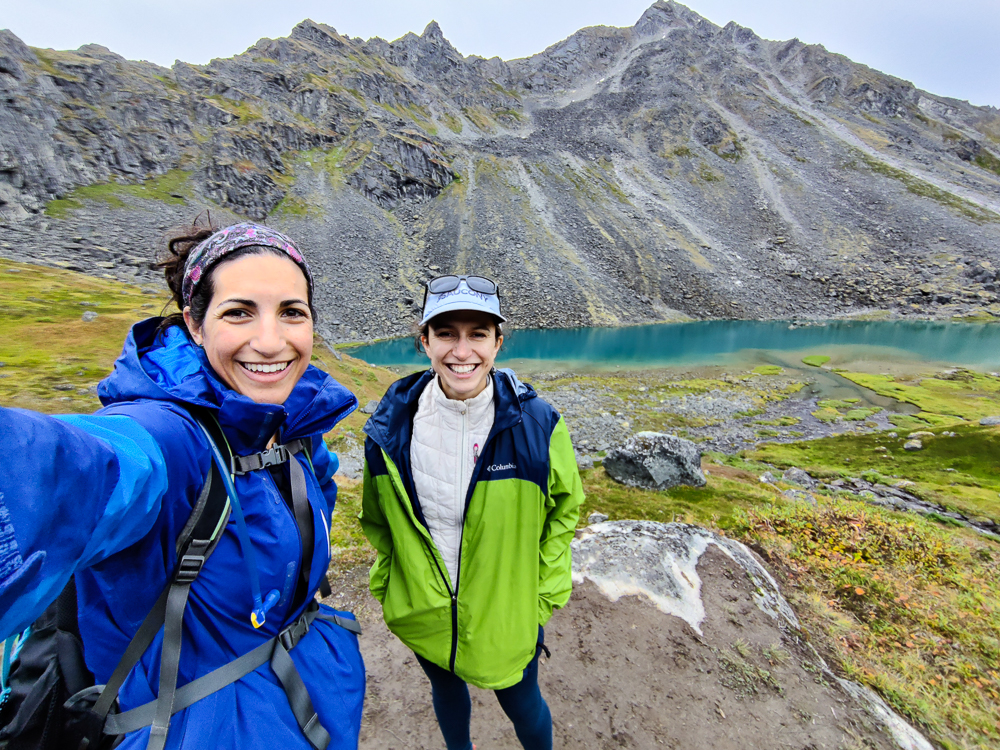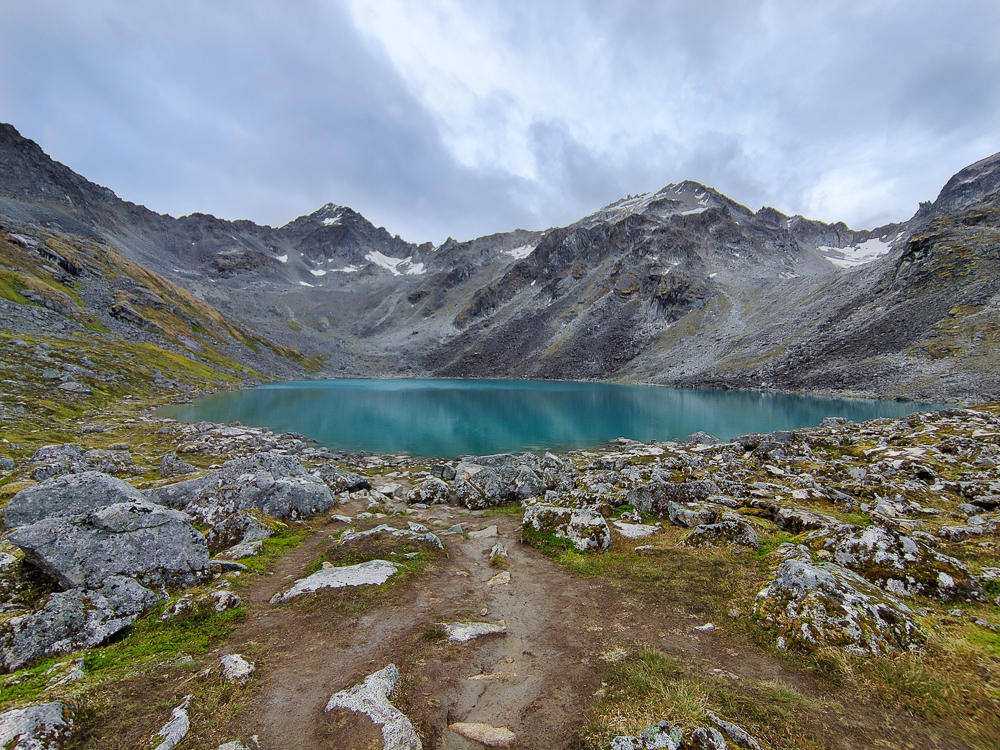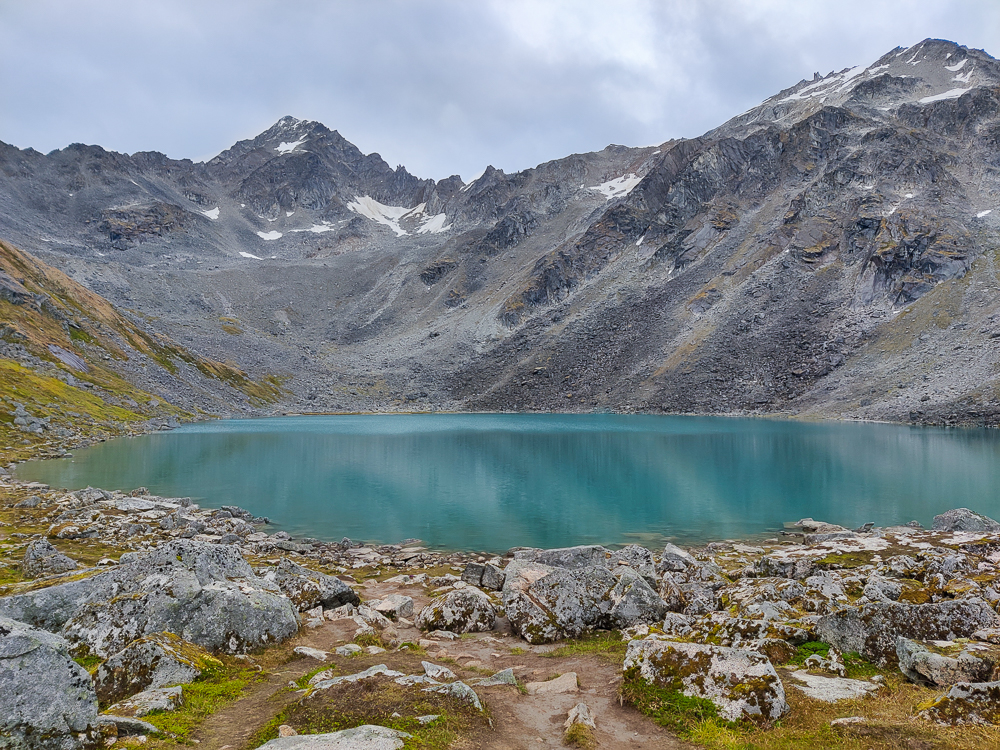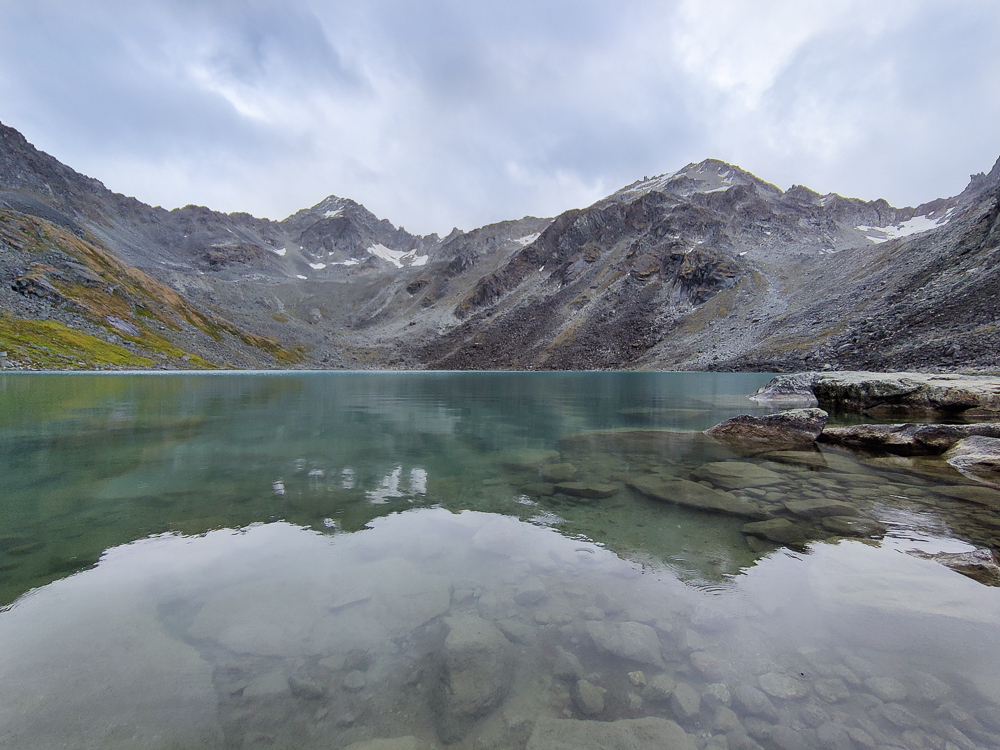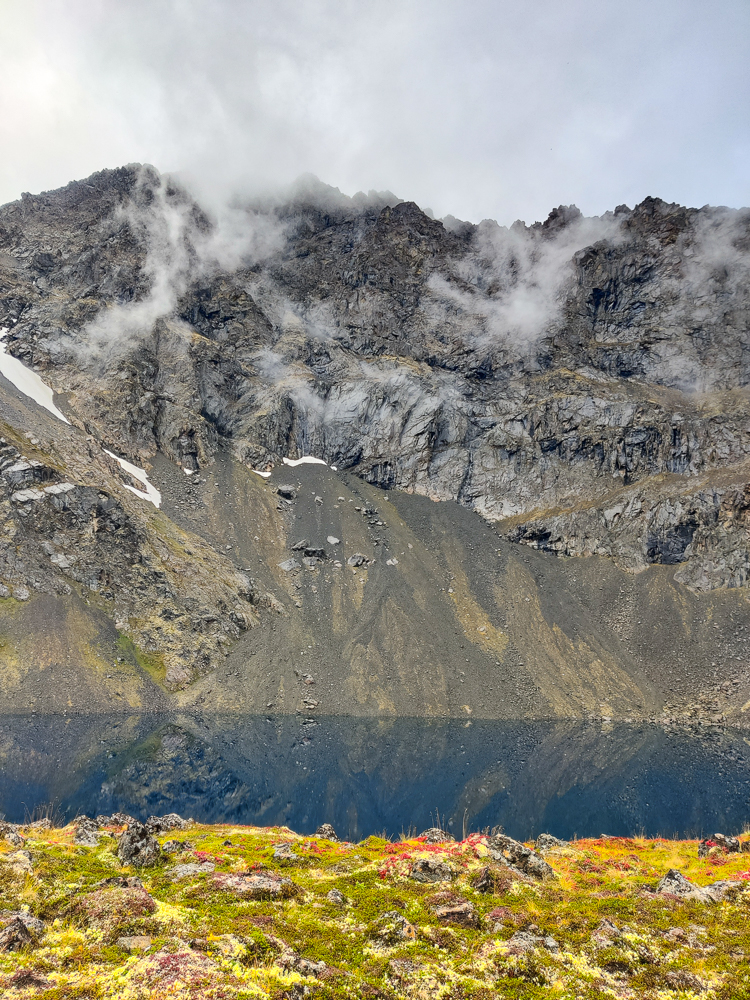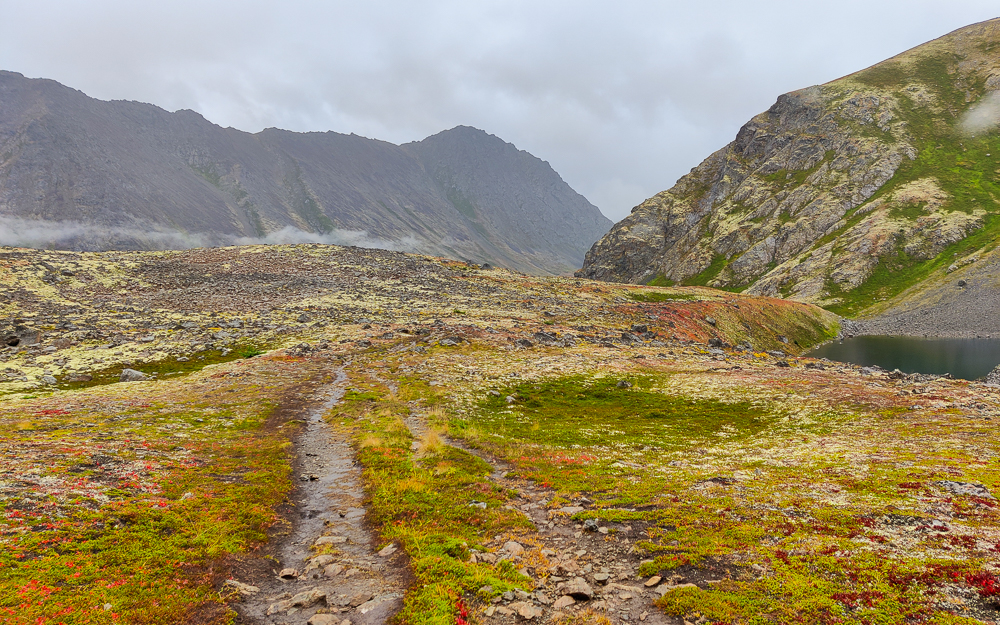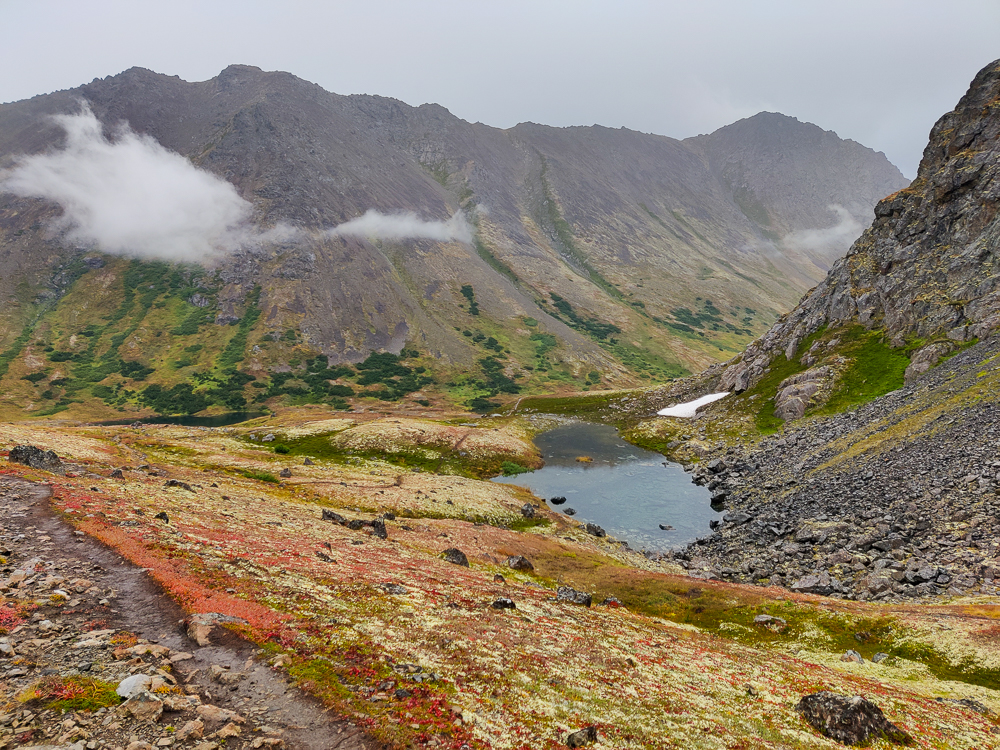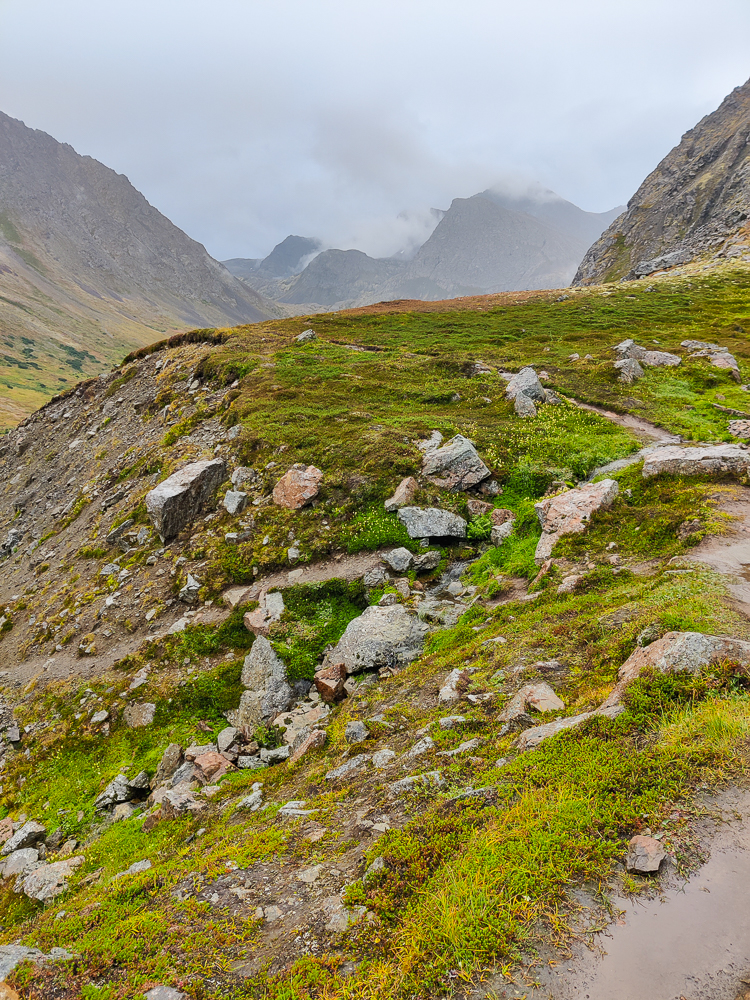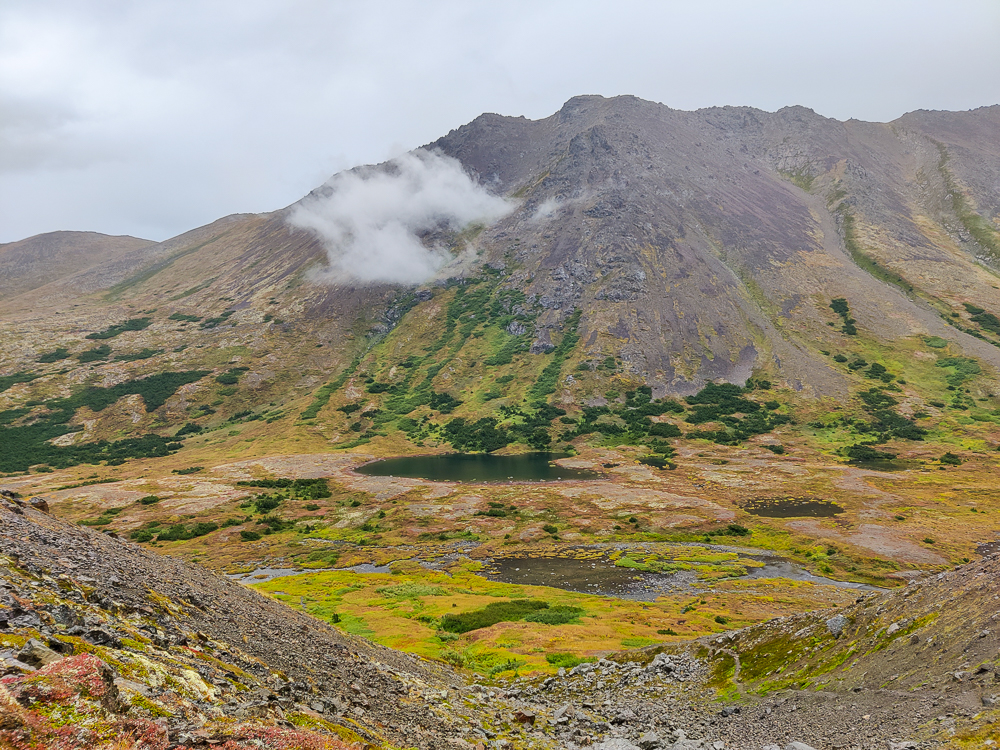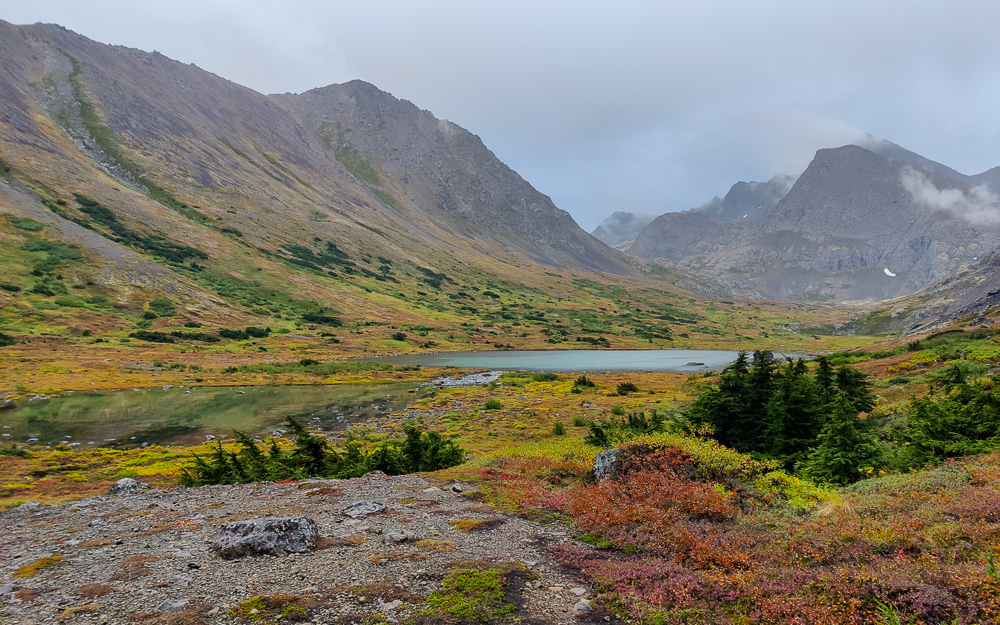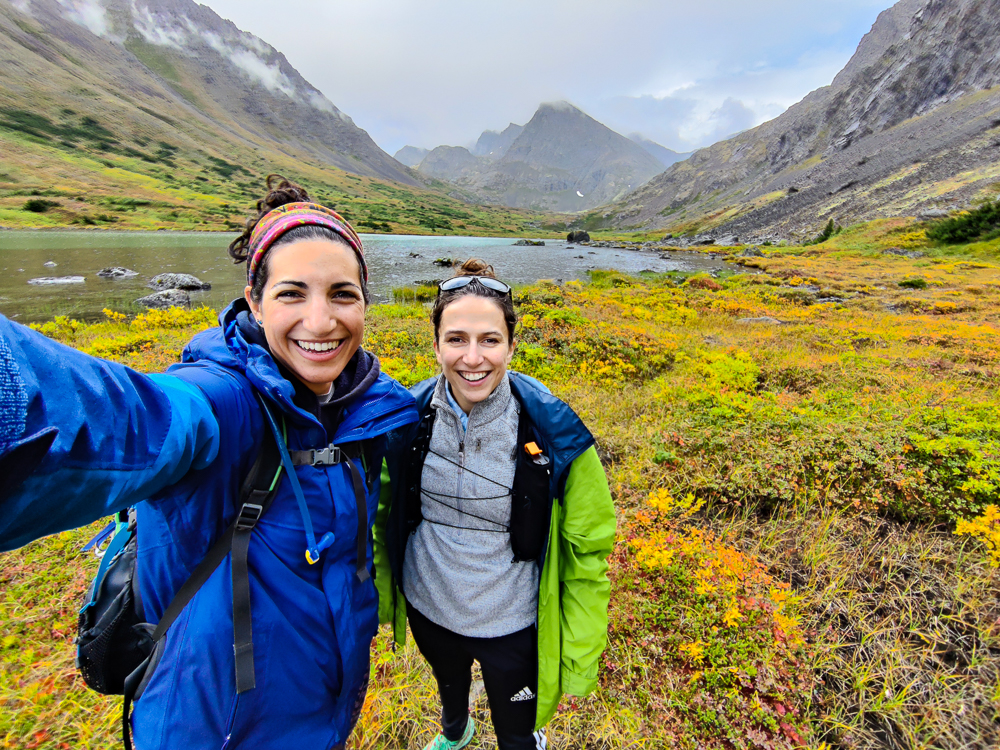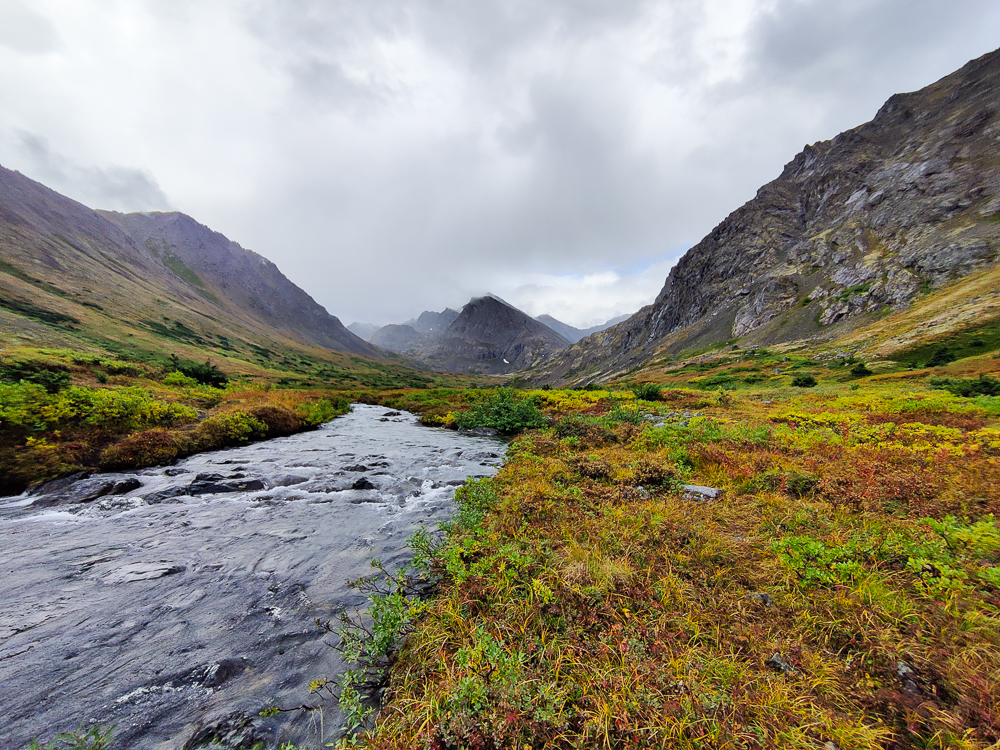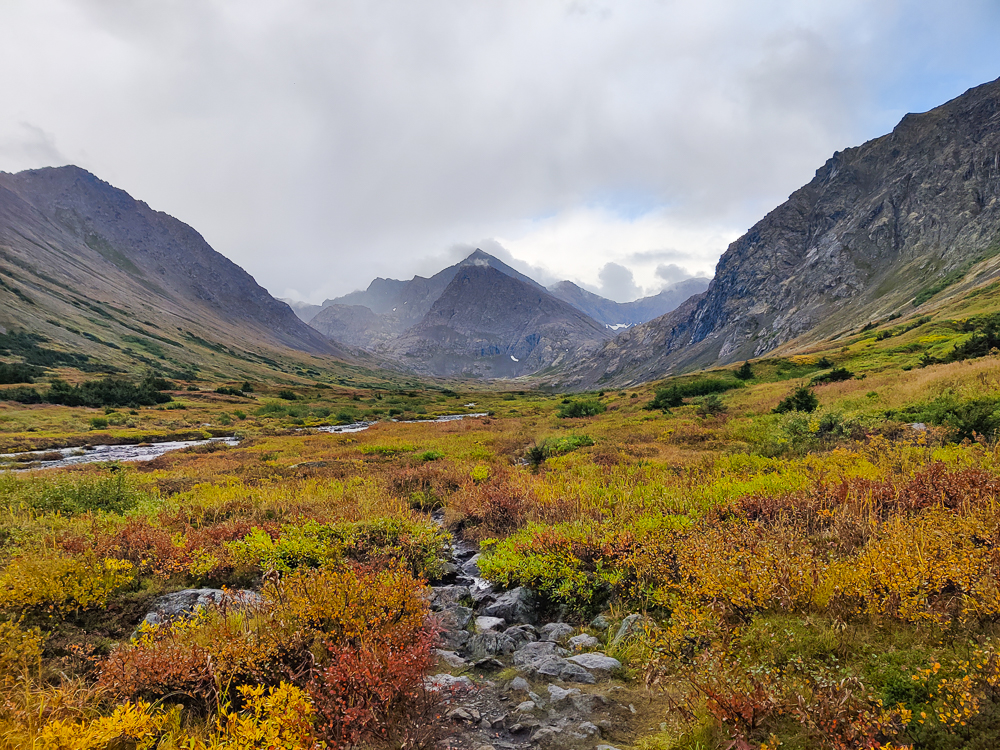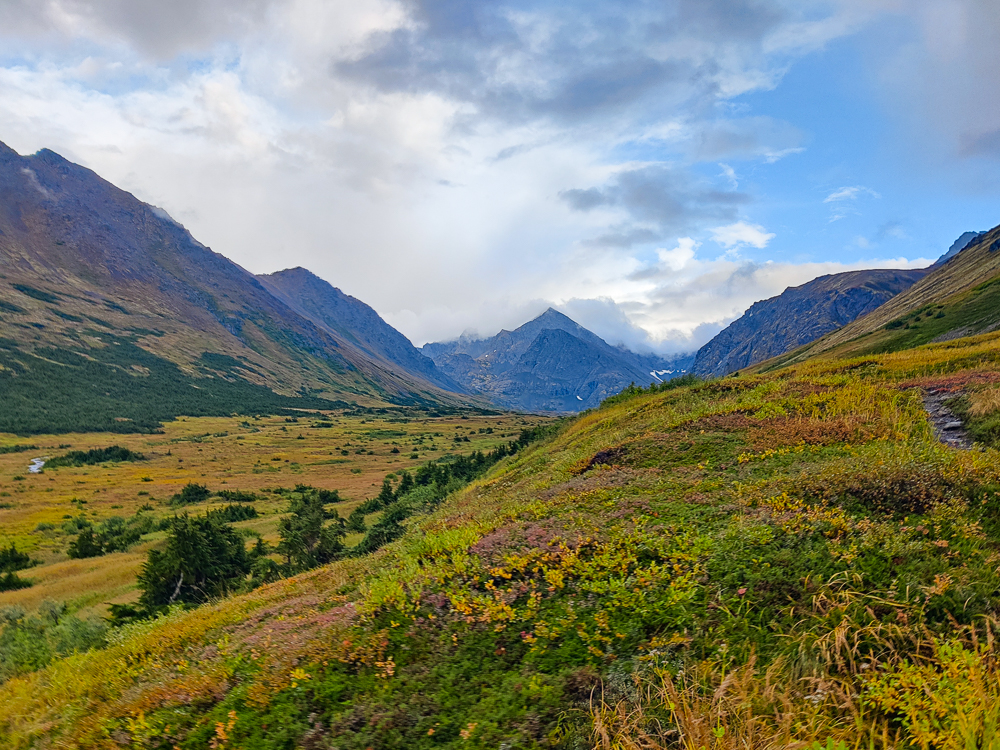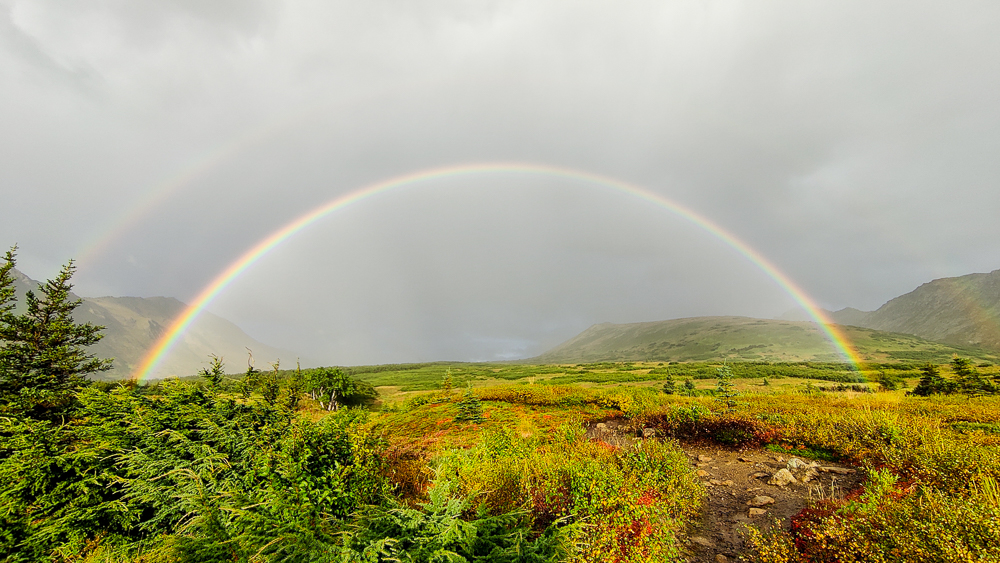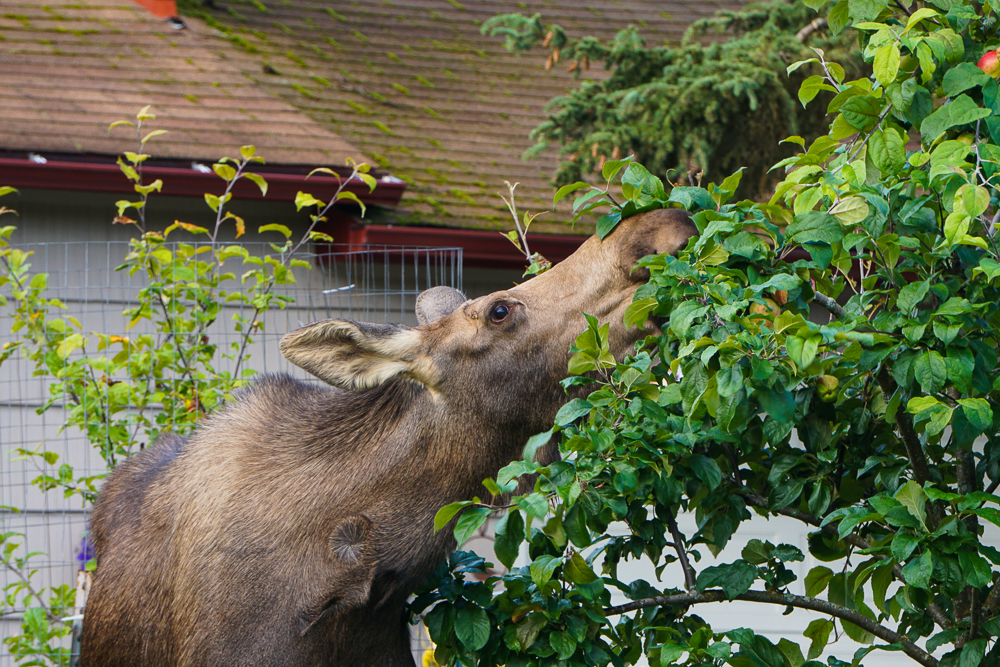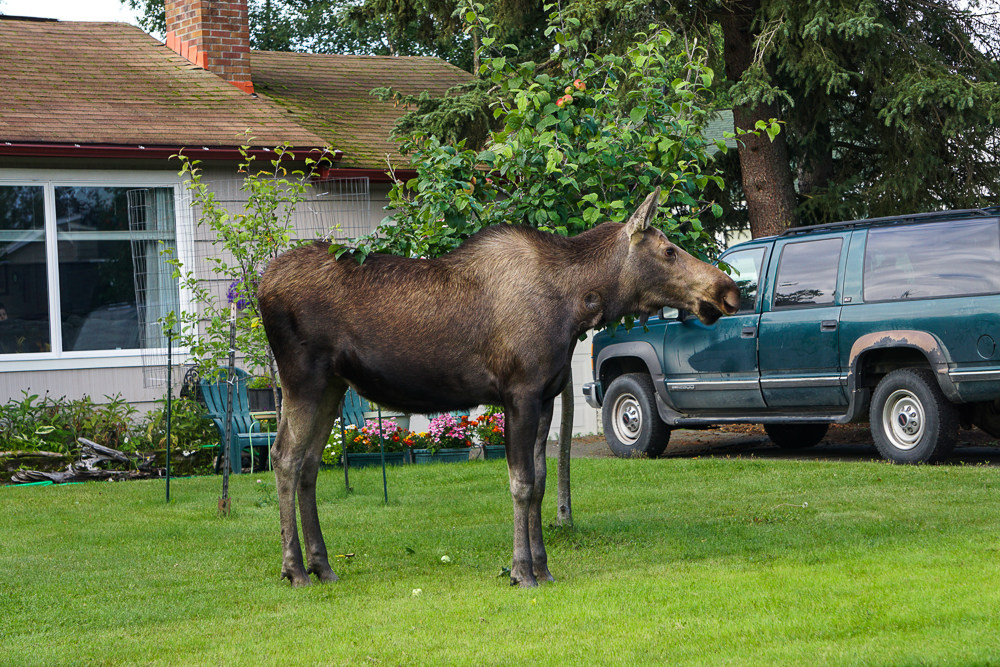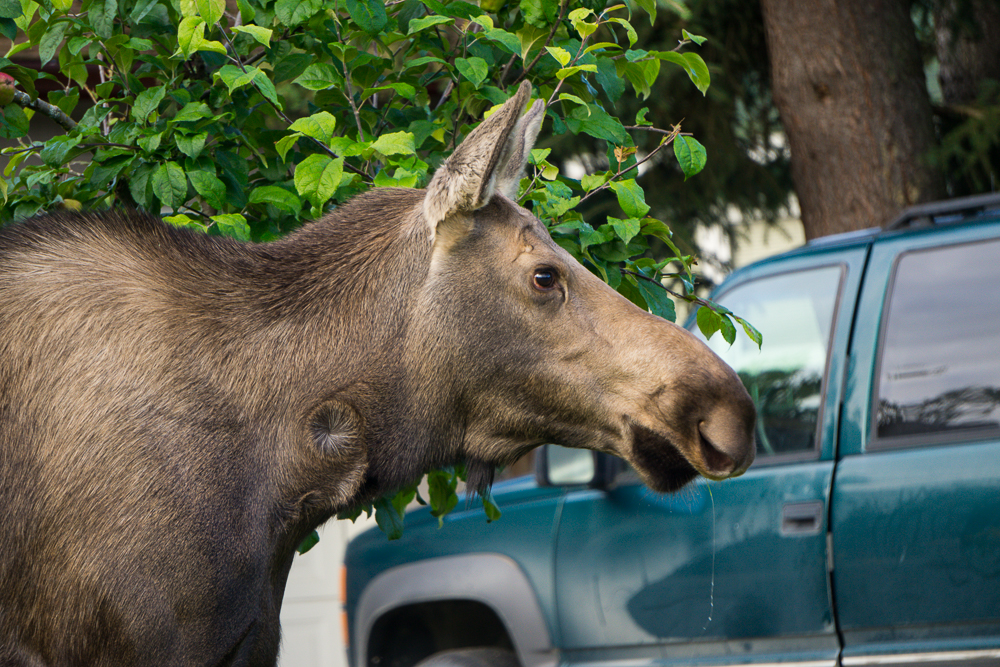
We’ve covered all of the major adventures of my trip to Alaska, so this last post is a bit of a mish-mash of things that didn’t fit in anywhere else… but I have pictures I want to share (like me feeding a MOOSE! I can’t keep that to myself!) which means you get one more post (and SO many pictures).

There’s one hike that we haven’t covered, and that’s because it wasn’t a full-day experience like the others. The day after O’Malley, we decided that we probably weren’t up to back-to-back, 9-hour hikes. So, Olivia’s mom suggested we do one of her favorite hikes, Winner Creek. This was a short little 7 miler… which I realize isn’t nothing, but it wasn’t a super intense 7 miles (also technically it’s just a 5-mile hike, but we innovated a bit). There was some up and down, but we certainly weren’t climbing a mountain. I was happy to have an opportunity to get moving and still give my body the recovery day it wanted.

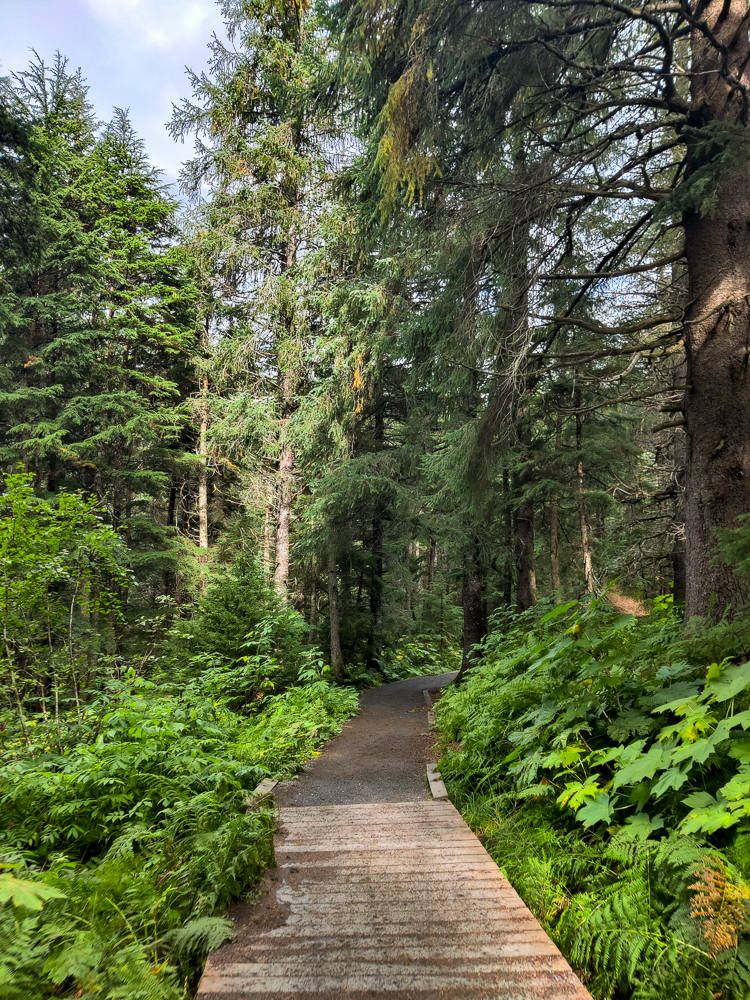
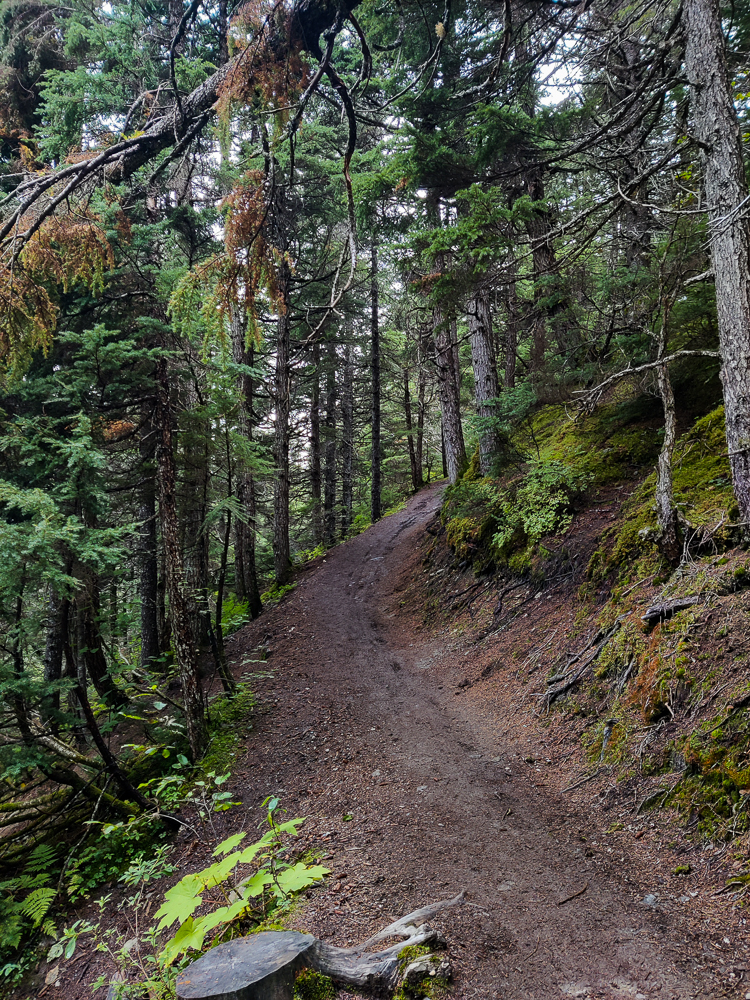
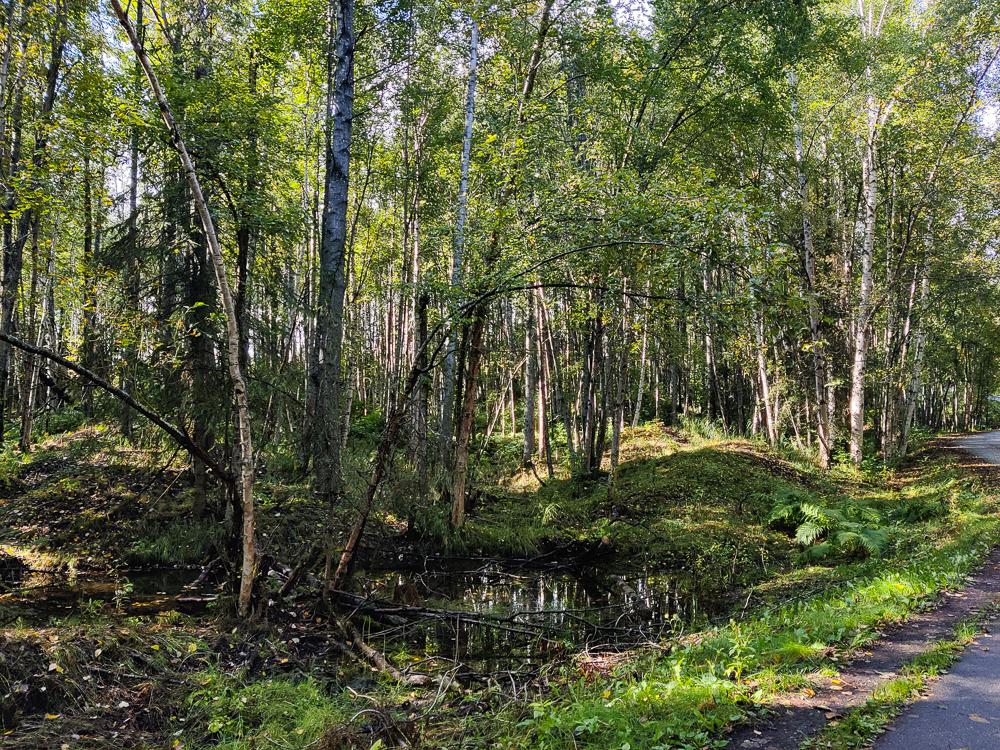
Winner Creek is very different from the other hikes we did. It doesn’t have the same breathtaking vistas, those sweeping views of colorful valleys framed by jagged mountains. There’s not even really a big destination. Mostly, it’s just a walk through some very pretty woods. The good news is that I love to walk in the woods. I also love those heart-stopping, mind-blowing hikes that make me feel like I’ve left the planet, but I don’t need that. I’m plenty happy to be walking through a forest, marveling at the big ole trees. Now, something like a viewless hike through scrublands… that would not be my favorite. But I love me a good forest.
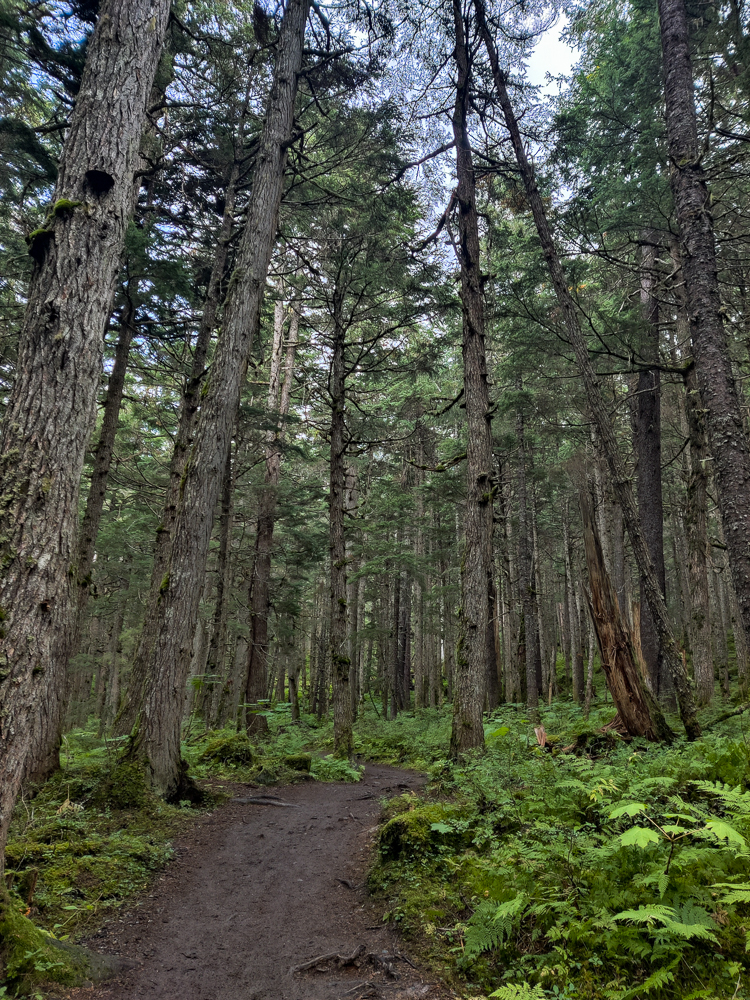
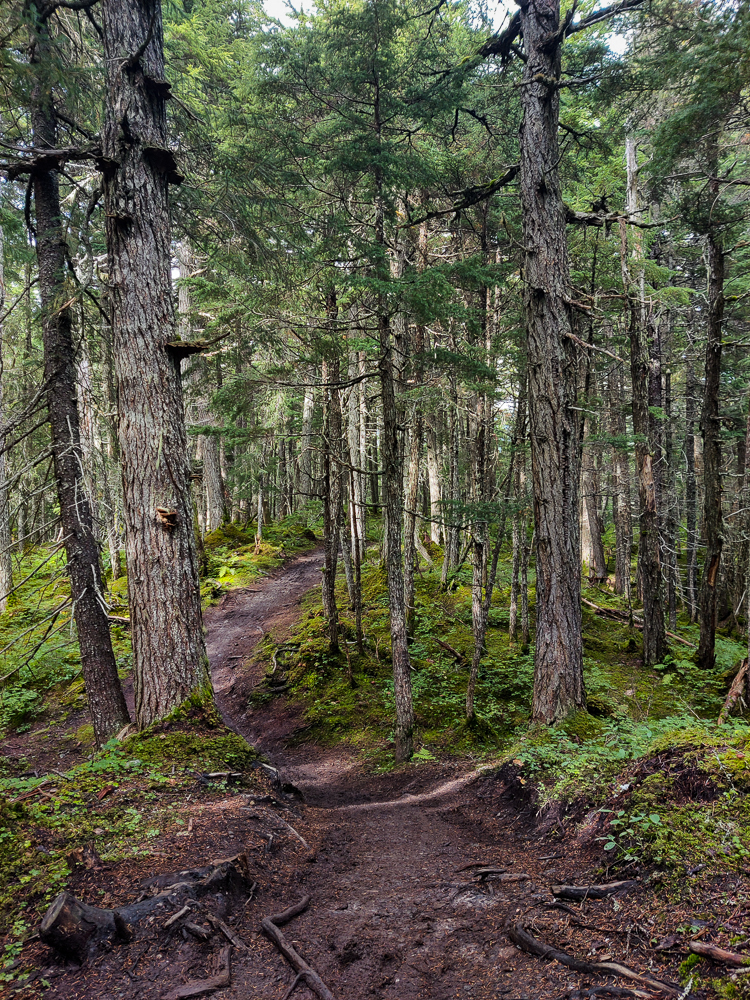
HELLO BIG OLE TREES
Seriously, there’s no better place for a walk.
I obviously have plenty of photos.
Don’t worry, I’m not going to run out anytime soon.

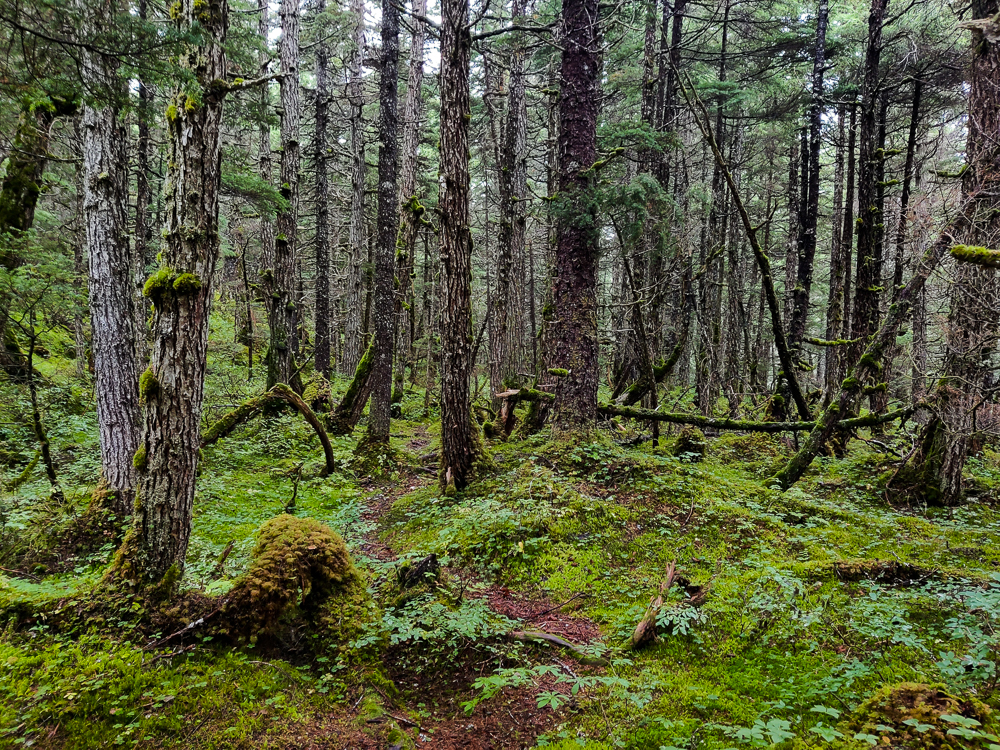
This, without question, is a good forest. Fun fact, it’s the northernmost temperate rainforest in the US! I find the “northernmost” part of that claim kind of comical because if it exists in Alaska, it is clearly the northernmost  fill-in-the-blank  in the US. The temperate rainforest part is, to me, interesting and unexpected because I think that despite knowing this isn’t the case, in my head, Alaska is still just a frozen tundra. This hike, though. It was giving me “Pacific Northwest” vibes. Important disclosure: I’ve never been to the Pacific Northwest, so you can give that the weight it deserves. BUT, I feel justified in my observation because… Did you know that there’s coastal temperate rainforest stretching from Alaska all the way down the coast into the contiguous US? Aka the Pacific Northwest! Sounds to me like I nailed it.
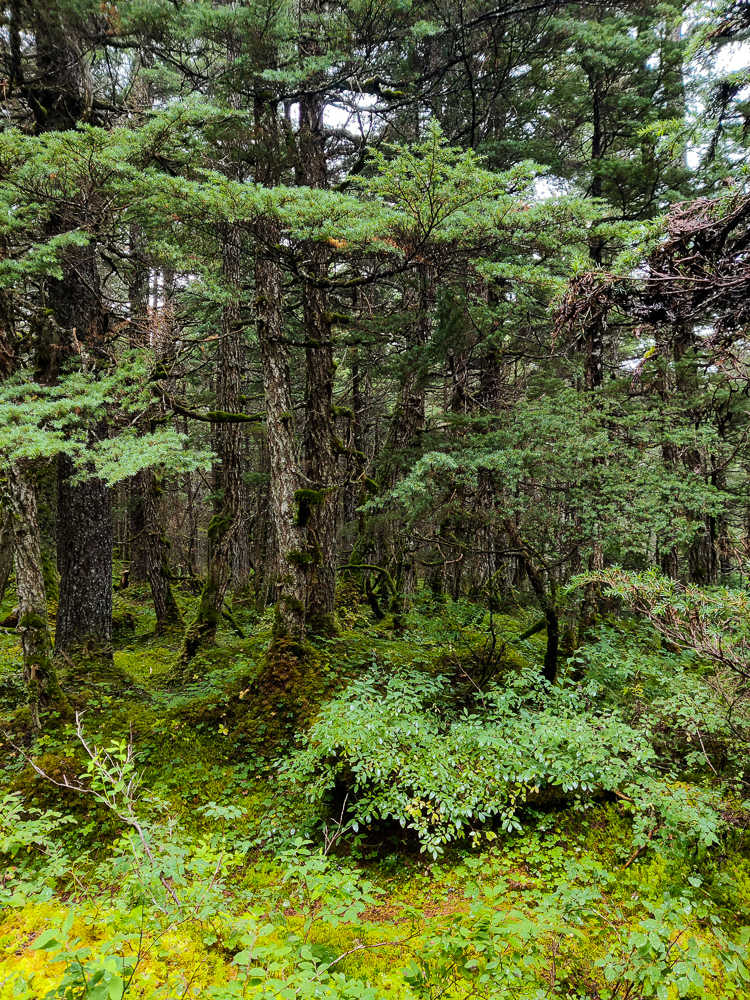
Very mossy.
And SO GREEN.

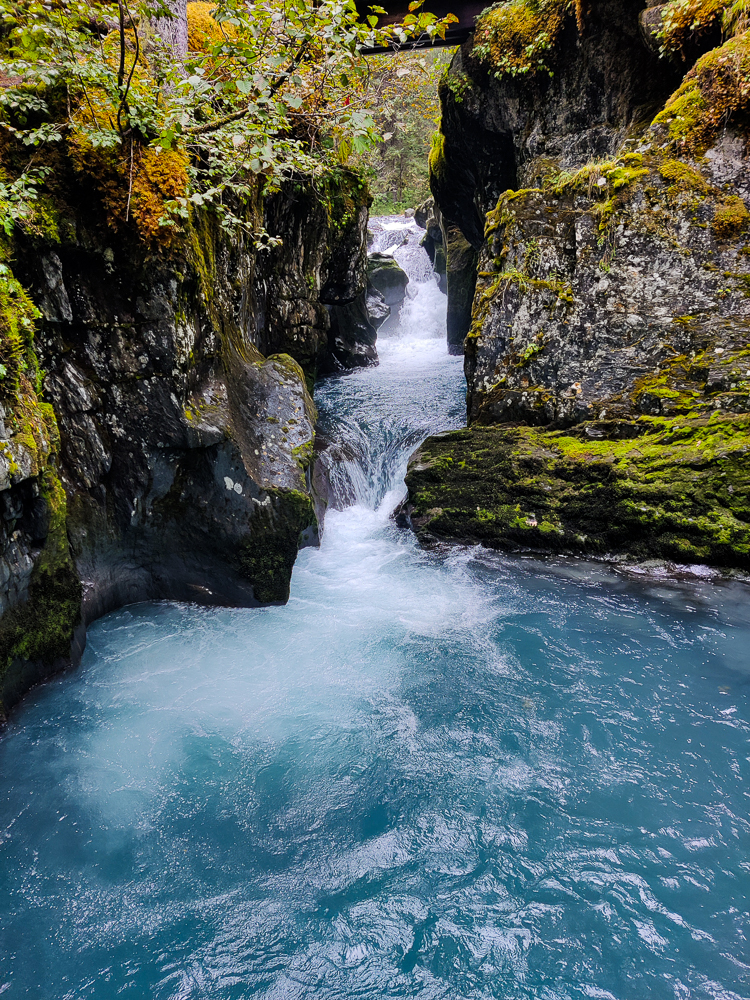
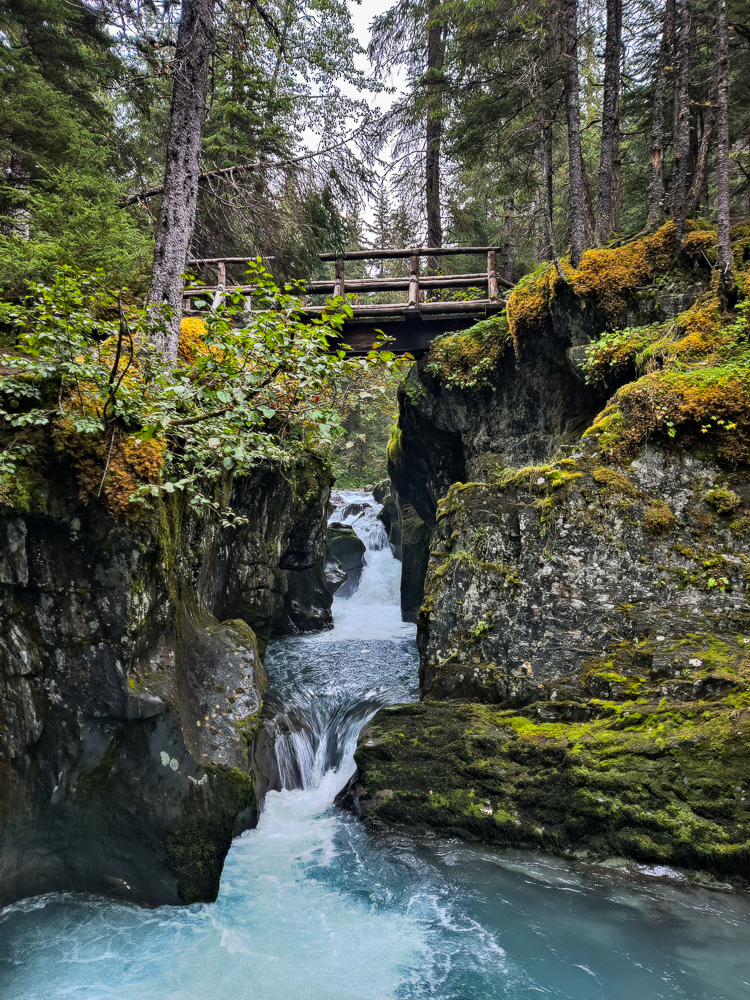
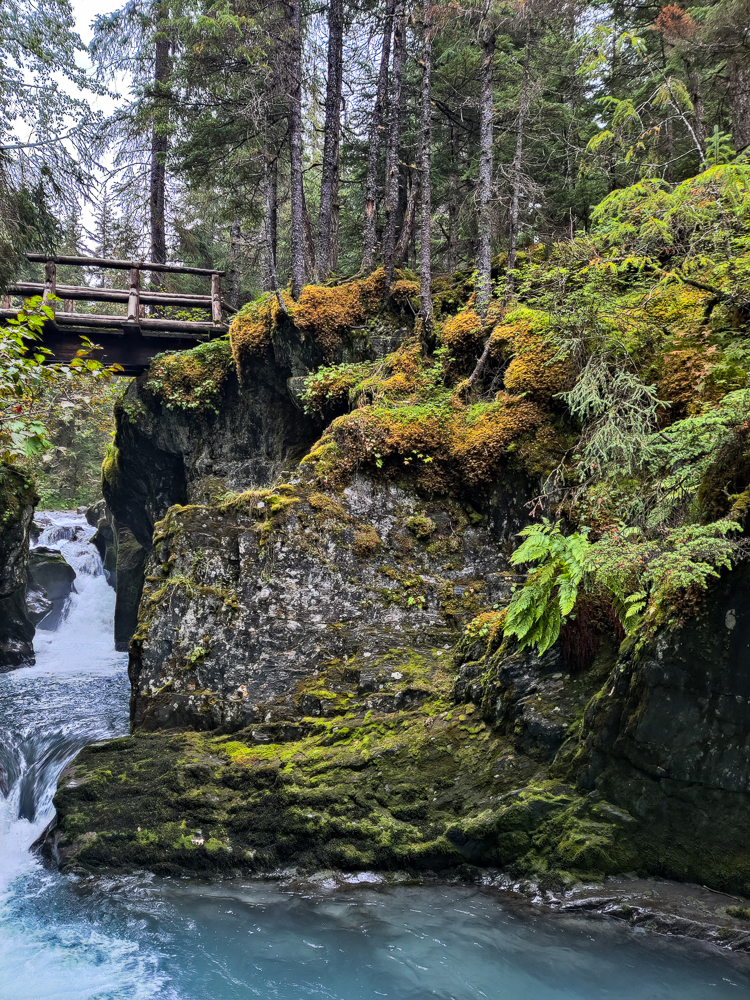
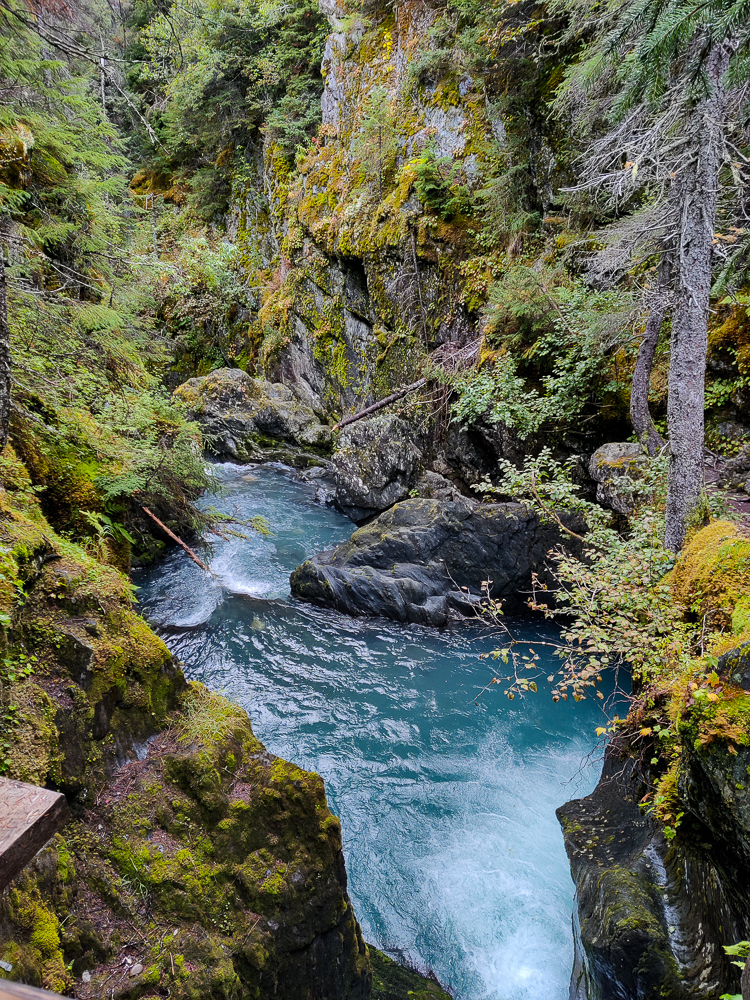
Besides being in a fabulous forest, the hike also criss-crosses a creek (in case “Winner Creek Hike” wasn’t a giveaway). It’s glacier-fed which means it’s SUPER clear and blue and is very pretty. There was this one waterfall that reminded me of an Ithaca waterfall except with more moss. The rock formations were very similar, though.

There used to be a hand-tram that you could use for a creek crossing in one place, but there were a few accidents and now it’s closed with plans to replace it with a bridge. That was a bummer. It would have been a beautiful view to see the creek from above, and I love unique things like the hand-tram. Oh well.
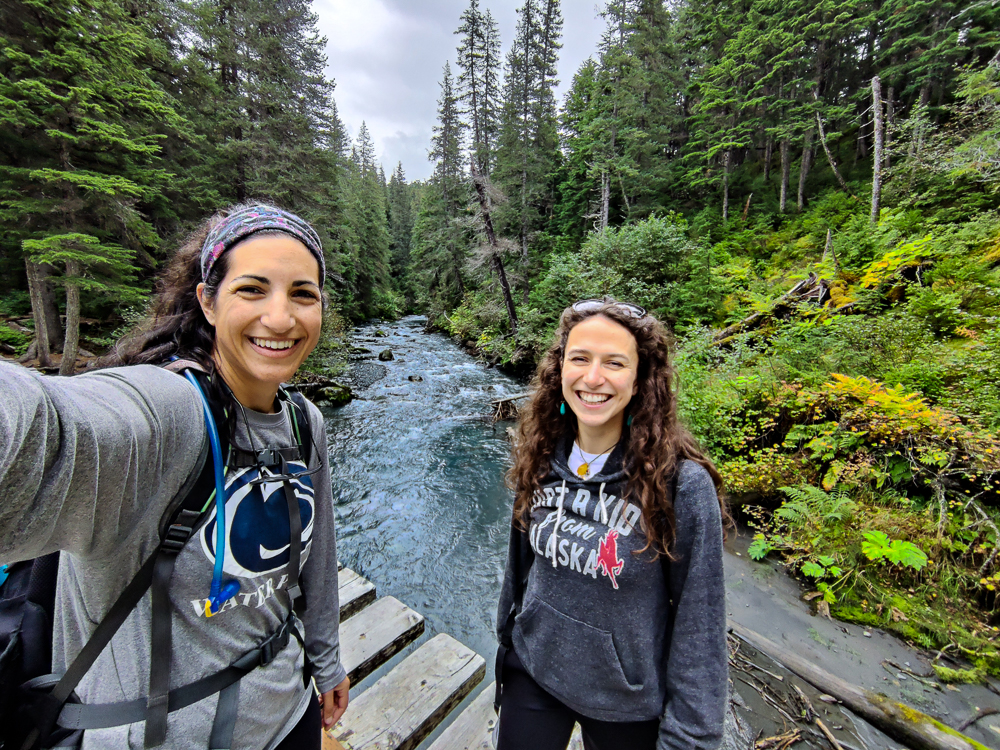
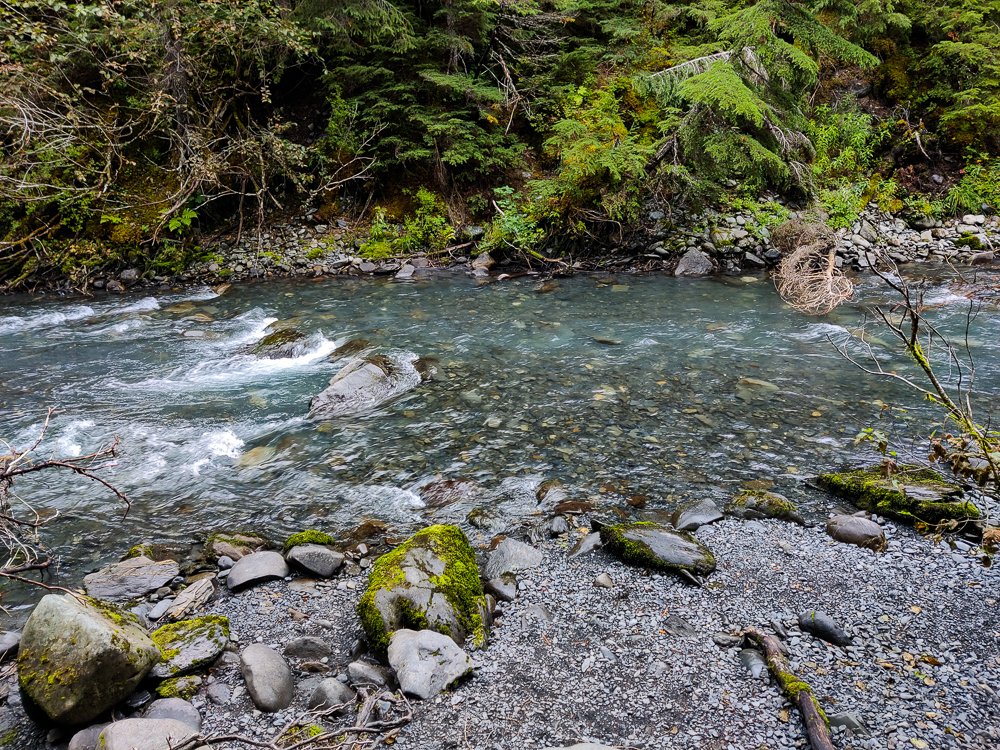
There was a different bridge, but this spot wasn’t quite as dramatic as the hand tram location.
Love that clear blue water!
Okay now ADMIRE THE WATER
AND THE CUTE LITTLE BRIDGE
AND THIS FABULOUS ROCK
AND THIS VIEW FROM THE BRIDGE
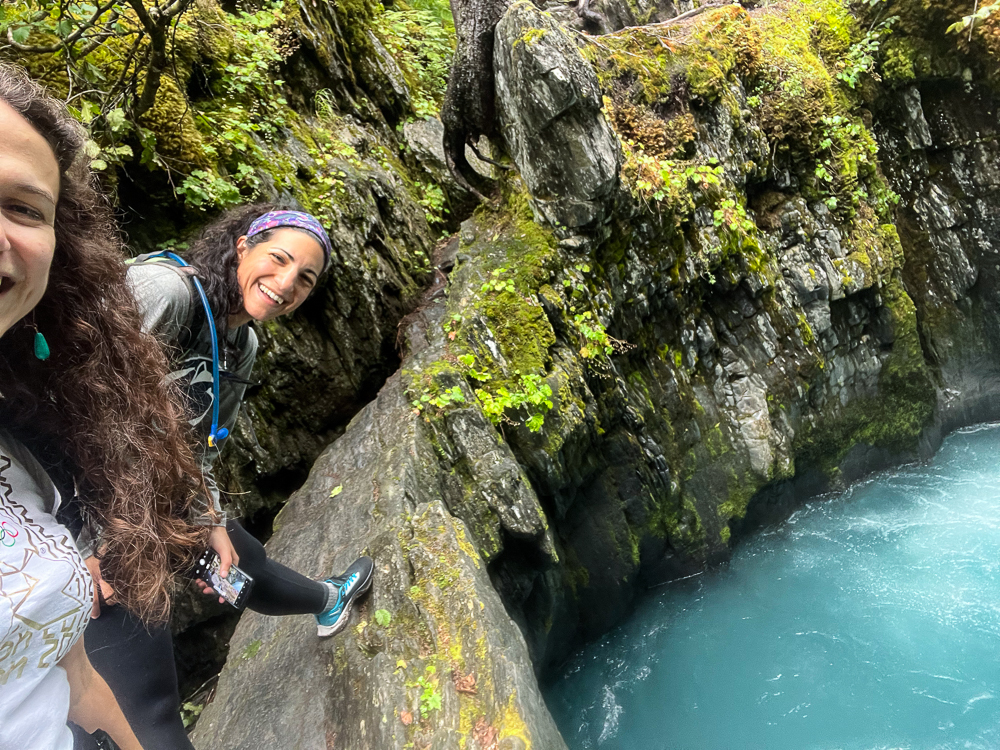
Do I look like I’m maybe a little bit thinking about jumping in because the water is so pretty? (But then immediately deciding I like not being a popsicle so maybe not…)

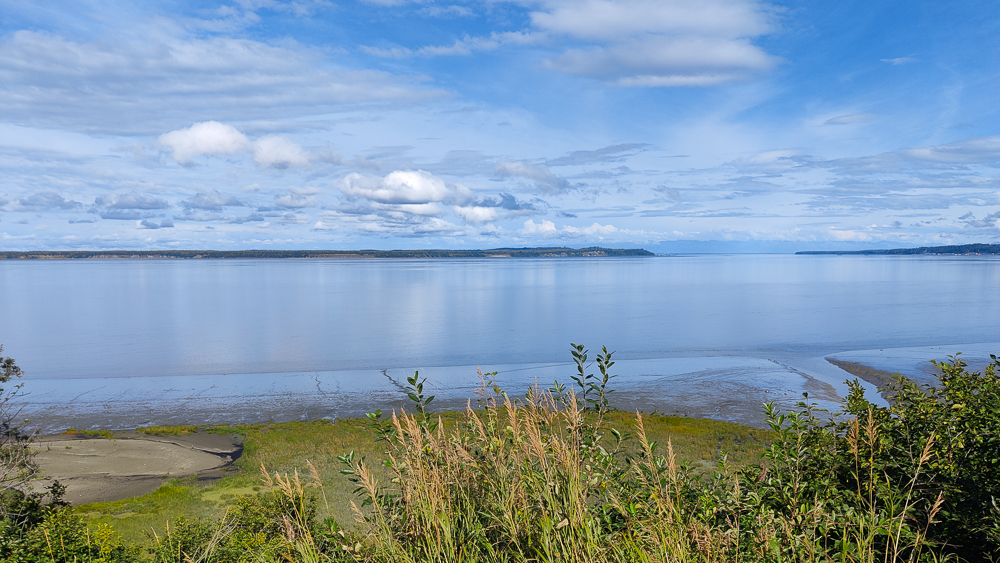
Another pro about this hike is the drive to get there. It’s about 45 minutes from Anchorage, and much of the route runs along the coast! There’s water on one side of the road and mountains on the other. Pretty cool! Apparently, there are often beluga whales in the water there, but we didn’t see any (not that it would have been that exciting if we did… I talked about this in my Anchorage Tour post. You can barely see anything when a beluga surfaces. Just a little flash of white here and there).
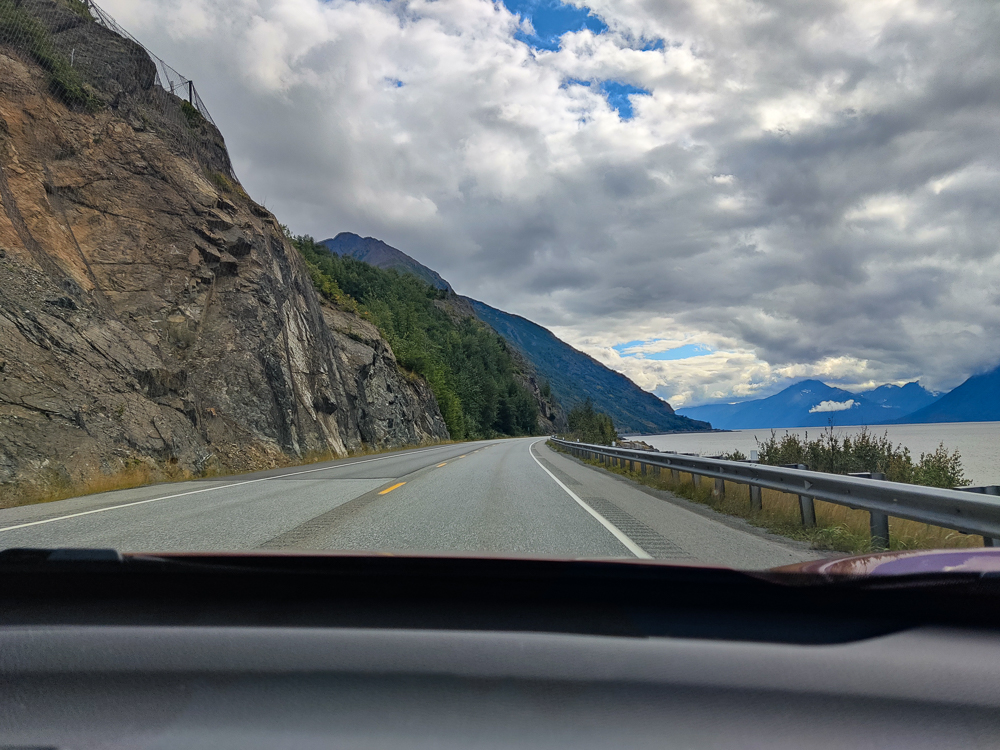
Mountains on the left, water on the right!

The other activity I want to talk about is visiting a reindeer farm! That’s probably not something I would have sought out on my own, but I have a cousin who lives in Alaska, and she recommended going. It felt kind of silly/gimmicky, but now that I’ve done it, I’m 1000% in.
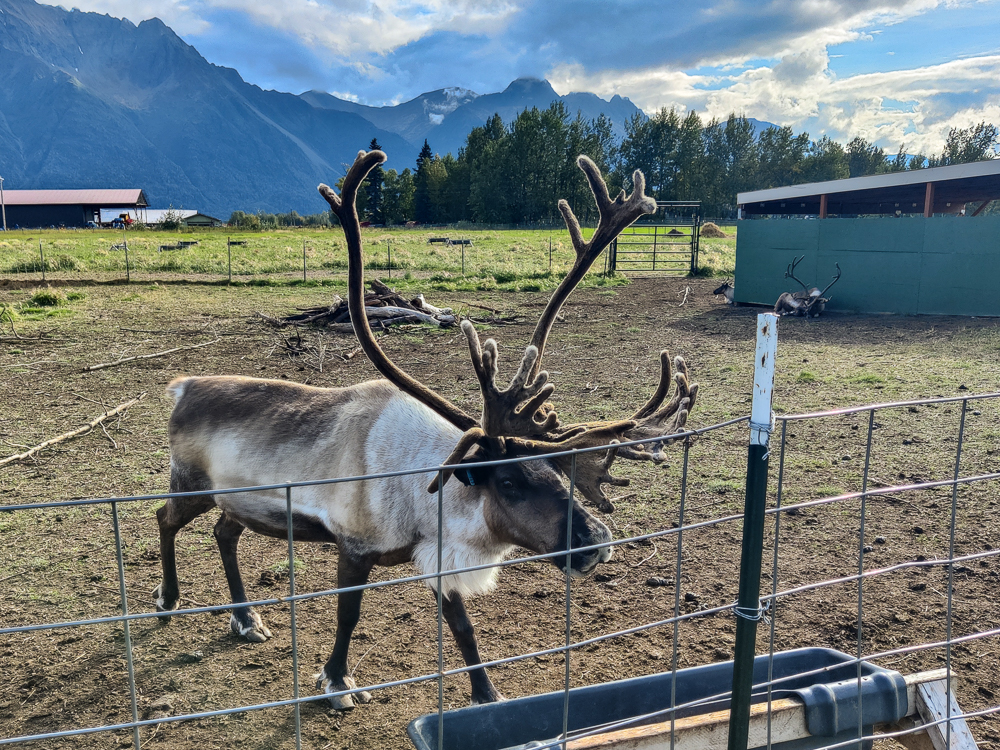
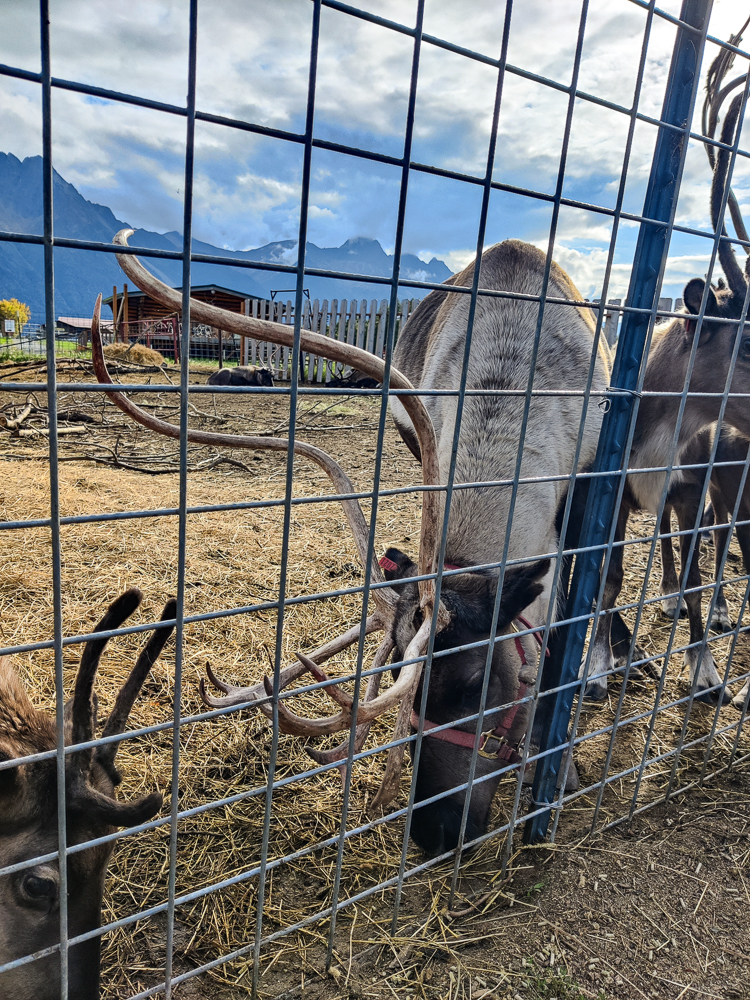
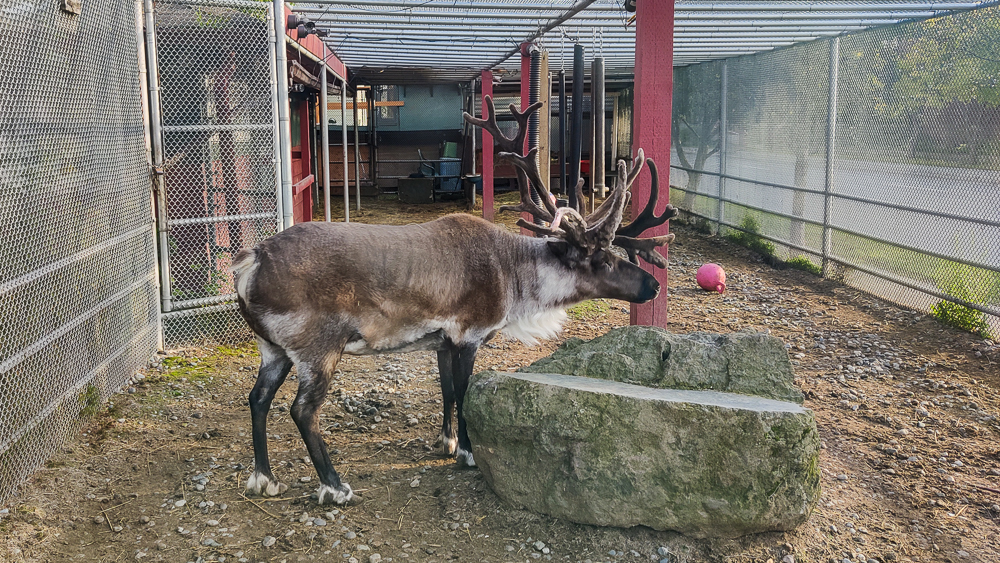
LOOK AT THIS MAJESTIC CREATURE. Really though, aren’t those some impressive antlers?

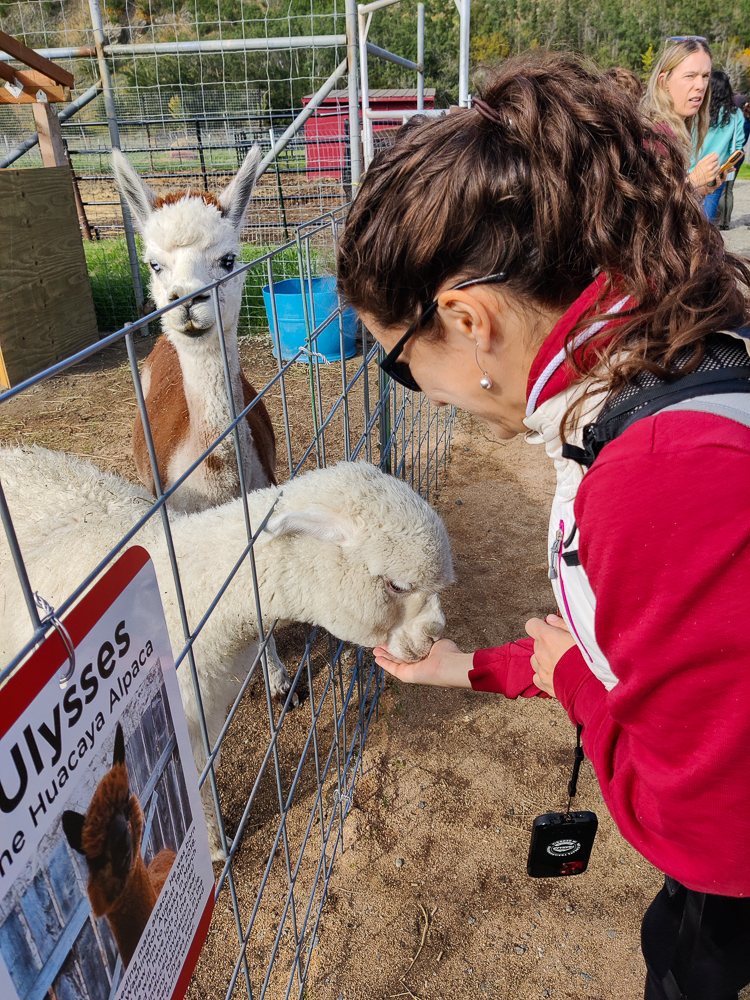
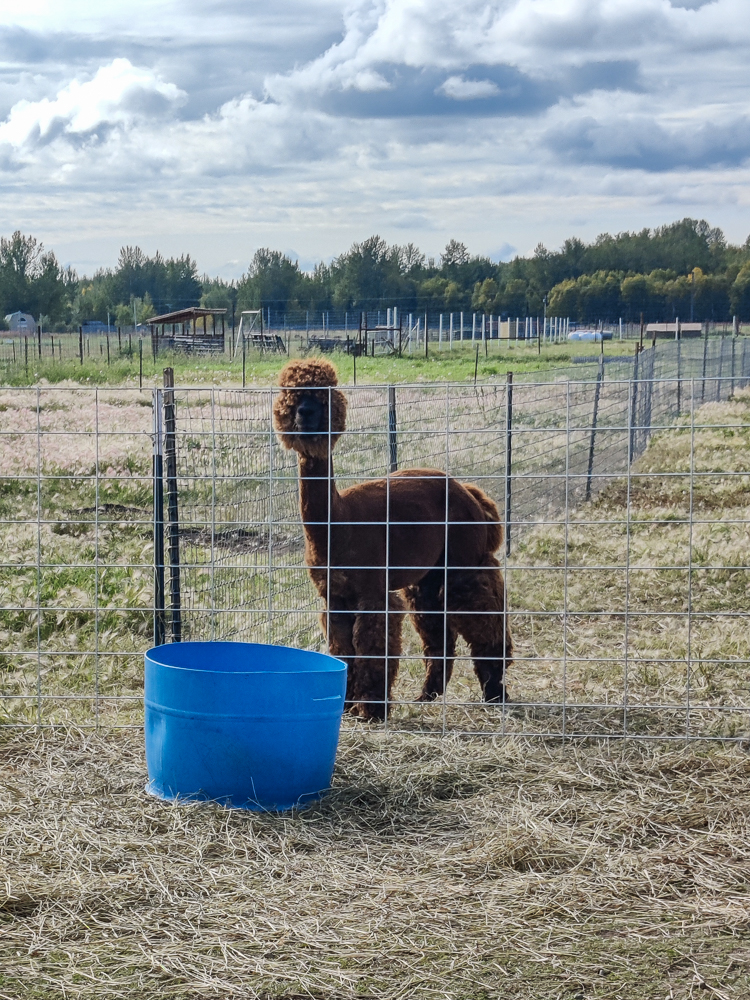
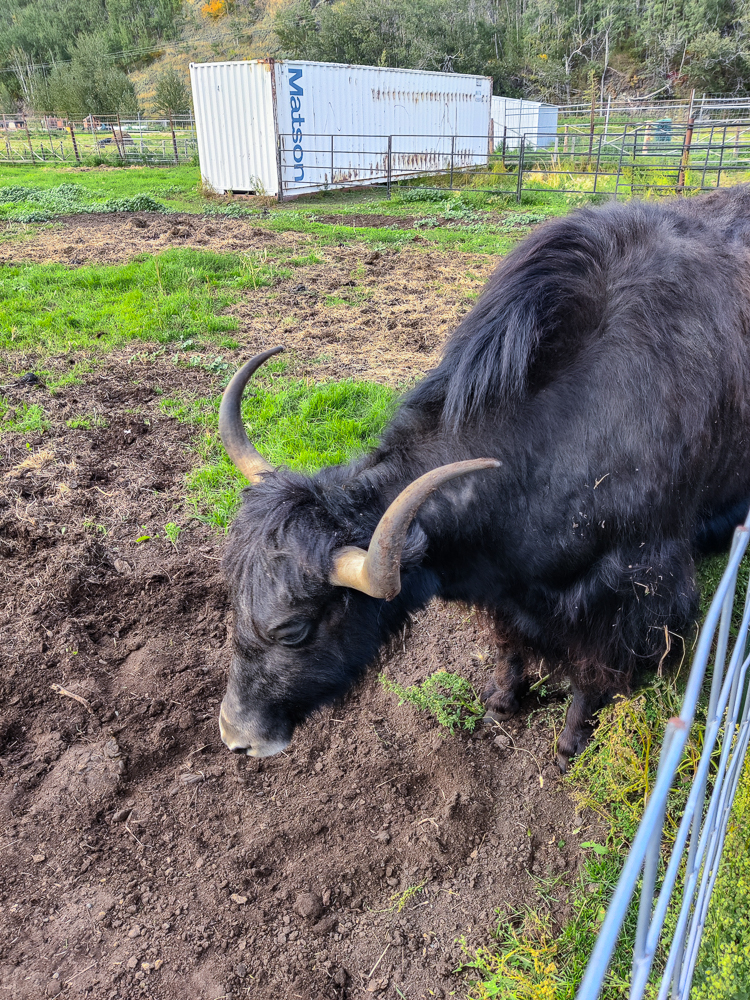
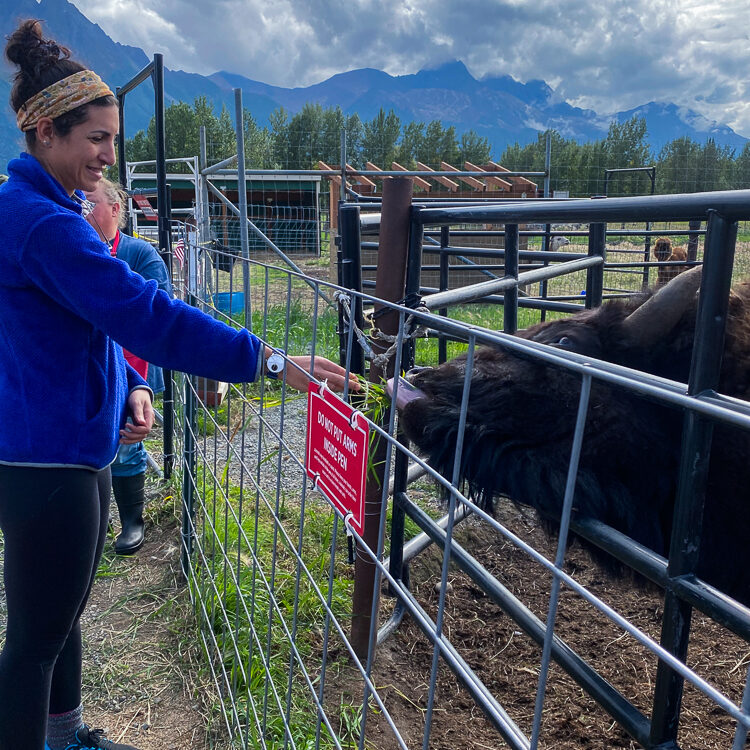
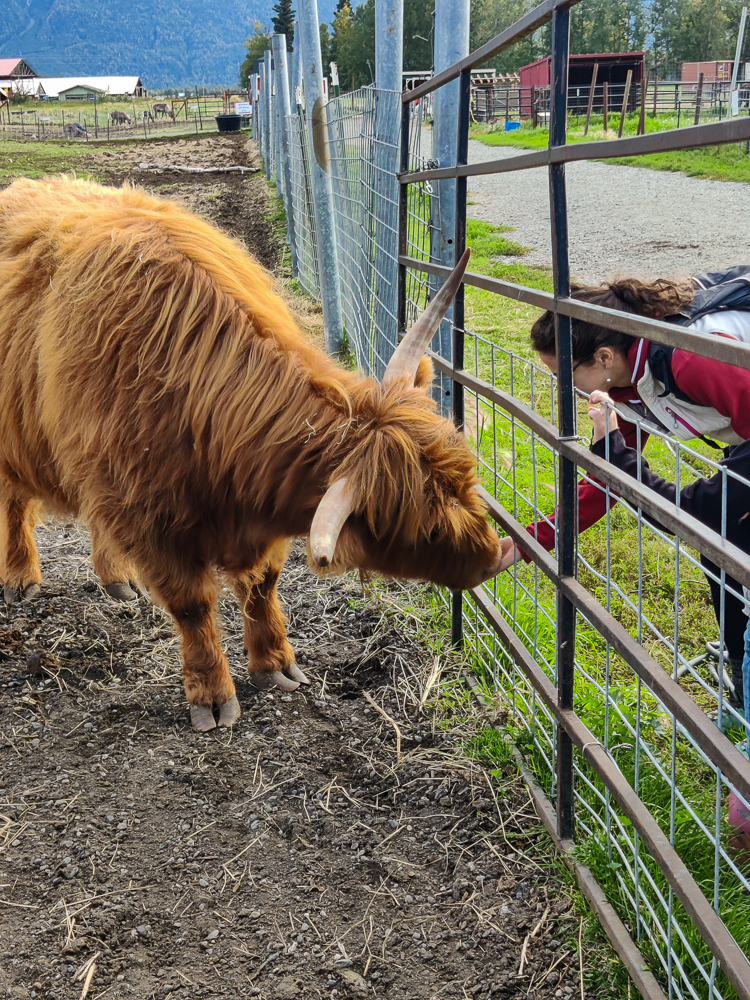
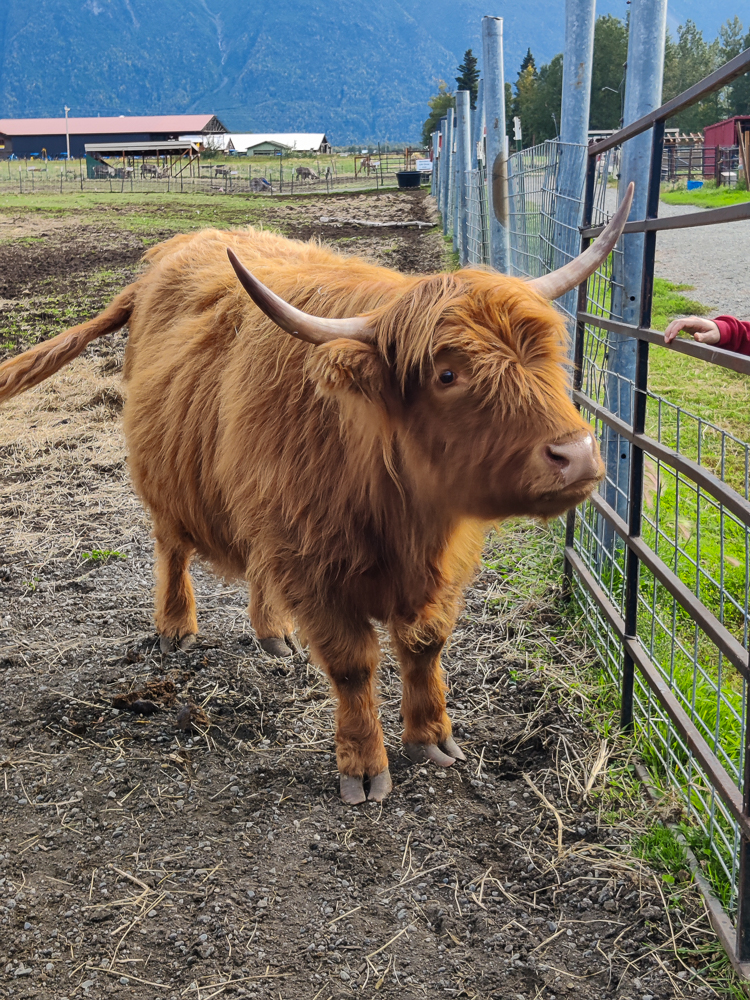
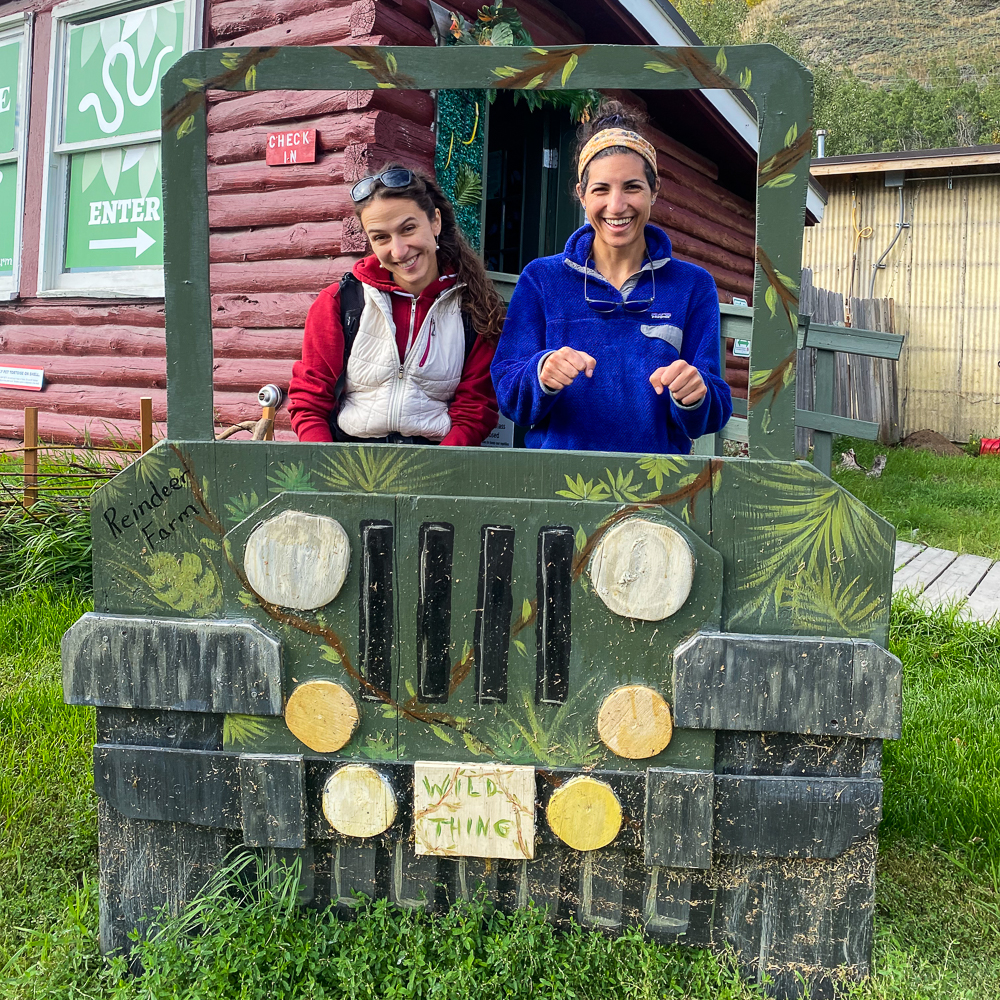
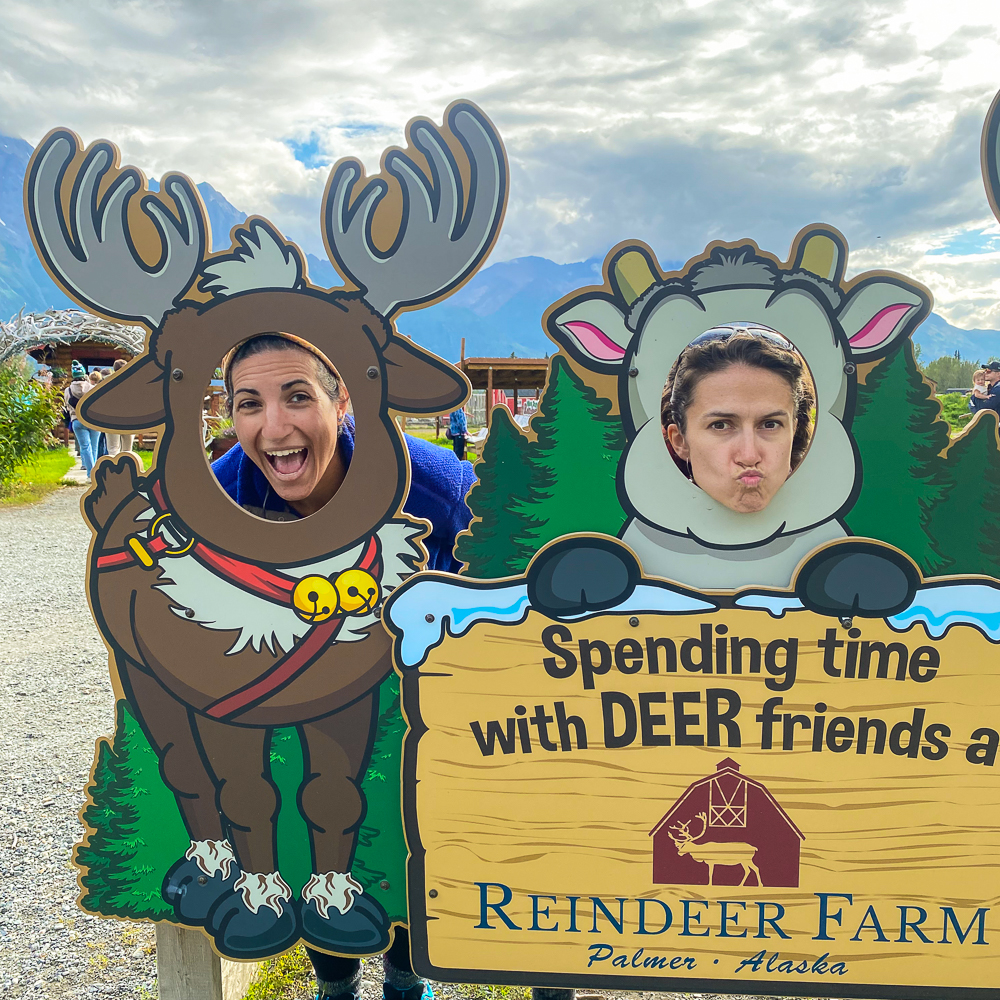
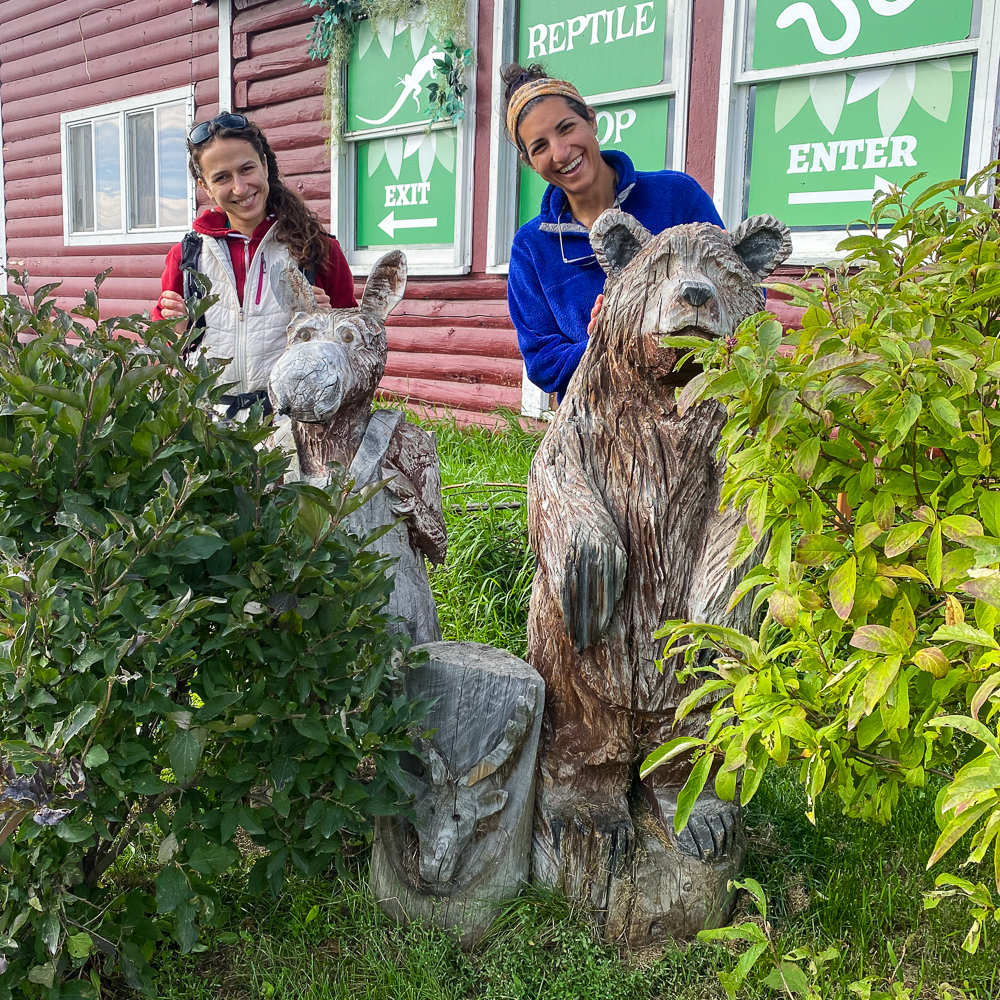
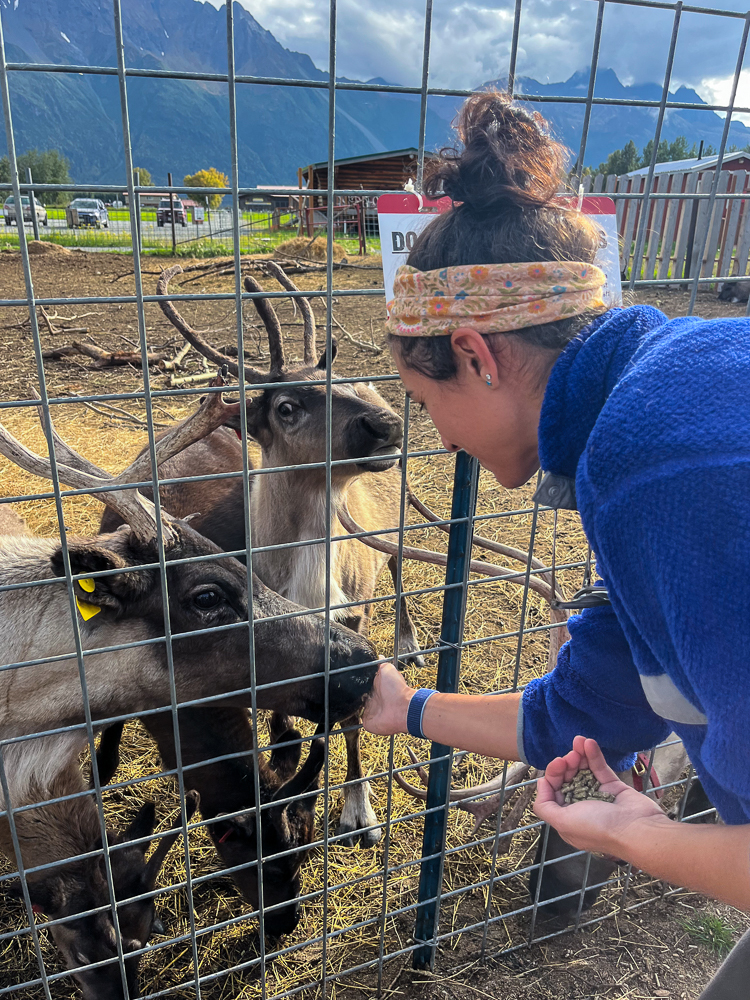
Besides getting to see the animals, you also get to FEED the animals which, again, feels like something gimmicky for kids, but I got over that feeling pretty fast once I did it. They don’t just have reindeer! The place we visited also had some alpacas. A Tibetan Yak. Highland cattle. I petted the yak and fed him some branches. There was a moose! Her name is Lily, and she was just about a year old but still enormous. The lady from the farm said that it’s special that they have a moose because you aren’t allowed to keep them without a good reason. Lily was abandoned as a baby, so that’s how she came to live with them. And we got to feed her! They had a little reptile house which was random but interesting. Olivia and I took some prom pics together. We saw a couple of miniature donkeys, and then there was another reindeer herd. We got to feed them too! I don’t know what I was expecting from the whole experience, but it was very entertaining. Enjoy a recap of our visit in probably way too many photos…
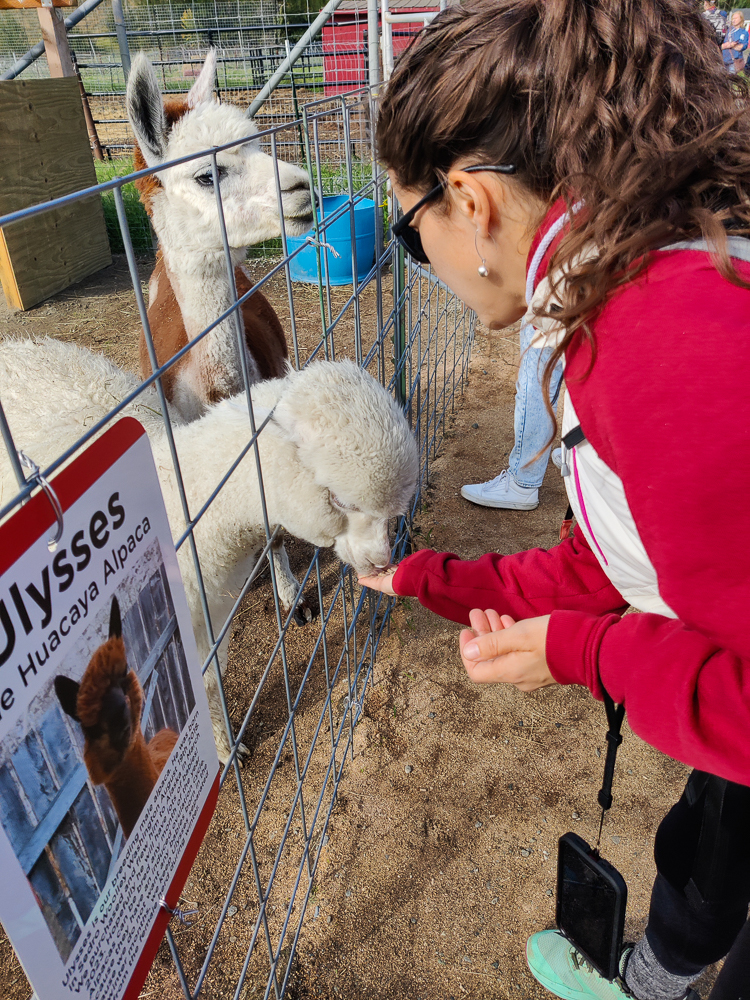
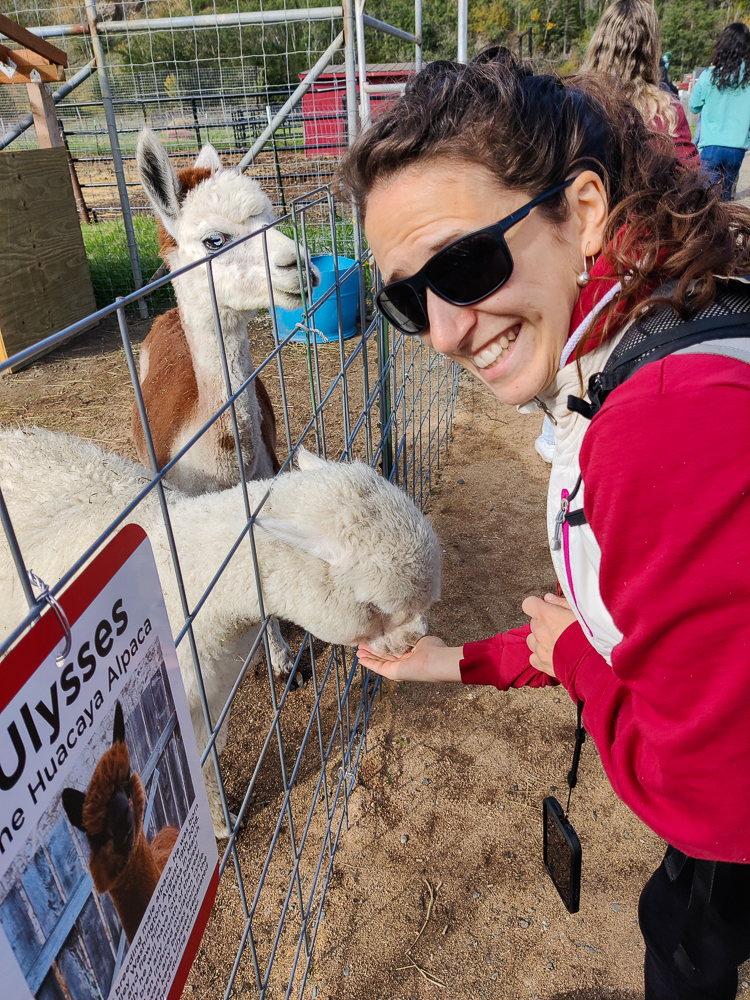
Olivia jumping right in to feed an alpaca.
She looks… maybe happy about it?
Definitely happy.
One more alpaca pic because they’re just so funny looking.
My Tibetan yak friend.
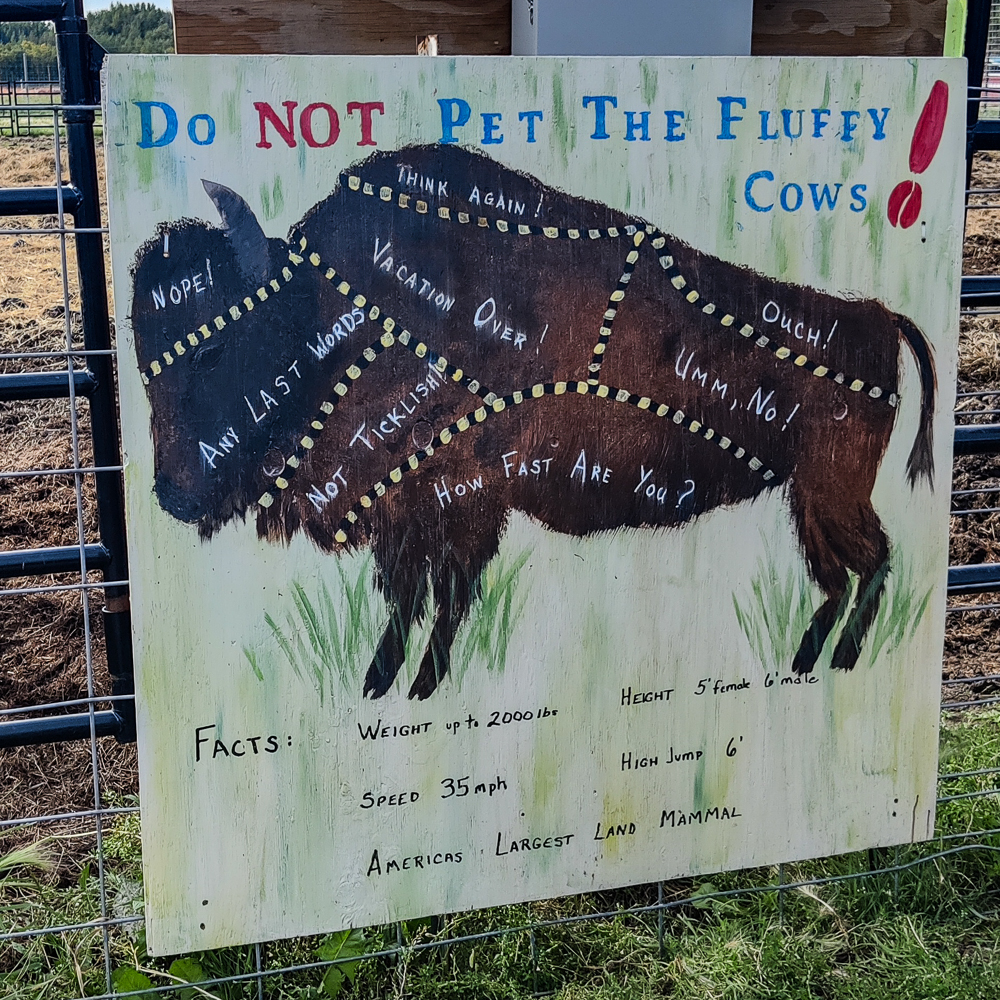
A bison! (Also I’m just going to say there’s like a 40% chance I’m going to misidentify an animal… so don’t quote me.)
In case you were wondering, I did not pet the bison.
Olivia looks perplexed.
Olivia feeds a Highland cow!
Hellooo
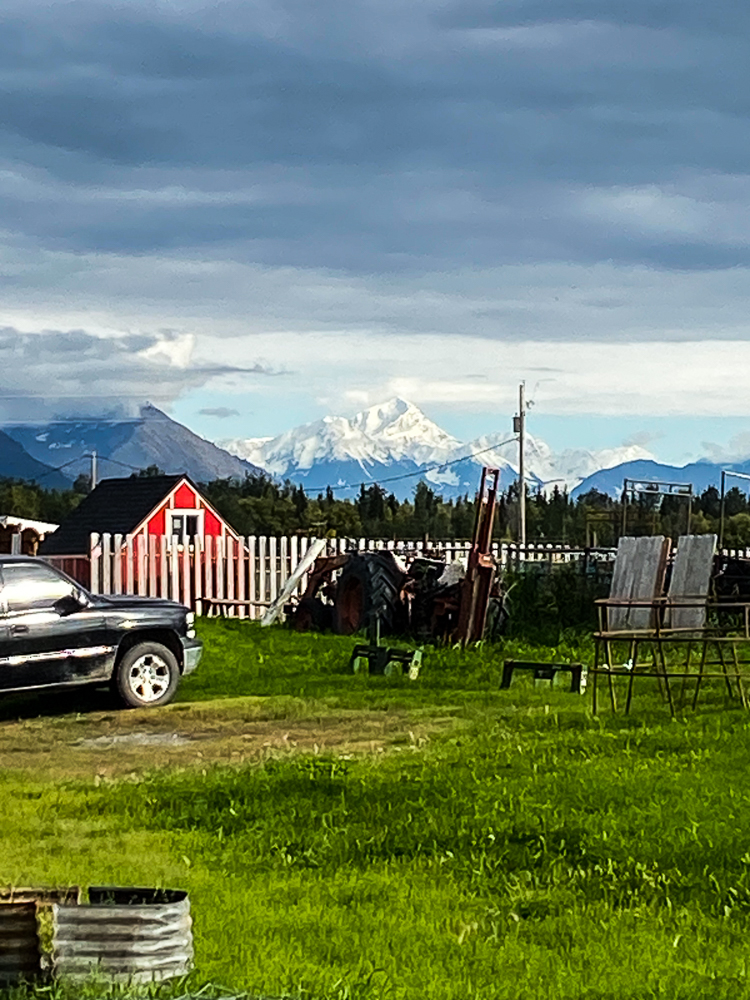
Mountain view from the farm
Lily the moose
Bonding
We’re clearly besties
Okay we took a LOT of pictures.
Free advertising…
This one is maybe my favorite.
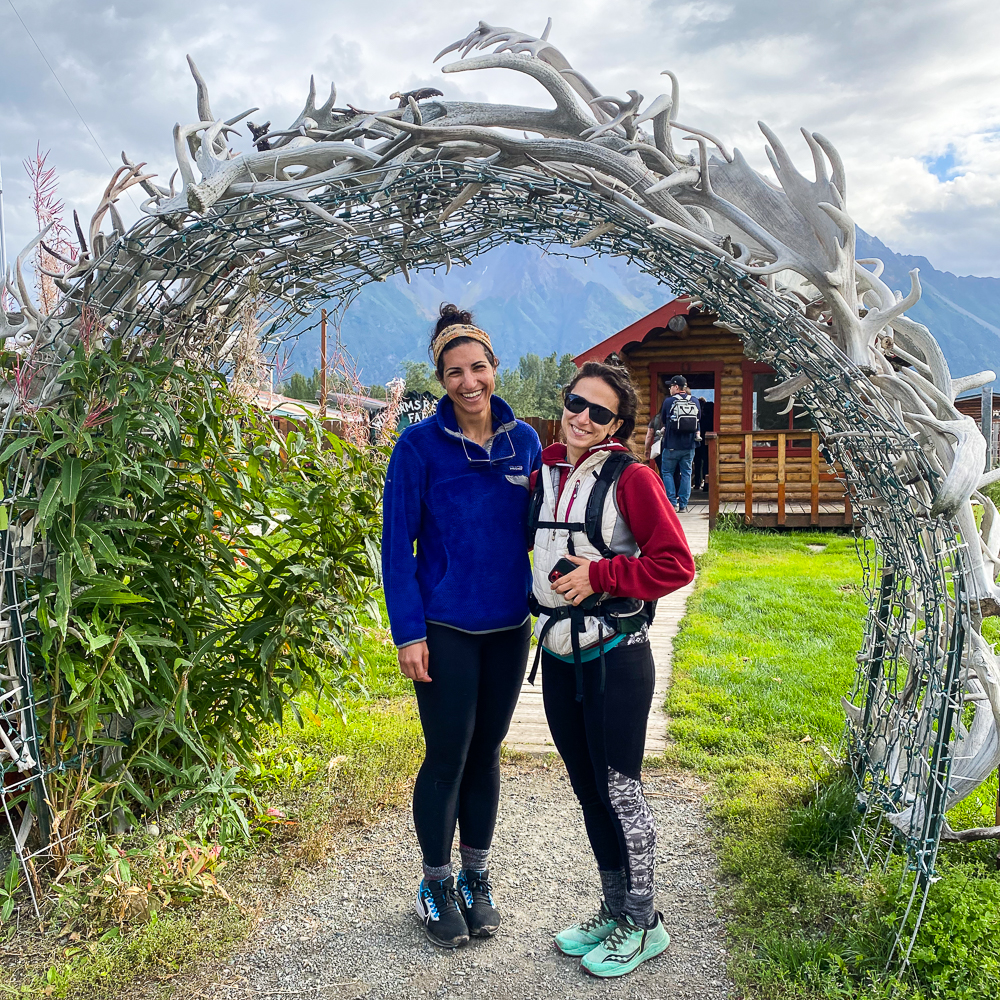
What a beautiful antler arch!
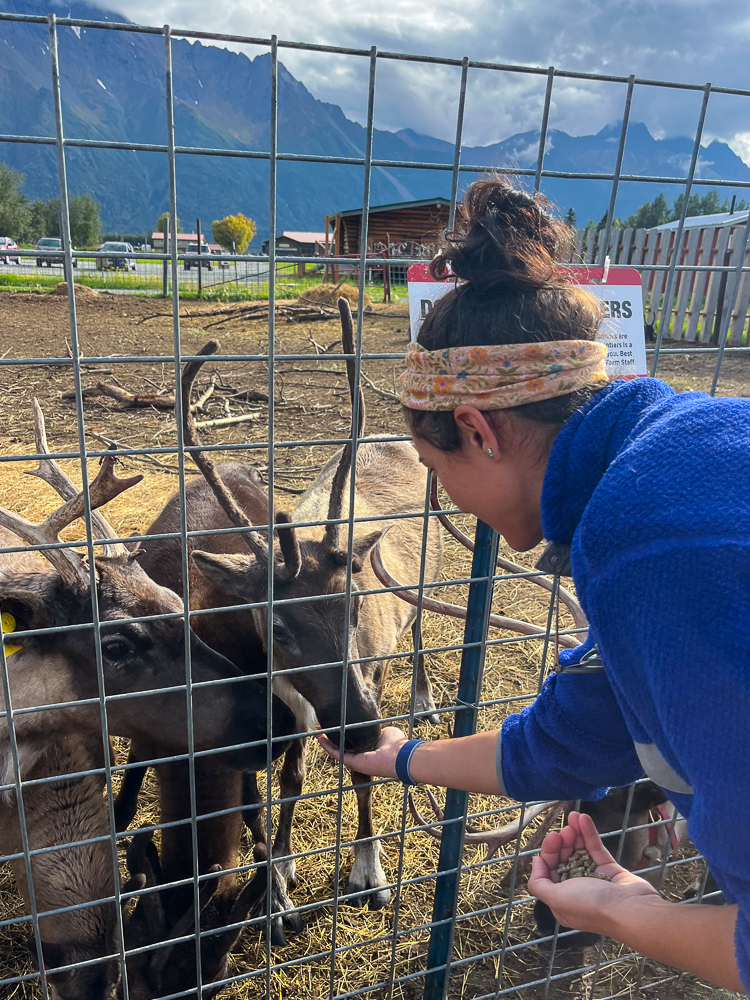
Photo overload, I KNOW, but look at the REINDEER!
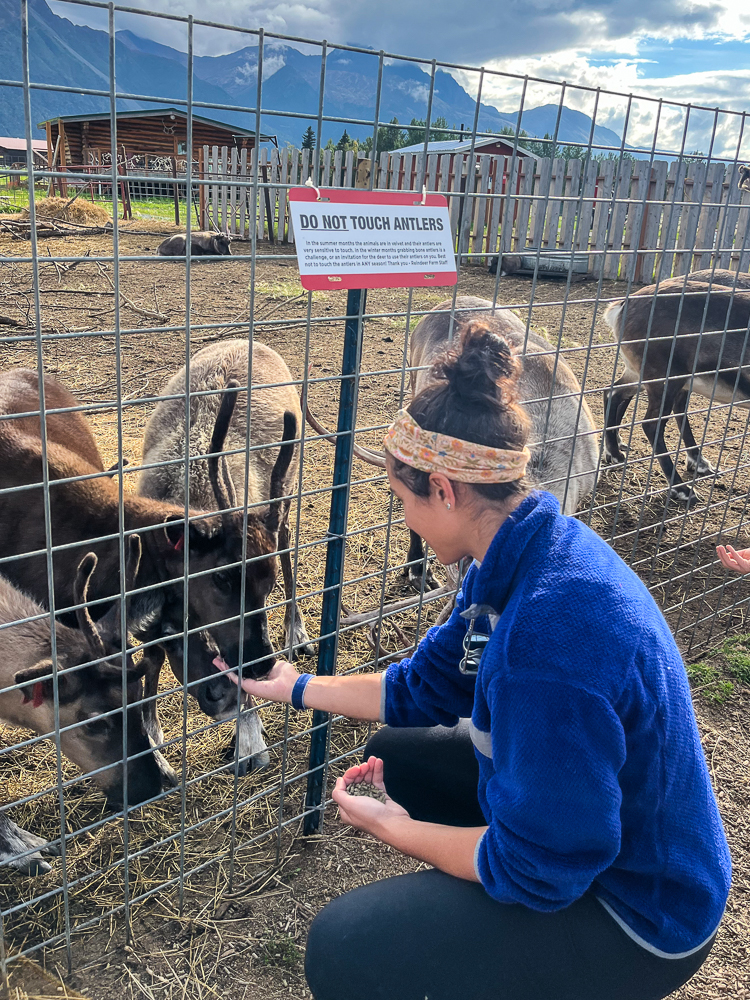
The sign behind me is saying not to touch their antlers because in the summer, they’re covered in velvet and are very sensitive, and in the winter, grabbing their bone antlers is taken as a challenge.
These guys aren’t very big, but I still wouldn’t want them coming after me with those things.
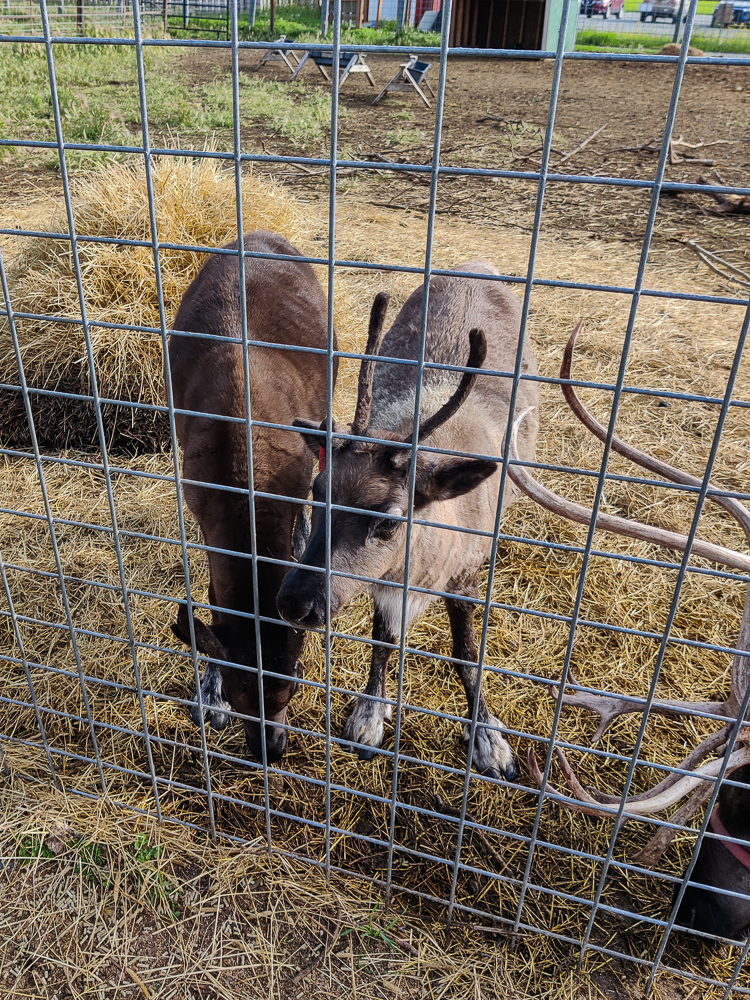
They’re so cool.
ALSO SO CUTE.
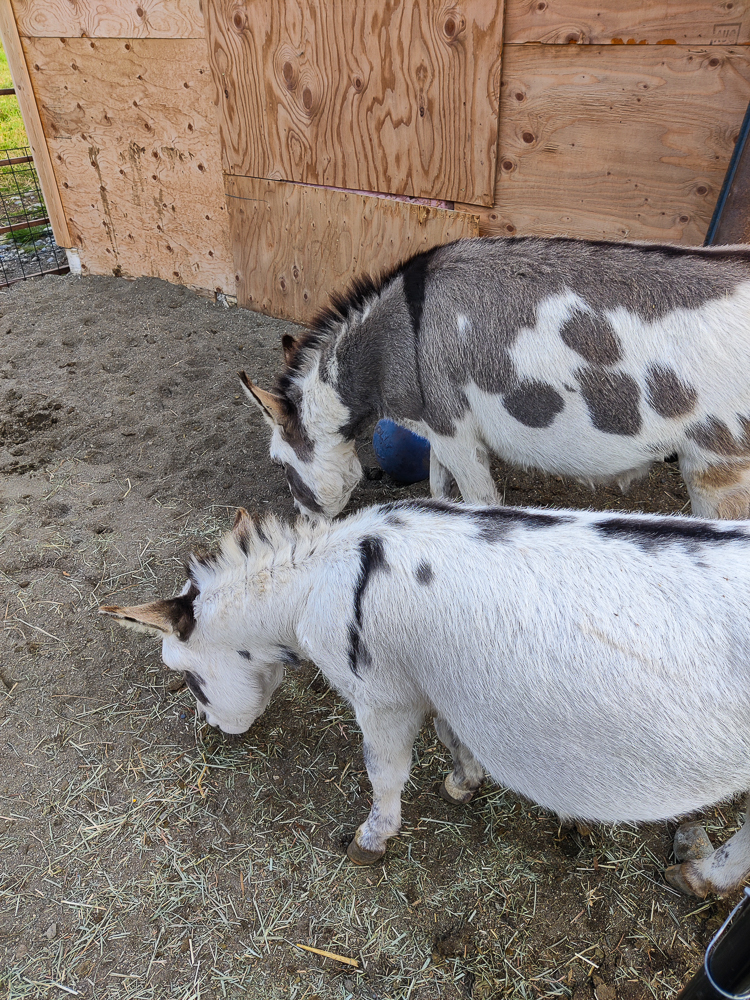
And here are some miniature donkeys. Lol.

And now, with that, our time in Alaska has come to an end. Don’t worry, though! The blog isn’t going anywhere! Our next stop is… New Zealand!  This is another actually recent trip (before we really start diving into the archives). I was there in February of this year! So, get excited! It’s going to be a fun time!

Before we part ways, I have a couple of orders of business to review…

I know I’ve been posting at a snail’s pace, and part of the reason for that is because I’ve been doing some general website maintenance projects (the other parts of the reason are because I’m trying to have a life and also not burn out, so you know, all good things!).

Mainly, I’ve been working on cleaning up the archives. Believe it or not, I’ve written over 400 posts since I first started the blog, and I never really developed a good system for making old content accessible. It’s still not quite there, but little by little, I’m hoping9 to clean things up. I’ve just redone the Georgia archives page (check it out and enjoy some throwback posts!), and I’m planning to slowly work my way through the others as well.

Next, I know that my travel timeline is confusing. I’m writing now about things that happened who knows when, and it’s just going to get more confusing the farther back in time we go. SO, I’ve created a chronological archive where you can see when I was actually somewhere (if you care) and keep track of what’s been written about and what is still to come.

To reiterate the plan, we’re off to New Zealand next, and then barring any new travels, we’ll go backwards from most recent to oldest trips. So, from there to Barcelona, then picking up where we left off years ago in South America, and eventually making our way back to the Europe of what will probably be 10 years in the past by the time we get there. But hey, a lot of that stuff has been the same for hundreds of years, so what’s a few more?

Admittedly, the chronological archive is also very confusing, so I’m not sure how much good it does. At the very least, when I forget all of the places I’ve been, I’ll have someplace to go and be reminded. For the rest of you, feel free to ignore it and keep going with the flow. Just know that when you start getting posts about me being in Panama or Germany or Albania, I was not there any time recently. I’m just reliving the glory days.

ANYWAY, enough of that! So, say goodbye to Alaska, and next time we meet, it’ll be in New Zealand!
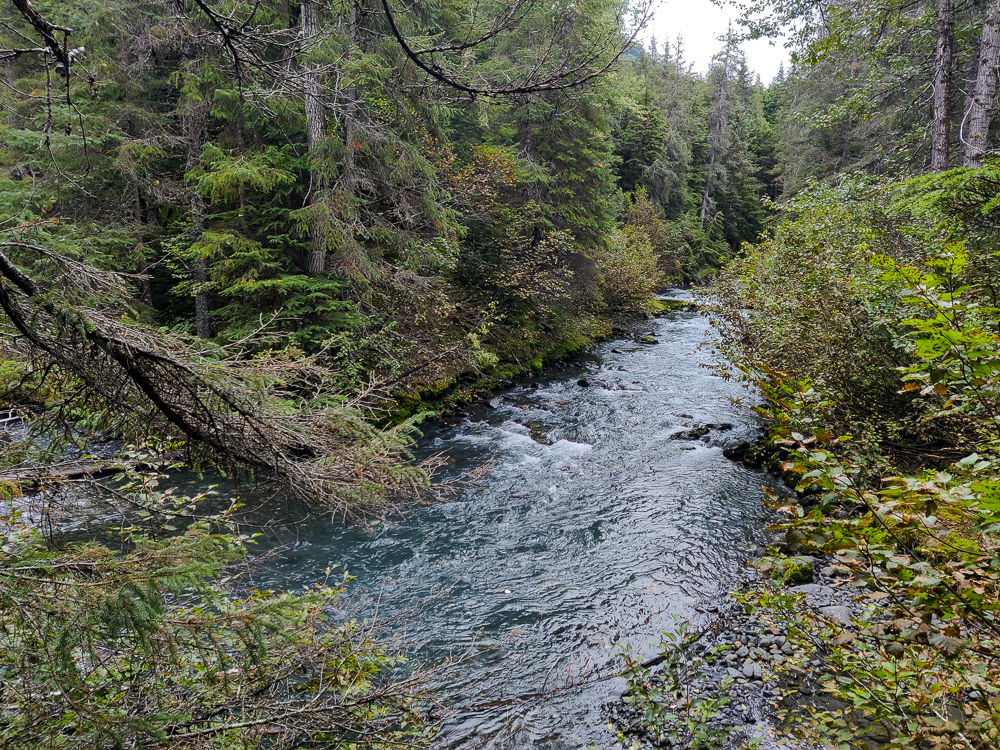
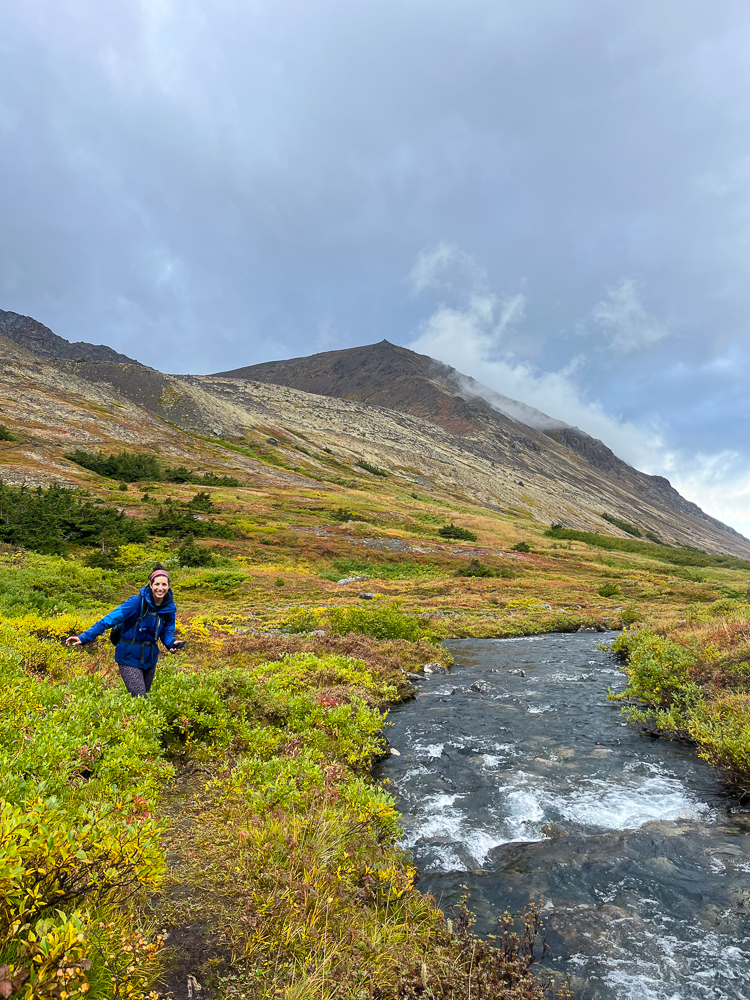
I leave you with one last creek pic.

As usual, the weather was looking uncertain on one of the days we had designated for hiking. One of Olivia’s friends came over to hang out in the morning, and we were hoping that with a slow start to the day, we’d be able to get a better read on the forecast and would make our final decision at the last minute. Well. Olivia’s friend came and went, and we still couldn’t figure out if it was supposed to rain or not. We checked a few sources, and none of them matched up. One looked like it was projecting rain where we were going? But another one said that there was a very low chance of rain. We decided to go with the more favorable forecast. Why not? Worst case we’d get rained on, and it’s not like that was anything new.

Part of our eagerness to give it a go was because Olivia had been looking at photos from the hike, and it looked spectacular. We were running out of possible hiking days, and we both agreed that it was as good a day as any. Rain is always a possibility.

The hike is called Reed Lakes, and it’s near Palmer which is where the State Fair is. We drove past the fairgrounds and up into the mountains without any instances of rain… good sign, but also, the forecasted rain didn’t start looking bad until more like 4PM (we started hiking around 2). We held onto our optimism that we’d be okay.

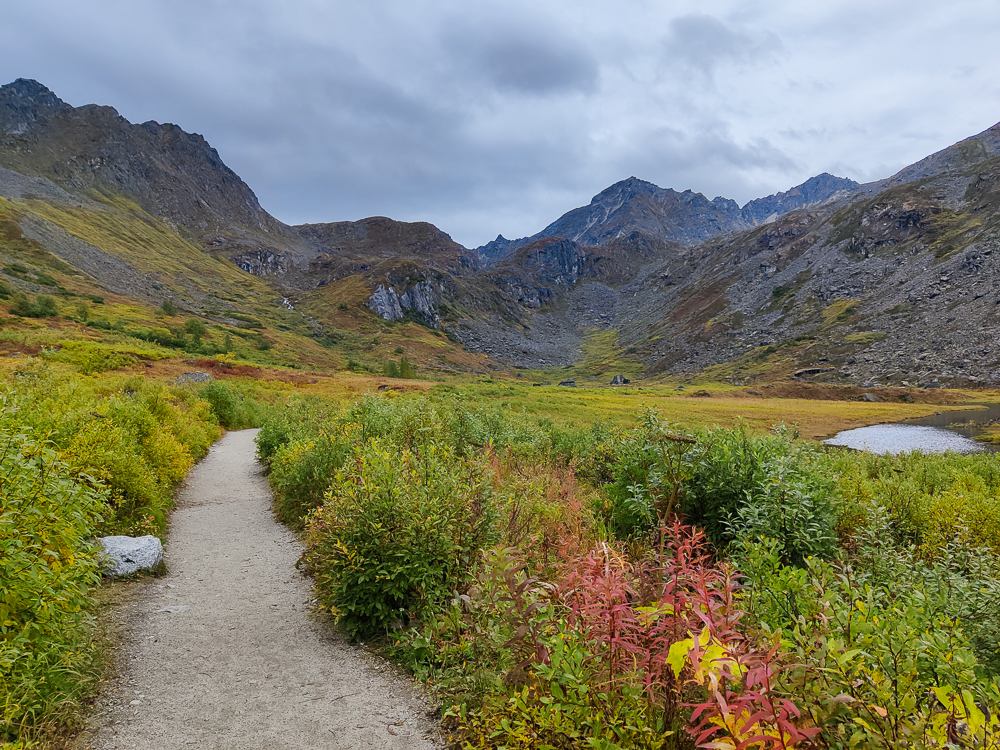
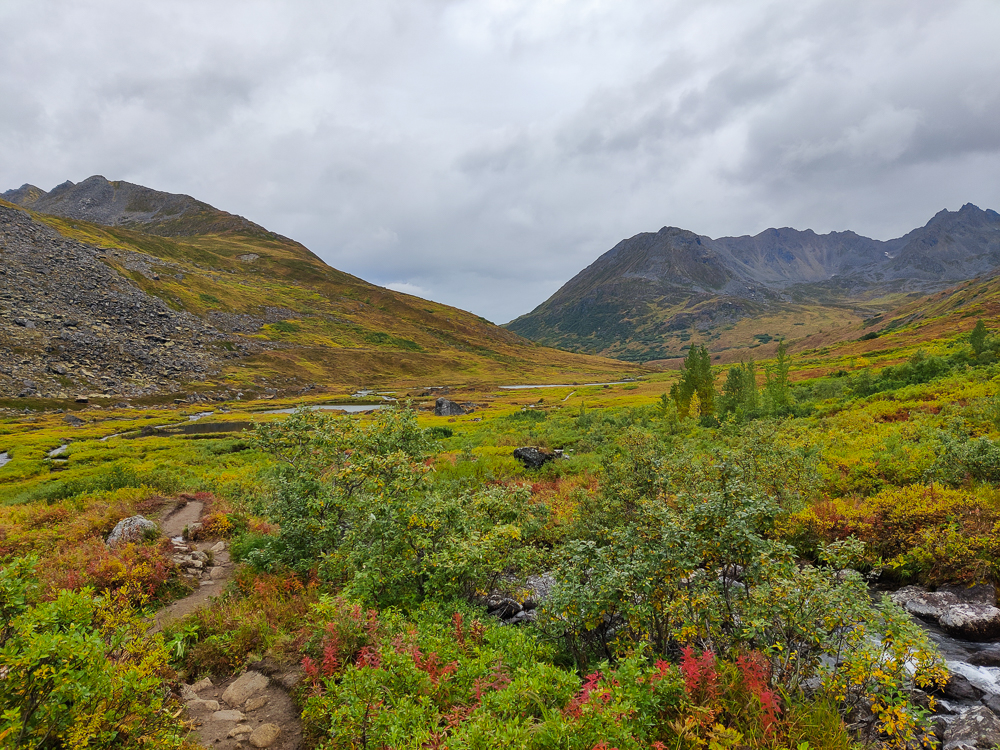
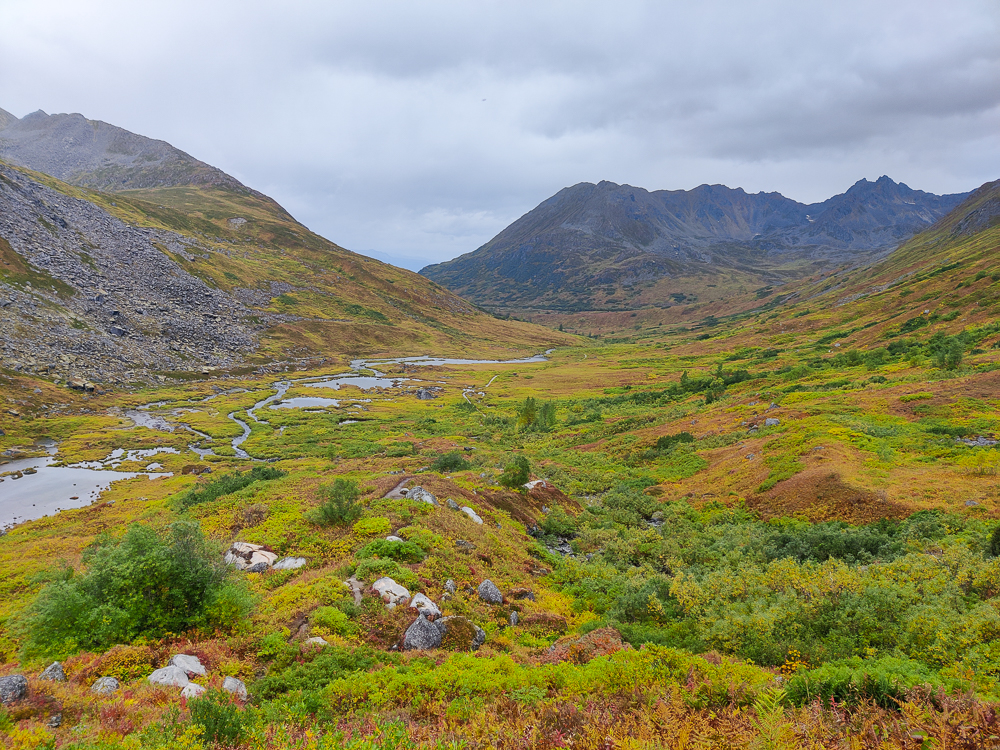
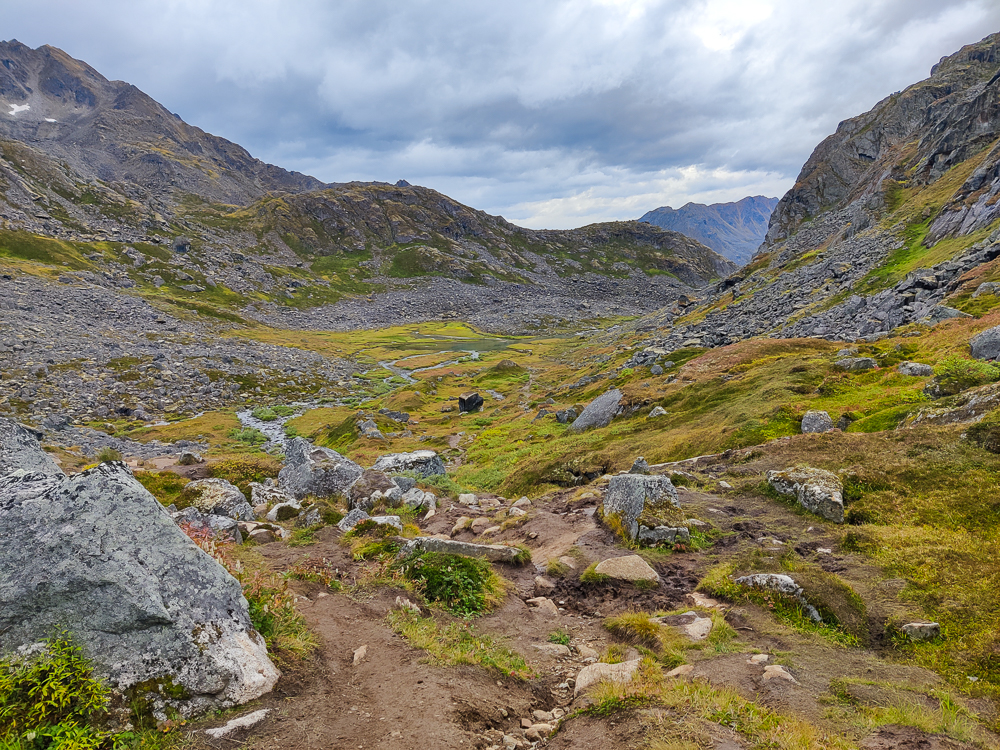
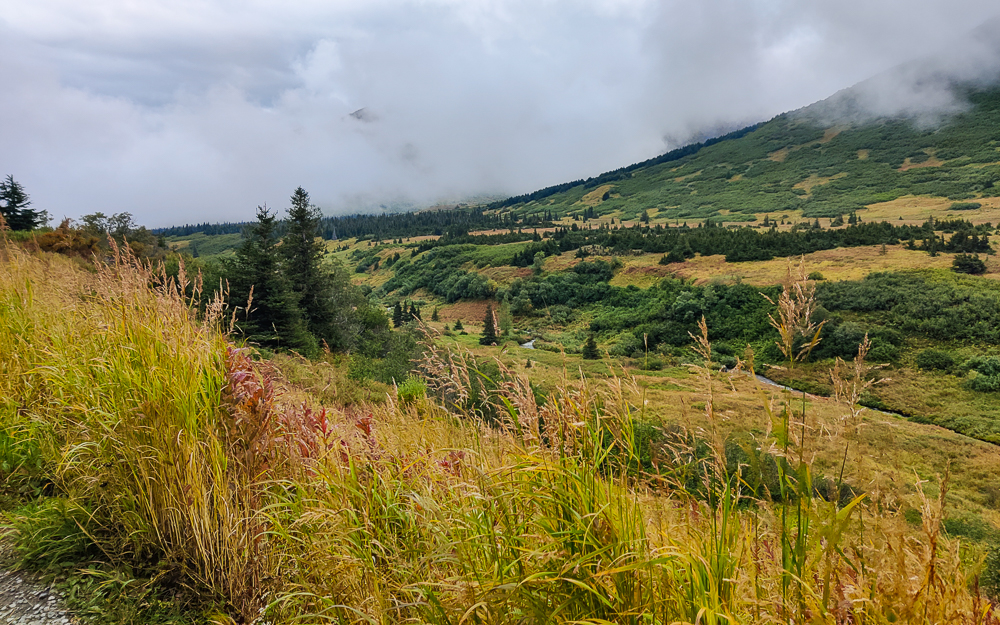
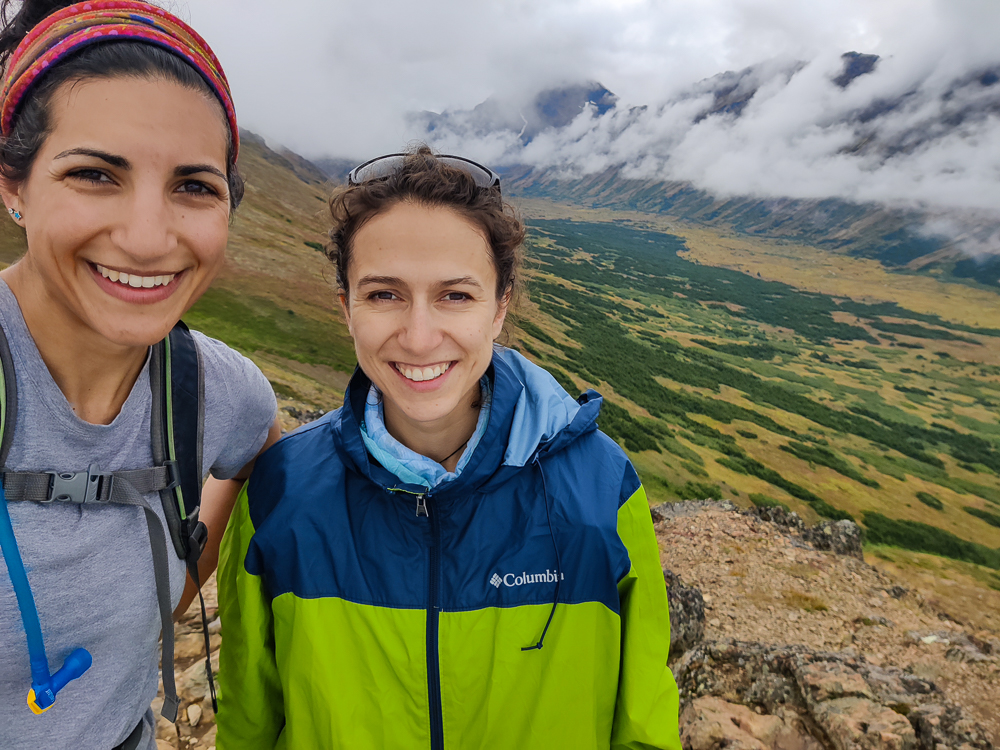
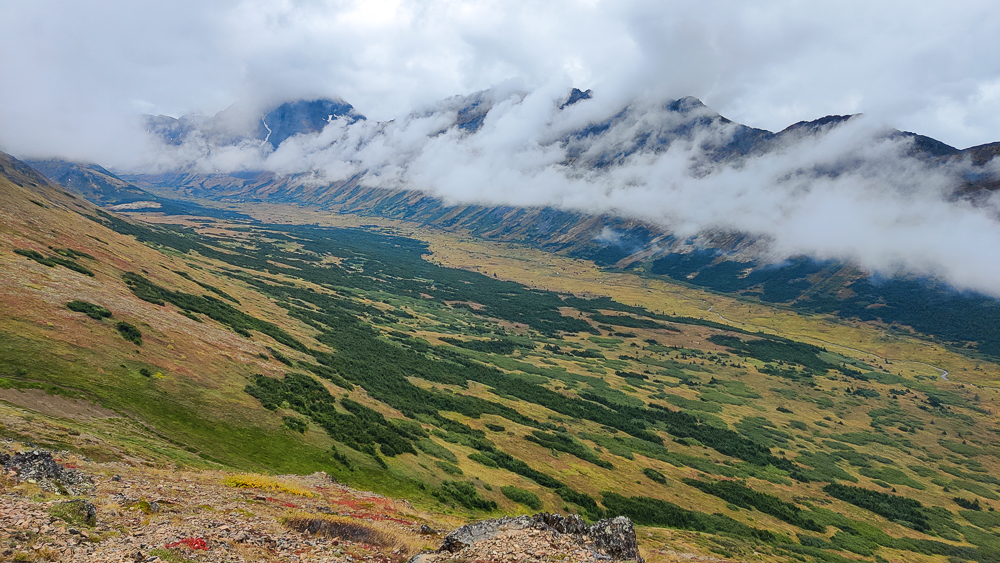
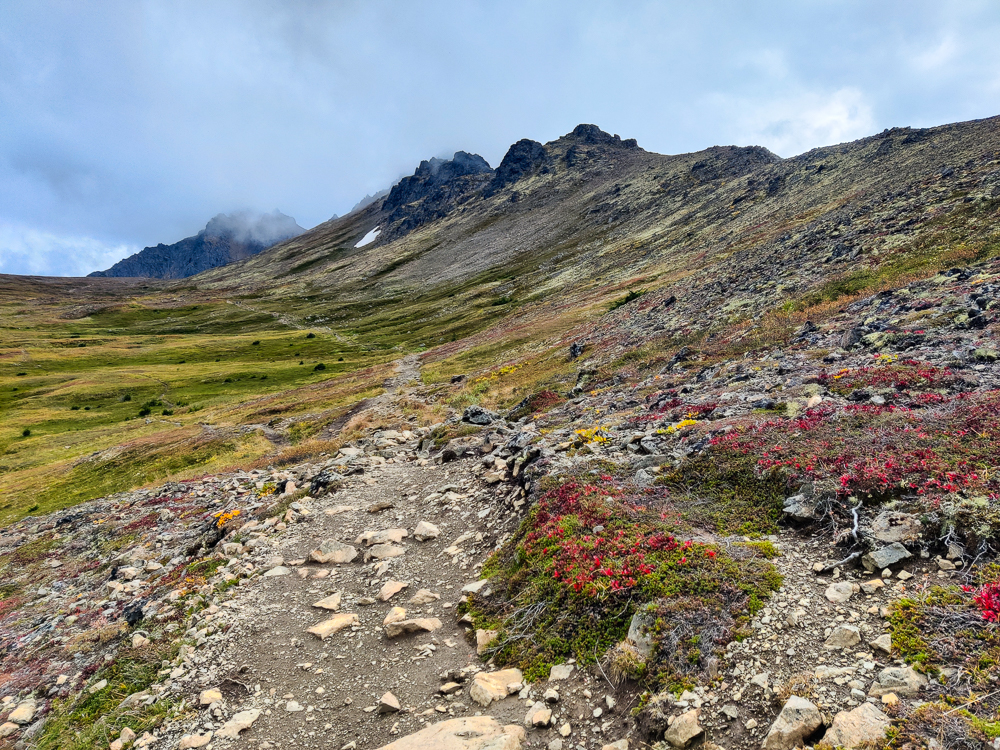
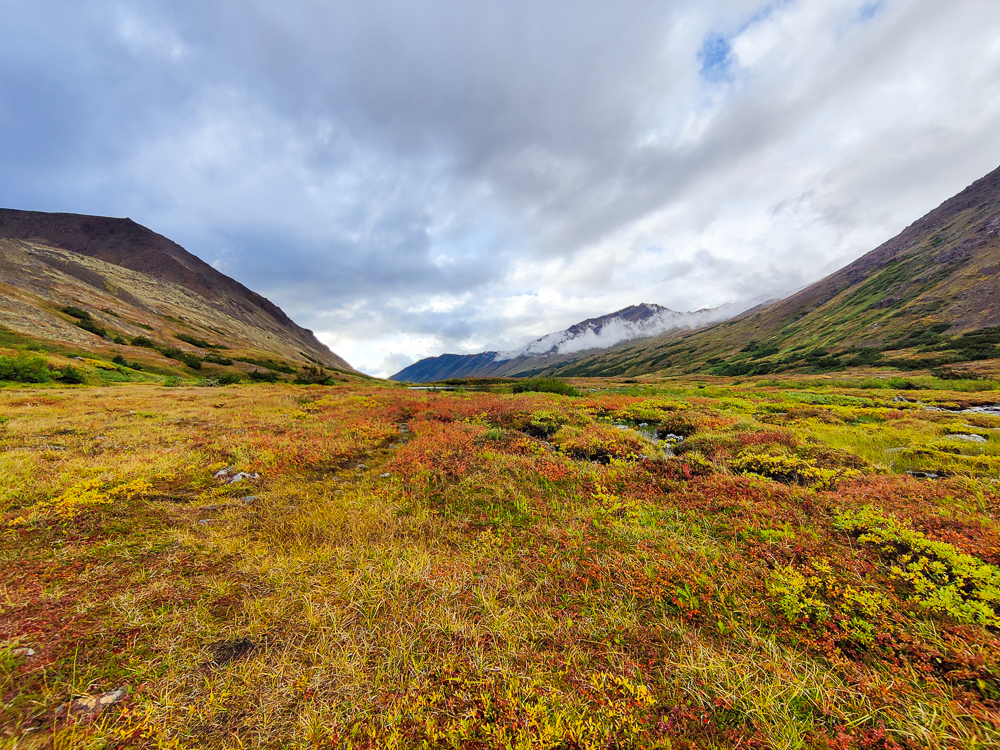
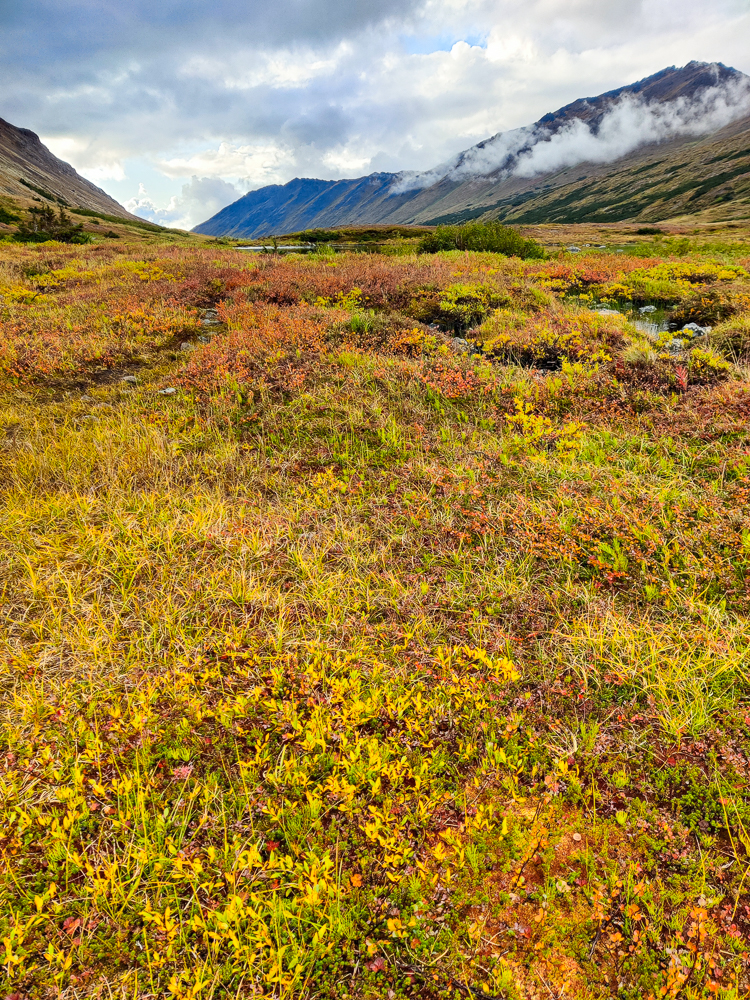
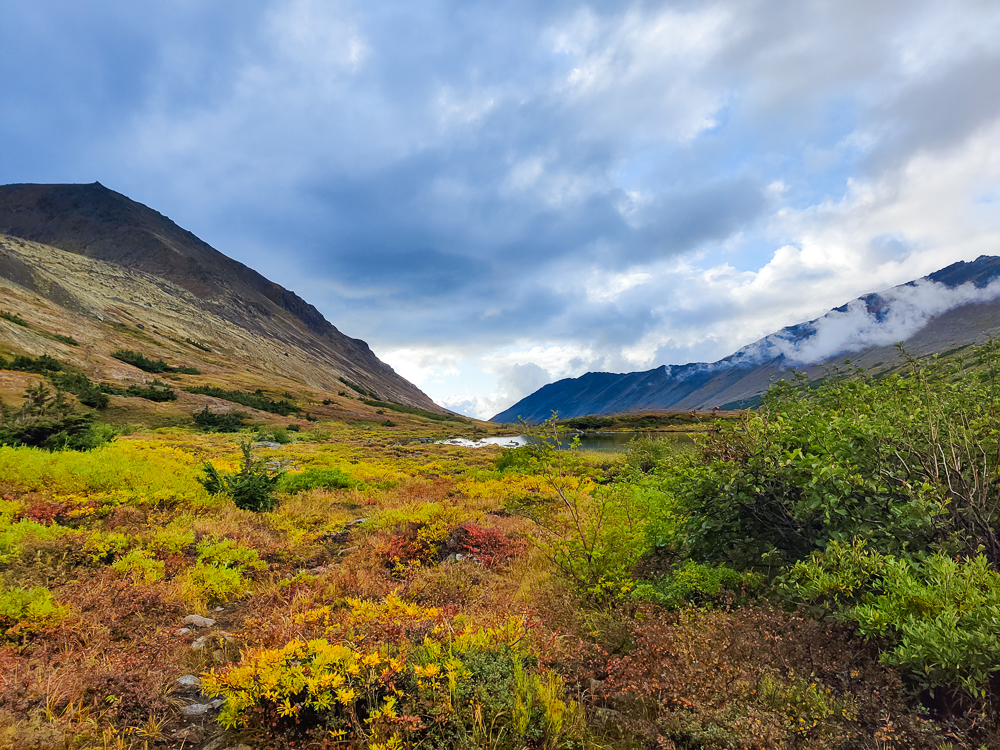
Get ready for another post full of me remarking about “THE COLORS! THE COLORS!”

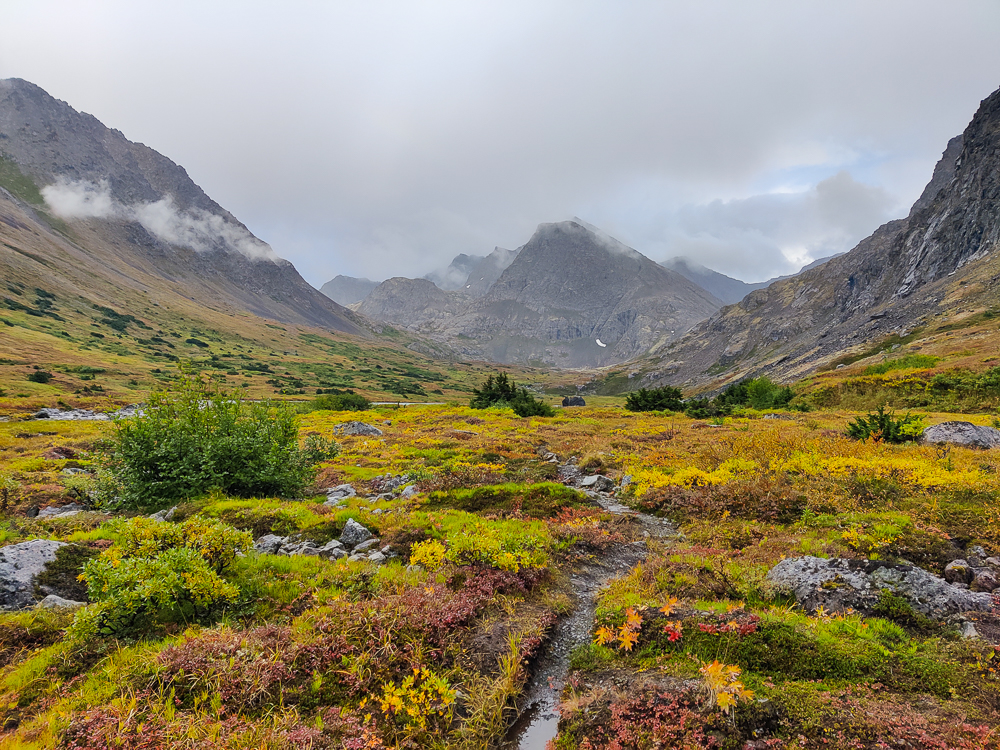
Even from the parking lot, we could tell it was going to be worth it. It looked like the leaves were already starting to change up there, like fall was in full swing. It was crazy how different it looked from Anchorage, only an hour and half away. The mountains towered over us, and the colors were insane… reds and oranges and yellows and browns, plus plenty of green still. Olivia was trying to take pictures out of the window while we were driving, but she said nothing did it justice. That was kind of the vibe for the entire hike. I took SO many pictures, and I don’t think any of them are sufficient to show how incredible it was out there.

Doesn’t this look like full-on autumn?
I couldn’t get enough… and hopefully you feel the same way because there’s a lot more where this came from.

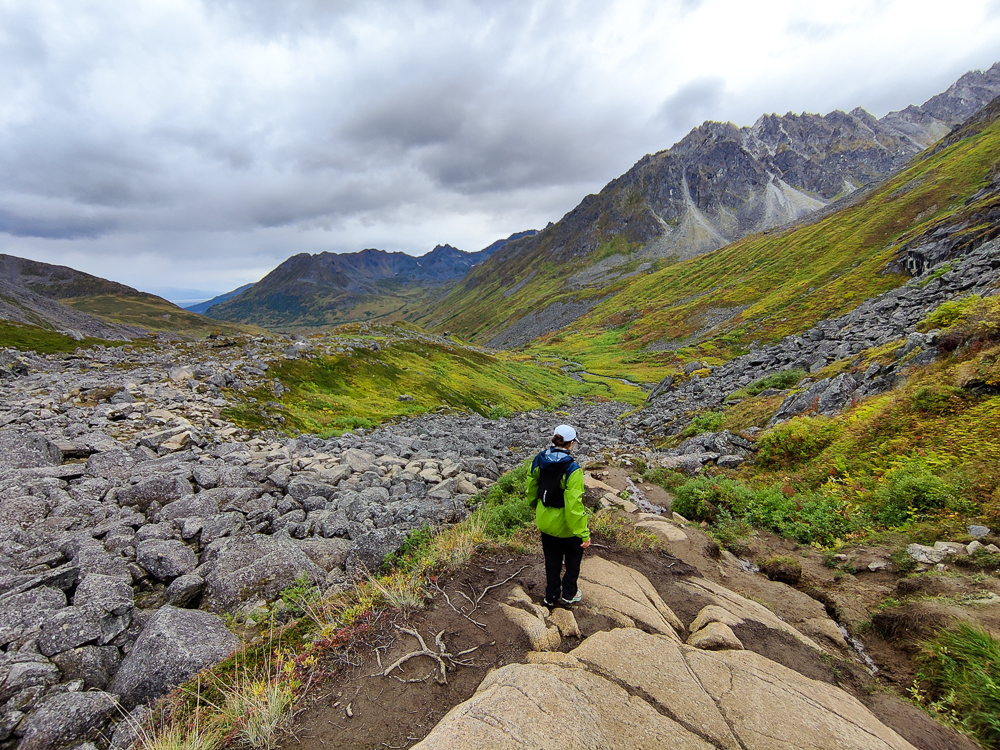
The beginning of the hike is fairly flat, and it’s on a nice, gravel path that winds through the valley alongside the river. Then, there’s a turnoff point, and that’s when the uphill and the Lara-and-Olivia-losing-the-trail begin. I’m not exactly sure why we are so bad at following trails, but I’m going to say that the blame is shared between 1. The trails: because they aren’t actually marked, 2. Our trail apps: because they’re never quite right, and 3. Olivia and me: because honestly, we’d probably get off course regardless because we’re way too busy chatting away to pay attention to something as silly as navigation.

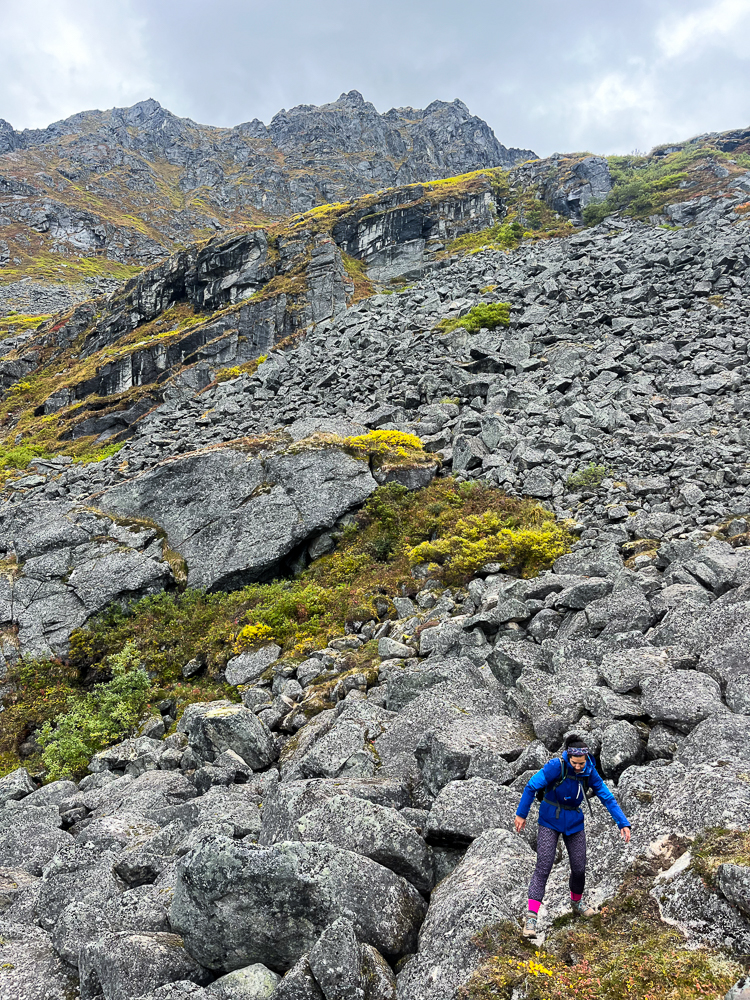
Then, this trail has a couple of additional navigation-complicating factors. There are rock scrambles (climbing over large rocks) which makes it much harder for a followable path to get worn down (stone is slightly more durable than grass). When there is grass, there are little cow paths running here there and everywhere (I don’t know if they’re really called that, and they’re definitely not formed by cows… but you know what I mean), so who knows which one is considered the official “trail”. We didn’t stand a chance.

If only the whole thing was like this, we couldn’t have gotten lost if we’d tried.
And besides the colors, how about those mountains??
Scrambling. I’m pretty sure we were lost when this picture was taken…
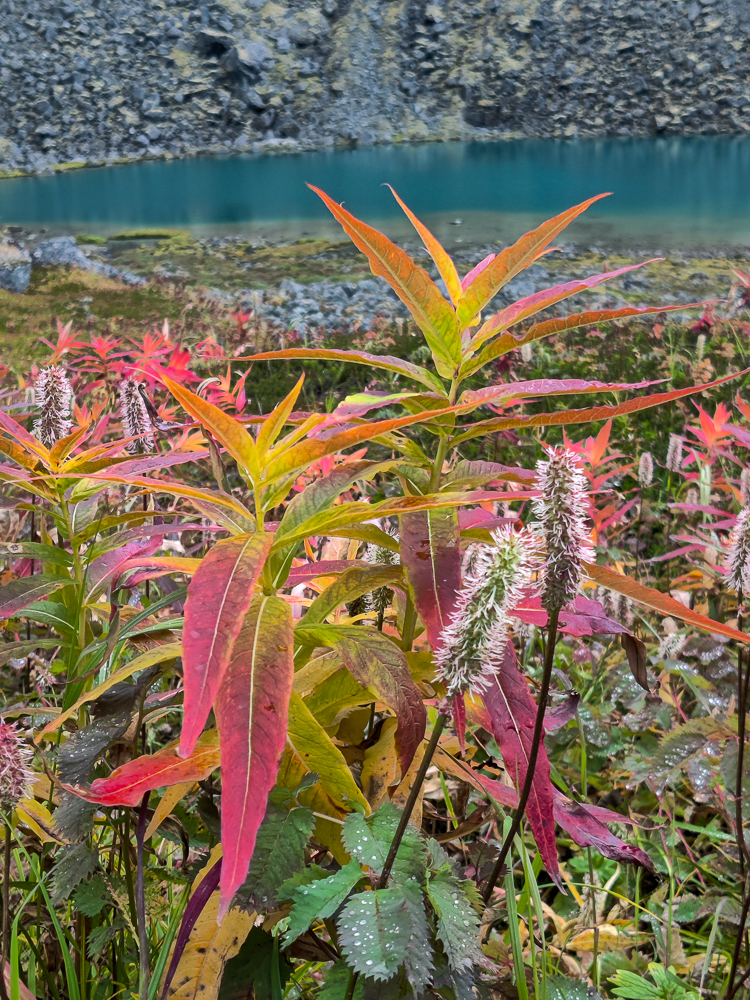
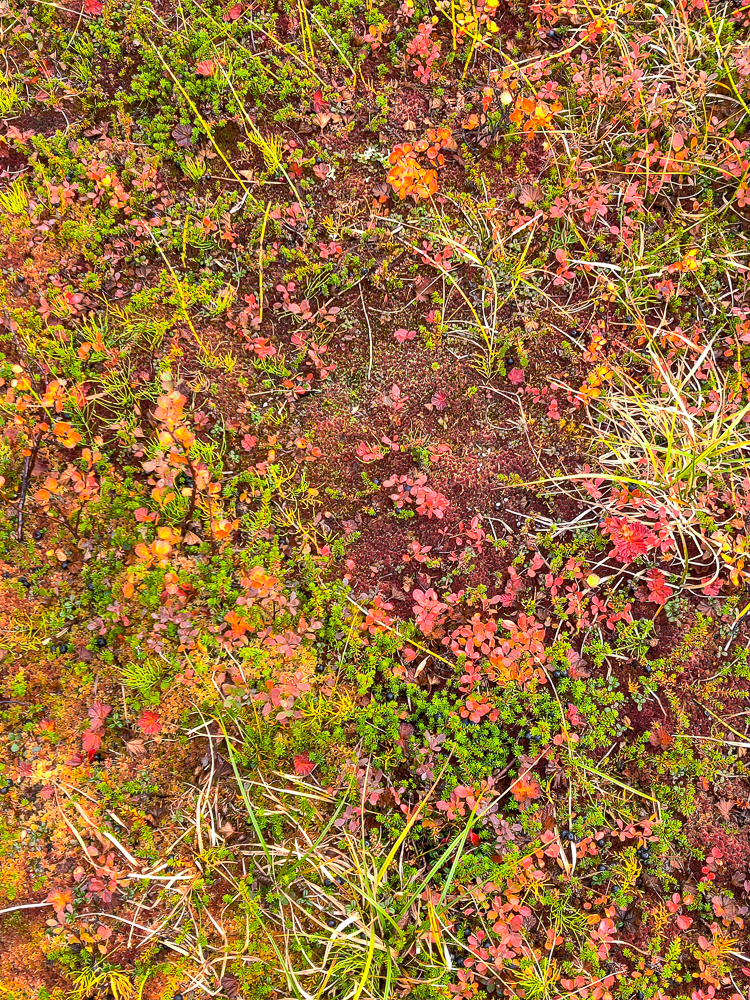
These plants are cool.
This is one of the lamest photos I took on this hike… and come on. IT’S SPECTACULAR.
Okay, so yes, I made Olivia re-walk up this rock because I decided it would be a cool picture… but it turned out pretty well, right?

One positive about the weather forecast was that it probably scared some other people away. We saw more people on this hike than on any of the others, but that meant maybe 7 or 8 other groups over nearly 10 miles. And all of them were leaving as we were hiking in. That’s always very reassuring, especially when there’s rain in the forecast. (You’re thinking, “Are we the only idiots who didn’t decide to get an early start to avoid the weather?” and the people you’re passing are probably thinking, “These idiots are going to get soaked.”)

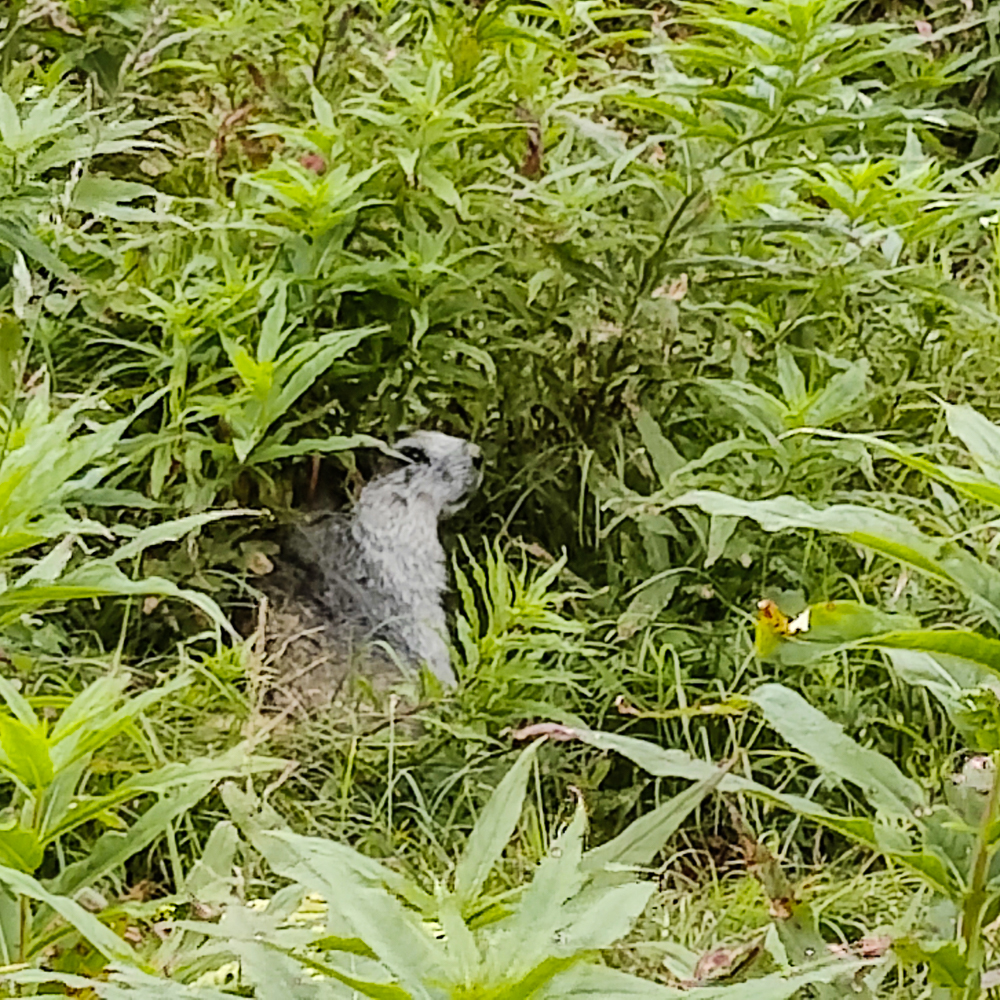
GUESS WHAT? We finally saw some animals!!! No bears (somewhat to my dismay… I’m not crazy, though. I was hoping for a distance bear-sighting. Like across a river or on the opposite side of a valley. But alas, we didn’t even get that). These animals were much smaller and less potentially threatening. One marmot and a few prairie dogs. They were all very cute. Some people who wrote reviews of the trail said to watch your stuff if you put it down because marmots might come for your food. Ha! They look a lot like groundhogs. So did the prairie dogs, actually. And they all make various squeaking noises. As you might imagine, this made them incredibly intimidating (not! They were adorable!).

Excuse the incredibly pixelated picture… but look! It’s a marmot!!!
Can you spy our little marmot friend in this picture? He’s pretty close to smack dab in the center of the photo. If you follow the left edge of the path straight up, through the greenery, he’s right there before you hit the yellow grasses, looking off to the left. Only his head is visible.
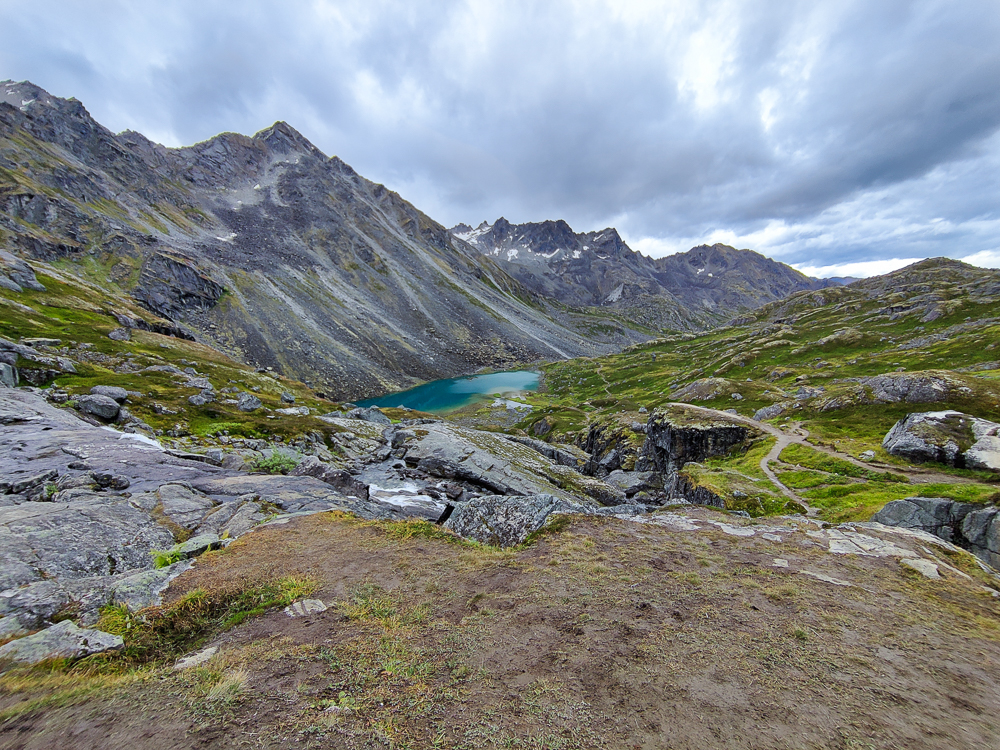
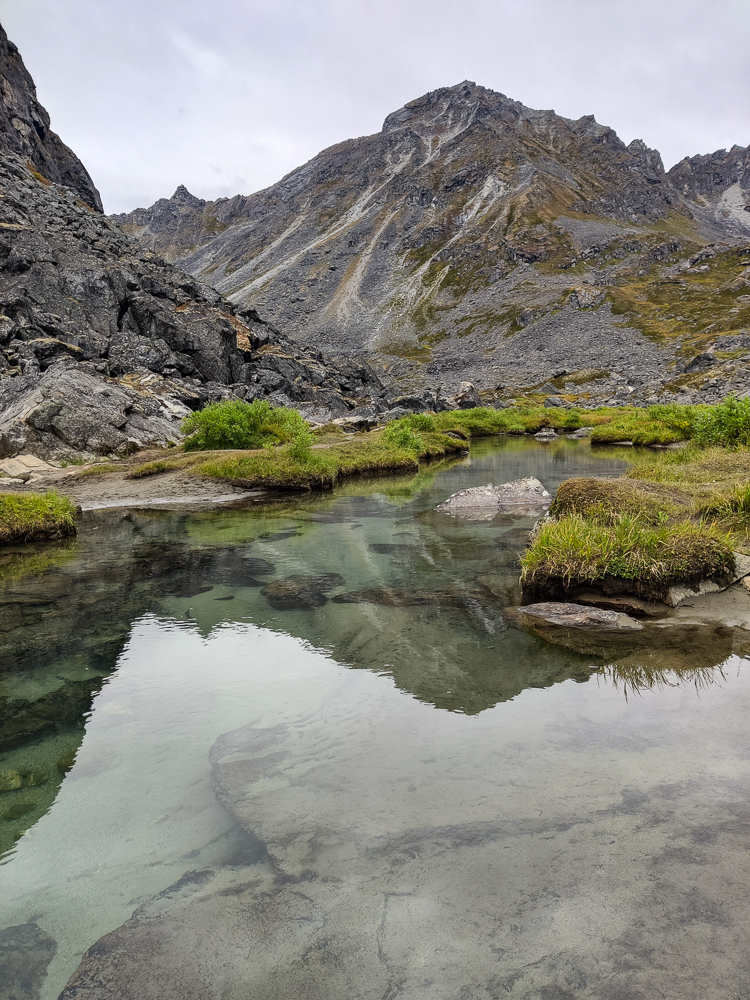
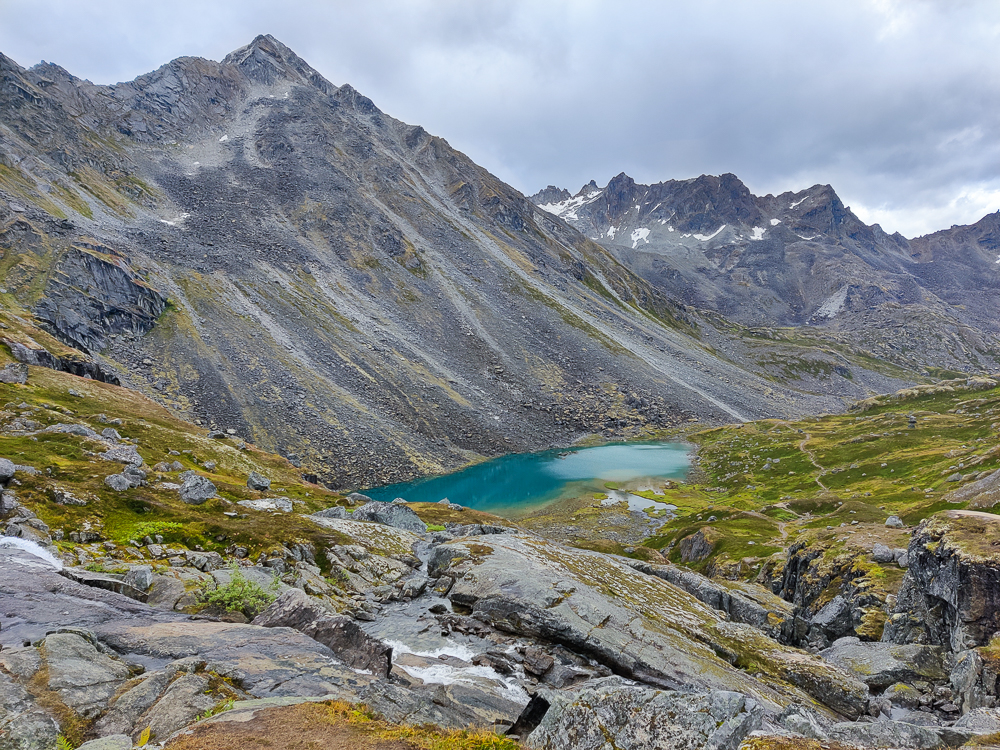
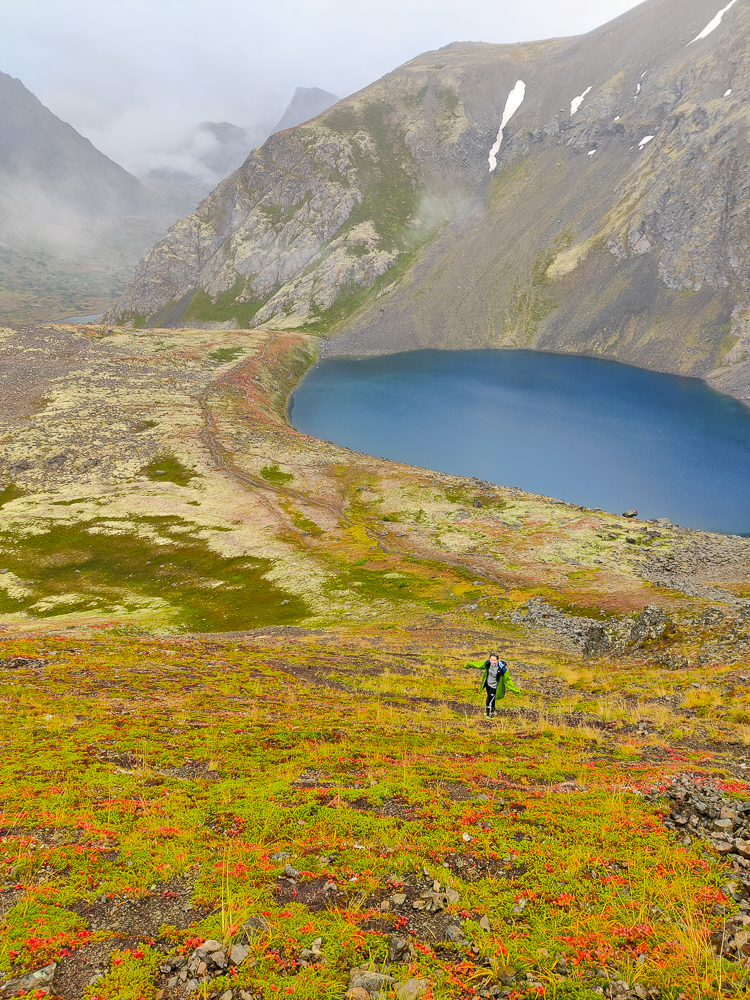
These little hills were FULL of prairie dogs (and yes, I’m going to gloss over the existence of that incredibly blue lake at the moment because we’re not talking about the lakes yet… but LOOK AT THAT INCREDIBLY BLUE LAKE!).

All in all, the hike wasn’t too bad. There was definitely some good elevation, but since so much of it was rock scrambling and walking on boulders, it was easier than just hiking uphill. I enjoy that type of terrain because it makes things a little more interesting and distracts you from the fact that you’re also going up. And we only got REALLY off course once when we realized we were on the complete wrong side of the river and had to innovate a river crossing. Not our worst, though!

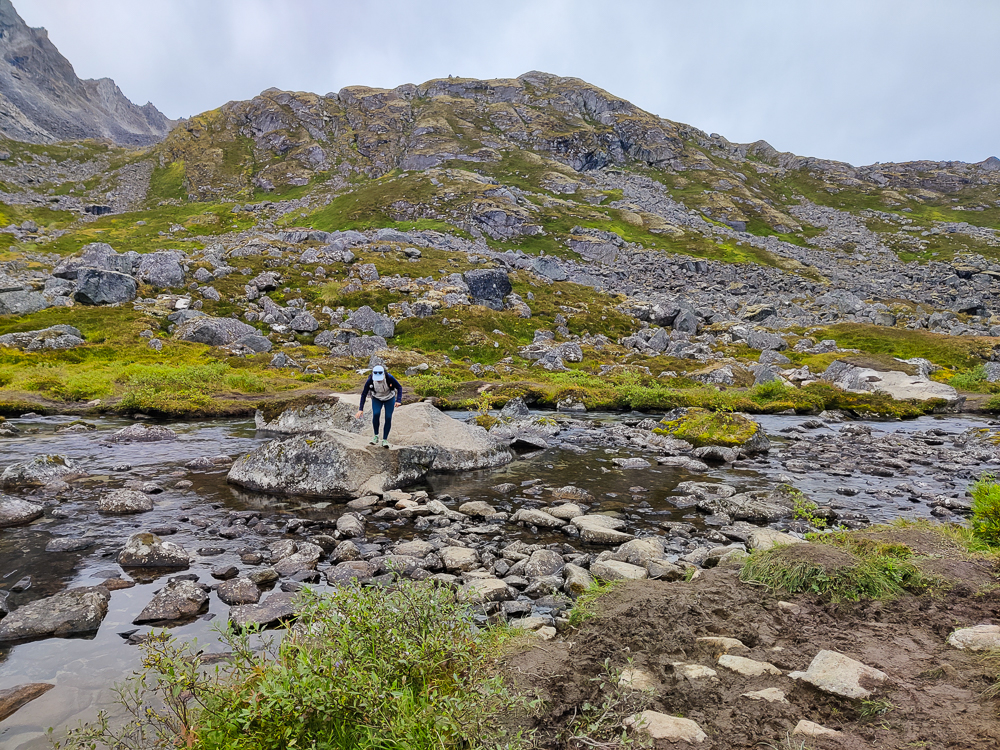
Here’s Olivia, course correcting after we inexplicably ended up on the wrong side of the river.
Just going to sprinkle this in here because I’m pretty sure I have three of nearly the exact same picture, and I can’t make myself exclude a single one.

The entire time, we were commenting on how insanely beautiful our surroundings were. I had that feeling I always get when I’m in a setting like that… like it’s so beautiful that I can’t even stand it. My heart aches out of an almost longing? Or a desperate feeling that I need to find a way to preserve it or store it so that I can keep it with me forever. I want to bottle it up and take it with me. I don’t know how else to explain it. The same thing happens to me a LOT in the fall when the leaves are changing.  I mentioned something to Olivia, and she said that sometimes when things are so beautiful, she gets almost angry. That sounds insane, but I can relate… for me, there’s a part of me that’s mad that I can’t always see it and that it won’t always be the same.

Does this not make you downright furious???
GET OUTTA HERE WITH THESE COLORS.
My heart hurts.
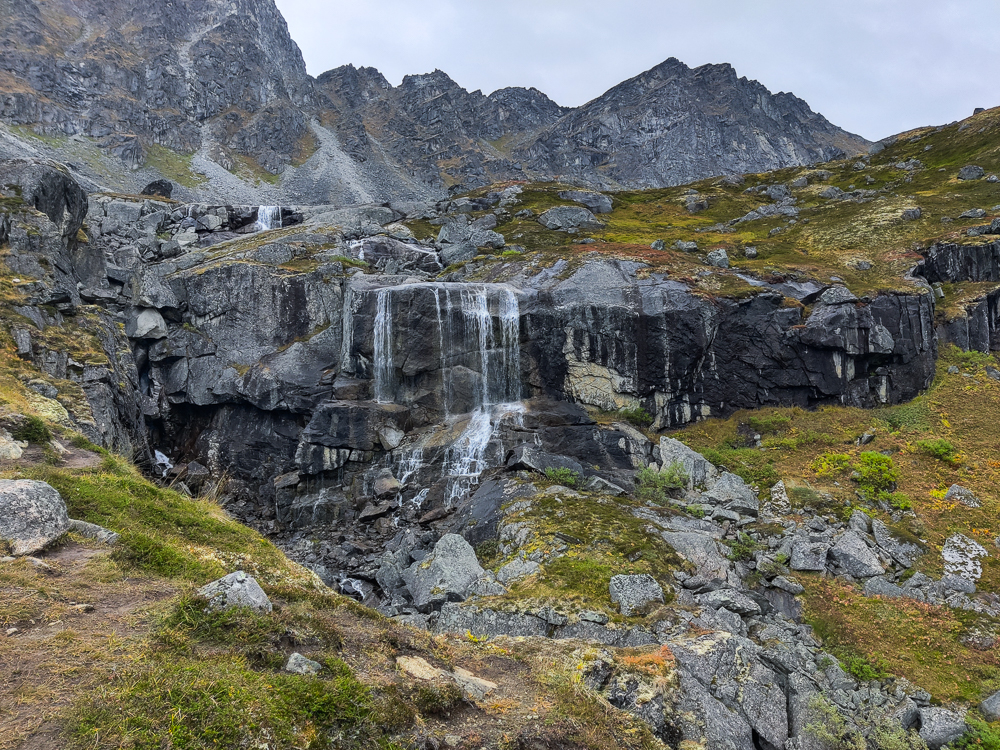
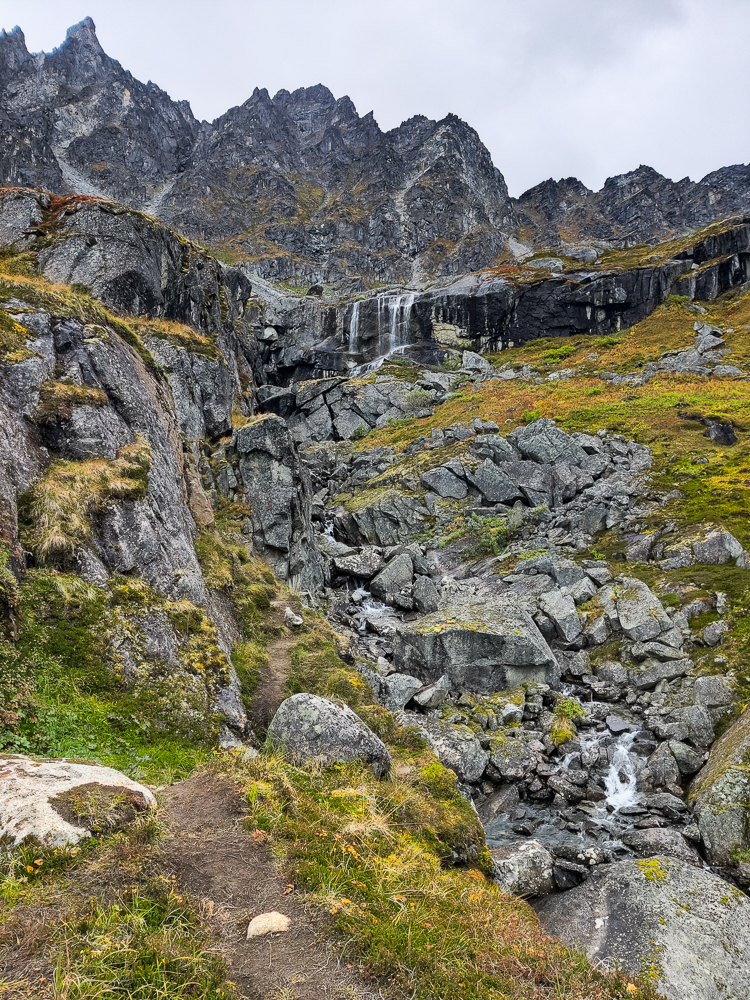
GO AWAY, WATERFALL!
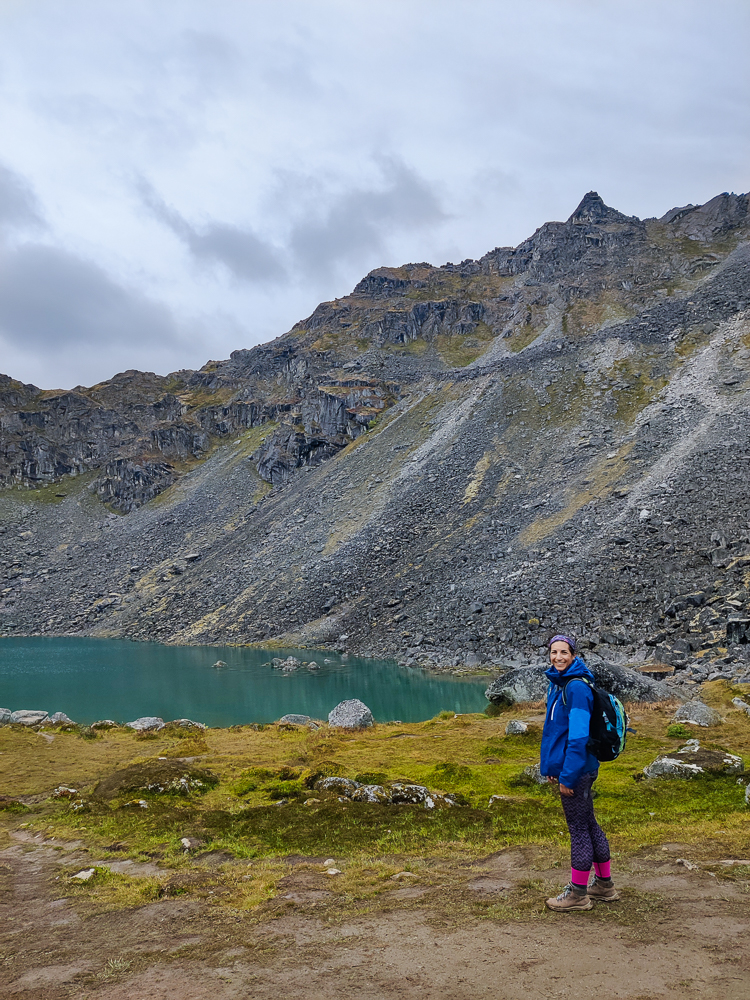
Me with another lake that we’re ignoring for the moment.
Ugh that waterfall again!

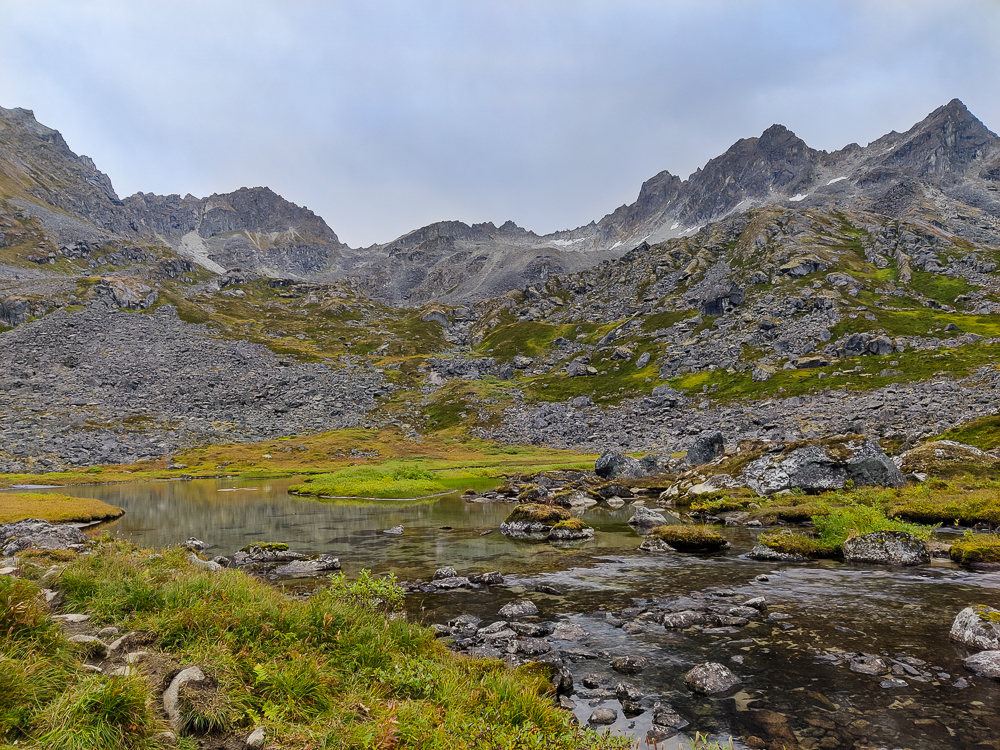
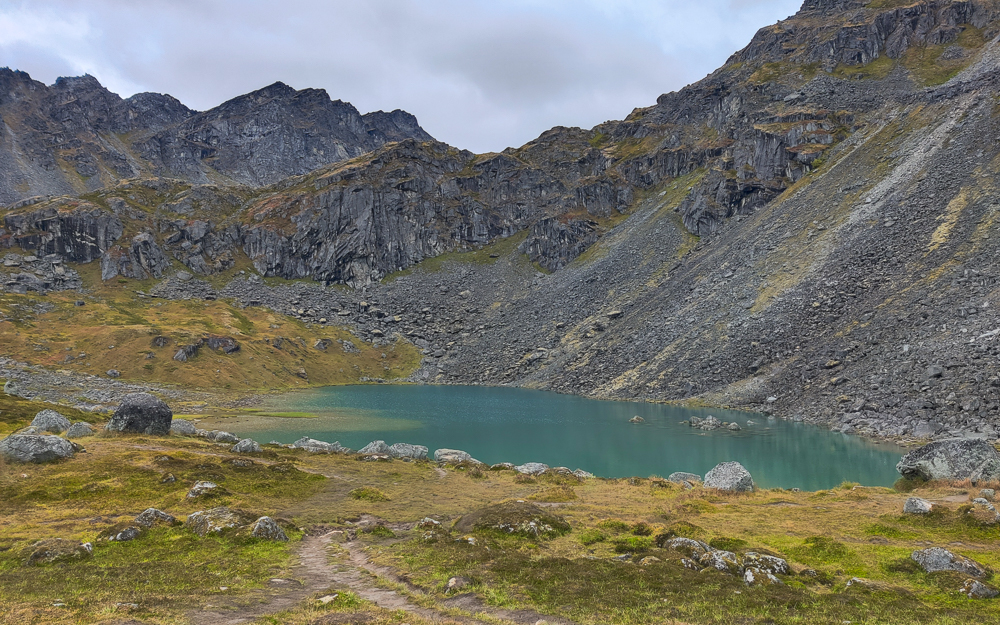
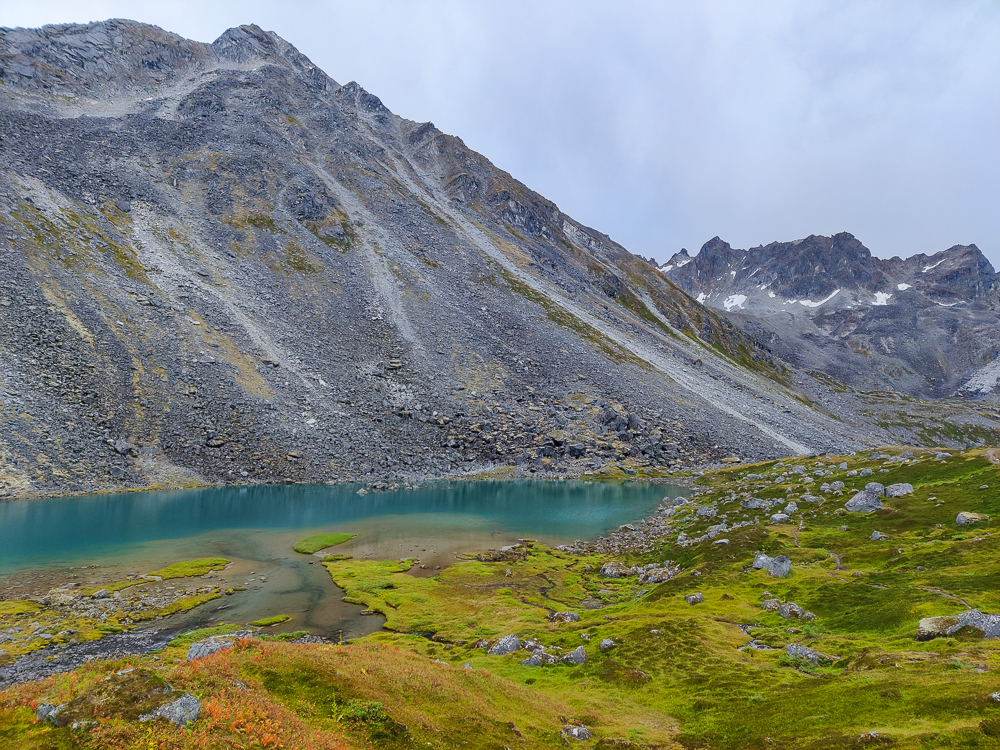
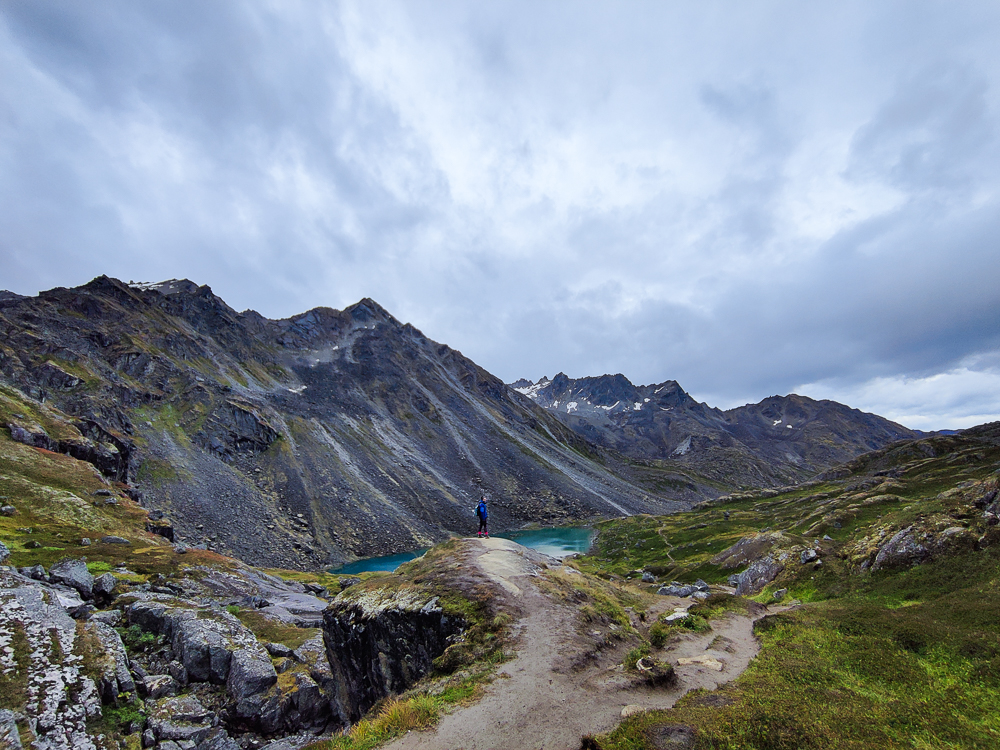
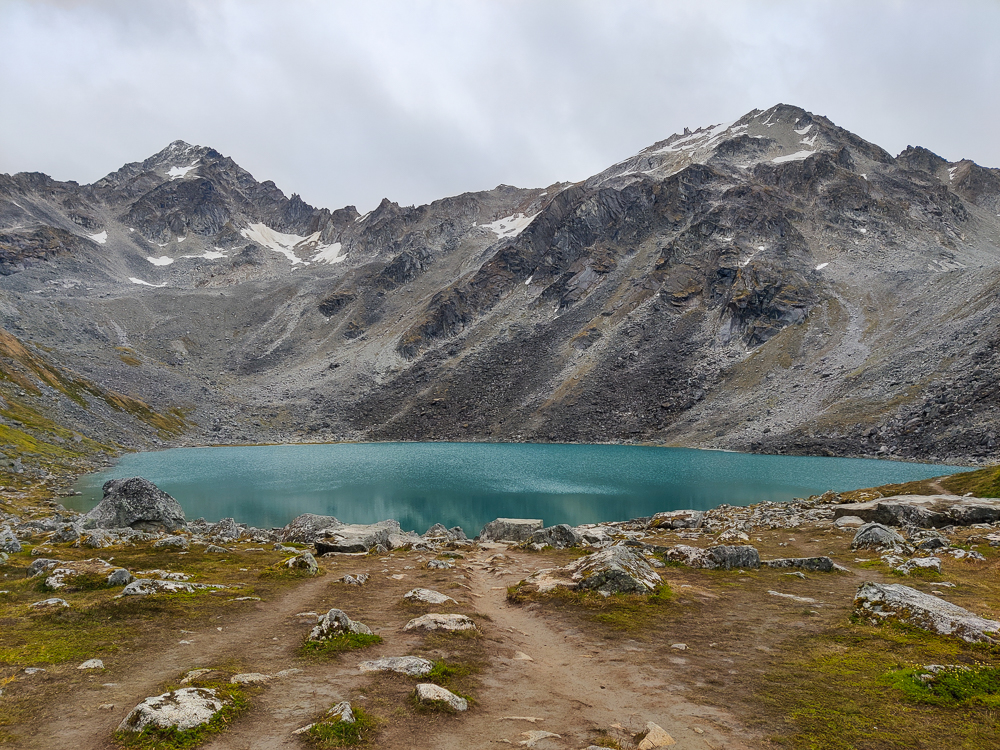
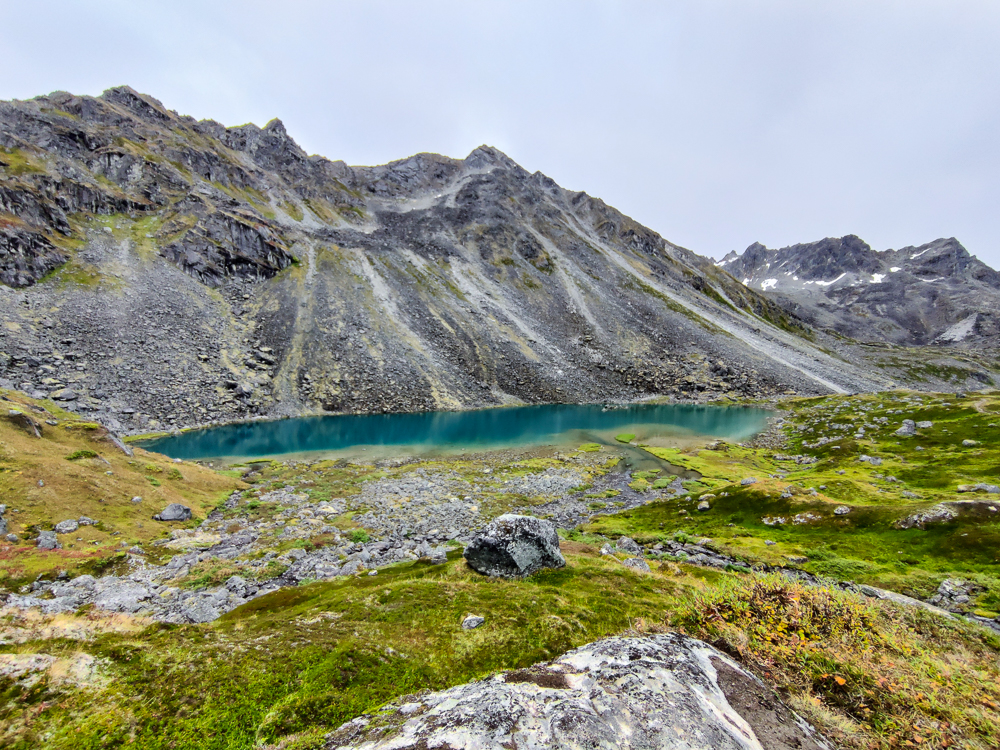
You may have guessed from the name of the hike that we got to see some lakes as well. There’s one major lake along the way (SO PRETTY), and the trail ends at another one nestled in the mountains. As you approach the end, it feels like you aren’t even close, like you’ll be hiking endlessly because there’s no final destination in sight… then, you go over a ridge, and BAM! A huge, beautiful lake comes into view.

I love hikes like that, where you really can’t get a good handle on where you’re headed until you’re there. Most hikes are straightforward. Like if you’re hiking to the peak of a mountain, you can usually pause along the way and see the view unfolding as you ascend. But with a hike with a hidden lake or waterfall or a view over a mountain or something similar, there’s no going partway and feeling like that was enough. You don’t even have an inkling of what awaits until the moment of the big reveal. Then, you turn that corner or crest that ridge, and for a moment, it’s like the world stops. “How could that have been RIGHT THERE all this time?” you think. It feels like you’re being let in on a secret.

Eventually, it’s time to go. As you walk away, it’s like you’re walking through a portal back to the normal world. The curtains close behind you, and the lake is gone without a trace.

The river along the way…
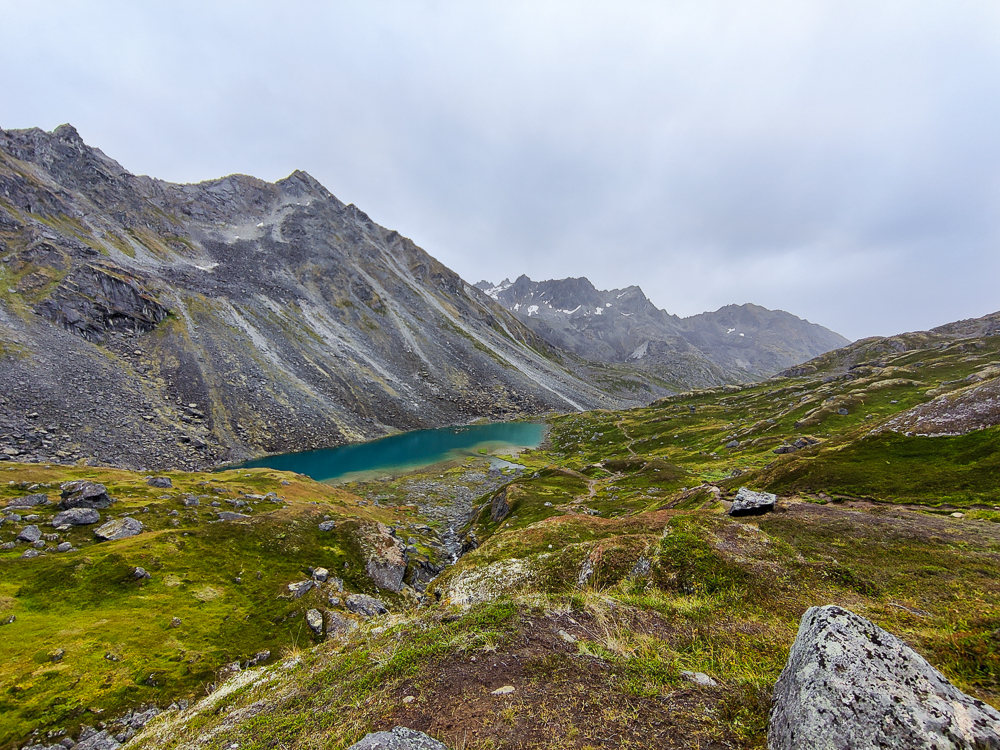
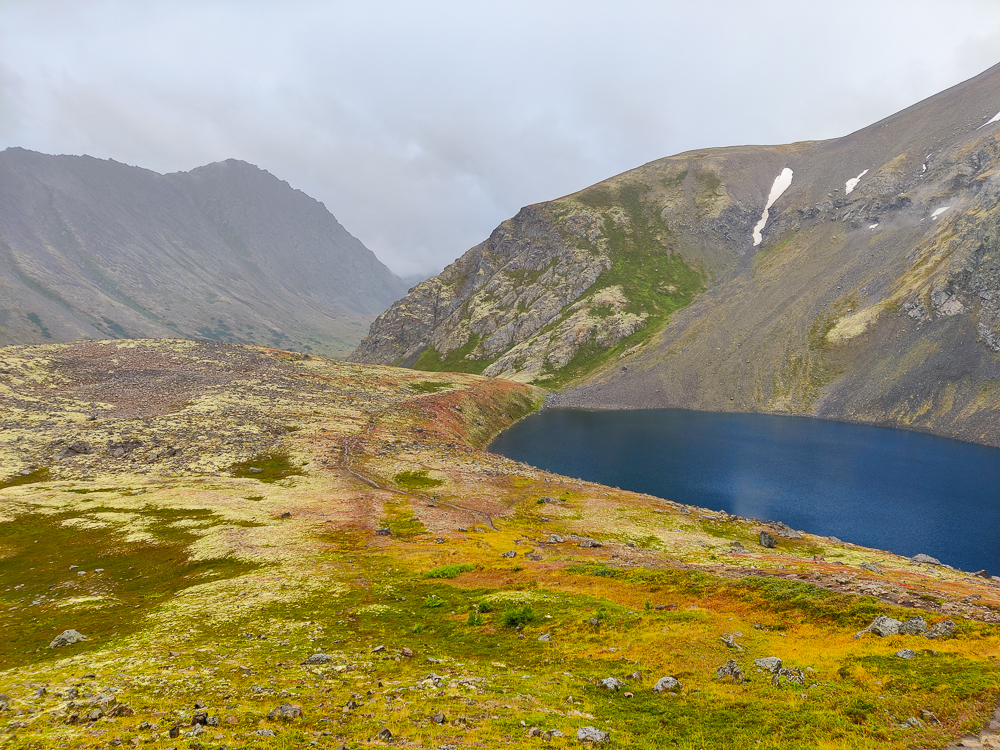
Our first view of the lake along the route.
I wondered, “Is this lake just as pretty from every angle?”
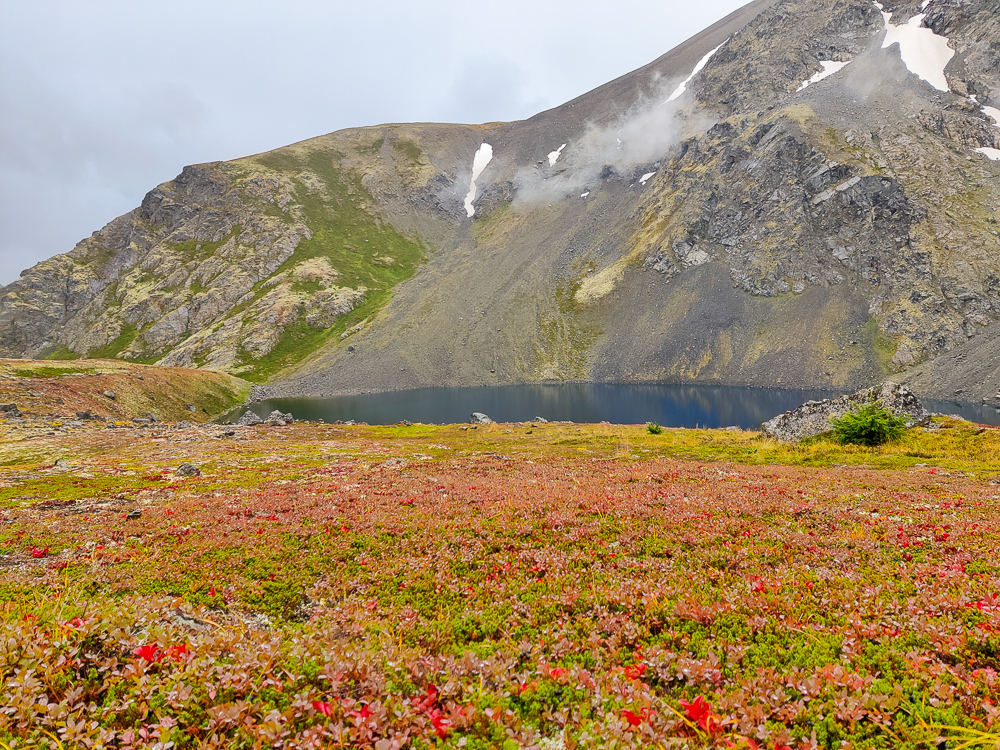
AND THE ANSWER IS YES. I mean, are you kidding with this? HOW IS THIS REAL?
Spot the little tiny speck Lara.
THE HAPPIEST.
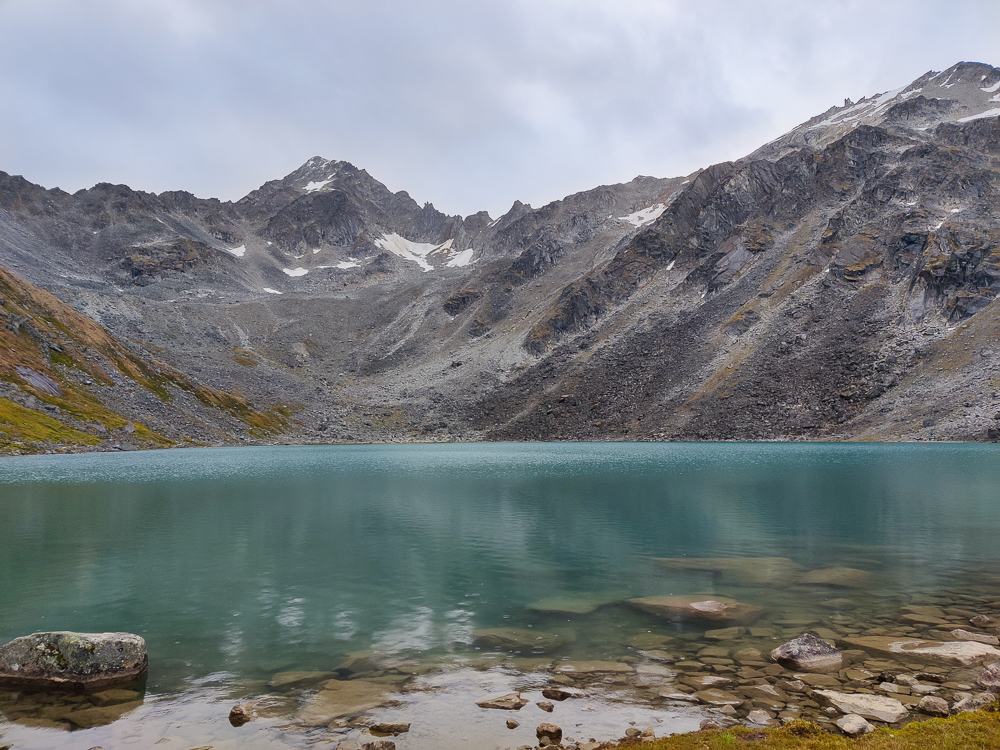
And then THIS is the final lake. I’m telling you, 50 steps away from this lake, you can’t see squat.
Look at the water! I said at the time that I wanted to swim in it, but on second thought, I wouldn’t be surprised if there was some sort of prehistoric dinosaur fish lurking in the depths… so maybe not.
But then, the water is SO clear that you’d probably be able to see any monsters, right? Sure, just in time for them to EAT you. So again, maybe not. I’ll just look from here.
And from here.
AND FROM HERE.

In general, I can’t get over how little justice the photos do to the views. We took SO many pictures, and they look amazing, yet they’re all missing something. I think it’s because a picture can’t convey that feeling of vastness surrounding you and the smallness you feel when you’re in the middle of it. As disappointing as it is to not have the ability to reproduce the beauty completely, at the same time, it’s kind of a gift. It makes it worth visiting a place even when you’ve seen it in pictures. You can show people what you saw, but a part of the experience is kept sacred, shared only between you and the other people who have been there. That’s kind of beautiful, I think.

The photos are still pretty darn spectacular, though.
You’re not tired of looking at these pictures yet, are you?
I sure hope not because we’re not done yet!

We ended up getting insanely lucky with the weather. We got rained on a little, but I think it was the least of any of our big hike days. It was never very heavy, and it didn’t last very long. Thank goodness for that because we realized this would have been one of the worst hikes to do in the rain. Between the walking on rocks and the already muddy trail, we didn’t need any more slip factors entering the equation.

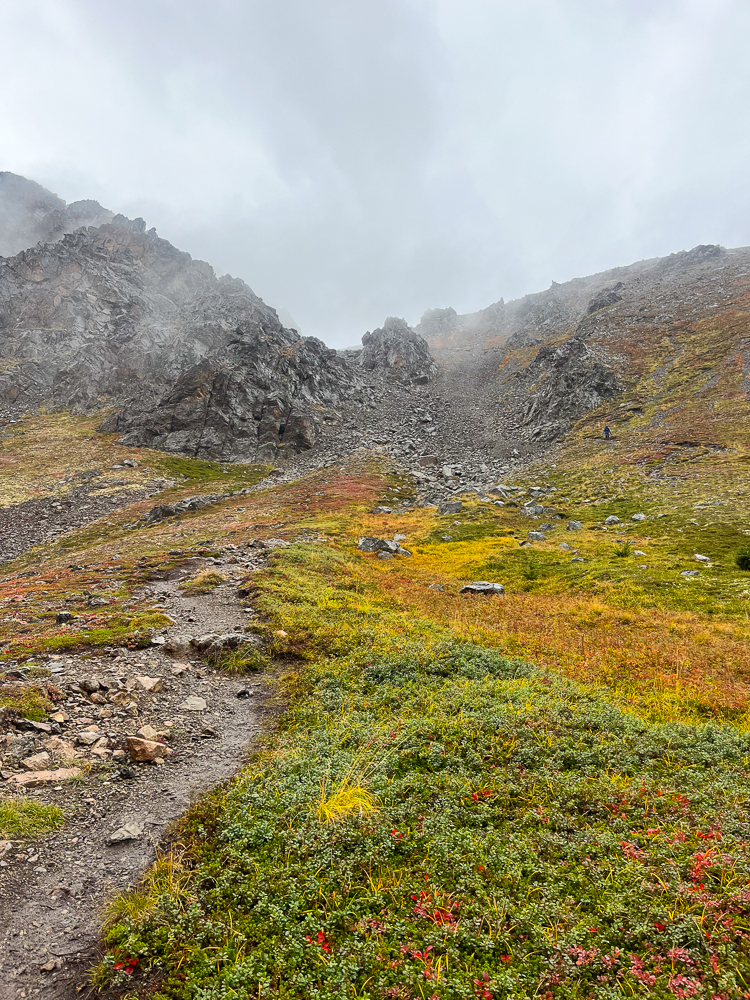
Headed out… this is actually one part of the trail where we took the same route there and back, but that’s because it’s pretty clearly marked for being a trail with no trail markers… That is literally a mud trail across the rocks.
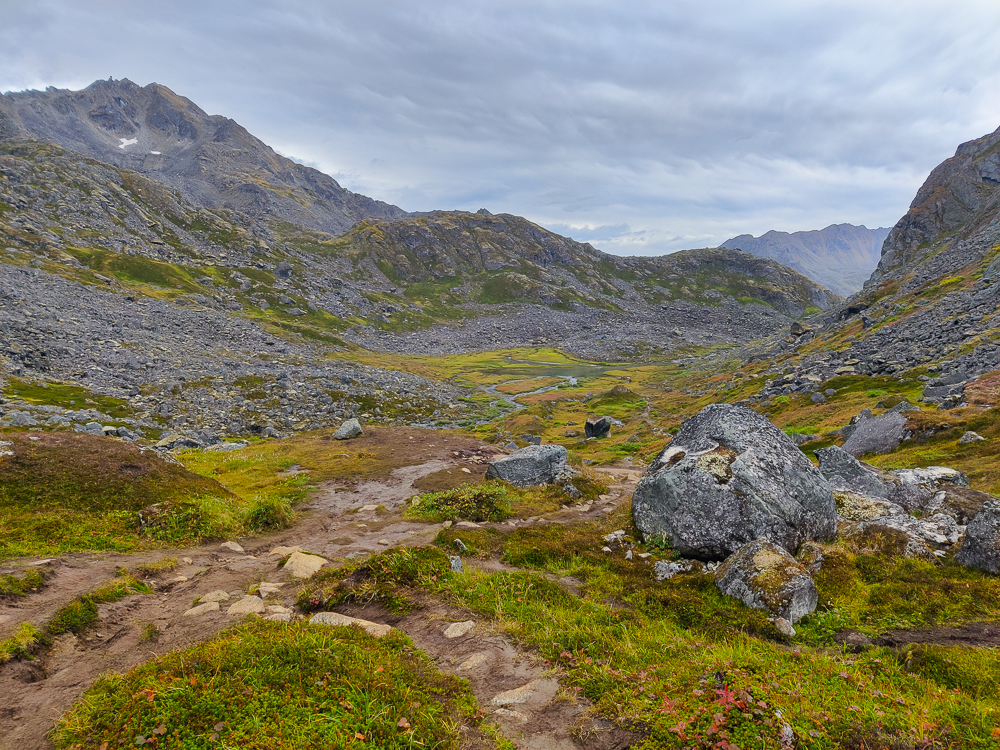
Goodbye, beautiful valley!
Here’s the map of our hike. We started and ended on the right side of this picture. You can see that our navigation got a little dicey there in the middle (the thickness of the line in that section shows we definitely did NOT take the same route there and back, and the little point up near that small lake is where we realized we were on the wrong side of the river… oops). And then, of course, you can see the two lakes that I took the most pictures of.

In the end, the hike was about 9.8 miles long (15.8 km) with 2,100 ft of elevation (650 m). Supposedly, according to the trail guides, it’s an 8.6 mile hike, but that’s apparently not what we did. I can’t imagine we added a full mile with our wanderings, though. That would be crazy. The most sensible conclusion is that the guides are wrong.

ANYWAY. Needless to say, we were drained but happy when we got back to the car. We had about an hour and a half drive back to Anchorage, and Olivia’s mom was once again the hero of the night. We got back to the house around 9, and dinner was waiting for us. Moms are the best.

If you’re not into fishing and don’t live in an area where people are, you might not know much about fish hatcheries. I was one of those people. I had no reason to even know they existed until I visited a friend in Ohio, and we went to a hatchery near her house to throw stale bread to the fish. This fit with my outsider perception of the entertainment options available in Ohio (limited)… but I have to admit, it was more fun than I expected. I digress. The point is, there are a lot of fish hatcheries around, whether you’re aware of them or not, and one of the biggest is the William Jack Hernandez Sport Fish Hatchery in Anchorage (they do abbreviate this to WJHSFH, but honestly, that feels just as cumbersome as the full name).

So, what is the purpose of a fish hatchery? Besides the obvious “to hatch fish” and presumably also to grow them. But what’s the point? Well, this varies. A few goals could be to recover endangered species, counteract habitat loss, or support sustainable fishing. There are private fish hatcheries to support commercial fishing interests. The Anchorage facility, as a sport fish hatchery, focuses on creating, improving, and diversifying opportunities for sport fishing in the state and minimizing its impact on wild stocks. The funding for Alaska’s two sport fishing hatcheries comes from the sale of sport fishing licenses and taxes on fishing equipment and boat fuel.

(Note: much of this info I’m going to include comes from info panels in the hatchery. I’ll also include some other sources at the end.)

The Anchorage hatchery is the largest indoor sport fish hatchery in North America (I feel like there’s maybe not a lot of competition for this title, but we’ll let them have it). This site was built in 2011, and all of the fish are raised indoors. This is not the norm. Most hatcheries basically have big, long pools outside for the fish. However, being indoors allows better control of the environment and protection against predators and disease (and it keeps people from feeding uncontrolled substances, like stale bread, to your fish).

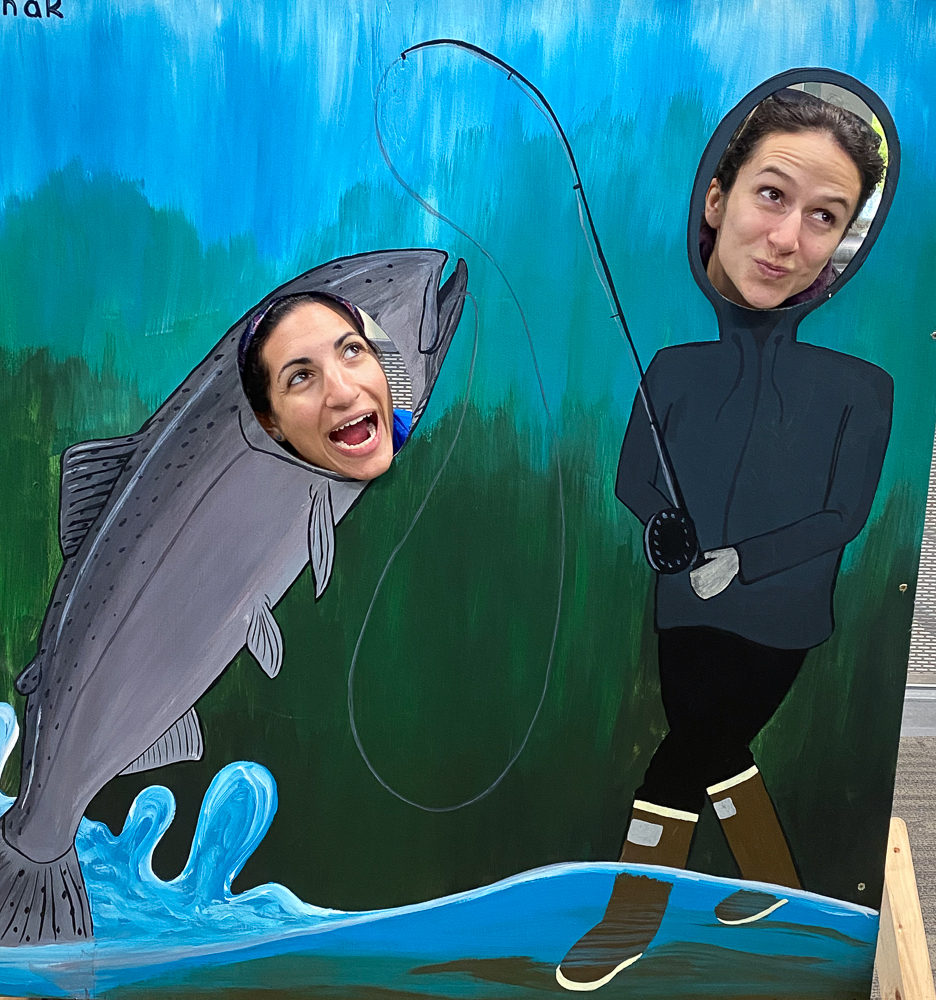
Olivia doing some sport fishing.

WJHSFH (nope, not using that acronym again) raises five species of fish: coho salmon, Chinook salmon, rainbow trout, Arctic grayling, and Arctic char. Each year, over 6 million fish are raised and stocked into over 200 locations. That is incredible. We’ll talk more about the logistics of stocking later, but just think about coordinating the transport of living fish to over 200 LOCATIONS. I’m getting ahead of myself. Who knew that a fish hatchery could be so exciting??

So, how does it all work? (As if anyone is asking… but whether you care or not, here we go!) Let’s go to the beginning. It all starts with eggs and milt (sperm). These are harvested from mature fish using methods that vary based on the species. With the two salmon, fish only reproduce once, even as wild salmon. They spawn in freshwater, live out their days in the saltwater of the ocean, and then return to their freshwater spawning areas for their one opportunity to contribute to the future of their species. Then, they die, and their bodies slowly decompose in the water.

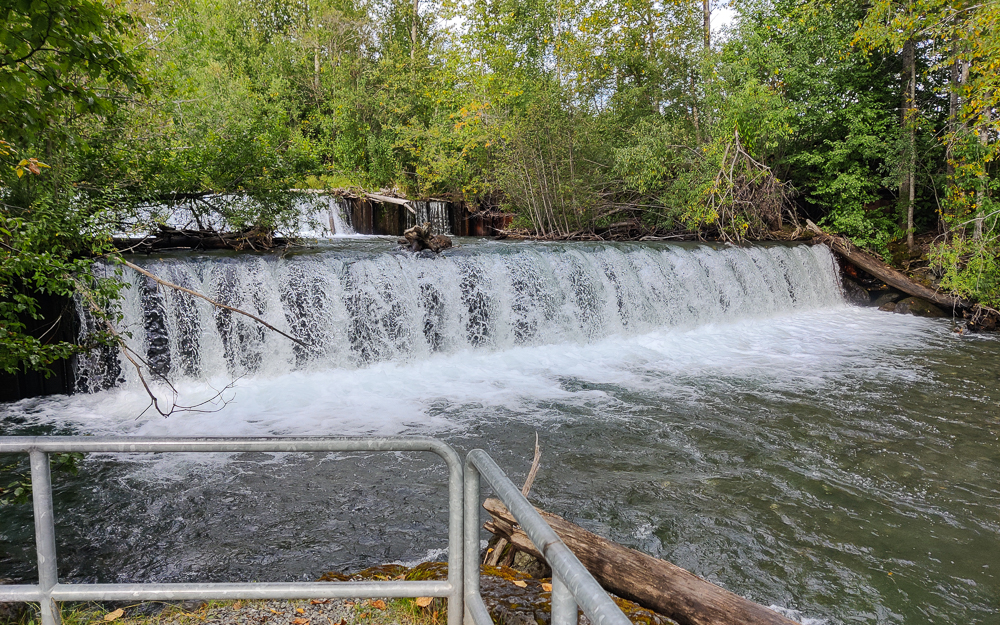
Ship Creek runs beside the hatchery and is a popular spot for spawning salmon.

The hatchery goes to a few spawning locations to capture mature salmon and harvest their eggs / milt. Since they would die anyway, the salmon are “dispatched” (as the signage nicely put it) before the females are cut open to access their eggs (one fish can have 10,000 eggs!) and the males are “milked” (the milt is literally squeezed out). Their bodies are then donated to feed bears in wildlife refuges or local sled dogs (they are past the age where they’re edible for humans, but the animals are less picky).

Ship Creek dam.
This is where the salmon are held while they’re waiting for the egg/milt harvesting days.

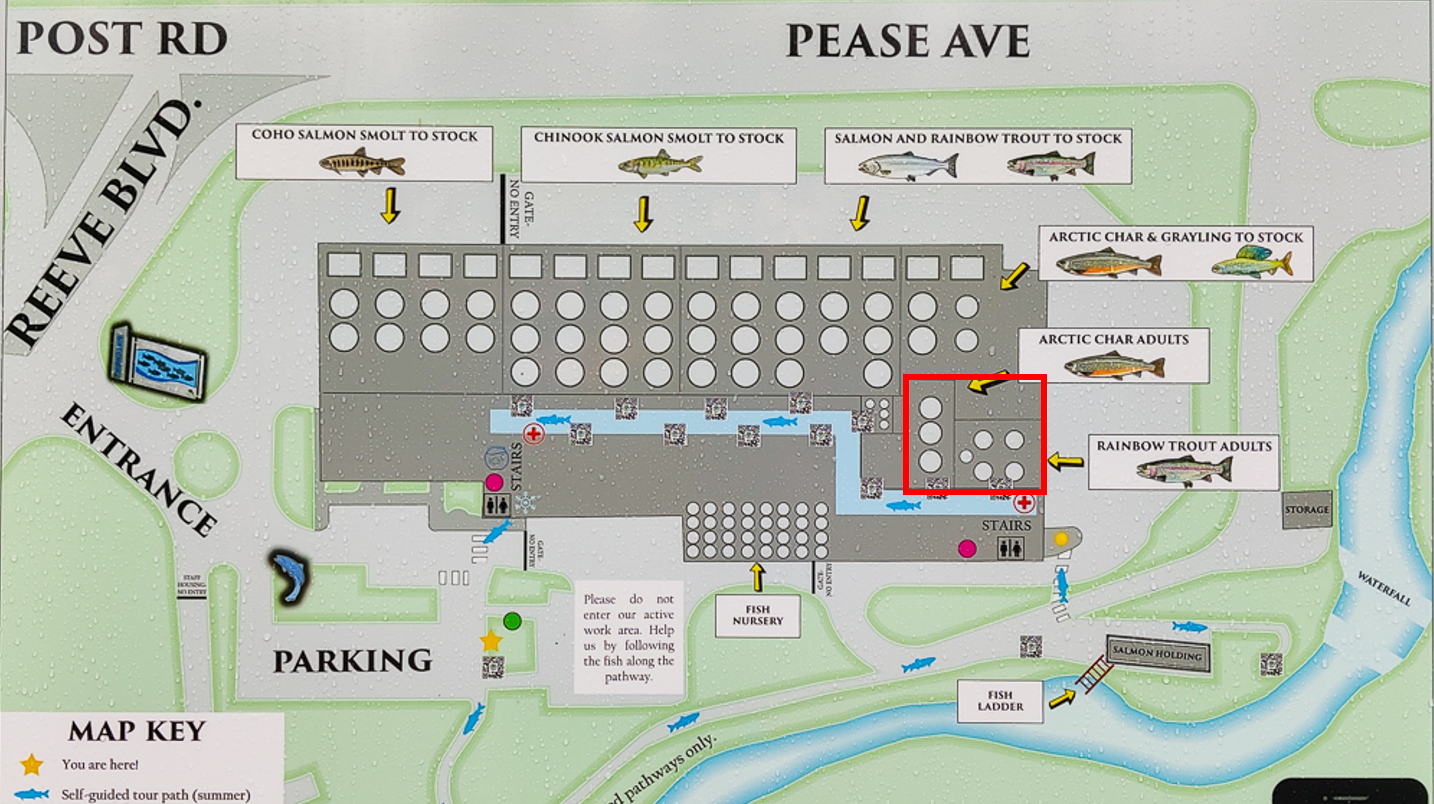
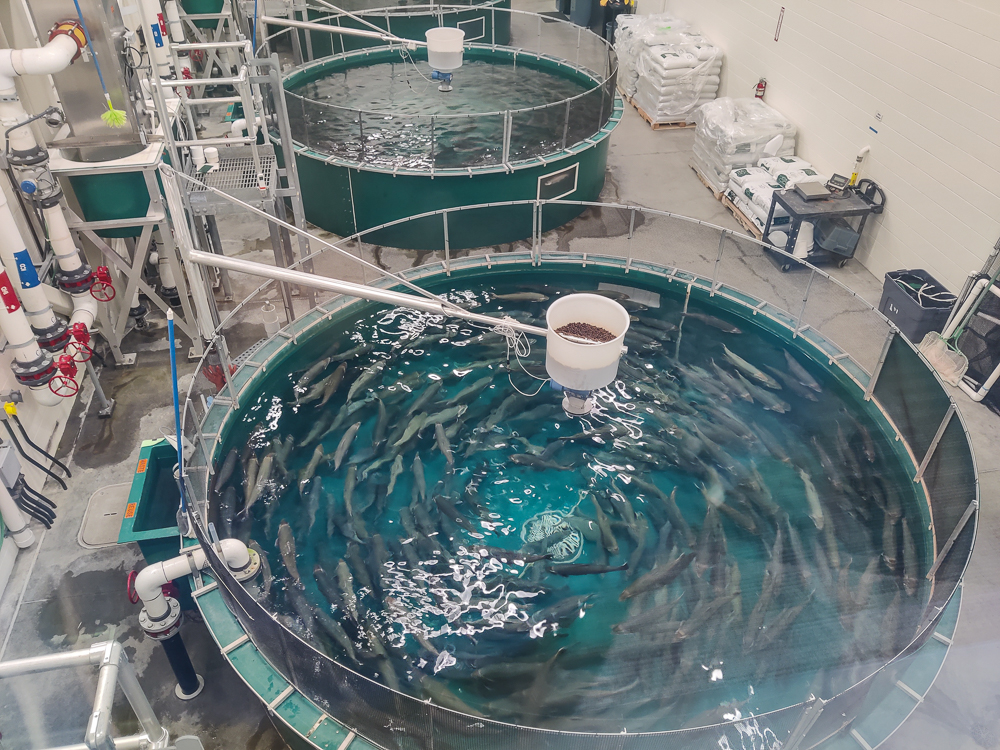
Rainbow trout and Arctic char are a different story. The eggs and milt for these come from “broodstock” which are raised to maturity (about 3-4 years) at the hatchery. Since both of these species survive after spawning, they are generally not “dispatched”. The females are “air spawned” which sounds insane to me. They inflate the fish’s belly with air to force the eggs out. About 2.5 million eggs are collected from the broodstock each year. The males are milked just like the salmon. And then these fish are all stocked into lakes where they can live for many more years.

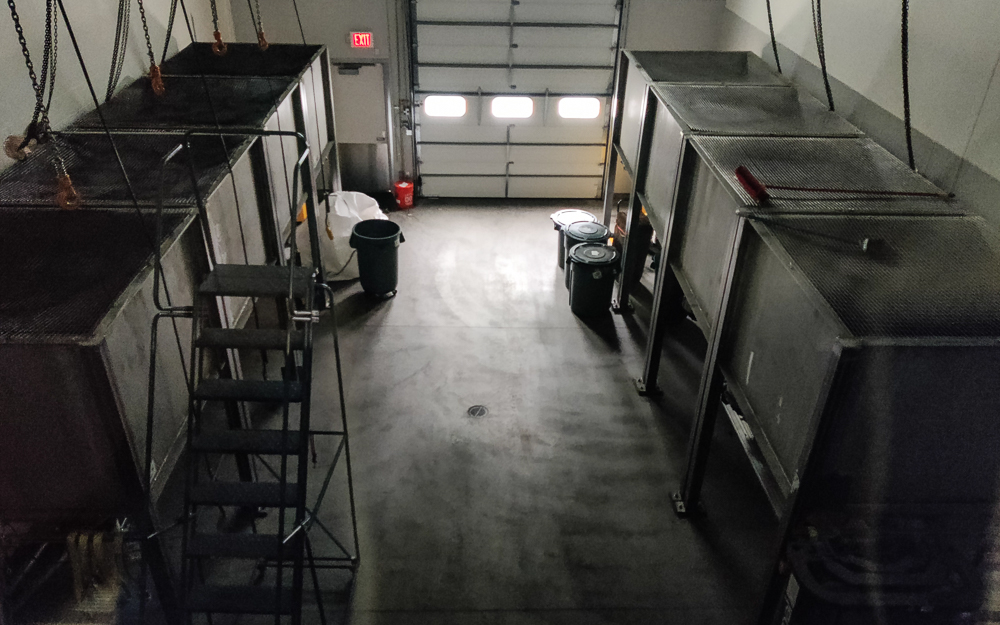
The broodstock have their own area in the hatchery (boxed in red). They’re divided by species between two rooms, and then each tank within the room is for a different age of fish.
This is the Arctic char broodstock.

The eggs and milt are hand-mixed together… I wasn’t sure if that just meant manually or literally with a hand, but I found a video of the process and it was literal hand mixing with no glove. In case you were wondering. Then, they’re put into trays in the incubation room. Fertilized rainbow trout eggs are also sterilized to ensure that stocked trout cannot reproduce with wild trout.

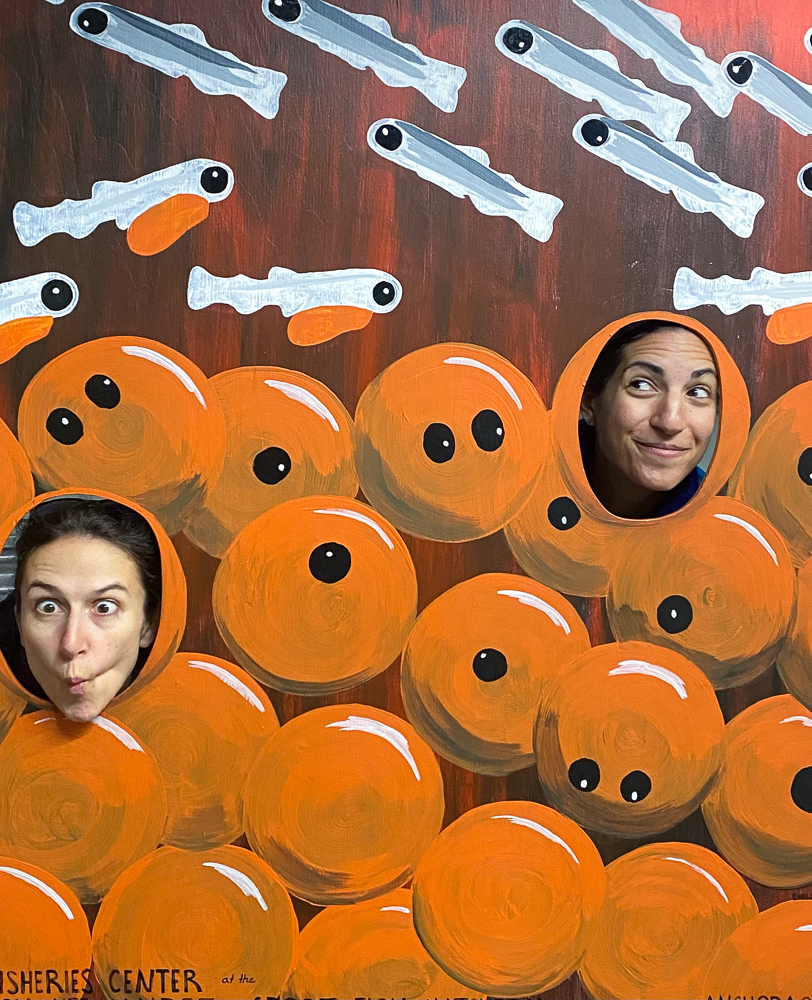
Olivia and me as eyed eggs with alevin swimming overhead.

Fun fact: Olivia said that in elementary school, their class was given eggs and milt from the hatchery. They fertilized the eggs and gave them back to the hatchery at the end of their project so that they could be grown and stocked with the other fish. What a fascinating elementary school project… That’s so Alaska.

Depending on species, one incubation tray can contain 7,500-12,000 eggs. The fish go through a few stages in the incubation room, and the time this takes depends on species and temperature. They start out as “green eggs”, or newly fertilized. In a few months, they’ll become “eyed eggs” which literally means that you can see the fish’s developing eyes through the egg shells. After they hatch, they’re called alevin. Alevin still have their yolk sacs with them, and those provide them with nutrients as they continue to develop. Finally, after this sac is fully absorbed, they’re fry, or small fish, and this means it’s time for them to move out of the incubation room to the start-up rearing area.

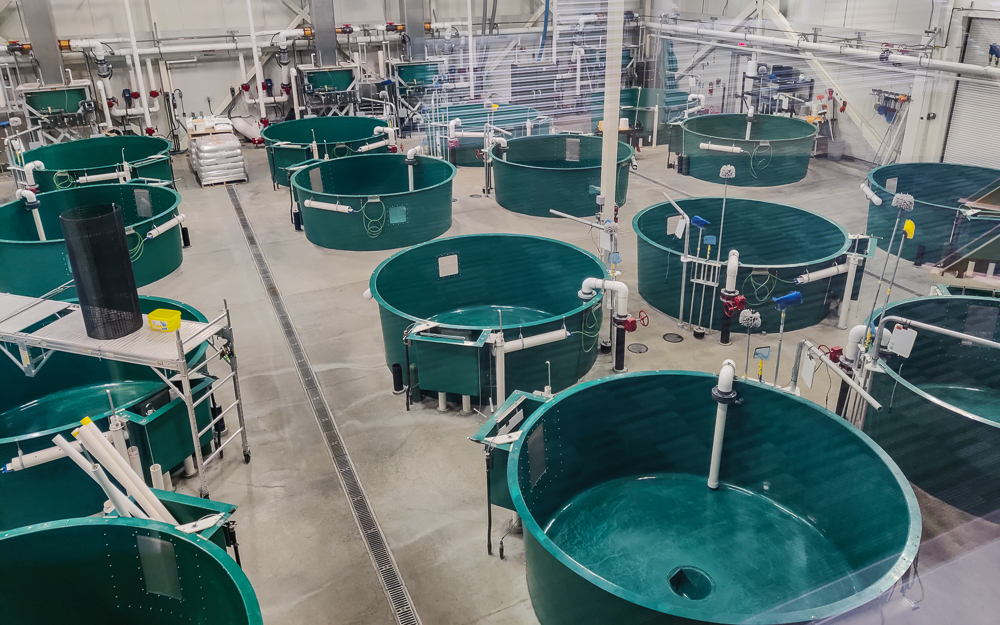
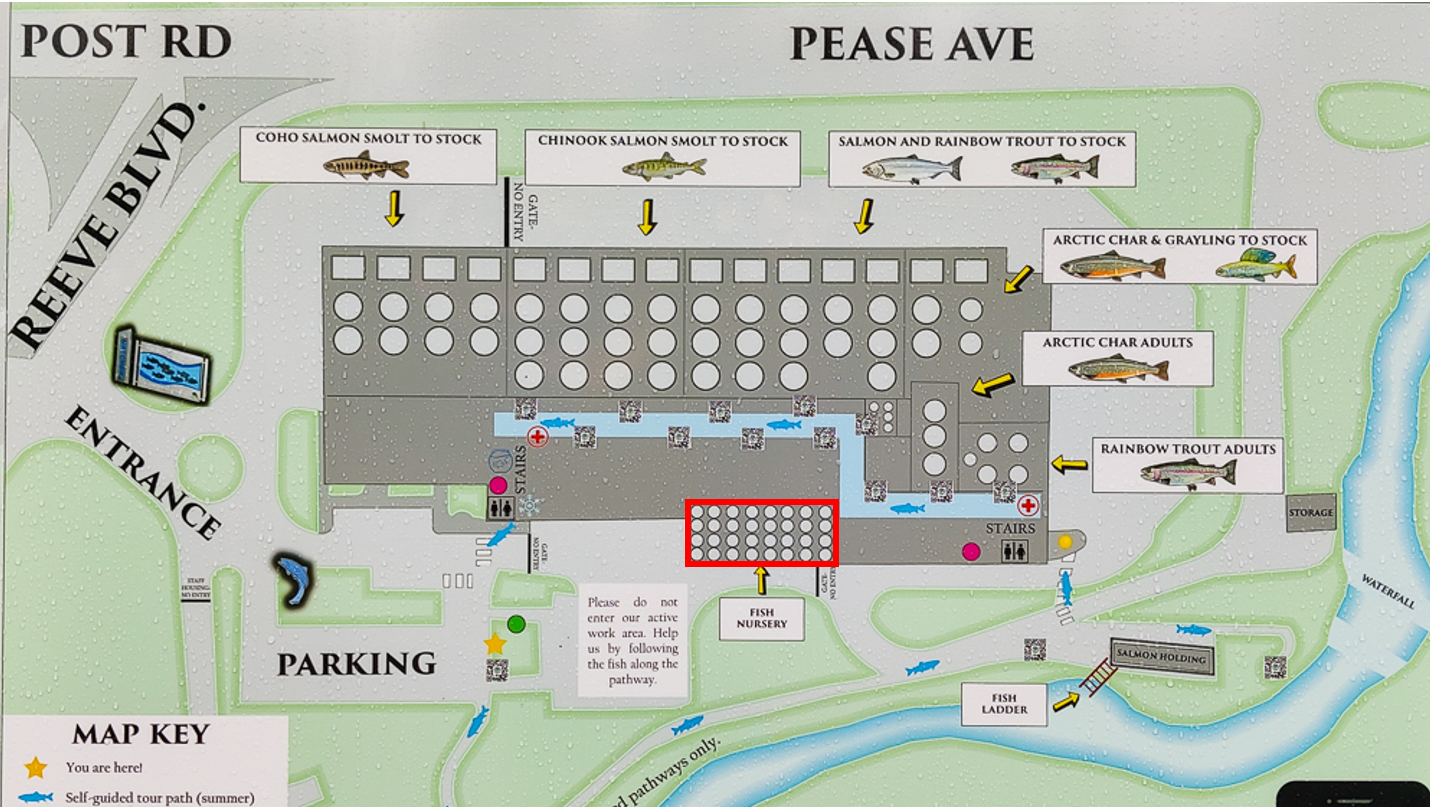
The start-up rearing room is where the fish start to swim and feed. It has 32 “small” tanks, 2,000 gallons each, and each can hold a maximum of about 110,000 fish. They start out eating food with pieces the size of grains of flour! As they grow, so does their food. Most species spend about 3 months in this room, and during that time they transition through three different feed sizes and grow to 10-30x the size they were when they entered!

Start-up rearing room (aka the fish nursery).
The start-up rearing room is boxed in red.

Once fish outgrow the shared tanks (at about 3 grams), there are a few different possibilities for their next move. Some are sent to be stocked out as “fingerling” (2-5 inches) which need to grow a little more in the wild before they can be caught. Some rainbow trout and Arctic char become part of the broodstock that will supply the hatchery with eggs and milt. Some are sent to the catchable area where they’ll continue to grow until they reach “catchable” size (7-14 inches). And some salmon are sent to the smolt areas where they will grow until they’re juveniles (smolt) and then are stocked out.

Regardless of where they’re headed, some serious fish-moving has to happen. Guess how they transfer the fish between tanks? HOSES. No joke. And this isn’t a quick little process. The tanks can be FAR apart – some transfers use hundreds of feet of hose! Once the hoses are attached to the tanks, they turn on a pump, coax the fish into the hose, and a fish counter tallies them up as they fall into their new home. For the fish headed to the catchable tanks, they will stay there for 8-12 months, until they’re ready to get stocked out.

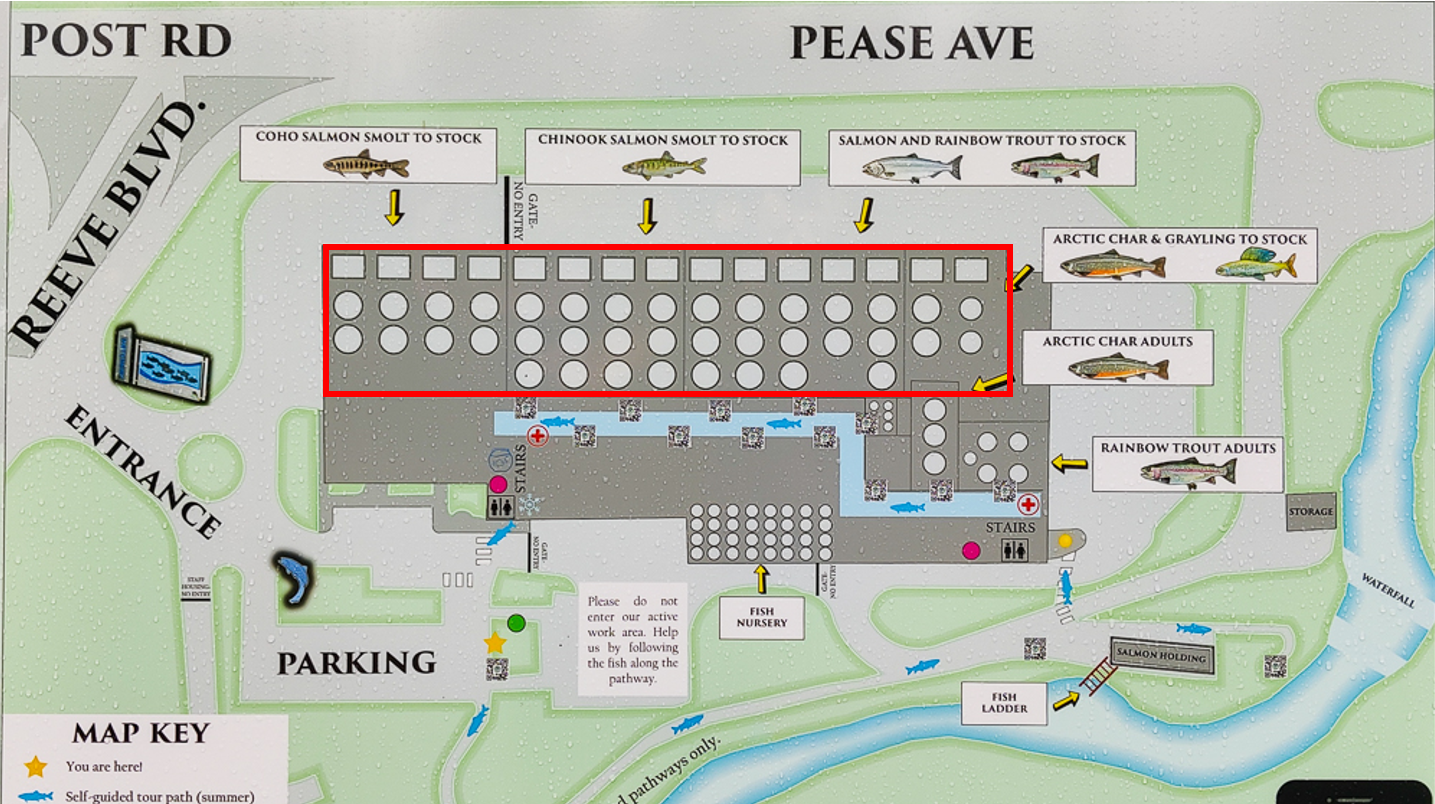
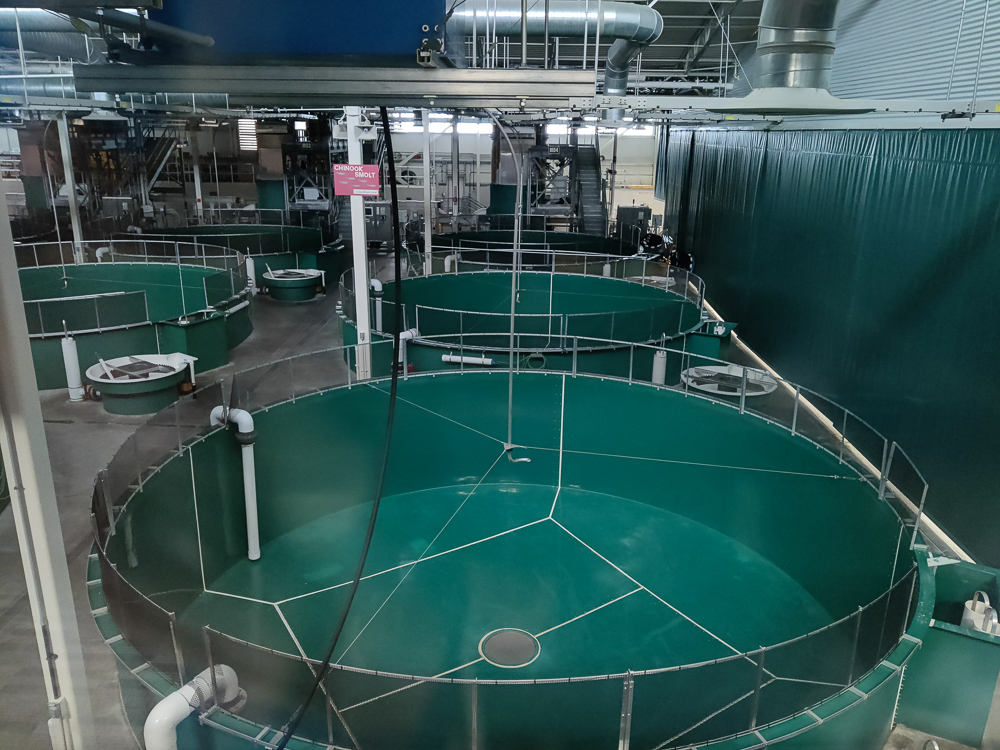
Here are all of the tanks that fish would be moved to (besides the broodstock). The smolt tanks are on the left side of this red box, and the catchables are on the right.

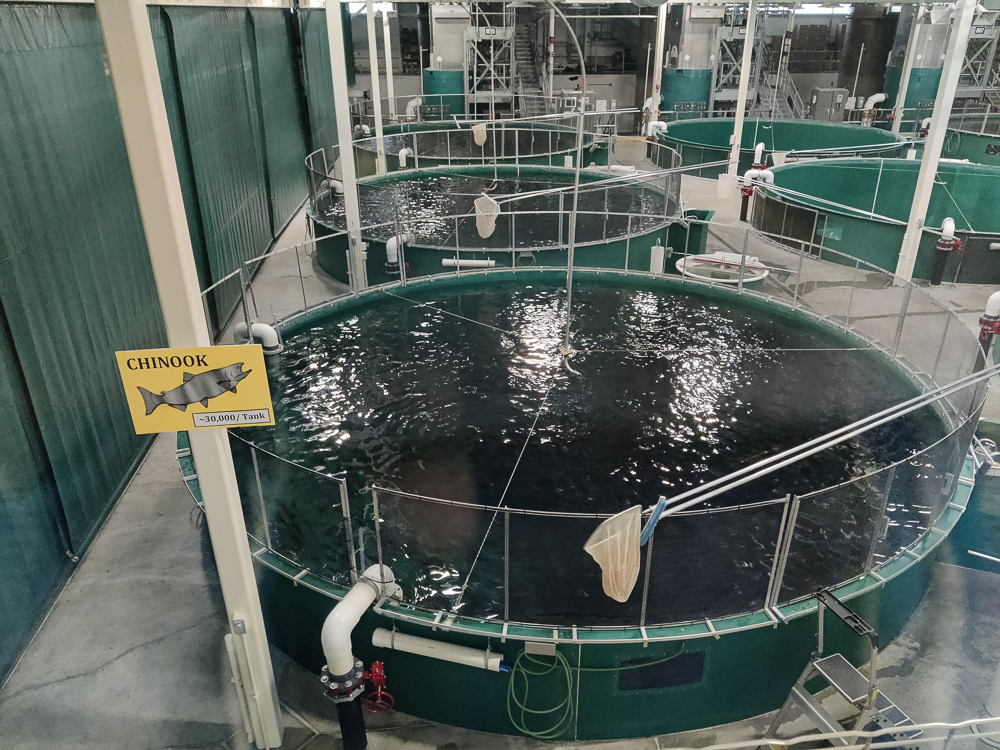
The catchable area has 18 tanks, each holding around 30,000 fish and 22,000 gallons of water! The salmon smolt areas have 20 more of these enormous tanks. Each can hold 100,000 coho salmon or 200,000 Chinook salmon! That’s a lot of fish.

It’s also a lot of water! Not surprisingly, they have a VERY intense water treatment situation. I’ll give you the basics (probably still more than you want to know… but oh well). The hatchery uses well water which would kill the fish if it was sent directly to the tanks. I mentioned before that a big advantage of an indoor hatchery is environmental control. Well, this is a perfect example of that. Nitrogen is removed from the water. Oxygen is added. The temperature is adjusted to be ideal for fish development.

Water is always circulating through the tanks. It exits through drains and overflows and is divided into wastewater and recirculation water. The recirculation water needs to be retreated before returning to the tanks, a process that takes about an hour. First, it is cleaned of most solid fish waste via a separator and a filter. Next, it runs through a biofilter which converts fish waste-generated ammonia into nitrite into nitrate which is less toxic for fish. Then, the gases are adjusted. Carbon dioxide and nitrogen are removed. Oxygen and ozone are added. Finally, it runs through a UV filter to sterilize the water and break down the ozone before it’s sent back out to the tanks. The amount of reused water in a tank varies… smaller fish use more fresh water, but by the time they reach the “catchable” tank area, 95% of the water is reused.

Most of the tanks were empty since we were there in September, but some salmon are raised to catchable size to be released in the fall or in the winter for ice fishing.

Another automated system that helps make life simpler for the hatchery staff is the automated feed system. Pelletized food is delivered to the hatchery in “super sacks” which hold 2,200 lbs (1,000 kg) of food! It’s stored in silos, and feed times and amounts are set in a computer program. When it’s time, the proper amount of food drops out of a silo into the hose below, a blower propels it to a “feed selector” distribution box, and from there, it’s routed into the outgoing hose that leads to the appropriate tank. Finally, at the tank, a spinning spigot sprays the food pellets all around to give the fish an equal shot at getting some.

These are the silos. Each one can hold two super sacks-worth of food!
Here’s a view of an empty tank. You can see the “spinning spigot” for the feeding system extending down in the middle of the tank.

Now, we’ve finally reached my most favorite part of this whole process – stocking! This is when the fish are taken from the hatchery and sent to live in various bodies of water across Alaska. This is a massive undertaking. There are over 200 different sites stocked from this one hatchery.

Between the two types of salmon, there are 15 release locations. Most salmon are stocked as smolt (juveniles) in rivers and coastal waters, and they swim out to sea to grow before coming back to their stocked location as adults. (Chinook salmon return after 1-6 years, and coho salmon after one.) Other salmon are stocked out at catchable size, some in the fall and then some in the winter for ice fishing. Many of the fish, of course, are caught by sport fisher-people in either the ocean or rivers/streams. Of the ones that evade capture and return to breed, some are collected for broodstock by the hatchery, and the cycle continues.

The other three fish are stocked in landlocked lakes, some at fingerling size (2-5 inches) and others at catchable size (7-14 inches).

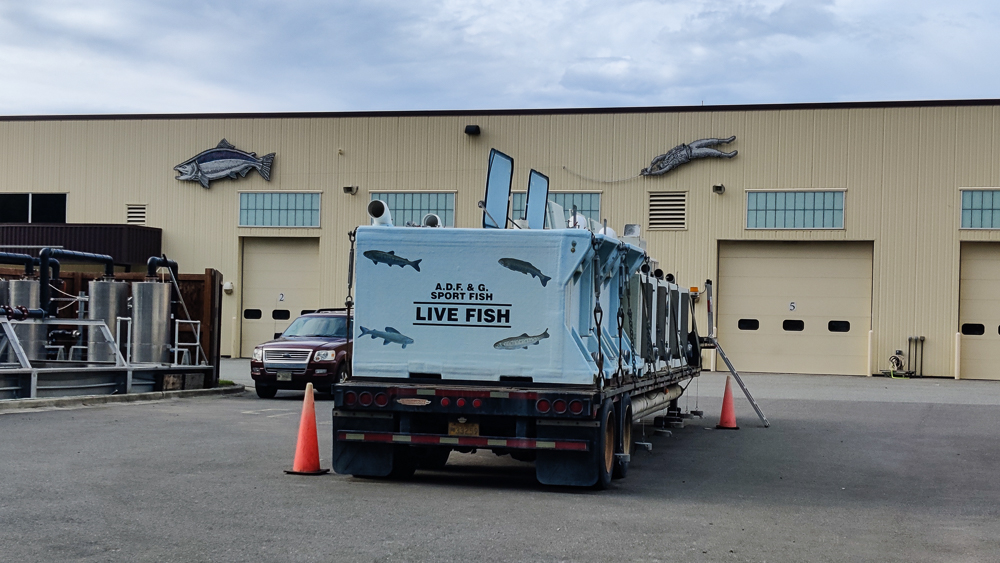
Fish are transported from the hatchery in trucks. They have a small fleet of trucks, big and smaller, used for this distribution, and during the heaviest stocking months of May and June, stocking is often a seven-day-per-week activity.

Okay, try to wrap your head around the various elements of this stocking situation… The hatchery has just spent many months hatching and raising and growing literally MILLIONS of fish. Now, it’s time to send them out into the big, wild world. Millions of fish to 200 locations.

There needs to be a schedule. Someone needs to make this schedule. My head is spinning just thinking about it. There are so many factors to consider! What type of fish and how many? What truck is needed? What locations? Where are these locations in relation to each other? How far are they from the hatchery? Who will be driving the truck? Do they need support personnel? Etc. And then apparently things can change last-minute based on lake conditions and access, to the point where they might have to change plans while already on the road. I’m stressed out just from this imaginary scenario. No thank you.

After the schedule situation, it’s not like things get easier. Did you forget that we’re talking about millions of FISH? Living fish! Ideally, fish that continue to be living fish through the entire journey and stocking! From hatchery to truck, along the truck’s journey, and then from truck to water. It’s not like you just pour water into a tank, plop in some fish, and off you go! Remember the hatchery’s high-maintenance water treatment system? The fish don’t get magically less fussy because they’re on the road. The water needs the proper amount of oxygen and none of the bad things that kill fish. And then it has to stay properly oxygenated throughout the drive. Yeesh!

A stocking truck!

Now, you’ve reached the end of the road to your destination. How on earth do you get the fish into the water? Sometimes, the truck can get close enough to just hook up a big hose and shoot them in (I find this to be an entertaining concept). In some places, there’s not great access, so they might have to CARRY THEM the last little bit from the truck to the water in 5-gallon buckets. (Can you imagine how many buckets-worth of fish can probably fit in one of those trucks??)

In situations where carrying buckets of fish isn’t practical (to me, that’s any situation where more than one bucket of fish is carried more than about five steps… but I imagine their bar is a bit higher), they might drive them in with ATVs. And SOMETIMES, they have to fly them in with little helicopters. Fish delivery by HELICOPTER! It’s insane. Insane!

All of this, remember, is so that people who like fishing can go out and fish without completely decimating the natural populations. As someone who does not quite understand the appeal of fishing, it is baffling to me that so many of these fishing people exist that such an operation is necessary. Apparently, running the facility costs $2-3 million per year, but the revenue generated from the stocking programs is estimated at $20 million per year. So, I may not understand, but clearly a lot of people are into it, and it brings a lot of business to Alaska. I’m happy that they’re happy and that they get to do what they enjoy without a massive environmental cost. So, in conclusion, yay for fish hatcheries! Keep up the good work!

Sources

I got a ton of info from this video tour of the hatchery.

Alaska Department of Fish and Game. “William Jack Hernandez Sport Fish Hatchery Tour.” Youtube, 1 December 2020, https://www.youtube.com/watch?v=en_WZjMGB_8.

This article talks about the salmon egg take and about how the dispatched salmon benefit captive bears and other animals.

Puryear, Wilson. “Hatchery Kings, Orphaned Bears and the Necessity of Synergy in Conservation.” Alaska Department of Fish and Game, July 2020, https://www.adfg.alaska.gov/index.cfm?adfg=wildlifenews.view_article&articles_id=961.

If you’re dying for more details on the salmon egg take and want to watch from collecting the fish through the fertilized eggs being placed in the incubation room, this is the video for you!

Alaska Department of Fish and Game. “Chinook Salmon Egg Take at the William Jack Hernandez Sport Fish Hatchery in Anchorage.” Youtube, 29 March 2019, https://youtu.be/5wJsUfASSTs?si=8-XR5vfcy8lTnXb2.

Here’s a brochure with some basic data about the hatchery.

Alaska Department of Fish and Game. “William Jack Hernandez Sport Fish Hatchery.” https://sustainableinfrastructure.org/wp-content/uploads/2020/10/hatchery-brochure-brand-update-SS.pdf.

Another hiking day! The weather was, as usual, looking uncertain, but in the mountains, that could mean misery or an absolutely beautiful day. If we waited for everything to look perfect, we’d never go anywhere. So, we packed lots of snacks and clothes for any possibility, and off we went.

Our planned hike had a few possible variations built in. We were headed back to Chugach State Park, just one ridge over from where we were for Flattop and Flaketop. This ridge started with Little O’Malley, another peak Olivia had hiked a million times, but after that, we hoped to continue on to Big O’Malley (actually just called O’Malley). After O’Malley, we could turn around or, better yet, continue on past a couple of lakes and turn our hike into a loop, rather than an out-and-back (always more interesting). Later, there was one more opportunity for an add-on, an out-and-back trail off the loop that led to more lake views. We definitely couldn’t do that entire trail, but we figured we’d wait to decide how far to go once we were there and had a better sense of the weather and the timing. We expected the whole thing to be around maybe 12-15 miles (19-24 km), depending on some of those decisions.

Fair warning… I have a LOT of pictures. You have no idea how hard I worked to winnow them down to the ones I’ve included, and there are still so many.

The hike up to Little O’Malley wasn’t bad at all. There was definitely some good elevation gain, but there were nice switchbacks that made it reasonably gradual which was nice. The view from there was… obscured. There was a lot of fog/cloud cover surrounding us. Thankfully, it was moving fast so we did see SOMETHING, but it was moving fast, so you had to keep your eyes peeled and be ready.

Atop Little O’Malley. Honestly, it didn’t even really feel like a summit, but maybe that’s just because when we were at the tippy top, we were completely surrounded by fog and couldn’t see anything.
Imagine those clouds zooooooming past.

From there, we continued on to O’Malley. Just like with Flattop and Flaketop, once we got past the first peak, we saw very few other people. There were maybe 5 human sightings over the rest of the hike. It felt like we had the place to ourselves. Crazy!

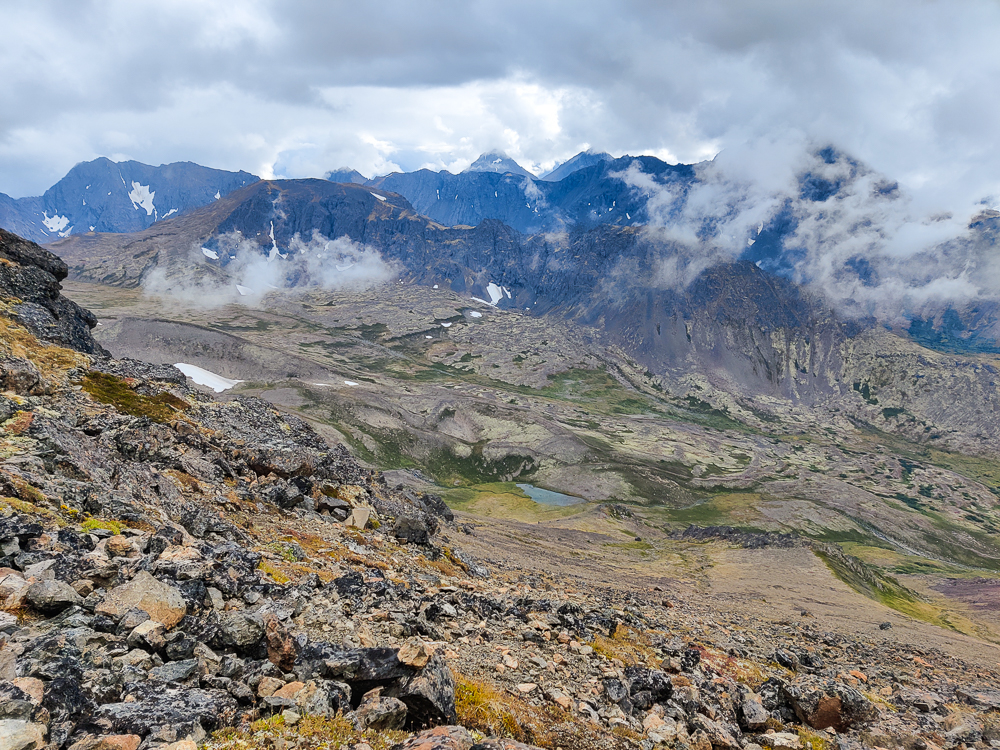
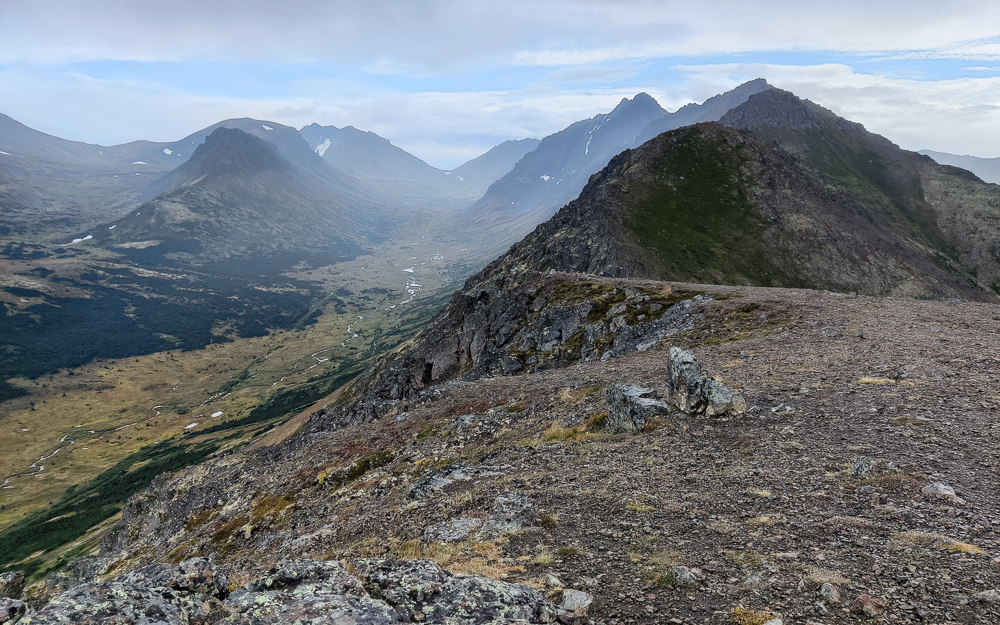
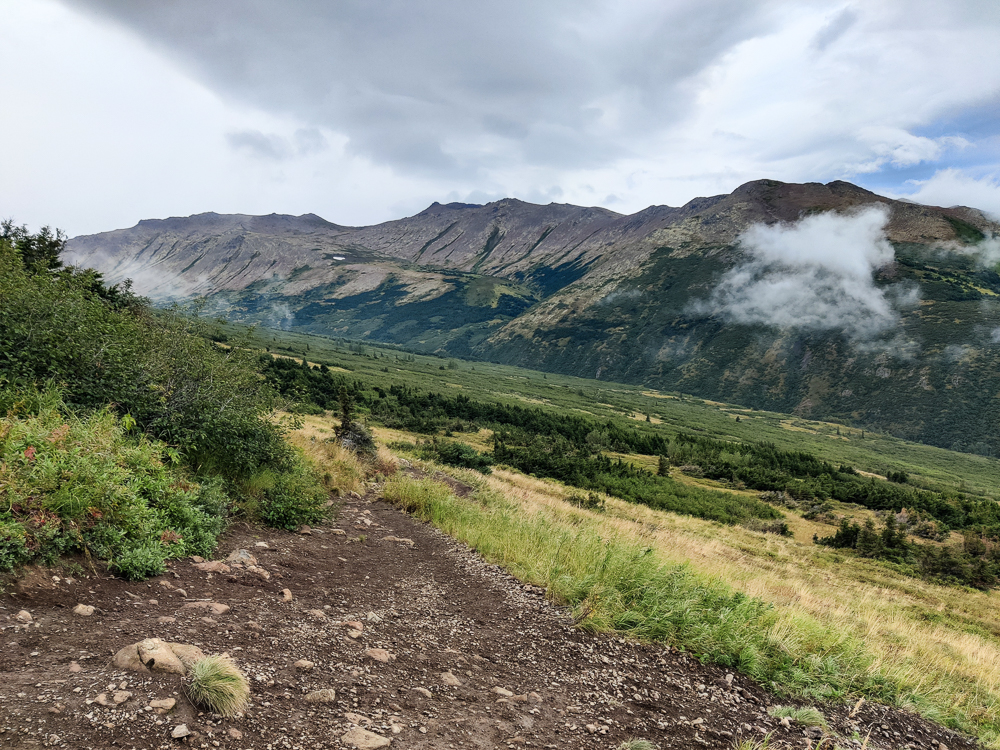
This was also where things got much more challenging. Well, not getting from Little to regular O’Malley. That was pretty flat, and it was very beautiful because of the colors of the valley and the dramatic mountains surrounding us (on the rare occasion when you could actually see them through the clouds… ha).

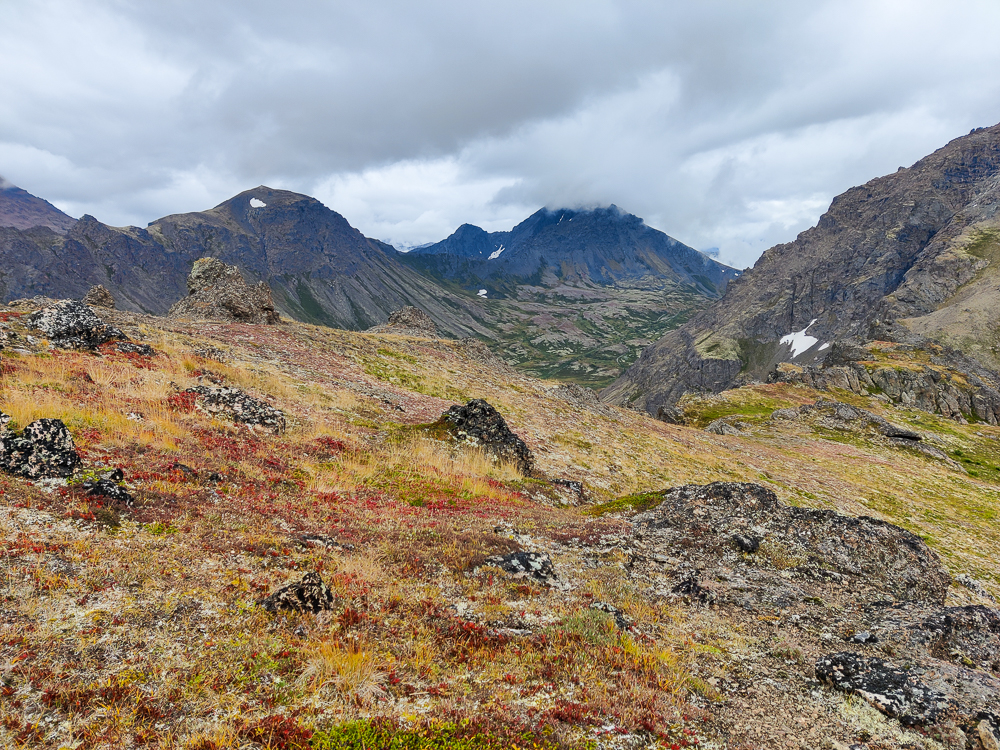
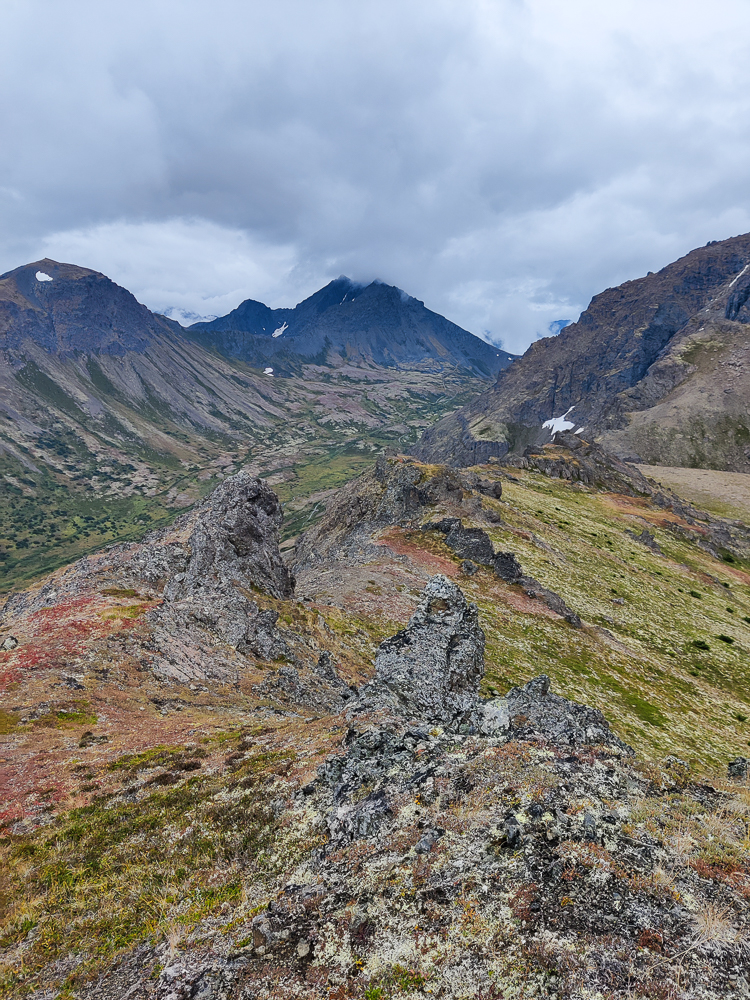
Another warning… the number of times I’m going to caption a photo with just an exclamation about “THE COLORS!!!!”… it will be more than once. But seriously, though… THE COLORS!!!! And we’re just getting started.

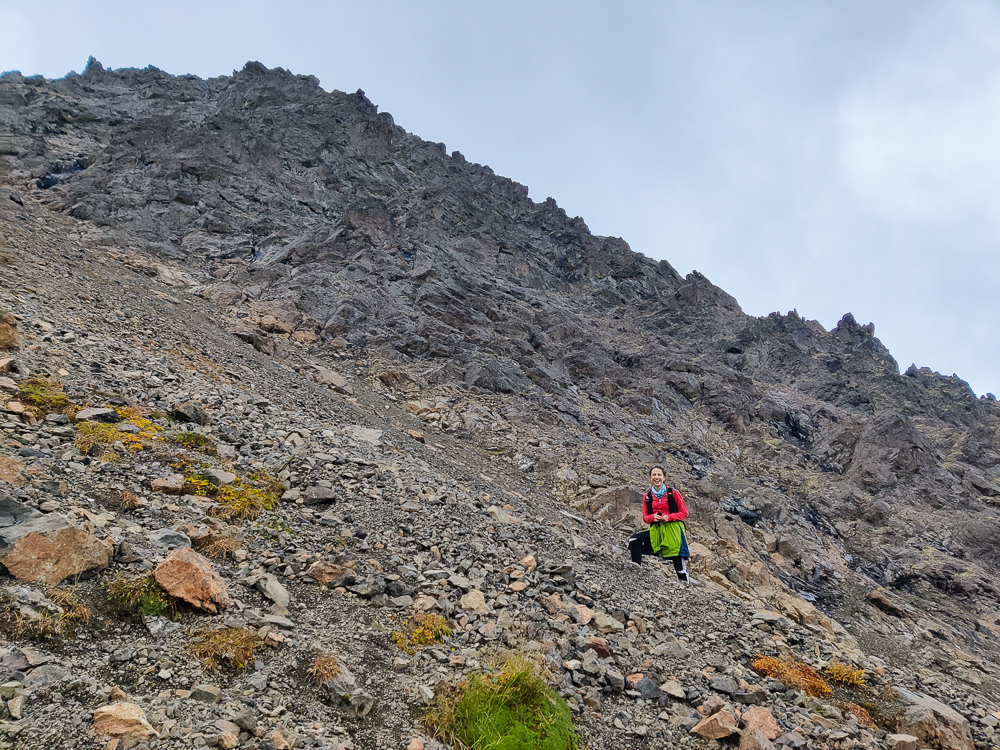
When we got to O’Malley, we knew it was going to be a different story. No more easy, flat ground. Our upward trek started out with what felt like an endless scree field. That’s where it’s all shifting and sliding little rocks, and you have to either not care about slipping or take extra time to be sure of your footing. I’m definitely a “take extra time” person. It takes me forever to go up those things because I’m checking and double checking my footing on every step before I commit. I hate the feeling of sliding. There wasn’t a particularly defined path for the up, so Olivia and I each decided for ourselves what seemed least terrible and ended up taking completely different routes.

This was the worst part of the whole hike, but thankfully, despite the slow going, I still felt good, both physically and mentally. There was never a point where I wasn’t sure I would make it. I knew I would be fine; I was just moving slowly. I also didn’t worry about Olivia. I knew she could handle herself, and we’d meet up at the top.

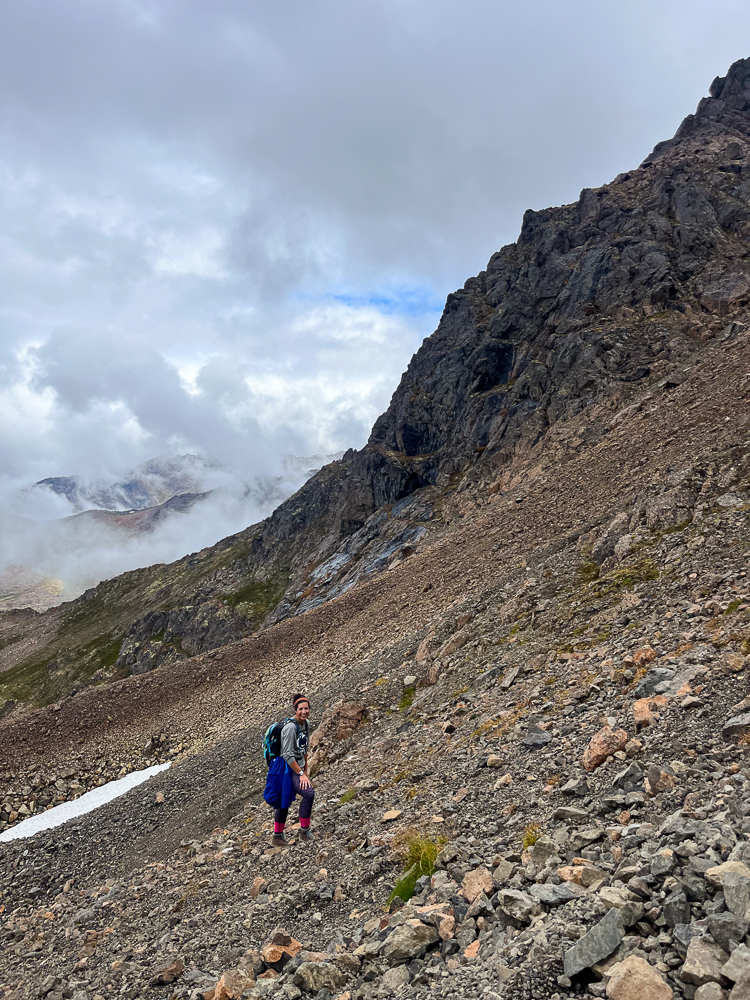
This was the last time I was close enough to Olivia to take a photo. I’m a pokey pokey tortoise.
It just got steeper after this.
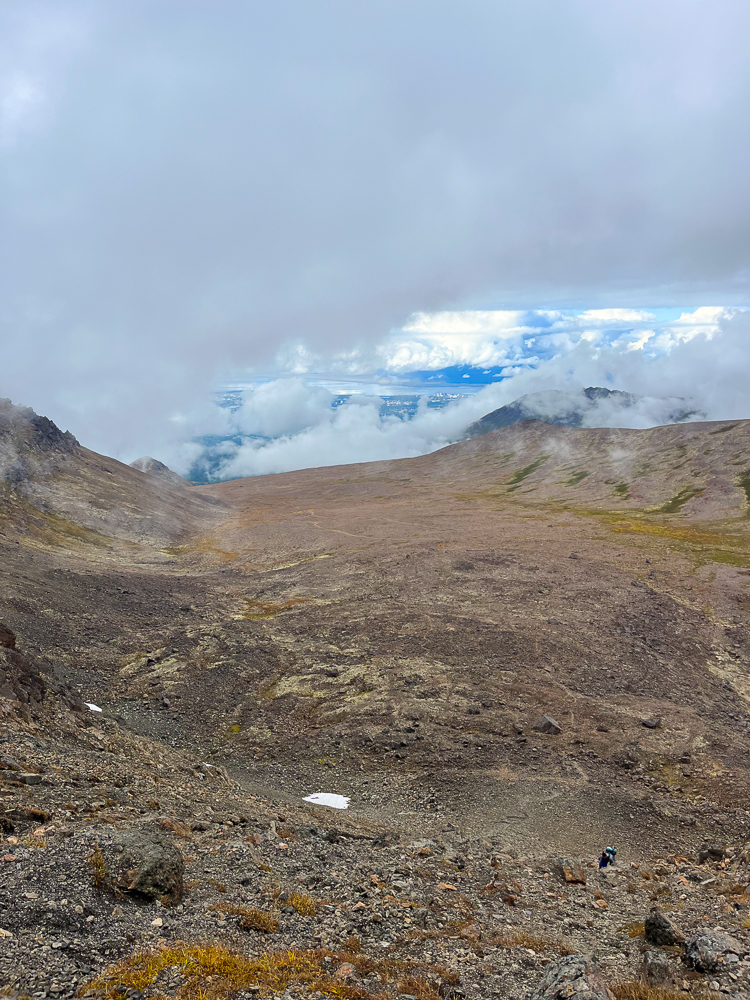
Can you spot the little speck Lara in this photo? (If not, see bottom right.) I feel like you can maybe kind of see how steep the uphill was, considering that the world seems to drop off a cliff behind me.

As we wait for slowpoke Lara to crest the scree field, I’d like to pause for a moment of Olivia appreciation. There are MANY things I appreciate about Olivia. She’s fun and interesting and thoughtful. When we met in Armenia, I knew immediately that I wanted to be her friend. I thought she was the coolest (still do). We’d never hiked together before this trip, but I had a good feeling about it. Turns out, we make great hiking buddies because 1. We will never run out of things to talk about, 2. We’re on a similar level, fitness-wise, and have a good sense of our capabilities, 3. We love adventures, 4. We’re up for a challenge, and 5. We’re determined.

I feel pretty confident that if I’m up for something, Olivia will be too. My adventurous side feeds off of that… knowing that she’ll likely say yes makes me push myself a little more (and it’s probably the same for her). It’s not like I would do something I didn’t want to do, but having her as backup lets me say yes to things that my voice of reason would talk me out of I was alone. Like this – doing an unfamiliar, challenging hike with basically no cell service and no other people around. Everyone evaluates these things differently, but for me, doing such a hike solo would have felt like a silly risk. Would I probably be fine? Sure. But there are too many things that can go wrong, and an extra person increases the chance that at least one of you will be able to get help if needed.

Anyway. In conclusion, Olivia is the best. Okay, slowpoke Lara has to be getting close by now…

I just love it.

Once I finally tortoised my way to the top of the scree, Olivia and I reunited and continued our trek. From there, we still had about another half mile to the peak with 800 feet of elevation gain, but after what we’d just done, it felt easy. The path was hard to track, but having learned our lesson from the last hike, we were much more diligent with checking the map whenever it seemed like we were getting off course. There were also MANY false peaks. These are high points that look like they’re the summit, but they aren’t. Usually, you get there and then see that the true summit is still ahead. As you might imagine, that can be discouraging. We called them deception peaks because it made us laugh and was also more fun to say when we were yelling at them. Luckily, since we were looking at our maps, we were undeceived. (In case you’re wondering what one yells at a deception peak, it’s just things like, “NICE TRY, deception peak! I’M ON TO YOU!” Um. Anyway. Just trust me when I say it feels therapeutic in the moment.)

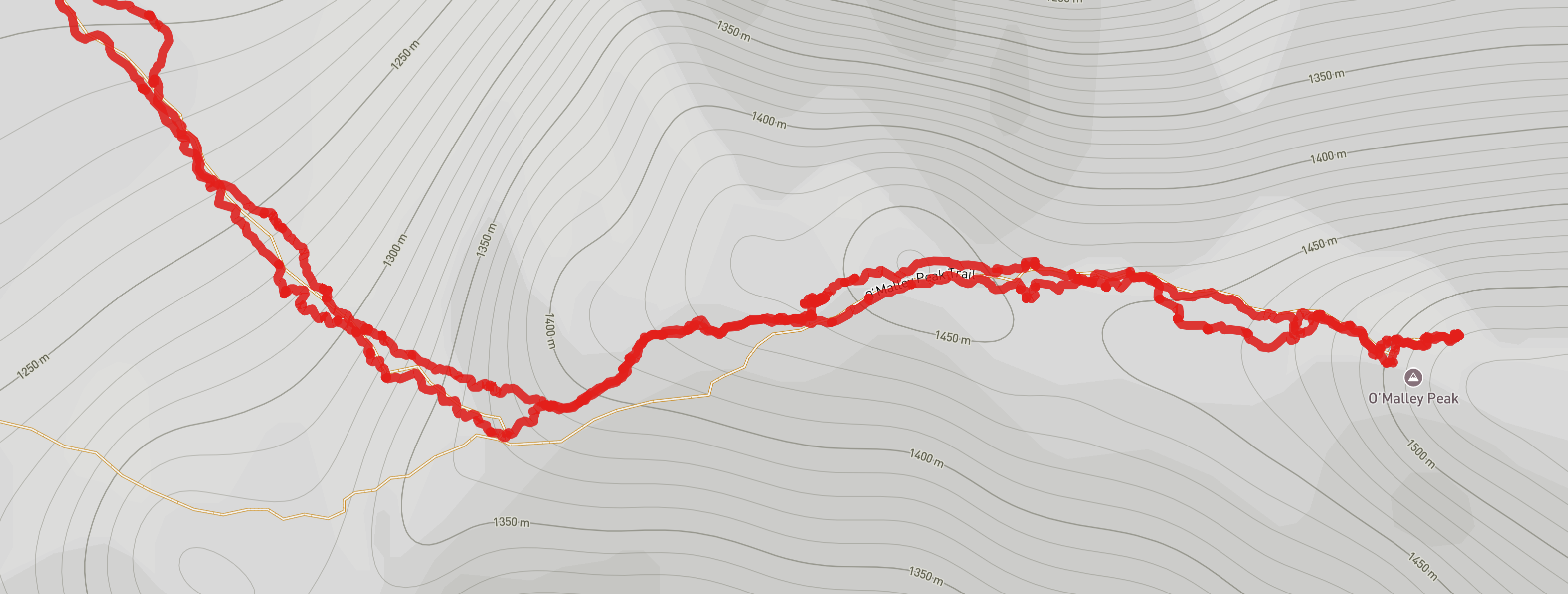
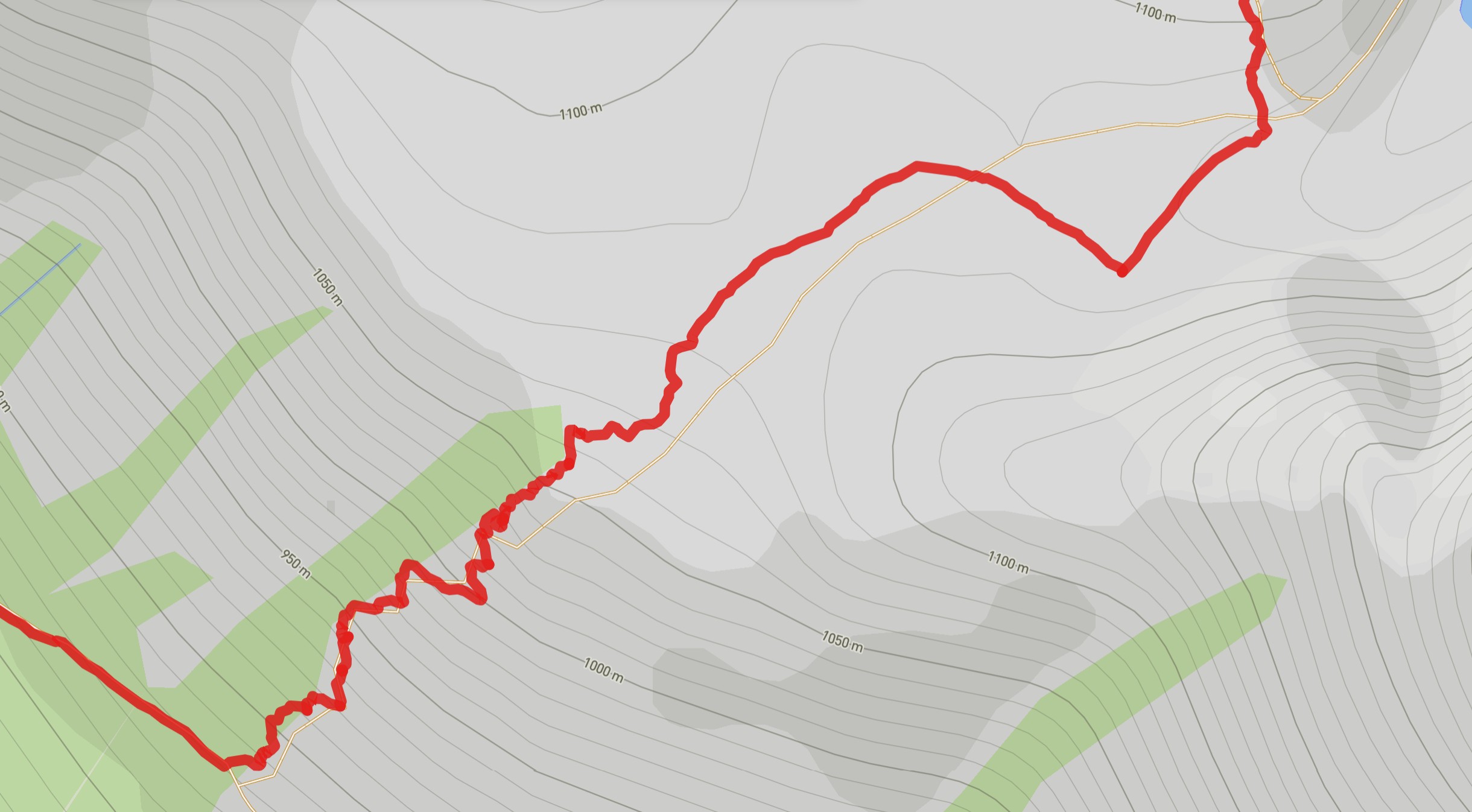
Here’s a snippet of our route up O’Malley. We came in the top left, and that part with the tight contour lines is the scree field. When our route turns more horizontal, that’s where we’re walking the ridge. You can see that our paths out to the peak and back are totally different. Like I said, we tried to follow the path. I’m still not completely confident that there IS a single path. And the one spot where we’re matched up in both directions is completely off the “trail” according to the map. Oh well. Whatever works!

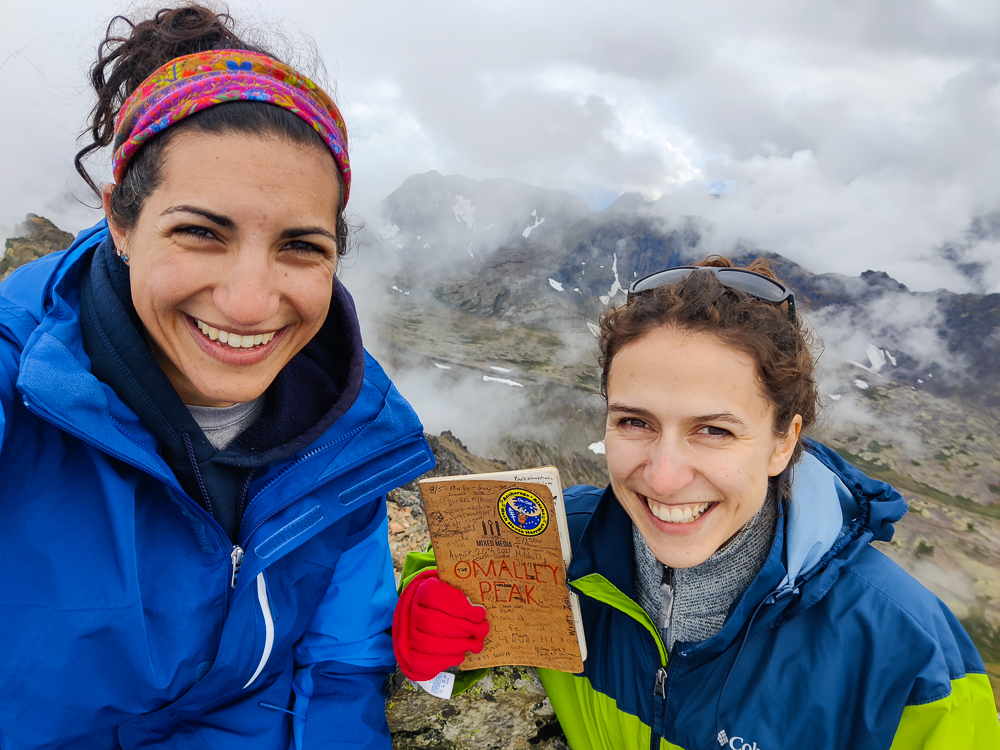
Olivia made it to the actual peak before me, and she popped up holding a metal case. I wasn’t sure what it was… random geocache at the top of the mountain? It contained some random objects and a book where you could sign your name!! That was cool. It made us feel like we’d accomplished something significant.

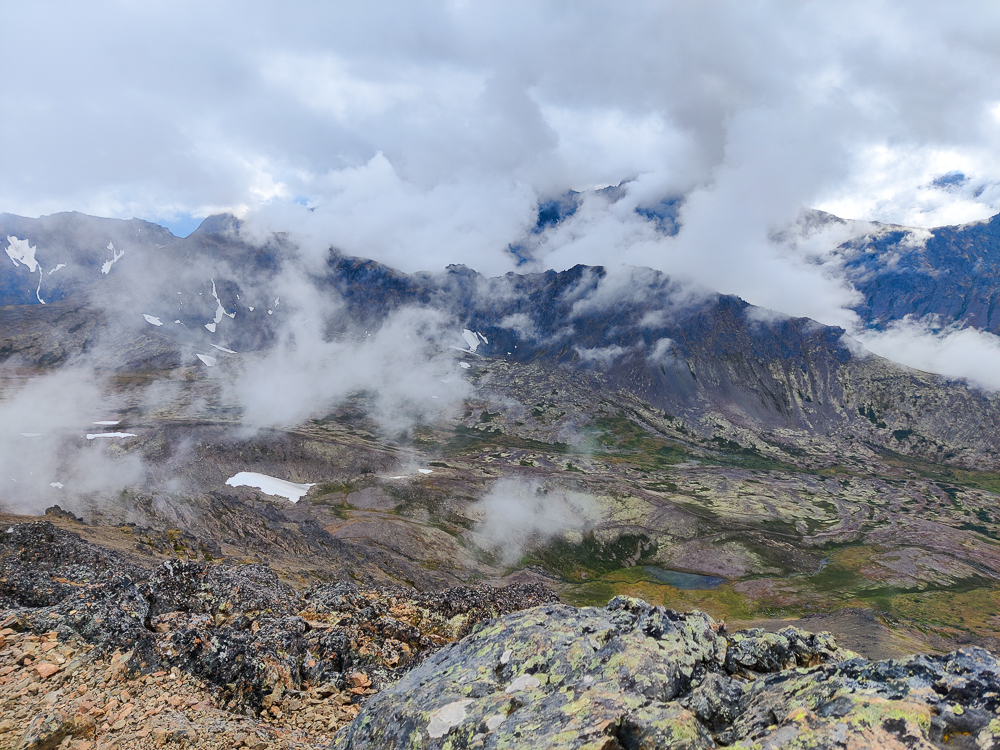
It was fairly cloudy when we reached the top, but since the clouds were still moving so quickly, we decided to stick around, eat a snack, and see if the view cleared up at all. Eventually, we got a decent view of the valley on the Flattop side of the mountain, but the other side stayed covered. Of course, that was the way we were headed. We just hoped that there was no rain associated with those clouds.

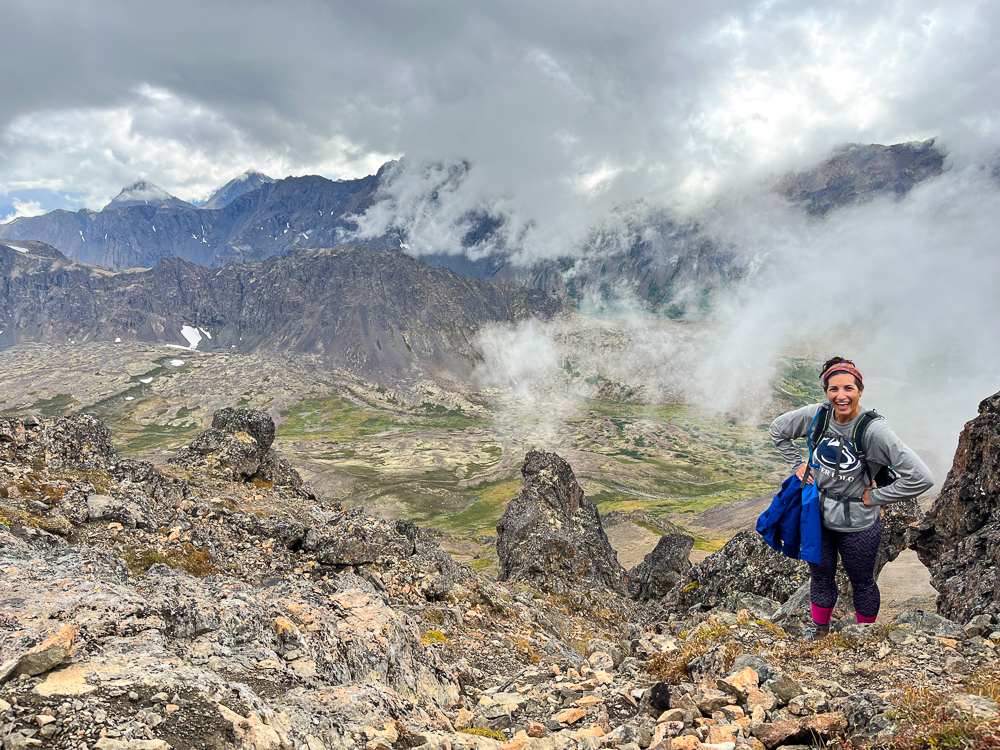
Just happy I’m not hiking up scree anymore.
We did it!
Semi-view from the top.

Once we were thoroughly chilled, we got moving again. We trekked down across the ridge and then were back at the scree field. In case you don’t have a lot of scree experience, let me tell you. Going down a scree field is way easier than going up. I still don’t love doing it, but if you get into the right rhythm, it feels like magic. All you have to do is turn off the part of your brain that thinks sliding = falling = bad. You take long, gliding steps and ride little self-created rockslides down the mountain while also steering yourself around immovable rocks and any scree-free areas. Oh, and remember to keep your weight on your heels so that you don’t tumble down the mountain. And bend your knees. And sit down to reset if you start feeling out of control. And keep a good distance between you and anyone else so that you don’t send any surprises hurtling their way (either a rock or your body). Got it? Easy peasy!

Leaving a healthy distance between me and Olivia. It looks like she’s literally headed off a cliff.

Like I said, when you get into a good groove, it’s kind of awesome. I feel like I’m flying or moonwalking or I don’t know. Floating. Weightless. Like I said, it’s magic. Then, a split second later, that euphoria turns to terror because I’m moving too fast and losing control and there’s a big rock ahead and it’s coming on WAY too quickly. Sit down. Breathe… 1, 2, 3. Recalibrate. Restart. Maybe I lied a little bit when I said I don’t love going down scree fields… I kind of do, but the feelings of terror and euphoria are so interwoven that it’s hard to isolate the joy when thinking about the experience. And the faster you go, the higher the high but also the higher the risk. It’s a fine balance. I took three recalibration breaks, aka panic sits, on the way down.

We took another time out at the bottom, stopping to clean out our shoes which were, shockingly, full of little rocks. I also needed a mental break… you have to stay focused the entire time you’re scree sliding, spotting your path and always having the next few steps planned. It’s exhausting.

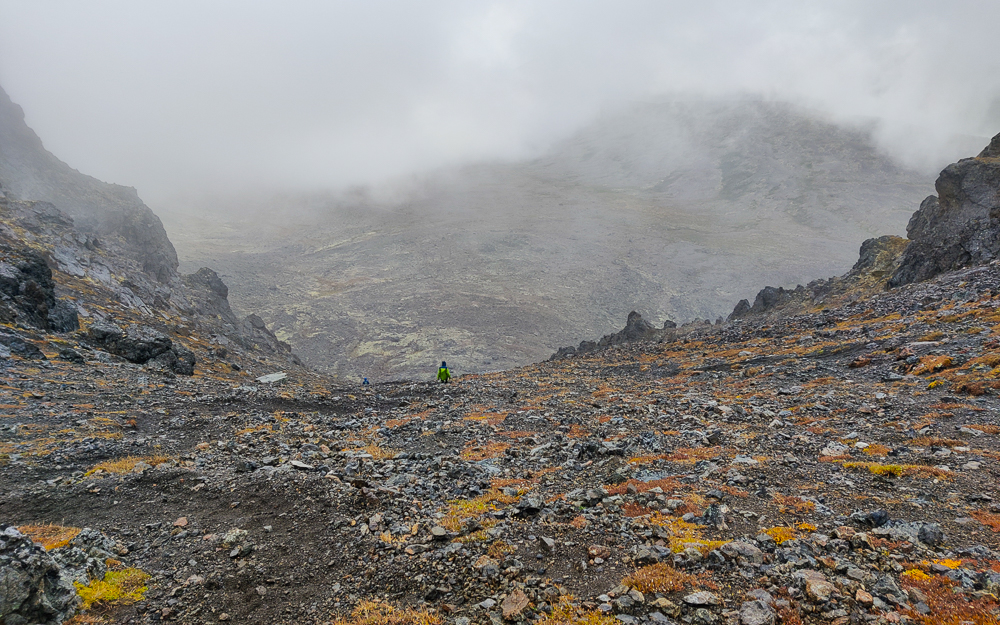
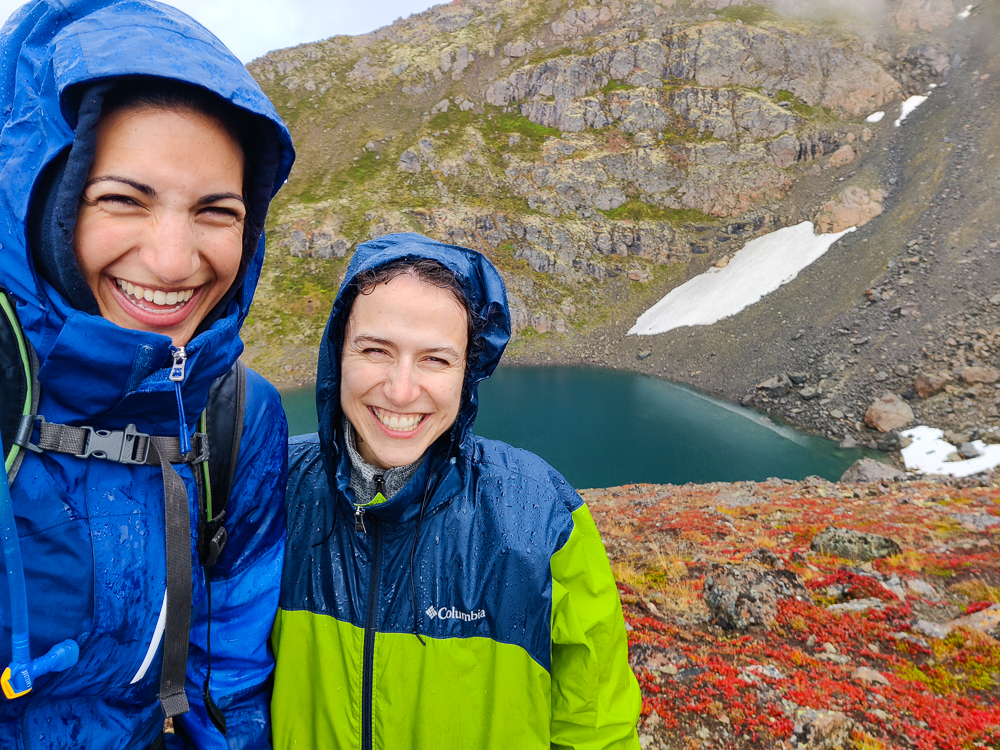
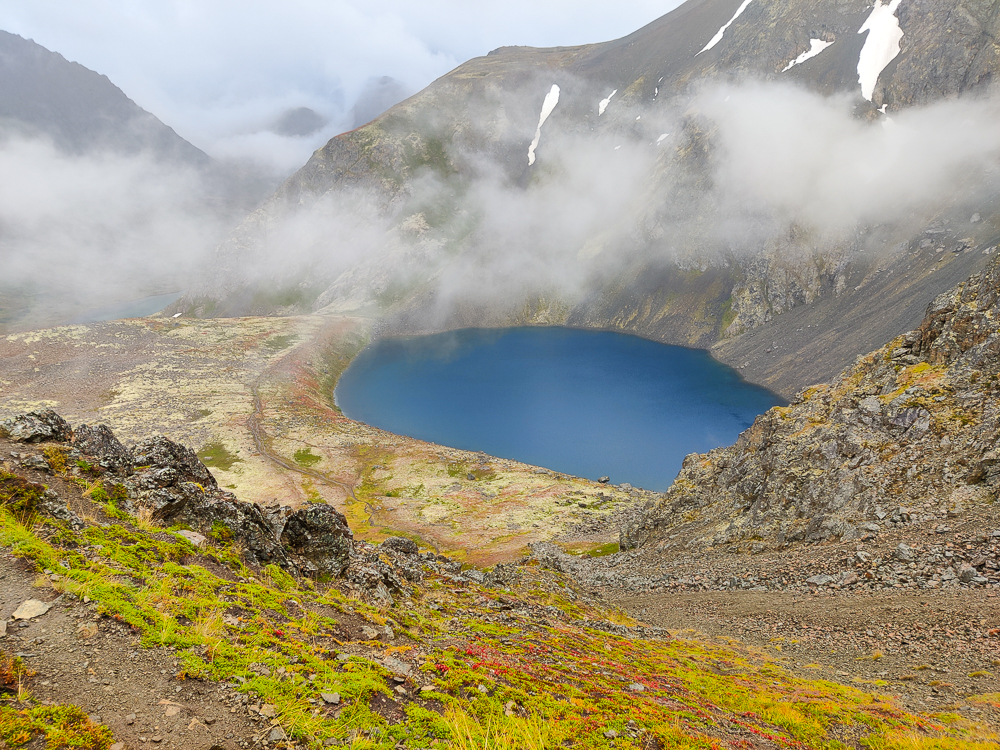
With O’Malley behind us, we reached our first decision point. Keep going, or turn back? We both felt fine physically, and the weather was drizzly but not terrible. We decided to continue on to the lakes. This involved another relatively steep downhill, but it was dirt/mud rather than scree. That’s its own challenge, but slightly less terrifying and also way slower to descend. We didn’t mind, though. The whole way down, there was a beautiful view of the valley and one of the lakes. We kept yelling about how it didn’t even seem real. (If it seems like we did a lot of yelling, well, yes. There was no one else around, so why not?)

At the decision point. As you can see, we’re a little wet from the rain. We only look happy because we took a picture with miserable faces before this and looked so pathetic that we started cracking up.
Say it with me now… THE COLORS!
This was the view as we were descending the mud/dirt slope. Unreal.
Spot the little Olivia, running on ahead.
Looking back up the way we came.
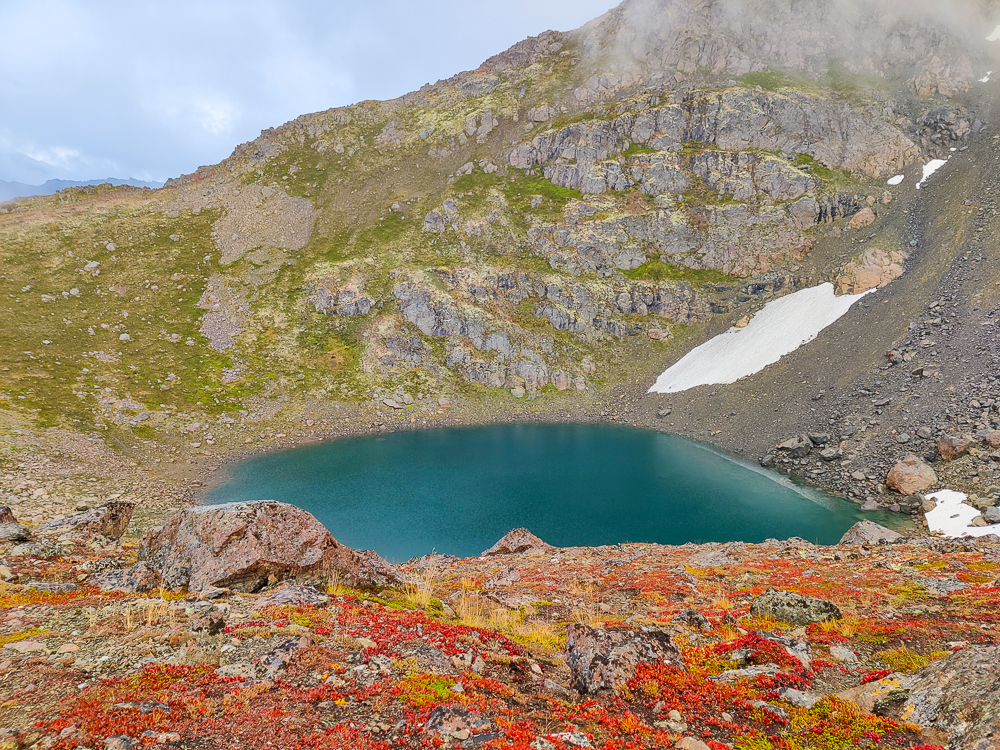
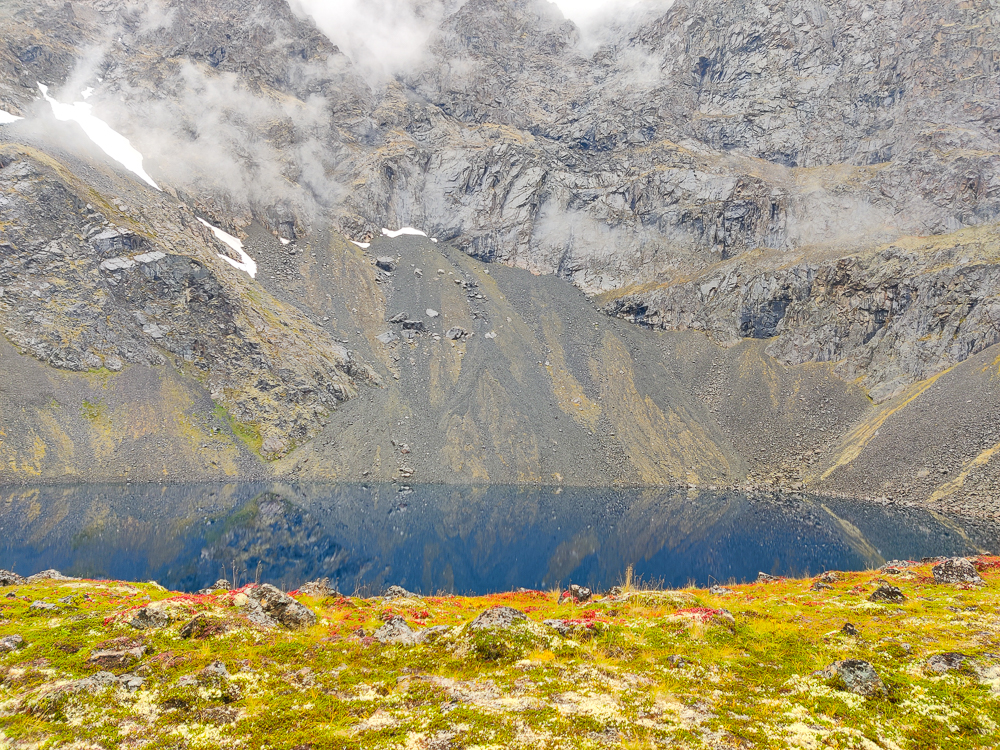
Black Lake. Now brace yourself for approximately 10384024932 photos of kind of the same thing but different.
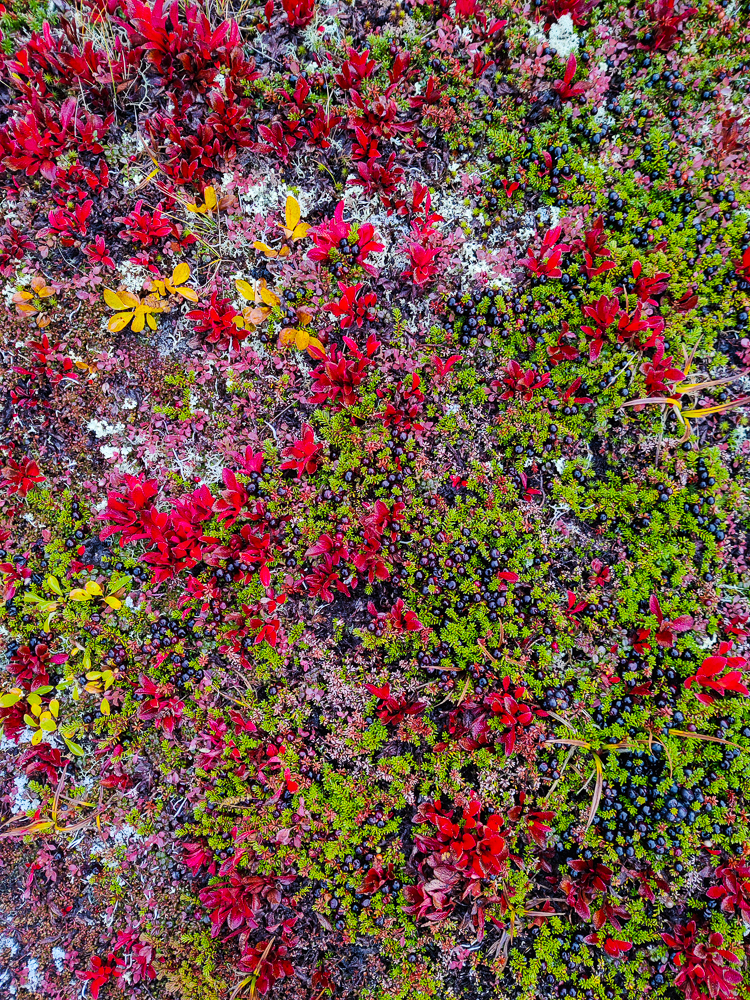
Look at these crazy vivid red plants.
And LOOK AT THIS LAKE.
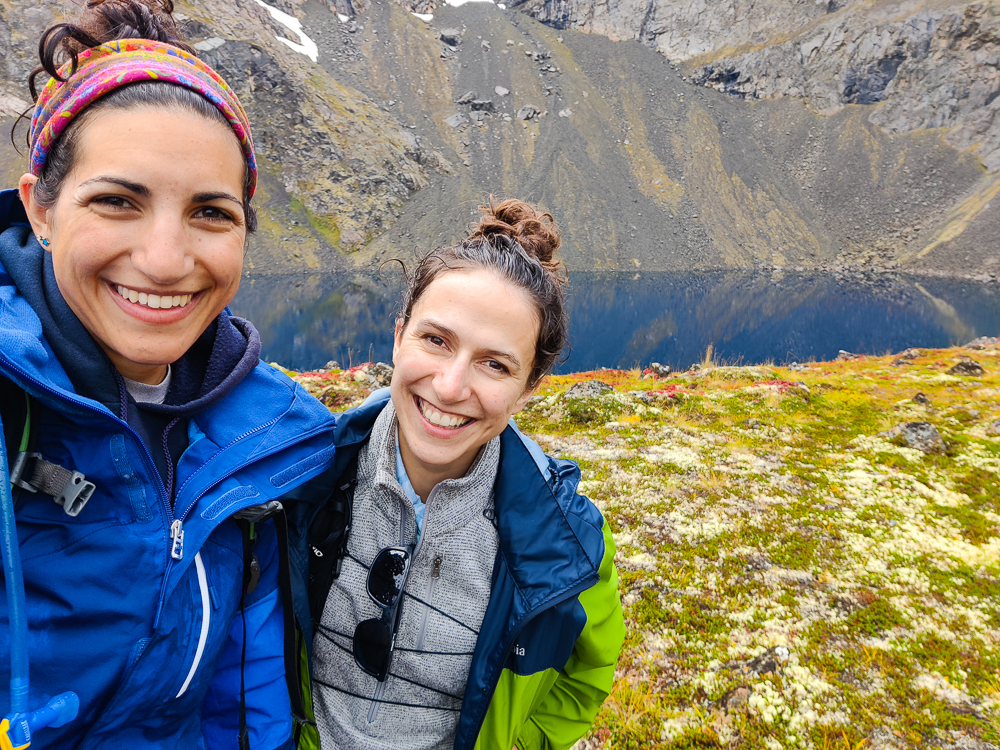
Just happy to be here!
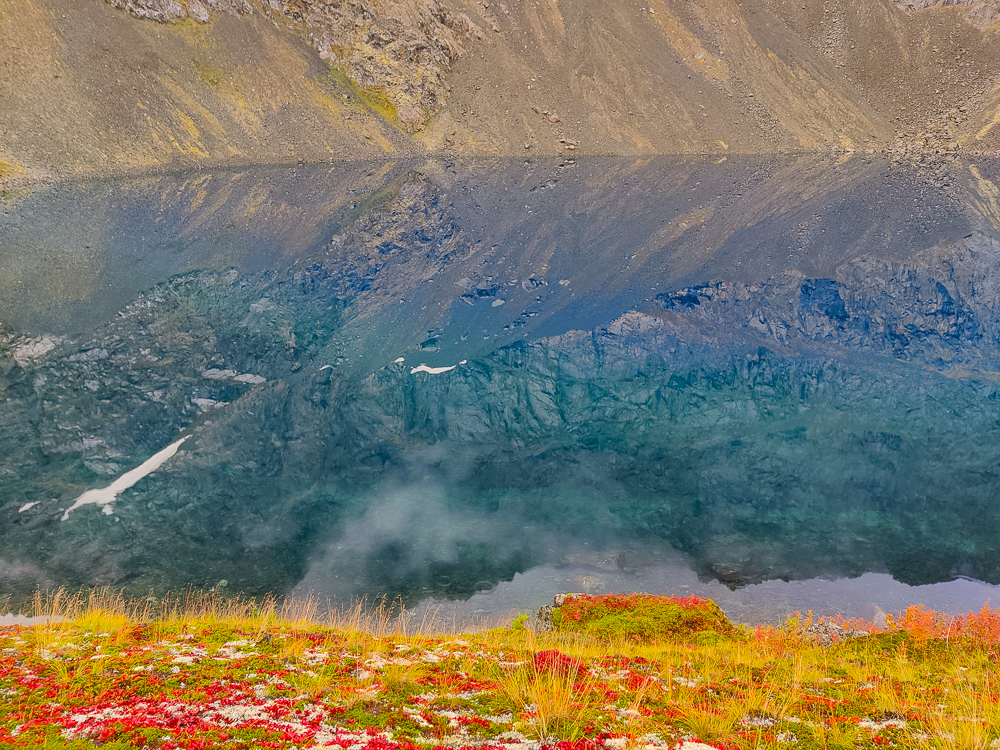
THE REFLECTION.
The little plants on the ground were so pretty. And so many blueberries! Olivia was snacking the entire time we were hiking. This is also why, later when there were more hiding spots, we were on high alert for bears.
Last one! Of this lake, at least. Onward!
I love a nice, flat path.

Eventually, we made it down to the bottom of the valley, and our trail dead-ended into the trail that we planned to follow out. This was our next fork… we could either turn left to go back to the car or turn right for more adventure before turning around. We decided to go right for a bit, just to see where it led, but we quickly hit a river crossing that was definitely too much for Olivia to do without waterproof shoes and probably too much for either of us to do without hiking poles. We settled on a short detour to get a better view of the nearest lake and then turned around and started heading back towards the car. We had about 8 miles to go and only a few more hours of sunlight, so turning around was probably the right choice anyway.

Before we go, though, we should enjoy a few more pictures…

It’s just too much. IT’S SO PRETTY.
Look at that bright green! Trust me when I say that this is actually how it looked in real life.
Obsessed.
I can’t get enough of these views.
Can you?? (If so, sorry… I’m not done.)
Okay now this… this is insane. I have pictures of the same mountains in the background with like 15 different foregrounds because they’re all spectacular and I couldn’t stop taking pictures.
Before we turned around.
Looking towards our way out. THE COLORS. ARE WILD.
Another fabulous groundscape for you.
Awesome.
Just a few more…
Okay, a FEW more….
Here are those identical background, variable foreground pictures I was talking about.
One more. Those mountains are just so photogenic. All of it. Just amazing!!!

The way back was so much more terrible than I expected. I didn’t expect it to be terrible at all! The maps said that it was mostly flat, and that was good enough for me. And to be fair, at the beginning, it was great! We were in a beautiful valley. We could hear the sounds of the river rushing past. There were some bear-den shrubberies around (aka plants large enough to theoretically conceal a bear), so we made up silly songs about bears and sang them loudly to scare away any potential lurkers. Life was good!

Unfortunately, what we couldn’t see from the elevation profile was that most of the trail was overgrown with tall grasses, AND it was muddy and sometimes completely underwater. Our feet got wet very quickly, and that’s guaranteed misery on a hike. Olivia’s shoes weren’t waterproof, so she had no chance. Mine were once waterproof, but there are some weak spots. So maybe the infiltration took a little longer for me, but barely. Even if our shoes HAD been 100% waterproof, it wouldn’t have mattered. We were walking through waist-height plants that were covered in water and overhanging the path. As we brushed past, it felt like water was pouring down our legs and into our shoes. It was awful. Also, it started raining again. It’s not like it made us much wetter than we already were, but it felt like adding insult to injury. Like really?

I could tell that Olivia was feeling similarly terrible. Neither of us said anything about it because what would that help? But also, neither of us was talking any more than necessary. The creative bear songs faded into Olivia yelling, “Heeeeey, bear,” whenever passing a potential bear den and me just hoping she was making enough noise for the both of us.

I was singularly focused on keeping a good pace, both to end our misery and because we were a little concerned about sunset. That meant I was zero percent focused on the map… if there hadn’t been a couple standing at our crossroads, I would have blown right past our turn. Eek. That would have been very good for morale. But, thankfully, we were saved from that fate, we made our turn, and BAM! There was an insanely vivid rainbow right in front of us! A double, actually! A tiny little boost to keep us going. And man, we needed it. I was holding myself together until we made that turn, but then there were just 2 miles to go and we were so close and I was so over being wet and cold and the end just couldn’t come fast enough.

Double rainbow!!! I took zero pictures during the miserable parts of the hike because I was too miserable to think about anything besides walking as quickly as possible.

I practically collapsed from joy when we got back to the car. We both took our shoes off for the drive home, and back at the house, I took a glorious hot shower. Olivia’s mom made pasta for us, and it was the best thing I’ve ever eaten. She also gathered up our wet clothes and shoes and set them up to dry, and I was so thankful to have nothing to do but eat and vegetate and stretch. Moms are the best.

Our final stats for the hike were: 14 miles (22.5 km), 4,000 feet of elevation (1,200 meters), and 8 hours and 40 minutes (total time, not just moving time). Even with the grumpy final miles, it was a good hike.

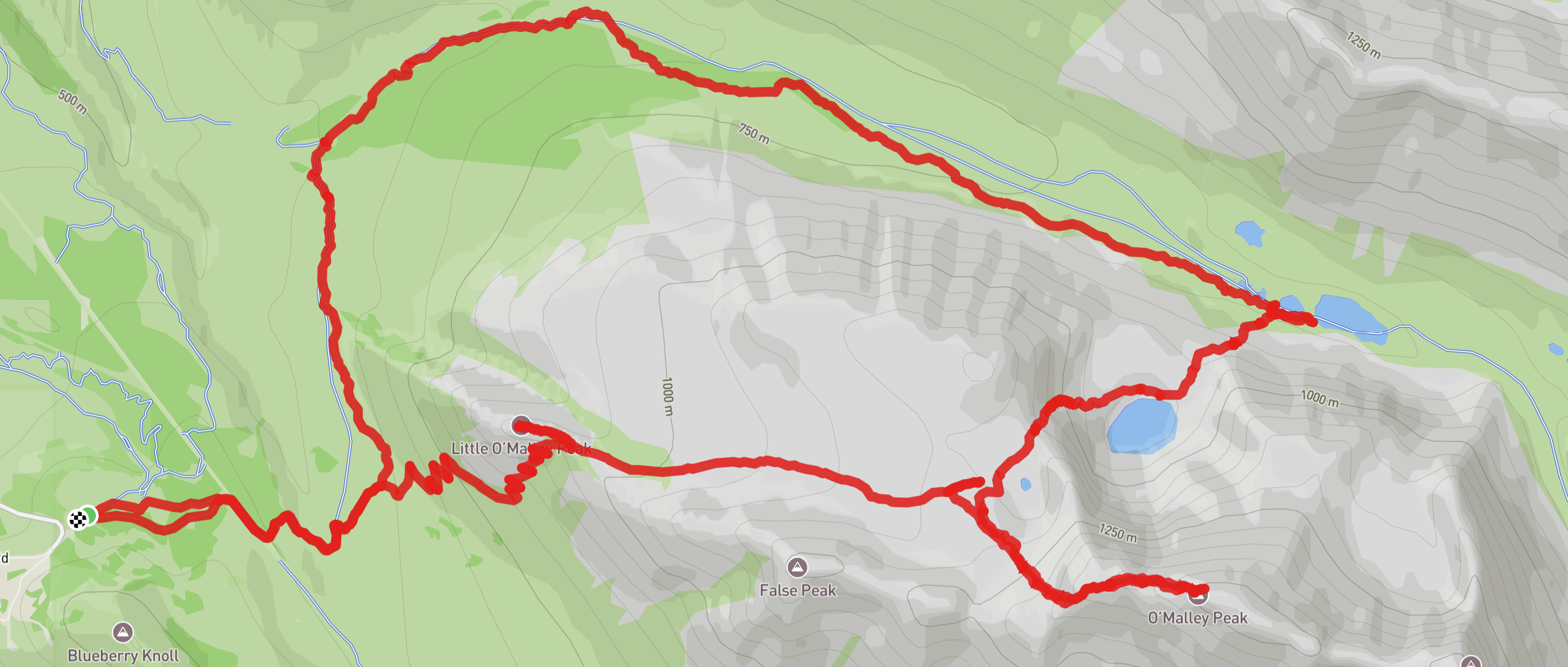
Here’s the final map of our hike. We started at the end of that tail on the left, went along the bottom of the loop to that other tail to O’Malley Peak. Then we went downhill (up on the map) to the lakes, had our tiny little detour to the first lakes (Williwaw Lake) on the lake trail (the others are out of view), and then we made that big loop back around the top to meet back up with our path in for the final little leg back to the parking lot.

On a day when the weather looked particularly questionable, we skipped the hiking and took Olivia’s mom up on her offer of an Anchorage tour! She said that she has a list of places where she likes to take people who are visiting, and I was ready to go wherever she wanted to take us.

Later that day, we were hanging out with some of Olivia’s friends, and they asked where we had gone on our Anchorage tour. They were fascinated by the itinerary, and apparently, they hadn’t even been to many of the places. They definitely didn’t say, “Oh yes! I would take people there,” to most of the stops. Having experienced the tour, all I can say is, those people are all missing out. We decided that this would be considered the “Offbeat Anchorage” tour which is absolutely the tour I would have booked anyway, given the choice (or, paying homage to my favorite travel resource, Atlas Obscura, the “Anchorage Obscura” tour).

So, come along with me on Annie’s Offbeat Anchorage tour! I don’t know what most people see in Anchorage, but it’s probably not this. (Also, a note – the order doesn’t quite match how we visited them. A few are tied to specific historic events, so I shifted those into chronological order, and the more general stops are just mixed in.)

The tour started with a more personal stop at Providence Hospital where Olivia’s mom volunteers. She maintains a flowerbed and also goes in weekly to cuddle premie babies in the NICU. The hospital was opened in 1939 by the Sisters of Providence, hence the name. Anchorage was a late bloomer of Alaskan cities, so by then, they had already started other hospitals in Nome in 1902 and later in Fairbanks (those were big gold rush towns).

Flowers from Annie’s flowerbed!
Any tour that starts with flowers is destined to be a good one.

University of Alaska Anchorage’s Foucault Pendulum

From there, we headed to the UAA university library to see one of Annie’s favorite things – a Foucault pendulum! I actually was familiar with the concept because there’s one at a museum in Philadelphia as well, but I was still happy to check it out.

The pendulum demonstrates the Earth’s rotation. By the time it was designed, people knew that the Earth rotated because of astronomical observations, but this showed it in a lab setting. The basic concept is that if the pendulum was located at one of Earth’s poles, it would keep swinging back and forth in the same plane, and the Earth would rotate 360 degrees underneath it each day (or about 15 degrees per hour). If you were tracking which way the pendulum was moving, it would seem like the swing was shifting, but the change would actually be because of the Earth rotating.

I feel like the pole situation is pretty easy to digest, but my brain starts hurting a little once you move away from the poles. When it’s not located at a pole, the Earth is still rotating underneath the pendulum but not a full 360 degrees in a day. (In Paris, where Foucault did his demonstration, it takes nearly 32 hours for a full rotation. In Anchorage, since it’s farther north, it takes about 27.5 hours.) Then, if you were at the equator, it wouldn’t rotate at all. If you crossed the equator, it would appear to be rotating in the other direction!

Apparently, for the best effect, you want a long cable and a heavy, symmetrical bob (the weight at the bottom of the cable). The university’s is 52 feet with a 240 pound, hollow brass bob. It also uses an electromagnet to keep the pendulum swinging since it’s not an ideal pendulum and things like friction, etc. exist.

I didn’t take a picture of the UAA pendulum, but here’s the one at the Franklin Institute in Philadelphia. This one has an 85ft cable and ~175lb bob. It has little metal pegs that get knocked down during the day to help show the rotation.

Train Station/Eisenhower Memorial

There’s an Eisenhower Memorial in town, and from there, you can see the train station. I didn’t take any pictures of the memorial because it was in depressing shape, but let’s talk about trains!

Anchorage was first settled thanks to the construction of a government railroad, meant to increase access to the resource-rich interior of Alaska. The associated job prospects caused thousands of people to pour into the area, and a tent city of makeshift shelters was erected on the banks of Ship Creek. This “city” only existed for a few months in 1915. Conditions were horrible, and the area taken up by the settlement was needed for the railroad/shipping infrastructure.

A new site was selected for the settlement on higher ground, and over 600 lots were auctioned off. Random fun fact: People wanted to call the city “Alaska City” (they even held a vote to come up with that incredibly creative name). But alas, the postal service decided it should be called Anchorage, and so it is.

Train station!

Elderberry Park & Oscar Anderson House

Our next stop was Elderberry Park which wasn’t particularly interesting in itself, but next to the park is the Oscar Anderson House. Oscar Anderson was Swedish and came to Anchorage back in the Tent City days (he said he was the 18th person to arrive). He bought land in the 1915 land auction and built a house, supposedly the first wood-framed home in the city. It was given to the city in 1976 and was moved about 60 feet from its original site. (I always think that kind of thing is wild. The logistics of relocating a building! I’m sure there was a reason, but all that for 60 feet? Geez.)

The house was closed for renovations when we visited, but I still felt like I got my money’s worth with the stop (zero dollars, but who’s counting). There was an informational panel outside that was written by someone who deserves a raise. Usually, trying to read those things turns my brain to goo. This one, though. From the first two sentences, I knew it was different.

“Oscar lived in this house for nearly 60 years. They say his ghost still lingers on.” TELL ME MORE. It said that after Oscar died, the people who moved in reported strange occurrences and noises that sounded like footsteps. “When they reported these stories to his widow, Elizabeth… she was delighted. She said she always knew Oscar loved the house too much to ever leave it.” That cracked me up. She was DELIGHTED to hear that her husband was haunting their old house. So good.

There was also a fabulous write-up about “Demon Rum”. Before I get into that, some context. Back when they were auctioning off land, “to encourage sobriety and good behavior among construction workers, the rules of the townsite sale stated that all lots would be forfeited if used for gambling, prostitution, or the manufacture and sale of liquor.” (Quoted from an info panel at the Eisenhower Memorial.) In case you’re curious about how that went… enter Demon Rum info panel.

Uncle Sam laid down the law in 1915. There was to be none of that mischief within the new townsite of Anchorage.
Who was he kidding? Some thought the Wild West had had its final fling. But this was a new frontier.
“The only thing more prevalent than the fine dust which clogs the air is the raw whiskey with which they wash it down,” observed one disgusted federal bureaucrat, thoroughly unimpressed by the new railroad town and the moral fiber of its inhabitants.
The laws prohibiting such behavior may have been there on the books. But enforcement was a different matter. Sometimes The Law was in cahoots with The Lawless.

The next paragraph gives a little more detail and a quote from a historian talking about “Characters nicknamed Dago Jim, Creampuff Bill, and The Pale Faced Kid,” and I couldn’t stop laughing about Creampuff Bill. What a nickname!

Anyway, all that to say that I wish I could submit positive feedback about the articles. 10/10

Captain Cook Monument

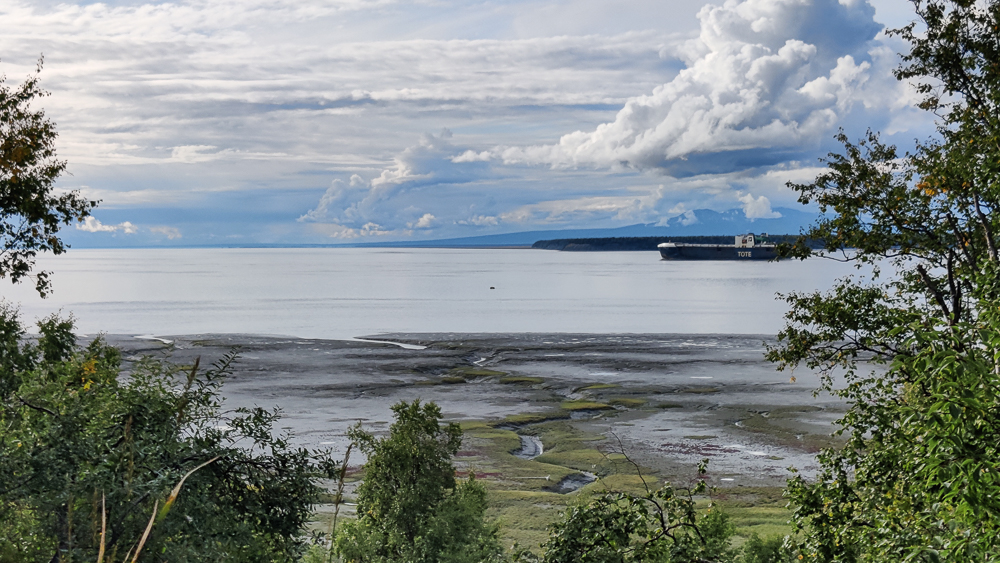
I don’t have much to say about the actual monument… It’s a statue in a little park with a nice view of the water. While we were there, though, we saw a barge cruising past, and that ended up being far more interesting to me.

Annie explained that these big barges come in with supplies a couple of times per week. About 95% of Alaska’s purchased food supply is imported, plus clothing, home goods, vehicles, etc. (On the export side, 75% are fishing and mining related.) It’s probably not surprising that one of Costco’s most successful locations is in Anchorage. It makes sense… people come to town for supply runs, and what better place to bulk shop for supplies than the bulk grocery store?

Annie also said that there are a bunch of food caches hidden around the city in case something happens to the barge supply lines. I couldn’t find anything about this online, but maybe that just means it really is a secret… I guess we’ll never know.

A barge cruising past…

Eleventh Air Force/Americans Home from Siberia – WWII Memorial

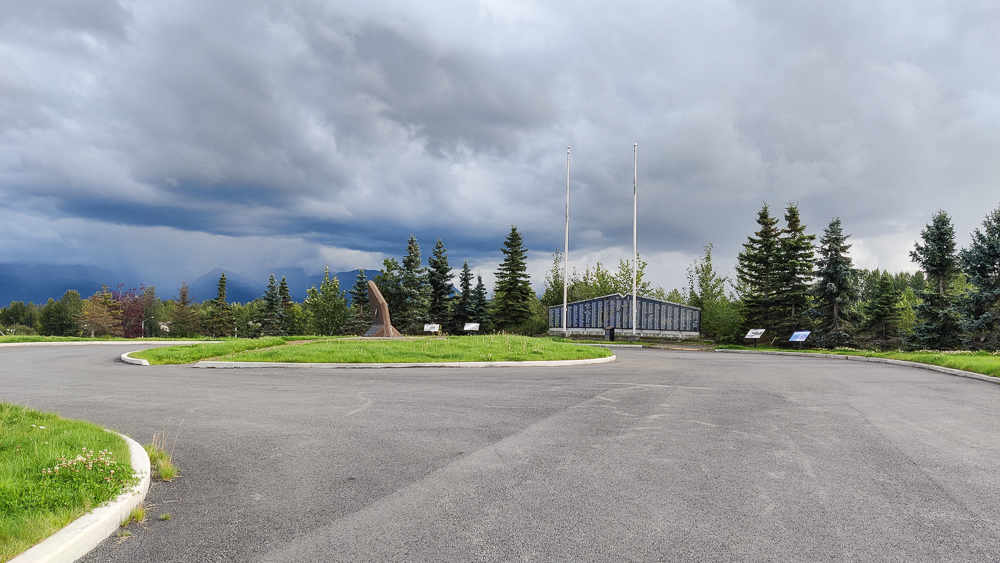
Our next obscure stop was at a WWII memorial which looked practically abandoned. Apparently, Annie stumbled upon it while playing one of those location-based app games during the pandemic. She thought it was interesting, so now it’s a tour stop! It’s in a very weird spot… next to an airport (I guess because of the “Air Force” part), not on a well-traveled road. It’s not surprising that no one seems to know about it.

The driveway into the memorial… weird, right?

Since Alaska was virtually undefended prior to WWII, the U.S. started building military infrastructure there in 1939. The war had a huge impact on Alaska. The population of Anchorage grew from 3,500 in 1940 to 12,000 in 1945!

Did you know that the only WWII campaign fought on North American soil and the only occupied American land was in Alaska? The Japanese occupied two of the Aleutian Islands (the islands that make up Alaska’s long tail) from June 1942 until they were finally driven out in August 1943. The U.S. and Canada lost over 500 men retaking the islands, and over 1,000 were wounded. After that, there weren’t many troops kept in Alaska, but part of the U.S. strategy was convincing the Japanese otherwise. The goal was to make them think that an attack might come from the north, forcing them to keep resources positioned to defend against that possibility.

There was a lot of people-moving happening during the war…

  • The U.S. forced hundreds of native Aleuts to relocate from the islands during the war. About 10% died in camps in southeast Alaska, and 4 out of 6 of their villages ceased to exist.
  • The Japanese captured 43 people from the islands and took them back to Japan. Only 25 returned.
  • The US imprisoned 245 Americans of Japanese descent from Alaska in internment camps in the western U.S.

And this one is what the memorial is specifically about:

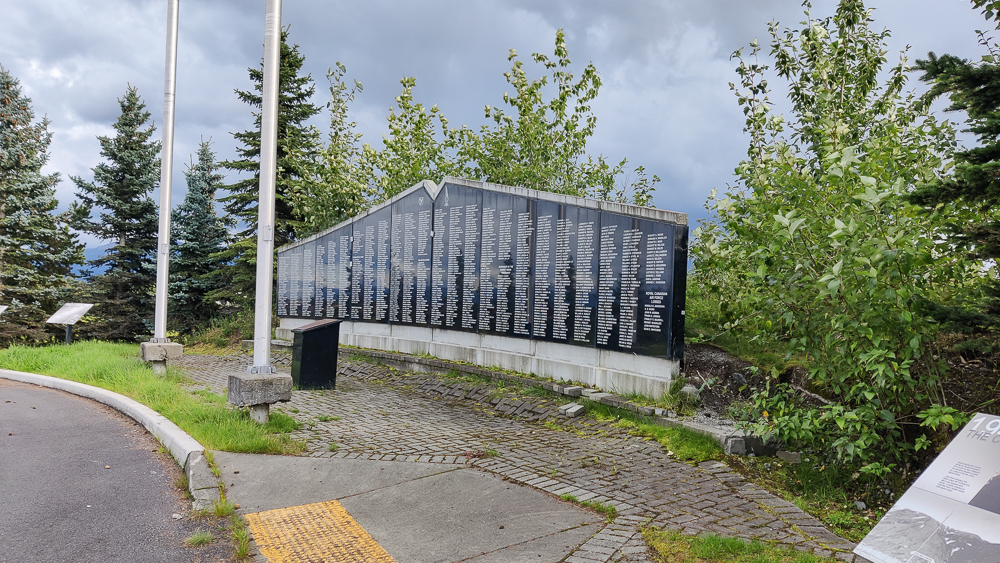
  • The Russians interned hundreds of U.S./Canadian airmen who had to divert to Russian bases after flying missions against Japan. Usually this was because they didn’t have enough fuel to get all the way back to Alaska after running into unforeseen circumstances. Russia was in a complicated spot with these “captured” airmen because the U.S. and Russia were allies against Germany, but Russia and Japan were not at war. The interned airmen were treated fairly well, and some were helped to “escape”. (There’s an interesting article about this linked in the “Sources” section below.)
Memorial name wall

Delaney Park Strip and Star the Reindeer

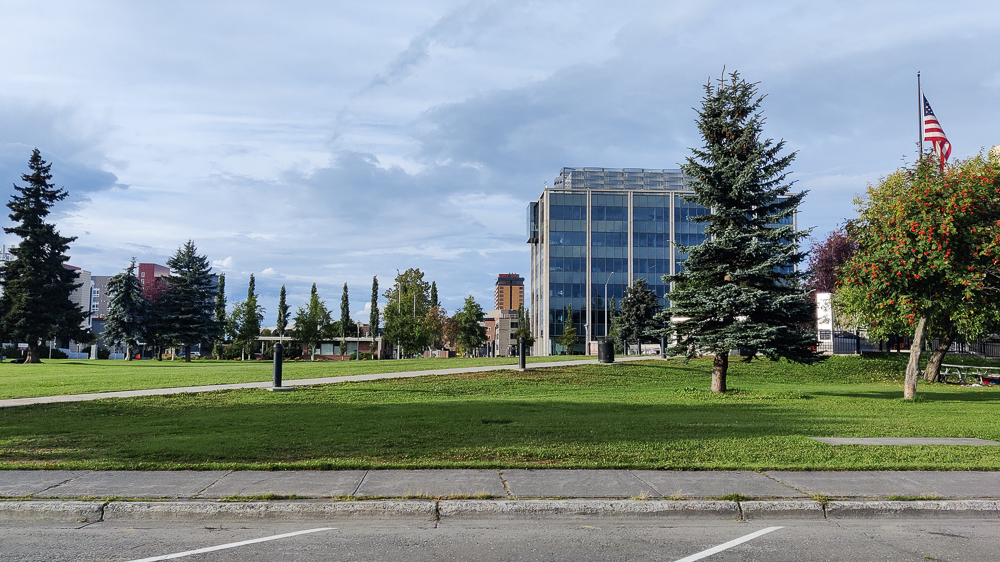
We drove past a park which Annie explained was originally put into the city plan as a fire buffer between the city and the forest. It’s one block wide and ~13 blocks long! In the 1920s, it started being used as a golf course and also an airstrip. (Honestly, it seems like if it was a good airstrip, it would be a terrible golf course, or vice versa. I’m going to go with “terrible golf course” because it is very flat.) Now, it’s a park with fields, memorials, and recreation areas.

Part of the park strip

Next to the park strip is the home of Star, the unofficial reindeer mascot of Anchorage, so named because Star #1 had a star-shaped mark on her head. Also, fun fact – “reindeer” are just domesticated caribou.

When I was researching for this post, I learned the unfortunate news that the latest Star (#7) just died earlier this month! They think he might have been poisoned. If that’s the case, he won’t be the only Star iteration to have had a suspicious/sad end. #1 lived a long life. #2 was killed and butchered, and the meat was sold (the perpetrator was caught and spent a year in prison). #3 died after eating plastic bags that someone had shoved into her pen. #4 had arthritis but lived a long life, though it wasn’t without its traumas – someone once climbed into her pen and broke off an antler (seriously, what is wrong with people?). #5 died from a bacterial infection as a calf. #6 lived a long life and died of natural causes, but there was an attempted kidnapping at one point.

Star 7

If you’re wondering if anyone can own a reindeer and keep it in their house in the middle of Anchorage, the answer is no. The keepers of Stars 1-5 got special permission, and it turns out that the permission is linked to the property which is how Stars 6-7 were able to keep the tradition going after the original keepers passed away. ALSO, you’re not allowed to own an Alaska reindeer unless you’re an Alaska Native. Stars 1-5 were leased, but after that, the law was changed so that non-Natives can’t lease Alaska reindeer either. So, where did Stars 6-7 come from? They were, in fact, Canadian reindeer, so the Alaska reindeer law didn’t apply. Technicalities! Another fun fact – Stars 1-6 were female, and Star 7 was male.

Also… the reindeer pen is attached to the house. The current owner would leave the door open in the summer, and Star could wander in and out of the house as he pleased. I think it’s safe to say that it takes a special kind of person to choose a reindeer as a pet…

Earthquake Park

The Great Alaska Earthquake of 1964 is still the most powerful earthquake ever recorded in North America. It had a magnitude of 9.2, lasted for over 4 minutes, and was caused by tension along the fault between the Continental Plate (Asia) and the Pacific Plate. The plates are moving towards each other with the Pacific Plate going underneath the Continental. In this case, the Pacific caught in place, rather than sliding nicely under, and the buildup of stress eventually led to an explosive earthquake.

There were 11 aftershocks over 6.2 magnitude in the first day after the main earthquake, and then there were 9 more over the next 3 weeks. Noticeable aftershocks continued for over a year!

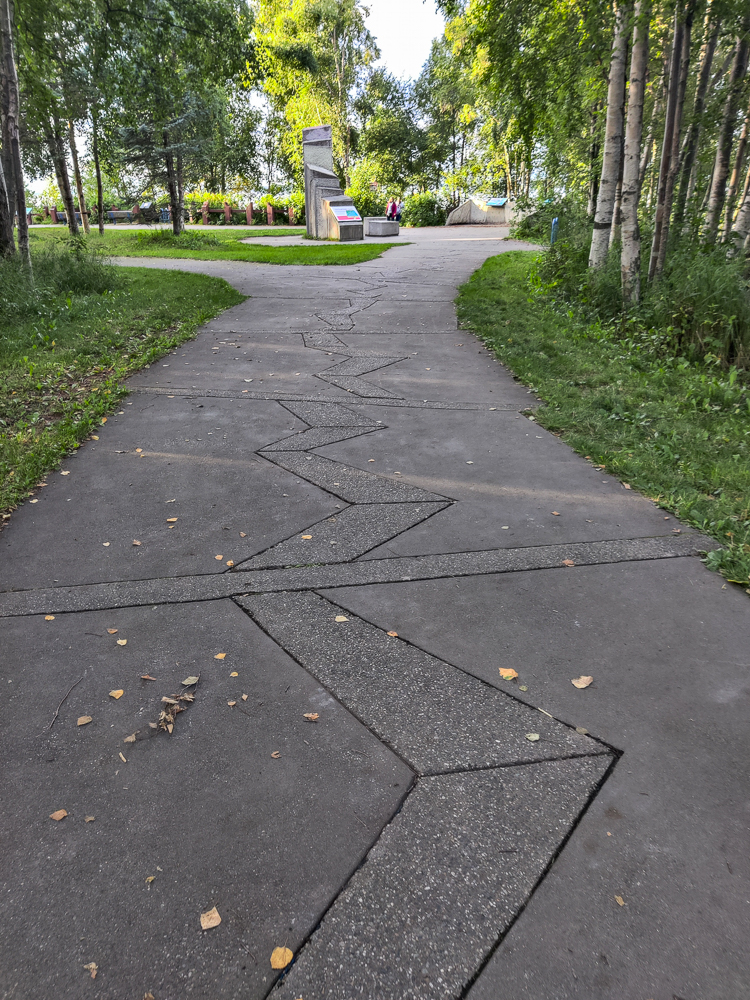
The pathway into Earthquake Park
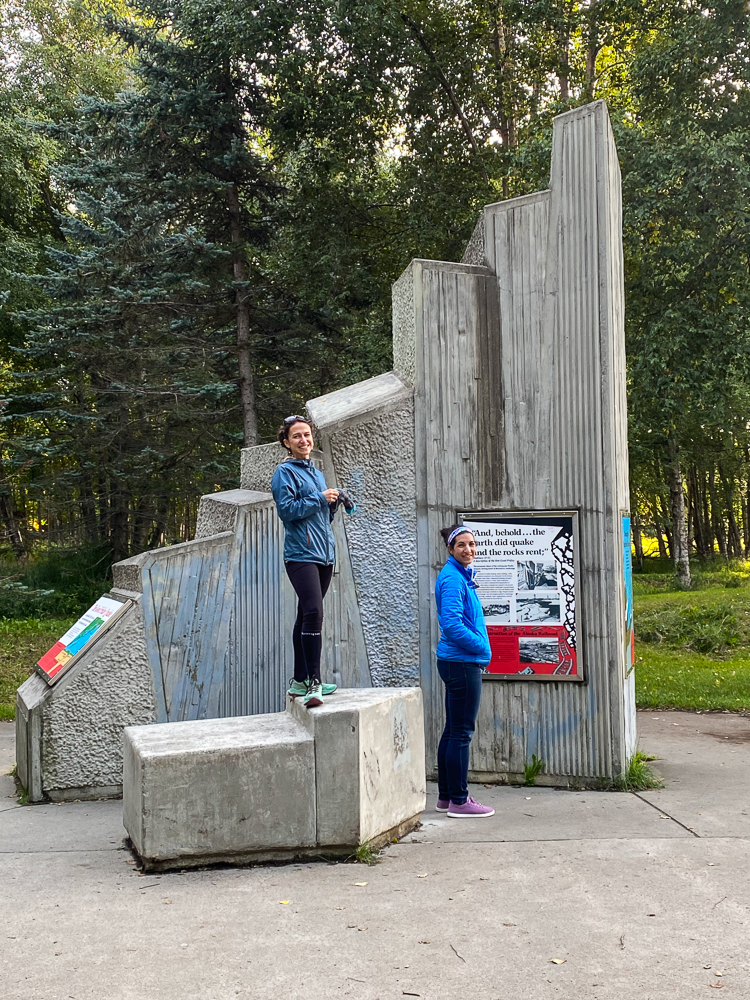
Learning about the earthquake…

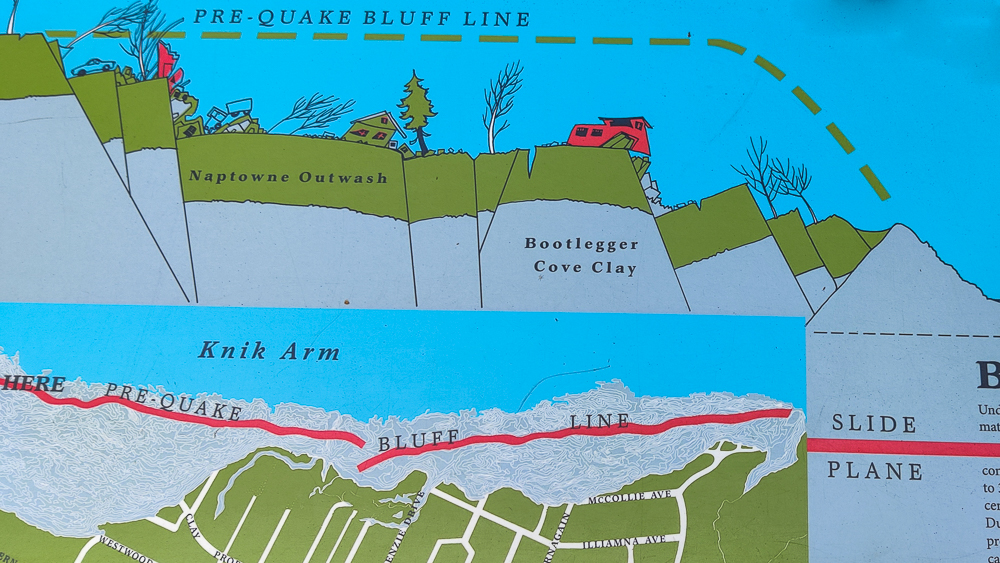
Most Anchorage buildings weren’t designed to withstand earthquakes, so the damage from the quake alone was extensive. Beyond that, though, there were landslides that destroyed even more of the city and caused significant, permanent changes to its geography. Earthquake Park is situated in one of those areas. One of the soil layers was a type of clay that destabilized in the quake. This led to a landslide as the upper layers slid out towards the ocean, destroying 75 homes and killing 4 people.

This shows what happened to the land… that dashed line in the top view shows what the ground looked like before, and the little cartoon rocks/houses below illustrate what happened after the earthquake (the “bootlegger cove clay” is the bad clay layer that caused the sliding). The bottom view shows how the land slid into the water and changed the shoreline.

Anchorage was lucky to escape damage from tsunamis, but other towns, like Seward and Valdez, were completely destroyed by 40-foot waves. Valdez, rather than rebuilding in the same area, decided to move 4 miles away to a less seismically risky area.

The Alaska Railroad was hard-hit with 200 miles of warped track, over 100 destroyed bridges, and other extensive damage to the infrastructure.

It was also catastrophic for the flora and fauna in the area. Thousands of deep water fish in Prince William Sound were killed by underwater shock waves. Mollusks suffocated under the mud and debris carried by tsunamis. Freshwater areas were inundated with saltwater, waterfowl nesting areas were destroyed, and forested areas were stripped bare by waves and landslides.

Coastal Trail

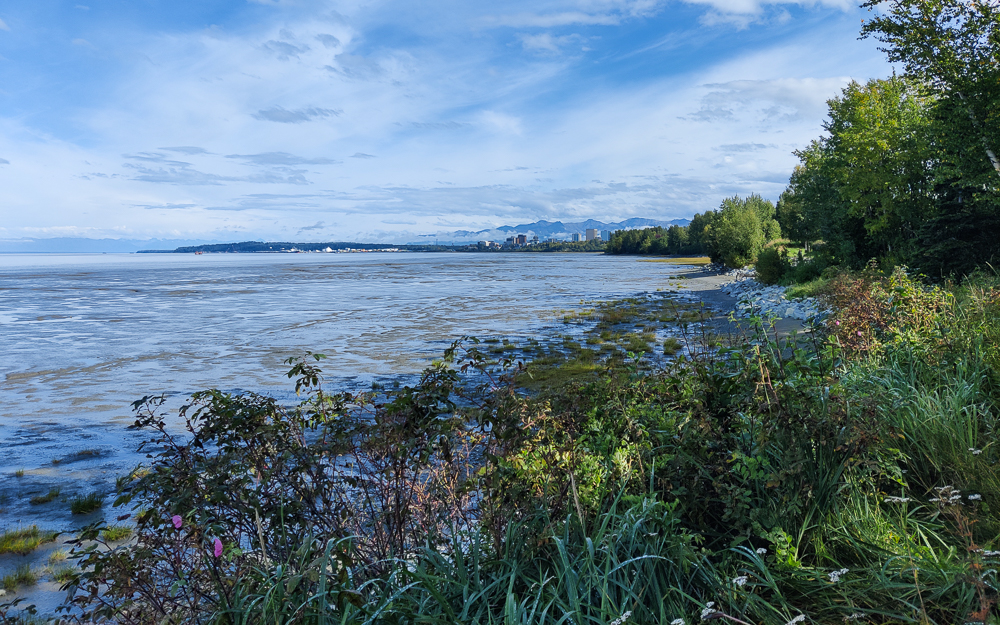
Later in the week, we strolled along the coastal trail, an 11-mile trail that, you guessed it, runs along the coast. It’s a beautiful trail, and people see all sorts of wildlife on it. Like I said in my Welcome to Anchorage post, Olivia saw a family of black bears (eek!) a few days before I got to town… We just saw some beluga whales on our walk. That’s kind of exciting I suppose, but they are maybe the least interesting animal to glimpse from the shore because they don’t have much on their backs to make them particularly visible. Like when you see a dolphin, you KNOW you’ve seen a dolphin. It’s cool even if you only see a fin. The belugas just have a ridge along their backs, so spotting a beluga is basically seeing a flash of white in the water and wondering if it’s a little whitecap or a whale. But anyway. The trail was pretty!

Some coastal trail views
So pretty!
No belugas here, not that you’d be able to see much of anything anyway.

Besides all of those, we also went to:

  • Fish hatchery – I’m going to talk about this in a separate post.
  • Westchester Lagoon – a good spot for birdwatching, I’m told.
  • Olivia’s high school (West Anchorage High) – to see the eagle mural gifted by the class of 1971. They wanted to include “Class of 1971” on it, but that was rejected, so they hid a 71′ in the design. I, of course, didn’t take a picture, but if you’re really interested, you can google it. Apparently it was years before anyone noticed. (Also, they put the apostrophe on the wrong side which would drive me crazy if I was bothered by silly little things like that…)
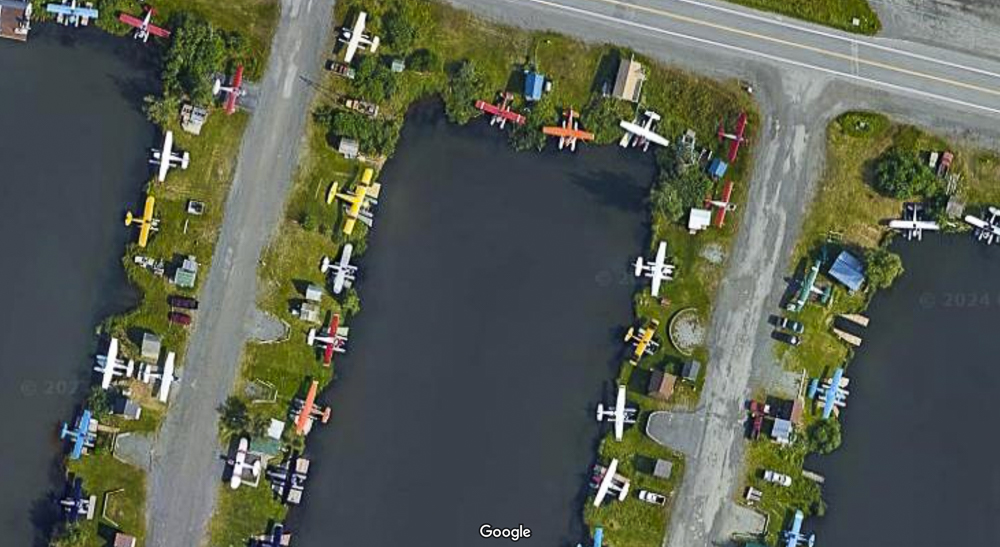
  • Lake Hood Seaplane Base – I talked about this in my Welcome to Alaska post.
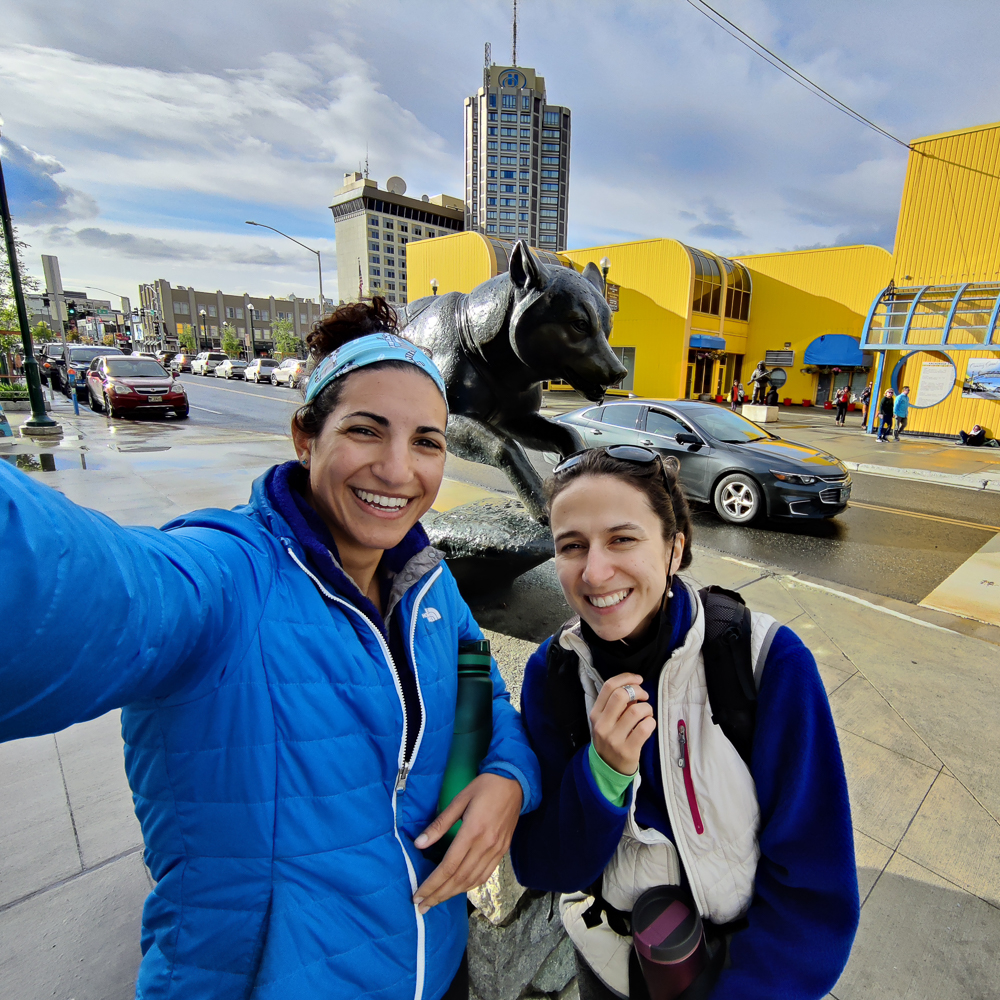
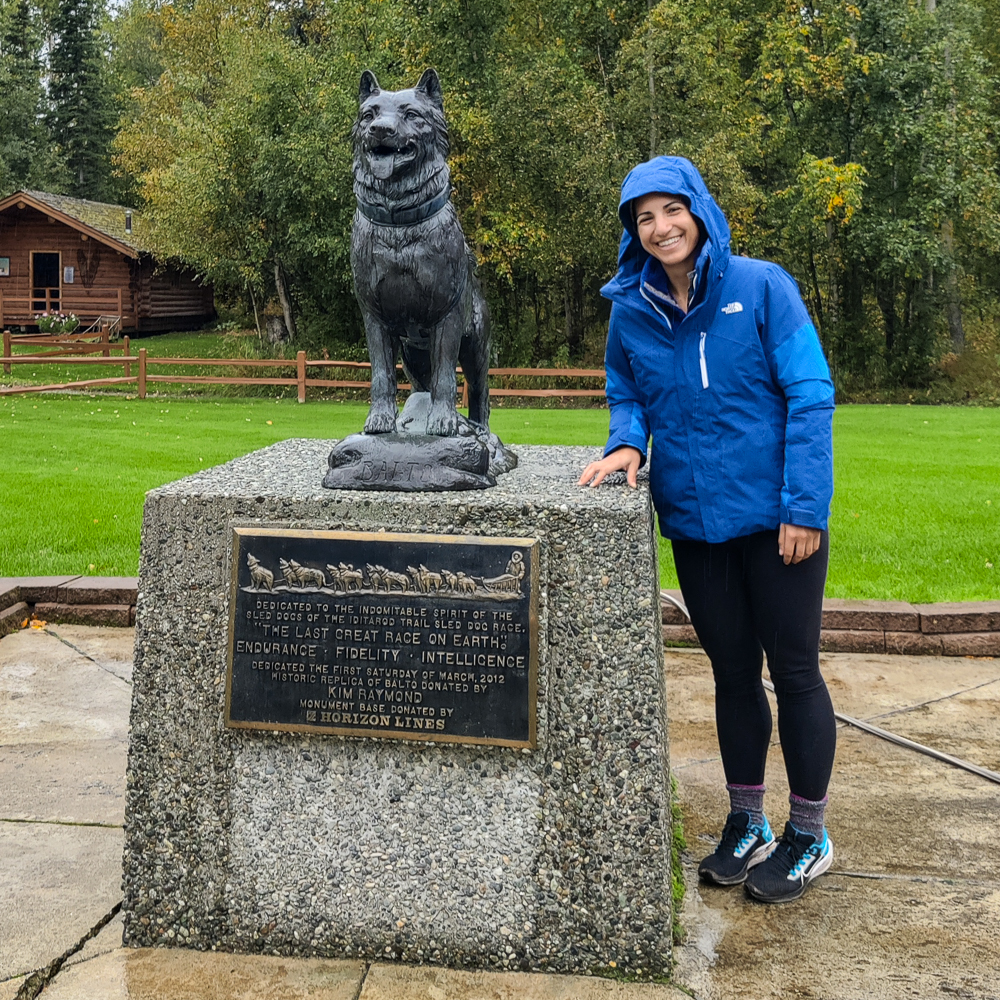
  • Downtown Balto statue – this is also the location of the ceremonial start of the Iditarod.
  • Anchorage Museum – this wasn’t part of our “official” Anchorage tour, but Olivia and I went later in the week and it’s awesome. They have some incredible Alaska Native art… my favorite part was the amazing beading and embroidery. And I loved their landscape painting exhibit!

Sources

Foucault Pendulum – there’s also a link to a PDF with some images to help illustrate how a Foucault Pendulum would behave at different locations on the globe.

 “Foucault Pendulum.” UAA/APU Consortium Library, University of Alaska Anchorage, consortiumlibrary.org/about/building/pendulum.php.

Oscar Anderson House

“The Oscar Anderson House.” Distinctive Destinations, National Trust for Historic Preservation, muni.org/departments/ocpd/planning/documents/oahmbooklet_final_07_02_13.pdf.

Article about Russia returning interned US airmen during WWII

Goldman, Stuart D. “The Soviet Union’s Top Secret Operation to Repatriate Downed U.S. Airmen.” HistoryNet, 6 May 2021, historynet.com/the-soviet-unions-top-secret-operation-to-repatriate-downed-u-s-airmen/.

Star the Reindeer

Berg, Bailey. “Meet Star the Reindeer, Anchorage’s unofficial mascot for 60 years.” Roadtrippers, 18 December 2020, roadtrippers.com/magazine/star-reindeer-alaska/.

When I signed on to visit Olivia in Alaska, she asked what I wanted to do while I was there. I was up for anything, but I definitely wanted to do some hiking. I love to hike, and Olivia and I are well-matched hiking buddies (the same amount of crazy but also appropriately cautious). We didn’t travel too far from Anchorage, but there are plenty of awesome hikes in and around the city. In fact, Chugach State Park, which supposedly has over 280 miles of maintained hiking trails (you’ll soon see why I say “supposedly”), is mostly located within the municipal limits of Anchorage (a fact that Olivia repeated anytime I said something about hiking near Anchorage. “Actually,” she would say, “did you know that much of it is IN the city of Anchorage?” Thank you for the fact check, Olivia. I will continue to say that it’s near Anchorage).

Prepare yourself for LOTS of pictures. And these are the ones that I was left with after really doing my best not to overdo it on photos…
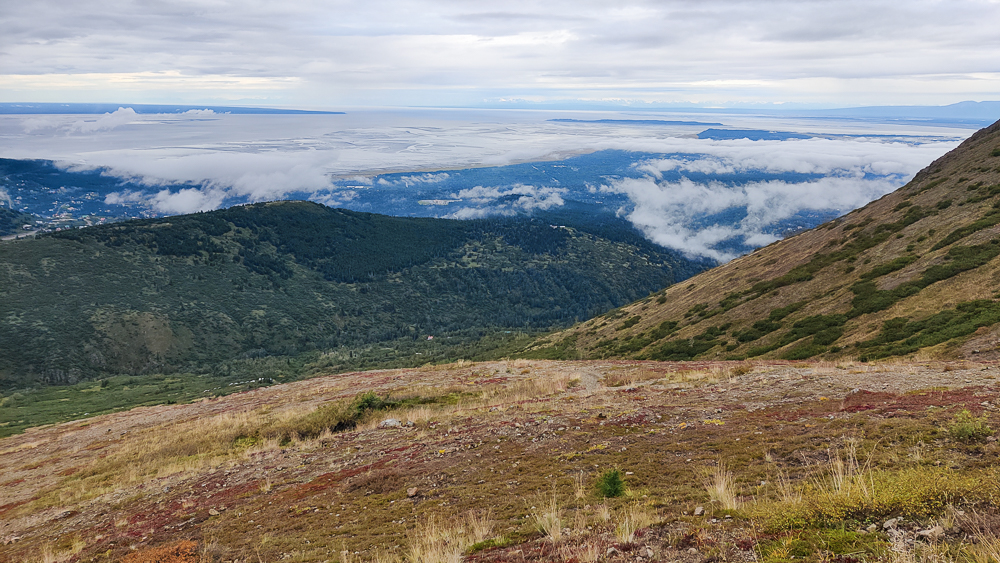
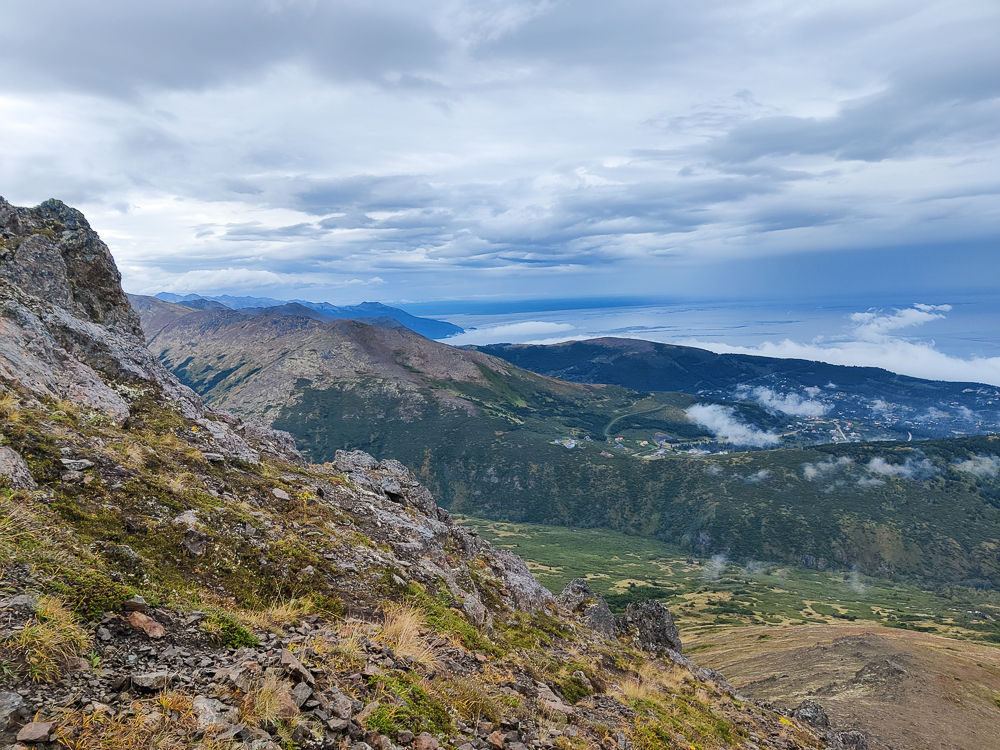
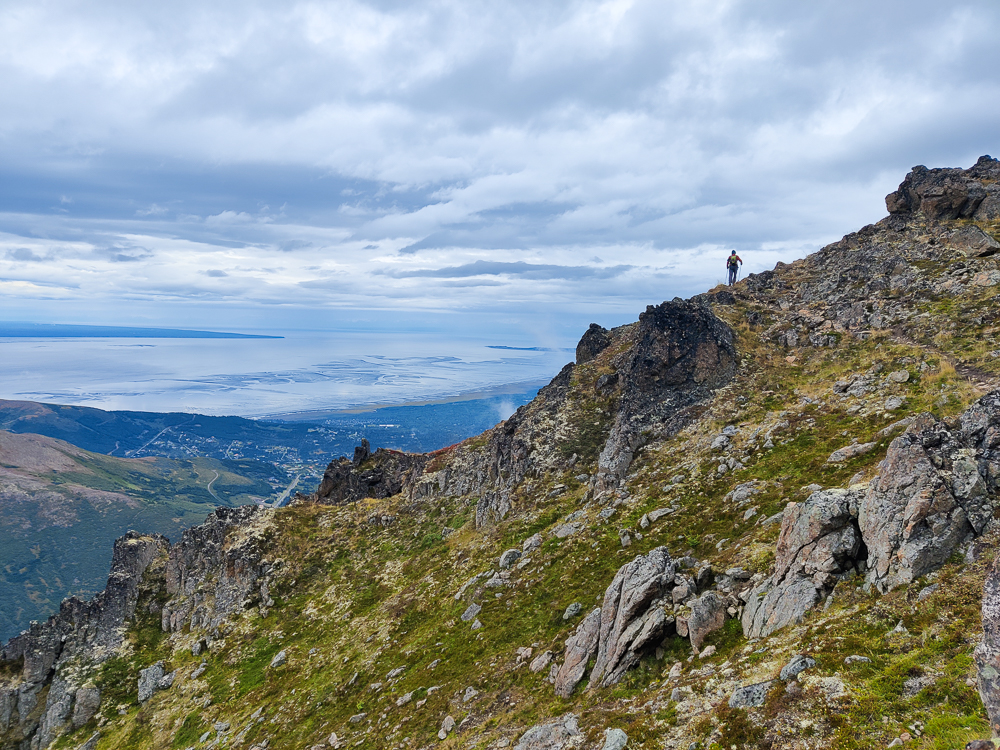
Looking back towards Anchorage on our way up to Flattop.

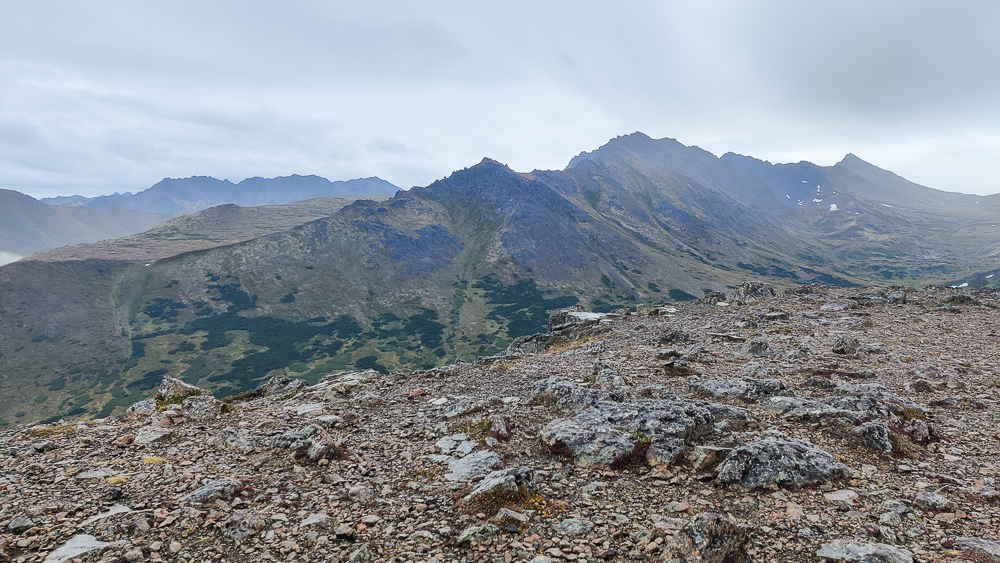
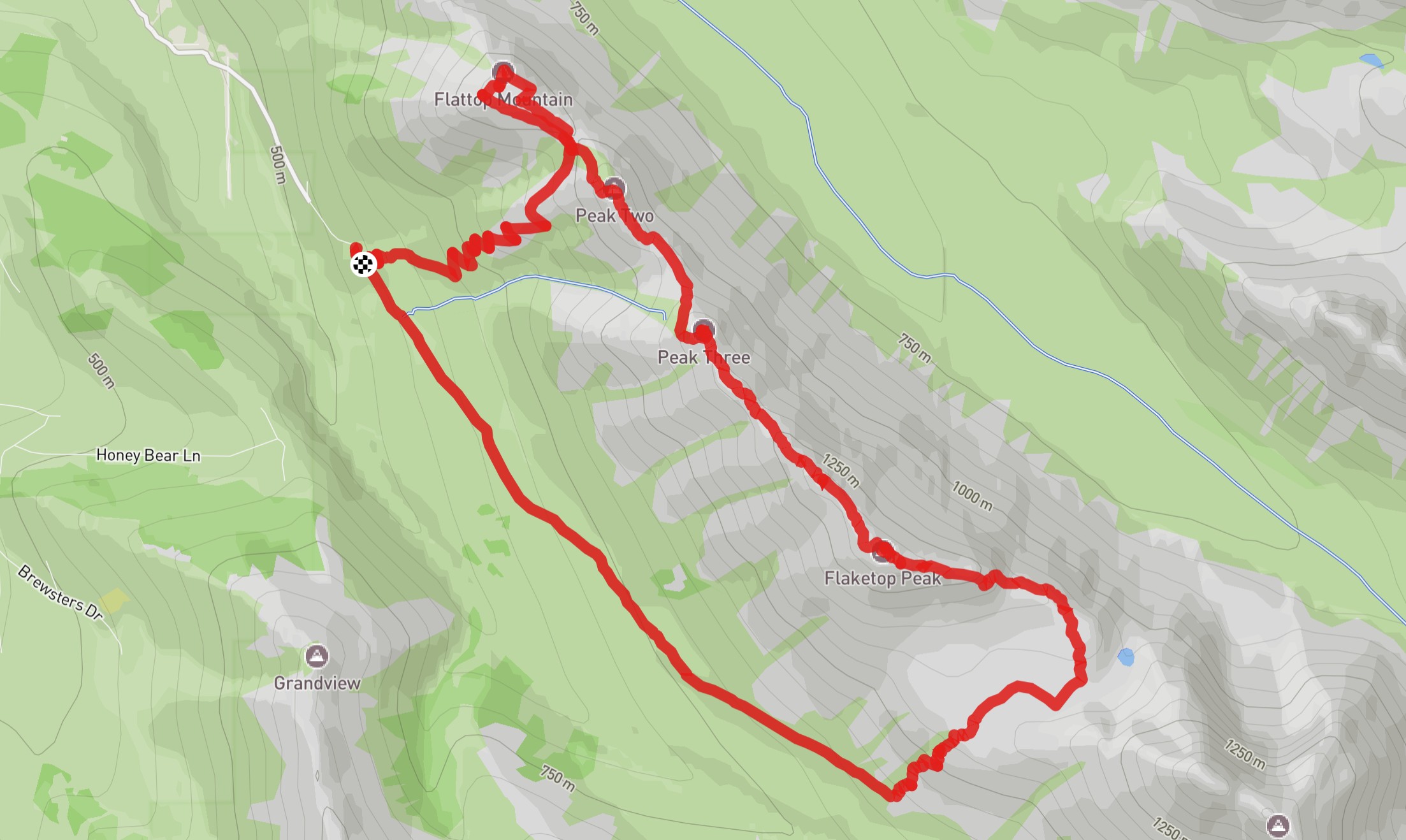
Chugach is enormous (~495,000 acres), so we didn’t explore even a tiny fraction of the park. We stuck to the area most accessible from the city which is basically made up of a few different mountain ridges. We had a couple of hiking days where we followed a ridge, hitting as many peaks as possible along the way. The plan for our first day was to hike around 9 miles and visit four peaks. The first, Flattop, is the most climbed mountain in Alaska. Olivia said she’s been there a million times. From there, though, we kept going which was a first for her. Based on how few people we saw after leaving Flattop, I’d say most people are content to turn around after visiting just that one.

At the top of Flattop!
Obligatory Flattop summit pic
I took this exact same picture about 500 times.
I’m only going to make you look at two of them, though. For now.
Here’s a good view of our mountain ridge for the day!

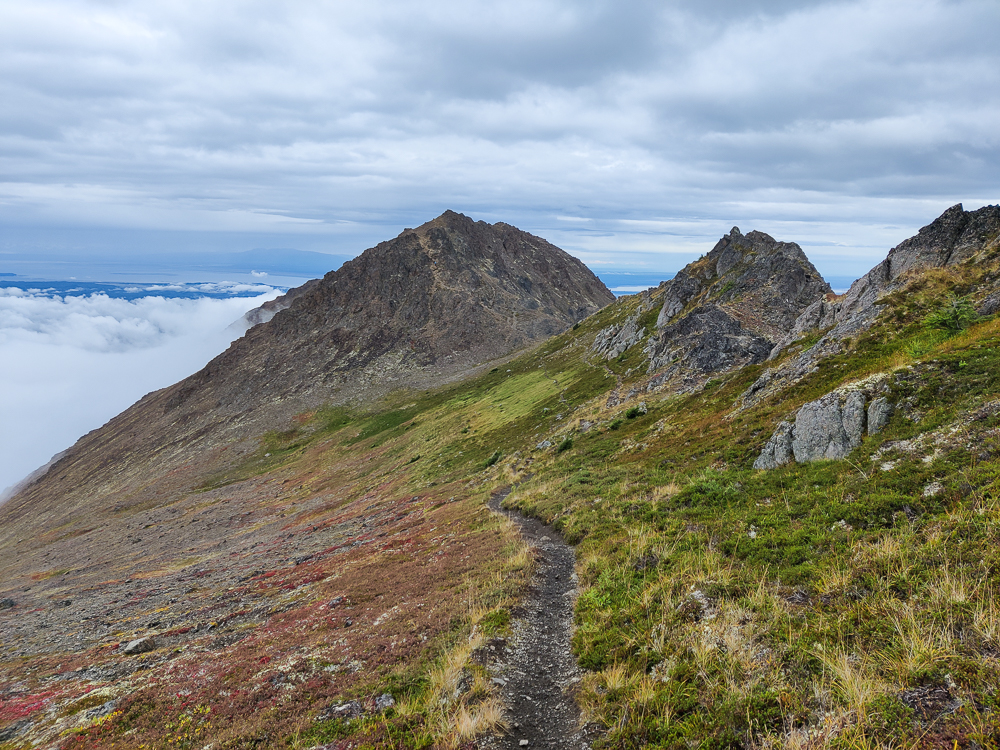
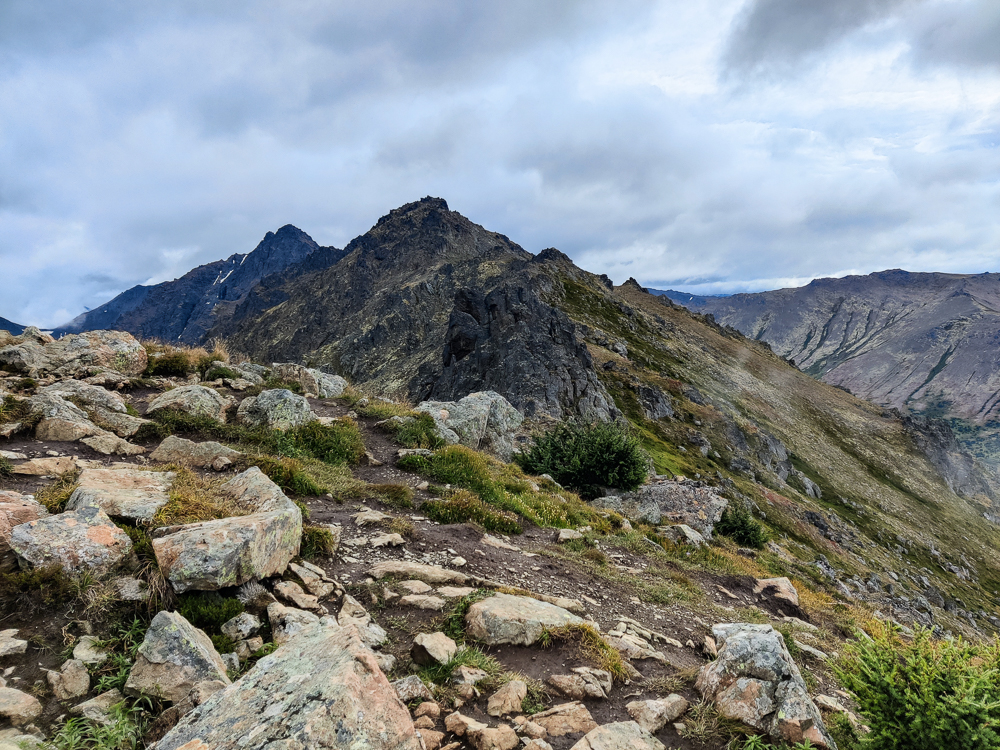
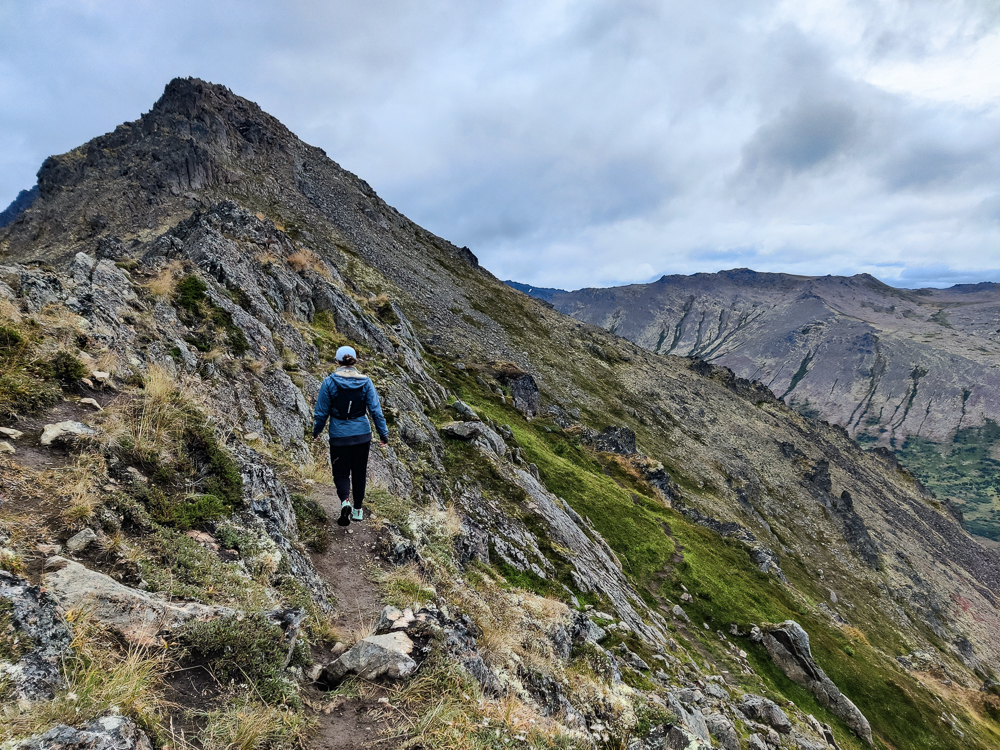
The next two peaks are creatively named “Peak 2” and “Peak 3”, and the last one is Flaketop. To travel between peaks, the trail runs along the ridge. Since this is a less-traveled path, staying on track was a little iffy. Sometimes, the trail was super easy to follow. For example: walking through a grass-covered area and sticking to the non-grass-covered line. Other times, it was less so. For example: walking through a rocky area and trying to determine if this patch of exposed dirt seems like the trail… or is it maybe that patch of exposed dirt over there? I wouldn’t have been opposed to the use of some trail markers. I’m just saying, a couple of paint blazes wouldn’t hurt anyone.

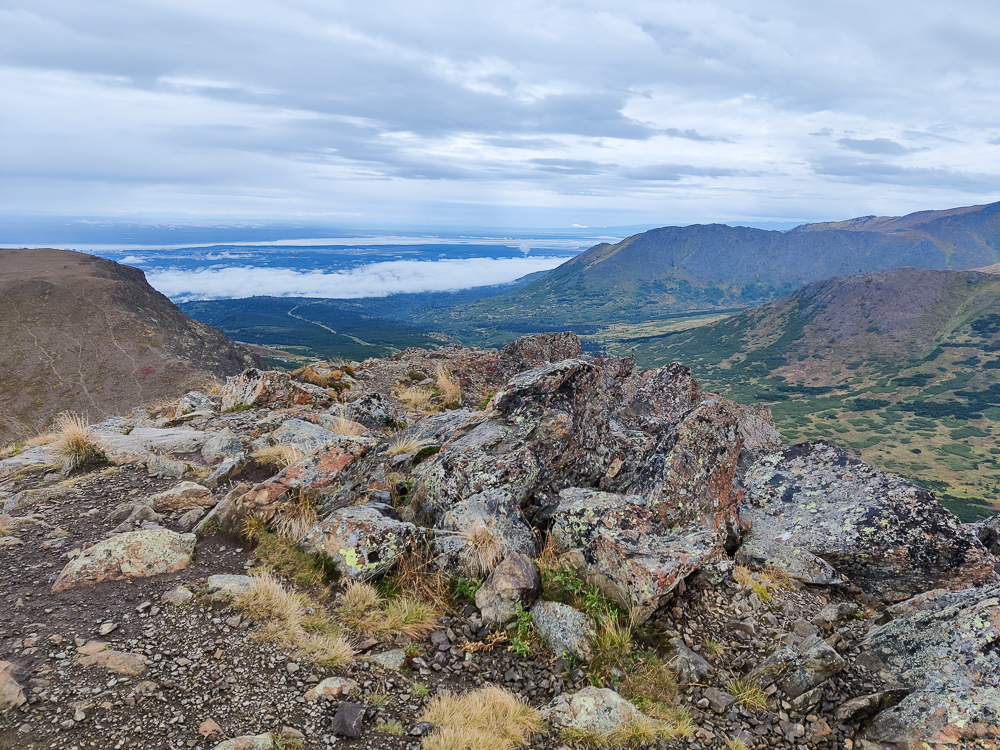
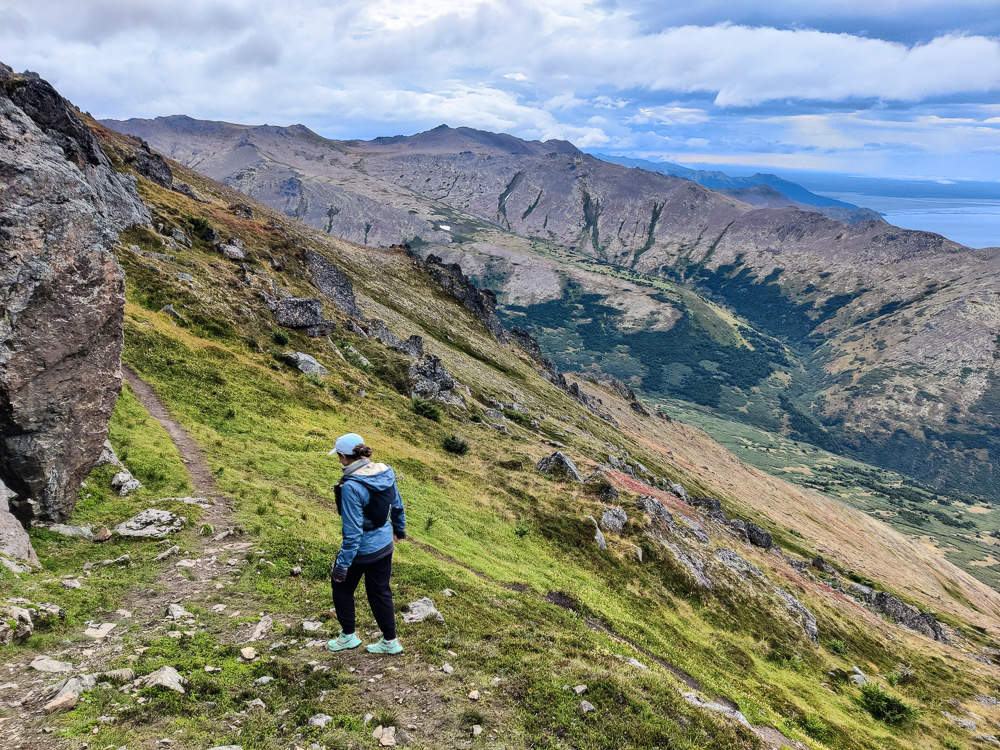
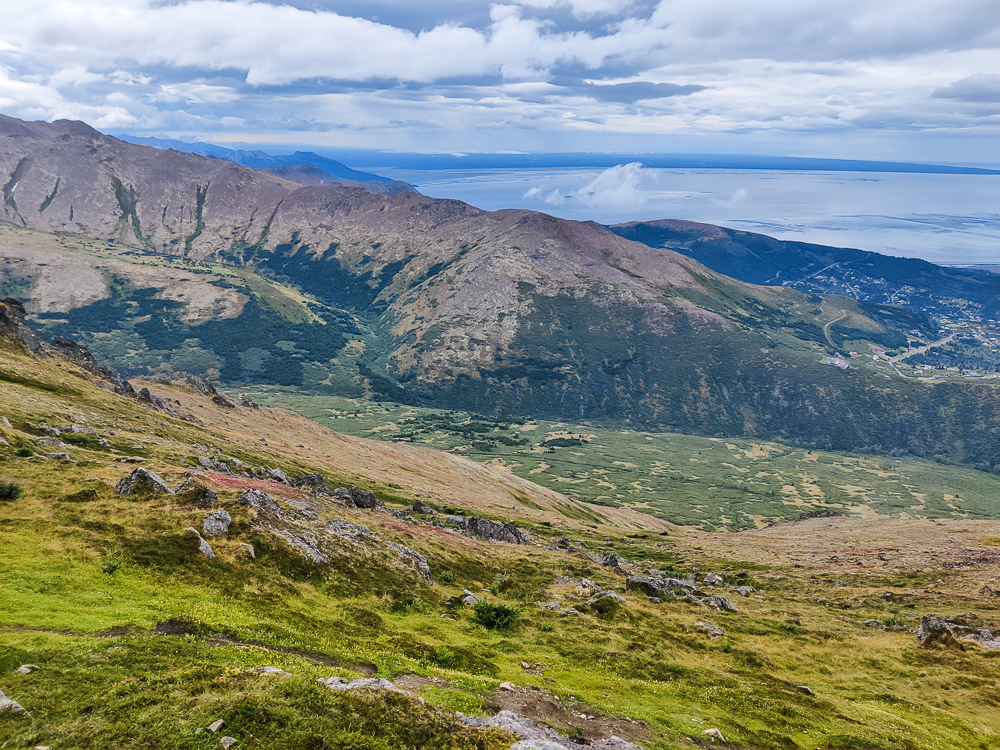
We may not have had a clear path, but we did have awesome views to both sides. Views to the right…
And views to the left!
Here’s one of those well-defined paths…
And here’s a muddy rock path… maybe?

Also, this may come as a surprise, but Peak 2 and Peak 3? Not the most defined peaks I’ve ever encountered. We did some, “Do you think this is the peak?” “No, my GPS is showing it somewhere over here… do you think this is it?” I think we probably found them. Let’s just go with yes.

This was possibly taken at Peak 2.
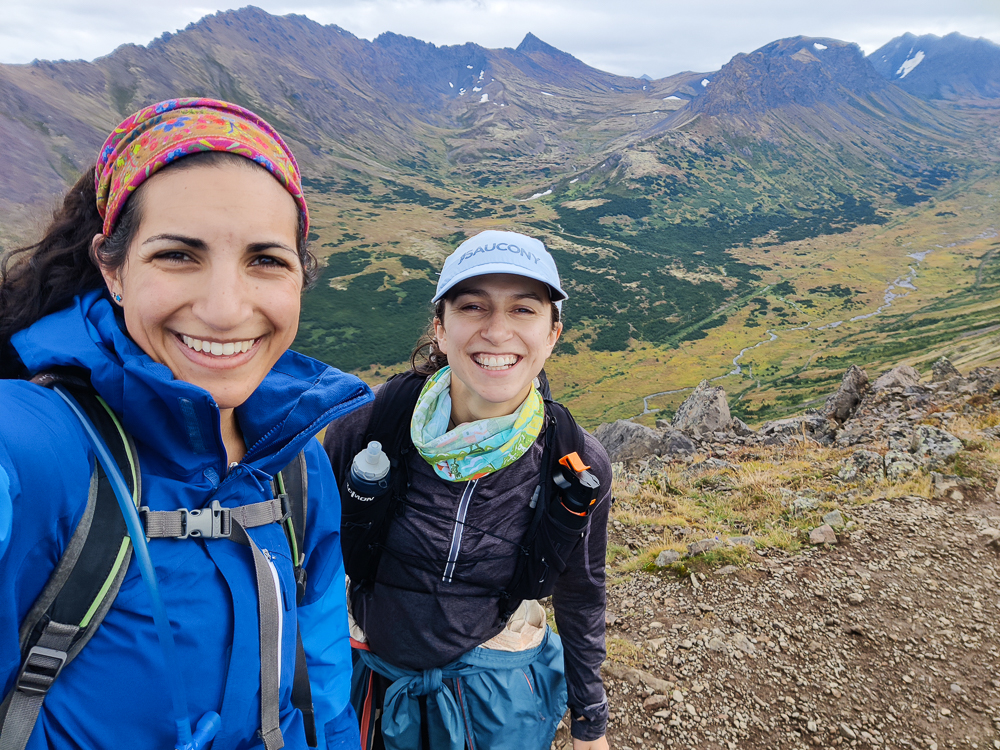
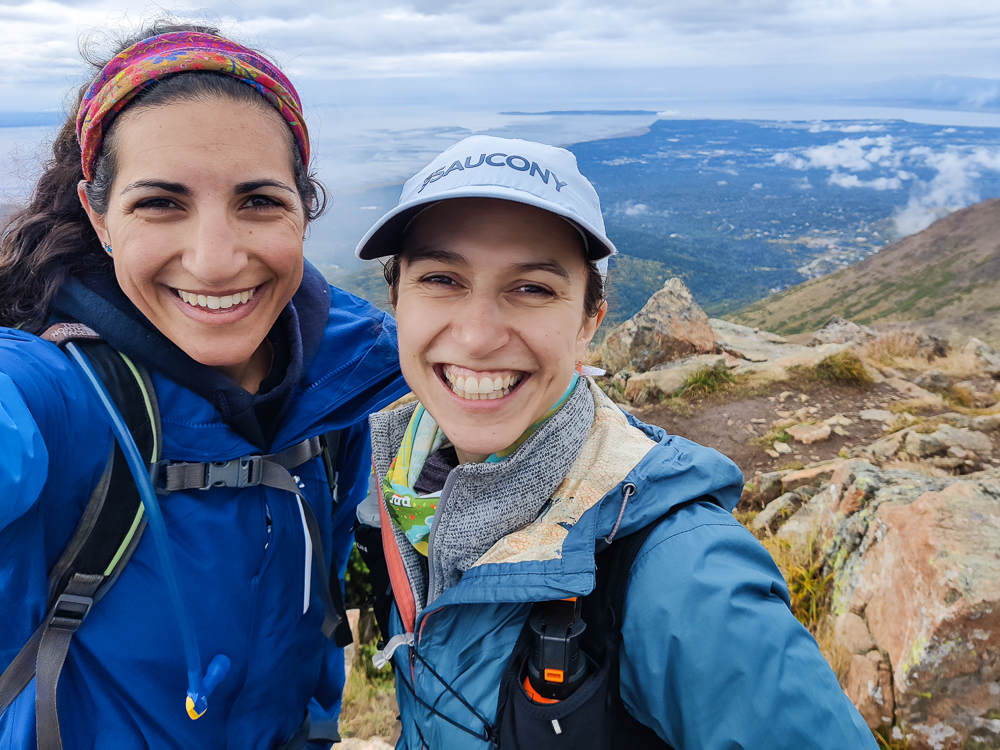
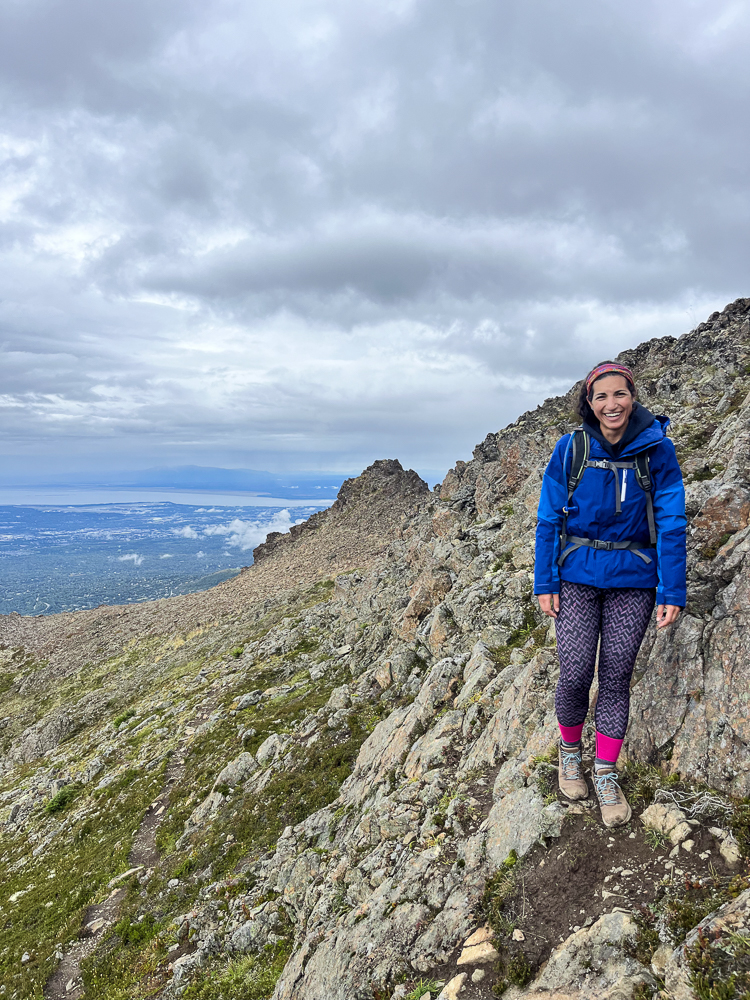
Peak 2 selfie!
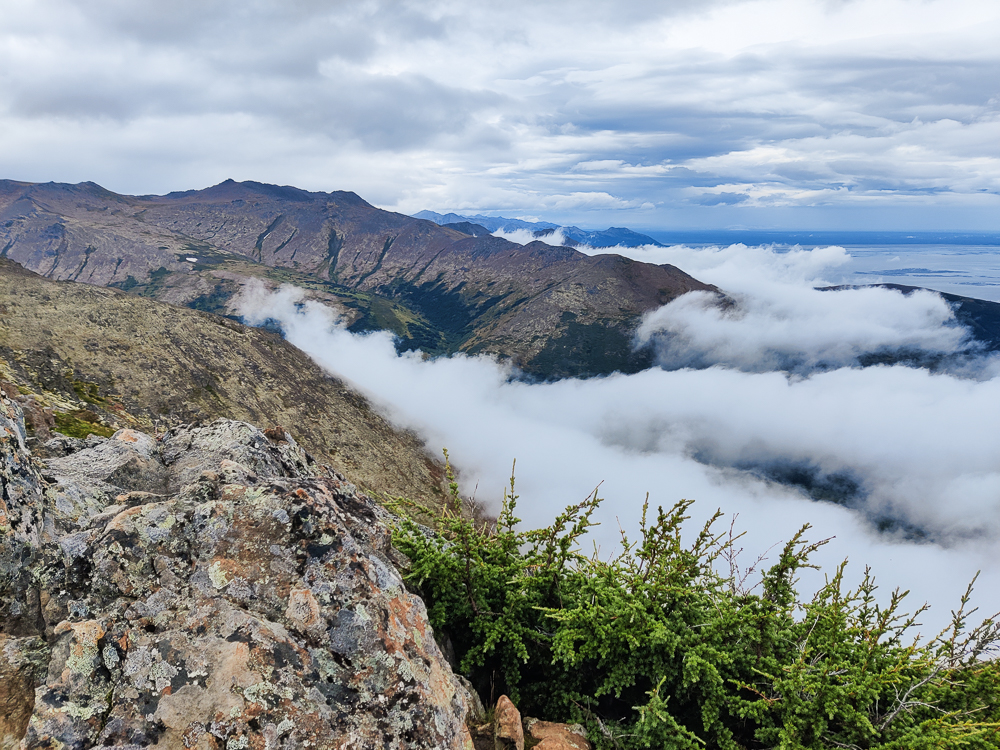
There were also some very fast-moving clouds.
Compare this to that last picture! It was crazy how quickly the conditions changed.
And for good measure, let’s put another of these photos in.
Hiking from Peak 2 to Peak 3
Possibly taken from Peak 3? (I feel pretty sure that we made it there.)
Peak 3 selfie!

Ambiguous peaks/trail aside, we did okay getting from Flattop to Flaketop. We certainly didn’t take the most efficient route, but we mostly managed to stay near the trail. There was a lot of map checking and course correcting. This was possible because while the trail wasn’t necessarily CLEAR, it did exist, so if you started walking in the right direction, at some point you’d think, “Ah, yes! Here’s the trail!” and start to follow that. (Was it actually the trail? Who knows. But at least there was something trail-like enough to convince you that you might be in the right place.)

Hiking from Peak 3 to Flaketop
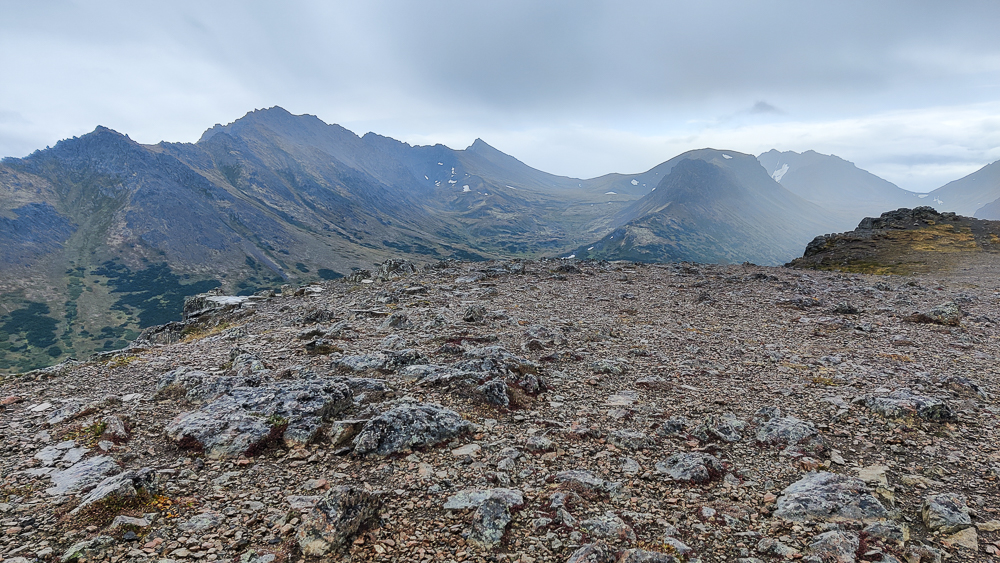
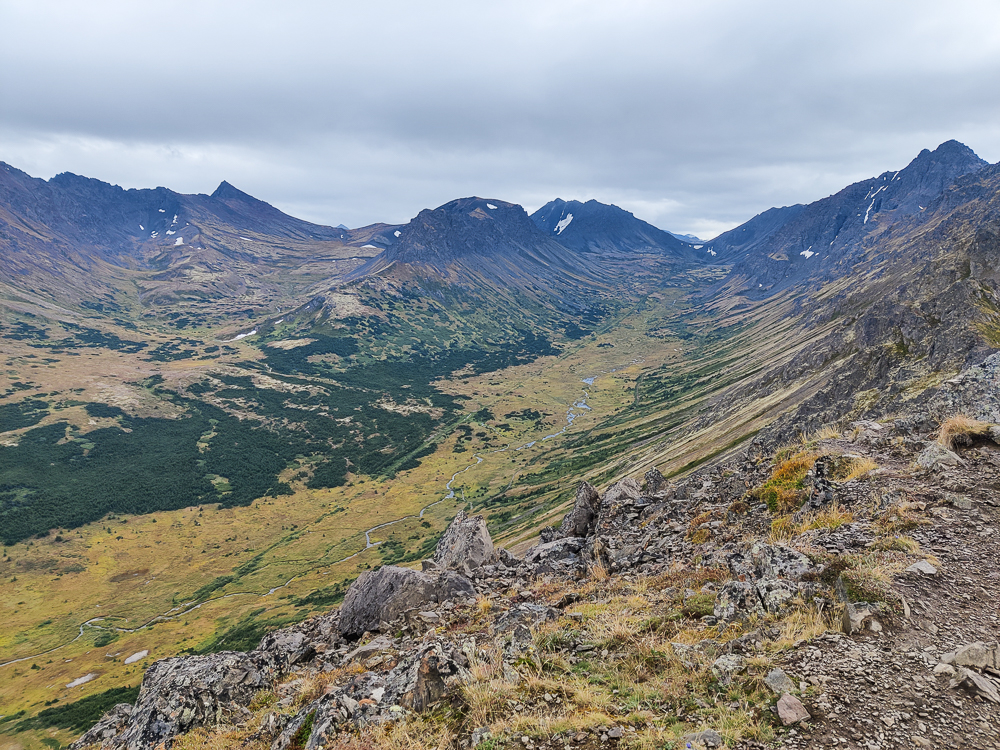
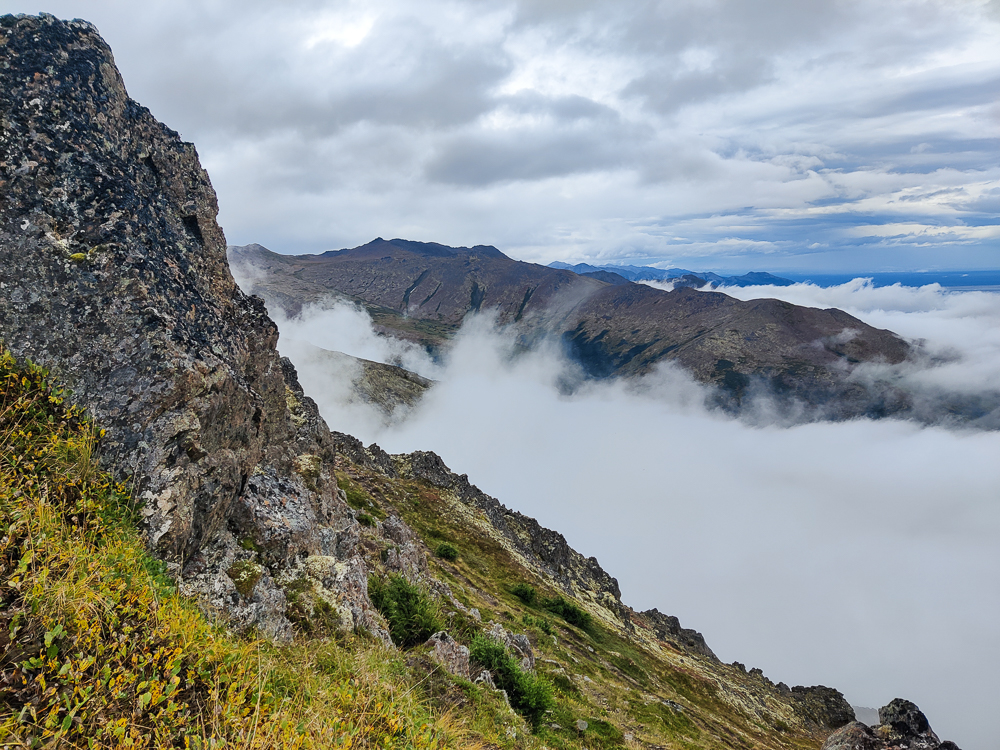
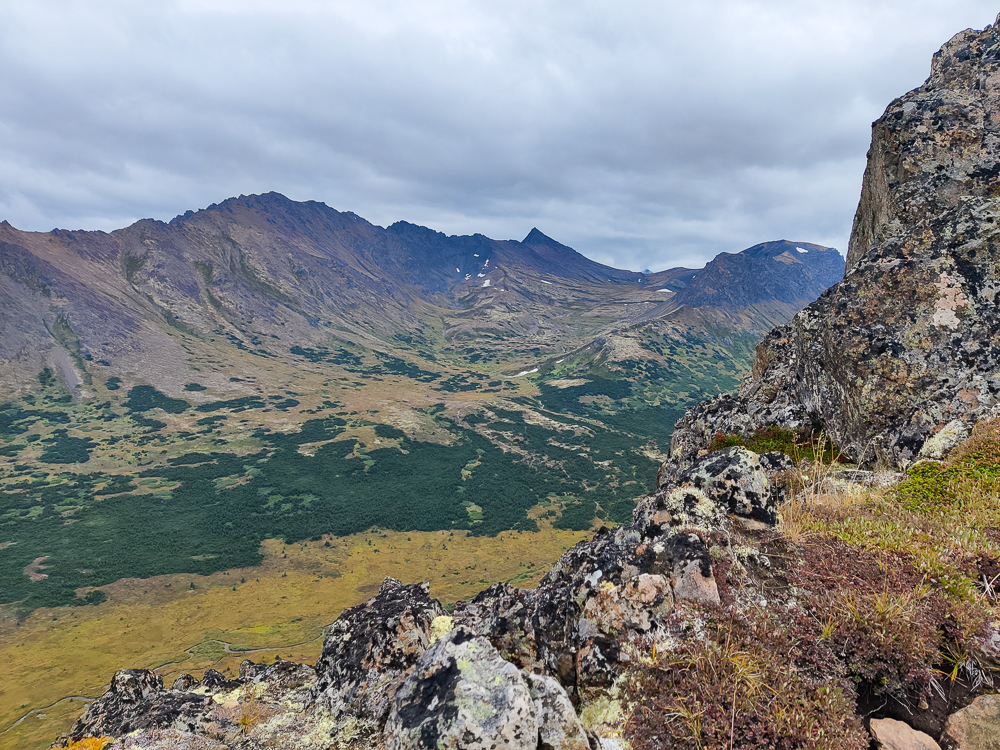
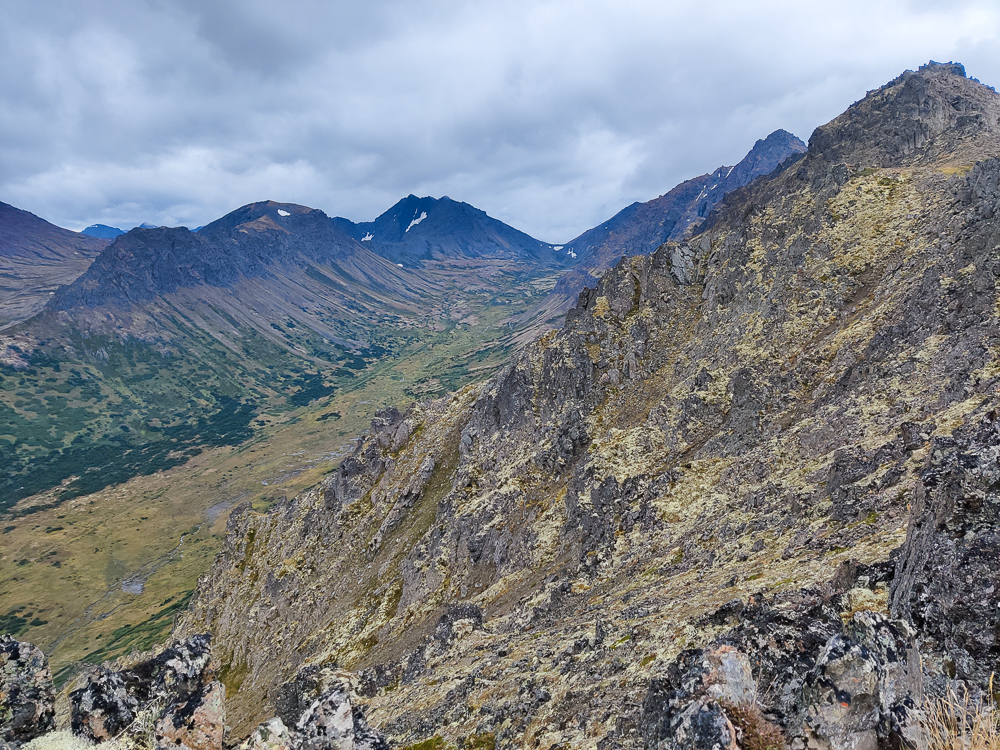
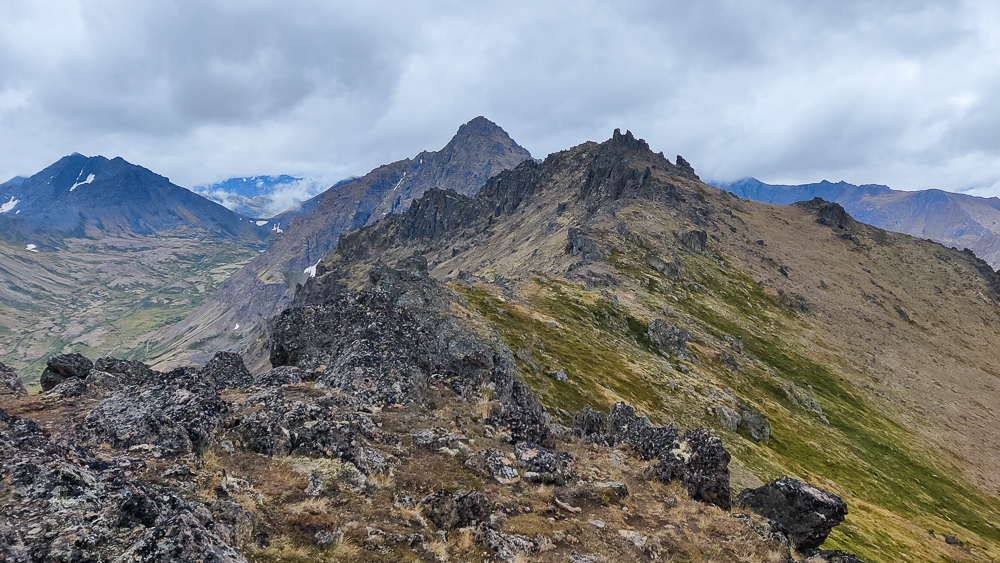
No shortage of amazing views
I love the texture in these mountains.
Spot one of the approximately 3 people we saw on our hike post-Flattop.
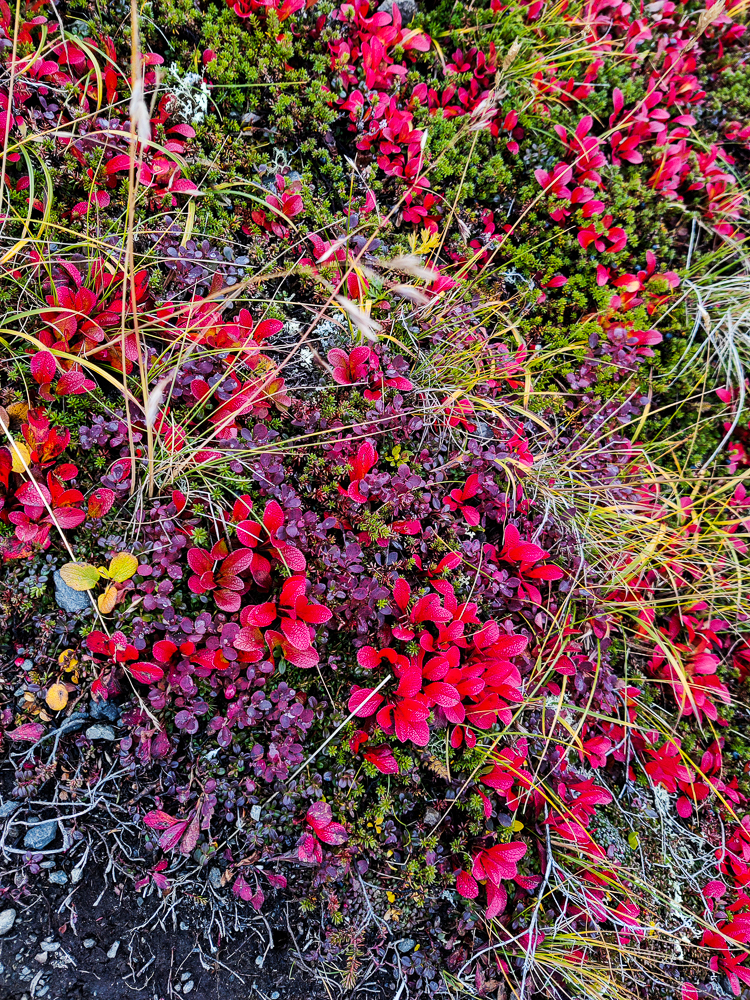
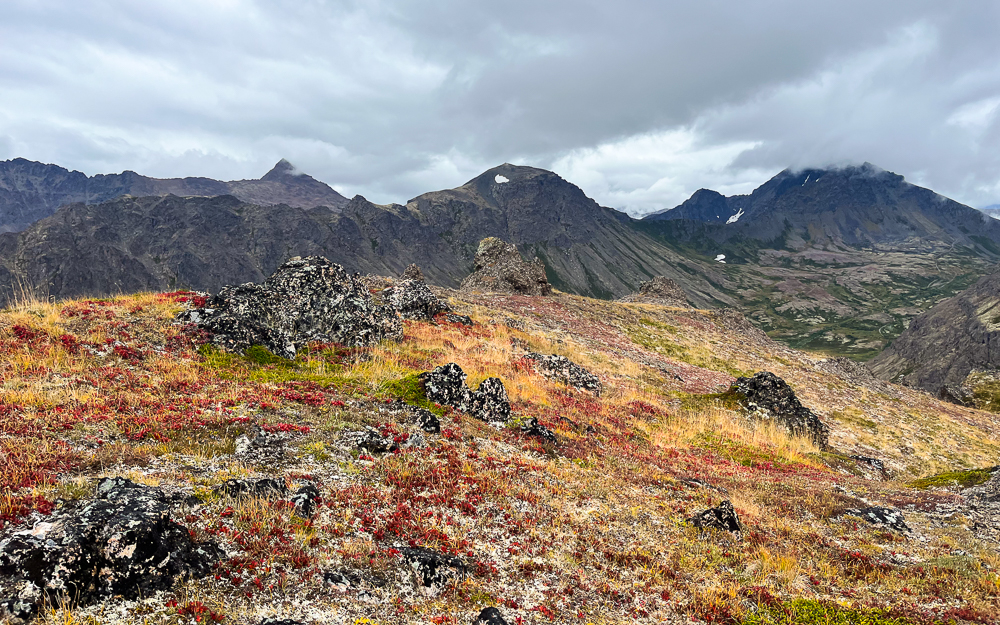
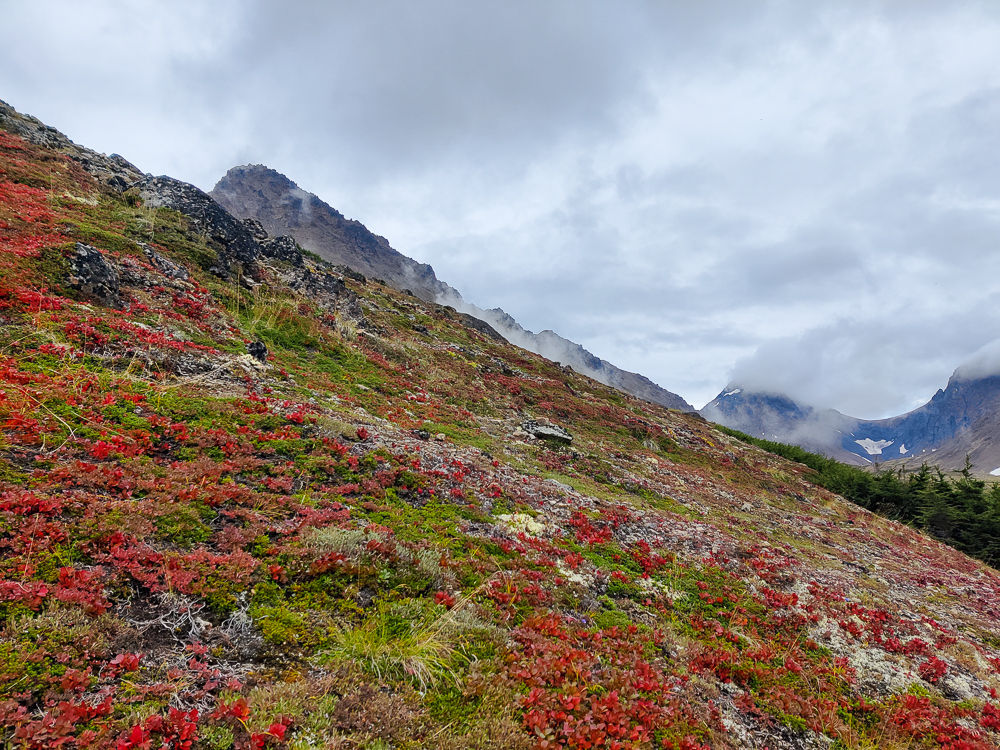
There were some pretty spectacular colors along the way.
Happy to be walking on the trail (maybe).
Look! There’s the trail!
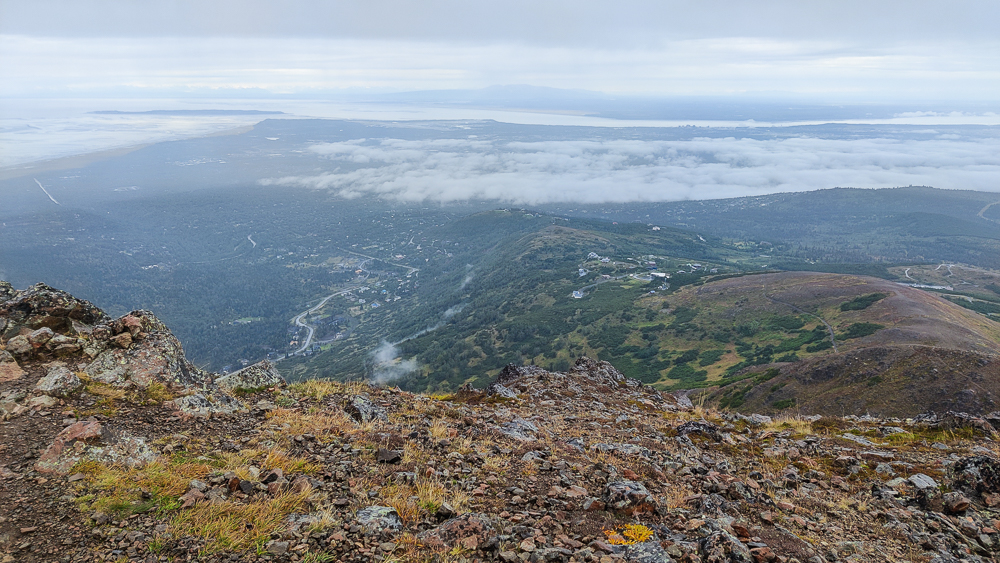
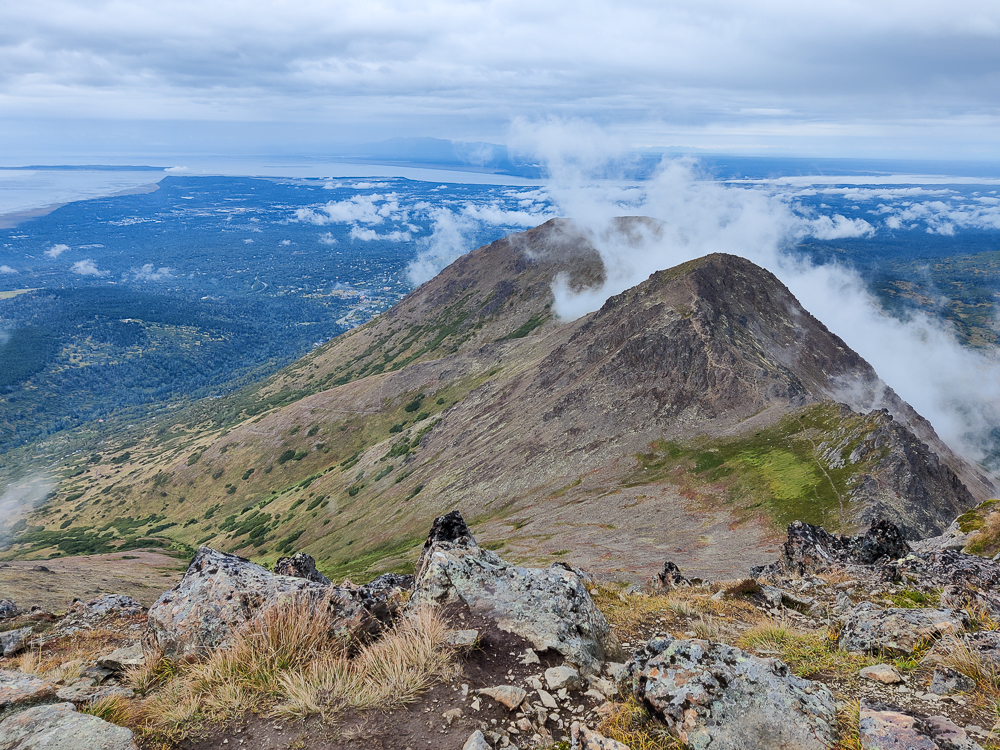
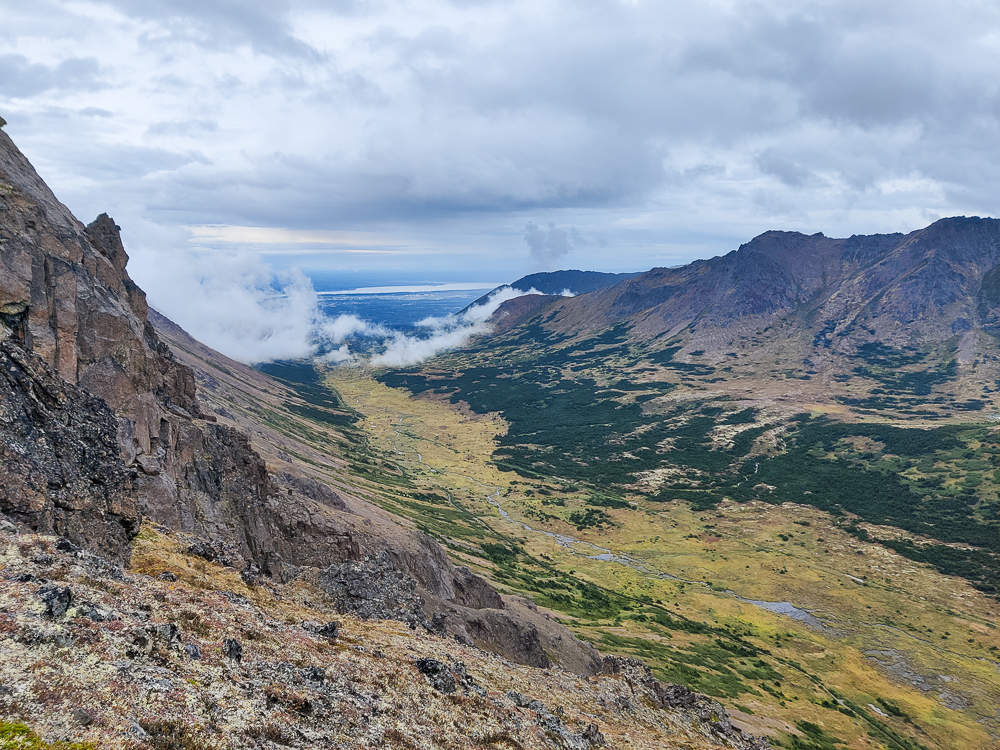
Looking back towards Anchorage.
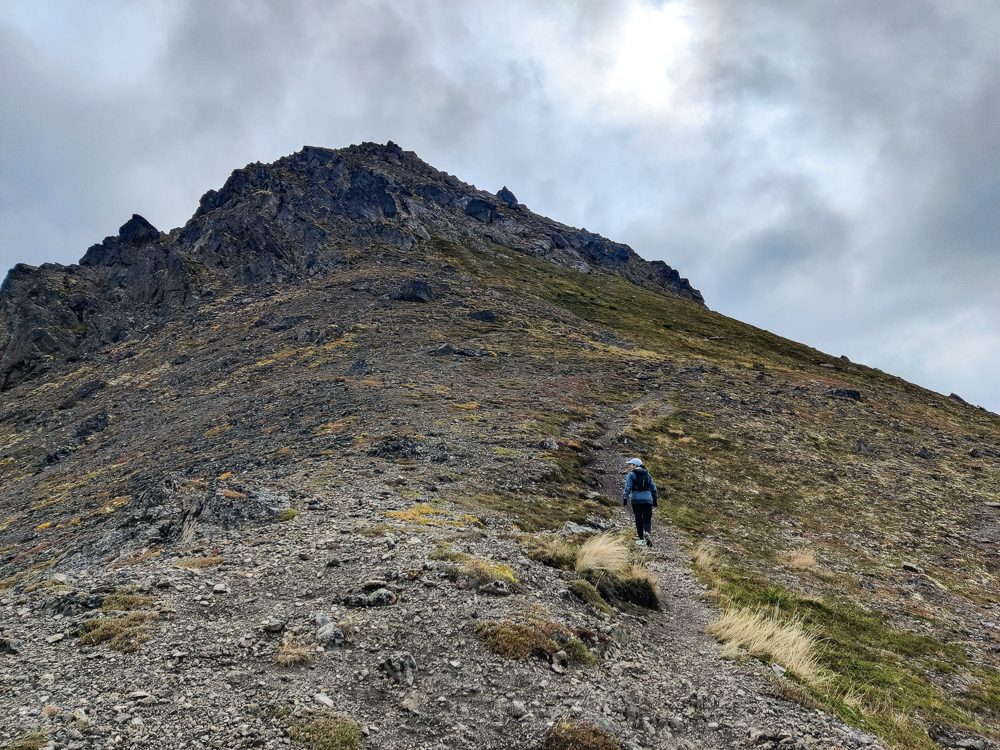
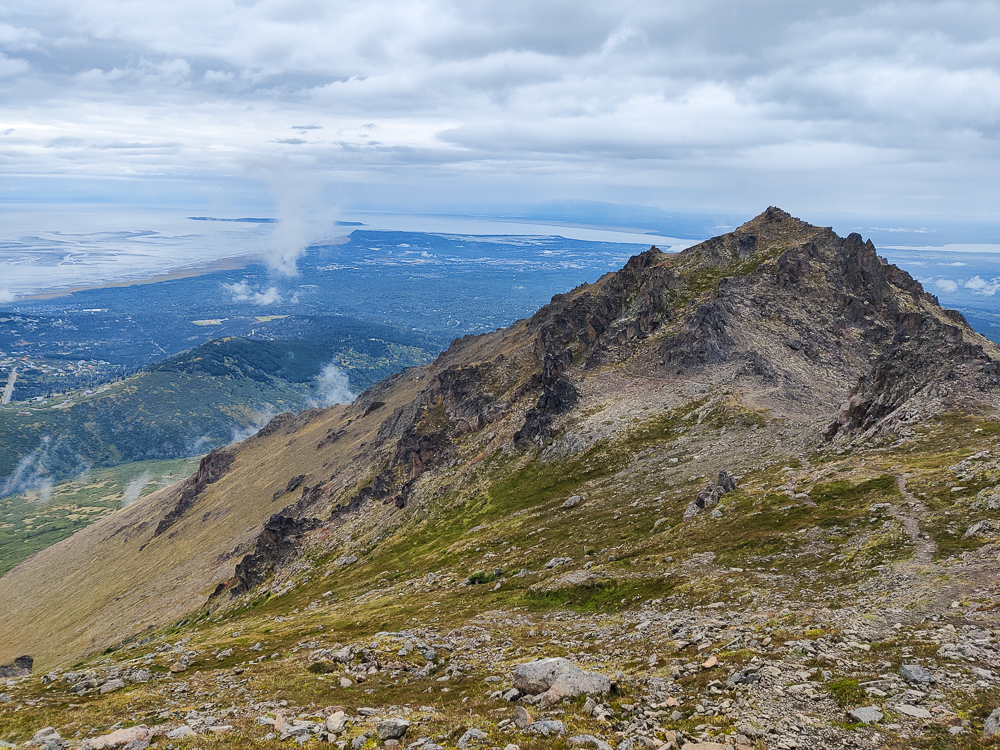
Flaketop is the craggy peak to the right in this photo (not the tallest one).
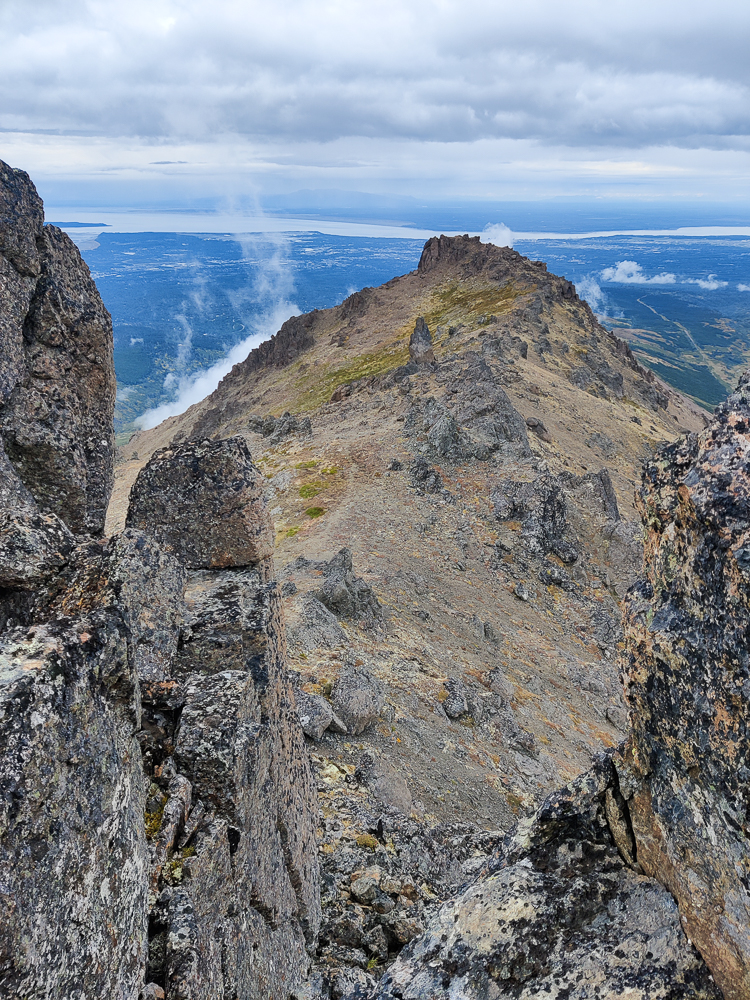
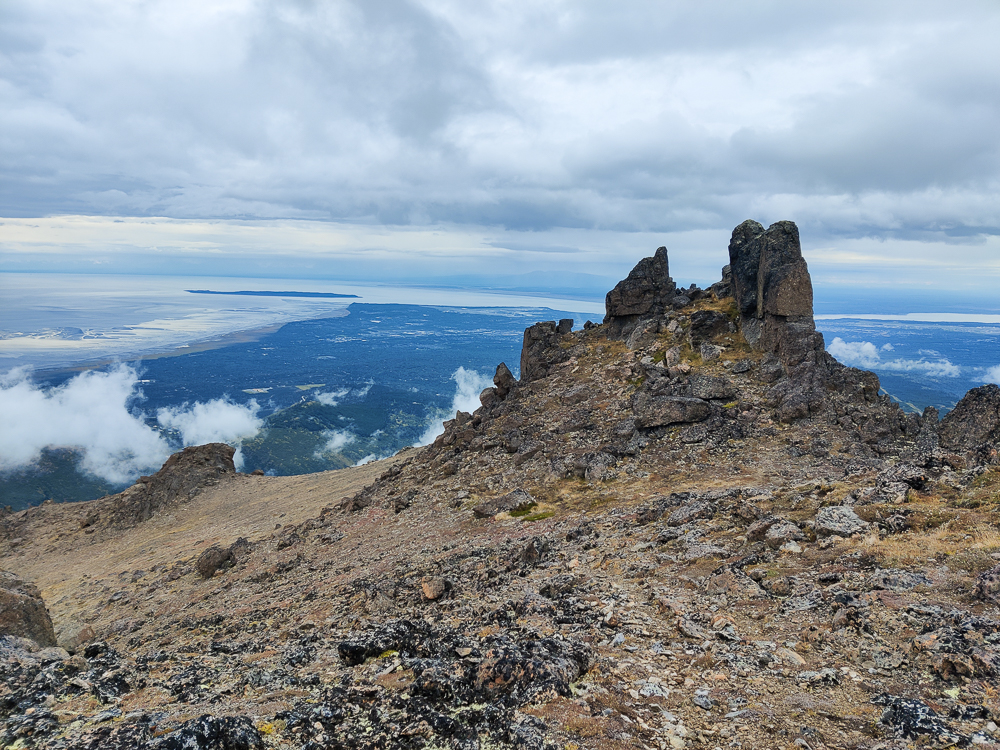
View from Flaketop
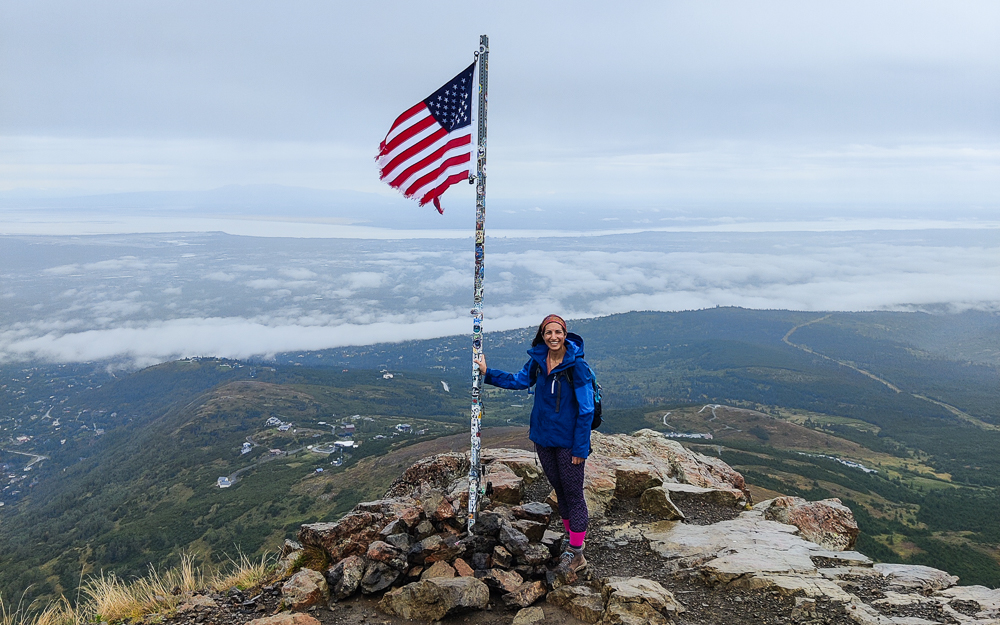
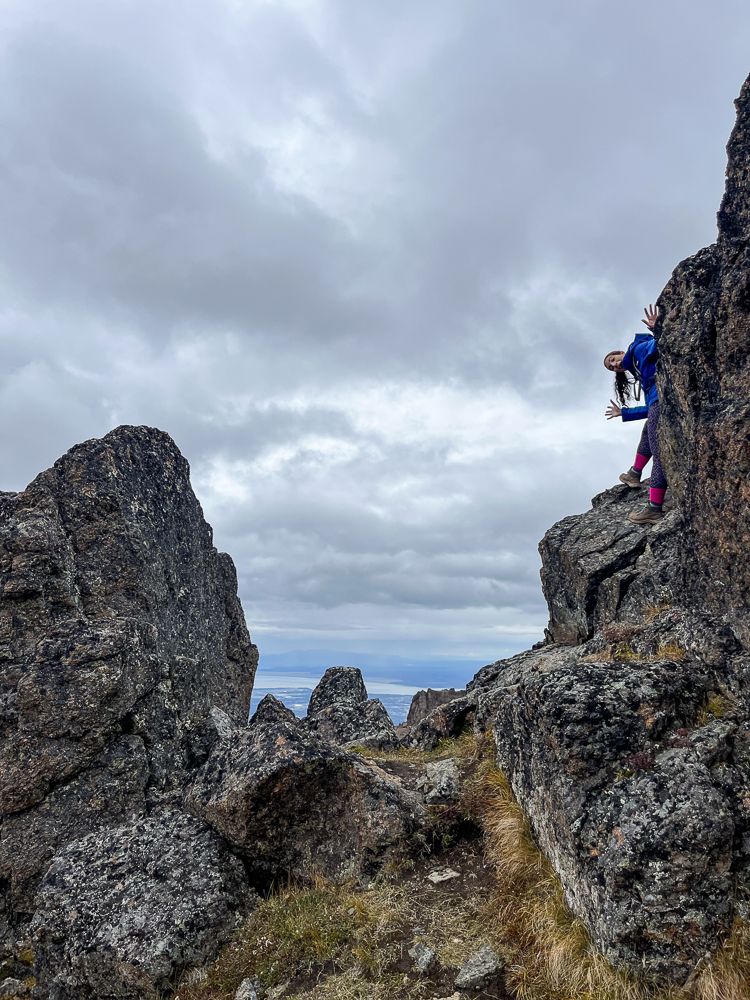
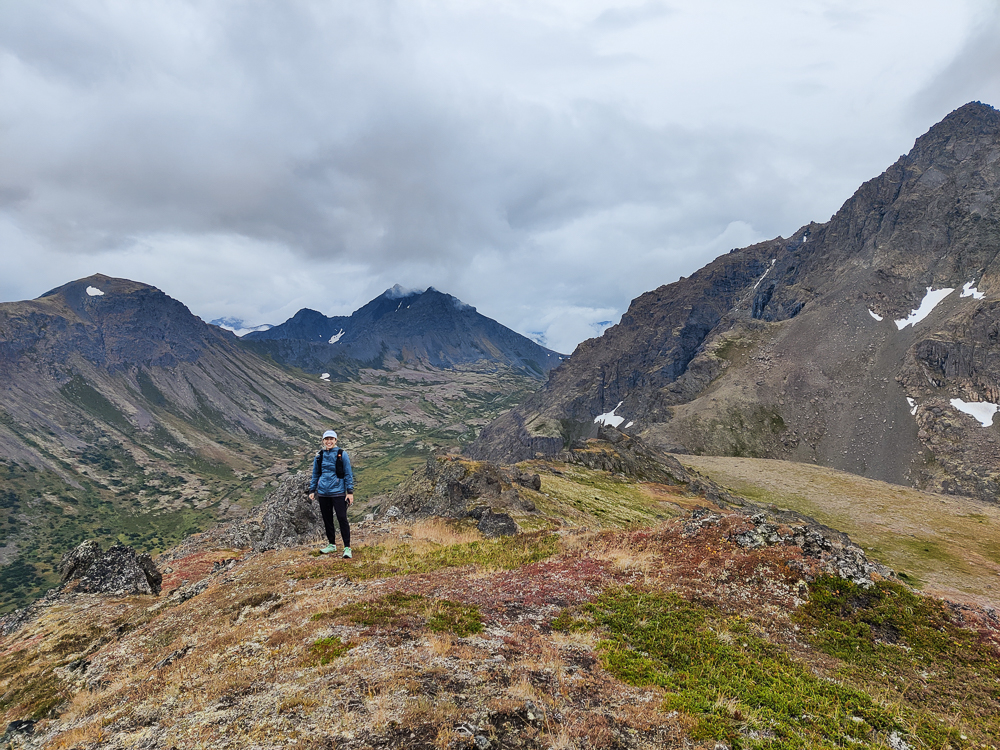
Yay! We made it!

After Flaketop (a much more commanding peak than Peaks 2 & 3), things started going downhill. As in, we began descending, and also as in, the trail quality took a dive. There was just… nothing. We’d follow a maybe-trail until we found ourselves at the top of a sheer drop off saying, “Hm. This is probably not right.” We’d check the map and see that we were WAY off course. Then, we would “find the trail”, but that just meant that our little GPS dots looked like they were in the right place. Sometimes, we would insist that we really did see a trail. “Oh yes! This is totally it!” one of us would say, as the other person nodded with great enthusiasm but weak conviction. Then, one step later, the hint of a trail would be gone again. Repeat. Repeat. Repeat.

Looking back at Flaketop
Smiling like we know where we’re going…
At least if we were going to be lost forever, it was in a pretty place.
The colors!
I couldn’t get enough of the colors.

According to our maps, we were headed for a junction with Ptarmigan Pass Trail, our route for the next leg of the hike. As we struggled down the mountainside, we staked our hope on that transition. “That one is probably more popular, right?” “It can’t be worse than this, right?” “Don’t let me down, Ptarmigan!” I’m sure you can guess where this is going.

We overshot the imaginary junction. How could we not? We were on an imaginary trail, headed for another imaginary trail. I started yelling about how it should be called Pterodactyl Trail because it was extinct. This felt funny at the time, if that tells you anything about how we were doing mentally.

Olivia and I kept checking our maps. “The trail should be just over here.” “Mine shows it right over here.” I kept thinking that our GPS must just be a little off. It’s never perfect, plus we had no cell service which doesn’t help. Eventually, though, we determined that there was no trail. I wish I could say that we gave up on trying to follow it, but we didn’t. After all, the trail could magically appear at any second! Right? (Spoiler: wrong.)
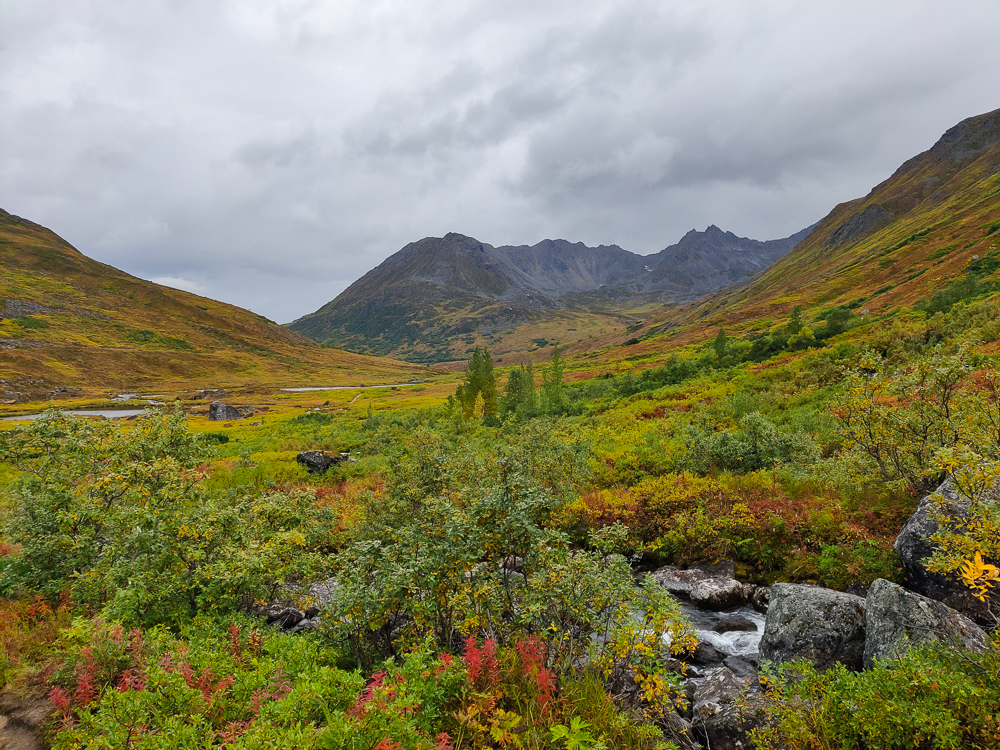
The more we walked, the loopier we got. My terrible pterodactyl joke apparently wasn’t enough for me, so I kept going, asking Olivia if she was on the trail yet or pointing literally anywhere and saying, “I think that’s the trail there!” or, seeing that my GPS dot was in the “right” place, “Look! Can’t you tell that I’m on the trail?” Olivia was actually laughing at all of the jokes, so again, you can make your own call about how we were doing.

This place. Is unreal.
I look like I’m falling apart, and there’s a good reason for that.
Where’s the trail? Are you on the trail, Olivia?

The only positive I can come up with is that this “trail” was carpeted with little ground-cover-type plants that made the descent really nice on the knees. The negative is that you’re generally discouraged from going off trail to keep from killing things like little ground-cover plants… but we didn’t have much of a choice. We figured that no one was ever going to replicate our steps, so the plants would probably be fine.

Easy on the knees AND pretty.

There was a small part of me that felt like we were never going to get down to the bottom. Then, out of nowhere, this beautiful, bold trail came snaking up towards us. I was indignant, “HECK NO. There is NO WAY the whole trail was like this, and we just couldn’t find it.” No. It’s impossible. We zigzagged over every part of that mountain. There was nowhere left for it to hide.

Afterwards, it was almost comical to look at the map of our route. When you look at it from afar, it looks fine…

For reference, here’s the overall map of our route.

But if you zoom in, you can see the chaos.

At the top right, you can see the “junction” between the two trails. And then you can see how we absolutely didn’t even almost follow the “trail” (that skinny little yellow/orange line) down (we’re the thick orange line that looks like total nonsense).

The hike ended on a good note. The last trail was glorious – wide and flat, and we couldn’t have gotten lost if we tried. Shout out to Rabbit Lake Trail. You’re my hero. We zoomed back to the car, cranking out the last 2 miles like they were nothing.

On my first day in Alaska, Olivia and I participated in a quintessentially American experience – the state fair. The Alaska State Fair takes place at the end of the summer each year, and when Olivia asked if I’d like to go, it wasn’t a hard decision. Giant produce? Fair food? Random displays and exhibitions? Count me in.

I’d never been to a state fair before, and it was simultaneously exactly what I expected and full of surprises. There were booths selling knick-knacks next to booths selling saunas and hot tubs. We visited the reptile house and saw fish and snakes and lizards. We walked around the craft pavilion and admired the things that people quilted, knitted, crocheted, and cross-stitched. We felt the difference between alpaca and sheep and muskox fibers. We watched performances by various dance groups. And then… we headed to the farm pavilion.

The farm pavilion is where the action happens. It’s where the livestock is kept. The smells are unmatched. We saw sheep and pigs and goats and cows. There was a pregnant pig whose piglets could come at any second! We were a little early to witness the wonder of piglet-birth… 12 piglets were born two days later.
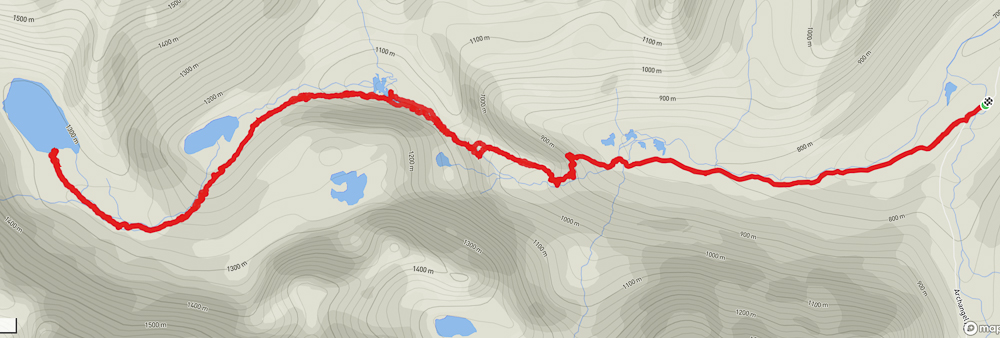
Anyway, the animals weren’t what I wanted to see. I took a look to be polite, but let’s be real – I was there for the giant produce. The pumpkin weigh-off had taken place the day before, so I was looking forward to seeing what a 2,035 lb pumpkin looked like. Olivia told me that it was going to be the size of a small car which was completely overselling it, unless she meant a toy car for children. I have to be honest. I was underwhelmed. I mean, it was an enormous pumpkin, but it wasn’t car-sized. It wasn’t even big enough to take a “James and the Giant Peach”-style adventure in. Oh well.

Even so, the day wasn’t a complete loss. We saw a giant zucchini and a carrot with roots that were at least 4 feet long. Whoever dug that up had some PATIENCE. There was an endless display of regular-sized produce that had been judged to determine the best in show. Best snap peas. Best basil. Apples, potatoes, broccoli, etc. It’s endless. All I could think about was the judges. How long does it take for them to judge all of the entries? How on earth do they determine a winner? The judging criteria was posted – clean, uniform, undamaged, size, color, etc. – but still. It feels very subjective. And after you look at hundreds of snap peas, do they not all start to look the same?

Me with the tiny pumpkin.
Also, apologies for the fact that I have so few pictures from the fair. I hadn’t yet decided that I was going to blog again, so I wasn’t in the same photo-taking mode as I would have been otherwise.
The only reason I have this prize-winning zucchini picture is because my mom also grows zucchini, and I thought she’d be entertained by this 23.9 lb monster.

I could go on and on about this, but I have more important things to discuss. We were fortunate to be in attendance on the day of the infamous Cabbage Weigh-Off. I will try to explain, but just know that no words can bring to life the energy, the tension, the excitement that filled the arena.

We sat down on the grandstand overlooking the holding pen. The competitors, seated on large tarps and pieces of plastic, waited around the perimeter with their humans. In the middle, there was a scale, presided over by an official of the Alaska Department of Weights and Measurements. Yes. This is a thing that exists, and contrary to my first thoughts, they do, in fact, have other responsibilities besides weighing large produce at the state fair each year, but none is as important.

This is my only picture of the weigh-off, so for the rest, you’re just going to have to use your imagination. You can see the scale in the middle of the holding pen (FYI no one calls it a holding pen. I just think it’s funny to do so. And no one else considers the cabbages to be the competitors, but really, doesn’t that make the most sense?). The pavilion where this all takes place is enormous. This photo shows probably less than half of its entire length. The livestock is out of frame to the left. You can see a wall straight ahead, and behind that is the rest of the produce, the flower displays, and the rabbits.

As we waited for the festivities to begin, the cabbage fairies (I’m not joking) circulated in the stands with baskets of “cabbage candy” (green-colored white chocolate rosettes). I ate one because I’m always up for some unpackaged candy in a basket that people are reaching into with their definitely clean hands. It’s best not to think too much about these things.

The fairies, though! They were clearly important. I had to know more. I did some quick googling and got the scoop. They are second-generation cabbage fairies. The original fairy group was founded by the mother of the Gen2 lead fairy. She attended the cabbage weigh-off one year and was inspired! (Understandable.) She created this costume that includes a skirt made of cabbage-leaf-shaped placemats. (I read an article about them – see “Sources” below – and that was specifically called out.) I was excited to see what they had planned. I thought that there would maybe be a cabbage-inspired dance or something. You know, a performance. I was a little disappointed to learn that mostly, they just exist. They’re like cabbage ambassadors. They also attend the pumpkin weigh-off, but they don’t dress like pumpkins. They do add some orange into their outfits for the occasion, though. I still think a cabbage dance would be a great addition. I’ll send a suggestion in.
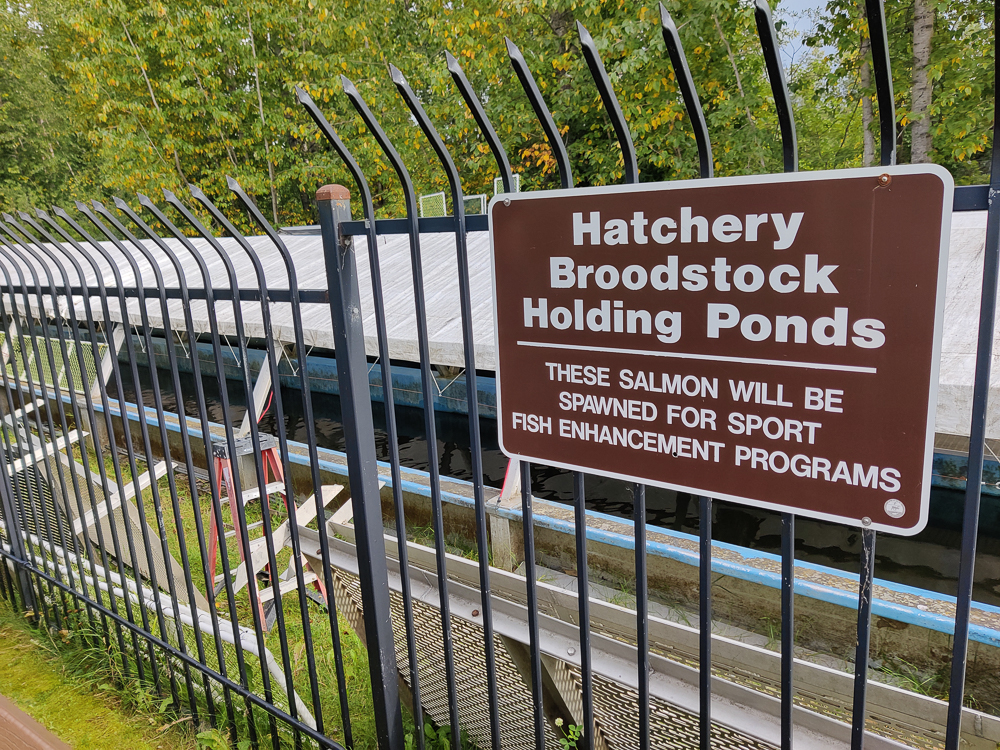
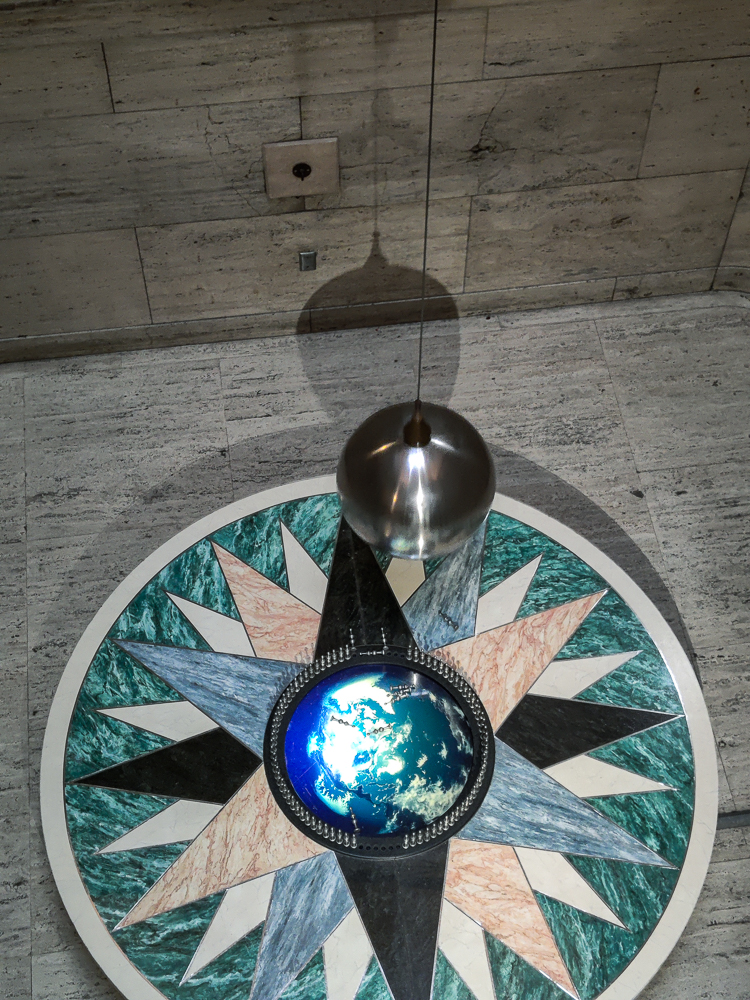
The fairies seem to be one part of a multi-level response to the understanding that watching the weighing of 40 cabbages is not the most thrilling activity. The pumpkin weigh-off involves maneuvering the pumpkins onto the scale using a crane. That sounded exciting! Unfortunately, the cabbages aren’t heavy enough to warrant a crane, so there goes that entertainment option. Some of Olivia’s friends were emceeing the event, helping to move things along by interviewing the cabbages’ humans. Much of the questioning was focused on the cabbage’s name and, if it wasn’t obvious, asking for the provenance of the name. The youth division was up first. We had Dave the cabbage, named as such because “I dunno”. There was also Slug Snack. I liked that one. I wish I had written more down because for some reason, they don’t record the names of the cabbages on the website, just their handlers. That’s not right! Give credit where it’s due.
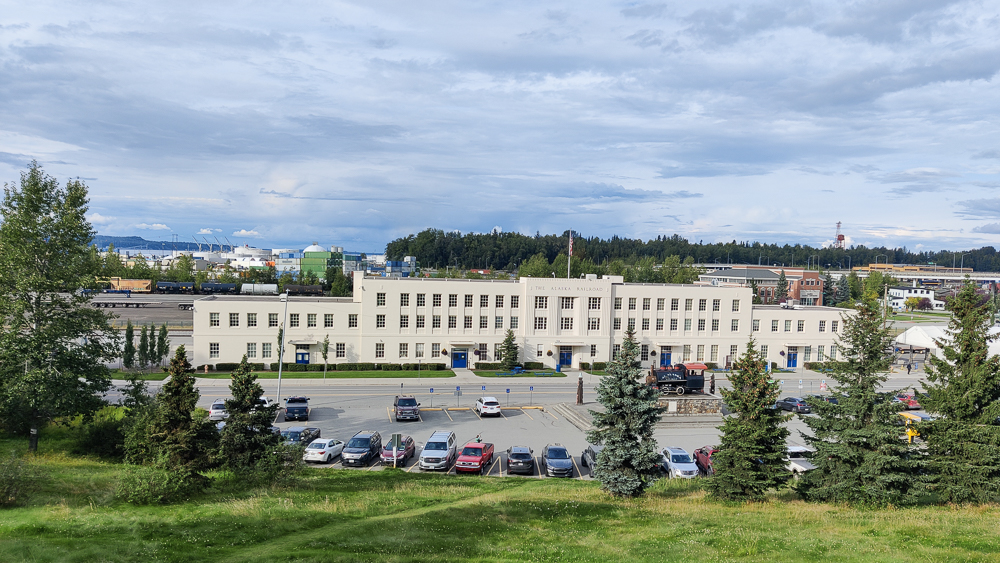
I expected more from the adults, but honestly, they weren’t much better. I did my own judging, quietly giving each cabbage handler a score for their naming skills. I think that should be an officially judged category in the future. Maybe then, people would take it a little more seriously.

Other side entertainments included the recitation of the top 3 entries to the cabbage limerick competition – yes, you read that right. If you’re interested, you don’t need to be from Alaska to enter! You just need to be struck by the cabbage inspiration fairy. (Link to the winners is below.)

The word is that things weren’t too hostile this year because no one had grown anything close to record-setting size. It was a bad summer (in fact, one cabbage was aptly named “Bad Summer”) – too wet and too much temperature fluctuation. I was told that in ultra-competitive years, the competitors (the cabbages, not the humans) need to be locked up to prevent any possible tampering. Yes, that’s right. Cabbage tampering. Also, apparently, cabbages begin losing body weight the instant they’re harvested, so there’s this balance between waiting as long as possible to harvest and also getting your cabbage to the fair on time.

The biggest cabbages were 90+ pounds. The 2024 winner was 97.35 lbs and its human was also responsible for the winning pumpkin. We learned that looks aren’t everything when it comes to cabbage size. Some of the heaviest ones were not the ones that looked the biggest. It’s all about density.

After the fair is over, the cabbages and other produce are donated to “various Community Services and the Alaska Wildlife Conservation Center” (according to the Alaska State Fair website). So enjoy that mental picture – rescued bears eating prize-winning enormous pumpkins and cabbages. Or google it (or find a link in “Sources” below) and you can find actual videos. Or if you’re in Alaska at the right time, you can go and watch it in person!

After the weigh-in, I felt a bit dazed. Olivia and I wandered around a little longer, checking out the rabbits and a bonsai tree display. We ate some fair food for dinner and more fair food for dessert. I went home with a stomach in revolt which feels like an indication of a successful day at the fair.

Sources

Honestly, I recommend checking out all of these links. I found them all very entertaining, and they’re quick reads.

To learn about the cabbage fairies and see some good pictures…

Bushatz, Amy. “The Alaska State Fair cabbage fairies take a final bow, ushering in a new generation.” Anchorage Daily News, 2 September 2023, https://www.adn.com/alaska-life/2023/09/01/the-alaska-state-fair-cabbage-fairies-take-a-final-bow-ushering-in-a-new-generation/

If you’re wondering what a prize-winning cabbage limerick looks like…

Alaska State Fair. “Giant Cabbage Weigh-Off Limerick Contest – 2024.” https://www.alaskastatefair.org/site/result/giant-cabbage-weigh-off-limerick-contest-2024/

If you’d like to learn more about what goes into growing an award-winning pumpkin (there’s a video!)…

Klecka, Joey. “Alaska State Fair crowns giant pumpkin winner for 2024.” Alaska’s News Source, 26 August 2024, https://www.alaskasnewssource.com/2024/08/26/live-alaska-state-fair-giant-pumpkin-weigh-off/

To see some bears eating large veggies…

Alaska Wildlife Conservation Center. “Big Bears Big Veggies 2024.” https://alaskawildlife.org/event/big-bears-big-veggies-2024/

Note: These external links are not maintained. If they stop working at some point, sorry! They worked once upon a time.

Surprise!! Hello, friends! It’s been a LONG time, but we’re back in action! I must say, I’ve missed this. I’ve been feeling for a while like I wanted to get back to blogging, and hey, 2025 is the year! The real question – what am I going to write about? Yes, I’m a “normal” person again. You know, working a job that actually pays me (weird) but that also limits my vacation time (boo). Despite that, I have taken some fun trips since reentering the real world, and I’ve been itching to write about them. So, here we are! We’re going to talk about some new(er) travels and maybe hopefully someday get back to some unfinished adventures from the past. Let’s not get ahead of ourselves, though. For now…

Welcome to Alaska!! Actually, getting back into things by talking about my Alaska travels is kind of perfect. How did this trip even come about? SO GLAD YOU ASKED. I was catching up with my friend Olivia who, fun fact, you already know! (Well, my faithful readers at least.) Olivia and I met in Armenia while we were both volunteering at Aleppo-NGO. We hit it off, and that was the beginning of a friendship that has survived the six (SIX?!?!) years that we’ve been on opposite sides of the world.

Olivia still lives abroad, and we’d been trying to coordinate a trip together. Schedules are tricky things, and we couldn’t nail anything down. Olivia said, “The only thing I know for sure is that I’ll be on home leave at the end of August.” We paused. I thought, “Wait, her home is…” just as she said, “Wait, my home is Alaska. Do you want to come to Alaska??” I think the “yes” was out of my mouth before she even finished asking. I looked at plane tickets. I bought plane tickets. And 6 weeks later, we were reunited! In Alaska!

I don’t know if you remember how we do things here (I don’t know if I remember how we do things here…), but a new place means a new list of first impressions. And so, here we go! My (very long-winded) Alaska (mostly Anchorage / some season-specific to the end of summer) first impressions…

(I promise all of my posts aren’t going to be this long, but I guess I had some pent-up writing energy after all these years.)

1. Flowers

There. Are. Flowers. EVERYWHERE. In people’s yards. In planters. In hanging baskets (we’ll come back to this). In landscaped medians. Sure, flowers aren’t unique to Anchorage, but I’m telling you, whatever people plant other places, there it’s more. It’s like people know that they only have a few months to enjoy them, so they’ve decided to make the most of it.

That’s the other thing. Having that many flowers with the climate what it is… that takes effort and planning. You can’t just wait for nature to make things happen because there’s not enough time. Growing season is late May to September. Those flowers are greenhouse and garage started.

Also, apparently the long daylight hours and summer temperatures make it so that the plants are especially large and vibrant. I believe it.

One of the many flowerbeds in the city. Look at those colors! I’ll include more individual flower pictures for your viewing pleasure as we go.
Two of the infamous hanging baskets… at least, I assume there are hanging baskets hiding somewhere in that mass of flowers.

2. Hanging Basket Capital of the World

I think Olivia made this up. What does it even mean? Who is responsible for handing out this honor, and how is it calculated? Quantity of hanging baskets per person? Per square mile?

Questions aside, there is a great volume of hanging baskets, and they’re all filled with flowers. And the flowers are all still alive which means someone is taking good care of them… or, I suppose, many someones, because with 9.5 hanging baskets per capita (invented statistic), everyone needs to be pulling their weight.

Aside from the summer care, people also do the work to keep the plants alive through the winter, either paying to board them at a greenhouse (no joke) or wintering them in a garage or basement until it’s time to get them ready to go outside again.

3. Weather

I have been to at least 5 places where people claim that their weather is more unpredictable than anywhere else in the universe. “We can have all four seasons in one day!” they say. “It’s like nowhere else!” I’m sorry to break it to all of those people, but this situation is not unique. It is, however, annoying, no matter where it’s the case. Alaska makes the list.

In my opinion, weather predictions are semi-useless always (sorry, weatherpeople), but in Anchorage, I don’t know why we even bothered checking. The best plan is to ignore the weather reports, decide what you’re going to do, and do it – while being prepared to dress for every possibility (LAYERS, waterproof everything, sunscreen, etc.).

4. Long days

This one feels obvious, but knowing it and living it are two different things. I wasn’t even there when the days were longest. Our days were around 7AM – 9PM, whereas the longest day has nearly 19.5 hours of daylight with sunrise at 4:20AM and sunset at 11:42PM! We had some late starts, but even so, we still had plenty of daylight and plenty of time for activities.

The negative of this is that you don’t realize how late it is, and then it gets dark and you realize, “Oh no! I need to be in bed, like, NOW.” Which may also explain our leisurely starts each day. So maybe it all cancels itself out.

The flipside of the long summer days is, of course, the short winter days. I’ve been struggling with our 9ish hours of winter sunlight at home. On the shortest day in Anchorage, they only get about 5.5 hours of sunlight (10:14AM – 3:41PM), and apparently, even then it never really feels like full-on daytime because the sun is so low.

5. Comfy college student dress code

I remember when I was looking at universities, I was drawn to Penn State because I saw people wearing sweatpants to class, and that was exactly the dress code intensity I was interested in (is that pathetic? Oh well). Anchorage fashion is absolutely my vibe – leggings, hiking boots or sneakers, an outdoorsy fleece, a puffer jacket, a headband. Count me in.

Dahlias are such satisfyingly chunky flowers.
So pretty!
Not quite as pretty as the flowers, but here you go: bear trash can. I should have gotten a picture of one in the city, but just trust me. They’re everywhere.

6. Up close and personal with nature – bear trash cans

If you’ve ever been camping in a bear-y area, you are familiar with bear trash cans. I read somewhere once that the challenge with designing these trash cans is that there’s an overlap between the smartest bears and the dumbest humans… but I digress. The point is, these trash cans are used in areas where bears frequent, and they’re designed with the intent that humans can open them while bears cannot.

Now, I had never seen a bear trash can until maybe college, when I started getting out into the wild more. City trash cans at home are, well, regular trash cans. They’re wide open, just begging squirrels and raccoons to come and feast. In Anchorage, every trash can is a bear trash can. The bears don’t care that it’s a city.

7. Life with animals

The bear trash can thing is linked to another observation – people are used to life being somewhat dictated by wildlife. This was strange to me because there aren’t many wild animals at home that would cause me to change my plans. My presence strikes fear into the hearts of foxes and rabbits and squirrels. Deer flee from me in terror. Sure, if I saw a bear, I would stay out of its way, but there are no bears in my neighborhood. Bears live in the woods where “Be Alert for Bears” signs are posted.

The animals of Anchorage are poorly trained. The bears don’t seem to know that they’re supposed to stay in the woods. Olivia’s mom took me on a field trip to see a “neighborhood moose” (a moose… in the neighborhood). It was eating apples from someone’s tree. She had no sympathy, saying that if those people cared about their apples getting eaten, they would have put up netting around the tree. I guess that’s like having a garden with no fence getting eaten by rabbits. Like, what did you expect?

Neighborhood moose, out for a snack.
“Oh, it’s just a baby!” Olivia’s mom exclaimed when we spotted the moose. Moose. Are. Big.

As we drove away, she rolled down the window to tell some people who were jogging with a dog that there was a moose up ahead. They thanked her and just turned around, rather than taking a chance with the dog/moose combination.

Olivia said that in the week before I came, she was jogging on the coastal trail (a path along the water in downtown Anchorage) and saw three black bear cubs on the trail. Her thoughts went from, “Oh, cute!” to, “Wait, where’s mom?” anddd she turned around and went back the way she came.

Okay, I mean, all of this makes sense to me. Of course you need to respect nature in a different way when you’re living with animals like that. But it’s just something I never have to think about, whereas there it’s a part of life.

Okay one more moose picture because I’m still not over the whole “seeing a moose in the neighborhood as it eats your neighbor’s apples” thing.

8. “Lower 48”

This is another “makes sense but I’d never thought about before” observation. People are constantly talking about “the lower 48” aka the contiguous USA. I found this fascinating because down here in the lower 48, there is no catch-all term for the rest of the “mainland” states. “The other 47”, perhaps? But when would you ever use it?

I also felt bad (not really) because it’s like Alaska is constantly thinking about us down here, but how often do any of us think about them way up there? Poor Alaska.

9. Acting like Alaska is not far away

People in Alaska, at least the ones who travel to the lower 48, talk about traveling back and forth like Alaska isn’t really that far away. If I didn’t know any better, I would think that Alaska was located smack dab in the middle of the US. People are “just in town for the weekend” or are “back and forth”. So casual. Multiple times, I found myself listening to conversations where I felt like I needed to jump in and clarify, “I’m sorry, we’re talking about LA like Los Angeles? Like the LA that isn’t close to here? You’re going there? For the weekend?”

Anchorage to Seattle is a 3.5 hour flight with an hour time difference. Anchorage to Los Angeles is 5.5 hours. Anchorage to Philadelphia is a 4-hour time difference and at least 11 hours of travel. IT IS NOT CLOSE. Boggles. My. Mind.

Flower break!

10. Private planes and pilot licenses

Alaska has the highest percentage of licensed pilots per capita in the USA. A 2023 article said that 1 in 78 Alaskans is a licensed pilot which is 6x the number anywhere else in the US.

This makes sense because Alaska is not the most accessible place. Only 20% of Alaska is accessible by road. Juneau, the STATE CAPITAL, isn’t accessible by road, only by boat or plane.

This also means that there are a ton of small, private planes. On a nice day, it sounds like they are constantly flying overhead. There are even some houses with airplane garages and neighborhood runways! Many people have houses outside of Anchorage that they travel to via plane.

Can you spot the runway? Can you spot the AIRPLANE sitting in front of someone’s garage? Can you spot the garage that looks suspiciously big enough to fit said airplane??

We also drove past the Lake Hood Seaplane Base… I should have taken a better picture but was too busy gaping. There are nonstop seaplanes and little plane huts. It’s wild.

A couple of seaplanes with some huts.
Since I didn’t take a good picture of the full scope of the area, please appreciate this snip from Google maps satellite view. And this isn’t even the whole thing.
In case you’re having trouble seeing what we’re looking at in that last picture… SEAPLANES. SO MANY SEAPLANES.

11. Balto

If you’ve never heard of Balto, the sled dog that saved the town of Nome, Alaska from a 1925 diphtheria epidemic, you need to watch more animated movies.

To summarize, the doctor in town quickly raised the alarm and asked for antitoxin to be sent ASAP. Without it, the entire town could be wiped out. The nearest supply was in Anchorage, but the only way to reach Nome in the winter conditions was by using the dogsled mail route. (The port was closed for the winter, there was no train to Nome, and planes at the time couldn’t handle the trip.) A train took the serum north, but it still needed to travel 674 miles west by dogsled. It was estimated that it would only keep for 6 days on the trail, 3 days fewer than the fastest travel time recorded.

A relay was organized with 20 mushers and over 150 dogs. The conditions were horrible, with temperatures of -50°F and colder, blizzard conditions (snow and wind), and January winter darkness. Multiple mushers got frostbite. Many dogs died along the way. The journey was completed in 5.5 days, and thanks to the quick response, fewer than 10 deaths were recorded in Nome (though there were likely additional unreported deaths in the surrounding Alaska Native communities).

Many people think Balto gets outsized glory considering that he and his team traveled only the final 55 miles. Togo, another lead dog, led his team 170 miles to pick up the serum and then another 90 miles back to hand it off to the next relay team, covering one of the most dangerous parts of the journey. Most other teams traveled 25-40 miles.

ANYWAY, the point of all of that is: Balto gets a LOT of glory. You can find him everywhere! I have pictures with THREE Balto statues from my time in Alaska. I’m sure that’s only a small sampling of the full supply. If ever you see a statue of a dog (even in NYC Central Park), I bet you $1 it’s Balto.

Whew! Okay, that was a lot. I hope you’re feeling slightly acclimated to Alaska. There’s more to come! Until next time…

Me and Olivia with Balto in downtown Anchorage.
Me and Olivia with Balto at the visitor center in Palmer.
Me with Balto outside the Iditarod museum.

Sources

I decided to start including my research sources in case anyone is interested in some additional reading (or feel free to ignore if you’re not). Some are pretty entertaining. Also, now you can know that, when I post things that seem absolutely insane, I’m not making things up… I’m just believing and re-posting things that other people made up. (English teachers – I know these are improper citations, and I don’t care.)

Flowers/Hanging Baskets

Anchorage Parks and Recreation. “Frequently Asked Questions.” Municipality of Anchorage. www.muni.org/Departments/parks/pages/ghfaq.aspx

Lowenfels, Jeff. “Alaska is the land of hanging baskets. Here’s how to store yours in winter.” Anchorage Daily News, 7 September 2023, www.adn.com/alaska-life/gardening/2023/09/07/alaska-is-a-land-of-hanging-baskets-heres-how-to-store-yours-in-winter/

Planes (I barely used this article, but it was fascinating)

Johnson, Acacia. “The lifeline of flying: the pilots connecting remote communities in Alaska.” The Guardian, 22 May 2023, www.theguardian.com/artanddesign/2023/may/22/its-almost-spiritual-the-female-pilots-connecting-remote-alaska

Balto

National Park Service. “Togo.” www.nps.gov/people/togo.htm#:~:text=Though%20Balto%20received%20the%20credit,at%20the%20age%20of%2016

Alaska Mushing School. “The 1925 Serum Run.” www.alaskamushingschool.com/learn/1925-serum-run-to-nome/

Note: These external links are not maintained. If they stop working at some point, sorry! They worked once upon a time.