By the time I hit day 4 of my time in Istanbul, I decided that I need to step up my game if I wanted to leave the city feeling like I had seen what I wanted to see. I always have these grand plans of waking up early, working out, sightseeing, getting home at a reasonable hour, being productive, and going to sleep at a time that allows me to wake up the next day to do it again without feeling like I’m dying. As you might expect, things rarely go this way. Usually I have one day where I wake up, work out, sightsee… and then end up meeting people and hanging out and getting back late… and then either passing out or staying up late to get work done. And the next day, the plan falls apart before it even starts.
As much as I love routine and being productive, I’m making a huge effort not to skip out on opportunities to spend time with people because that’s always what I remember the most about my trips. I have so many awesome friends that I never would have met if I had stayed in my comfort zone. My comfort zone, by the way, is a place where I never talk to strangers or put myself in a position where I’m uncertain about the outcome. Comfortable, yes. Boring, also yes. So yeah, things didn’t go exactly according to the grand plan, but I think they turned out even better.
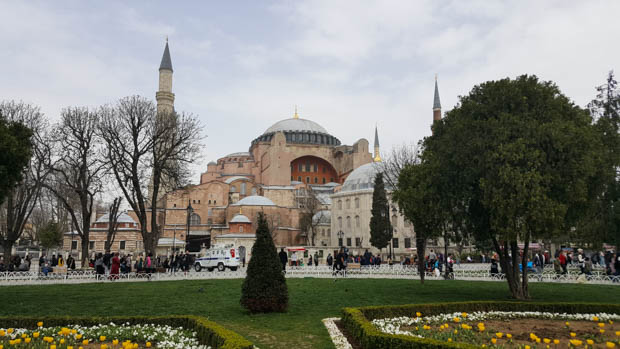
Point of that tangent was that by day 4, I still had a lot to see. Since I just needed to get moving on SOMETHING, I picked the Hagia Sophia (Ayasofya in Turkish) as my destination for the day and was off.
We learned about the Hagia Sophia in my architecture history classes in university, but heck if I remember anything from those. That’s not true, I do remember a few things, but apparently not the historic details of the Hagia Sophia because I felt like I was going in blind again. No problem! I had a written guide from the internet, and with no expectations, you’re setting yourself up to be amazed.
Top of a column (capital) from the second church
The current Hagia Sophia started out as a church, built in 537AD by the Byzantines. There were two churches previously built on the same site. First, the Great Church was built in 360AD and destroyed in 404AD during riots that took place in the city. A replacement church was built in 415AD and destroyed in 532AD during a revolt that burned down half the city. When the last structure was built, Europe was in the Dark Ages, and Istanbul was emerging as a center of Christianity.
There are a few remaining parts of the second Hagia Sophia predecessor from Theodosian timesI assumed this was a ceiling coffer, but I could be wrongYou can see how massive the space is
The main dome of the structure is 182 feet tall and 104 feet wide, and at the time of its construction, it was the largest dome in the world. It held that title for 900 years until it was overtaken by the Florence Cathedral (fun side fact: construction on the Florence Cathedral was started before anyone knew a way to complete the dome. They figured that was a problem for the future generations to figure out – since building a church took an eternity – and the final solution was some brilliantly engineered machinery that no one besides the inventor thought would work). The entire Cathedral of Notre Dame in Paris can fit inside!
The Crusaders took over in 1204, and for almost 60 years, it was under the control of the Roman Catholic Church. Shockingly (not), during this time, many of the riches inside were stolen and sent to Italy, though the golden ceiling mosaics were left mostly untouched. I guess those are slightly harder to steal than other things.
When the Ottomans took the city in the 1450s, Hagia Sophia was converted into a mosque. This involved covering or removing any images of living beings, and the mosaic ceilings were plastered over and forgotten about. Despite this unfortunate redecorating, the conversion to a mosque kept the building safe and maintained. Four minarets were added to the outside, and the prayer niche was moved to face Mecca instead of Jerusalem.
The minarets were added when it was converted to a mosque. You can see that they don’t match the rest of the building.Fountain for washing before Muslim prayerClose up of the fountain
At the fall of the Ottoman Empire, the mosque was closed and converted into a museum. The golden mosaics were rediscovered beneath the plastered ceilings and were in generally good condition. Now, the building is a clear mix of Christian and Islamic elements with many of the furnishings remaining from the mosque, including giant, calligraphed medallions, and the original Christian architecture and décor.
View of the main dome
I had no idea what to expect, I had no idea how long it would take me to visit, and I definitely went a bit later than I should have… oops. It wasn’t a big deal though because I wasn’t in Istanbul at a terribly busy time, so waiting in the line to get inside only took maybe 40 minutes. I people-watched to entertain myself, and before I knew it, I was inside.
The building is under construction, but it doesn’t even matter. I mean, I’m sure it would have been great if half of the main hall wasn’t filled with scaffolding, but even with it, you could see how impressive the space is. The ceiling looks like it’s miles away, and since there aren’t big, bulky columns or anything crowding the dome, it seems even bigger. I spent my first 20 minutes staring at the ceiling and trying not to walk into anyone.
The place is so big that even though it was crowded, it didn’t feel like it was. It was probably loud too, but sound had a way of just getting lost. Sometimes I like to sing worship songs when I’m visiting churches (what can I say? They get me in the mood), but I don’t want anyone to hear me… so spaces like that are perfect. I sang to myself, and as soon as the sound left me, it was lost to the open space and the murmurs of the people around me.
So many chandeliers!
From here, I’m going to use the photo captions to give you a mini-tour… I think that will work out the best.
Entrance and ceiling mosaics
Mosaics in the exit corridorDoors supposedly made with a wooden core of wood from Noah’s Ark. I’m sure it’s true…This mosaic is the “Donation Mosaic” showing Mary with baby Jesus. Constantine is on the right offering a model of the city, and Justinian is on the left with a model of the Hagia SophiaOne of the most interesting things, in my opinion, was the variety of marble that was used in the construction. It’s kind of like they went to the marble warehouse, couldn’t decide which one they liked best, and decided to leave with one of everything.Funky, right?Weeping column. I’m not sure which is right, but I’ve heard two different stories about what you’re supposed to do here. First is that you stick your thumb in the hole and spin your hand counterclockwise. If you make it all the way around, your wish comes true! The second is that the column was blessed and sticking your finger into the hole can cure your sickness… though I assume it probably just ended up spreading sicknesses because I can’t imagine they ever cleaned it.
The Mimber, where the Imam stands during Friday services.The prayer niche, adjusted to face Mecca instead of JerusalemI’m obsessed with all of the detailingThe Omphalion, where Byzantine Emperors sat during the service and also where their coronations took place
Golden gates because why not?
Going upstairs…
Ramp to the upper galleryLeave no surface un-mosaic-edMary holding baby Jesus and sitting between Byzantine Empress Irene and Emperor John II (ruled from 1118-1143AD)Jesus with Byzantine Emperor Constantine IX (ruled 1042-1055AD) and Empress Zoe.Jesus with Mary to the left and John the Baptist to the right. This was made at the end of the Crusader occupation of the church.
Casual ceiling paintings
Booo construction scaffolding 🙁In the upper galleryView of the BosphorusBlue Mosque from the windowBaptistery basinButtresses added during Byzantine times
One of the negatives and also sometimes positives of extended travelling is that you don’t necessarily have time to do a lot of research. I make sure that I hit the major sights (thank you, tripadvisor) and put a LOT of trust in the people working reception at my hostel to tell me what I should go see. Sometimes, that means that you know you should visit something, but you have no idea what it is… and then you go there and learn about it and are like, “DUDE! THIS IS SO COOL!”
SO COOL
For me, that happened with the Basilica Cistern, or Yerebatan Sarnici in Turkish (Sinking Cistern). The “basilica” part of the name comes from the fact that there was formerly a basilica on the site. I had no idea what it was, but I saw a bunch of tour groups going and the self-guided walking tour I was following mentioned it, so I figured I should check it out. I know, all of this makes me sound like a complete idiot, but sometimes the best way to learn about something is to just go and experience it (things I tell myself that may or may not be completely true… sometimes it’s probably good to have a clue, but that’s not the way I’ve been operating recently).
The Basilica Cistern was constructed during the Byzantine days, between 527-565AD by Emperor Justinianus I. It’s a ginormous underground water cistern, 140m x 70m and with 9m tall columns. The capacity is around 100,000 tons of water which translates to 26.5 million gallons. There are 336 columns total, placed in 12 rows of 28 columns. These are joined by arches and vaulted ceilings that carry the weight of the city above. The brick walls are over a meter thick, and they and the floors are plastered with a thick layer of special brick dust mortar for waterproofing.
Seemingly endless
The cistern was in active use until the Ottomans conquered the city. They preferred fresh water as opposed to sitting water, so the underground reservoirs went mostly unused with the exception of feeding the nearby Topkapi Palace gardens and a few homes. In the 1540s, a Dutch traveller visited Istanbul in search of Byzantine monuments. When he noticed residents pulling water out of their floors, they directed him to a staircase that led into the reservoir. He explored it using a small boat, took measurements, and published his findings in a book that piqued more Western interest in the cistern.
There were repeated renovations in the 1700s – early 1900s to reinforce various part of the structure, and it wasn’t until a major 1985 restoration that the complete scale of the cistern was discovered. After removing 50,000 tons of mud (and probably trash and bodies and who knows what else), the full height of the columns was visible.
You can see that the column capital (the thing at the top) on the closer column is different from the column behind it
The columns are all made of different materials and are of different architectural styles because, in classic ancient fashion, they were swiped from other structures. They always say that it was from ruined structures, but I like to imagine that there was a big column-pilfering problem in ancient times and sometimes people would wake up in the morning to discover that the columns on the local temple were gone… and then they would go steal some others and so on until someone finally sucked it up and just made some new ones. Estimates are that it took 7,000 slaves to construct the cistern, and that doesn’t even include the workforce required to build the 12-mile long aqueduct that fed it.
Check out those ceilings!
Tear column
There are three columns of particular interest. One is carved with the images of eyes and tears, paying tribute to the hundreds of slaves who died during construction. (It’s a good reminder that all of this amazing ancient stuff usually came at a high human cost.) The other two are normal columns, but the bases are two big Medusa heads that scholars think came from the Temple of Apollo near Ephesus (another city in Turkey), but no one knows for sure. One is sideways and one is upside down, a configuration explained by scholars as showing the change from pagan religion to Christianity. Other legends say that they were placed there for protection and are oriented that way to keep them from turning people to stone. I think that they were just so tired of moving them that they said, “This is close enough, we’ll leave them like this.”
Hey, MedusaThe girl who took this for me definitely thought I was a weirdoUpside down selfie!First view when walking down the stairs
Now, there are walkways for tourists to tour the cistern, unfortunately replacing the boats that were formerly used. That would have been awesome.
As I took the steps underground, my jaw literally dropped when I got my first look. It’s huge. I know, like duh it’s huge, but when you see it in person and realize that you’re underground, it’s unbelievable! And it was chilly down there which I suppose would have been nice if it wasn’t also chilly outside. My brain couldn’t even imagine the whole thing filled with water, and with no lights down there it would have been CREEEEEPY. Eek. Imagine going in there while it was full, with no clue what you were going to find in a little boat in the darkness with just a lantern. No, thank you. It probably smelled weird too.
I’m obsessed with this brick work
Anyway, despite the fact that I didn’t get to ride on a boat, it was spectacular. The space seems to go on forever, and when you think about the logistics that went into actually constructing it, it’s mind-blowing. All of that. Underground. Over 300 huge columns. So. Many. Bricks. And the ceilings are super high which means they had some sort of scaffolding. And then the aqueducts to feed it! Geez!
After wandering around much longer than anyone else and in a constant state of marveling, I made my way to the exit. Then, if you aren’t already aware of the expanse of the thing by the time you leave, you pop up on the surface, blocks away from the entrance. And it’s bright outside and noisy and bustling and you’re like, “WHAT IS HAPPENING?” because you just emerged from this underground cave and now you’re in the middle of the city. The whole transition was very confusing, and I felt like a time traveler or something.
In conclusion, the Basilica Cistern is super cool, and if you’ve ever wanted to feel like a time traveler, it’s the place for you. Except now that I’ve warned you, maybe you’ll just go and not feel it and think that I’m insane. Maybe I am.
In case you were wondering (or worried), no, I didn’t fall off a cliff. I’m alive and well and just very, very far behind on writing. I’ve been keeping up my journal at least because if that’s a sloppy mess, no one besides me is going to read it… which is good because more than once, I’ve fallen asleep while typing and woken up to unintelligible nonsense on my computer screen.
I’m going to attempt to get back into the game because I’ve missed it! Writing about the things I’m seeing and doing forces me to learn so much more about them than I otherwise would, and that has added so much value to my travels. I know, I could just learn for the sake of learning, but when you’re learning to explain to someone else, you have to have a much fuller understanding of the subject. That makes me try way harder than I otherwise would to really get the complete picture.
During my morning run along the BosphorusFlowers!
So, excuse the side note, and let’s get back to Istanbul! My first few days were not the most sightseeing-efficient. Day 1 was a complete mess because I was so tired. It basically consisted of me eating, trying to keep my eyes open until my bed was ready, and taking a very long daytime “nap”… and then waking up from that nap, sitting in bed for a couple of hours, and going to sleep for the night. I kind of considered going for a walk during the “sitting in bed” time, but it was raining and ugh and instead I just sat.
I was determined to make day 2 better… and it was raining again. I told myself that the day would be counted as a success if I just managed to make myself leave the hostel (I know, this is not a realistic life I’m leading at the moment), and that was enough motivation to make me step outside. I attempted, and failed, to take a guided walking tour of the city (I couldn’t find the meeting point because I was still a mental mess), so I defiantly decided that I didn’t need a tour guide anyway and found a self-guided walking tour online.
My journey started in Old Town at the site of the old Hippodrome, center of the Roman Constantinople. The Romans always crack me up because they always have the same priorities when it comes to outfitting newly-conquered cities to the Roman standard. Essential parts of a city, according to the Romans: sporting facilities, aqueducts, baths. So fancy.
HippodromeObelisk of Theodosius
Of course, one of the first things to be constructed were baths because hygiene and what on earth are you supposed to do with your social life otherwise? And then, what is a city without a hippodrome for chariot races?? That was constructed near the beginning as well, and it was eventually expanded by Constantine to include stands for 100,000 people and epic columns and statues and gates to make it worthy of being the hippodrome of “New Rome”. This was the social and geographic center of the city from around the 200s-1450s AD when the Ottomans took control. It started to fall into disrepair and was eventually turned into a park, which is its current state today. Most of the Roman monuments are gone, but a few still live in the park: two obelisks and a broken column.
The first obelisk, the Obelisk of Theodosius, is covered with hieroglyphs and, like practically every single “Roman” obelisk, was stolen from Egypt. This one dates back to 1450BC! It was moved to the Hippodrome in 390AD, and only the top 1/3 of it remains which is completely insane because it’s still huge. The rest was damaged, they think, during transportation and re-erection… and my response to that is, DUH! What do you expect when you try to move a 60m tall piece of granite???
Base of the obelisk. It shows Theodosius crowning the winners of chariot racesSerpentine Column
The broken Serpentine Column is situated next to the obelisk. This was built in the 400s BC by the Greeks after a battle victory, and supposedly it’s made from the melted-down shields of the Persian soldiers who they defeated. It was 8 meters high, and the twists in the column are the bodies of three serpents, formerly with heads that held a golden bowl. Unfortunately, it was plundered 300 years ago, and this little stump is what remains, though they did manage to find a piece of one of the serpent heads.
Finally, the Constantine Obelisk sits on the other side of the column. It’s a bit sad looking now, and I’ll give you one guess why… That’s right, it was plundered! It seems like everything in the Roman universe is somehow tainted by theft. It was built in the 10th century by Constantine, and that sad stone exterior used to be covered with gilded bronze plates that depicted the military triumphs of his grandfather, Emperor Basil I. During the Crusades, these were stolen and melted down.
The very sad looking Constantine Obelisk
There used to be many other monuments in the Hippodrome. Many of them were probably stolen before they were placed there, and later they were stolen again to be placed elsewhere. The whole concept of stealing a monument still just baffles me. How? And why? And how?? “Ah, this million-ton bronze sculpture would look fantastic in my garden, right next to the million-ton pointy rock that I acquired in Egypt. Men! Load it up!” That’s how I imagine those decisions took place. That was the ancient way I guess.
The Hippodrome also contains a not-stolen and not-Roman gift from the German Kaiser Wilhelm II after he visited in the late 1800s. Eh. He probably stole it from someone. Anyway, it’s a fountain with a beautiful gold mosaic ceiling. I don’t know about you, but no one’s ever given me a gift like that. Also, what to do with it? “Thank you, Kaiser, for this wonderful gift. We will put it… uhhh… in the Hippodrome! Right in the center of the city and mostly because we have a bunch of open space there so why not.”
German Fountain. They built it in Germany, deconstructed it, shipped it, and reconstructed it here.Looking up into the German Fountain
Constantine’s Great Palace was right next to the Hippodrome, and almost nothing remains… except for some amazing mosaics that were discovered in the 1930s underneath shops in the nearby Bazaar. More mosaics were found in the 50s, and they were brought together to form the Mosaic Museum. I’m personally a huge fan of mosaics, so I was completely sold on going. The most substantial mosaics formed the floor of a courtyard in the palace and date back to 450AD.
The Bazaar where the Mosaic Museum is located
They estimate that the floor used 75-80 million cubes with about 40,000 per square meter. They’re very small, about 5mm per side, and that allows for some spectacular detail. It also must have taken forever to make. The main part of the mosaic is composed of a series of scenes of varying subject matter: people hunting, animals fighting, mythological stories, pictures of rural life, etc. It’s pretty spectacular. I can’t even imagine seeing it in its original form with columns lining the sides. I bet you were even allowed to walk on it back then.
So tiny!The grand mosaic floorCheck out the detail!
The surviving portion of the floor is about 250 square meters… and guess how big they think the entire thing was? SEVEN TO EIGHT times that size. That’s more than the area of 1.5 Olympic-sized swimming pools. How do you even start that project? How do you make images that actually look how they’re supposed to look?? I thought that painting was hard on a large scale, but this is next level.
The Mosaic Museum
Some mythological creatures, some animals devouring other animals… the usual.I seriously don’t understand how they made these
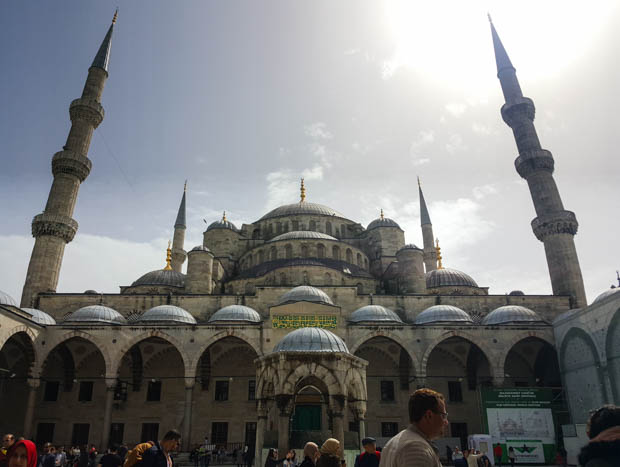
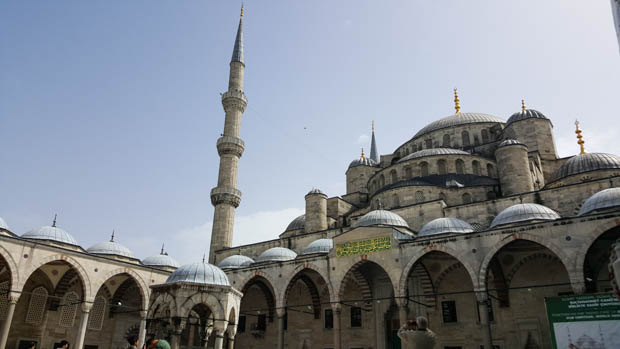
The main portion of the Grand Palace once stood on the site of the famous Blue Mosque. Unfortunately, when I visited, it was closed for renovations and I don’t want to think about it or I’ll be sad. The mosque was completed in 1616AD after only 7 years of construction! That may seem like a long time, but when you think about the fact that so many of the world’s epic churches took centuries to complete, it was basically finished in the blink of an eye.
There are six minarets, and this is what the Imams (worship leaders) used to climb to sing the Call to Prayer. Five times a day, right before the five Muslim prayer times (dawn, midday, afternoon, sunset, night), the Imams sing to invite people to come to the mosque to pray. Back in the pre-loudspeaker days, the Imams would climb to the top to sing, but now they just use a microphone that’s connected to the speakers in the minarets. Kind of a bummer in my opinion. The five daily prayers each take about 5-10 minutes and are meant to purify the soul, teach discipline and humility, and remind you to think about God throughout the day.
With the construction, only the courtyard leading into the mosque was open. At least that was something. I’m sure the inside isn’t that cool anyway (lies I tell to myself. I’m sure it’s amazing).
Ignore this man who walked right in front of my picture
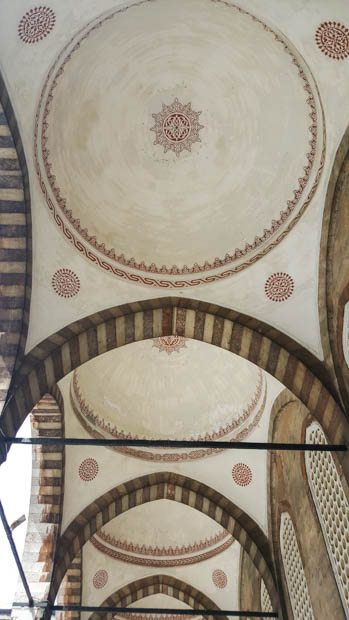
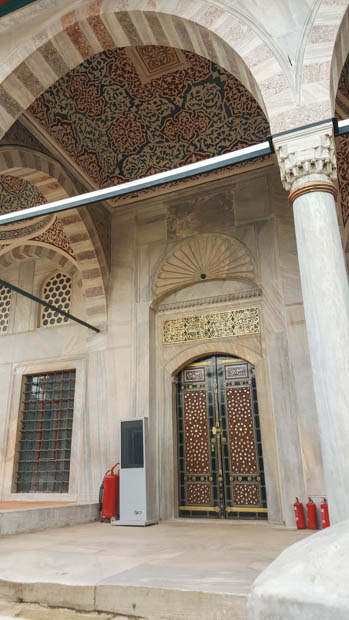
Ceilings around the courtyard
Between the Blue Mosque and another iconic structure that I’ll talk about in a later post, Hagia Sophia, is Sultan Ahmet Park. This is the site of the old Roman Baths of Zeuxippus (those Romans have to have their baths!), and there are Turkish bathhouses nearby that you can still visit today.
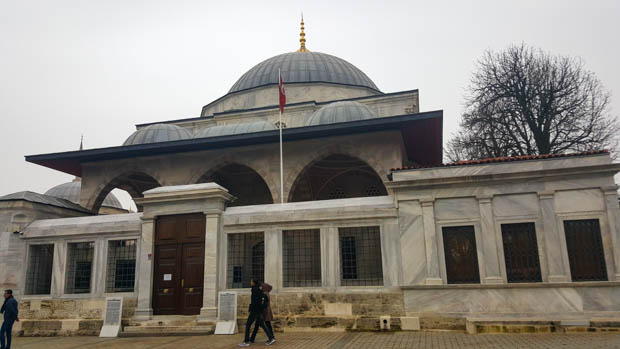
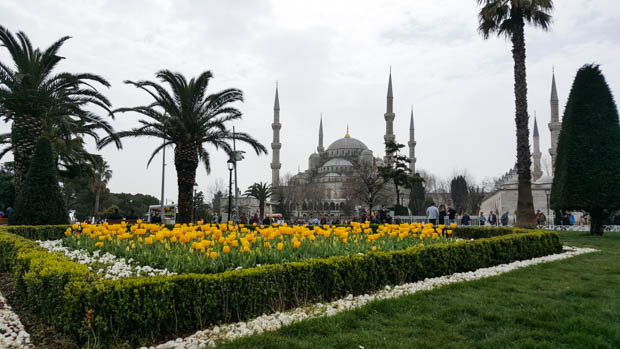
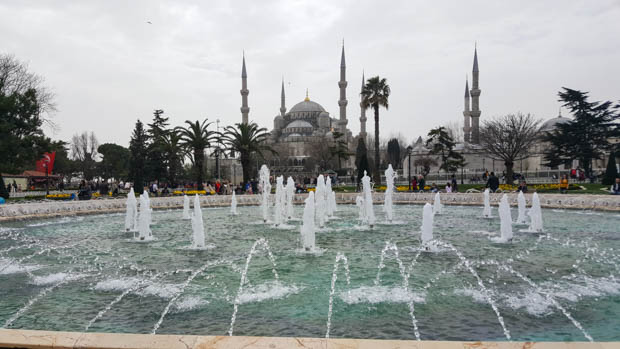
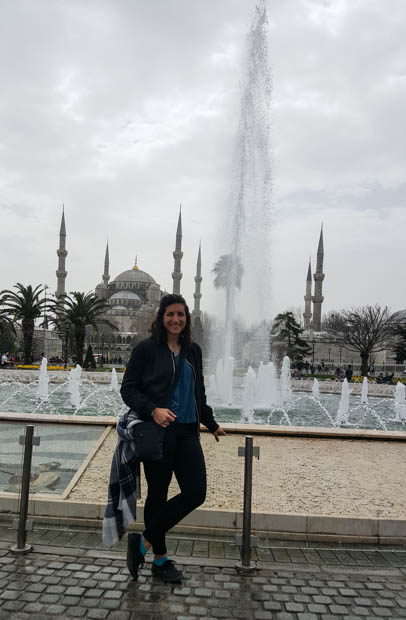
Sultan Ahmed’s tomb, located next to the Blue MosqueIt was under restoration when I was there, so I couldn’t go in, but you can see how crazy intricate even just the outside isBlue Mosque from Sultan Ahmed ParkMore Blue MosqueMe, kind of with but mostly in front of the Blue Mosque (this is what happens when you ask strangers for pictures)Hagia Sophia
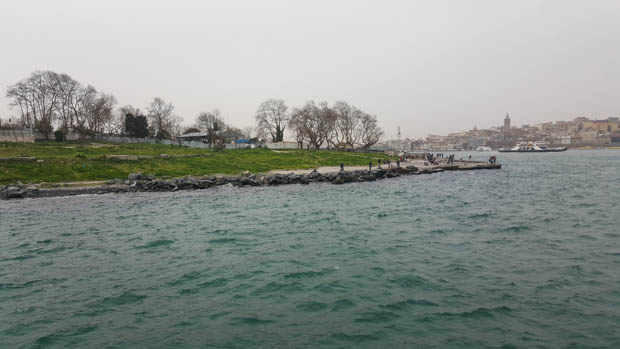
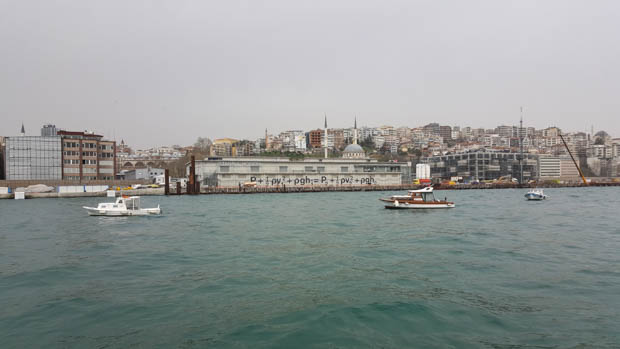
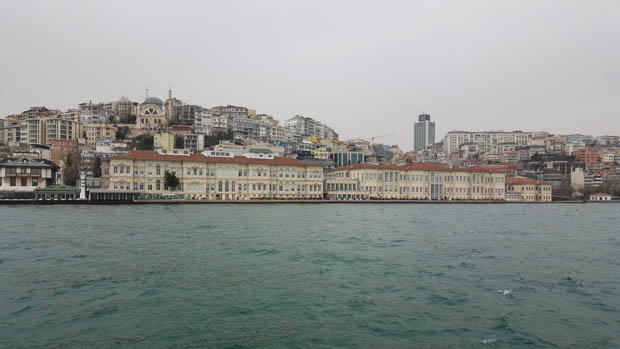
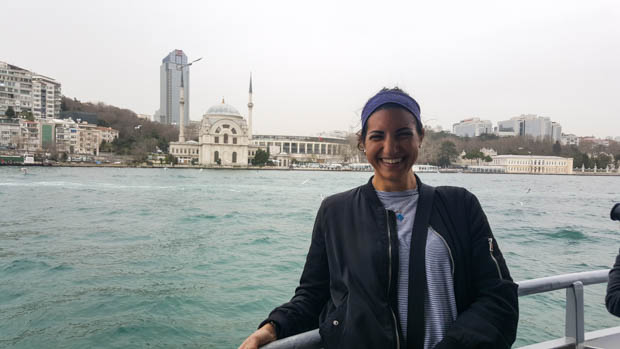
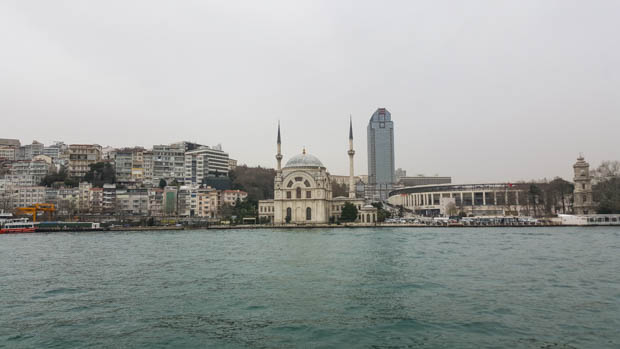
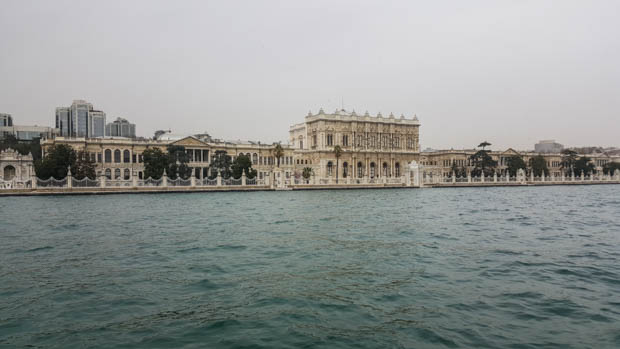
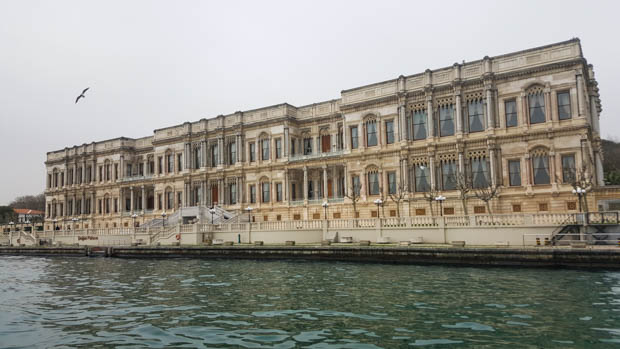
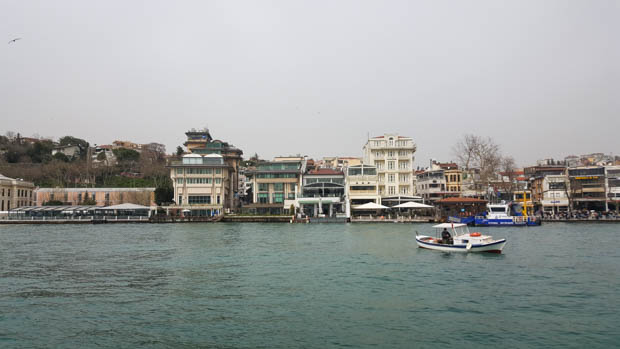
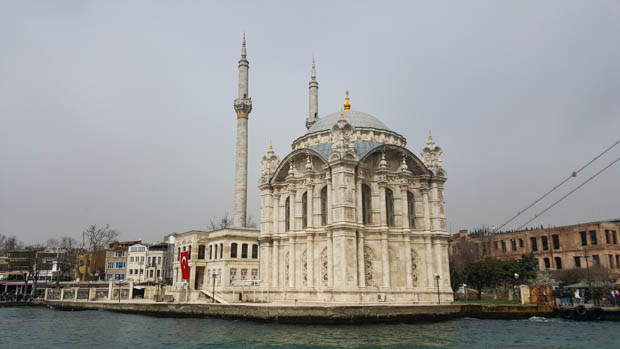
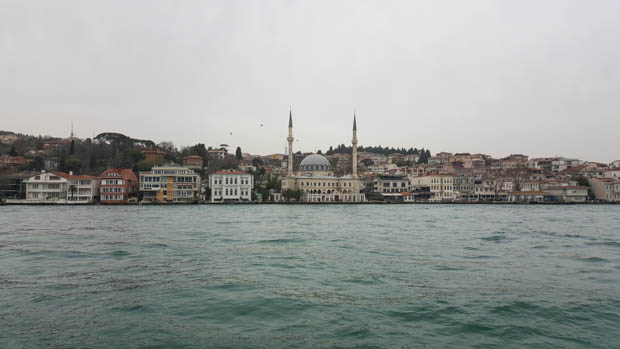
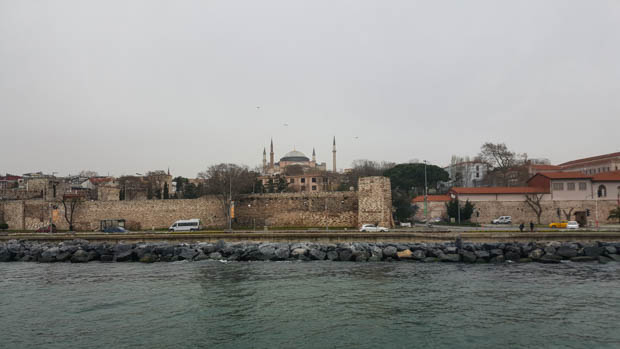
With my Old Town tour basically finished, I decided to take advantage of the beautiful weather (sarcasm… it was still gross out) and go on a Bosphorus boat cruise. Why? Don’t ask me. These are things that you should do on a nice, pretty, clear day. But sometimes opportunities present themselves at less-than-ideal times. I got a good deal on the ticket, so I went despite the weather. Enjoy the pictures and pretend that it’s not cloudy or foggy or gross.
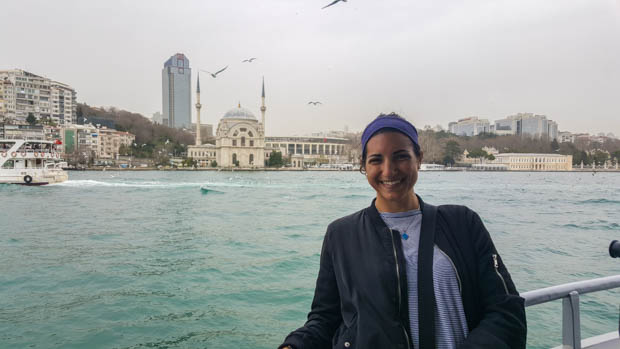
Pretending I’m not coldDolmabahce MosqueDolmabahce Palace
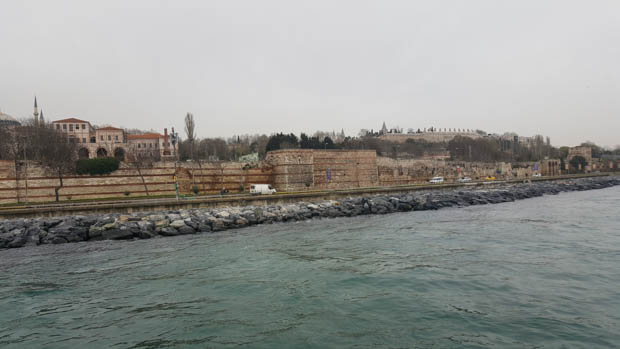
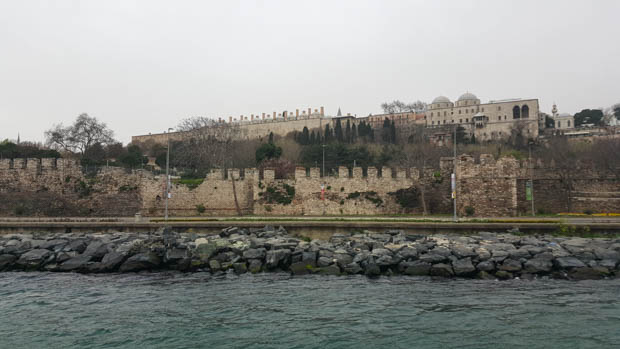
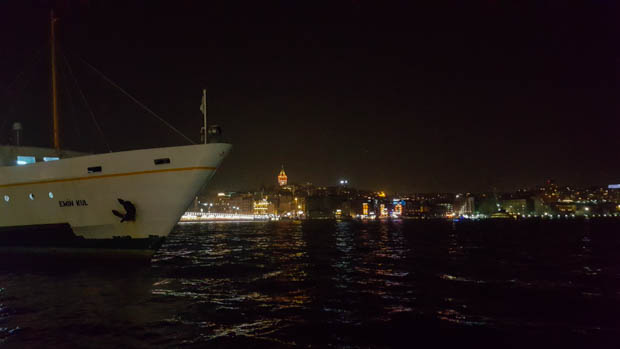
Hagia Sophia and the old city wallsTopkapi PalaceMore city walls and palace viewsFailed attempt to take a night photo with my phone camera
Istanbul is one of those cities where, if you don’t understand the history behind it, you’re left scratching your head. Architecturally, it’s a huge mash-up that tells the story of the city’s past. Back when I was in university, we had a project in architecture studio where we made architecture collages. The first person got a blank board and a name of a building, and they built a model of that building. They passed the board to the next person who got another random building, and they had to find a way to integrate that into what had already been built. The board was passed again, and the last person had to add in another architectural component. The final result was weird and interesting because each collage was a confusing mix of different architectural styles, and if you didn’t understand the project, you would have stood there wondering what crazy person put the models together. Similarly, if you don’t understand the story behind Istanbul’s growth and development, the architecture of the city doesn’t seem to make much sense.
Let’s start from the beginning… If you look at a map, it’s obvious why Istanbul is located where it is. To the north is the Black Sea, to the south the Sea of Marmara, and right through the middle is the Bosphorus Strait, connecting the Caucasus and southeastern Europe to northern Africa and the Middle East. It’s like a trader’s dream.
The Bosphorous!
The first inhabitants of the area may have arrived as early as 3000BC, but a true city wasn’t established until the 600s BC when Greek colonists settled there because of its location. They were led by King Byzas, and in typical, modest-king fashion, he gave the city its first name, Byzantium, after himself.
Rome conquered Greece in 149BC and moved into Byzantium soon after. The Romans started to build it up into a Roman city, complete with city walls, a Roman layout, a hippodrome, and monuments to various Roman battle victories. The Roman Empire was divided in two with Rome as the western capital and the newly named “Augusta Antonina” (really rolls off the tongue, doesn’t it?) as the eastern capital.
Constantine came to power in 324AD, officially moved the capital of the Roman Empire to the city, and renamed it “Nova Roma”. He wanted to rebuild the city and fill it with epic monuments like those in Rome. After Constantine’s death in 337AD, the city was renamed Constantinople in honor of him. (The people in that city must have had a serious identity crisis from all of the name changes.)
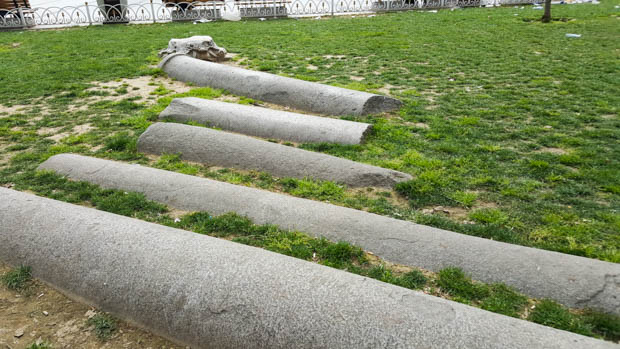
Examples of random things you can find around the city because of its complicated past: columns, probably from Roman times, half buried in the middle of a random park in the city.
In 395, the Empire was split into Eastern and Western halves, and after the Western Empire fell, Constantinople and the Eastern Empire were still going strong. Between the time of Constantine’s rule and the eventual conquest of the city by the Crusaders in 1204, there was a lot of action. The walls were expanded, aqueducts and churches were built, and the city resisted multiple attacks by Arab conquerors. There were various revolts in the city, buildings were destroyed and rebuilt, and the emperors continued to build ever more impressive and ridiculous buildings.
In 1204, Catholic Crusaders from Italy broke through the city’s sea walls and took control. During their brief period of control and in typical Crusader fashion, they stole all sorts of items from the palaces and churches and sent them back to Rome, where many of them remain to this day.
The Romans managed to push the Crusaders out in 1261 and reclaim control of Constantinople. They never reached the strength of their former occupation and were weakened further by the repeated attacks of the Ottomans. Finally, in 1453, Sultan Mehmed II was successful in conquering the city, and Constantinople became part of the Ottoman Empire.
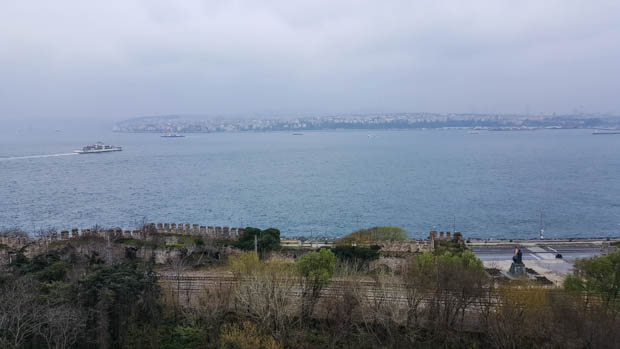
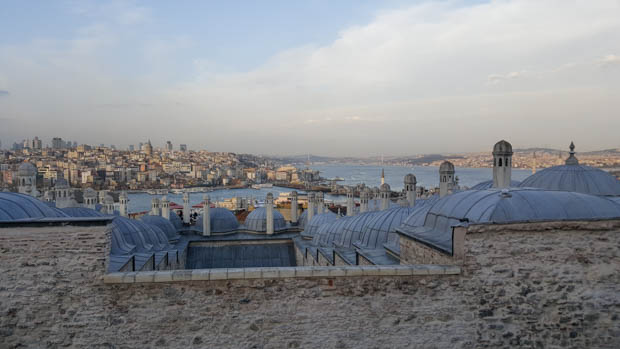
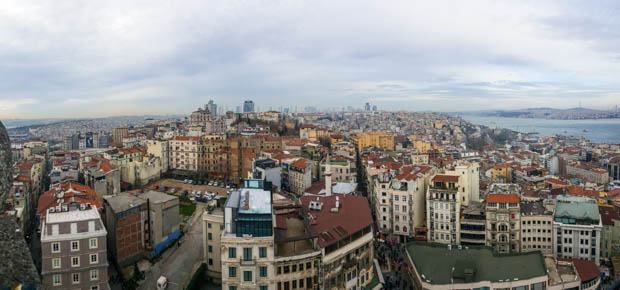
View overlooking the city
Over the next almost 500 years, the Ottoman Empire expanded its control across the region. The sultan was determined to rejuvenate Constantinople. He created the Grand Bazaar (a huge covered market), built palaces, mosques, bathhouses, and other public buildings, brought people from various religious backgrounds into the city to have a diverse population, and started the movement of the city towards its later status as a major cultural, political, and commercial center.
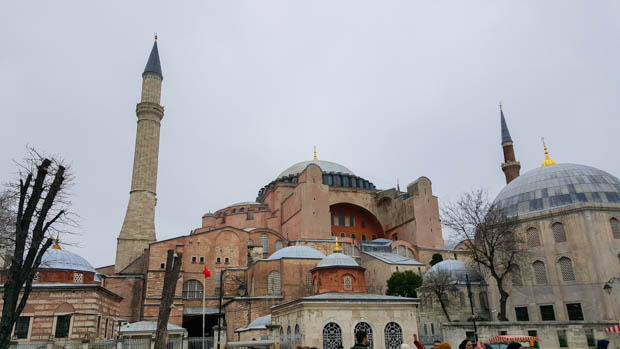
This is the Hagia Sofya. It started as a church and was converted into a mosque later. Can you see how the towers were clearly built at a different time from the rest of the building?
Following its defeat in WWI, the Ottoman Empire ceased to exist, and in 1923, the Republic of Turkey was born in its place. Within the new republic, the capital was moved to Ankara, and Constantinople started to decline. The population decreased, and parts of the city fell into disrepair.
Eventually, things started to turn around. In 1930, the city of many names became Istanbul. In the 1940s and 50s, the city’s structure was updated with the construction of new public squares and boulevards. Finally, in the 1970s, people were drawn back to Istanbul because of the many new factory jobs available on the outskirts. This led to the rapid growth of the city, turning it into a sprawling metropolitan area.
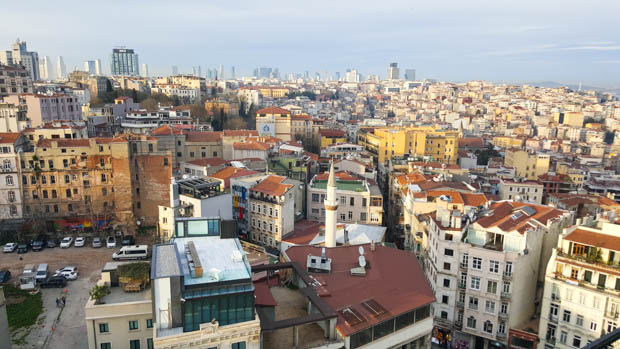
The city looks like it goes on forever…
Currently, it is the largest city in Turkey with a population of approximately 13.5 million people, and it enjoys the exclusive status of being the world’s only metropolitan area that exists on two continents (Europe and Asia).
Its complicated history makes it an even more interesting place to visit, and I had a lot of head-scratching moments as I explored and tried to figure out how everything fit together. I’ll do my best to spare you the same struggle!
Welcome to Istanbul!! I know, you were probably wondering if we were ever going to manage to leave Georgia, but we did it!
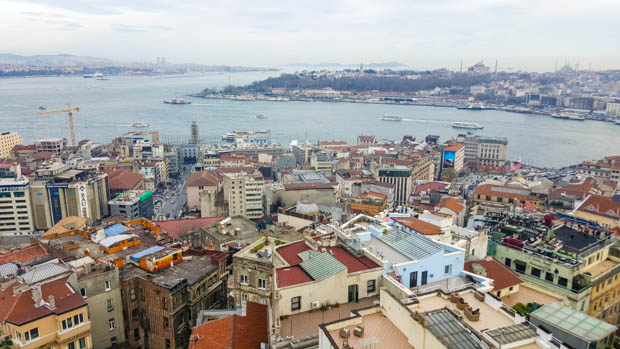
View over Istanbul
My flight landed in Istanbul after a solid 3 hours in the air… during which I was completely comatose, but it apparently didn’t make a difference because I was still exhausted when we landed. I hate feeling groggy while going through immigration and customs, but sometimes there’s only so much you can control. Before leaving the airport and attempting to navigate the long journey to my hostel, I tried to smack myself awake and pull it together the best I could (never underestimate the power of a quick face washing/tooth brushing in the airport bathroom).
From the airport, I had to take three modes of transportation. This trek was completely the result of my trying to spend as little money as possible. There are two airports in Istanbul, one on the Asia side of the city and one on the Europe side. I was staying on the Europe side, but I flew into Asia because it was way cheaper. Then, I could have gotten a pick up or a taxi from the airport, but I’m not made of money! And the less I spend, the longer I can take coming home… hehe just kidding (Mom, I’m just kidding. I promise!). Anyway, all of this led to three modes of transport: shuttle bus, funicular, and tram.
The shuttle was the longest leg of the journey, about 45 minutes, and I slept from the moment I sat down. That’s great, except then when we got to the end stop, I was completely disoriented and had no idea which way I needed to go. And it was raining, of course. I marched off confidently in some random direction until I could get oriented… at which point I turned around and marched off in the exact opposite direction. My approach to walking around strange cities: Always look like you know exactly where you’re going and what you’re doing, even if you haven’t a clue.
Long story short, I figured out where I needed to go, how to buy a transit card, etc. with my eyes at least 50% closed, and when I got to the hostel, they showed me where to drop my bags (since I was there about 6 hours before check-in) and told me to help myself to breakfast. Ah, those words were like music to my ears after spending the night eating crackers, gummies, and a variety of other travel snacks that I love but that will also lead to my slow death-by-vitamin-deficiency.
Don’t worry, I won’t bore you with the details of my breakfast (but bread and chocolate spread were obviously involved because gotta get those essential vitamins!). Instead, here are my first impressions of Istanbul (admittedly collected in more than just the hour and a half journey from the airport):
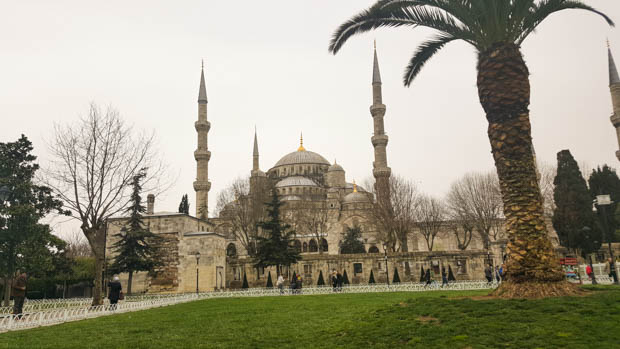
Mosques – There are SO many, and they’re everywhere. And they’re seemingly always under construction, but I’ll talk about that later. I’ve been to other countries with a lot of mosques, but the ones in Istanbul are generally very welcoming to visitors which was a huge difference from places like Dubai, for example.
The Blue Mosque, one of many, many mosques in the city
Public transportation – It’s so good! And there are more modes of public transit than anywhere I’ve been. There are trams and funiculars and ferries and metros and trains and buses and probably spaceships too if you know where to look. And they’re all nice and clean and on-schedule and easy to navigate.
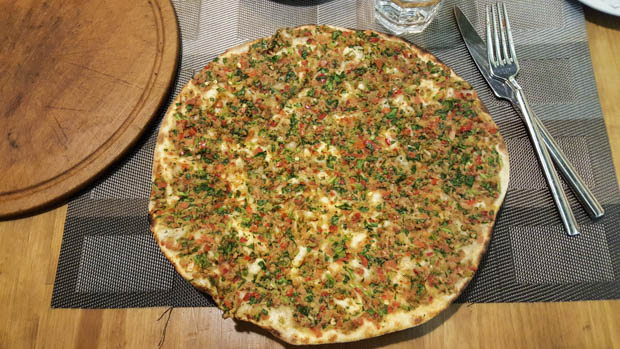
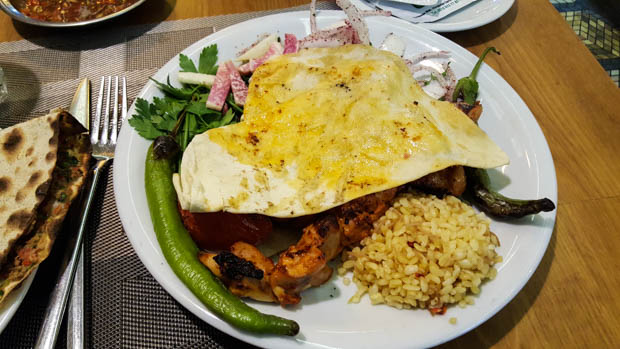
Food – This has to be one of my favorite places, food-wise. I think I said that about Lebanon too, though, so it’s definitely a Middle-Eastern-food thing. This is the most similar to the type of food I grew up with which made me feel at home. Kind of funny because I used to hate practically all of those foods, but hey, times change. I could eat kebab and lahmajoon for every meal for the rest of my life.
LahmajoonKebab platter
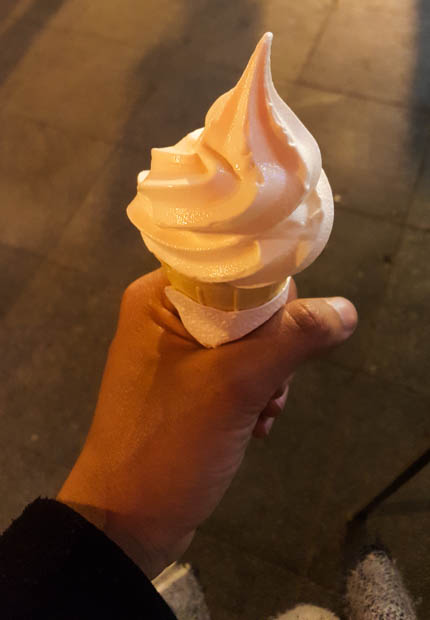
Soft serve. Yummmm
Dessert – Yes, this gets its own number, separate from food. If you don’t understand already, it’s not worth my trying to explain it. Three words. Baklava. Icecream. Turkishdelights. (Okay, I should have said five words.) I usually don’t like baklava but there were a few fantastic baklava moments that happened. It’s very hard to disappoint me with ice cream, so the fact that it even exists puts it on the list. Turkish delights aren’t my personal favorite to eat, but they’re high on the list of my favorite desserts to look at.
Nuts – This deserves its own number too. So much love for nuts. They’re everywhere and in EVERYTHING. Chocolate, Turkish delights, every other dessert whose names I don’t know. It’s almost impressive how many different ways they manage to use the same ingredient.
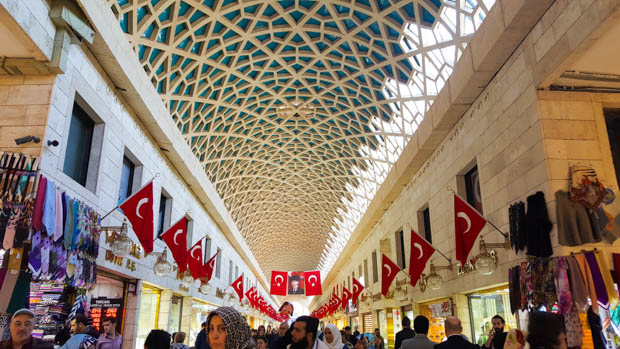
Flags – There. Are. Turkish. Flags. EVERYWHERE. Honestly, it’s a little weird. Someone tried to tell me that there are a lot of flags around in the States, but this is like the U.S. on Independence Day x 100000.
Flags. Everywhere.
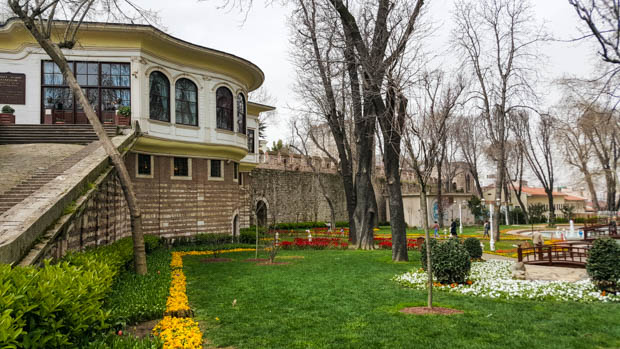
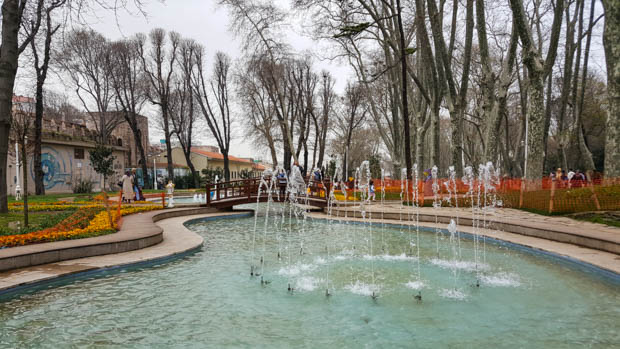
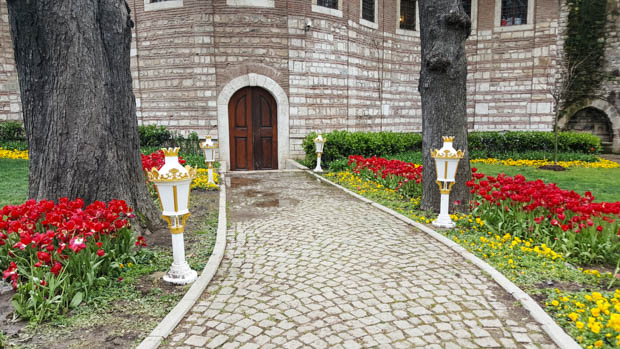
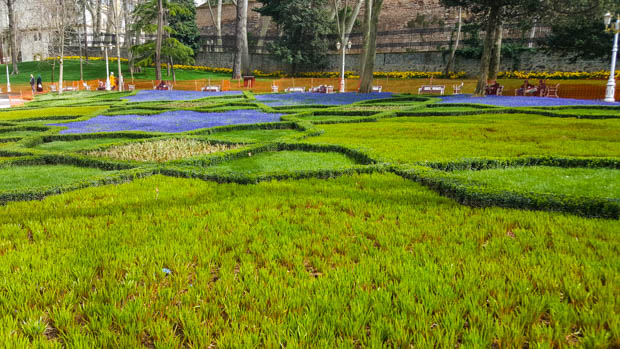
Flowers – I’m sure this is partly just a spring thing, but also landscaping. I have never seen SO many flowers and so many impeccably landscaped parks. I was completely obsessed because what’s better than flowers and parks? But it definitely takes a huge amount of work and maintenance for them to look like that. It’s amazing!
Check out this park…They’re winning the landscape gameThis just looks so magicalWhatttt
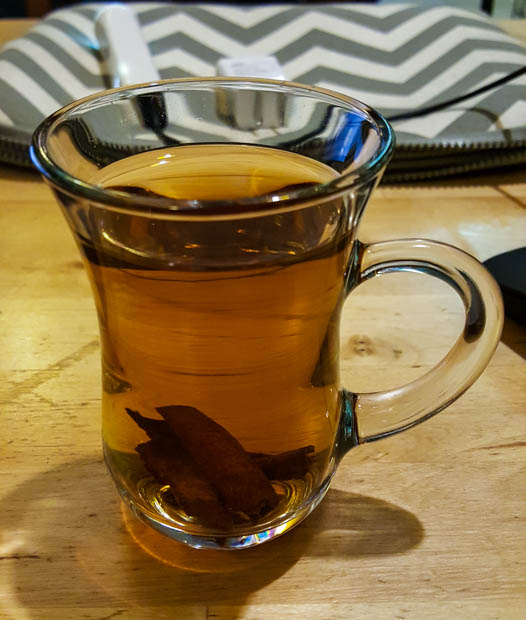
Apple tea, my new true love. There’s even a cinnamon stick in the bottom of this one!
Tea – In general, I hate tea. I think it tastes like something that could maybe be good if it wasn’t so watered-down. Also, most typical flavors are kind of eh. In Istanbul, tea is a big thing, and I LOVED it. This is a significant statement coming from me. Apple tea is like <3 <3 <3. There are no words. It’s like drinking warm apple juice but better. And there’s definitely a pile of sugar in it, so that doesn’t hurt. I had some delicious pomegranate tea too, and I don’t even like pomegranates! Summary: they know what they’re doing when it comes to tea.
Water – There’s nothing better than a city with a nice river… except for a city with an estuary and a strait AND a sea. You can take ferries like buses!
On the water! On a boat!
The estuary is coming in from the right, the Bosphorus Strait is on the left, and the Sea of Marmara is out in the distance
History – Istanbul is an old and complicated place, and you can see it. There are old churches that were turned into mosques, palaces, the ruins of Roman aqueducts and city walls… the city oozes history.
I also quickly noticed that my chameleon suit worked very well there (that’s how I’ve started to think of my somewhat ethnically ambiguous appearance… often, it’s like I’m a chameleon that can kind of blend in, or at the very least can keep from standing out). I got a lot of, “You’re Turkish, right?” Thank you, chameleon suit. Which brings us to #11…
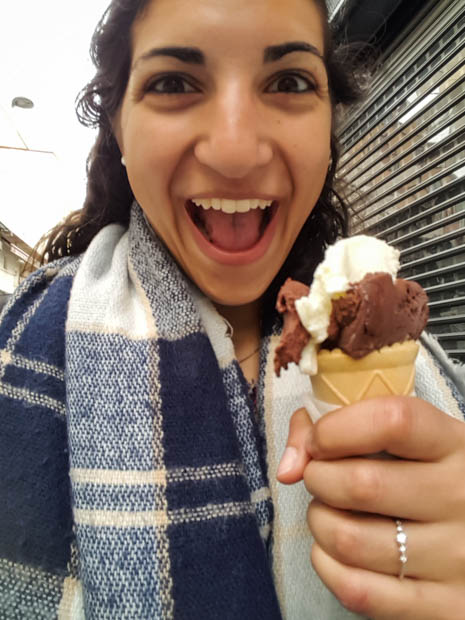
I got some Turkish ice cream which is very similar to Arabic ice cream (which I had when I was in Lebanon). It uses mastic (a resin) which helps to keep it from melting. Also note my fake engagement ring. Hehe.
Men – Aside from Ghana, this is probably the place where men have been the most forward on the street. In Armenia, other people had issues with this, but I walked around ignoring everyone, so I was generally left alone. I tried to apply my ignore strategy in Istanbul, and that just led to follow up questions about why I was ignoring them and promises that they were of good character (claims which, I would argue, were negated by the fact that they were disregarding my clear disinterest in talking to them). UGH. After about two days of it, I got so annoyed that I went and bought a fake engagement ring to wear when walking around alone. I don’t know if it made a difference, but at least it gave me a very easy “out” if someone tried talking to me, “Oh sorry, I have to go. I’m on my way to meet my husband.” I HATE having to use the “other man” shield because it’s a lie and saying “leave me alone” should be enough, but for sanity’s sake, there are some battles not worth fighting.
Okay, that’s enough for now. Get yourself excited for some history because next time, we’re going to learn alllll about just how much history Istanbul has.
During the rest of my time in Georgia, I’ll be honest… I didn’t exactly make the most of my time, if you’re looking at it from simply a sightseeing perspective. I, however, was thinking about it from more of a mental health perspective, and part of the reason I even planned to go to Tbilisi in the first place was because I wanted to feel like I could take some time to just relax without feeling the need to run around like a maniac and explore a new city. I had already seen a decent number of things there, and it made me feel like I could take some “me” time.
It also didn’t help that the weather was mostly a bummer. I was there for three days, and it was rainy and gross for two of them. My motivation was already fairly low, and the weather was all that was necessary to completely eliminate any chance of me being adventurous.
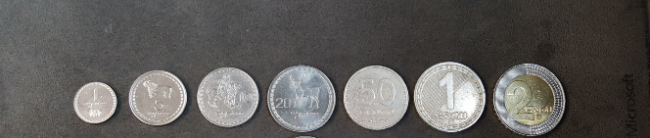
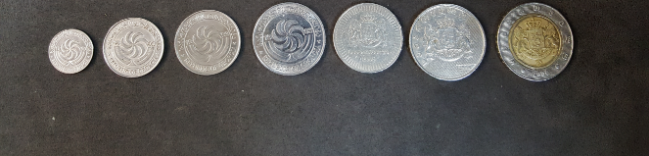
While traveling to more cash-based countries, I always have such an issue with the quantity of coins that everyone uses. I hate coins, but in Georgia, there’s a whole collection of them. Here we have the 1, 5, 10, 20, and 50 tetri coins, plus the 1 and 2 lari coins. WHY SO MANY???
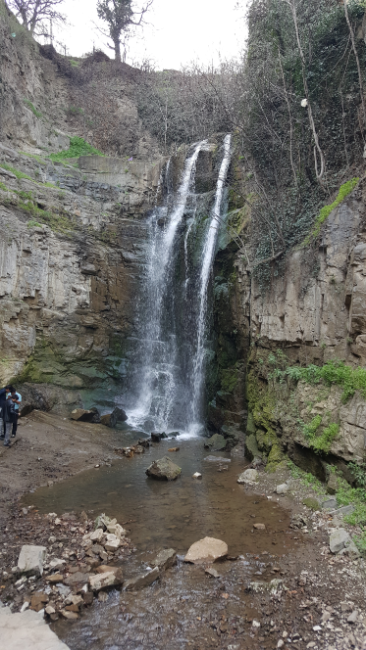
On my first day back after Batumi, I committed to doing the few things that I still had on my list. That list was admittedly pretty short, but I figured I should cross off the remaining items so that there was no danger of me leaving the country again without doing them. My first stop was in Old Town, right near the sulfur baths. There’s a sulfur waterfall there that we didn’t end up going to because everyone was hungry… the funny part about that is the fact that it took MAYBE 10 minutes to walk there from the location where that decision was made. It wasn’t anything jaw-dropping, but it was cool to think about the fact that I was standing in the middle of the capital city of Georgia, looking at a waterfall. Like… they have a waterfall in the middle of the city! Of course, it smells like sulfur and that’s gross, but conceptually very cool.
If only you could also smell it…
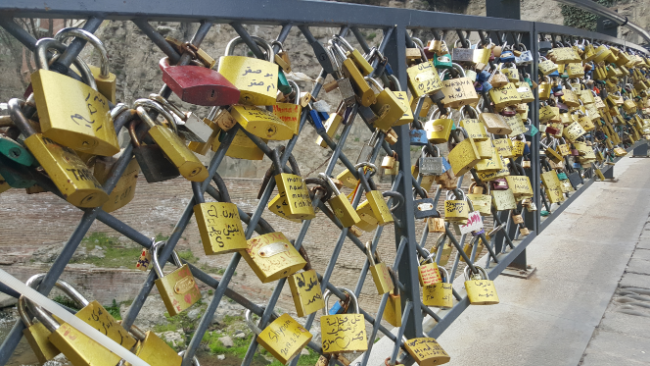
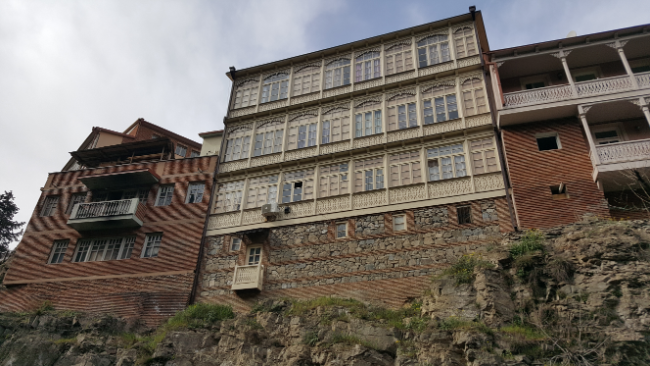
Love locks on the way to the sulfur waterfallOne of the buildings along the way to the waterfall. Not terrifying at all, right?
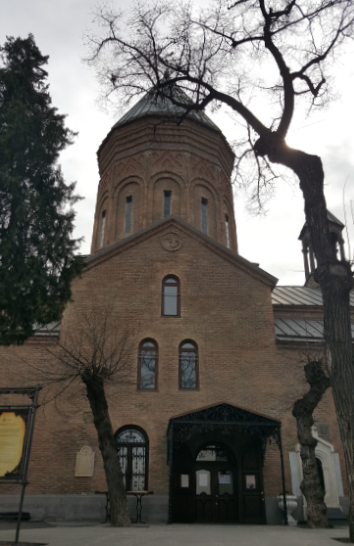
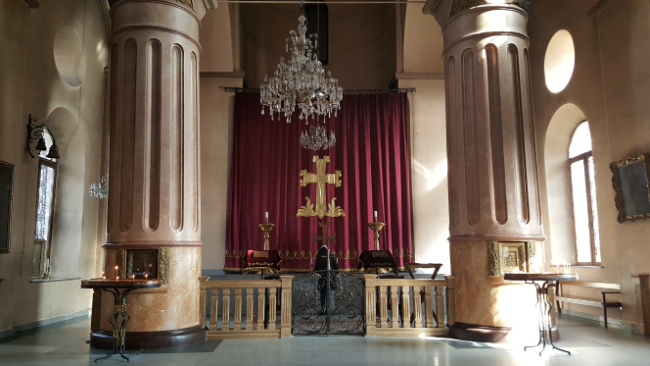
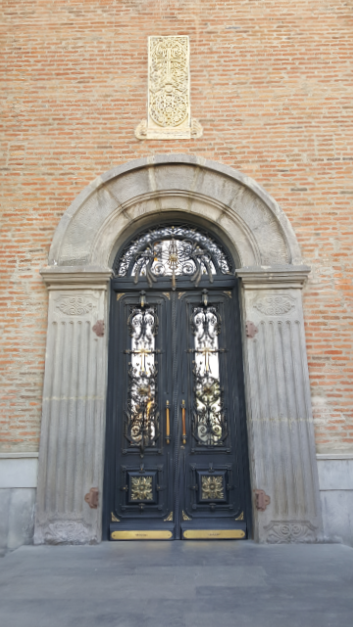
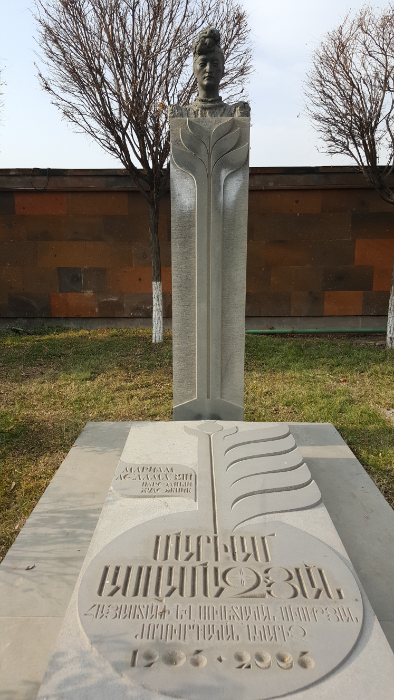
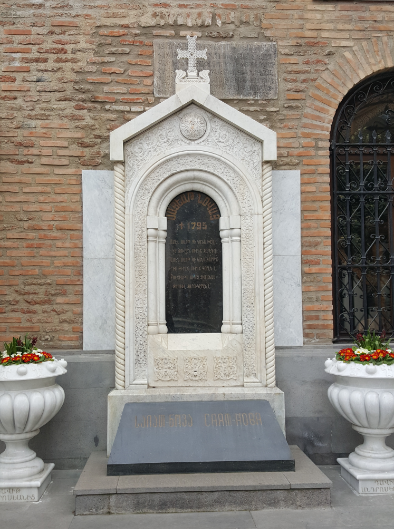
I also went back to St. George’s Armenian Church to pay homage to Sayat Nova, since I didn’t realize his gravestone was there until after we had already visited and left (I wrote more about that visit, who Sayat Nova is, and some other famous Armenians whose gravestones I visited here) and Ejmiadzin, the other major Armenian church that was closed last time we went. It wasn’t my favorite church from the inside, but I was excited to hear people speaking Armenian after only hearing Georgian for a few days, and I bought a candle to light just because I could. I asked for it in Armenian, the woman understood me, and I was thrilled to use my hard-earned language skills again, even for something so basic. It’s such a bummer when you spend all this time learning a language while living in the country where it’s spoken, get to a level of proficiency that makes you feel comfortable, and then leave the country and realize that everything you worked so hard to learn is completely useless in helping you to communicate in this new place. I know I’ve talked about this a lot, but it still frustrates me every time I think about it.
St. George’s Church with Sayat Nova’s grave marker to the right of the door
Inside Ejmiadzin Church
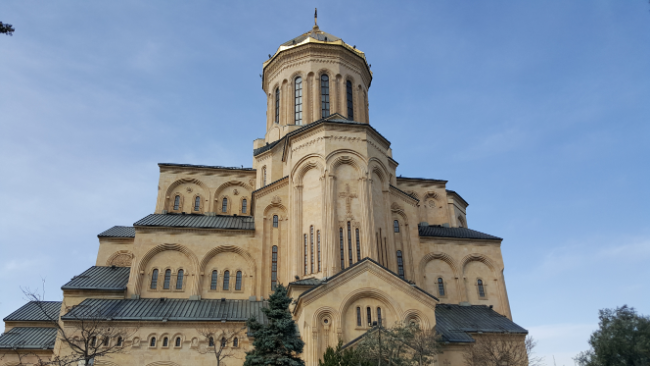
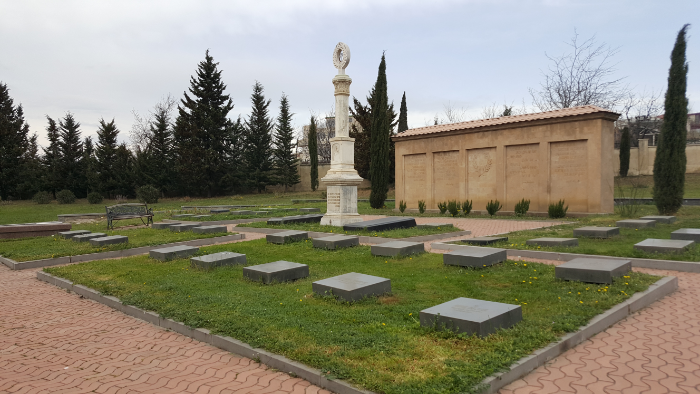
From there, I went back to the big Holy Trinity Cathedral that was partially built on the site of an Armenian cemetery. In my previous post about visiting there, I explained how the Armenian community freaked out about how the graves were being dug up without any respect, and the only appeasement offered was this little Armenian Pantheon that they hid behind the church. I say “hid” because even though I was looking for it, I STILL had trouble finding it. You might think I mean oh, if someone didn’t know it was there, they wouldn’t find it… no. I knew it was there, I had the location in front of me on google maps, and I still wandered around for at least 15 minutes before I figured out where it was and how to get there.
The door to Ejmiadzin
Holy Trinity Cathedral
Yes, figuring out where it was and then how to get there were two separate steps, and neither of them was particularly easy. I walked in the general direction that google pointed me, and I couldn’t figure out what I was even looking for. Luckily, there were some pictures, and I spotted the top of the highest point in the pantheon peeking over someone’s house. Okay, now I knew where it was… but HOW was I supposed to get there?? I tried taking a direct route, and I’m fairly certain that I walked down someone’s driveway and through their yard before realizing that I couldn’t see my reference point anymore, and there was a wall blocking me from going the way I thought I needed to. Finally, I figured out the roundabout way you have to walk there, including walking by a security guard who, I didn’t realize until afterward, was only there to make sure that unauthorized cars didn’t try to come into the church grounds. I thought I wasn’t allowed to leave that way, but he couldn’t have cared less about me walking past. Good to know.
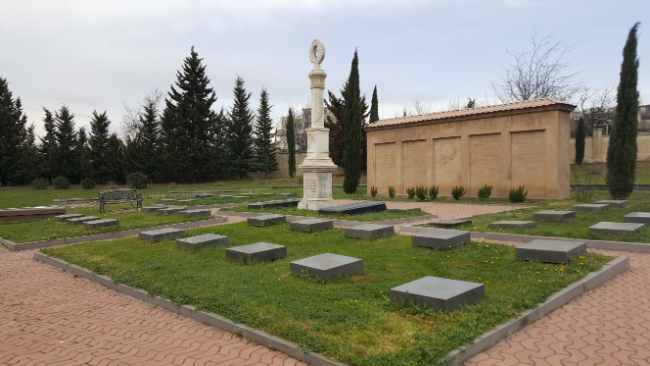
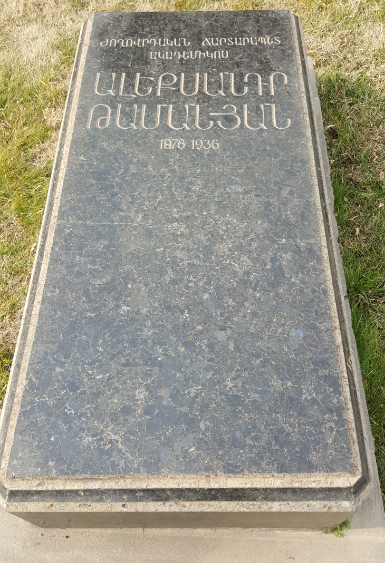
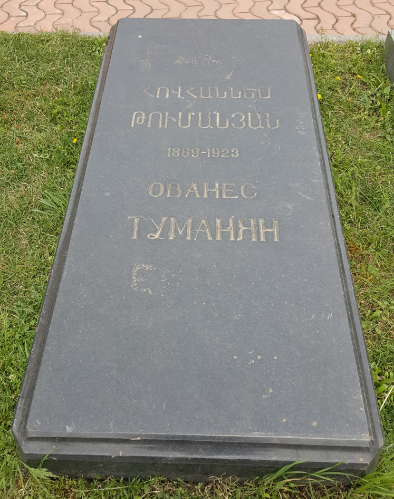
The Pantheon was kind of sad, mostly because I knew that it was just a shadow of what it used to be. The most notable person buried there (in my personal opinion) is Hovhannes Tumanyan, the writer that I also talked about in my Famous Armenians post.
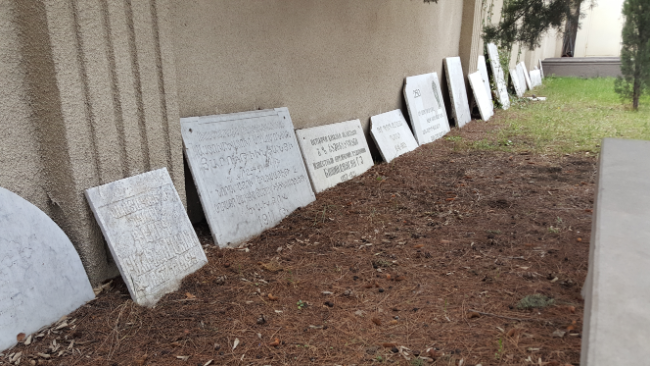
Remains of the original grave markers in the Armenian cemeteryThe Armenian Pantheon. The big white thing in the middle is the only reason why I found my way there.
Having crossed those few things off my list, I felt pretty good about relaxing for the next few days. Well, I kind of relaxed. I had a bunch of things I needed to get done, and as is the way with those things, they all took longer than I expected. I also had some things come up related to planning the later stages of my trip, and planning-related tasks are always rabbit holes. You can spend an eternity on them without even realizing.
The next day, I went on a sketching adventure. I’ve been carting a sketchbook around with me since I got to Armenia, and I’ve done barely anything with it. I decided that I might as well put it to use if I’m going to keep carrying it with me, so I walked around the downtown area and made a couple “quick-sketch” stops. I’m trying to get better at sketching quickly, rather than always spending hours on each drawing, so I limited myself to half-hour-long stops. After I get better at those, maybe I’ll cut down the time a bit more, but for now, I’ll just say that I need to keep practicing. You have to start somewhere!
I also spent a decent amount of time hanging out with the other people in my hostel. This hostel was much smaller than the ones I usually stay in, so it felt more like a little family. There were some cool people there, and we went out to eat together, played Jenga (Including potentially the world’s longest game where, by the end, we all just wanted to stop playing because it was way too stressful), learned about each other’s countries, and had fun just spending time together. Hostel living frequently becomes such an interesting way to learn more about the world because you get to hear the opinions of people who are actually from different places. We always hear one side of the global narrative in the States, and it’s whatever side the government wants us to hear. As much as we like to think that we aren’t fed propaganda, we are. It’s just slightly more subtle. It’s like the same thing I realized in Armenia… In the US, we have such a different picture of, for example, Russia, than they do there. In Georgia, I met a girl from Russia, and she obviously had another perspective to offer. It’s still not easy to pick out the “facts” (whatever that even means) about things, but hearing different views is a good way to make sure that you’re thinking critically about the information you’re given. That’s a good lesson for life in general.
Anyway, just more random musings. My next stop after Tbilisi was Istanbul, Turkey, and I had an inconveniently-timed 4:30AM flight there. I didn’t bother reserving a space at the hostel for the night because I knew I wouldn’t end up sleeping even if I did. Instead, I just hung around until midnight when I made my way to the bus stop to hop on an airport-bound bus.
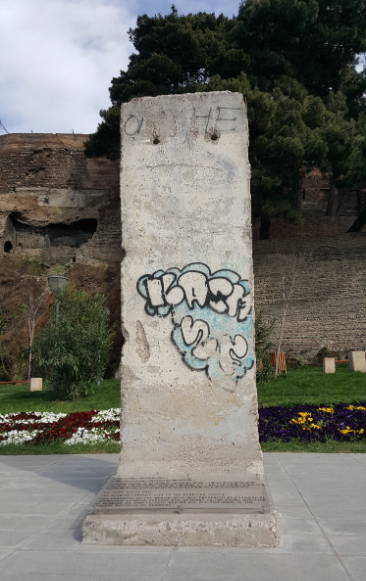
A piece of the Berlin wall, gifted to the people of Georgia from the people of Germany. It was given to the PM of Georgia when he visited Germany. My first thought was, “Oh, that’s so nice.” Second thought: “Do they just have pieces of the wall in a warehouse somewhere to give out as gifts?” Third thought: “Imagine going on a trip and getting a huge concrete wall to take home with you. ‘How am I supposed to get this home?? I only get two 23kg checked bags!'” (Yes, I’m joking. I’m aware that the PM of Georgia probably doesn’t fly commercial.)
There are certain times in particular that not being able to speak the language in a country becomes extra frustrating. One of those times is when announcements are being made, like on my delayed train to Batumi, and you have no idea what information is being shared. Another time is when people are having an argument or someone is causing a ruckus and you can’t determine what your response should be to their actions because you don’t know what the issue is. On the bus to the airport, this guy got on (let’s call him “yelling guy”) and started yelling about this and that… and I had no idea what this and that were because it was all in Georgian. Most people were just ignoring him. Eventually, some guy started shouting back at him and then got off the bus. Then a new guy came and started trying to calm yelling guy down, but I don’t think he made a difference. Eventually, the bus stopped and the driver and some other transit officer came back and then they were all shouting at each other, and calming guy was seemingly defending him…? But who knows because this entire analysis is based on body language and tone. Finally, they got him to settle down a little, and someone motioned for yelling guy to come sit next to him. THEN yelling guy started trying to talk to me (I was standing nearby), and I had the fun task of getting him to understand that I don’t speak Georgian… thankfully, the guy next to him figured it out and explained the situation, but somehow that never seems to stop anyone from still trying to communicate by just speaking AT you. After he was just told that I couldn’t speak, he continued to ask me questions which I responded to with wide eyes and a confused face. The guy next to him kept laughing and saying (I imagine), “DUDE! She can’t understand you!”
Finally, we made it to the airport, and I jetted off the bus. I still had some time to wait before I could check in, so I made myself comfortable on an airport chair and began a long night of non-restful sleep in various awkward and uncomfortable positions.
I had a brilliant idea to maximize my sightseeing efficiency in Batumi: a sightseeing run. In hindsight, I see the million flaws with this idea and also the million better options, but I didn’t see those at the time, so here we are.
What is a sightseeing run, you ask? Well, exactly what it sounds like. Go for a run, stop at any sights, keep running. I thought this sounded like a perfect idea because I wanted to work out, I wanted to go sightseeing, and sometimes, I feel like walking between sights just takes too long. I planned to run along the boulevard by the beach so that I didn’t have to deal with cars and could have nice views of the water along the way.
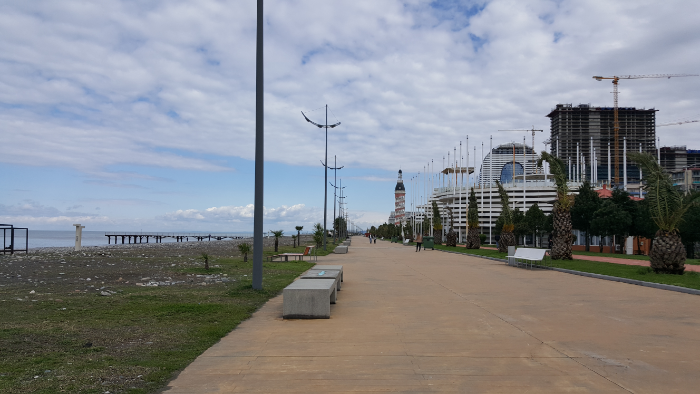
More beach pictures! The weather was much better on Day 2.
Since I’ve given you no real information about Batumi yet, here’s a little background for you. Like I briefly mentioned, Batumi is the major beach resort of Georgia, located on the western side of the country along the Black Sea. It’s the second-largest city in Georgia after the capital city, Tbilisi, and its economy is centered around tourism, gambling, and its port which is the biggest in Georgia.
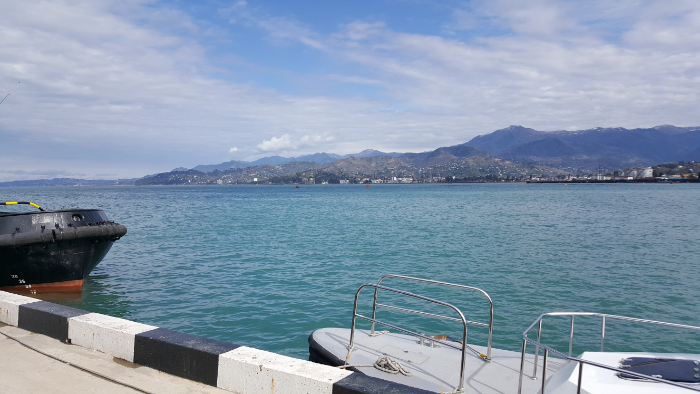
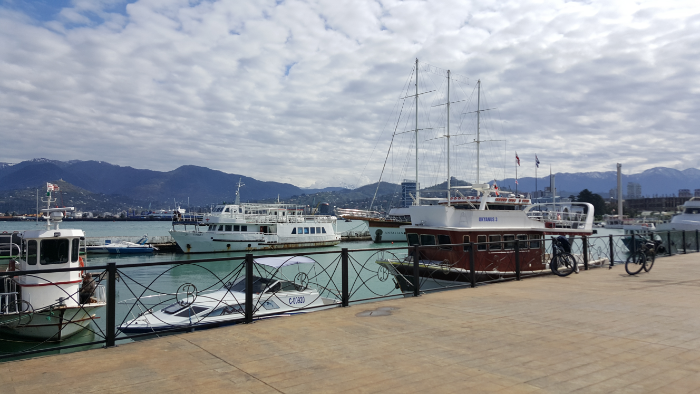
The harbor
Historically, the first record of a city on the site of Batumi was an ancient Greek city, Bathus, in the 4th century BC. The Romans conquered it in the 2nd century AD, and after that, it went through a series of rulers along with the rest of the cities in the region.
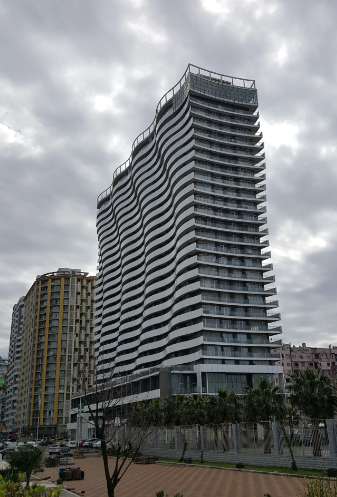
Architecturally, the city is particularly interesting. This is something I absolutely didn’t expect going in and was pleasantly surprised by (though of course, I knew nothing going in, so it’s not very surprising that I wasn’t ready for what I found). Many of the buildings are from the 19th century and are a mix of different styles: European and Asian, Georgian, Turkish, and Soviet, etc. There’s also a strong sea theme, so you can see a lot of mythical sea creatures woven into the architectural details. And the colors! There are so many pretty and unexpected colors.
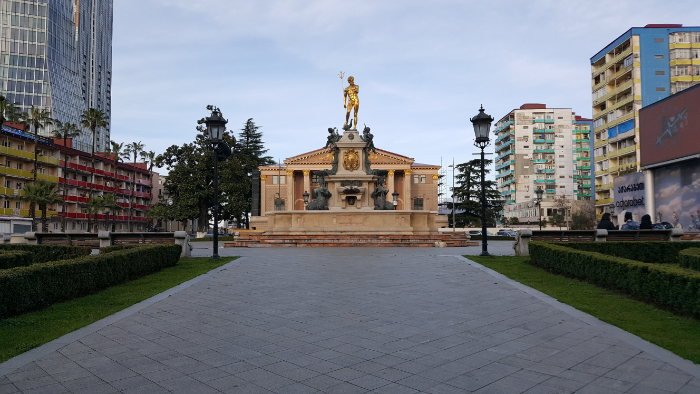
The Batumi Drama Theater in the background with creatively-named Theater Square in front of it.
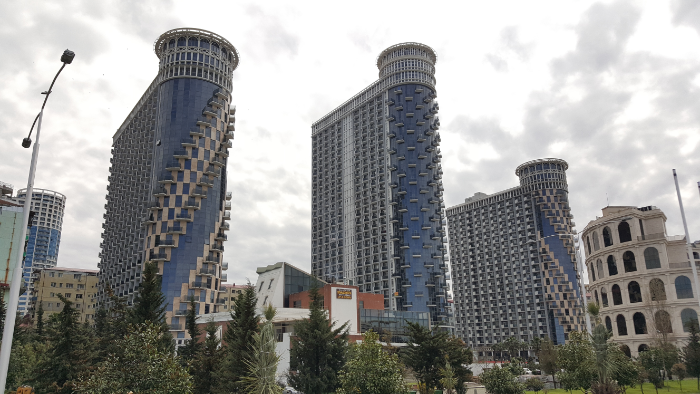
Recently, there’s been a push to grow Batumi, and these historic buildings have been joined by new, modern high-rise buildings. It was already a strange architectural mash-up, and now it’s even more so. Just wait… you’ll see what I mean in the pictures.
Okay, back to my sightseeing run. I hadn’t worked out in quite a while, so I thought maybe three miles (5k) or so would be a good start (I’m not a good runner AT ALL, so even this was kind of a stretch). Plus, with the sightseeing component, it allowed for “photo stops” aka “find something to take a photo of because you don’t want to run anymore” stops. It seemed like a good way to ease back into running. Maybe it would have been, too, but after I had gone two miles and hadn’t turned around yet, I saw some mountains in the distance and decided that I wanted to be closer to them. Very specific, I know. So, I kept going, and I kept thinking that I was going to reach the point where I had some epic mountain view and would know that it was time to turn around and go back.
The sky!!So many shades of blue!!
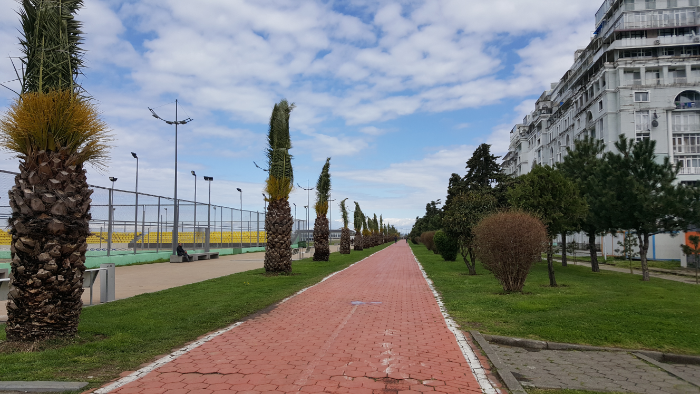
The path was nice, too. It went right along the beach, there were interesting buildings to look at, and there were barely any other people around. Then, somehow I was more than four miles away from home and seemingly no closer to the mountains. I could have kept going. I kept thinking that if I just went a litttttttle farther, I would hit a good spot to turn around after the next bend. Or the next bend. Or the next bend. That maybe would have been fine, but I did NOT plan ahead for that kind of adventure and was carrying no money and no bus ticket. Not my brightest moment. Note to self: always bring bus money.
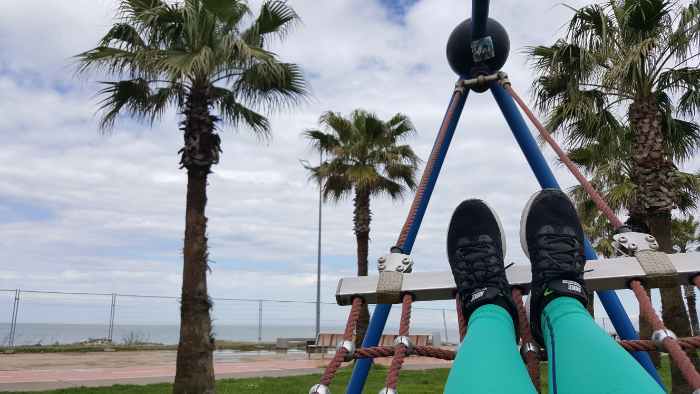
Found a hammock along the way…
???
No clue what this is but weird, right?
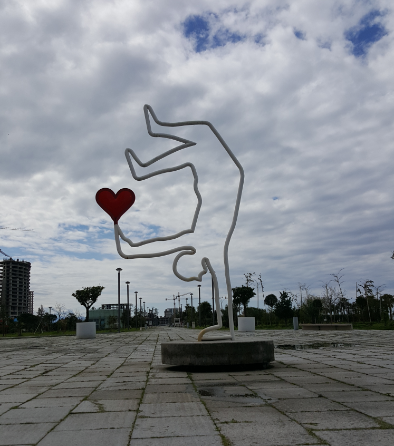
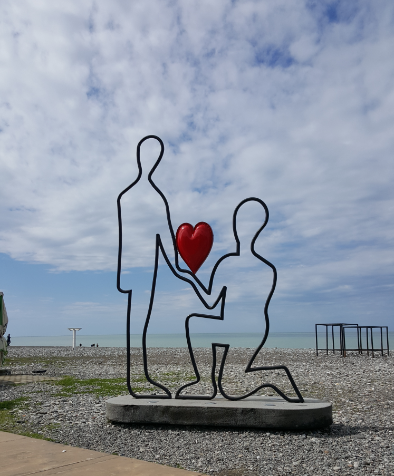
There’s also a ton of public art everywhere, including a series of silhouettes doing various things while holding hearts.
More public art
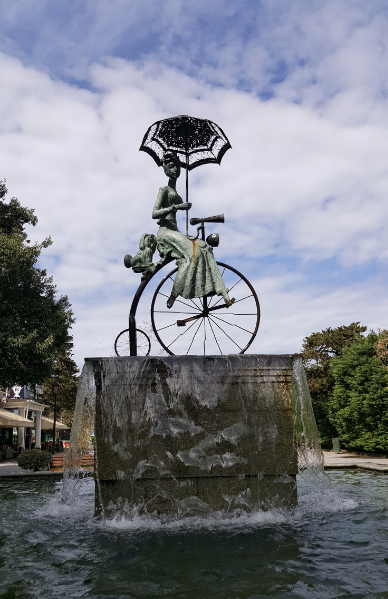
This fountain was cool… Her wheels spun around and kicked up water!
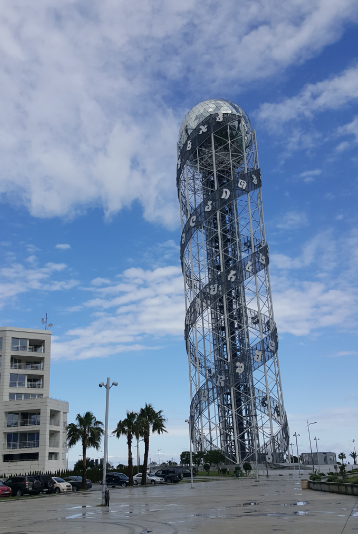
This is a tower celebrating the Georgian alphabet
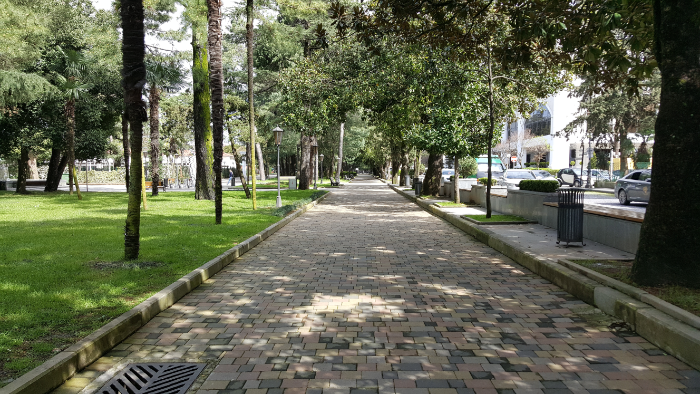
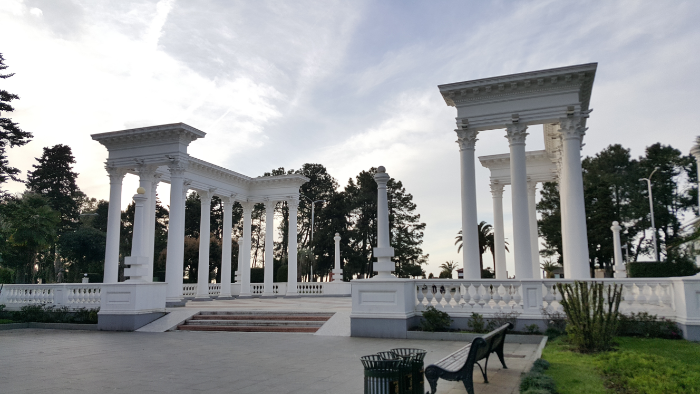
View on the boardwalk during my sightseeing runA park along the boulevard“The Colonnade”, designed as an entrance to the beach. The concept, as you might guess, was developed by someone who had recently gone to Italy. Now it’s just a random and confusing monument, in my opinion. Though definitely pretty.More interesting architecture
Finally, I had to accept that if I hadn’t gotten a good view of the mountains yet, it probably wasn’t going to happen and that I needed to turn back or risk collapsing from exhaustion. Oh yeah, I also didn’t bring any water. Or money to buy water. And I had only eaten a granola bar for breakfast. I know, I know, but remember that I was planning for a two- to three-mile jog/walk/stop, not an almost nine-mile (15k) adventure. Hehe. Oops.
The closest I ever got to the mountains… so not close at allRight near my turn around point… good question, random street art. Where the heck am I?
My post-experience thoughts about this whole thing:
What on earth was I thinking?
Why didn’t I just rent a bike?
What on earth was I thinking?
I don’t even like to run.
At least I got a good workout.
After I got back to the hostel, cooled down, drank some water, and ate something, I changed and went out again because despite the ridiculous distance I had covered, I had only seen the sights along the coast and still had the entire downtown area to check out. This time, I aggressively plotted my route to avoid covering any extra distance, and off I went.
I did NOT want to leave the hostel again after I got back and sat down, but it was my last day in Batumi, so I didn’t feel like I had a choice. My legs were killing me, and I walked at an impressively slow pace the entire time.
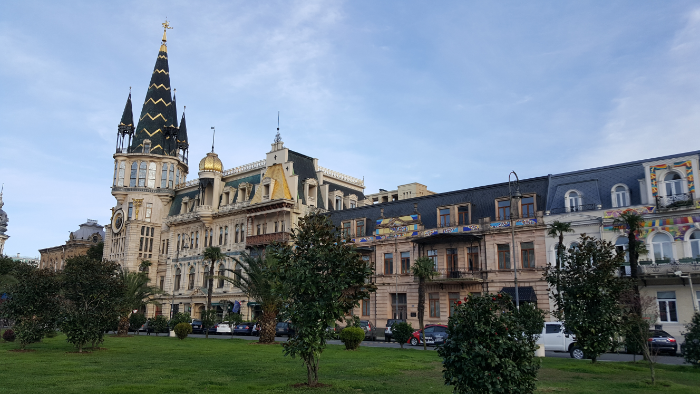
My loop around the city included a whole pile of churches, whatever parks I happened to stumble upon (because who doesn’t like parks??), some city squares, and a few of the tall buildings that I didn’t get to on my “run”. I’ll let the pictures speak for themselves for the most part because it’s not even worth me trying to explain without visual aids!
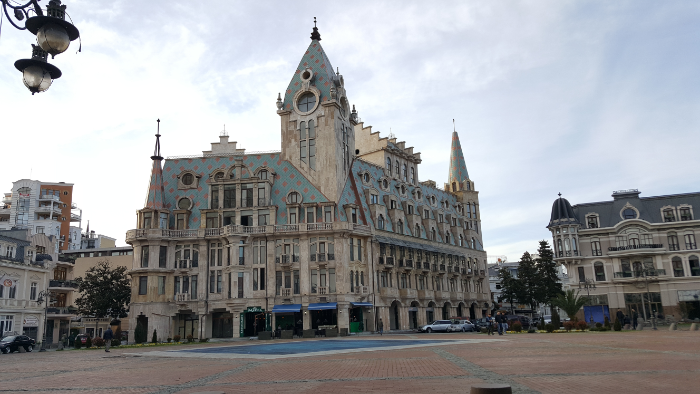
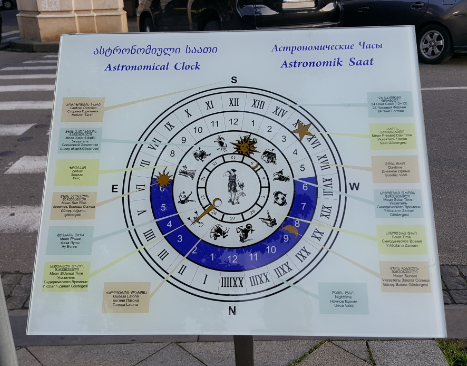
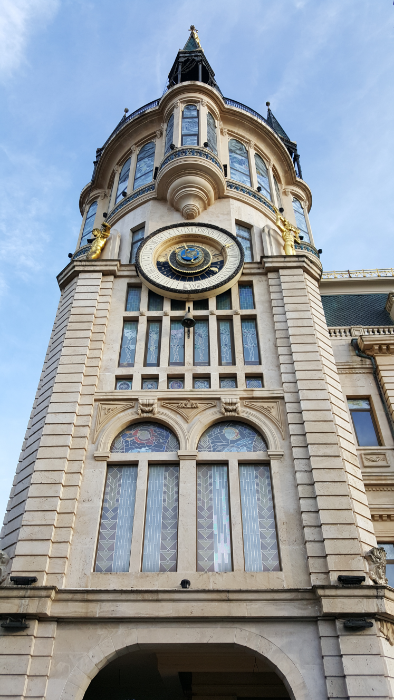
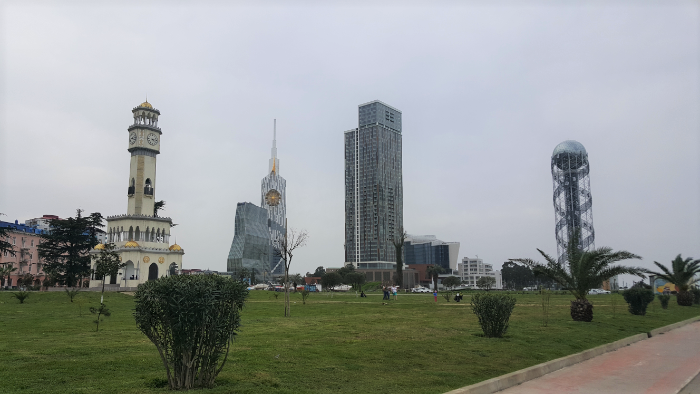
A building on Europe Square. Does it not look like it was taken straight out of a fairy tale?More buildings along Europe Square, all so different from each other!There’s an astronomical clock on one of the buildings (farthest to the left in the picture above), and this was the diagram explaining it. I looked at it for about 5 minutes before deciding that there was too much going on and taking a picture to try to figure out later.
The astronomical clock from below
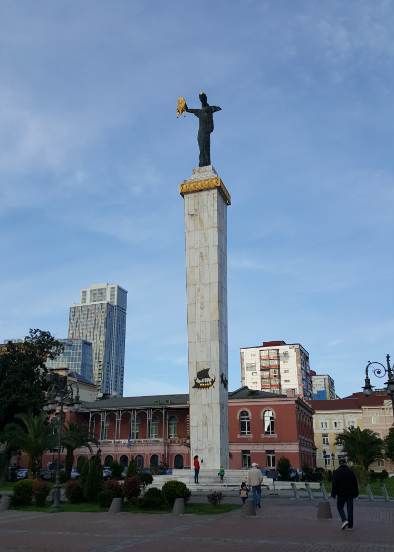
This statue on Europe Square is of Medea, a daughter of a Georgian king, holding the Golden Fleece. The story goes that she helped Jason, the legendary Greek hero, to steal the fleece.
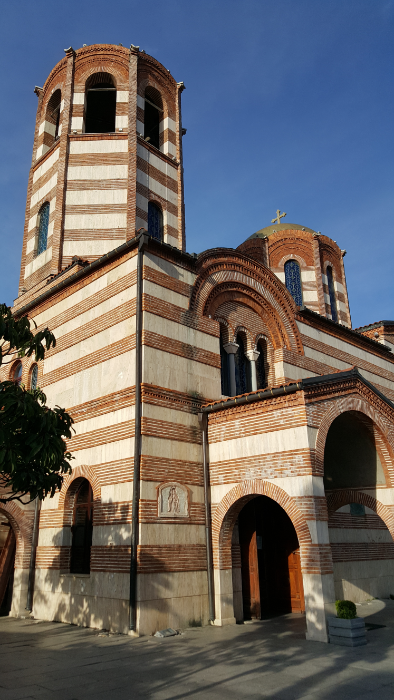
St. Nicholas Orthodox Church
This thing is called Chacha fountain. Chacha is a classic Georgian alcohol made from distilled grapes, and supposedly you can get free chacha from the fountain for 10 minutes each day. Who knows if this is true or not but either way, hilarious.
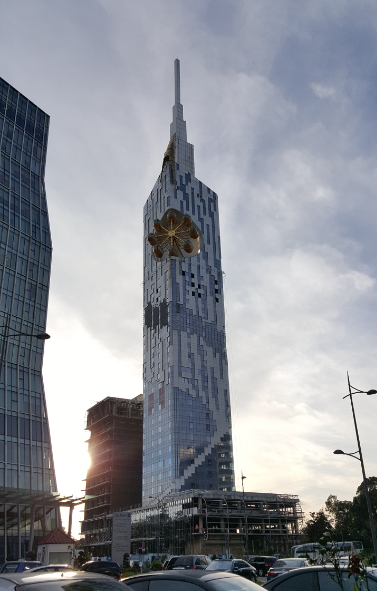
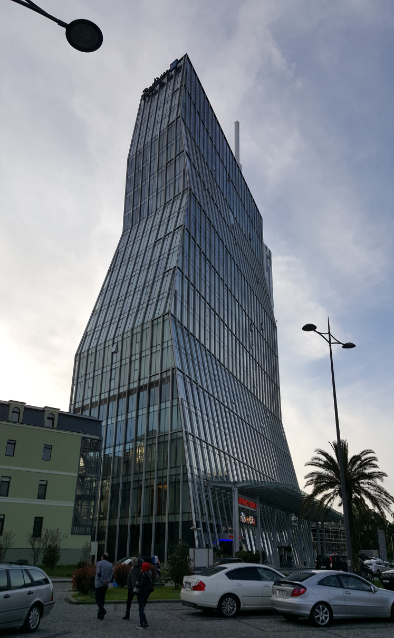
This building, Batumi Tower, was designed by a Georgian architect, is 200-m tall (and is the tallest building in Batumi), and was supposed to house a technological university. Instead, it got sold and now it’s a hotel. And there’s a ferris wheel in the side. Did I mention the ferris wheel? Like… what????
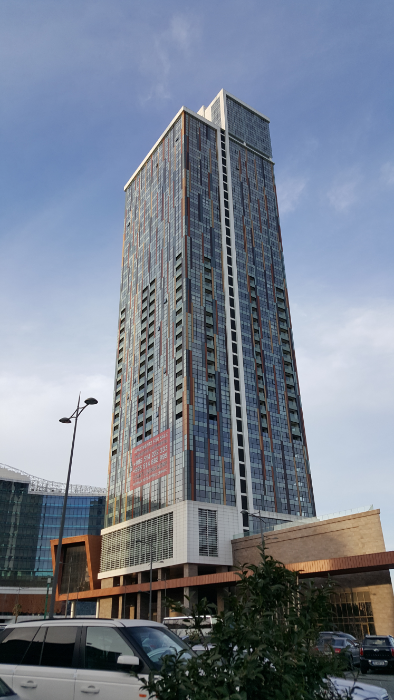
Pretty sure these are condos
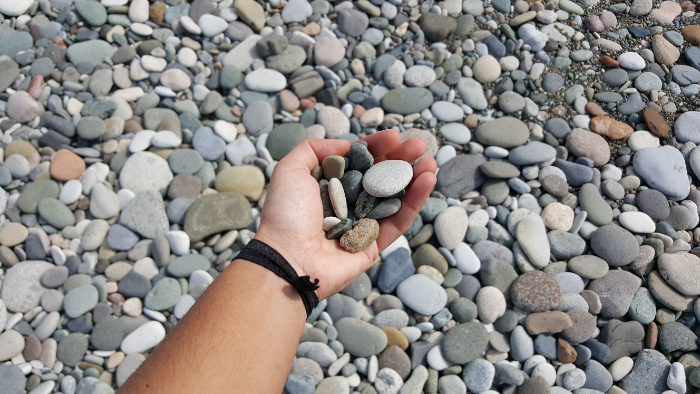
Rocks!
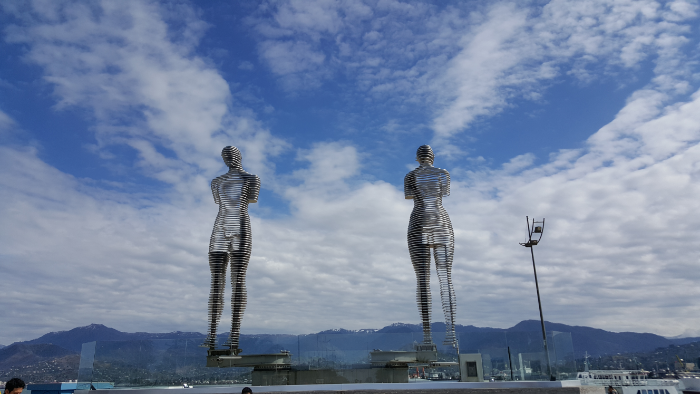
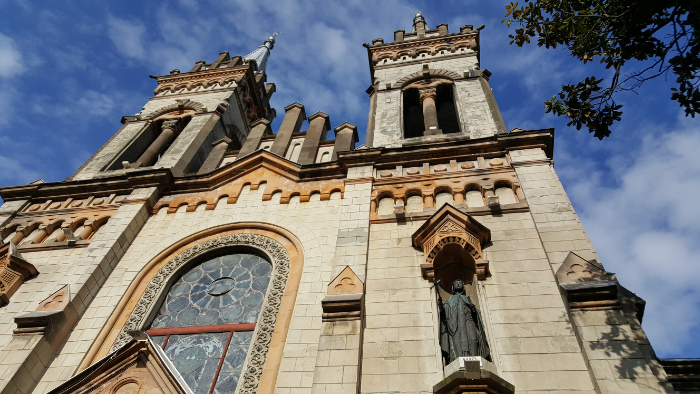
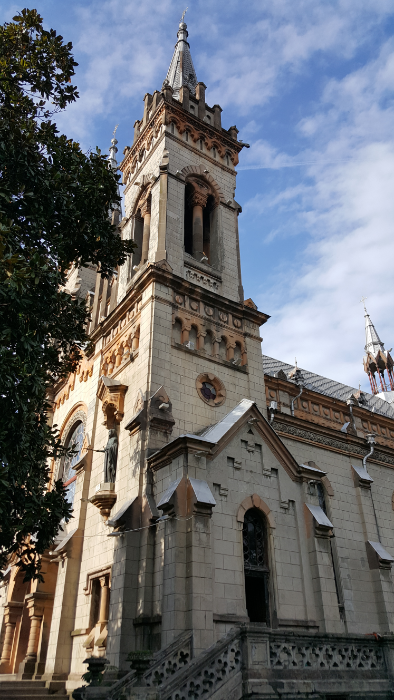
This is a sculpture called Ali and Nino, inspired by a story about a Georgian princess, Nino, and an Azerbaijani Muslim, Ali, who fall in love but are kept apart by WWI. It’s like the Romeo and Juliet of the Caucasus. The two figures move back and forth, literally passing through one another.Holy Mother Virgin Nativity Cathedral. Quite the mouthful of a name… maybe it’s shorter in Georgian
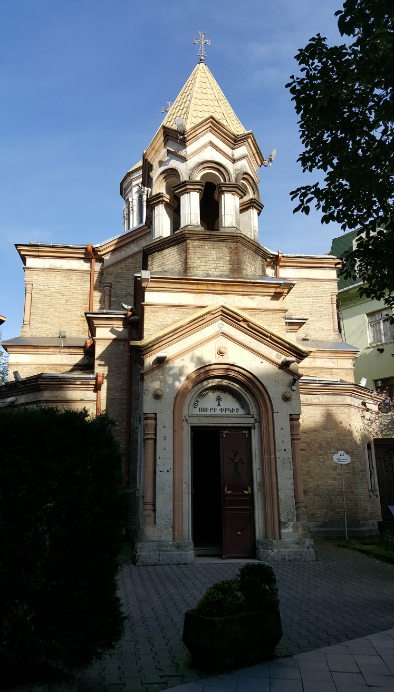
Armenian church!
I had a train ticket to go back to Tbilisi the next morning, so as much as I enjoyed my time chilling in peaceful Batumi, it was time to move on to the next adventure. I asked at the hostel about how to get to the train station so early in the morning, and the guy said that the buses weren’t running yet, but I could probably get a marshrutka there.
I walked out to the bus stop around 6:45 because my train was at 7:30, and it was like I was the only person awake in the entire city. As you might imagine, I started doubting that there were even marshrutkas running after not seeing any for the first 10 or so minutes waiting at the bus stop. This one taxi driver kept asking me if I wanted a ride, but I was determined not to take a taxi. He asked where I was going, and I told him the train station (using a very unhelpful Georgian phrasebook I found online). He said he would take me there for 20 lari. HA! I literally laughed at him. I didn’t know how much it SHOULD cost to get there, but 20 lari is like $8 and is completely ridiculous for a 5-minute ride.
After I laughed at him, he lowered his price to 10 lari, and when I said no again, he changed it to free. I apparently am a phenomenal negotiator… This conversation all happened through hand motions and google translate because he spoke ZERO English. When he said he would take me for zero, I typed, “Why???” into google translate. I thought that was a valid question. He just looked at it, laughed, and gave me the “come along” hand wave.
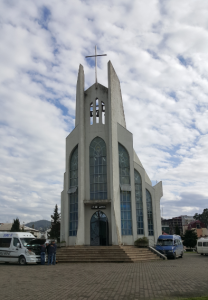
An architecturally-hip Catholic church
And this is a hotel
At this point, I still hadn’t seen any marshrutkas drive by, and I was starting to get a little worried about missing my train. I figured what the heck, and off we went. Let me just say that if I was in practically any other country, I never would have done that, but this was Georgia and I was mostly not worried about it. We got close to the train station, and I started pointing that I wanted to go there. From our broken conversation, I gathered that we’d had a slight misunderstanding. I thought I was saying that I wanted to go to the Batumi train station to take the train to Tbilisi. HE thought I was saying that I wanted to go to the Tbilisi train station. I mean, I guess I technically did, but not in his car!
Thanks to my mostly worthless Georgian phrasebook, I knew how to say, “Stop here!”, and I said it on repeat until he listened. He kept trying to tell me that he would take me all the way to Tbilisi for free, and still I have no idea why. Eventually, I convinced him (in my fluent Georgian) to take me back to the Batumi station, and that was that. He didn’t ask for any money, and I’m almost positive that he would have been insulted if I had offered.
It wasn’t the most conventional method of getting to the train station, and I’m sure my mother is losing her mind right now, but hey, it worked. I’m happy to report that the rest of the trip was uneventful. I took the train, I took the metro, and soon enough, I was back at my hostel to enjoy a couple more days in Tbilisi.
I took it slow during my first day in Georgia because I wanted to give myself some time to process everything going on in my brain. I checked into my hostel, sat in a park and journaled, and went to bed early because the next day, I had an 8AM train to Batumi.
Batumi is the major beach town in Georgia. It’s on the Black Sea, and I knew basically nothing about it going in except for those two things. Last time I was in Georgia, we met some people who said it was a great place to visit, and apparently that’s all I needed to be convinced. I also knew that I wanted to get out of Tbilisi for a few days, and Batumi seemed like as good a place as any.
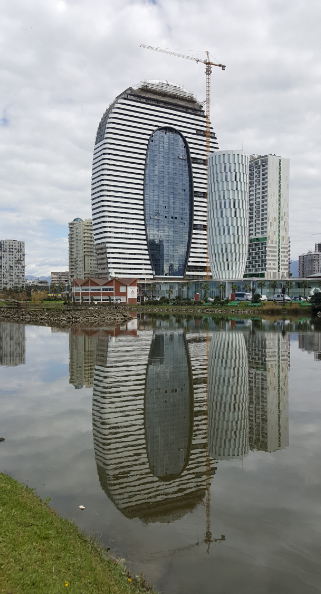
I was definitely not prepared for such interesting buildings! The pointy one in the middle literally has a ferris wheel on the side of it.
The train ride was five hours which is maybe a lot, but at this point, unless a leg of my journey is more than ten hours, I don’t even think twice about it. Five hours is easy, plus on a train you have a bathroom and space to walk around if you want. Luxury!
After the all-too-familiar packing struggle, I pulled myself together and left the hostel around 7:15 to get to the train station early in case I had any issues. It was a little confusing to figure out how to get into the station, but with my “keep cool and use your brain” mantra playing on repeat in my head, I followed some people carrying suitcases and was delivered straight to my train. Fabulous.
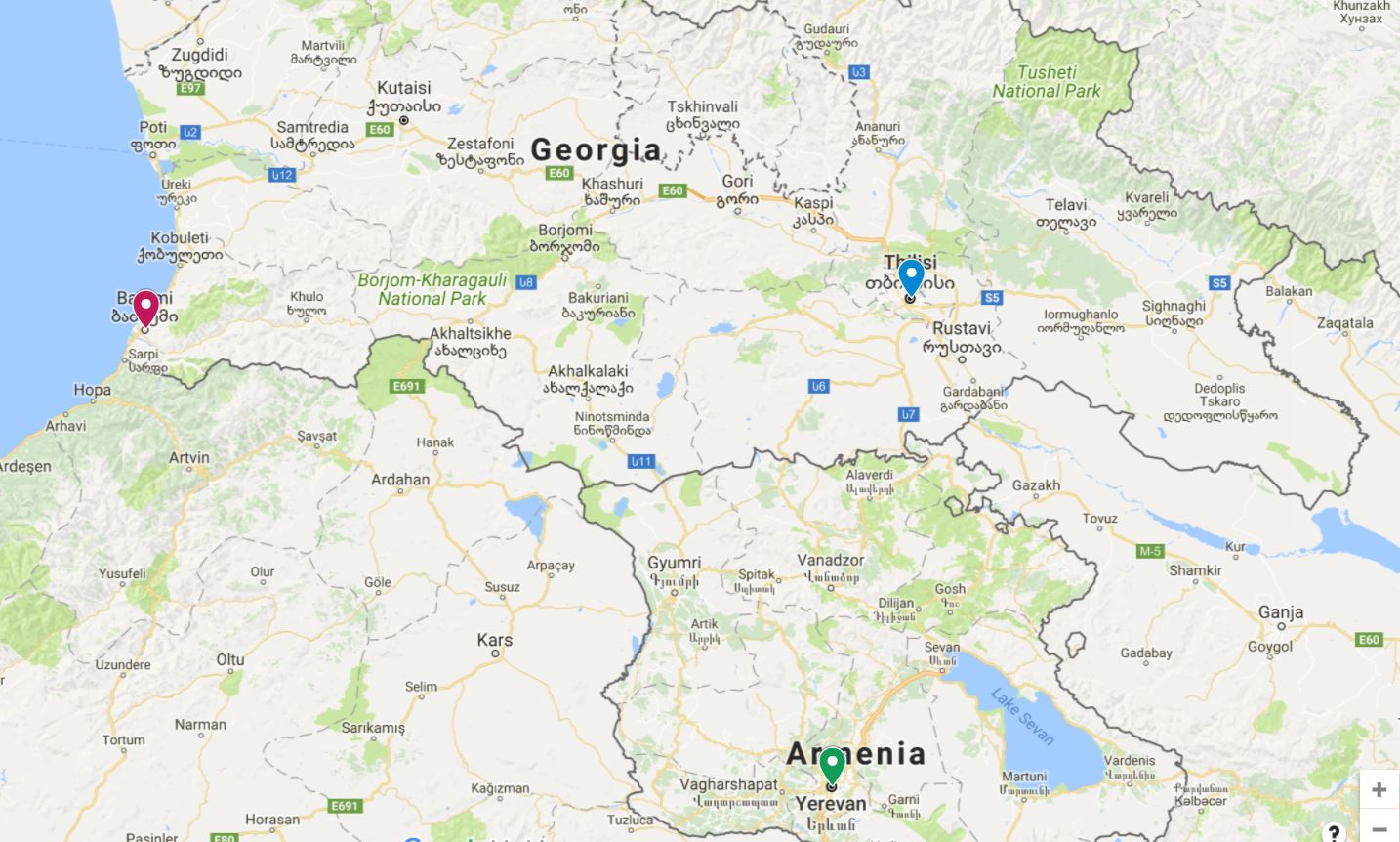
To help orient you, Armenia is at the bottom (Yerevan is marked with green pin), Tbilisi is marked in blue, and Batumi is to the west in red
The train ride went smoothly until we were maybe 20 minutes from Batumi. We stopped at a station along the way and then didn’t start moving again. They made some announcement in Georgian and Russian, and people started freaking out. I asked some Russian-speaking girls sitting near me if they spoke English, and one knew enough to explain that there was something happening with the train and the tracks and the weather maybe? But the conclusion was that the train was not moving until whatever was resolved, and there was no timeline on when that would happen. Okay, cool. I settled in to wait it out because sometimes these things happen. Around me, it was chaos. People were yelling at the conductors in Georgian and Russian (as if that was going to change anything). Some were jumping ship and aggravatedly calling taxis to go the rest of the way. An English-speaking kid was whining about how the wifi wasn’t working, and his mom was going on and on about how she was worried that the train was going to leave us in the middle of nowhere as if she thought that was an actual possibility. And then she said, “and we’re running out of water,” as if we were stranded on a desert island and minutes away from death by dehydration.
Batumi!
About an hour later, we started moving again and made it to Batumi maybe an hour and a half behind schedule. Not a big deal. The next step was figuring out how to get from the train station to my hostel. The easy thing to do would be to take a taxi. When you’re trying to travel on a budget, you usually choose economic over easy, so I was taking the bus. I had scoped out the bus routes online, so I was fairly confident that I knew which numbers I could take. After a struggle figuring out where the bus stop was, I made it there and hopped on the first bus that came by.
Grey rock, grey sky
When I’m figuring out a new public transport system, I usually watch to see how everyone else pays and then just follow along with that. This time, I was the only one to get on, so that wasn’t an option. I sat down and stared at the various payment locations like maybe they’d make sense if I focused hard enough. Finally, a woman got on and I watched to see what she’d do. She took a chip card out of her purse and tapped it on one of the card readers. Okay, not helpful. I only had cash which meant that I needed to figure out the cash payment method. The woman looked nice, so I made eye contact (probably with a slightly panicked look in my eyes), held up some change, and made my best “how do I pay with cash?” face.
This is the way that travelling works when you don’t speak the language. Observation, facial expressions, sign language, and charades are key. She pointed to a woman who was sitting in the back of the bus, and the woman quickly came over to me. I pulled out the amount I thought I owed, she looked perplexed, and I dumped a bunch of change in my hand and held it out to her. She took what she needed, gave me some change, went to one of the machines to punch my ticket, handed it to me, and showed me that I had paid for two rides instead of just one which was why my ticket cost more than I thought. When we got close to my stop, my friend was getting off too. She offered to help me with my bags, and the ticket woman helped me to untuck my scarf which was stuck in my backpack. Basically, everyone was taking care of me. On the street, my friend introduced herself as Mina and asked if I needed a place to stay (via charades). I had a hostel booked so I was good, but I was definitely appreciative of the fact that everyone was so nice and helpful.
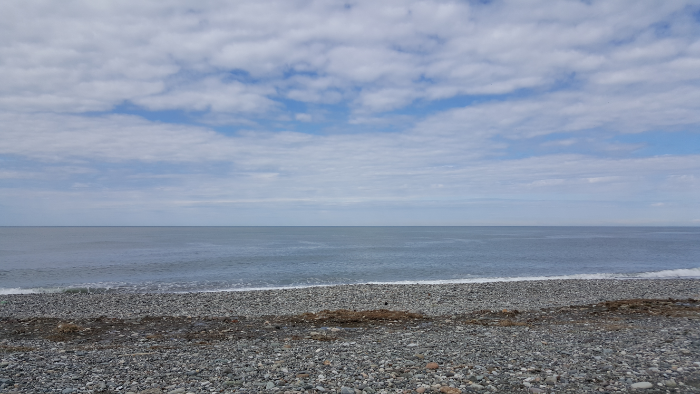
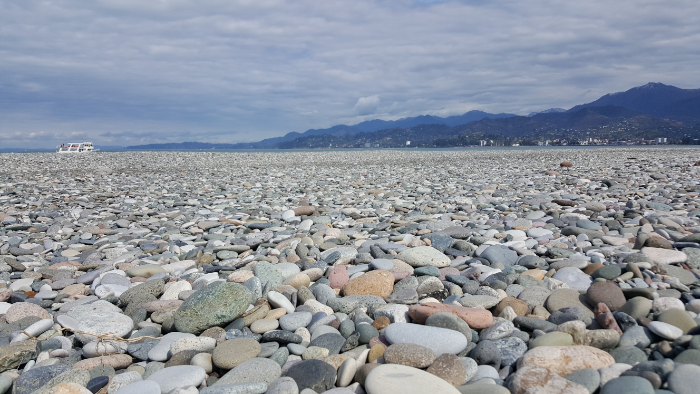
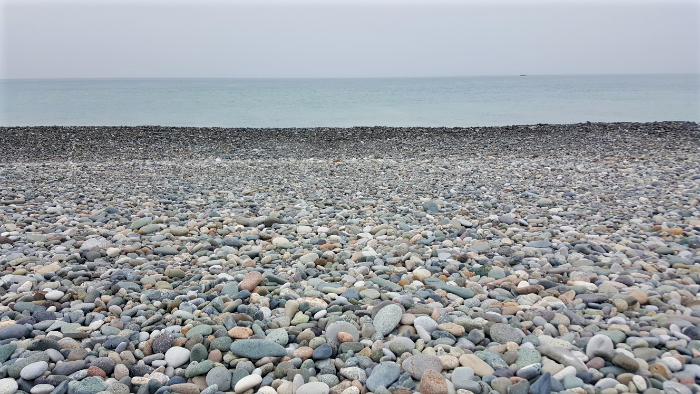
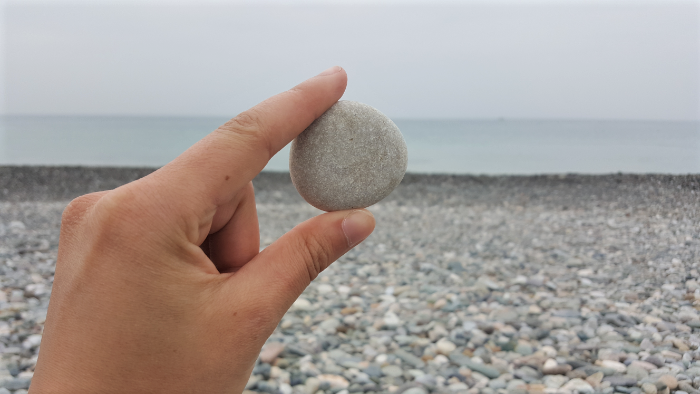
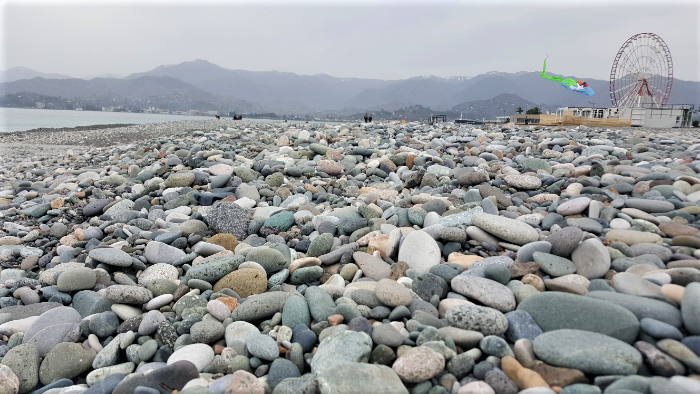
Since it’s still the off-season in Batumi and I was there during the week, I had the entire 6-person room in the hostel to myself! I was super happy to see how quiet and relaxed the city was because that’s exactly what I needed, a little escape from chaos and some time to think. I walked out to the harbor and followed the water to the beach where I had the BEST surprise. It was a stone beach! Okay, I know what you’re thinking. “Lara, you went to this place without even knowing that the beaches weren’t sand? Did you read literally nothing about it??” The answer to that would be yes, and that is totally not like me but I’m trying this new thing where I go with the flow and don’t over-plan my life.
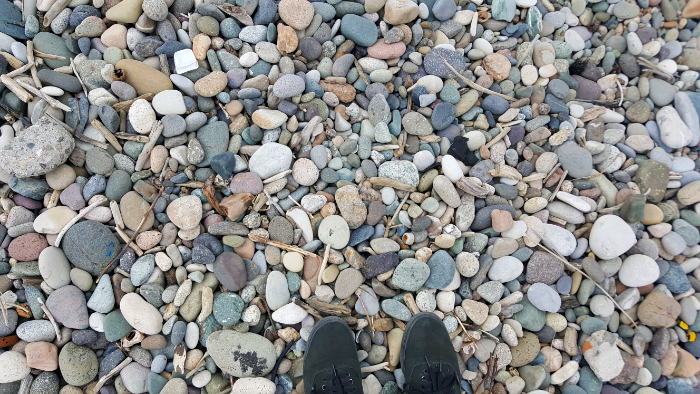
Okay so prepare yourself for a lot of rock pictures but like… I’m in love.
Anyway, that complete lack of research led to me being pleasantly surprised and extremely excited by what I found, so I’d argue that it was even better that way. In case you don’t know this about me, I despise sand. I don’t think I’ve ever truly liked it, but I successfully ignored that truth until a pivotal experience. Long story short, my friend Sarah and I went camping on a beach once because that’s such a romanticized idea and how cool to sleep on a beach… and by the morning, we were so over it. Three words: Sand. Gets. Everywhere. It was in the tent, in our clothes, in our mouths, all over everything. There was no shade because we were on a beach, and the tent was like an oven in the morning (that’s not sand’s fault, but it didn’t help the situation). We took showers and still felt sandy. We were on an island, and when the morning’s first ferry to the mainland pulled up, we couldn’t get on it fast enough. And that was the dramatic end to my already rocky (hehe) relationship with sand.
<3 <3 <3
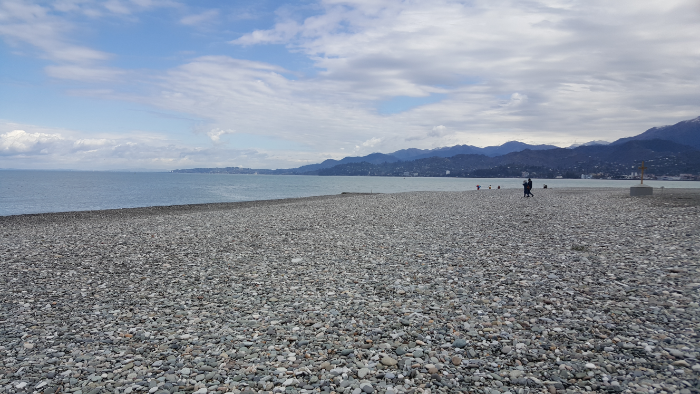
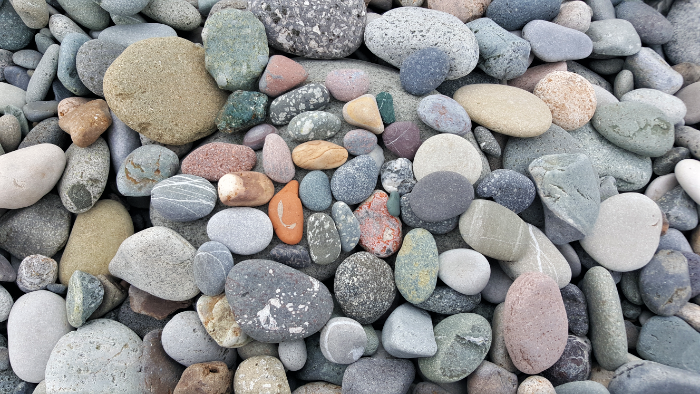
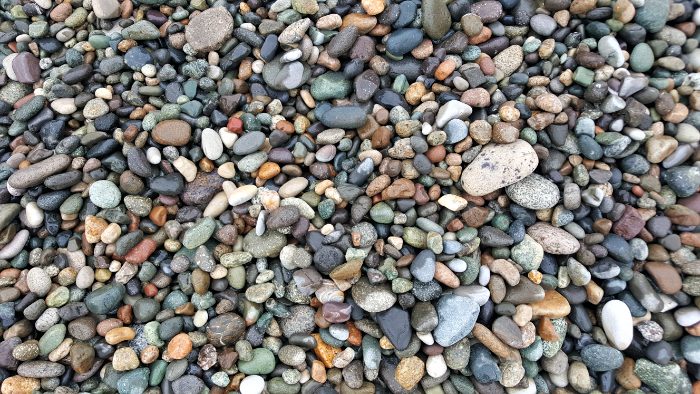
So anyway, as I was saying, stone beach. I think this might be one of my new favorite things because besides the fact that there’s no sand, the stones were beautiful! They were a million different colors, smoothed out by the sea and with pieces of driftwood mixed in. I walked along the shore (note: walking on a stone beach is at least as awkward as walking on sand, especially as the stones get smaller. Also, infinitely louder. There’s no way to sneak up on someone on a stone beach) until I found a good spot devoid of weird beach couples, plopped down, and organized my rock collection.
I love rocks. Pretty much in every application. I love old buildings made of rocks and rock-filled ruins. I also LOVE smooth and colorful rocks, and that is exactly what I was surrounded by. Between the rocks and the sound of the waves, I was in heaven. AND the weather was perfect. I had a t-shirt on, there was a nice, warm breeze coming off the water, and I didn’t even notice the temperature which means it was exactly right.
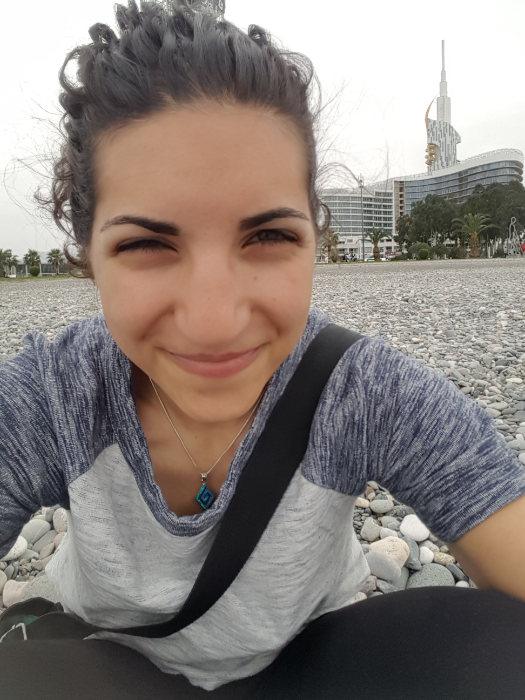
Me pretending I wasn’t taking a picture of myself
Some of the best rocks that I picked up along my walk
After sitting there and sorting rocks for who even knows how long, I decided that I had to go and touch the water because it’s the Black Sea, and I’m trying to touch as many bodies of water as possible. Okay, always a difficult task when you’re trying to touch water that’s coming in waves and you don’t want the rest of you to get wet. As I got closer to the water, I realized that half of the sound of the waves was the rocks clinking over one another as the waves went back out to sea. Seriously one of the coolest sounds. So of course, I stood there for a bit just listening before I got back to my mission.
Wet rocks near the sea
I spotted a good strategic location… there was a concrete pier sticking out into the water, and I thought that would be the perfect place to stick my hand down and keep the rest of me dry. The only problem was that there was some guy filming a video of himself that seemed to go on and on forever. After he finished, I hopped onto the pier, did my water touch, and was about to leave when he asked me to take a picture. He was British, and we got to talking and that was the end of any plans I had for the day.
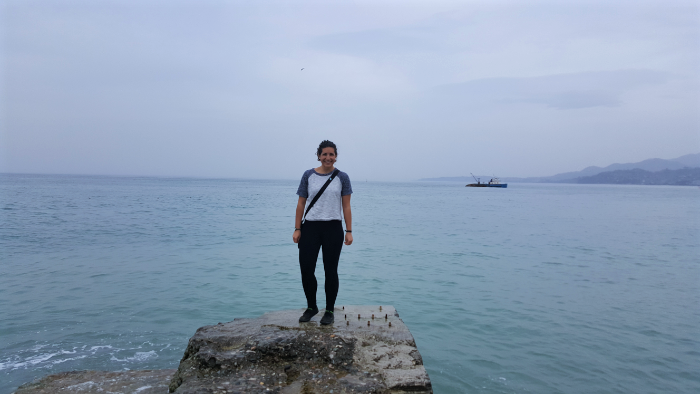
Me and the sea! Photo thanks to my new friend Ben
Meeting people is arguably the best part of travelling. I know, you can meet people anywhere, but it’s not the same. This guy, Ben, is in the middle of a motorcycle trip around the world. The purpose of his trip is to raise money in memory of his friend who passed away from Crohn’s disease, and it grew into a round-the-world adventure. He’s been going for eight months now and he thinks it’s going to take about four more years. Yes. Four years. He was planning to go through Armenia next, so we started talking about that and ended up getting dinner and hanging out for the rest of the day. That was the first time that I realized I’m now one of those crazy travel people. I looked at him and thought, “Look at this guy who’s doing this crazy travel thing!” and while we were talking, I was like, “Whoa, I can actually keep up with him. Look at this girl who’s doing this crazy travel thing!”
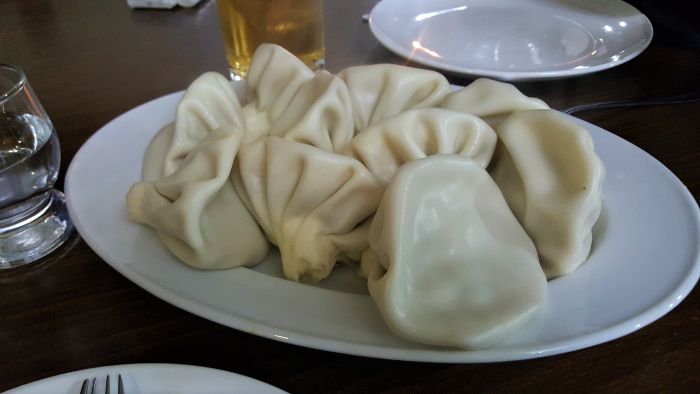
Ben and I got khinkali for dinner because he hadn’t had it yet, and it’s a classic Georgian dish. I always describe them as little meat-filled money sacks.
Nearly every travel friend I’ve made has taught me something about myself. I’ve met some incredibly insightful people, and despite the fact that those relationships are generally short-lived, it doesn’t matter. Sometimes, an 8-hour friendship can have a lifetime impact. It’s a good reminder that every interaction, no matter how brief, has the possibility to shift someone’s life.
(P.S. Sorry for the philosophical musings, but they’re probably going to be semi-frequent. I have a lot of things to sort out in my head right now, so enjoy your complimentary window into my swirling thoughts.)
After my cousins left, my time in Armenia quickly wrapped up. I planned to leave the country two days later, and between the goodbyes and the packing, those days flew by. From the second their cab pulled away, I was running. I said goodbye to the Birthright staff and had a final dinner with work friends before going back to my friend Zoe’s apartment to start pulling my life together.
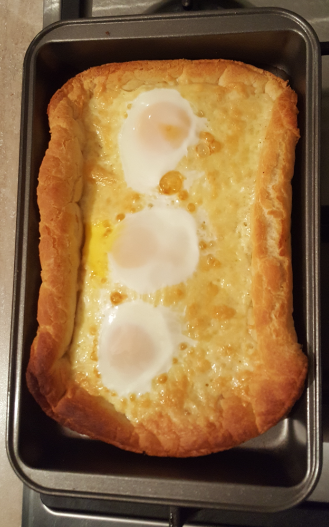
When I stayed at Olivia’s, we made our own khachapuri! Isn’t it beautiful?
I want to take a second to shout out to Zoe and Olivia for taking me in during my days of homelessness in Yerevan. They’re the best. Not only because of that, but yeah, they’re the best.
Zoe let me store my extra stuff at her place during the two weeks between my apartment move-out and my Armenia departure, and finally I couldn’t put off sorting through it any longer. Every time I move, I wonder the same thing… how on earth do I accumulate stuff so quickly?? I went to Armenia with a school backpack and a 55-liter backpack. I sent the school backpack home with my cousins, jam-packed with my Armenian notebooks and books and pairs of shoes (three! HOW??) and who even knows what else. That left me with one bag to hold the rest of my stuff, and the only options for each object were fit it or leave it.
I have this packing anxiety problem where I look at the pile of things to be packed, look at the bag, get stressed out, and decide that maybe it would be better to just ignore them both. As you can imagine, that’s maybe not the best approach to take because no part of it leads to me being ready to leave. I fought through it, and I don’t know how, but when I was finished, everything essential was inside my bag. It must be laced with a little bit of magic.
Me and Olivia, saying goodbye for now
My last night in Armenia was spent with Zoe and Olivia. We went to church together and then out to dinner, and I had that feeling again. You know, the one where you feel like everything is right. Like perfect contentment. There are a lot of reasons why I think I was meant to stay in Armenia as long as I did, and those friends are two of the major ones. If I had left when I planned to, I never would have met them, and trust me, that would have been a terrible shame. God definitely did a little divine plotting to bring us together, and I can literally pinpoint His reasons in each relationship. It’s cool to feel like I have such a solid confirmation that I took the right path.
The next morning, I took a cab to the marshrutka station to catch a marshrutka to Tbilisi, Georgia. Before I go home, I’m doing some travelling around because why not? I’ve been saying that I’m taking the long way home… the VERY long way. The plan for Georgia was to stay for about a week, spend some time recovering emotionally from leaving Armenia, and then move on to my next destination.
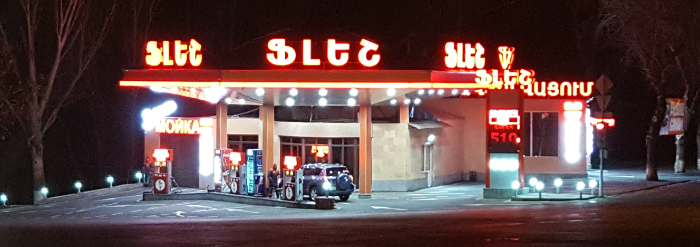
This is random but I’ve been meaning to take this picture for so long. These gas stations are everywhere, and they always make me laugh. They’re called “Flash” when you see it written in English, but the way it’s written in Armenian letters is “F-L-E-SH”… flesh. Something about that just cracks me up.
I wasn’t sure how I would feel about leaving Armenia. On one hand, I think I was ready. I was ready for a change of pace and some different scenery. On the other, everything was starting to fall into place for me there. I had some great friends, I could communicate fairly well, and I felt comfortable. Maybe that’s part of the reason it was time to move on… time to be uncomfortable again, time for the next challenge, time to stretch myself in a different way. I guess we’ll see what happens in this next chapter.
To be honest, I don’t think it even registered that I was leaving for real this time. I had gone and come back so many times that my brain felt like this was a temporary trip again. Maybe I will go back to Armenia someday, but it’ll never be the same. I’m probably not going to have a life there again, and that makes me sad… but the fact that I’m sad makes me happy because that means I had a great experience. Leaving happy things behind is always sad.
Taking a marshrutka out was a weird way to leave. When you fly, you’re in the country and the next second, you’re gone. In a marshrutka, the leaving is gradual. After we pulled away from the station, I still had four hours of Armenia ahead of me.
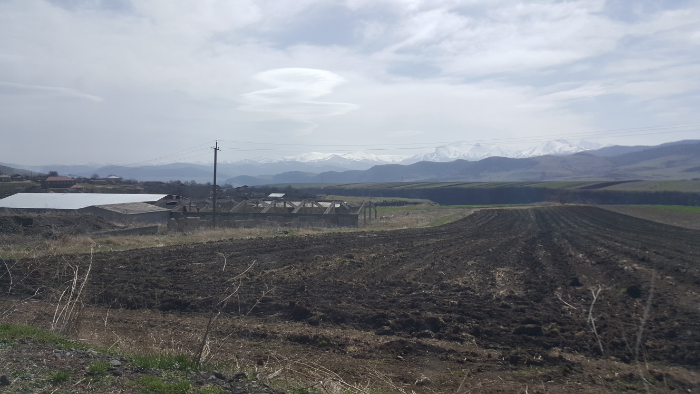
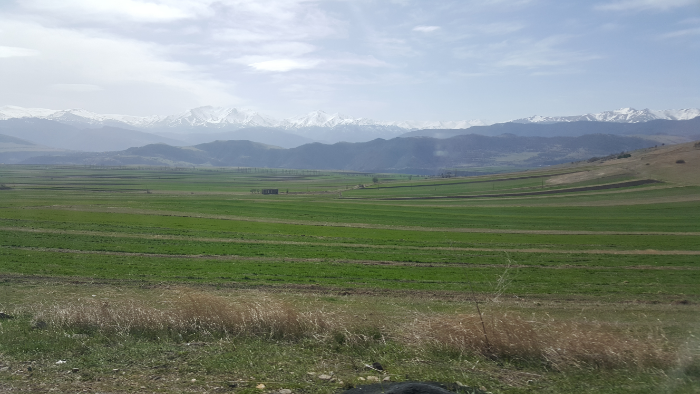
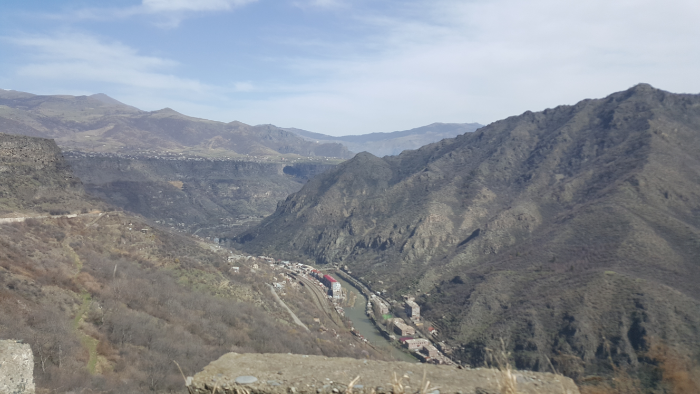
Here are some through-the-car-window shots from the drive to Tbilisi!
I’m not going to say that I cried during the ride or anything. I’m also not going to say that I didn’t cry. I will say that I spent the ride looking out the window, admiring the Armenian countryside and having some feelings about what was happening. You can’t really let yourself cry in marshrutka though. How embarrassing. And it’s not like in the US where everyone would pretend that you weren’t crying and ignore you. No, someone would absolutely ask what was wrong and that would make everything even worse.
Pretty, green Armenia
The ride to Tbilisi from Yerevan is five hours, and it felt like nothing. I would have been fine with sitting in that car for another five hours, but I think part of that is the fact that I always have a little anxiety about transitions. When you’re in the process of something, you know what to expect and you know you’re on some track (whether it’s the right or the wrong track is a different question that we’ll leave for another time). The transitions are scary because they’re unpredictable. And when you’re travelling, the transitions are also when you have to lug all of your stuff around, and that’s no fun either.
Right at the end of the drive, you go through these awesome mountains. Like come on, Armenia, Are you TRYING to make me change my mind and stay?
When we got to Tbilisi, the driver didn’t let us off near a metro station like I expected. Instead, we were at this bus station that’s totally not close to anything. Okay, keep your cool and use your brain, Lara (my mantra in every situation where my instincts say to panic, shut down, and cry in a ball on the ground). I realized that while the marshrutka driver was still there, I should ask him for help. I told him where I needed to go in Armenian, he asked this Georgian guy next to him in Russian, and the Georgian guy gave me two bus numbers and pointed me in the direction of the bus stop. And that was the last moment when my Armenian knowledge was of any use. Bummer, right? It’s always sad to realize that it doesn’t matter if you speak two or three or fifty languages as soon as you go to a country that doesn’t speak any of them.
I made it to the bus stop no problem and checked out the arrival board to see when the next bus was coming. Thank goodness numbers are the same in practically every language because even if you can’t read the name of the bus route, you can at least see the numbers. After finding the right bus, the next step was figuring out how to pay. I got on, sat down (no small feat while also wrangling all of my stuff), and watched what other people did. Everyone got onto the bus, swiped their metro cards at this little terminal, and got a receipt. When I felt sure about the procedure, I left my stuff in the seats, went up to get my receipt while acting like I totally had things under control, and whacked my head on a bar as I walked back to my seat. So much for that.
At the end of the bus line, I decided to just walk the rest of the way to the hostel because it was only six blocks… which is nothing until you’re wearing your life on your back and it’s a good 10 degrees C (20 degrees F) hotter than it was when you got dressed. So anyway, that’s how I started off my post-Armenia life: walking the streets of Tbilisi, wearing a huge backpack that got heavier with each step, and trying to pretend that I wasn’t sweating but definitely was. Off to a great start!
I realized that I promised you a post WEEKS ago about famous Armenians and my visit to the Komitas Pantheon where a bunch of them are buried. Well, before I talk about leaving Armenia, I need to make good on my promise!
My trip to the Pantheon was part of a day full of adventures, and it ended up being one of the highlights! I didn’t even know it existed until blog friend Lori the Naz made the suggestion… sometimes the internet can be a wonderfully cool thing!
View of Komitas Pantheon
During my time in Armenia, I learned a lot about the different Armenian cultural heroes. It’s kind of awesome how much the arts are prized there. For example, all of the money features scientists and artists and writers instead of politicians like the U.S. money. Of course, Armenia doesn’t have hundreds of years of presidents to choose from, but still, it’s a nice concept. They’re updating the money this year and maintaining that theme. The new bills will have a writer, a composer, a painter, St. Gregory (first head of the Armenian Apostolic Church), and a former chess world champion.
Chess, you ask? It seems random, but people often joke that the national sport is chess, partly because Armenians generally aren’t the most athletic (though there is one very good wrestler at the moment, so it’s not unheard of), but also because there’s such a big emphasis put on it. The great chess players are celebrated like professional athletes are in the States. Chess class is mandatory in schools for kids aged 6-8! You can see old men playing chess in every park in the country.
In the realm of more traditional arts, music has always been a big focus area for Armenians. One of the best parts of going to the opera/ballet all the time was hearing the orchestra play. There are SO many amazing Armenian musicians. I met someone from Lebanon recently who joked that every single musical instrument teacher in Lebanon is Armenian. In summary, simply put, the arts are one area where the Armenians are doing pretty darn well.
It might seem like that was a big sidetrack, but it’s important to understand the role of the arts in Armenia before I talk about the people who are buried at the Komitas Pantheon. They are some of the most celebrated Armenians, and the majority of them are artists of some kind.
There are, of course, a million different artists I could probably talk about, but I’m going to focus on the ones I have heard of who are buried at the pantheon. Ready for a little Armenian culture lesson? (Just a warning that if you actually want to learn about these people, you should probably read something else because the summaries are maybe 50% fact and 50% Lara commentary.)
Aram Khatchaturian
Aram Khatchaturian (1903 – 1978)
Composer
Currently on the 50 dram coin
Khatchaturian is one of the most celebrated Armenian composers. He was born and raised in Tbilisi, but make no mistake, he was definitely Armenian! He composed multiple concertos and symphonies, plus the music for the ballets Masquerade, Gayane, and Spartacus. I went to see Masquerade and Spartacus, and they were both incredible (the music part at least). I also was amazed by how many of the songs I had heard before, and that’s because some of his work is pretty mainstream, not because I’m some Armenian music savant.
Komitas
Komitas (1869 – 1935)
Composer
To be featured on future Armenian money
Let’s start out with what I consider to be an essential fact… Komitas’s real name was Soghomon Soghomonian. No wonder he changed it. Komitas was an orphan and was taken to Etchmiadzin to be raised in the seminary there. He became a priest and then also studied music in Germany and is credited with saving thousands of Armenian folk songs from oblivion by collecting and transcribing them.
Komitas’s life story is tragic. He was one of the Armenian intellectuals/cultural leaders who was arrested at the beginning of the Armenian Genocide, and while he actually managed to survive the ordeal after being placed in a prison camp, it took quite a toll on him and led to a mental breakdown and the development of PTSD. He spent the end of his life in a psychiatric hospital which seems to me like it might have been an even worse fate.</span
Mher Mkrtchyan (1930 – 1993)
Actor
Mher was an actor during the Soviet years, and he went by a stage name, Frunzik. He was born in Gyumri, and there’s a museum there honoring him. (I went and had no idea what anything was and couldn’t speak Armenian at the time, so maybe it was interesting, but I wouldn’t know.)
He was known for his sense of humor and acted in many comedy roles, but he also had a true talent for acting and starred in a number of dramatic Armenian classics. He had an Armenian nose (aka it was very big), and he frequently joked about that.
I don’t know what it is about artists and having complicated lives, but similar to many others, despite his professional success, his personal life was a series of unfortunate events. His wife was diagnosed with a mental illness and lived the rest of her life in an institution, his son had the same illness, and his daughter died in a car accident at age 39. He may have been a funny guy, but he spent the end of his life in a deep depression.
This is from when we went to visit Mher’s museum… and the street in front was under construction so we had to adventure our way insideMher Mkrditchian
Sergei Parajanov
Sergei Parajanov (1924 – 1990)
Film director
I wrote a detailed post about Parajanov herewhen I visited his museum with a friend. He was quite the interesting guy, so I’d recommend checking out that post if haven’t already or don’t remember.
One-second summary is that he was a filmmaker during the Soviet years, he was imprisoned multiple times for made up reasons, his films were aggressively censored, and he funneled his creative energy into hilarious collage-making as a side activity (the “hilarious” part is not objective… that’s based on my personal opinion).
William Saroyan
William Saroyan (1908 – 1981)
Writer
To be featured on future Armenian money
Saroyan was a writer of novels, plays, and short stories. As is the Armenian way, the claim is that he is underrated, and his name belongs alongside those of Hemingway, Steinbeck, and Faulkner. I haven’t read his stuff, so I can’t speak to that, but I can say that that’s the most Armenian thing I’ve ever heard.
It sounds like he was one of those slightly difficult artists… there was one project where MGM wanted to adapt a novel based on his childhood into a movie, and he was hired to help with the screenplay but refused to let them cut anything out. He was fired, and one day before the film was released, he released a novel of HIS version of the screenplay. After that, he refused to let his work be adapted into movies.
He was born in the US, so half of his ashes are buried there, and the other half are in Armenia.
Martiros Saryan
Martiros Saryan (1880 – 1972)
Painter
Currently on the 20,000 dram bill along with some of his work
Saryan was a painter during Soviet times. He wasn’t born in Armenia, but after he visited the country, he painted a ton of Armenian landscapes and also designed the coat of arms for the Soviet state of Armenia. Near the end of his life, he moved to Armenia, continued to paint, and also organized what is now the National Gallery of Armenia.
Hovhannes Shiraz
Hovhannes Shiraz (1914 – 1984) Poet
Shiraz was a poet from Gyumri, and he is considered to be one of the greatest Armenian poets of all time. We read a bunch of his work as part of Armenian class to celebrate his birthday, and I got to read this depressing poem about apricot trees and how they can’t have children and no one loves them or something to that effect. Uplifting, for sure. My understanding is that he wrote a lot about apricots, his mother, and Armenian patriotism.
From our Shiraz poetry recitalAlexander Tamanian
Alexander Tamanian (1878 – 1936)
Architect
Currently on the 500 dram coin with a building he designed
Tamanian was an architect and urban planner during Soviet years who was responsible for creating the master plans for cities all over Armenia including Gyumri, Stepanakert, and the current center of Yerevan. I don’t know how I feel about him exactly, but I don’t think he’s my favorite. In the 1920s, Tamanian designed a new city center for Yerevan than resulted in the destruction of a lot of historic buildings, and they were replaced with these semi-European-looking buildings. To me, it’s like they’re not European and they’re not Armenian, so why?? The most famous buildings he has in Yerevan are probably the ones around Republic Square and the Opera House, and I’m not too keen on either of those. It could be because the exterior night lighting for both is terrible, or maybe I actually just don’t like the architecture either. It’s hard to separate them.
The Yerevan opera houseRepublic SquareMariam Aslamazian
Mariam Aslamazian (1907 – 2006)
Painter
Mariam and her sister, Yeranuhi, were both painters born in Gyumri. I went to their museum when I lived there, and they have some interesting stuff. Mariam is referred to as the “Armenian Frida Kahlo” because of her style, but don’t ask me who gave her that title. She did more than just paint… she also did a lot of ceramics work and various random other handcrafts.
Bonus!
There are a couple of people I want to talk about who aren’t buried at the Komitas Patheon, but I came across their graves in Georgia, and I feel like this is an appropriate time to bring them up.
Hovhannes Tumanyan
Hovhannes Tumanyan (1869 – 1923)
Poet
Currently on the 5,000 dram bill
Not to be confused with Tamanian, Tumanyan was a poet who is even more of a big deal than Shiraz. He didn’t stop at poems though, he also wrote novels, ballads, fables, etc. He’s the one who wrote the rhyming version of the Armenian epic about David of Sassoun (which I talked about when I visited the Sasuntsi David statue).
Tumanyan lived much of his life in Tbilisi, Georgia, so it makes sense that he’s buried there. His grave is in the Armenian Pantheon in Tbilisi, just outside of the Holy Trinity Cathedral. It used to be part of a huge Armenian cemetery there which was destroyed despite Armenian protests during the construction of the cathedral. I’m not sure if his body is actually underneath the gravestone or not because it sounds like things really got messed up during the demolition which is unfortunate.
The Armenian Pantheon in TbilisiSayat Nova
Sayat Nova (1712 – 1795)
Poet, musician, composer
Sayat Nova was born in Tbilisi, Georgia and was named Harutyun Sayatyan. Sayat Nova means “King of Songs” in Persian. He wrote songs in Armenian, Georgian, Azerbaijani, and Persian and performed in the court of Georgian King Heraclius II. Some of his poems are written in all four languages! (Which basically just means that almost no one can read them.)
Officially, he’s credited with writing 220 songs, though the real number is almost certainly much higher. He was killed after refusing to convert from Christianity to Islam. Sergei Parajanov directed a movie partly about him, The Color of Pomegranates.
Both the Georgians and the Armenians try to claim Sayat Nova as theirs, and while they both have valid points, sharing is obviously not an option. He was born and lived in Georgia, but he was ethnically Armenian. So, I guess they made a deal to agree on his burial location. His grave is in Tbilisi, but it’s outside of one of the Armenian churches. Seems like a decent compromise to me! Also kind of funny…
—–
Okay, so now you know more half-facts about famous Armenians than you probably ever wanted to know. You’re welcome. I promise I won’t do this to you again. Feel free to read up elsewhere on any of these people and then tell me what a mess of a job I did giving their mini-biographies.

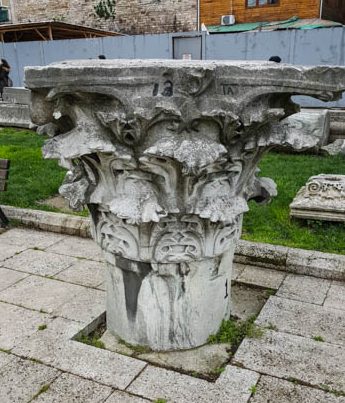
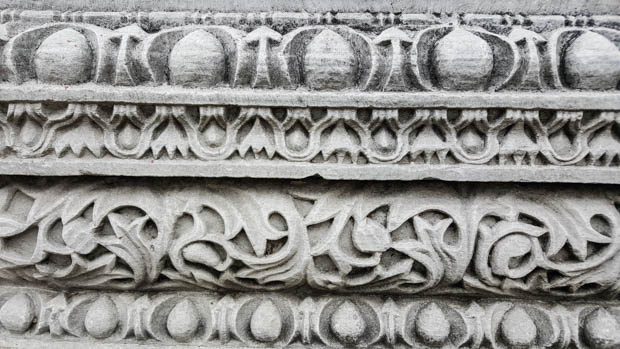
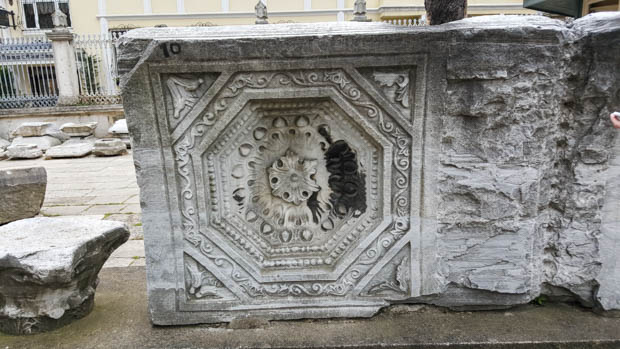
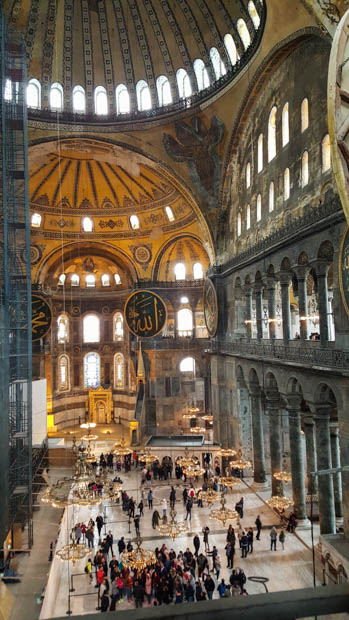
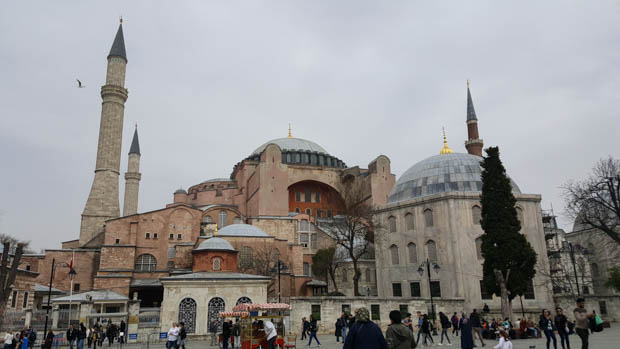
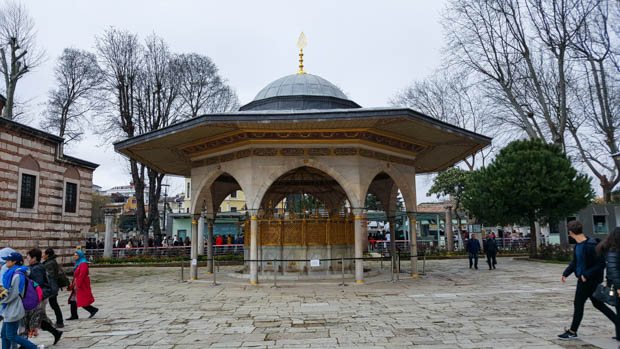
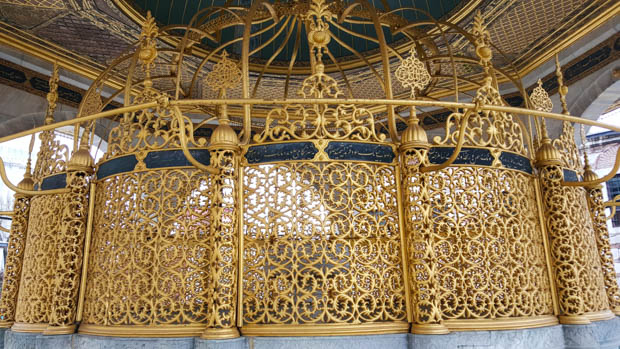
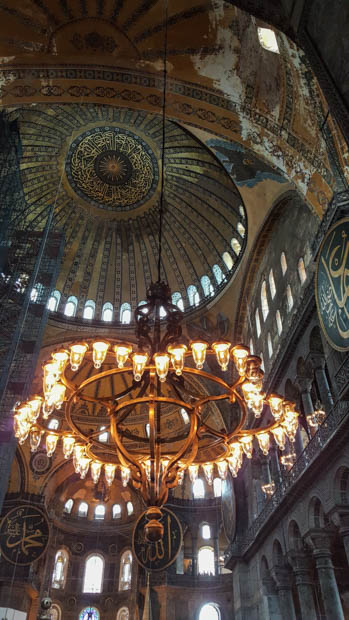
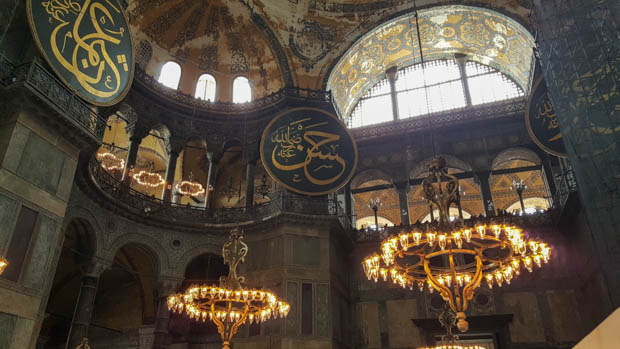
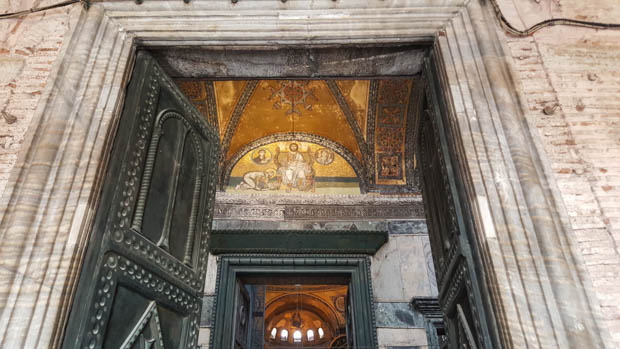
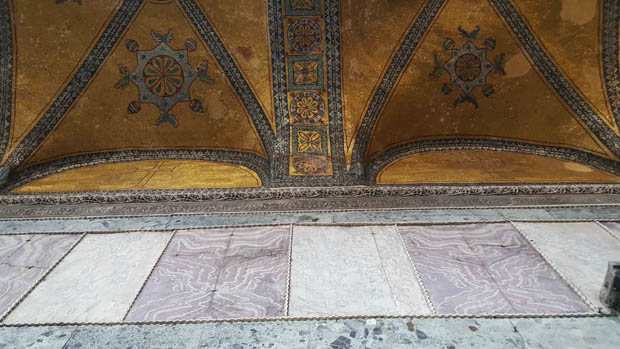
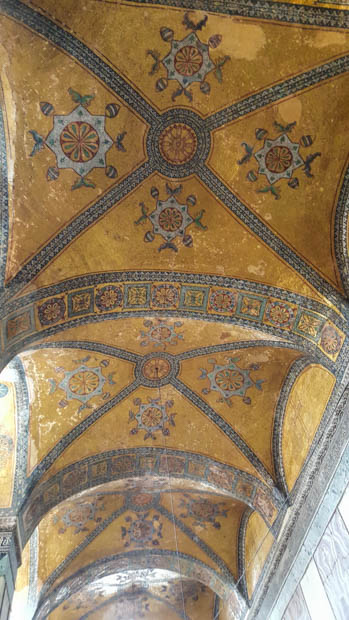
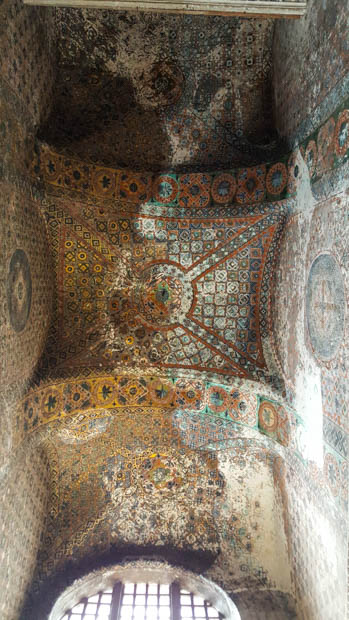
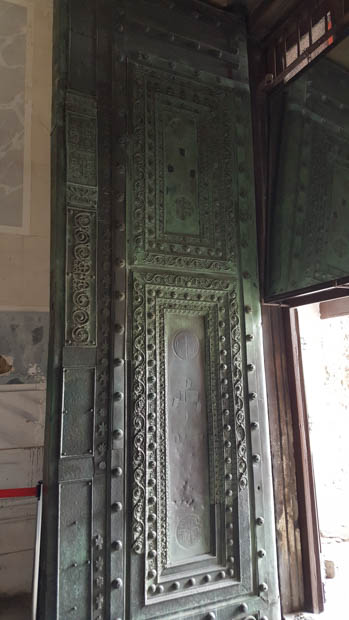
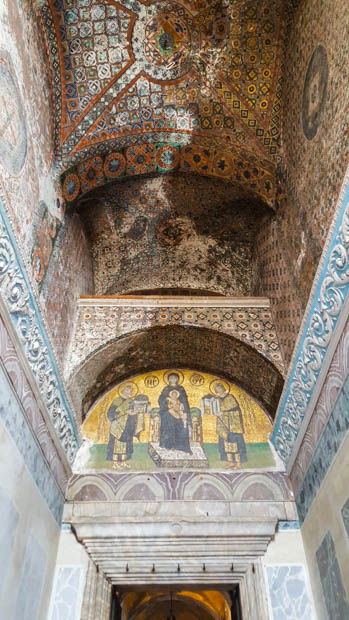
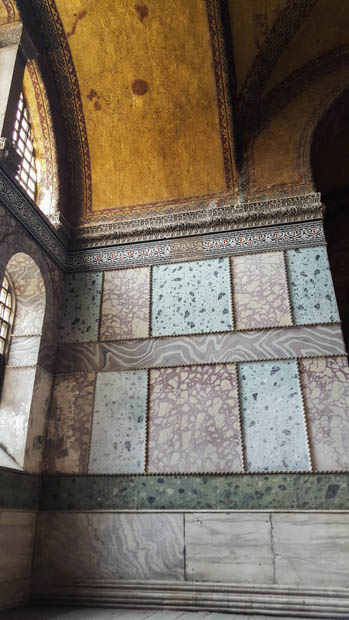
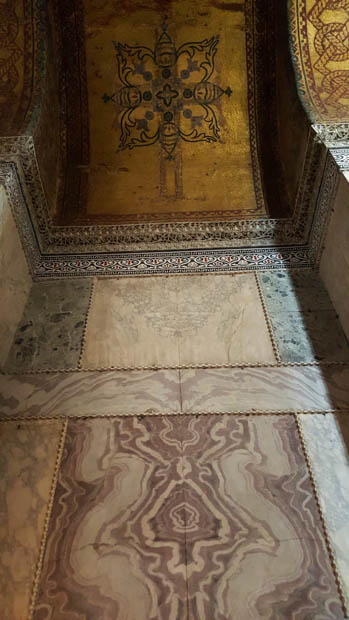
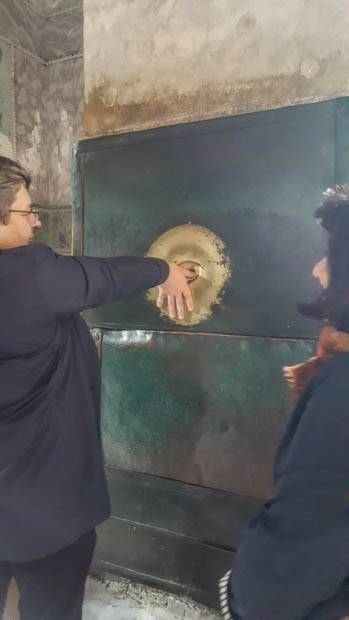
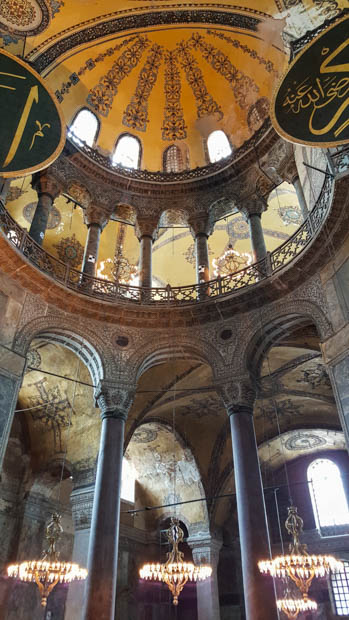
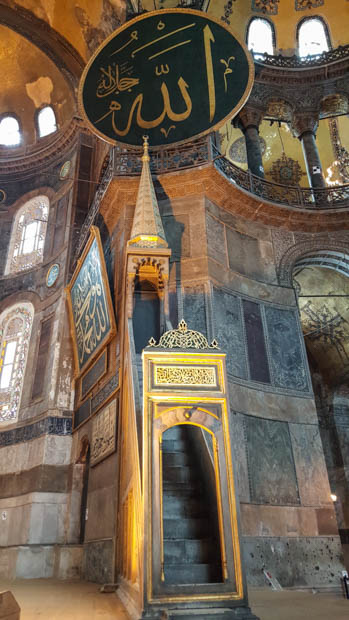
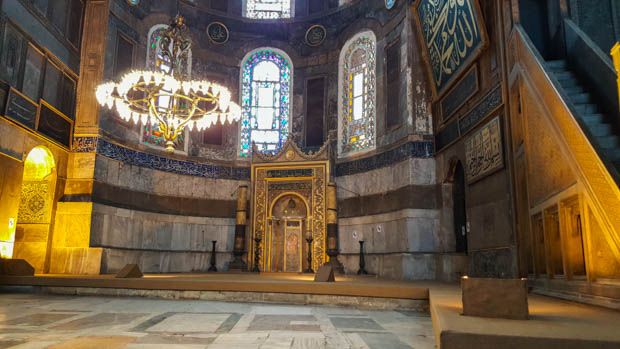
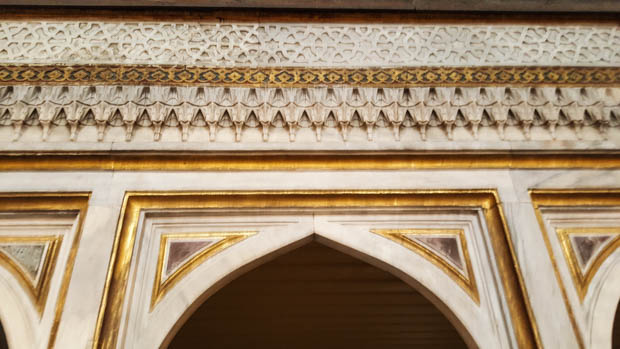
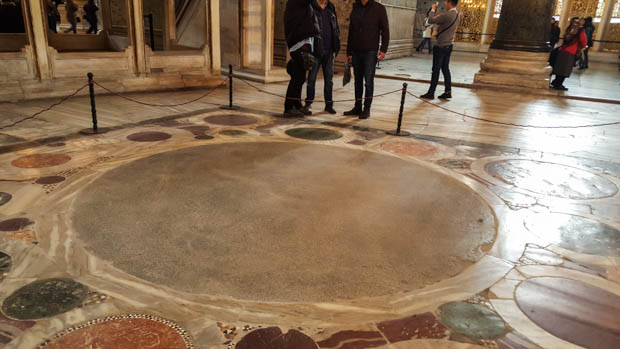
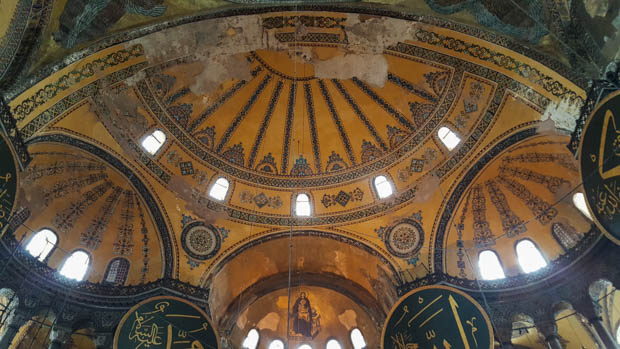
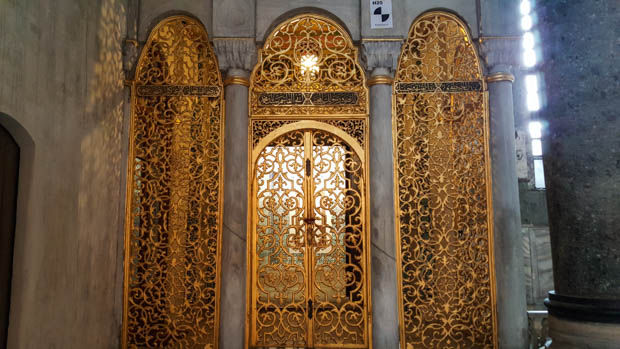
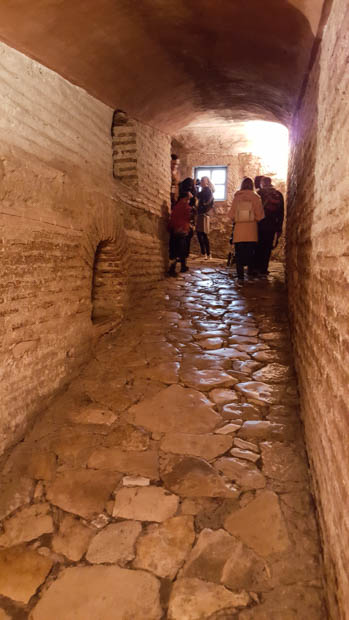
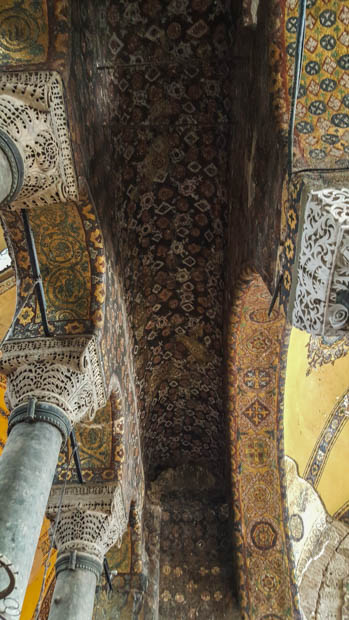
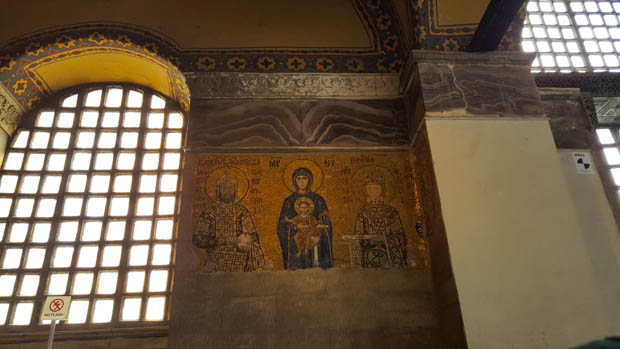
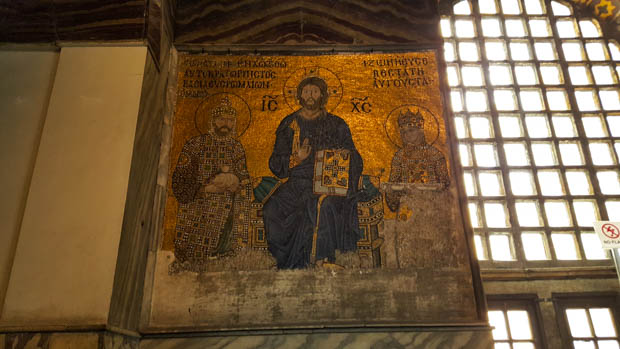
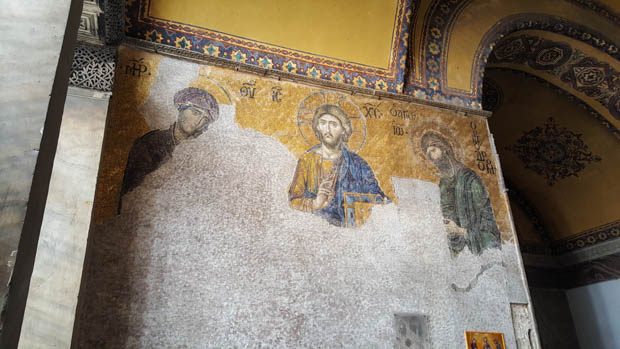
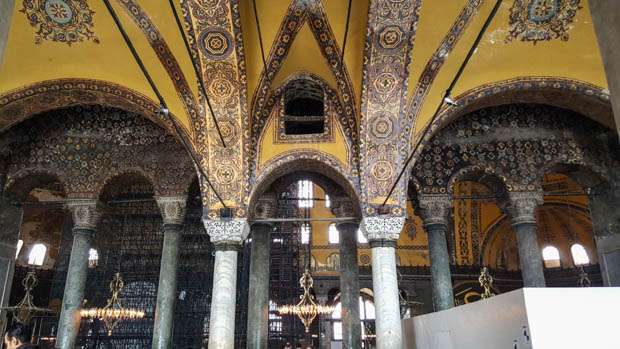
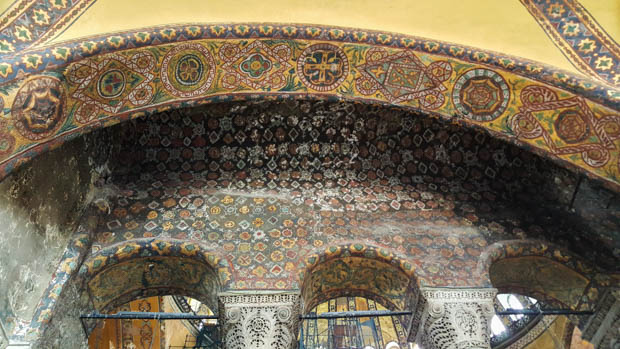
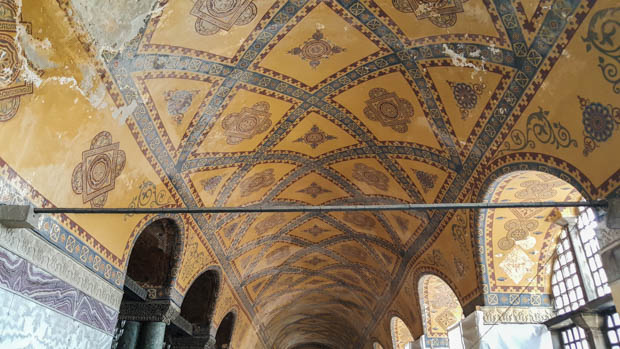
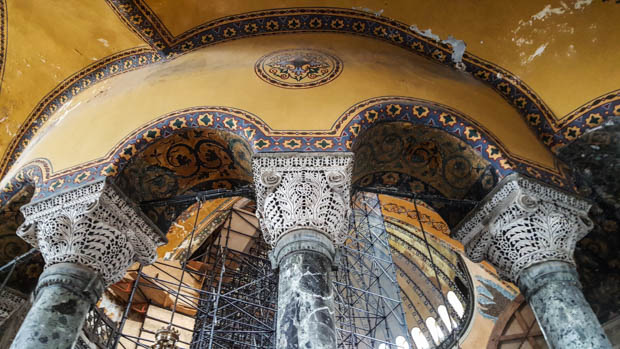
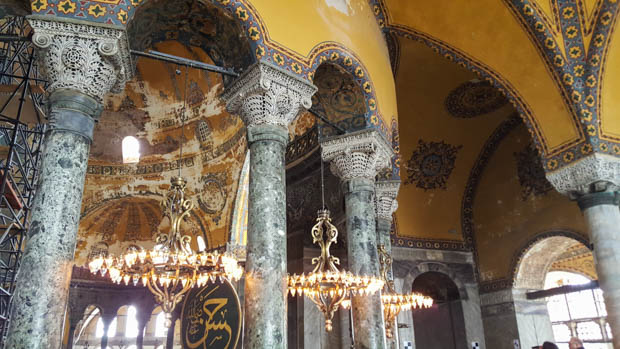
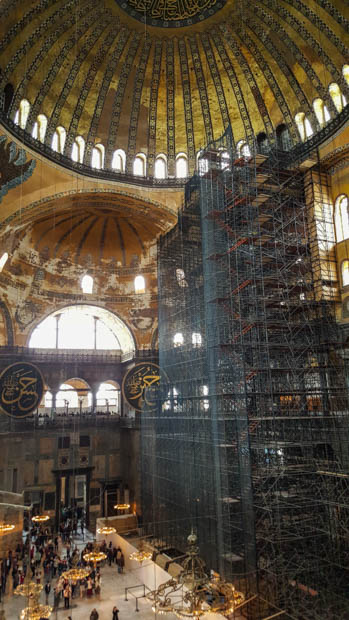
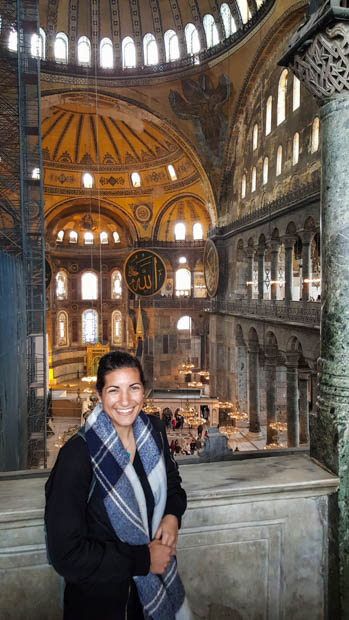
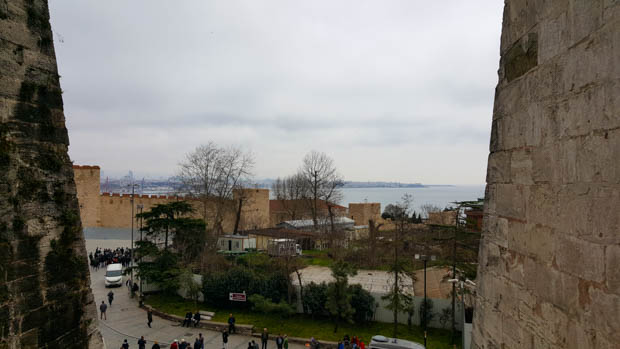
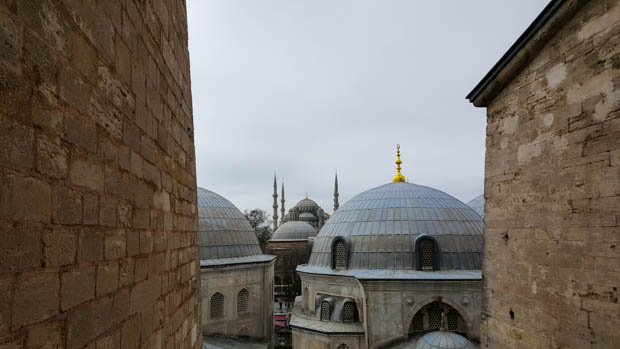
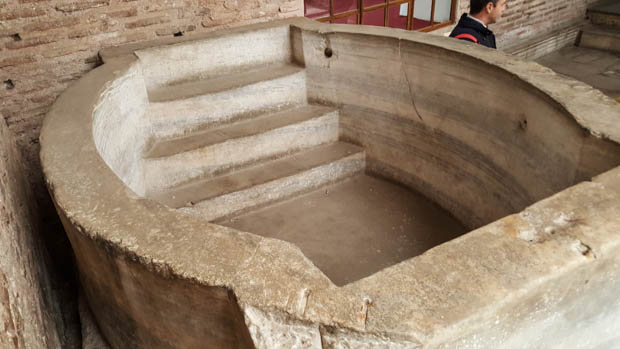
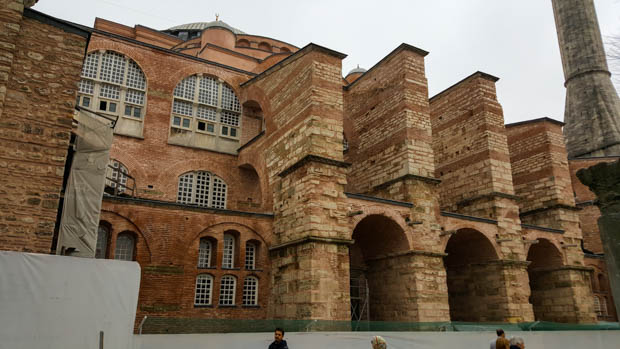
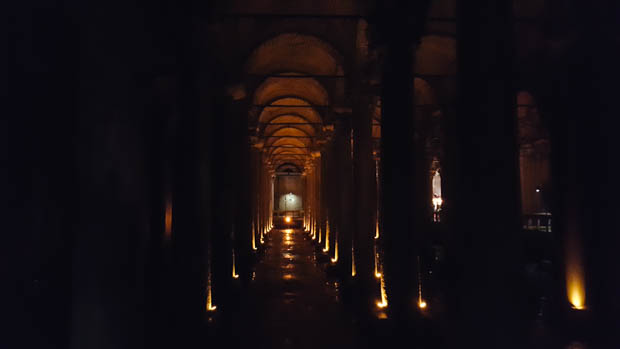
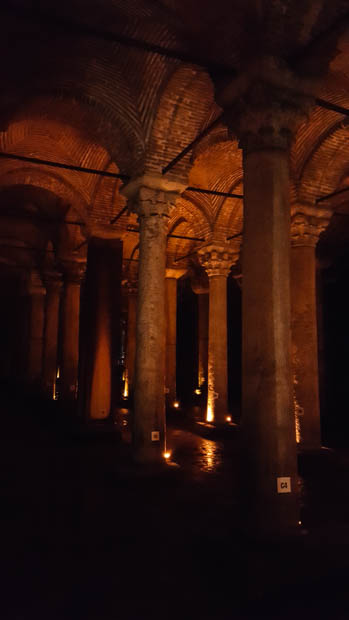 For me, that happened with the Basilica Cistern, or Yerebatan Sarnici in Turkish (Sinking Cistern). The “basilica” part of the name comes from the fact that there was formerly a basilica on the site. I had no idea what it was, but I saw a bunch of tour groups going and the self-guided walking tour I was following mentioned it, so I figured I should check it out. I know, all of this makes me sound like a complete idiot, but sometimes the best way to learn about something is to just go and experience it (things I tell myself that may or may not be completely true… sometimes it’s probably good to have a clue, but that’s not the way I’ve been operating recently).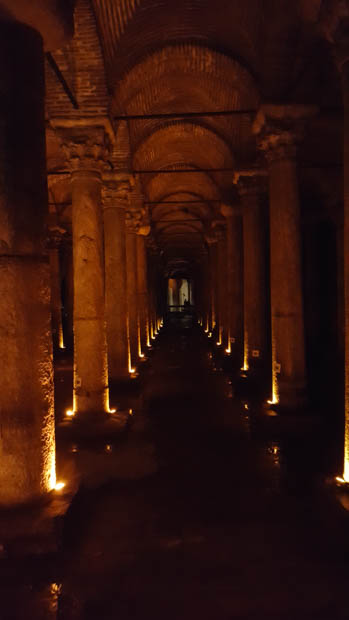
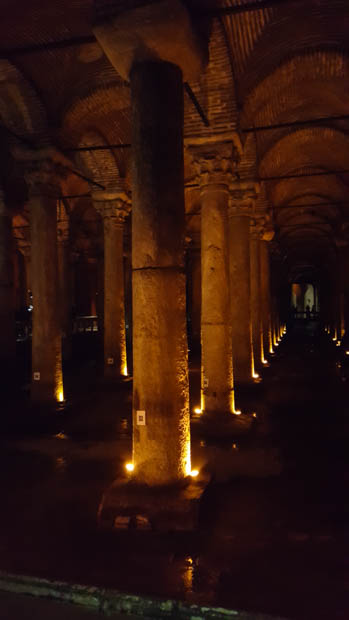
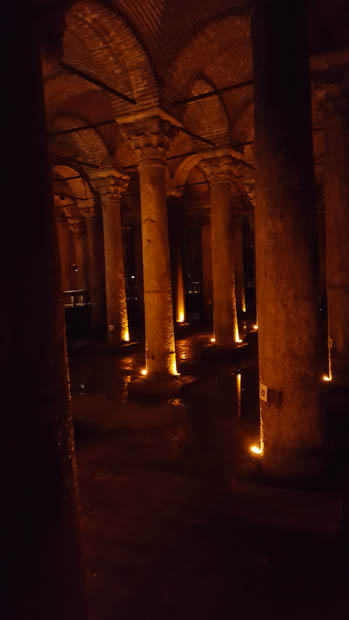
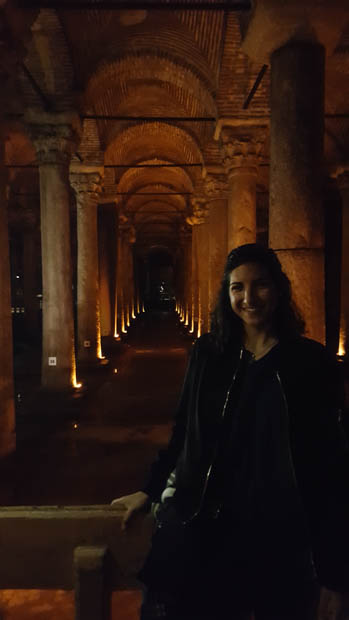
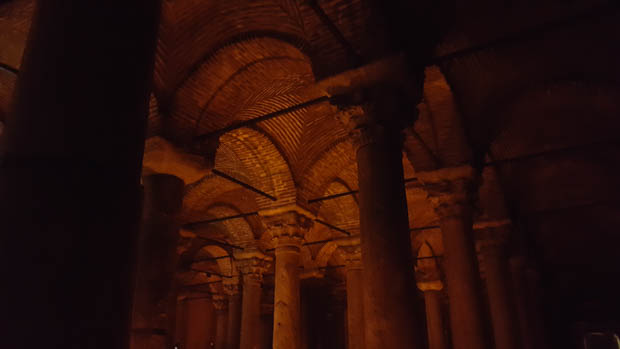
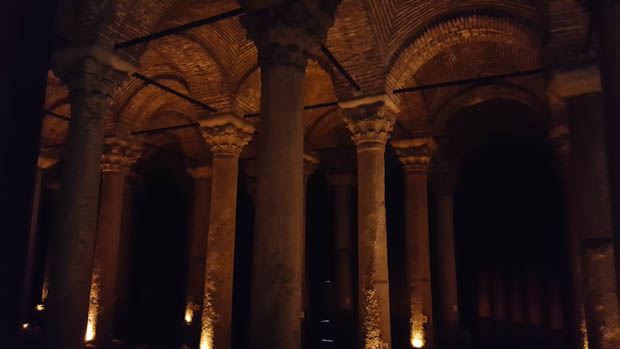
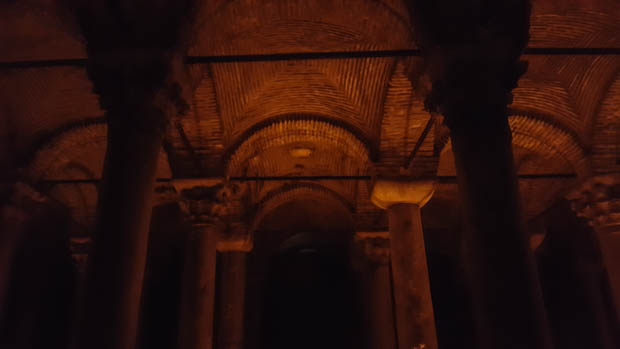
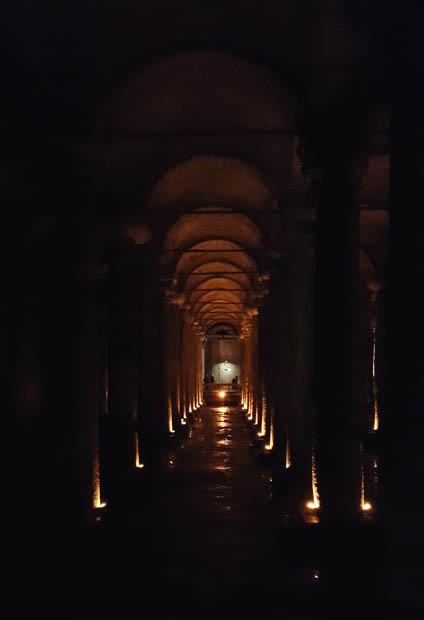
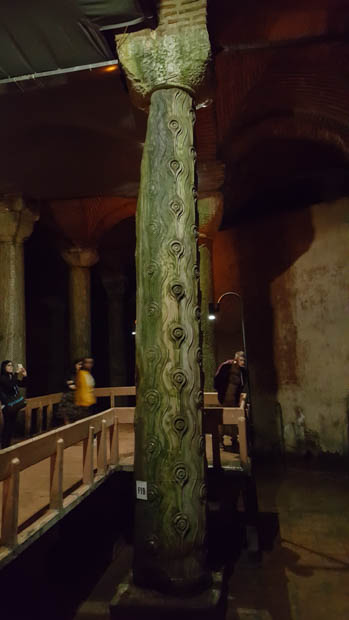
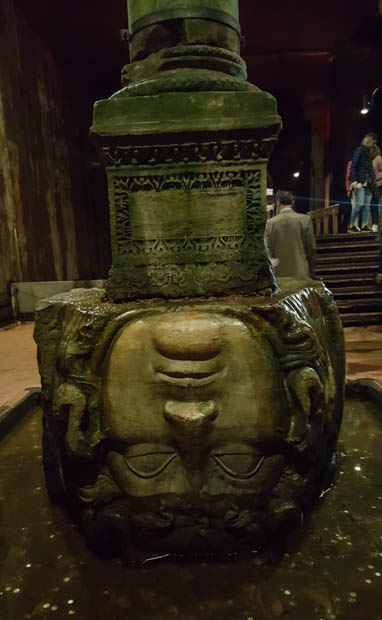
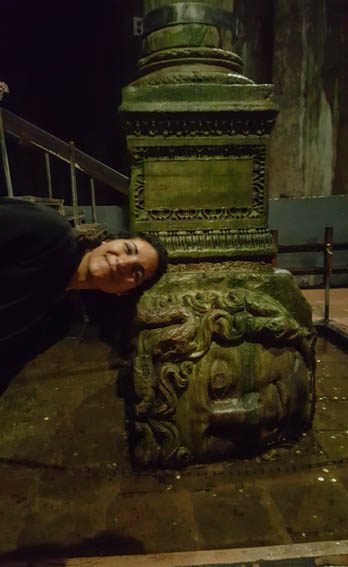
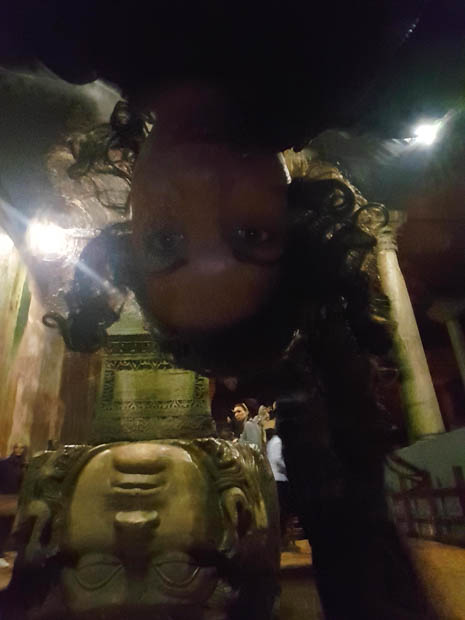
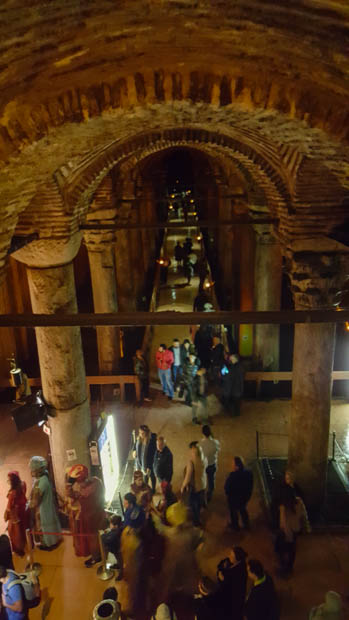
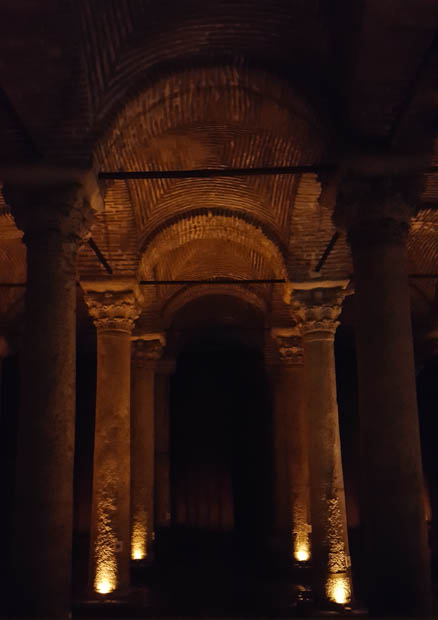
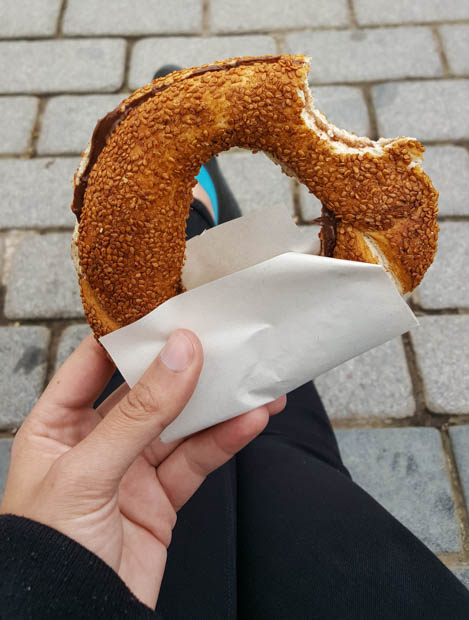
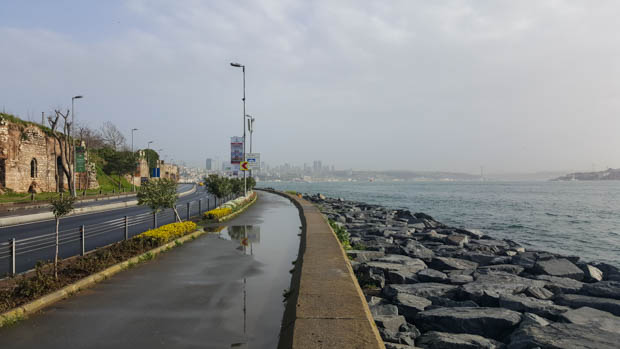
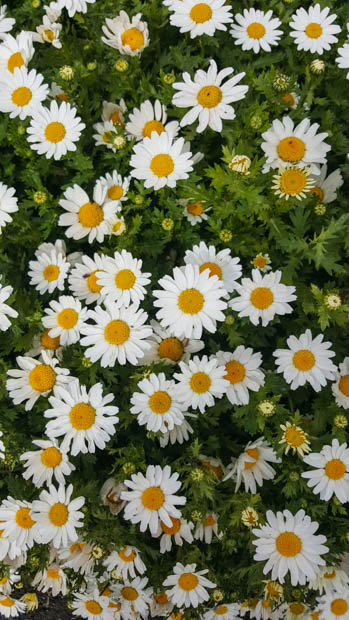
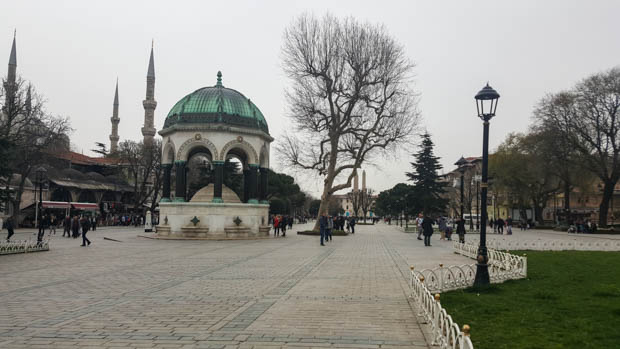
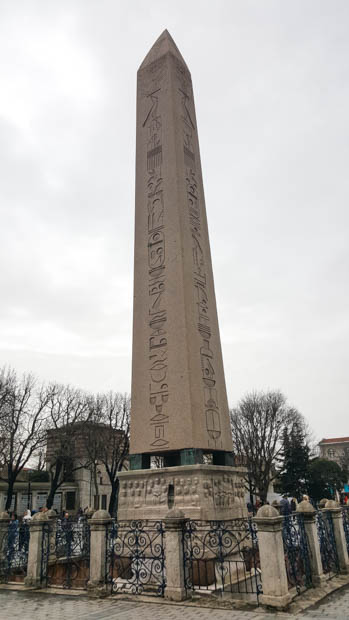
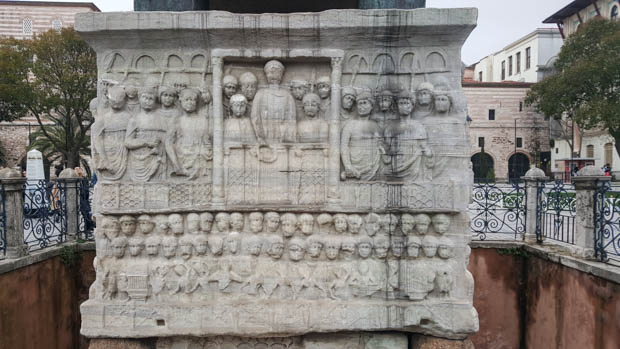
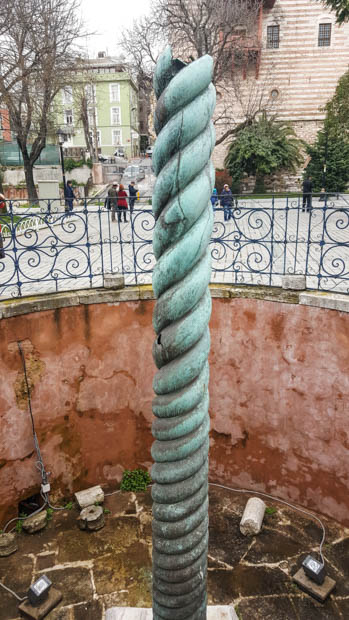
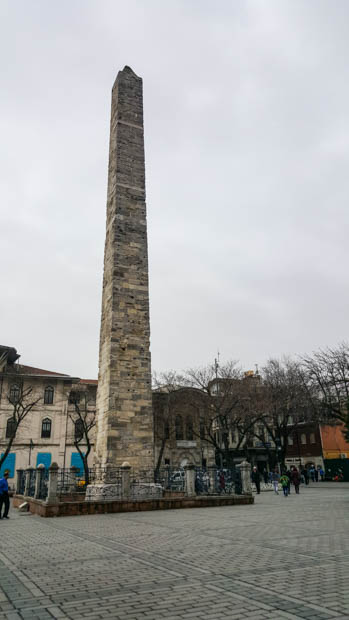
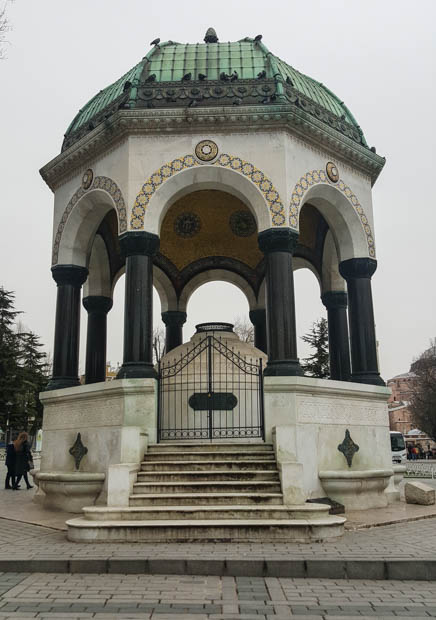
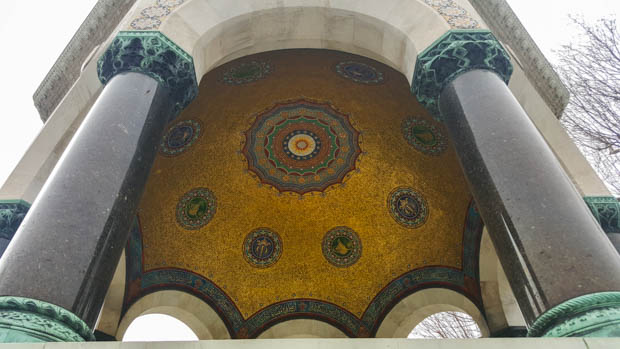
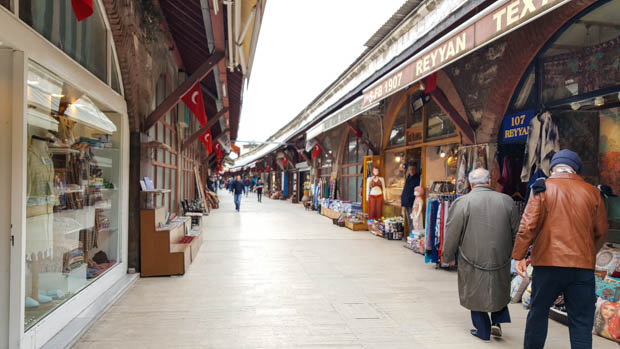
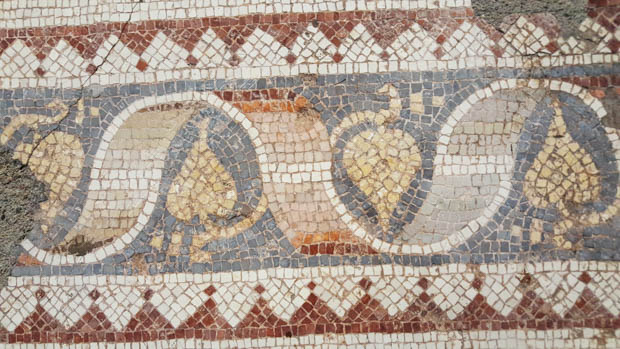
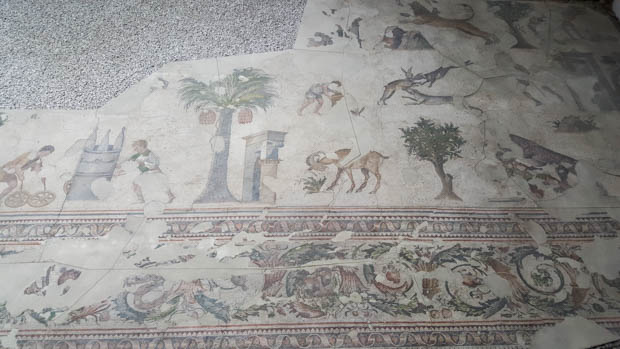
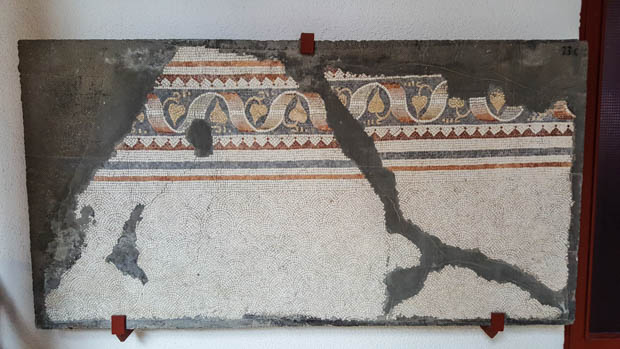
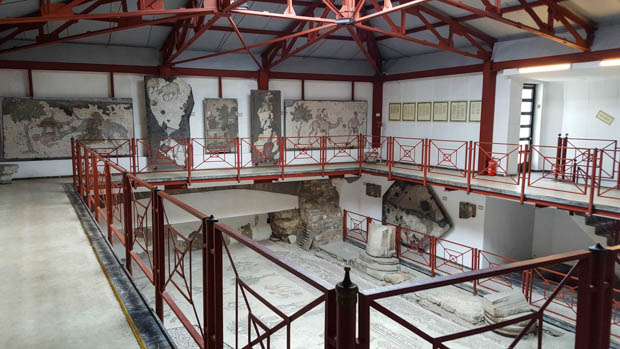
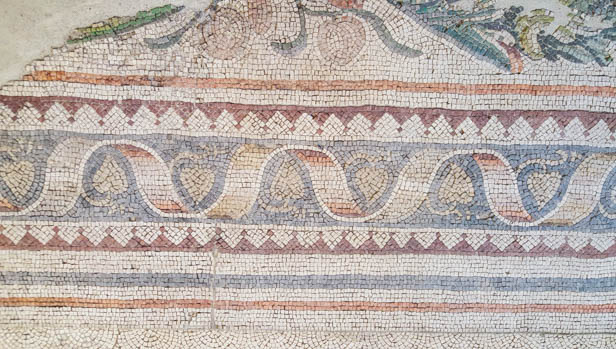
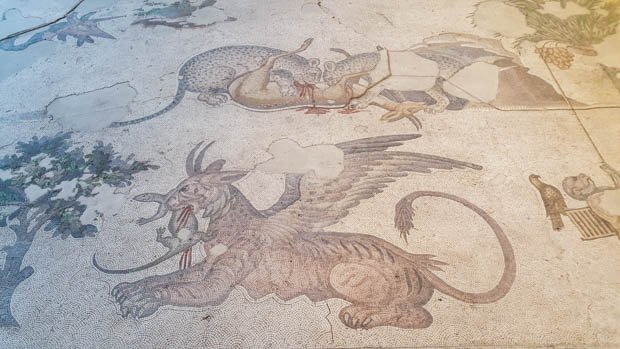
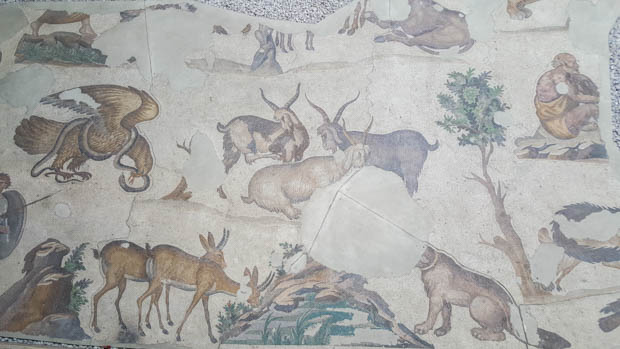
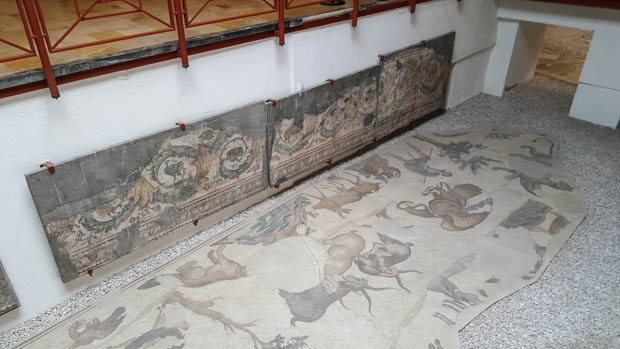
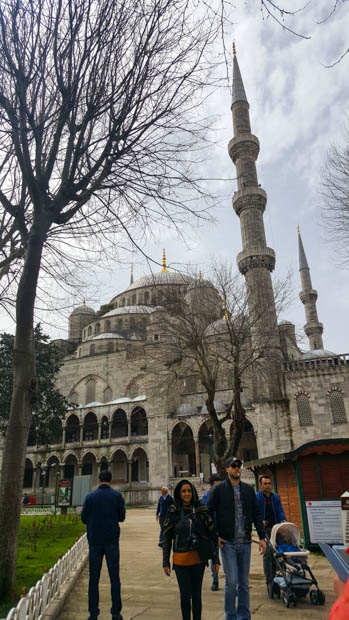 The main portion of the Grand Palace once stood on the site of the famous Blue Mosque. Unfortunately, when I visited, it was closed for renovations and I don’t want to think about it or I’ll be sad. The mosque was completed in 1616AD after only 7 years of construction! That may seem like a long time, but when you think about the fact that so many of the world’s epic churches took centuries to complete, it was basically finished in the blink of an eye.