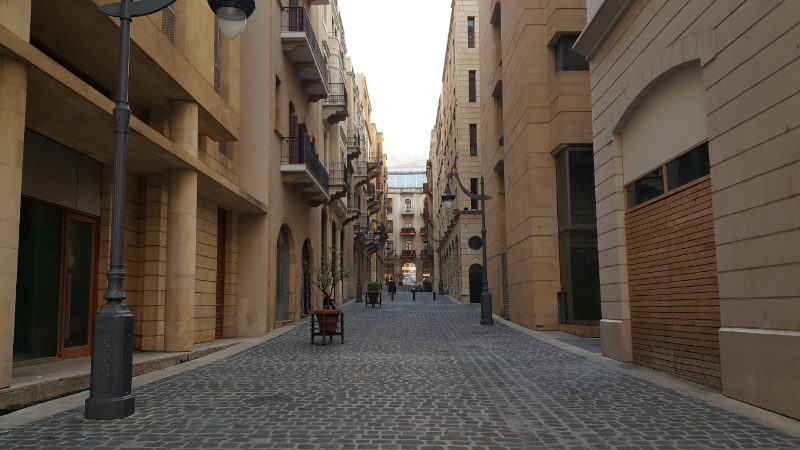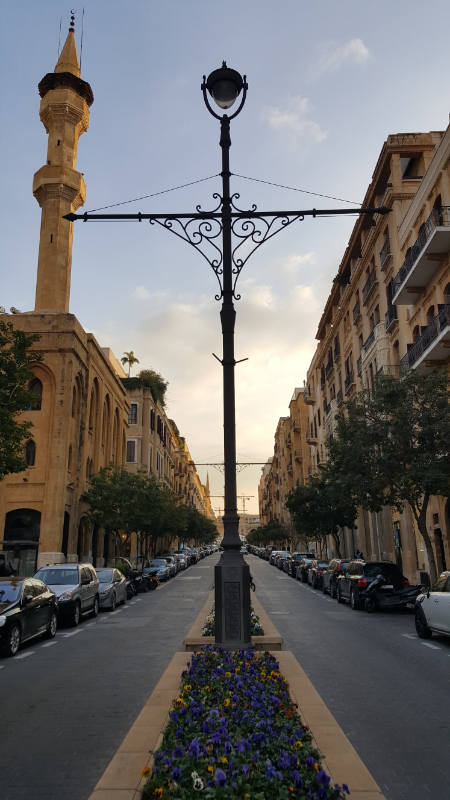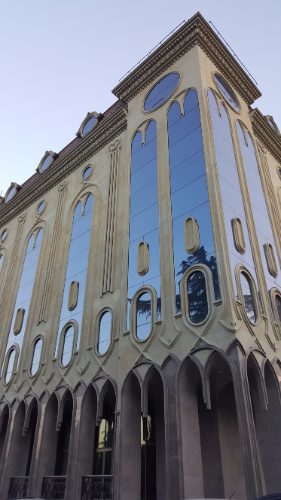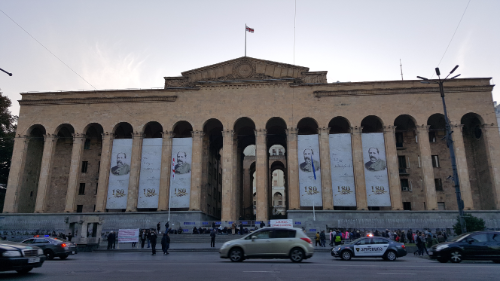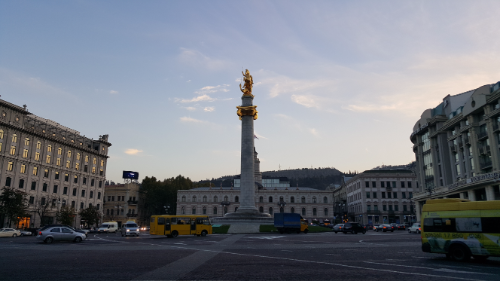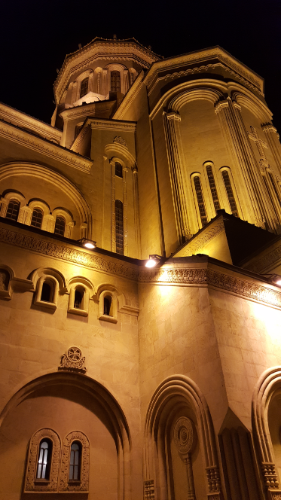
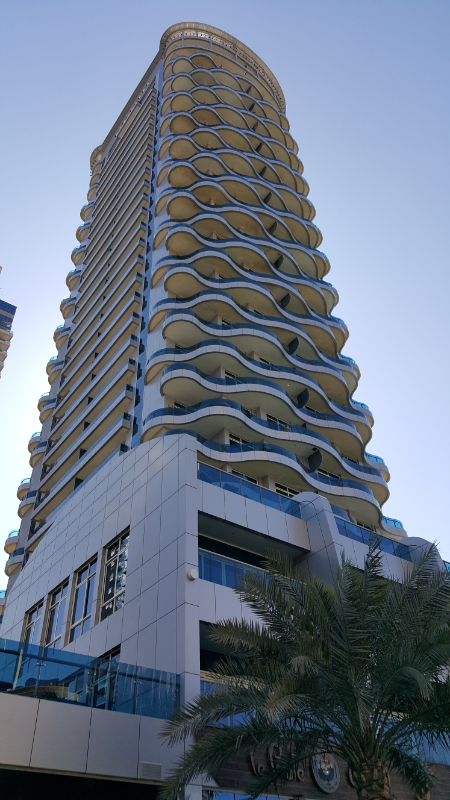
Funky balconies

I left off my previous post about my “world’s longest day” in Dubai at the Dubai Mall metro station…

I think they got their metros from Japan or something. They’re the same ones that they have in Hong Kong, if I’m not mistaken. They’re all automatically driven and perfectly line up with the glass doors on the platform every time. They are almost impeccably on schedule and can get VERY crowded (that has nothing to do with where the metros were made, it just seems to be a theme everywhere). Like I said in my Dubai intro post, the public transit has optional designated seating for women that I wasn’t going to use until I realized that I was the only woman on the platform NOT in front of the women’s car. When it came and we all packed in, I was happy with my decision.

I took the metro to one of the stops near Dubai Marina. Then, a bunch of people were running to catch a tram that was coming, and I remembered from the transit map that one of the stops was Marina Mall which is exactly where I needed to go. What I didn’t realize was that the tram does a loop from the stop I was at, and the mall is the last stop on that loop, not the first. Oops.
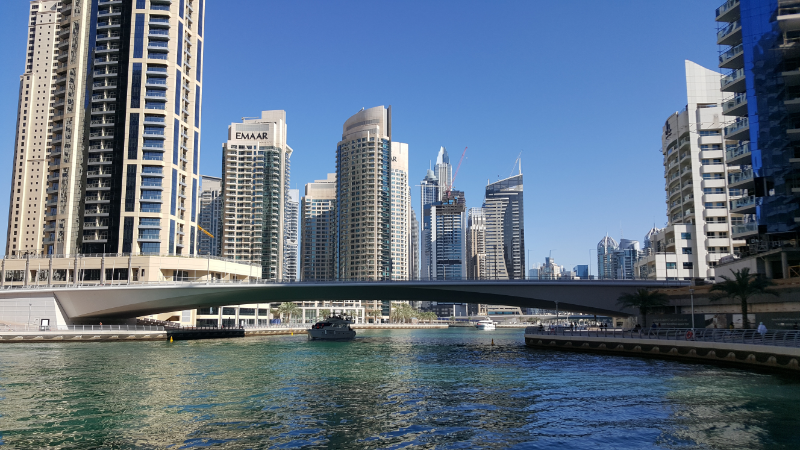
Dubai Marina
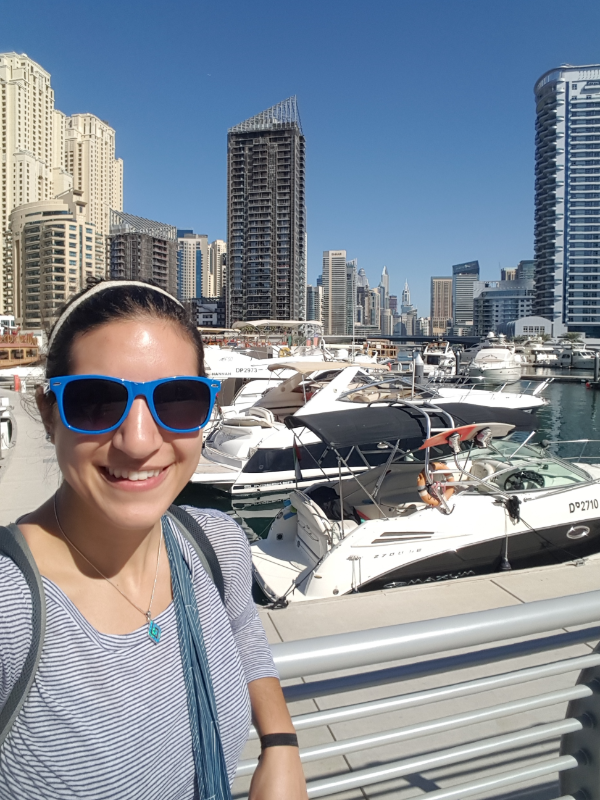
Awkward marina selfie as I sweated it out in my winter-appropriate attire.

I planned to take a ferry from the marina to the “old” part of Dubai. Due to my unexpected detour, I got to the ferry terminal at about 11:02, and the ferry left at 11. It was pulling out just as I walked up. I’m blessed with very good luck disguised as bad luck, though, because every time I think something has gone wrong, I end up being better off than if it had gone “right”. Okay, so I missed the first ferry, but the next one was in just two hours.

There’s a promenade that runs right next to the water, so I strolled along that for a bit and took in the sights. I spent a little more time sitting on a bench, soaking in the sun and warm air, watching people walk, run, and bike by, and wondering what brought each of them to Dubai.
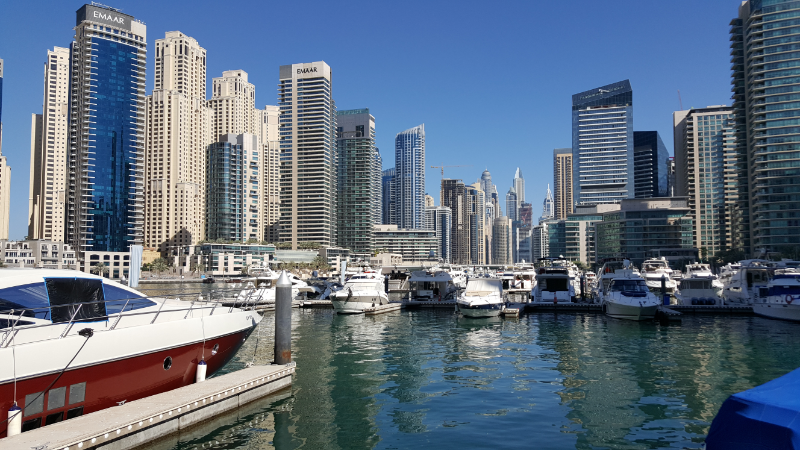
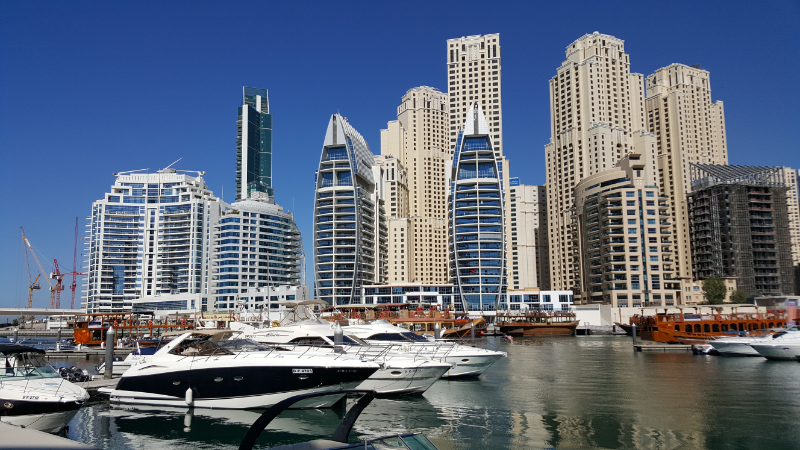
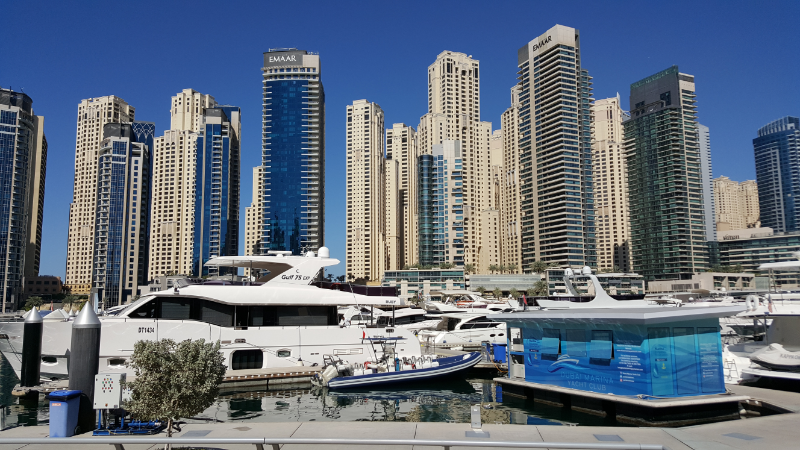
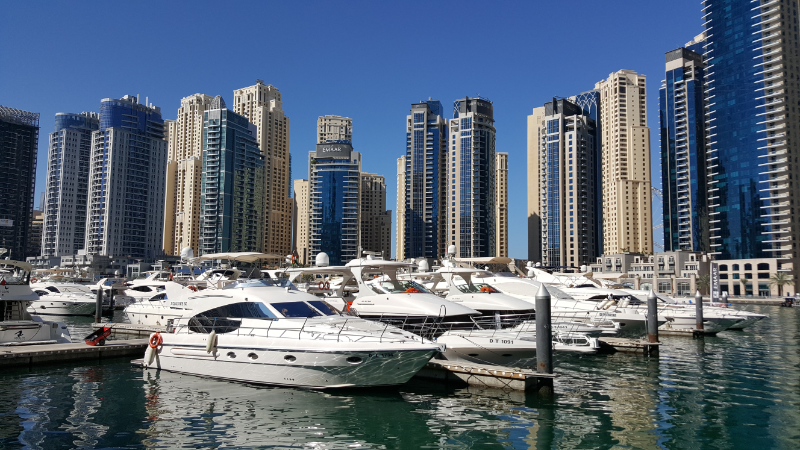
Yachts. Everywhere.
I’ve definitely seen pictures of that little twin building in the front before… But there are so many highrises and funky architectural statements that things get lost.

My extra hours at the marina flew by. Before I knew it, it was time to go and buy my ferry ticket! Based on the information I found online, the ferry was supposed to take 60-90 minutes. Ha. The route was a little different than anticipated, and it ended up taking TWO hours! I was excited because we went around one of the palm islands which is something I wasn’t expecting to get to see. Maybe other people would have chosen to spend their day differently, but I thought it was great! It only cost 50 dirhams (about $14), and I got to be on a boat in Dubai which kind of just felt right since boats are such a big part of the identity of the city.
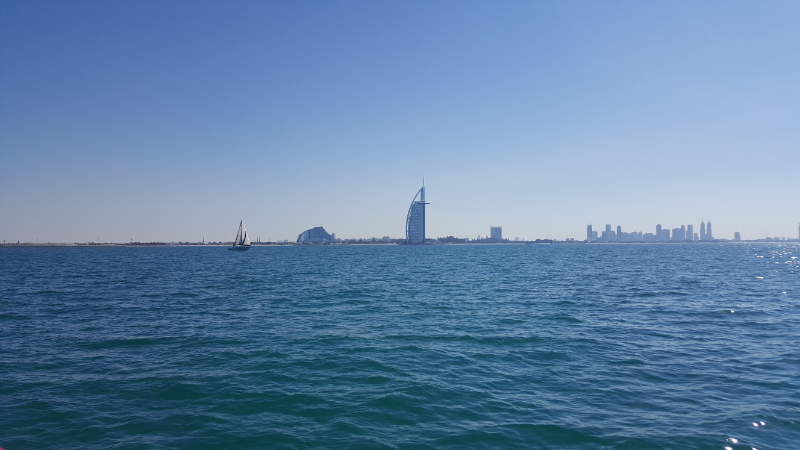
I wish we were a little closer to shore, but you can see the Burj Al Arab (the taller one), Jumeirah Beach Hotel (the short one to the left of the tall one), and in the foreground, there’s a sailboat which is kind of funny because the Burj Al Arab is supposed to look like a sail.
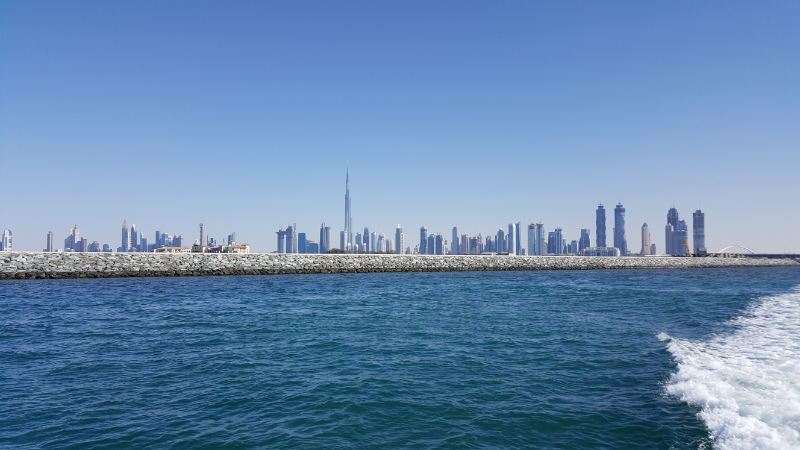
Check out how ridiculous the Burj Khalifa looks, popping up above all of the other buildings

When we finally landed, I was right in the middle of the things I wanted to see next. I was worried that I wasn’t going to have enough time to see everything based on my time estimates, but you know what? It worked out perfectly. I made it to everything on my list, and I didn’t feel the least bit rushed. I actually don’t know what I would have done if I’d had all the time I planned. It would have been way too much!

First, I strolled around Heritage Village. I didn’t realize at the time that it’s currently closed for renovations, so nothing much was going on. It’s a rebuilt neighborhood that is supposed to show “the traditional lifestyle” with demonstrations of the customs, traditions, professions, and craftsmanship of old Dubai. It has a mix of different building types to show building traditions across the different parts of the emirate. That probably would have been cool to see, but instead, I just wandered a bit and looked at the buildings.
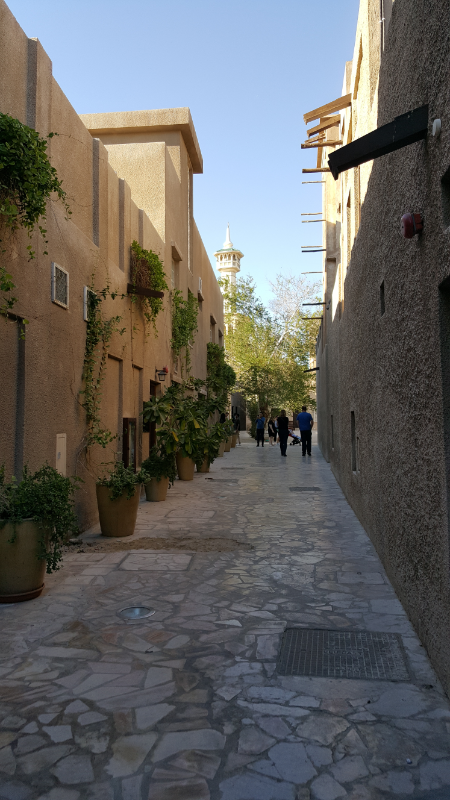
Look at those pristine streets

My next destination was Al Fahidi neighborhood. This and Heritage Village are right along Dubai Creek, where the oldest settlements in the area were located. Apparently, they wanted to tear the neighborhood down and develop it, but people fought to preserve the history there. The result was that they didn’t build big buildings… but it’s still been developed. It feels like something straight out of Disney. A brand new historic village. It was still interesting, but I was a little disappointed, to be honest.

After I’d had enough of that, I went to the Dubai Museum. I was ready to be slightly disappointed again since the last two things I planned to see were such bummers. If the museum was a similar failure, I was going to be left with all sorts of extra time.

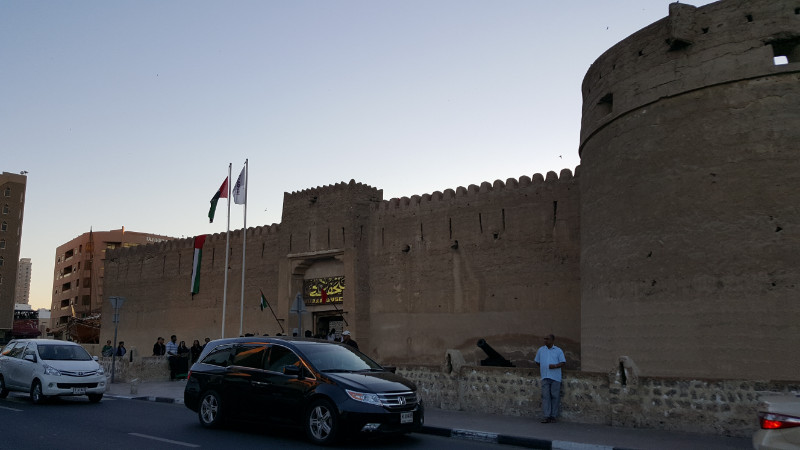
Thankfully, it was much better. It’s in an old fort, Al Fahidi Fort, and that building actually looks like it was preserved instead of rebuilt. The walls aren’t perfectly finished and fresh looking. I mean, I’m sure they did plenty of work on it, but it was at least less obvious and fake looking.
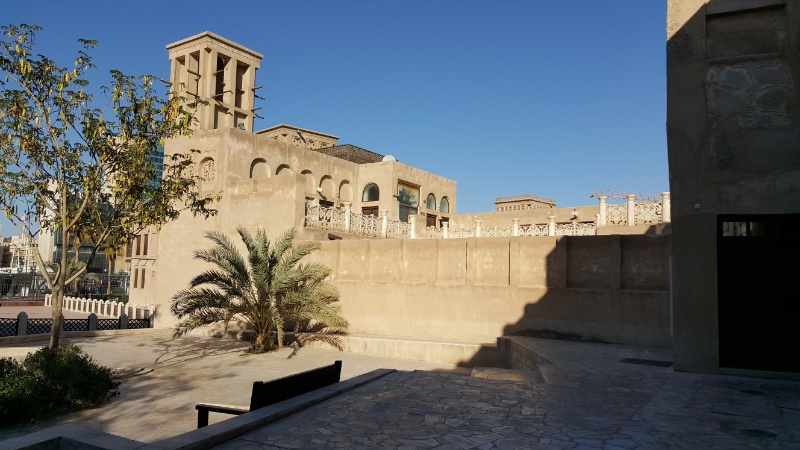
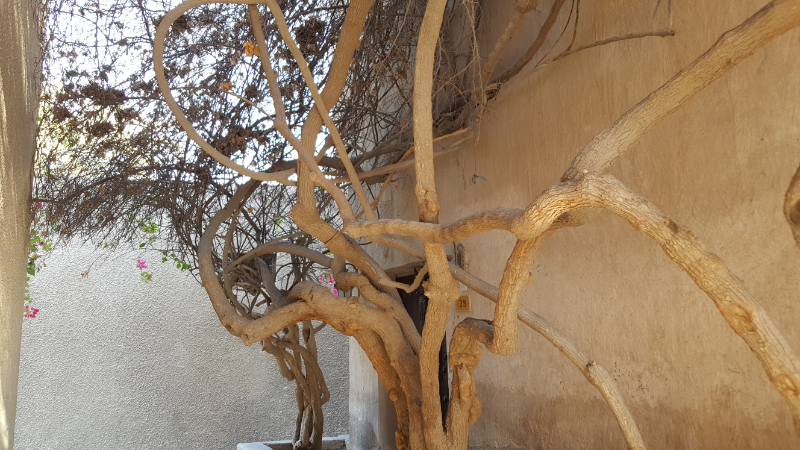
The “historical” neighborhood of Al Fahidi
Cool trees in the hood
Dubai Museum/Al Fahidi Fort
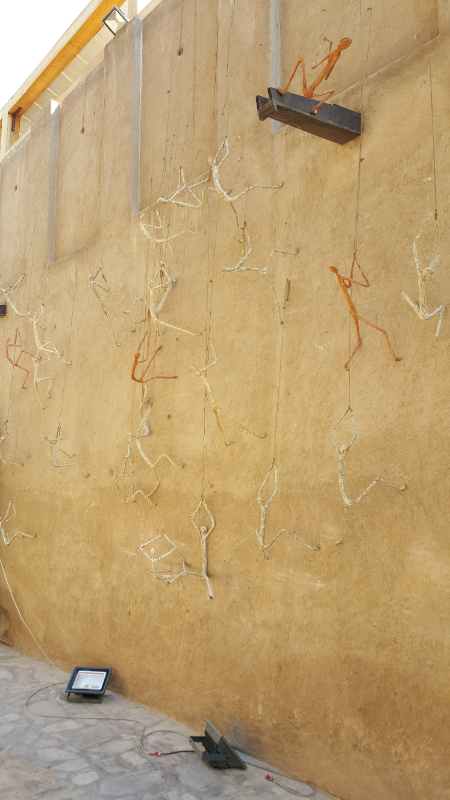
They’re kind of hard to see, but these little wire guys trying to climb the wall made me smile.

The museum itself was fairly well-done. In a few parts, there was so much information that it was actually exhausting (and I have a high tolerance for museums), but otherwise, it was good. There were also parts where the text was so small that I literally couldn’t read it from the distance I was required to stand at. By about the halfway point, no one besides me was even attempting to read anything anymore. Everyone else was just trying to get through it as fast as they could manage.

I thought it was really interesting because it talked about the history of Dubai and of the UAE in general. I haven’t been to many countries in that part of the world, so the history wasn’t the same old story that I’m used to, and the culture is completely different from many of the things I’ve seen before.
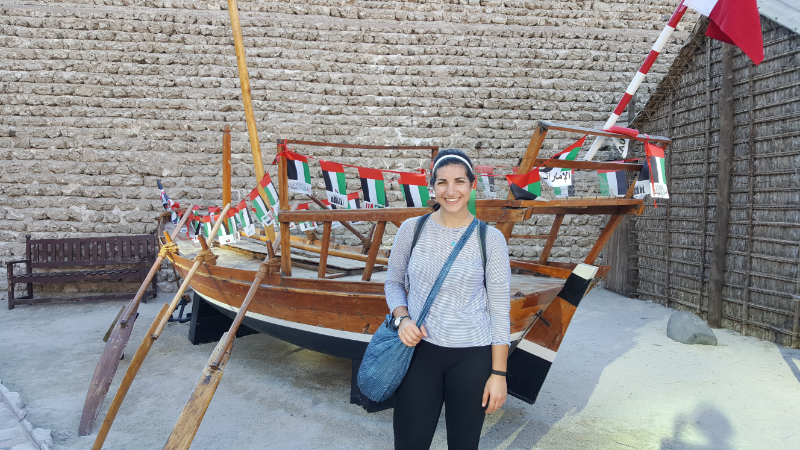
Not awkward
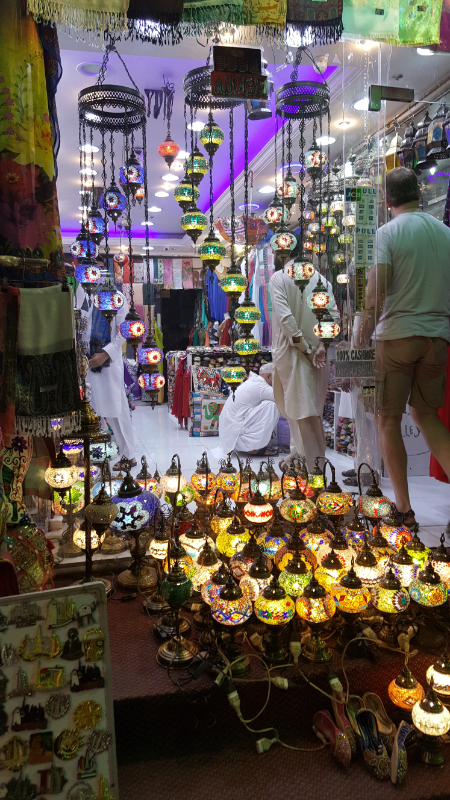
HOW COOL ARE THOSE SPIRAL LIGHTS? But also… what would you do with them?

From there, I headed to the river. I walked through the textile souks and admired all of the pretty fabrics and scarves. The unfortunate thing about the souks, at least when I was there, is that you can’t just walk around anonymously. People are constantly trying to get your attention, talk to you, and get you to look inside their shops. I wish I could wear a sign telling them not to waste their time with me because I cannot be persuaded to buy something when I have literally no interest in buying anything. I had no interest in buying anything. No, I don’t want a pashmina scarf. I don’t want any spices. I don’t want a fake designer purse. What am I supposed to do with these things? Where am I supposed to put them? I’m currently living out of a backpack, and the rest of my life is in boxes/my childhood room at my parents’ house. If there’s one thing I definitely don’t need, it’s more stuff (I’m sure my parents would agree).

When I got to the river, I watched the abras, old boat “buses”, pull in and out of the dock. It was mesmerizing! It looked like they were doing a dance, and I was amazed that they weren’t constantly bumping into each other. The passengers sit on this raised middle part of the boat, and it’s only 1 dirham (30ish cents US) to get across. After I watched long enough to understand what was going on, I hopped onto a boat to cross the river. I think this was my favorite part of the whole day because it was the only thing that felt authentic. The boats were old and a bit sketchy, they were constantly packed, and the ride was cheap It was fun to be out on the water like that.
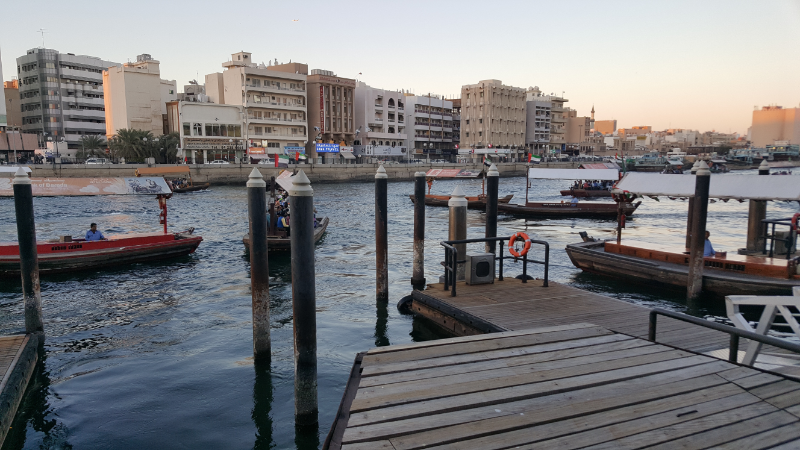
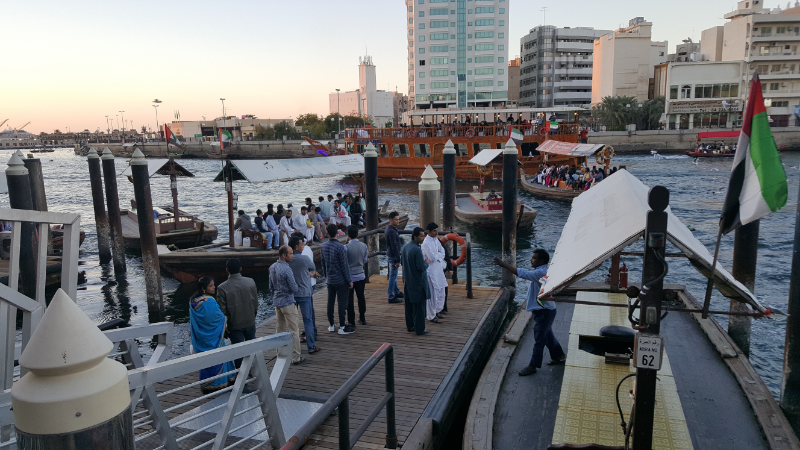
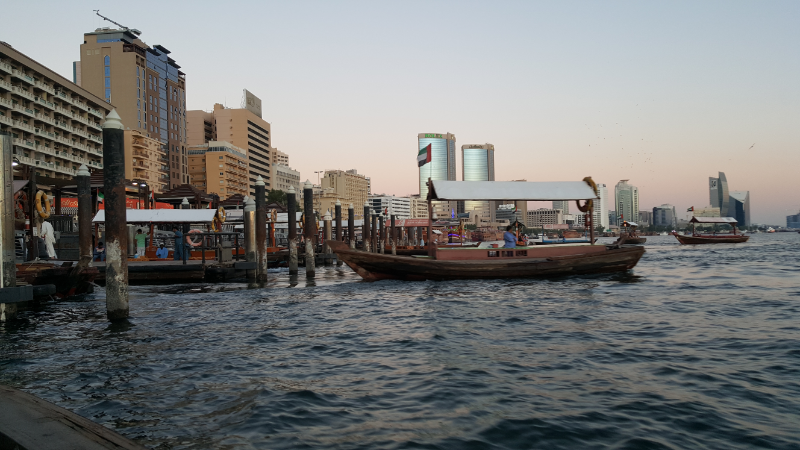
Abra docks
Organized chaos
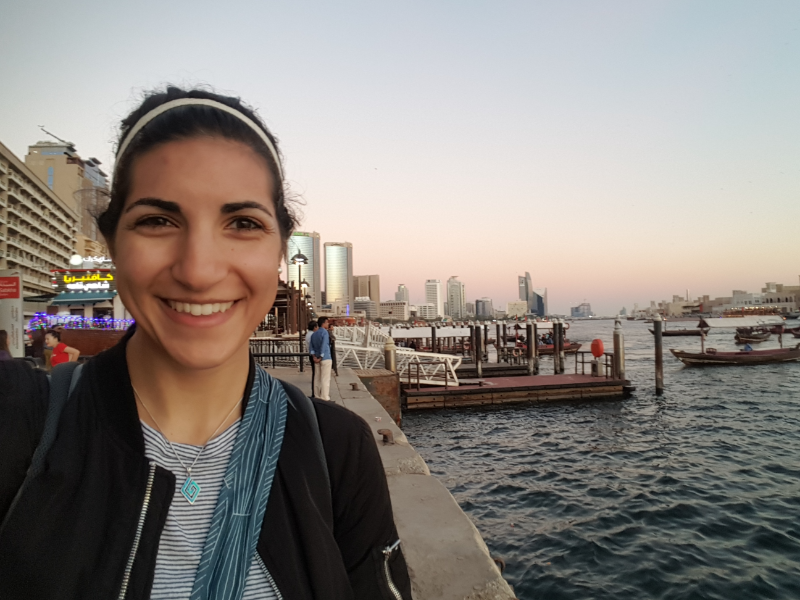
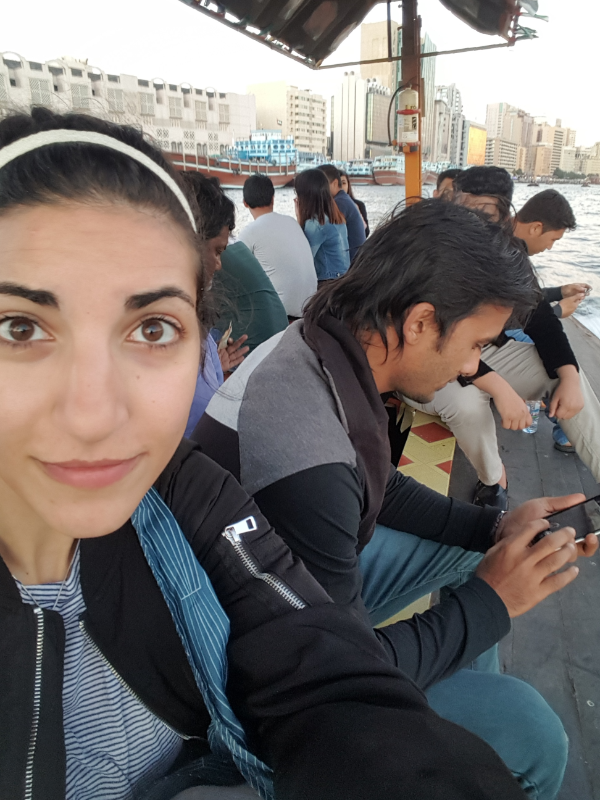
Just living that solo travel selfie struggle
Coming into the dock
Clearly amped about getting to ride on the abra… things got better after this.

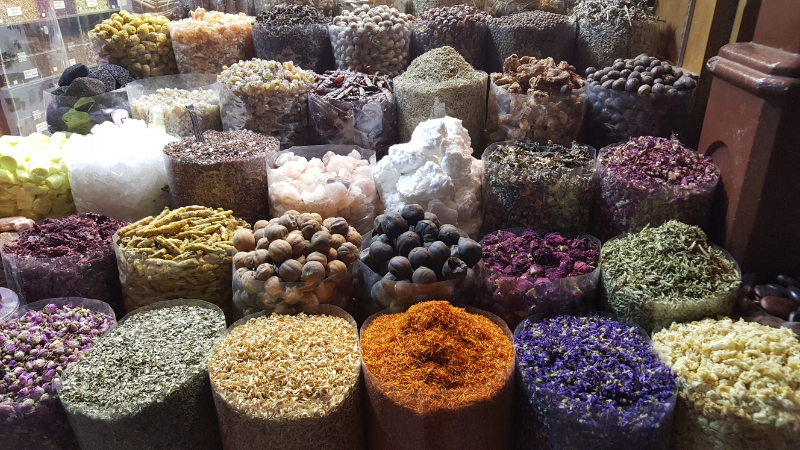
On the other side, I walked in the direction of the gold and spice souks. I spent a lot of time pretending that I was oblivious, pretending that I didn’t speak English (which is kind of hilarious because I pretended that I could only speak Armenian), and telling people that I didn’t want anything. People also kept trying to guess my ethnicity (this is a common occurrence in my life) with guesses ranging from Iranian to Arab to some mix of those with other things.

When it was about time to leave, I decided to take a boat back across the river just because I wanted to. If I had the time, I could have been happy riding back and forth all night. From the dock, I walked to the metro and spent the rest of my money on plane snacks. I had 12 dirhams left, and I strategically planned what snacks I could get, trying to get as close as possible to 12 without going over. Guess what I ended up with? 11.90. It doesn’t get much better than that! I left with a very healthy haul of three cookie varieties.
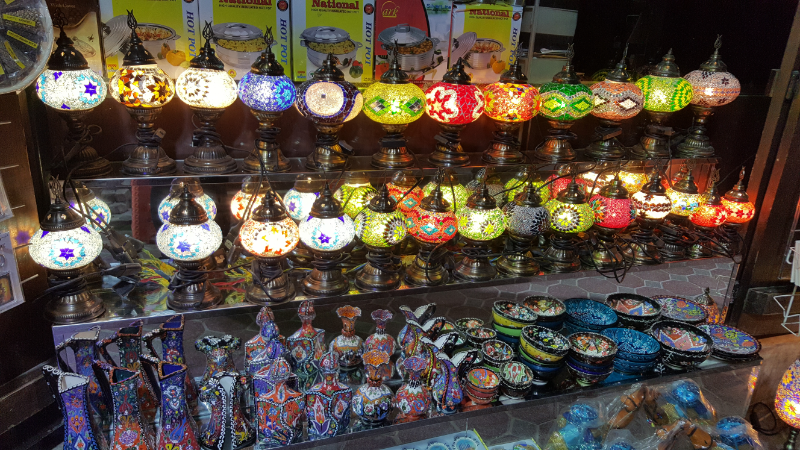
I’m kind of obsessed with these lamps
Classic spice market picture
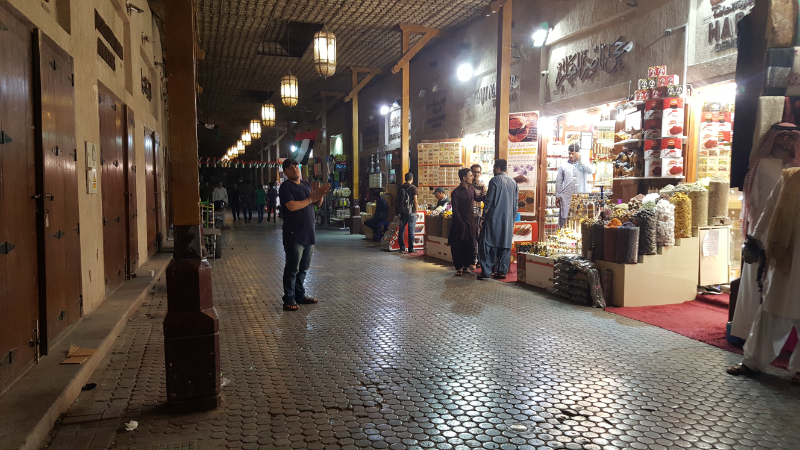
Souks
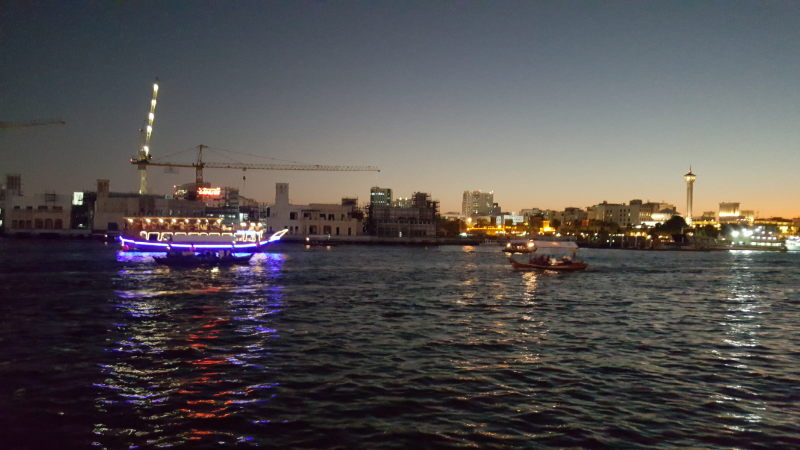
Blurry night abra picture

Getting back into the airport was a breeze because I didn’t have to check my bag. I was at the gate in less than 20 minutes. Turns out my speed was completely unnecessary because about an hour before take-off, we were informed that our flight was cancelled because of weather conditions in Yerevan. In classic Armenian fashion, everyone started calling their relatives in Yerevan, confirming that the weather was fine and that planes were landing, and arguing with the airline staff. None of this resulted in our flight getting un-cancelled, but they did agree to give out food vouchers which was enough to satisfy me.

I ended up sleeping on the floor because the chairs in the terminal all have armrests on them (how rude). It wasn’t the most restful night of my life, but of course I managed to sleep. I always do. I went to sleep around midnight, woke up about every two hours to change position, and got up for good at 8AM before our flight finally left at 2PM. Not exactly the ideal end to Dubai Day, but I survived and got free KFC out of it, so it could have been worse.
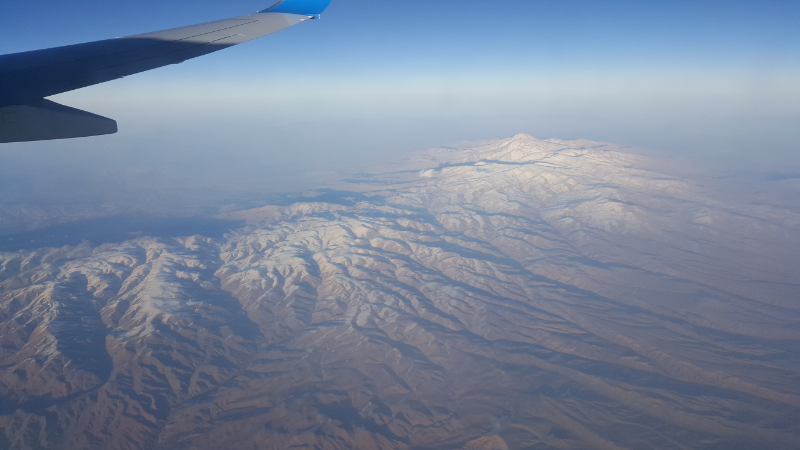
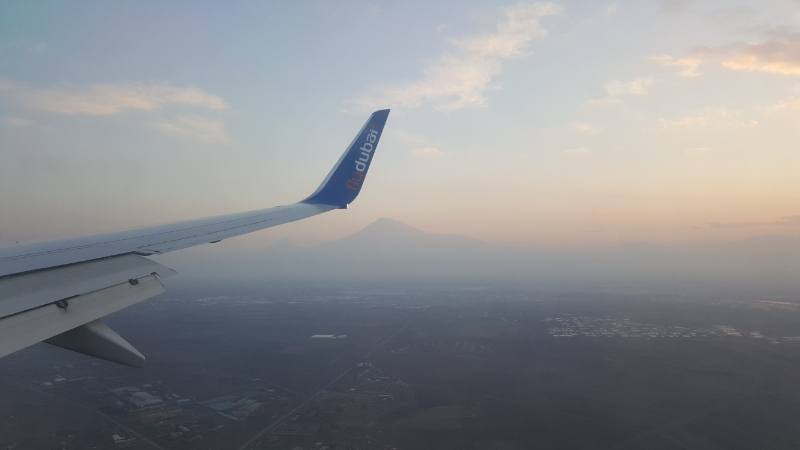
There were some awesome views on the way back to Armenia! I usually fly at night, so I never get to see anything
Mount Ararat on the way into Yerevan airport

Dubai Day started bright and early… and after an INCREDIBLY restful four hours of plane sleep on my flight from Beirut. My flight landed at 4:45AM, I zoomed through immigration, and I tried to somewhat pull myself together in an airport bathroom before venturing out into the world.

My first stop was the Burj Khalifa, aka the tallest building in the world. You can schedule a time to go up to one of the viewing decks (I opted for the lower one because I’m not rich), and I signed up for a sunrise time slot. I made the mistake of going to Dubai on a Friday. That was stupid because Friday is the Muslim Sabbath day, and in the UAE, it’s a “non-work day”. It didn’t mess me up TOO much, but most things opened later in the day which wasn’t ideal since I got in so early in the morning. The metro wasn’t open yet, so I took a cab from the airport and got dropped off next to the building.

Welcome to Dubai! That body of water is the Persian Gulf.

The thing about being “next to the building” is that when the building is 828 meters tall (2,716 feet), the base of the building is not small. I had NO idea where to find the correct entrance to go to the viewing decks, so I just walked in a direction that I thought made sense until a guard told me I was going the wrong way and redirected me. No doubt that’s a normal occurrence in his job.

The walk to the right entrance was about 15 minutes, and I didn’t mind one bit because the world was quiet, and the city was still asleep. That’s one of my favorite times in a city (though I hate being awake so early).

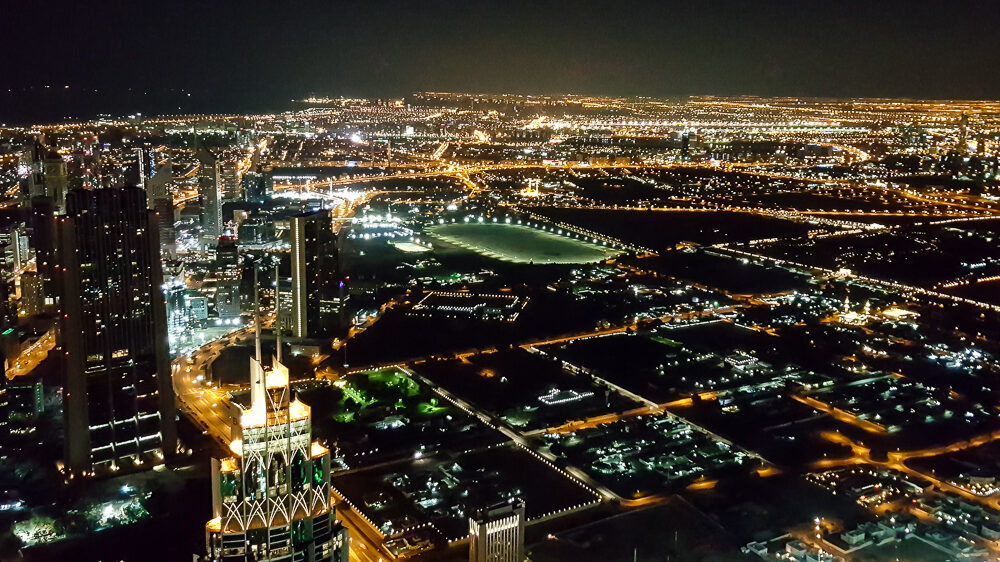
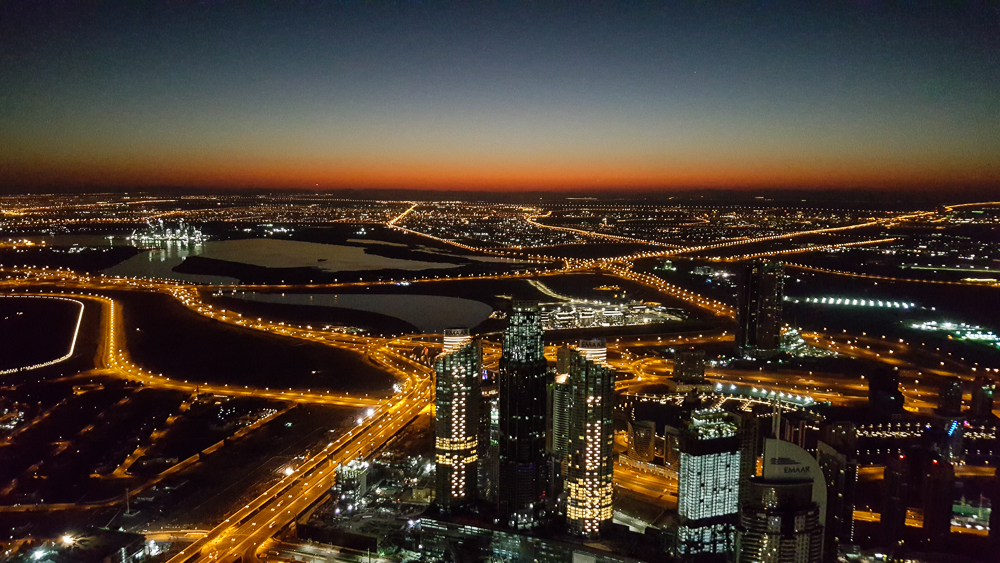
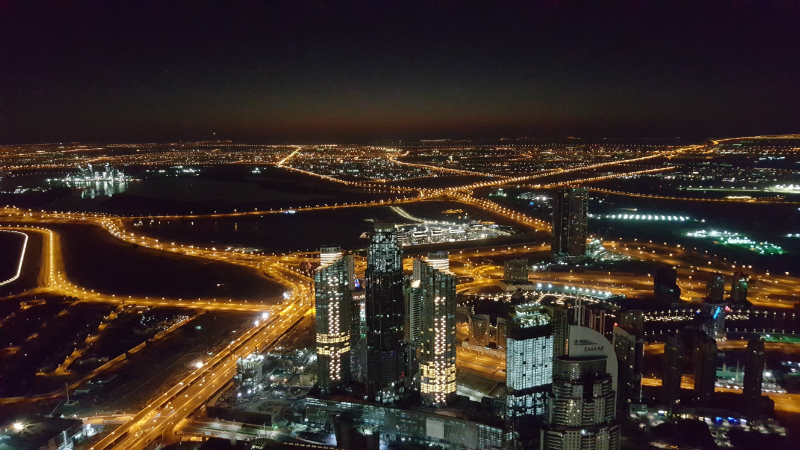
Nighttime city view

One of the best parts of going to viewing platforms in tall buildings is getting to learn about the building. They always have information about the design and how it was built. Learning about the process makes the experience so much more interesting!

Excavations for the Burj Khalifa started in January of 2004, and it was officially opened in January of 2010. Even though it boasts a height of 828 meters (2,716 ft), the top floor is located at 584 meters (1,915 ft). The rest is just a ridiculous spire to make it taller.

The piles that make up the foundation system are 50 meters deep (165 ft). They also had the challenge of making sure that the in-ground structure could withstand the harsh minerals found in the soil. After a year of construction to prepare the foundation, work started on the floors. They created a process that allowed them to pour the concrete for one floor every three days! They also pumped concrete from the ground up to 601 meters (1,972 ft) which is about 3/4 the height of the building. That set another world record (there really is a world record for everything).

The quantity of building materials that went into the structure is insane. The foundation alone used 45,000 m3 of concrete (58,900 yd3), which is like if you filled 18 Olympic swimming pools, and the superstructure used another 330,000 m3 (431,600 yd3) or 150 more swimming pools. If you lined up the steel rebar end-to-end, it would go a quarter of the way around the world.

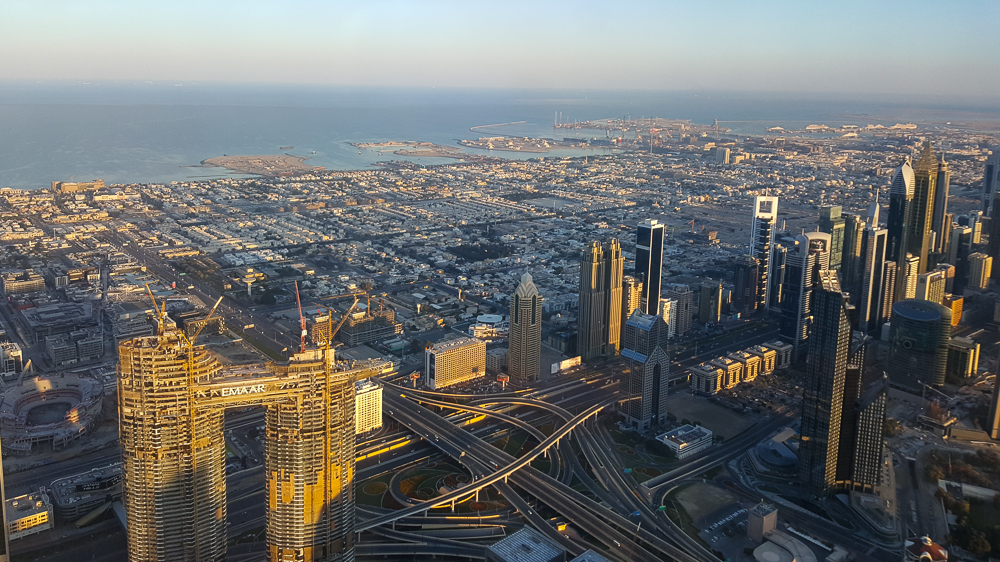
See the area of brown out in the water in the upper right? That’s where they’re building the world islands. There’s an island for each country… It’s like Epcot on steroids.

During the summers, temperatures easily reach over 44 degrees C (about 110 degrees F). In order to keep work going through the summer months, concrete was poured at night when the sun was gone and temperatures were lower. Also, as the tower’s height increased, workers were subjected to stronger winds, making their work more challenging and dangerous. Another crazy statistic for you: 22 MILLION man-hours went into the construction.

The building’s shape was determined by its structural requirements. A Y-shaped floor plan was selected to add stability, and the weird shape and setbacks were designed to reduce the impact of wind on the building. The occupied levels were built with poured concrete floors, but the structure of the spire is entirely steel. It has 54,000 windows. Can you imagine being in charge of window cleaning??? I wonder if they ever do clean the windows because it seems like that would be terribly unsafe. Haha I just looked it up… it takes 36 workers 3-4 months to clean all of the windows. The top 27 levels are cleaned by unmanned machines. (Also, the window-cleaning system cost US$6.3 million which I personally think is insane.)

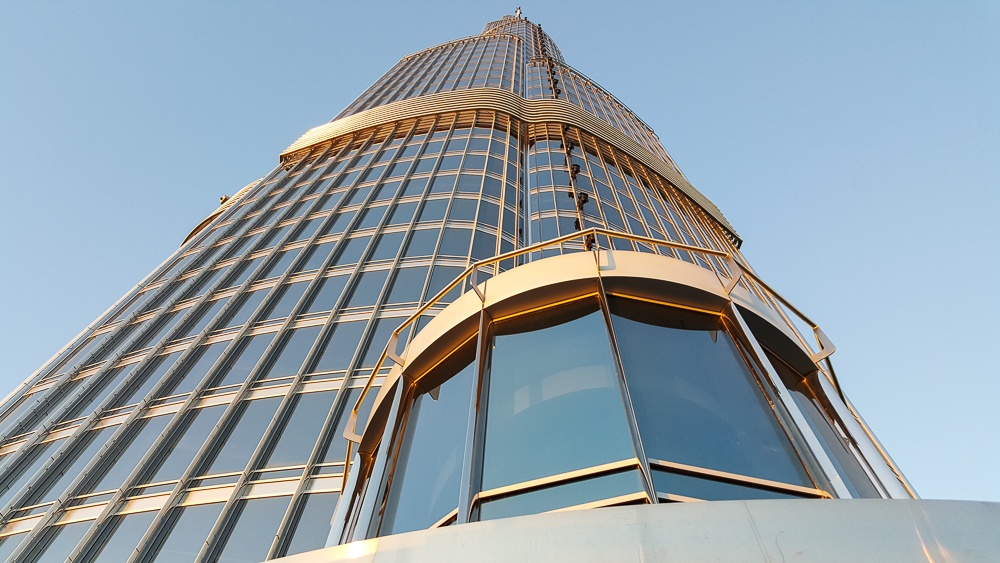
Looking up… and this is just the part of the building that’s above the viewing deck.

It holds the titles of: tallest building in the world, tallest free-standing structure, tallest man-made structure, building with the most stories, highest occupied floor, highest outdoor observation deck, and a few more. It houses a hotel, apartments, a restaurant, and offices. At its base is the Dubai Mall, filled with expensive stores and ridiculous attractions such as an ice rink and an aquarium.

After my brain was filled with knowledge, I took an elevator to the 124th floor. I think it only took a minute, and the elevator was so smooth that you could barely even tell it was moving. For reference, I live on the 7th floor of my building in Armenia, and I’m fairly certain that the elevator there takes longer to go 6 floors than this one takes to go 124. Not sure if that’s a compliment to the Burj Khalifa elevator, an insult to the one in my building, or a little of both. Apparently, the building is so tall and the elevators are so fast that you can watch the sunset twice from the building, once from the base and once from the observation deck.

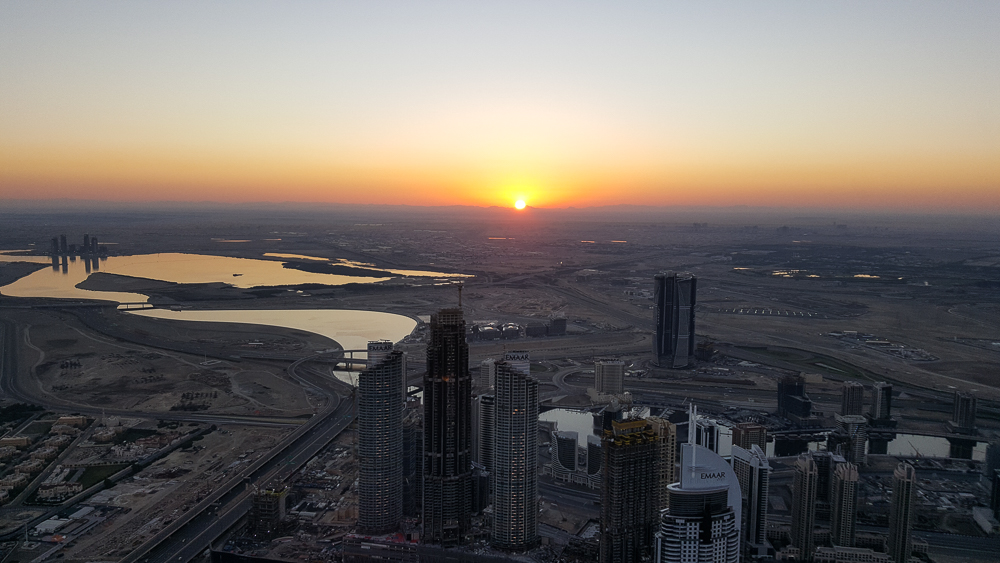
At the top, I wandered around a bit before the sun started to rise. It was still completely dark outside, so I got to see the city lights all the way around the building. About half an hour before sunrise, I claimed a spot next to the windows with a good eastern view and waited.

It was awesome getting to see the world light up and the city wake up. The streetlights gradually turned off, along with the building lights. The world got brighter and brighter and the sky more and more orange. Then, finally, the sun broke over the horizon, and everyone cheered.

Based on the group’s reaction, you’d think no one had ever seen a sunrise before, but it felt extra special that day. You know how things like the sunrise or stargazing can make you feel like your problems or day-to-day worries are so small? Like there’s a whole big universe out there, and you’re just a tiny part of it? In that moment, as we watched the sunrise together, It didn’t matter where we were from, what language we spoke, or what our beliefs were. Everyone, young and old, had the same look of excitement and awe on their face. The sun rises every day, it rises in every country, and that morning, it shined its light on our shared humanity. At our core, we’re all the same. And we all love sunrises.

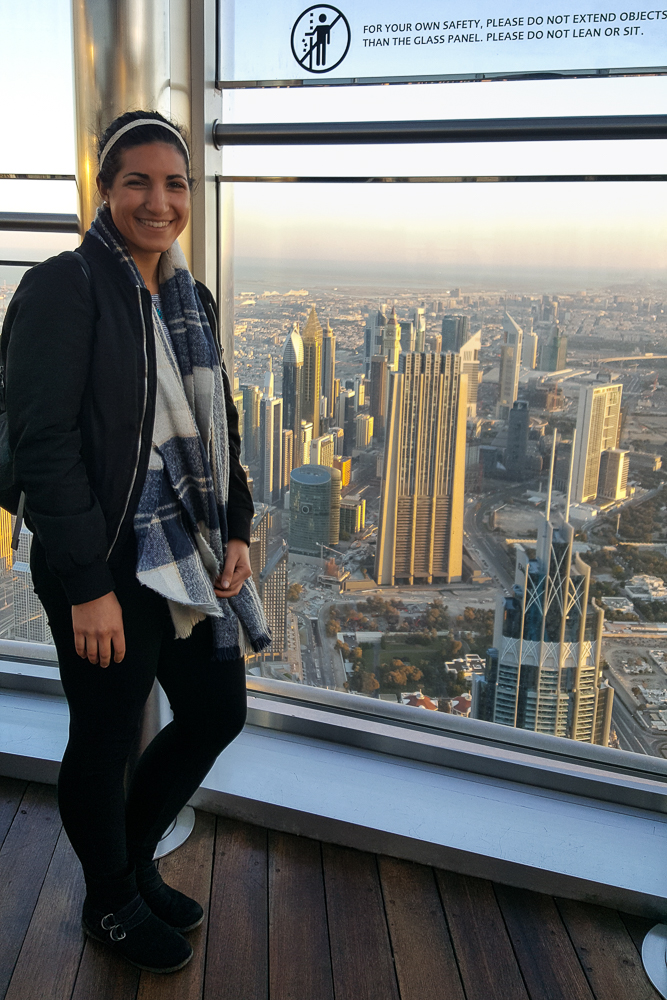
Yes, I’m wearing a scarf in the desert. It was a chilly morning! (But it came off VERY soon after this.)
The sun is cominggggg. I love that the roads are little lines of light. That’s some serious street lighting!
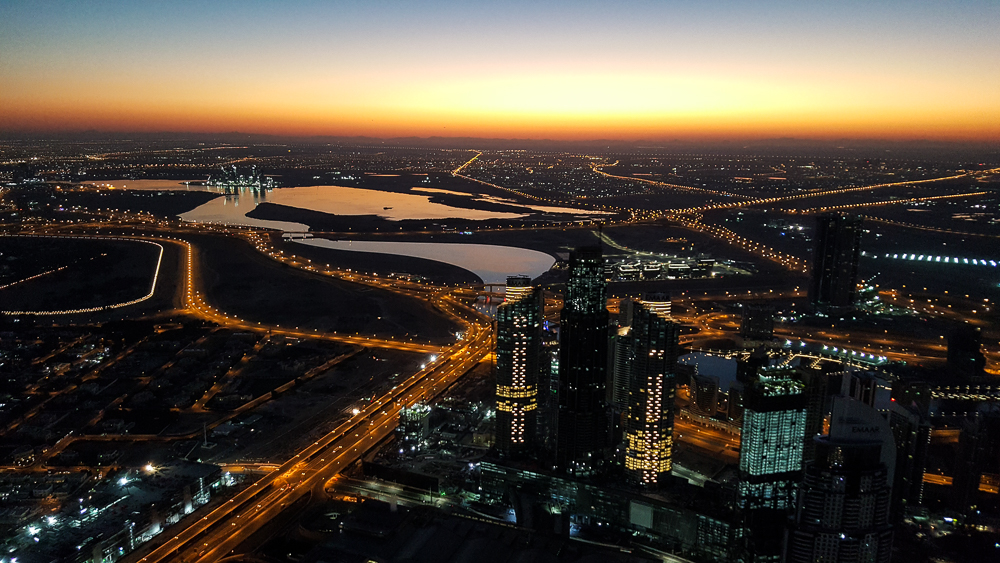
The sky is brightening…
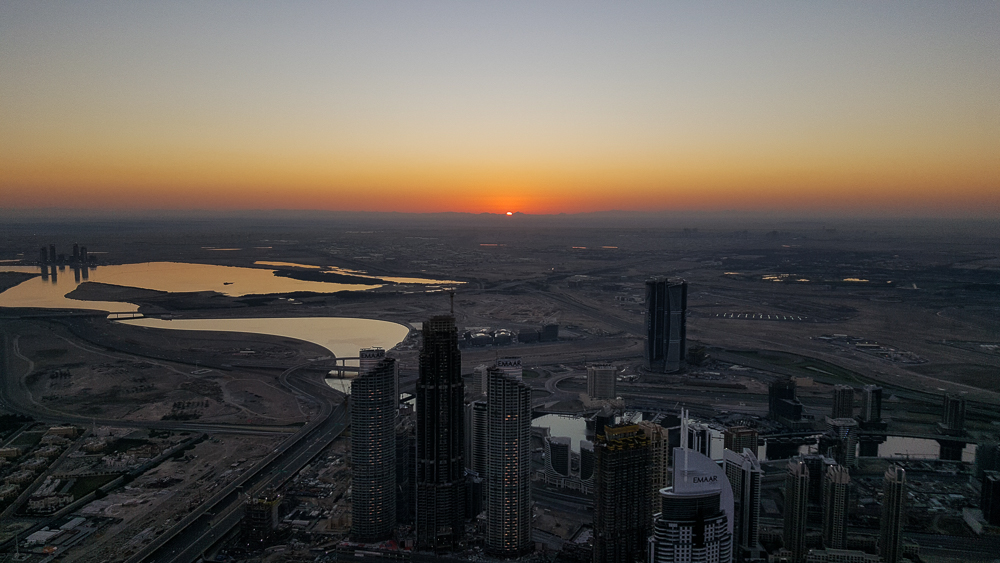
The city lights turn off. The sun peeks out! The crowd goes wild!
Good morning, sun!

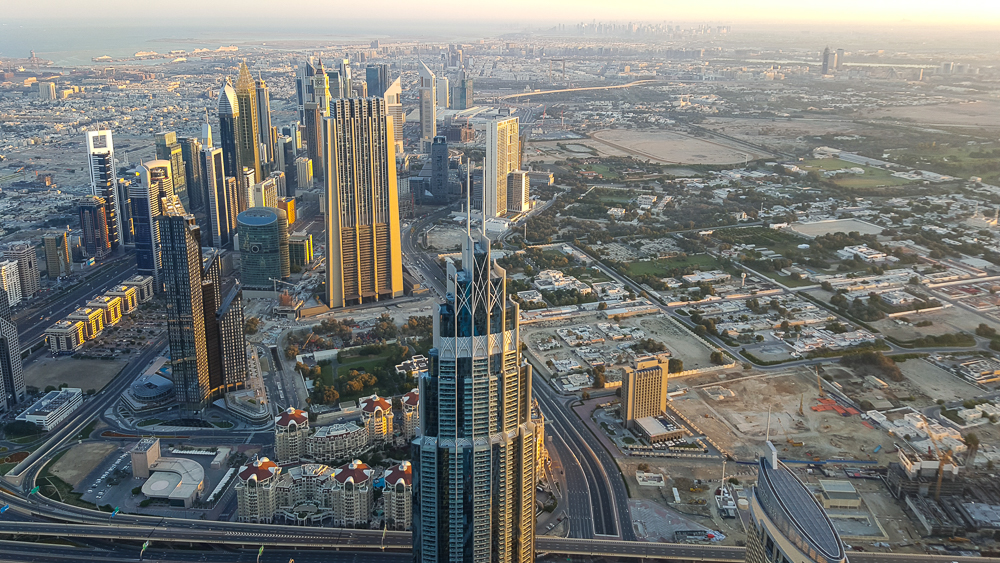
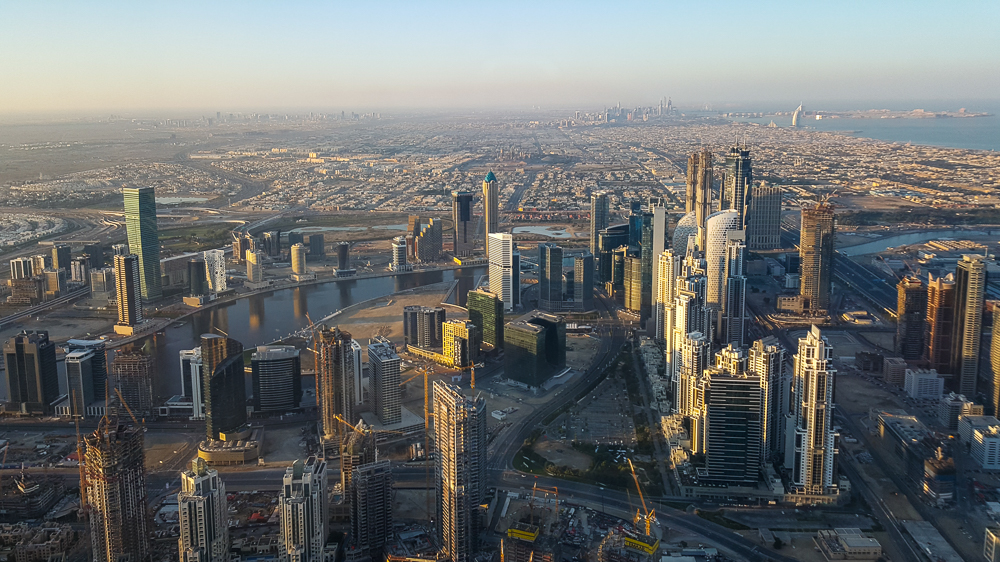
After the sun rose, I walked around again and took another look at the city. It’s cool how light transforms things. The city has a completely different personality during the day. It was like I got double the value for my ticket because I got to see two different Dubais, or maybe even three. Night Dubai, waking up Dubai, and daytime Dubai.

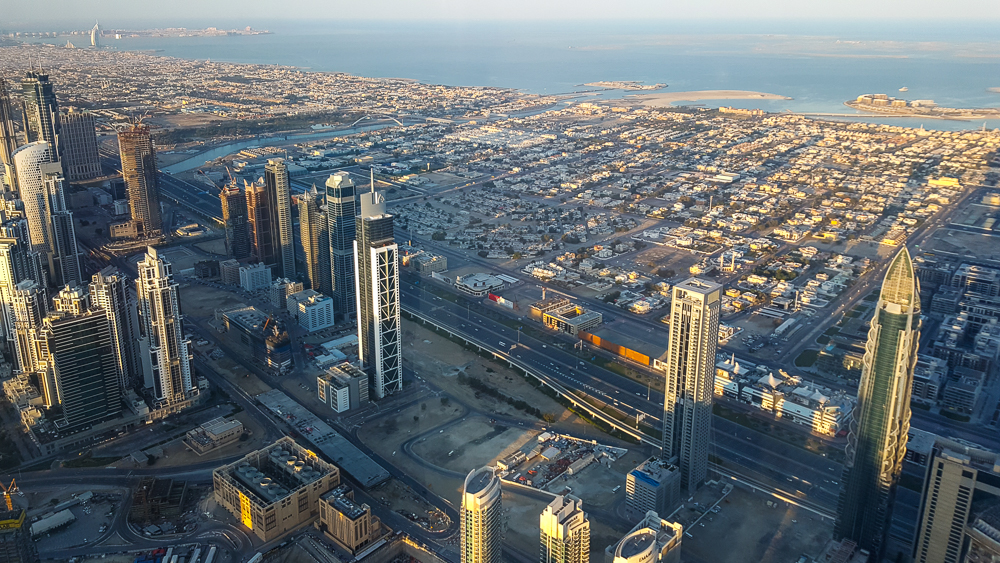
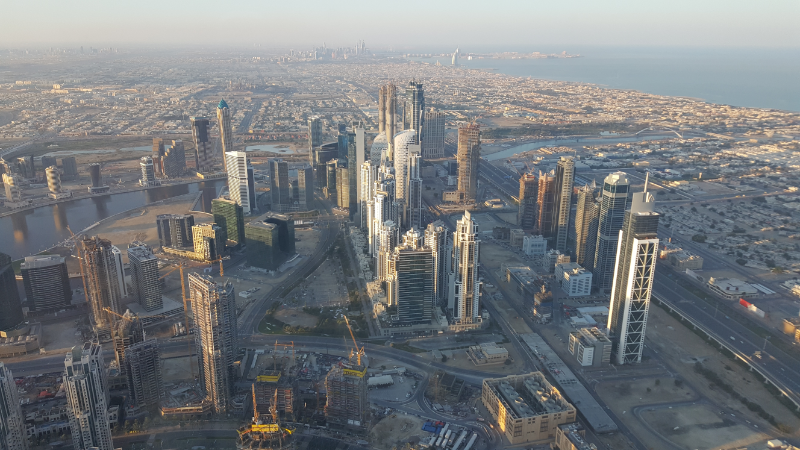
It’s such an interesting skyline… most cities have some tall buildings in the middle, and then they gradually get shorter as you move out. In Dubai, it’s like skyscrapers were dropped from the sky without any rhyme or reason.
There’s just so much empty space between the buildings, and immediately next to a 100-story building is a 1-story house. It feels so unnatural.

I stayed there longer than anticipated. By the time I got downstairs, it was about 8AM. Part of the sunrise deal was a drink and breakfast sandwich, so I still had to eat before moving on to my next activity. The only drinks included were different types of coffee (the ongoing struggle of eating and drinking like a child), so I just asked for a cup of hot water. The guy working there thought it was weird (who drinks a cup of hot water in the desert?), but I conveniently had a hot chocolate packet in my backpack. Score!

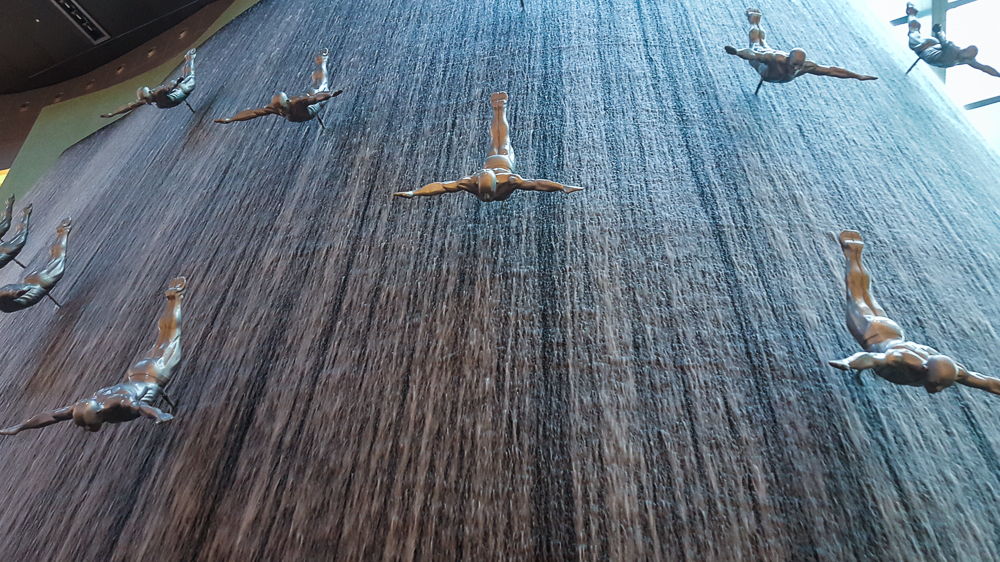
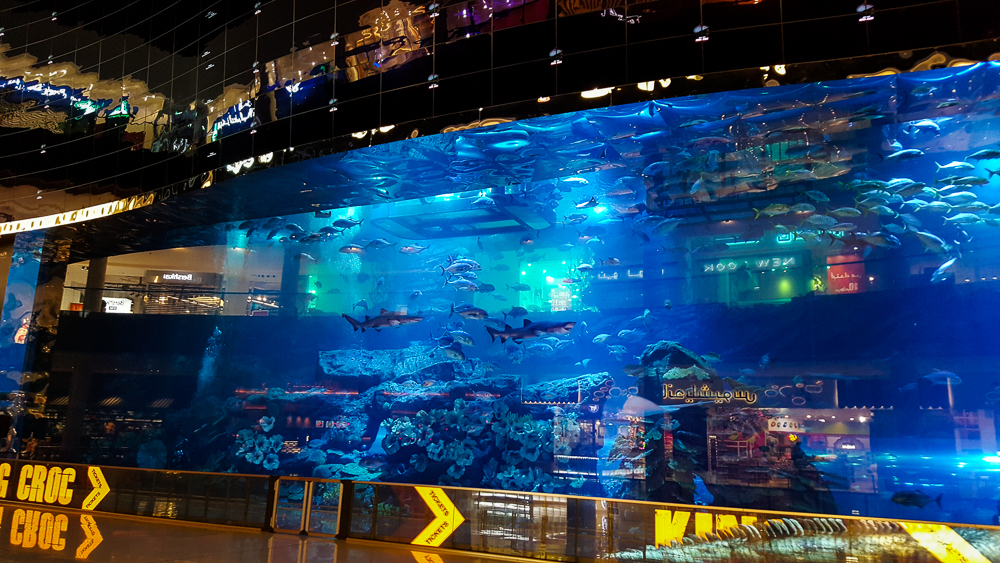
I was originally planning to take a bus to my next stop at 8:30, but at that point, I figured I might as well take my time and wait for the metro to start running at 10. After breakfast, I headed into the mall to poke around a bit. The stores were mostly still closed, but I wasn’t interested in those. I got to see the aquarium from the outside (you can pay to go in, but even without entering, there’s a huge tank visible from the mall), the ice rink, the “human waterfall”, and the general ambiance of the mall.

Divers in Dubai Mall
The aquarium!
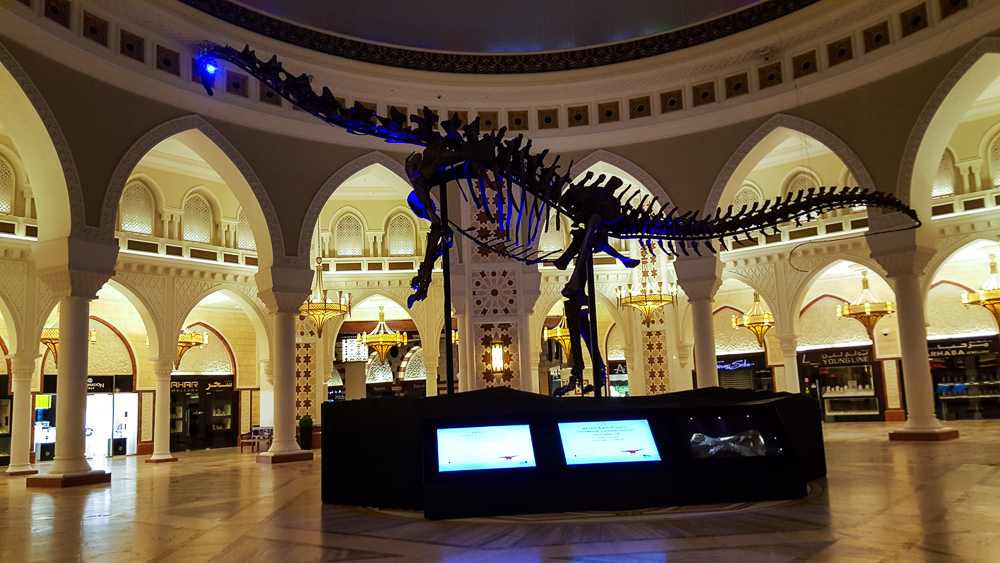
And a dinosaur because why not?

Between the mall and the metro, there’s a crazy long “metro link”, aka a series of above-ground tunnels connecting the two. I didn’t mind the walk because the tunnels are lined with floor-to-ceiling windows, and it was cool to see the city from a VERY different perspective than the top of Burj Khalifa.

To spare you from spending one day reading this post about one day, to be continued…

Check out the continuation here.

Related Posts

Dubai First Impressions – get a feel for the city with a list of my first impressions

Dubai Mini-History Lesson – follow Dubai’s development from a small fishing village into the international, skyscraper-filled city it is today

Dubai Marina and “Old” Dubai – join me as I zig-zag my way across the city after leaving the Burj Khalifa, exploring Dubai Marina and attempting to go back to Dubai’s roots in not-so-old “old” Dubai

Galata Tower (Istanbul, Turkey) – enjoy a panoramic view of Istanbul from the top of Galata Tower… it’s significantly shorter than the Burj Khalifa, but the view is no less impressive

Sky Garden (London, England) – look out over London from the Sky Garden, plus take a stroll through Hyde Park and past Buckingham Palace and St. Paul’s Cathedral

Welcome to Dubai! Leaving Lebanon was sad, but that was buffered a bit by the fact that I still had an adventure ahead. I intentionally scheduled a long layover in Dubai so that I could leave the airport and check out the city. I was trying to get a normal length layover until I realized that the long one was cheaper, AND it gave me a chance to see something new. Score!

Before I get into what I did while I was there, let me tell you about some of my first impressions…

  1. Vertical city – Dubai claims to be a “vertical city”, and I guess to a certain extent, that’s true. There are a lot of VERY tall buildings. At the same time though, it’s also very horizontal. There will be a little patch of super tall buildings over here, then there’s an area of completely flat land, and then there’s another patch of tall buildings. It’s like if you took the center city areas of a bunch of cities and then put them near each other. Instead of seeming like one city, it’s more like a few weird, disconnected but nearby cities.

    Cluster of tall buildings. Flatness. Cluster of tall buildings.
  2. Not a city made for people – That sounds stupid, I know, but I mean that it’s really not pedestrian friendly. I always consider one of the great things about cities to be the fact that you don’t need a car. If you’re in the downtown area, you should be able to walk to all of the major things. In Dubai, there are places where it’s so hard to find a place to cross the street that you feel like you can’t even navigate the city on foot. It is also completely NOT bike friendly which is enough to make me immediately turn up my nose (I’m a bike snob, I know).

    This night shot is cool because you can so clearly see the roads. All of the orange light lines are street lights… doesn’t it seem wrong that so many of them are floating in a sea of darkness with no buildings near them?
  3. Public transit – As bad as the pedestrian situation is, the public transit really is good. I rode the metro, bus, and trolley while I was there, and all of them were impressive. They were clean and prompt and everything had a separate section for women only. The first time I went on the metro, I was going to just ride in the normal part… until I looked around the platform and realized that NO other women were standing near me. I moved to the women’s car, and I’m happy that I did because it was PACKED, and at least that way I didn’t have to be smushed up next to a bunch of smelly guys.
    The price of the public transit also wasn’t bad… a little over a dollar for a ride. I think that if you have a more permanent card, it’s even cheaper too.
    There are A LOT of rules on the metro. The number of things that you can get fined for is actually kind of impressive. There are penalties for eating, drinking, chewing gum, falsely pressing the emergency button, being a man in the women’s cabin… probably more that I’m forgetting. I don’t know how seriously they enforce the rules, but they exist.

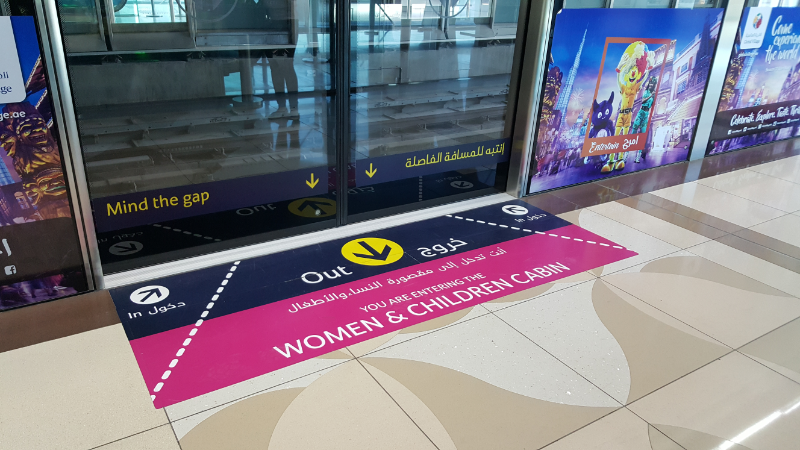
    They make it very clear where the women’s car on the metro is.
  4. Shiny and new – Everything just seems… shiny. And surreal. And inauthentic. It’s like the whole city is trying too hard. For example, there’s this one part of the city that’s supposedly “historically preserved”. In Dubai that apparently means “rebuilt but in the old style”. The buildings are too tall. Everything is too new. It’s just too fill in the blank.

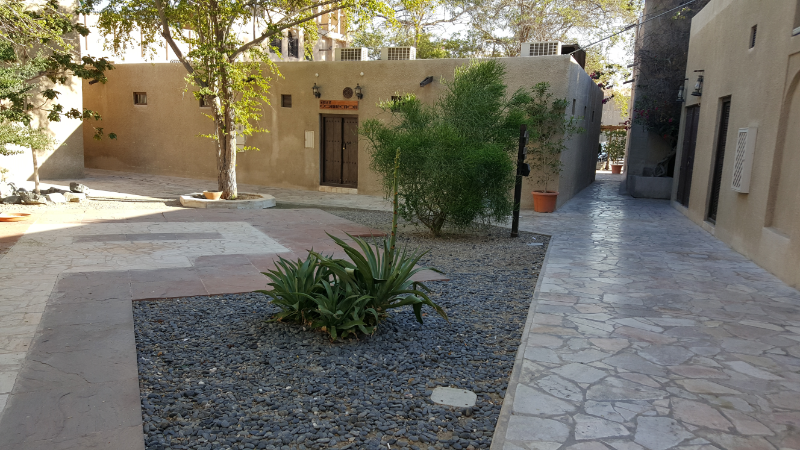
    This is supposed to be “old” Dubai… It is very clearly “new old” Dubai. How could I tell? Well, besides the fact that everything looked pristine, there were fire alarms and lights installed with no wiring exposed. Unless the pearl divers of old Dubai were way ahead of the rest of us in harnessing electricity, I don’t think those are original.
  5. Foreigners – There are foreigners everywhere. Tons of tourists, tons of foreigners who live there. If you were trying to guess where in the world you were just based on the people, I don’t know that the United Arab Emirates would even be top 15 on your list of guesses.
  6. English – On that note, you can speak English everywhere. When I was getting ready for my day in Dubai, I stumbled on some forums where people were asking if you needed to speak Arabic to be able to navigate Dubai easily. The answer was a resounding no. After being there, my answer is an even more resounding no. You can easily speak zero Arabic and have zero issues.
  7. When everything is impressive, nothing is – If you’re a genius and you work at a company filled with geniuses, is anyone a genius? Or are you all just average? Next question: If you’re an impressive skyscraper surrounded by a bunch of other impressive skyscrapers, are any of you impressive? Or are you all just normal? Dubai is filled with statement buildings. They are weird and funky, and in any other city, they would help to define the skyline. Instead, they’re surrounded by other weird and funky buildings that make them look normal. It’s almost a shame that anyone even bothers putting effort into their designs because it’s only a matter of time until there are more tall buildings on all sides, and you can’t even see the first building anymore. If you want to build a statement building and have anyone care, don’t build it in Dubai.

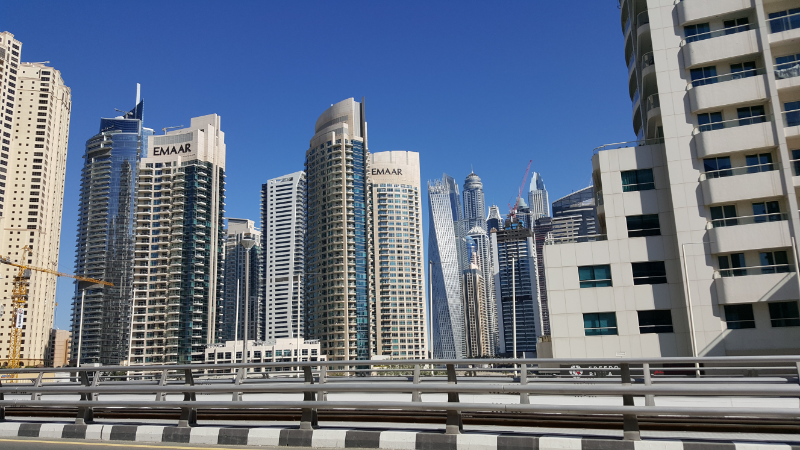
    Hidden away in this picture are two skyscrapers that I knew about before I went to Dubai, Princess Tower and Infinity Tower (since renamed, but I’m going to pretend not). If I hadn’t KNOWN that they were there, I wouldn’t have even looked twice. Infinity Tower is the twisty one to the left of the big block building on the right side of the picture, and Princess Tower is behind it with the round spaceship-like top. It’s the second tallest building in Dubai after the Burj Khalifa, but you’d never know because it looks dwarfed from this angle by all of the surrounding buildings.
  8. Construction – Remember when I said that there’s a lot of construction in Beirut? HAHAHA. That’s like child’s play compared to the construction happening in Dubai. Everywhere, there’s some sort of construction happening. It seems like it’s endless, and I seriously just don’t understand it. Which leads me to my next point…
  9. Confusing – This is a long one. Dubai confuses me in many ways.
    There are a few developers who are doing most of the construction in the city. They seem to just keep building more and more and more, and I don’t understand how it’s sustainable. Are they seriously making enough money that it’s worth it to keep building? Maybe this has changed, but I always think of Dubai as a ghost city where there’s a ton of empty property. The numbers have probably improved since back when Dubai was just starting to emerge, but I can’t imagine that everything could be full.
    This is going to sound like a direct contradiction of #7, but that’s part of the reason why this is going under the category of “confusing”. Dubai is filled with icon buildings and icon things in general (for example, the palm islands or the world map islands)… and then those iconic things might be right next to the most boring, uniform pop-up of skyscrapers ever. There were some skyscraper clusters where it looked like the architect got bored or fired after designing the first building, and every building after that was just slightly modified from the first. Maybe this one has 10 fewer floors. Maybe that one has one column of windows shifted slightly. Why build an army of buildings that all look the same and that are all seemingly empty?

    Have you ever seen a more boring group of skyscrapers? Just wait until you see them from the back…

    Okay, NOW have you ever seen a more boring group of skyscrapers? Seriously, how lazy can you be? B.O.R.I.N.G.
  10. Over-the-top – Everything. Nothing can be done halfway. If something is done, it will be the _______est. The Burj Khalifa is the tallest building in the world. The world map islands are the most ridiculous collection of man-made islands (that’s a title that I just made up now, but I am extremely confident that it would hold up in front of a judge). The I-can’t-remember-the-name flower garden is the most absurd flower garden in the world. It’s like everything is super-sized whether that be in actual size or just in concept.

There are a few of my first impressions of the city, but if I’m being totally honest, none of those were surprises to me. I think it was about what I expected. That doesn’t make it any less weird, though, when you’re surrounded by tall buildings and there’s not a person in sight. There were moments when I felt like I was in a post-apocalyptic movie or something, and I was the last human on earth. The city is built for SO many more people than live there. I wonder if it will ever grow into itself. Better question, if it DOES grow into itself, will there be enough capacity in the public transportation and roadways to accommodate those people?

Next, I’ll tell you a little bit about the history of Dubai and how it turned into the craziness that it is today. Maybe the history lesson will clear up some of your confusion regarding the mysterious existence of this wacky city… or maybe not.

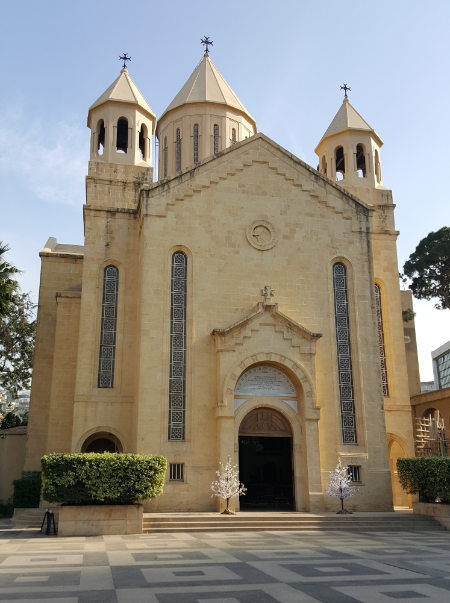
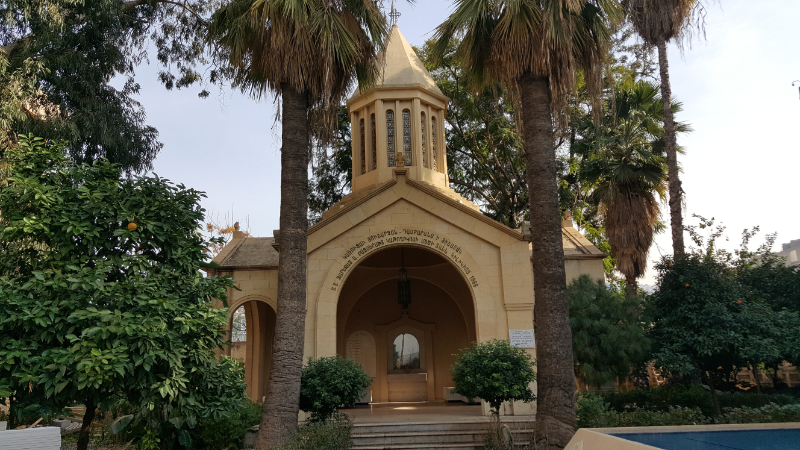
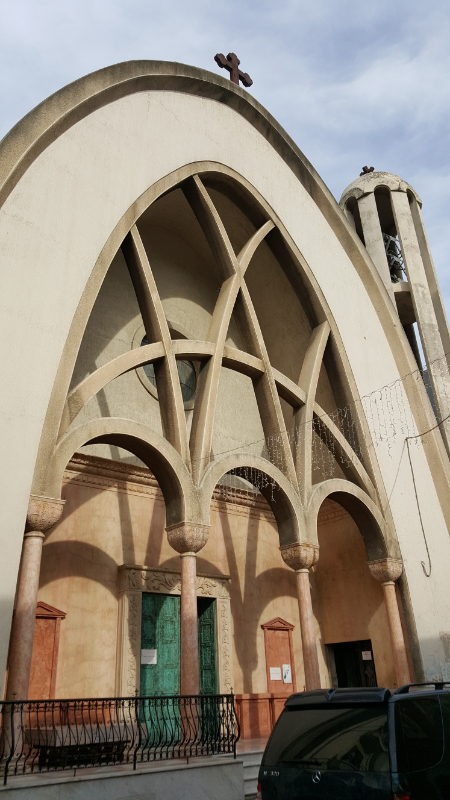
The church at Antelias

Does it feel like we’ve been in Lebanon forever? It’s amazing how much you can pack into 9 days! All good things must come to an end though, and here we come (side note: I’ve just now decided that is a very dumb saying, and I’m not going to use it anymore. All it does it make you dread the “inevitable end” of the good). I spent my last couple of days wandering around Beirut, making sure everything was checked off my sightseeing list, and revisiting some of the things I saw with Badveli in the rain or the dark.

Maria and I went on an adventure to the “Etchmiadzin of Lebanon”. As a refresher, Etchmiadzin is like the Vatican of the Armenian Apostolic Church. It’s where the Catholicos (the Armenian version of the Pope) sits… but of course, nothing is simple, so here’s another quick, complicated history lesson for you. When Armenia was under the control of the Seljuk Turks in the 1100s, the Catholicos ended up in Cilicia and set up camp there. A couple hundred year later, when the situation in Cilicia started to fall apart, a new Catholicos was elected in Etchmiadzin. The Cilicia Catholicos settled in Antelias, Lebanon, and now there are two Catholici, with the one in Etchmiadzin serving as the supreme Catholicos. The Catholicos of Cilicia is responsible for the Armenian Apostolic churches in Lebanon, Syria, Cyprus, Greece, Iran, and the Gulf countries.

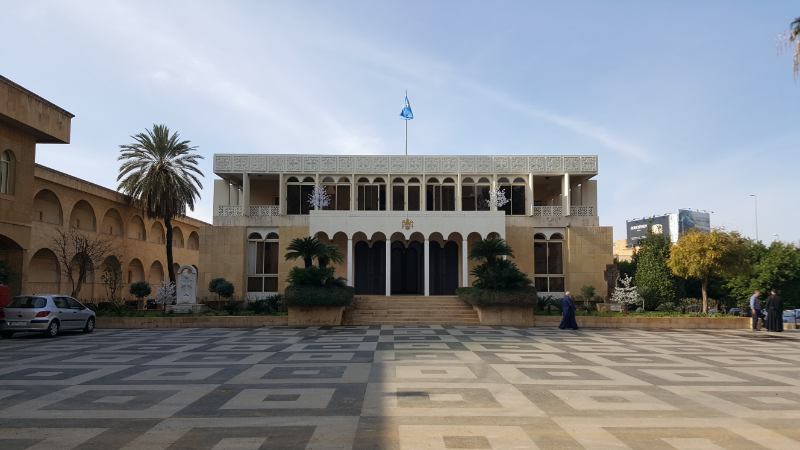
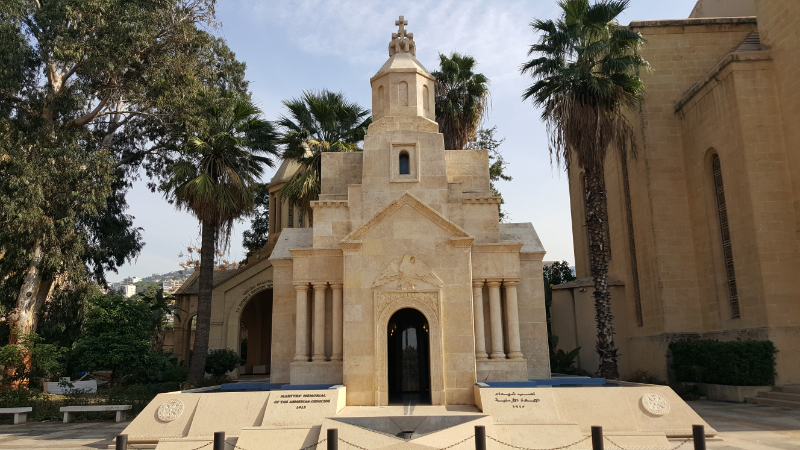
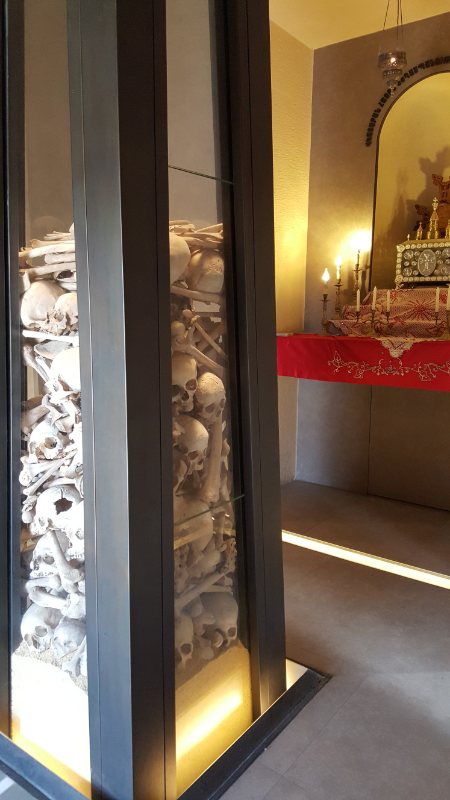
The compound includes a cathedral, museum, library, the Catholicos’s residence, and a school for clergy. There’s also an Armenian Genocide memorial that includes sand and bones from Deir ez-Zor, the major “concentration camp” located in the Syrian desert. I put that in quotes because those words imply that there was something there, but it was just open, empty desert where people were sent to wait for death. There used to be a memorial and museum there, but those have since been destroyed in the Syrian war.

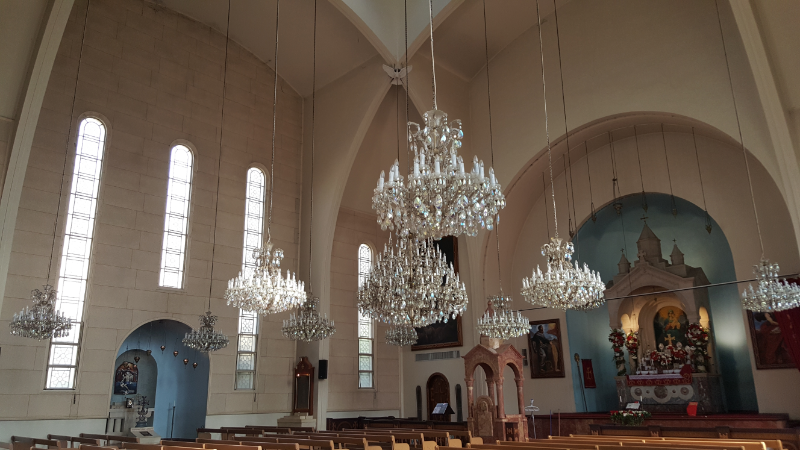
Chandelier party in the church at Antelias… hehe
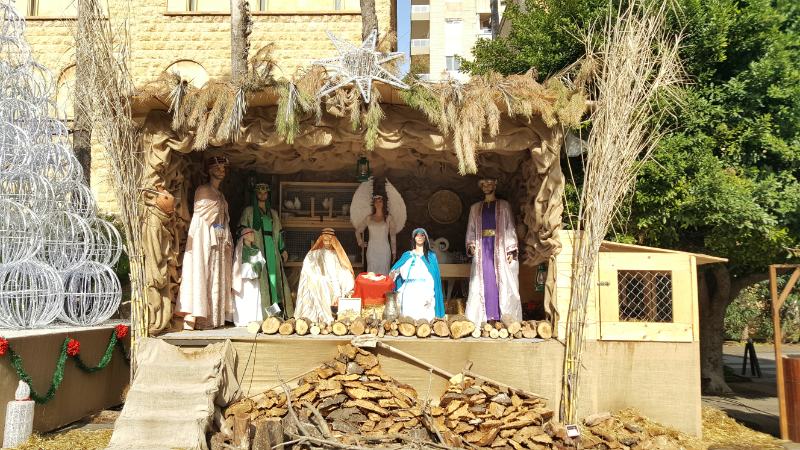
Their mannequin nativity made me giggle

The building where all of the old Catholici are buried
Outside of the Armenian Genocide memorial
Inside the Armenian Genocide memorial
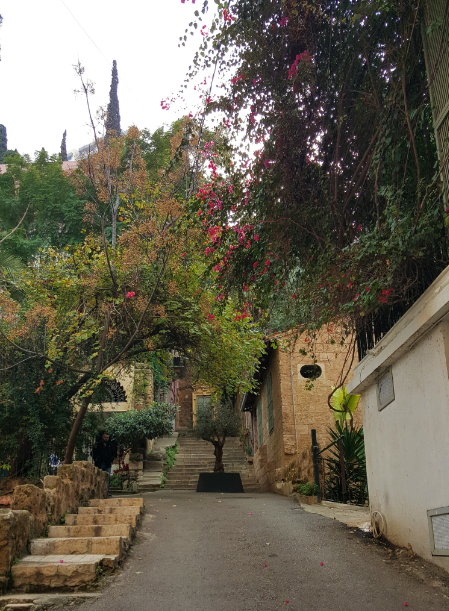
Plant. Covered. Walkways. <3 <3

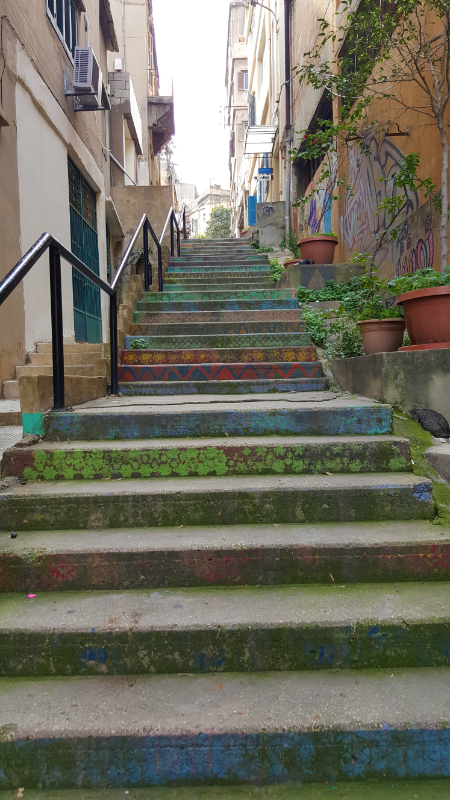
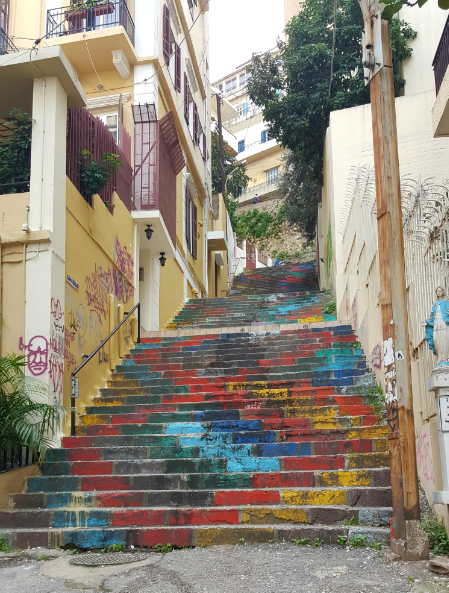
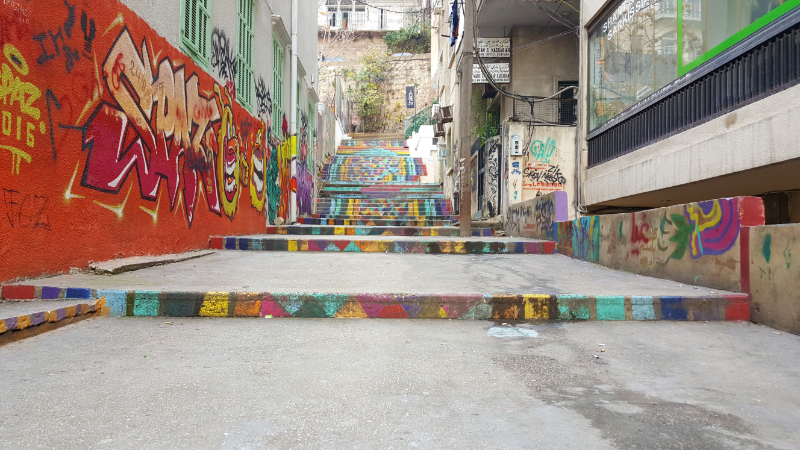
The rest of my remaining adventures took place around Beirut. I started out my last day with a leisurely walk to downtown on Armenia Street (the name changes halfway, but we’ll just claim it all for Armenia). There are some cool alleyways that I had noticed earlier in the week and wanted to go back to check out more closely. Based on my walk, I’ve decided that every staircase should be painted, and every walkway should be covered with a canopy of plants. Those two things make everything look at least 100 million times cooler.

St. Elias… probably my favorite church from the outside. I tried to look inside, but it was under construction 🙁
Stairs!
Seriously though, how much more fabulous do they look because of the paint?
These are the coolest ones
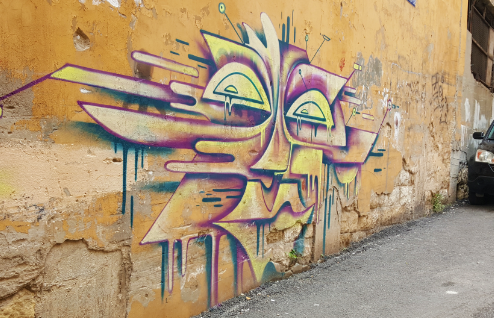
There’s some pretty fab graffiti too
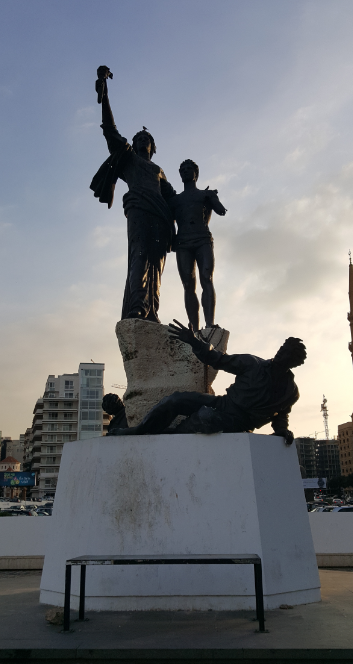
Martyrs’ Monument

Once I made it into town, I paid a visit to Martyrs’ Square… and by “square” I mean “parking lot with a monument in the middle”. The square was the location of executions of Lebanese nationalists by the Ottomans and was thereafter known as “Martyrs’ Square”. The first statue was erected there in the 1930s, and it showed a Muslim woman and a Christian woman holding hands over a coffin. The current statue replaced that one in 1960. Martyrs’ Square was a place to gather, a place to demonstrate. During the civil war, it was right on the dividing line of the city, and the statue suffered a lot of damage. After the war, they decided to restore the statue and leave it with some of the war damage as a reminder. It has reclaimed its former position and now sits in the middle of two muddy parking lots. There are plans to rebuild the square, but they definitely haven’t come to fruition yet.

Street views
Pretty but deserted streets leading into the central square
Anddd empty…
Crusader Castle in Beirut… not quite in the same condition as the one in Byblos!

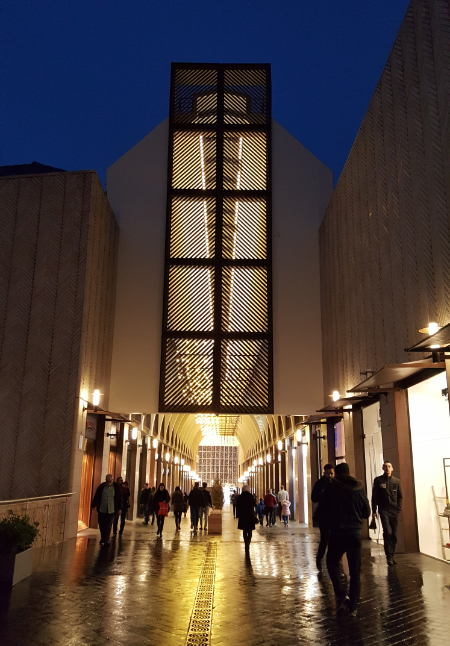
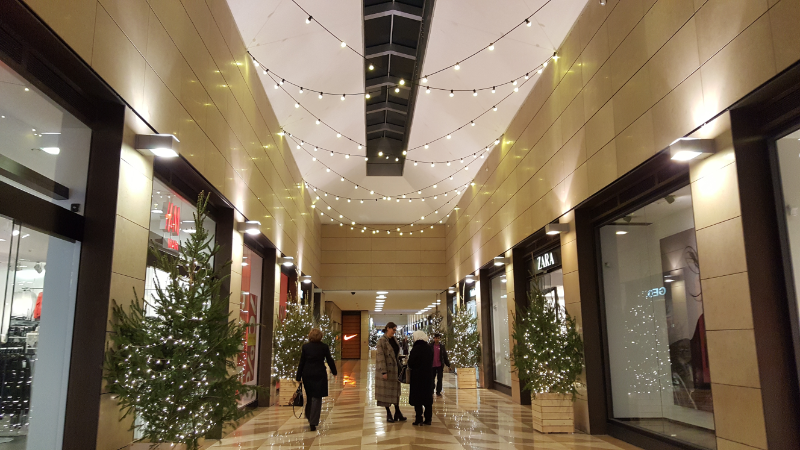
Yay for twinkle lights!

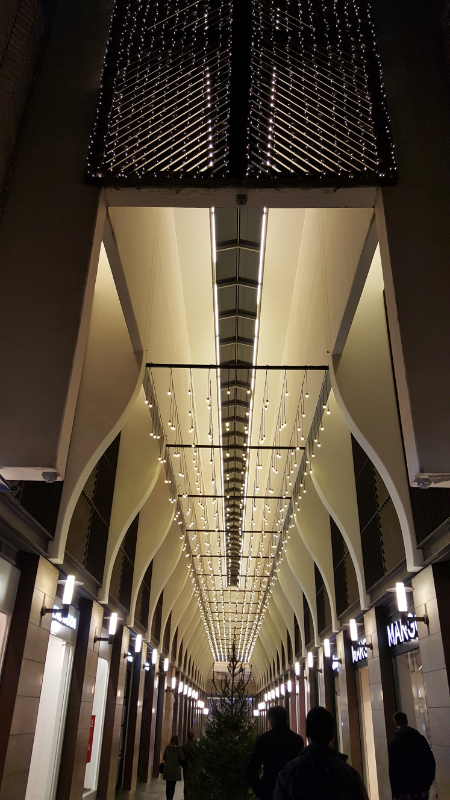
Another spot in the city that I visited with Badveli was the Beirut Souks. The name is misleading because “souks” implies that it’s a market, but it’s actually just a mall. Back in the day, it used to be a market. You know, one of those bustling, crowded, personality-filled markets. I love those places. The people-watching is always fabulous because they’re full of people with purpose. I think it’s cool when you’re in a place that seems like nothing but chaos to you, but when you look around at the people who clearly live and work there, they all know exactly what they’re doing and where they’re going. From the outside, it looks like chaos. To the people on the inside, it’s organized chaos.

When all of the post-war redevelopment of the city started, the old shop owners were offered money in exchange for their shops. The payouts weren’t fair, but with the compulsory purchase power held by the developers, people really didn’t have a choice. I think the new building is nice and all, but it’s just like any other shopping mall. There’s nothing “souk”y about it. They did keep the old streets as the layout for the new corridors, but like… come on. I wanted to hate the building because of what it represents, but I can’t pretend that I didn’t enjoy it a little bit. Especially since when I went with Badveli, it was all decorated for the holidays, and you know what a sucker I am for lights! It’s nothing unique though, that’s for sure. Essentially, it’s like any other mall you’ve ever been in.

Beirut Souks
This would be way more ordinary without the decorations
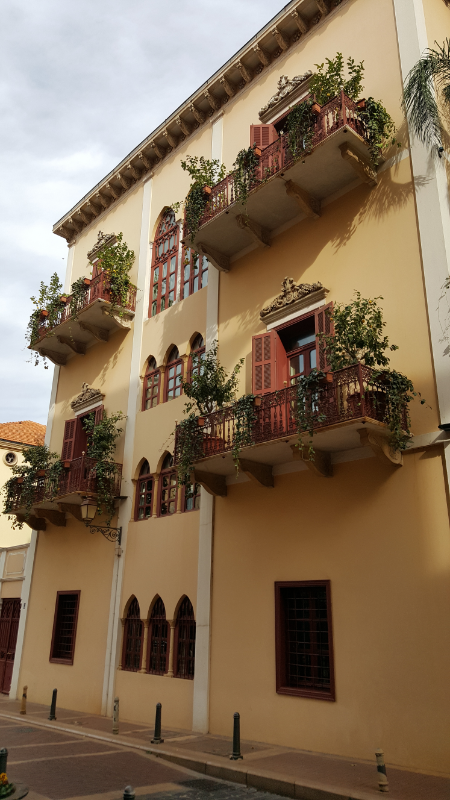
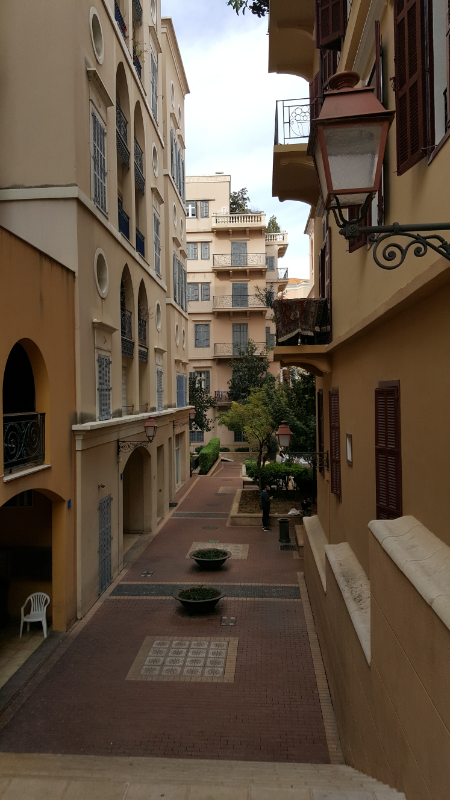
A building in Saifi Village, an upscale neighborhood in Beirut that was completely rebuilt after the war
More Saifi Village views

Hard at work

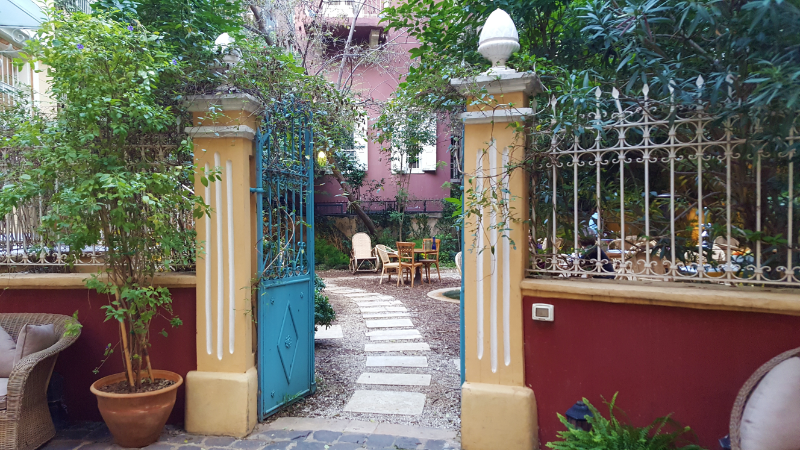
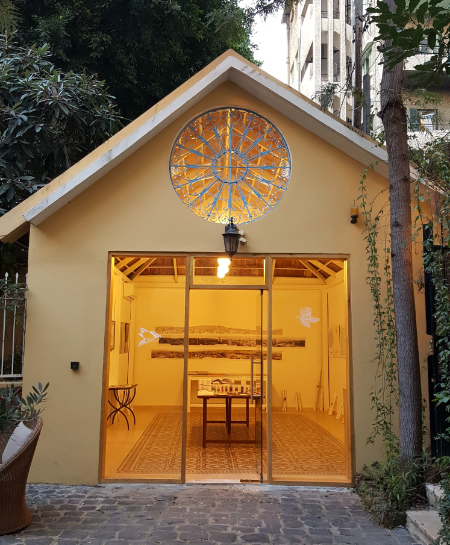
The final activity of my last day was a trip to a gallery, Beyt Amir. There’s a little café in the backyard, and we went there for lunch before checking out the show. Maria unfortunately had a lot of things to do at work, so that mostly left Badveli and me alone except for a quick few minutes during lunchtime.

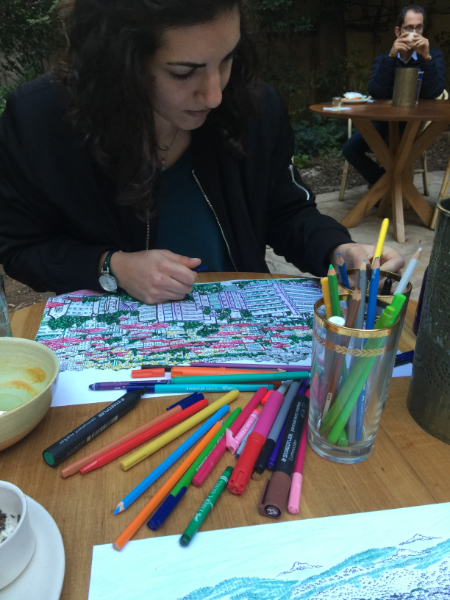
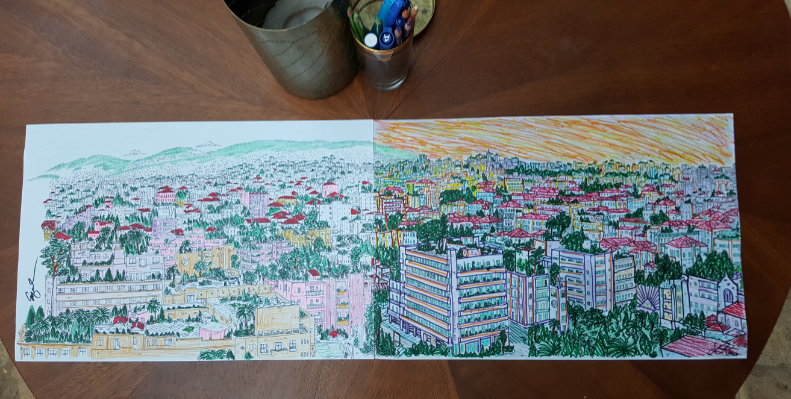
The big thing at this gallery is a bunch of panorama-type pictures of Beirut at different points throughout history. There’s one from 1870, one before the war, one right after the war, and one modern day. Then, an artist did a drawing of what the 2052 Beirut might look like. At the café, the artist’s black and white panorama drawing has been split into pieces and it’s used for placemats! Each table also has coloring utensils at each table, sooooo they’re obviously telling you to color. Badveli and I were talking… and then we were coloring and talking… and then we were so into it that getting our food was almost an inconvenience because we had to stop coloring to eat.

I don’t know how long we sat at that table… but I do know that it was long enough for both of us to finish our masterpieces. It took stealing some markers and pencils from another table to make our dreams a reality, but we did it! It was only after we finished, took photos of our artwork, left them on the table, and went to the gallery that we realized we had colored a couple pieces of a bigger picture… and that our pictures fit next to each other! We rushed back to the table, and sure enough, they matched up perfectly! We found this to be extremely exciting and then obviously took a few more photos before going back to the gallery.

Our masterpieces. Whose is whose? (though I guess the last picture kind of gives it away)
Gate into the cafe

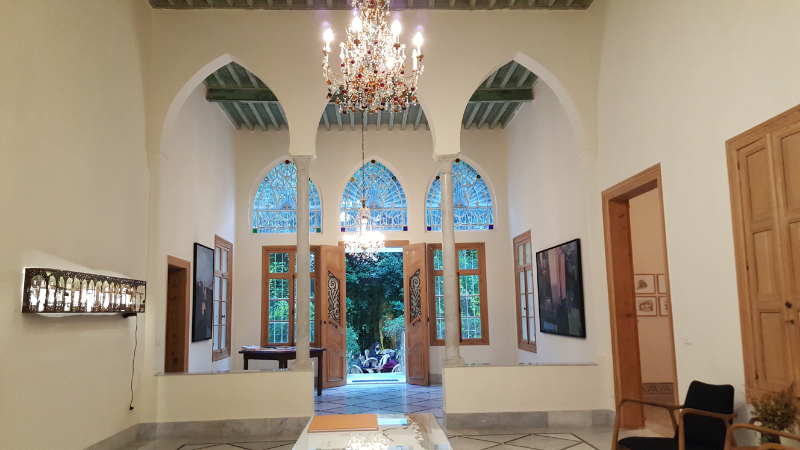
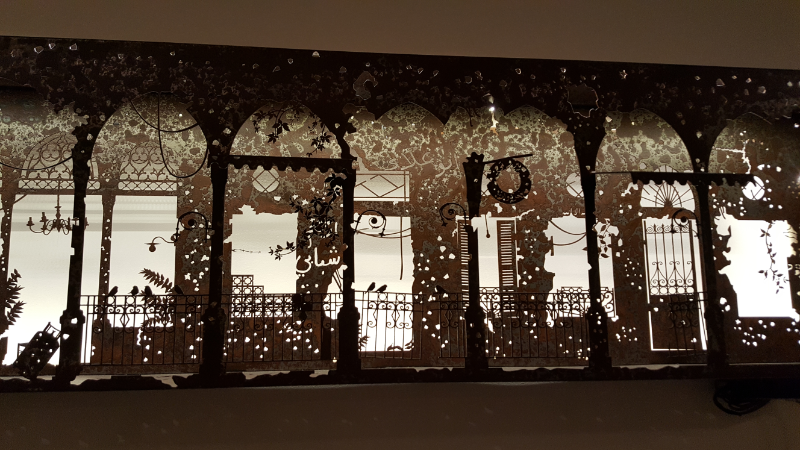
The exhibition was an interesting mix of things. There were the panoramas, plus some watercolors of old, damaged buildings from around the city. Those were cool because the surroundings were all just pen-drawn, and the building that was the focus was painted in watercolor. There were other things that were like little metal dioramas. They were showing war-damaged rooms and buildings but were kind of beautiful because of all the details and the lights that made them look like decorations. The building itself was also pretty. All in all, a great choice of lunch venue and afternoon perusal location.

Inside Beyt Amir
Isn’t this cool?? All of the details are crazy!
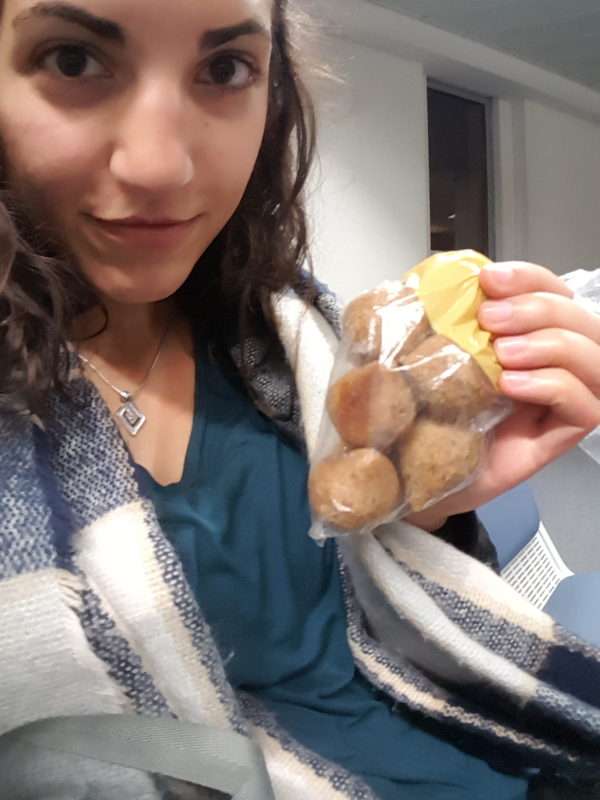
Me with my airplane kuftes

And just like that, my time in Lebanon ran out. Badveli, Maria, and I had our last supper, and before we knew it, Hovig was downstairs to take me to the airport. Maria, in a classic Armenian mother move, insisted that I pack kuftes for the road… because that’s such a normal airplane snack… I pretend to grumble in those situations, but it’s nice to feel the love that comes along with the food pressure because you know that you’re only being forced to take/eat food because you’re cared for and no one wants you to waste away (like that’s even possible in an Armenian household).

I was sad to leave, but I went with a full heart. Seriously, it was just the break I needed to refresh me and prepare me for the rest of my time in Armenia. It was nice to be around familiar people, eat familiar food (because the food in Armenia is NOT the Armenian food I’m used to, but the Middle Eastern and Armenian food in Lebanon are exactly what we ate growing up), spend time in familiar community, and just have a little time where I felt like I was truly at home.

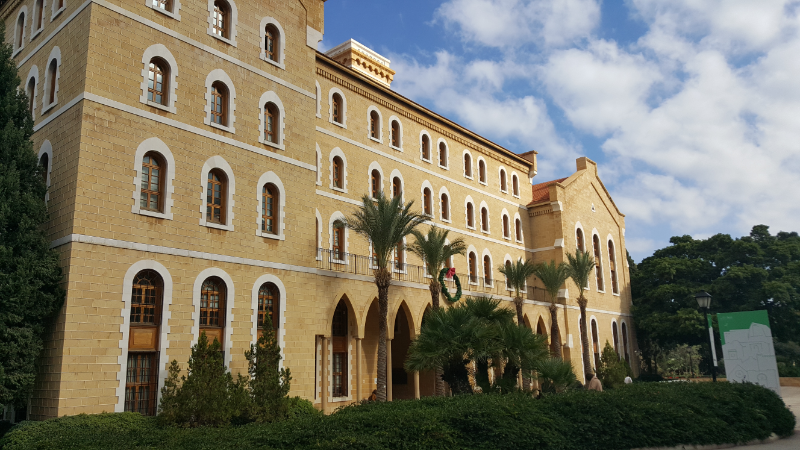
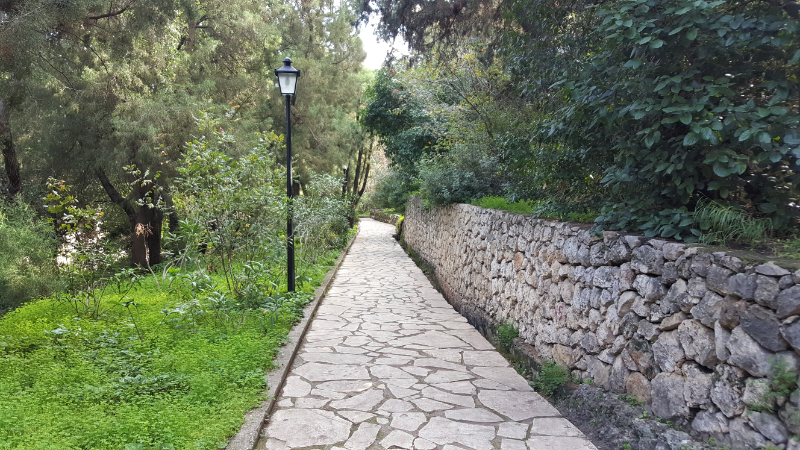
I also took a stroll around the American University of Beirut’s campus. They have some really nice buildings! And lots of green space.
AUB greenery
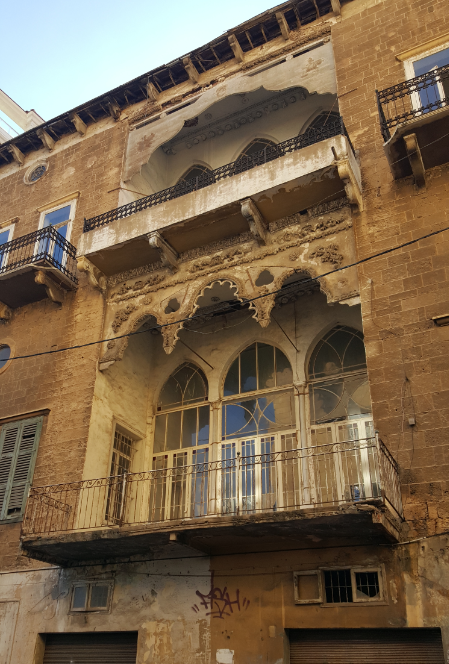
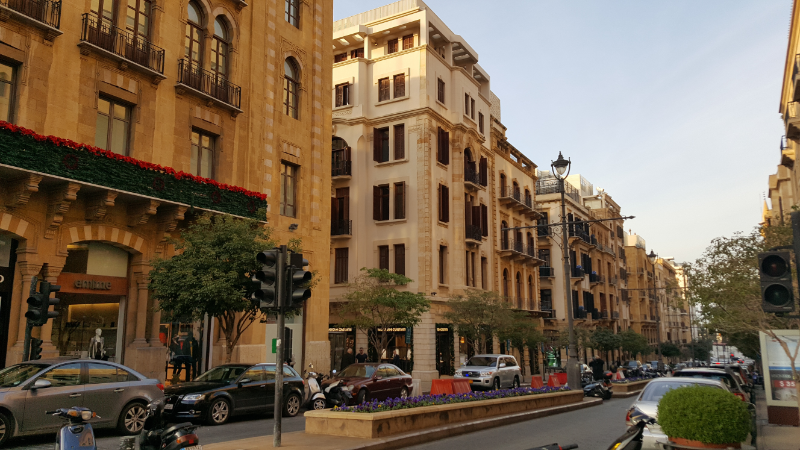
If you keep your eyes open, you can find all sorts of hidden architectural gems in the city.
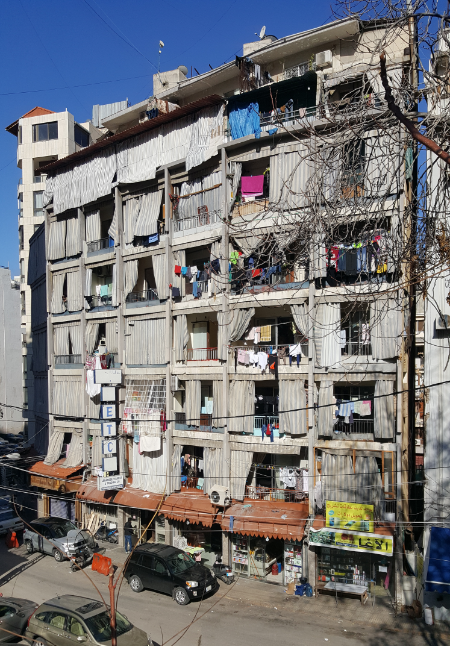
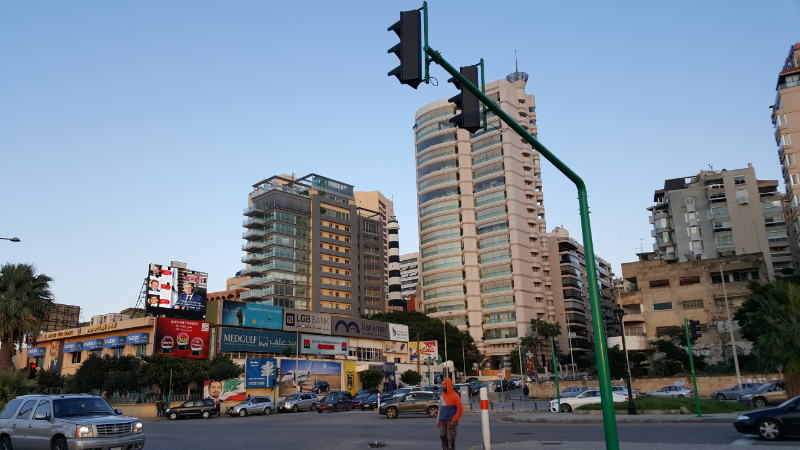
This is a pretty classic apartment building view. The curtains on the balconies help to keep out the rain and heat.

I’ve already decided that I need to go back to Lebanon because there’s SO much more to see there (and because I had a great time hanging out with Badveli and Maria). I spent most of my time in Beirut, so I definitely have to go back to see the major sights that I didn’t get to outside of the city. Next time will be a cross-country tour… which sounds intense until you remember that it takes about 2 hours to drive across the country from west to east and maybe 6 from north to south.

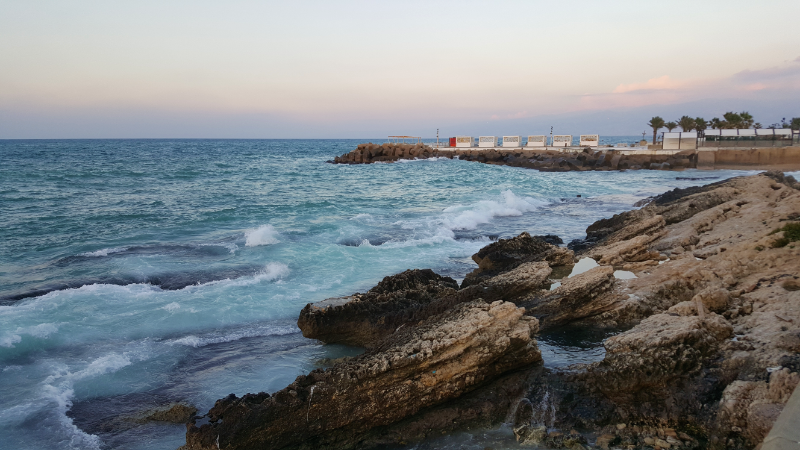
HI, PRETTY WATER!

Anyway, we did get out of the city a couple of times, and one of those adventures was to Byblos (Jbail in Arabic)! Byblos is a coastal city north of Beirut. “They” say it’s one of the oldest continuously inhabited cities in the world. “They” seem to say that about a lot of cities though, so I’m a little hesitant to listen to anyone who tries to claim that title. People in Armenia say that about Yerevan too, but there are a TON of waaay older cities than Yerevan. I guess that when you say it’s “one of the oldest”, there isn’t a clear place to draw the line. Convenient. Well then, I’m one of the oldest people in the world. I’m one of the tallest humans. I’m one of the coolest people in the universe. These all could very well be true as long as you stretch your imagination a little bit.
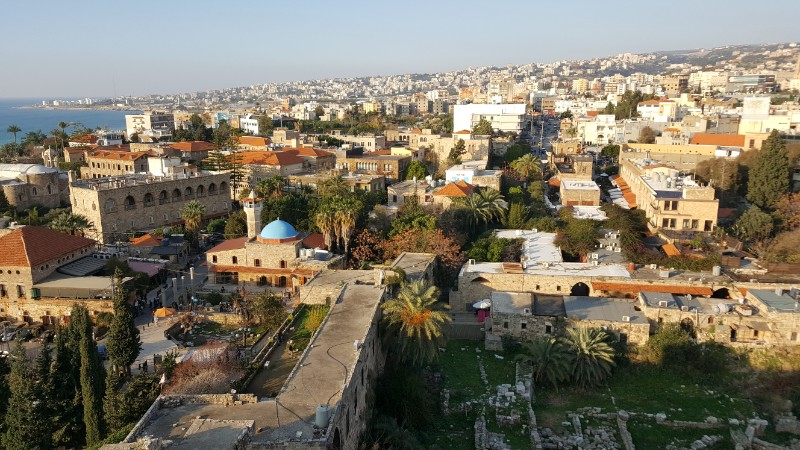
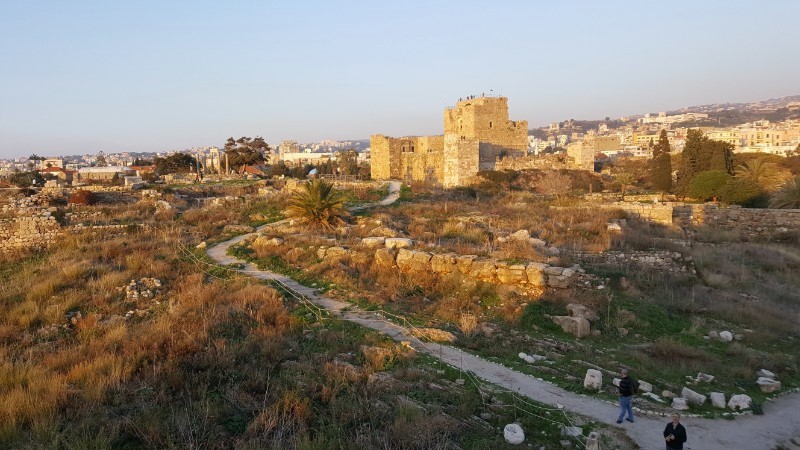
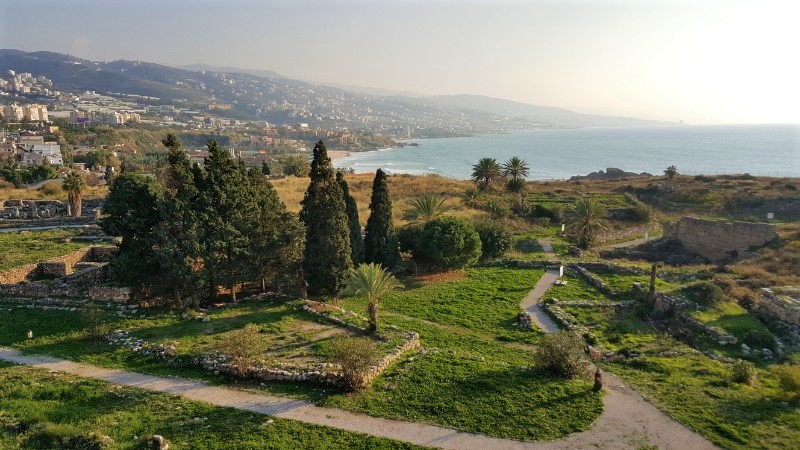
View of the city to the north of the castle

Wow okay, I got a little carried away with that. Like I was saying, pre-rant, Byblos is old. That certainly can’t be argued… Back in the day, Byblos was a fishing village until it turned into an important Phoenician port, shipping out the famous Lebanon cedars and more. It was known for both that and for fantastic shipbuilding. The city grew very wealthy due to its trade with Egypt, and it was heavily influenced by Egyptian culture. It’s also one of the Phoenician cities that gets a few shout-outs in the Bible (though that’s not exactly a good thing because it’s usually when one of God’s prophets is foretelling judgment on the city that will lead to its destruction or something to that effect).

That water though…

As Tyre became more and more important, Byblos became less and less and started to decline. It had a resurgence under Babylonian and Roman rule until almost fading out completely during Muslim rule. During the brief upswing, they exported a lot of papyrus. For this reason, the Greek word for book, biblio, came from the city’s Greek name. And the word for Bible came from the Greek word for book… so the Bible is kind of named after Byblos. After the Muslim conquest of Byblos, they cared so little about the city that they didn’t even bother fixing the things that were destroyed during their invasion. Byblos was nearly forgotten until the 1860s when it was brought back into the picture by a French historian (Ernest Renan).

Today, Byblos is becoming a more and more popular tourist destination because of its beaches, history, and beautiful setting.

Obsessed.
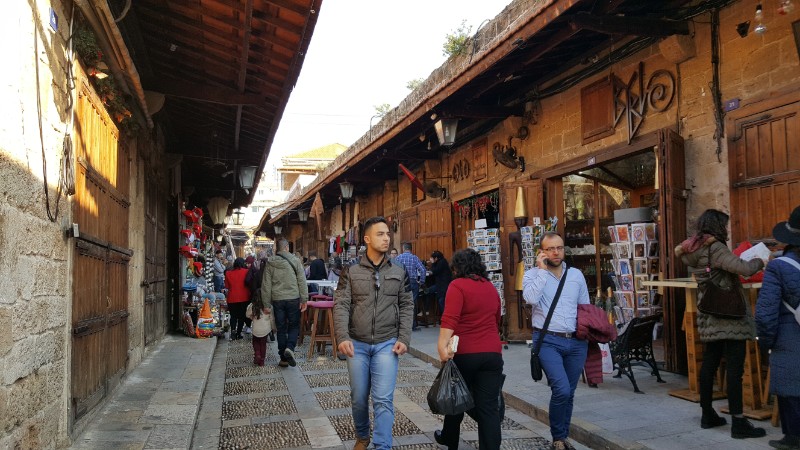
One of the restored “souk” streets in the city which basically just sells souvenirs and such now

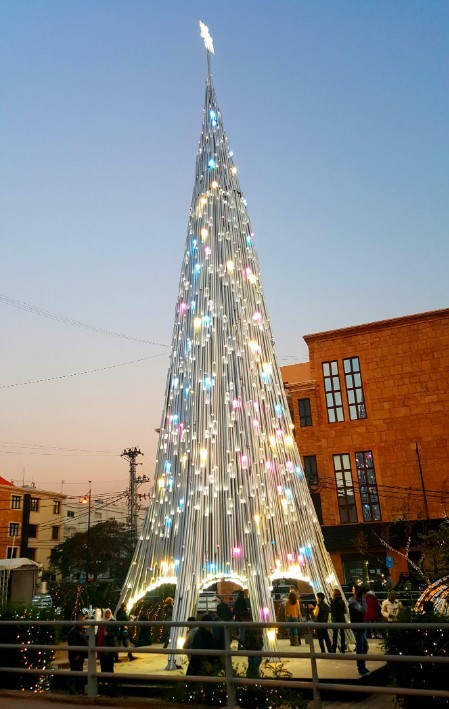
The “modern” Christmas tree in Byblos. Hovig despised it. I thought it was kind of interesting.

Badveli asked one of his car-owning friends, Hovig, if he could drive us there, and thankfully he said yes. It didn’t take long for me to realize that Hovig has the same *brilliant* sense of humor as Badveli and I do, so all it took was a few corny jokes before it felt like we were old friends.

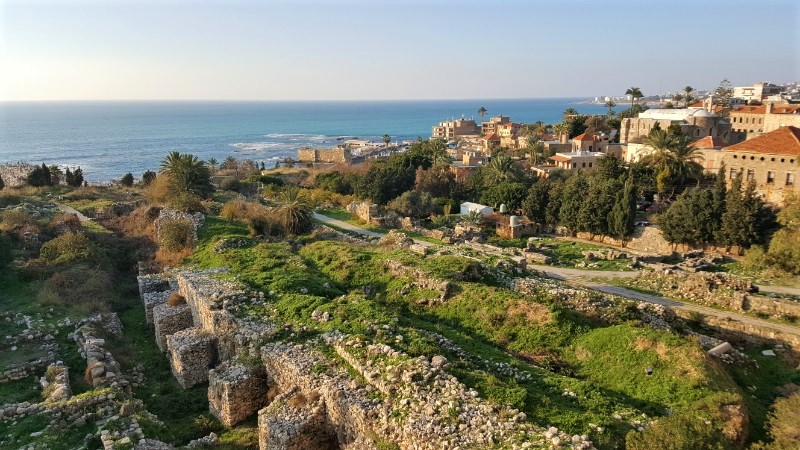
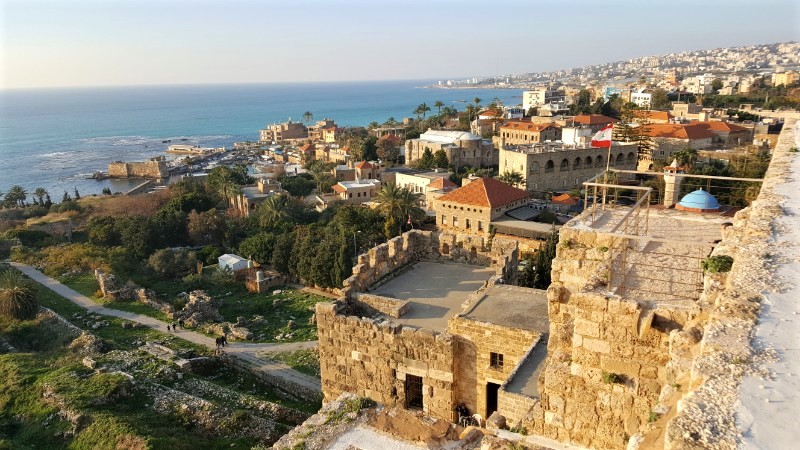
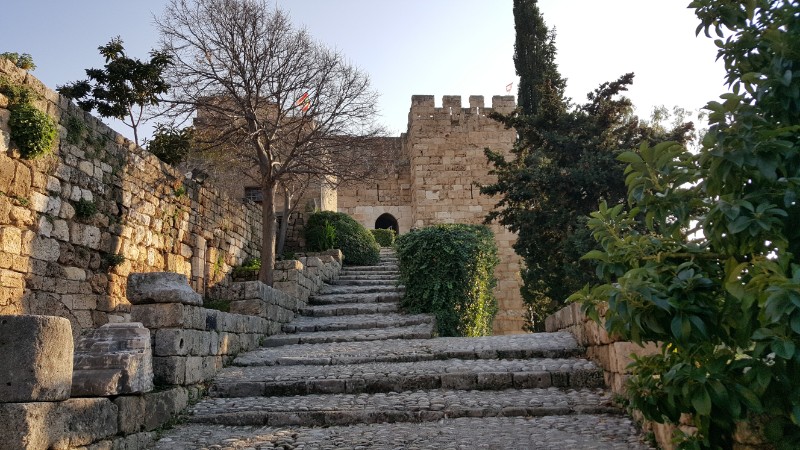
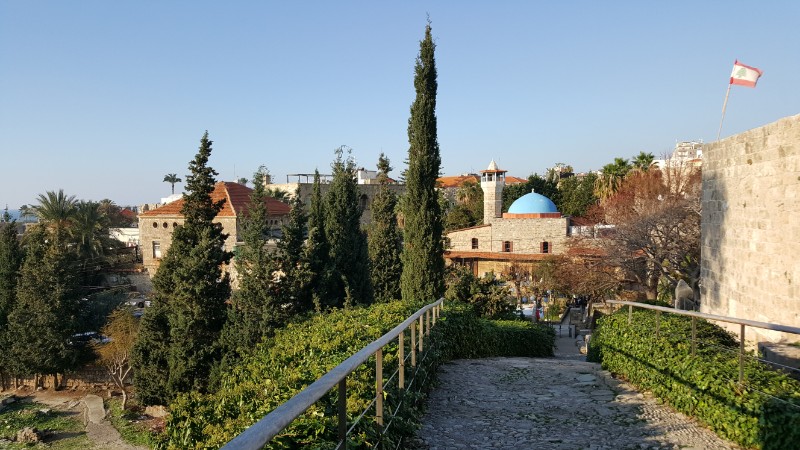
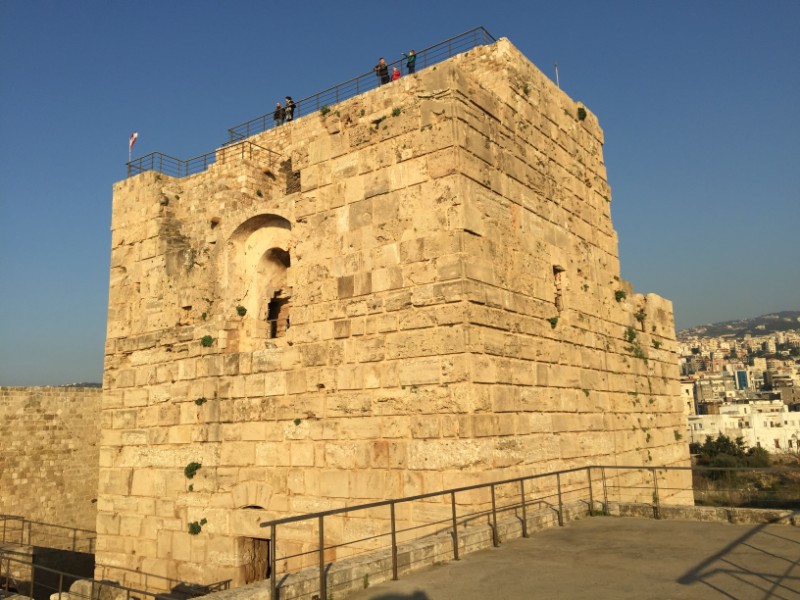
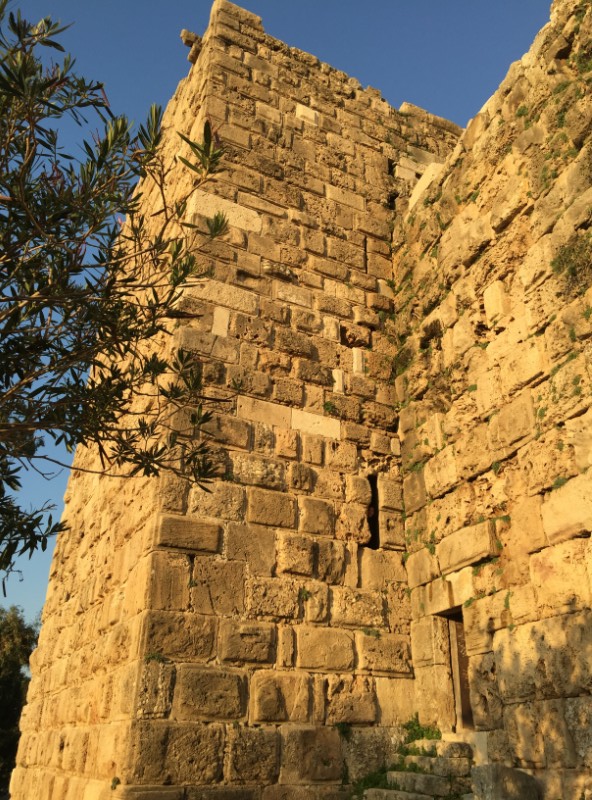
We went to the Crusader castle in the city, and I absolutely loved it. The castle was built in the 12th century by… you guessed it, the Crusaders. Besides the castle, there are also extensive ruins on the grounds. You can see the foundations of temples and dwellings and fortifications, and the actual castle has been restored to give you a better idea of what it was like in its former glory. It’s pretty cool because there are ruins from practically every part of Lebanon’s history… prehistoric dwellings, the Phoenician necropolis, Egyptian temples, Persian fortress, a Roman amphitheater, and more. The site is right on the coast, so there’s a beautiful view of the sea which is made even better by the fact that you can go all the way to the top of the castle to see it. I kept marveling at how pretty and blue the water is… and Badveli and Hovig responded by saying how gross and dirty it is because trash and stuff get dumped into it. Well excuuuuse me. I didn’t say it looked clean (though from afar it looked fine), I just said it looked pretty.

Entrance to the castle

Can you see me?
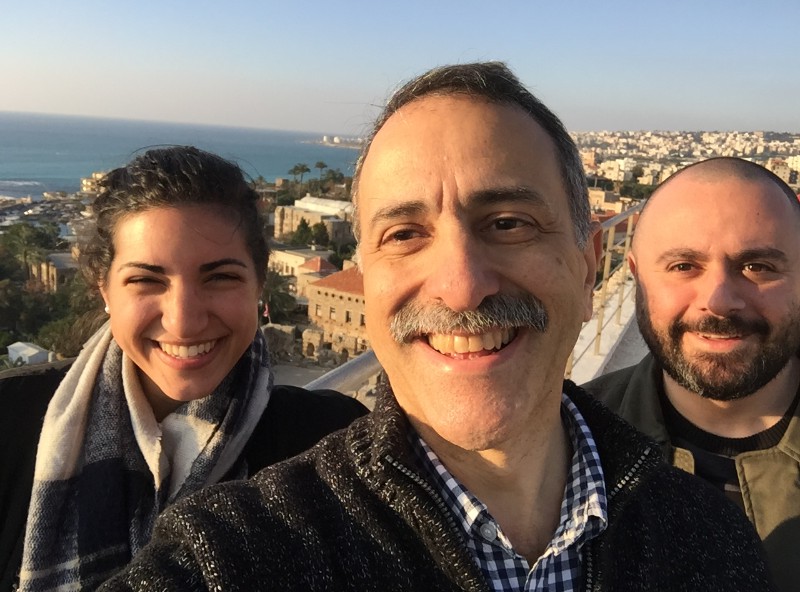
Me, Badveli, and Hovig on top of the castle

Badveli took over as the official “Lara in holes” photographer during the trip. Can you find me?We were at the castle until closing when a guy started aggressively blowing a whistle to get people to leave. I, of course at that very moment, was poking around a building on the site that I felt like maybe I shouldn’t be poking around. (My recent approach to sightseeing has been “do what you want until someone yells at you” because so often, things that you wouldn’t be allowed to do in the US are totally okay in other countries. If you limit yourself to the things you think would/should be allowed, you’ll probably miss out on something.) Since you get super jumpy when you think you’re doing something wrong (or at least I do), the instant the whistle started blowing, I was sure that it was someone whistling at me for being somewhere I shouldn’t be. I’ve been to places (I can’t remember exactly where… Machu Picchu maybe?) where that’s the how the guards get your attention. I kind of spazzed and ran to what I deemed a more acceptable location before realizing that he wasn’t whistling at me. And of course, Badveli and Hovig laughed at me the entire time (to be fair, I deserved to be laughed at). Apparently not having learned my lesson about trying to look semi-normal, I then ran around like a lunatic, trying to see the couple of things we hadn’t gotten to yet before the whistle man kicked us out.

Poke poke poking around… this is just moments pre-whistle and spaz attack.
The castle from my illegal (but not actually) stop on the steps of that building
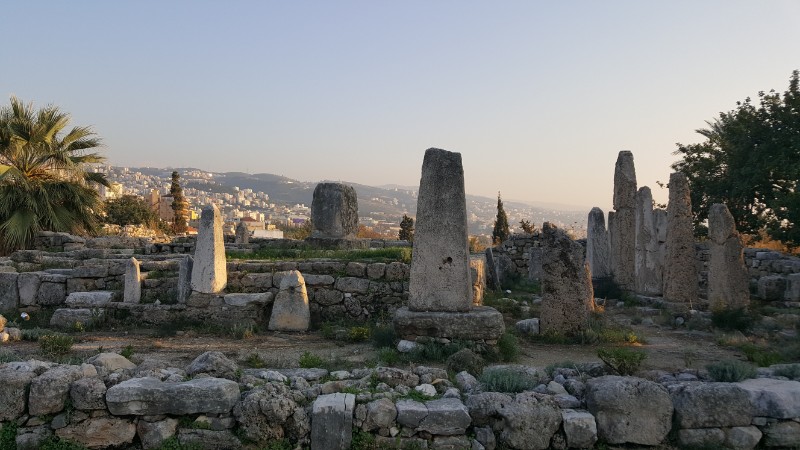
Egyptian obelisk temple that was relocated to this site to conserve it
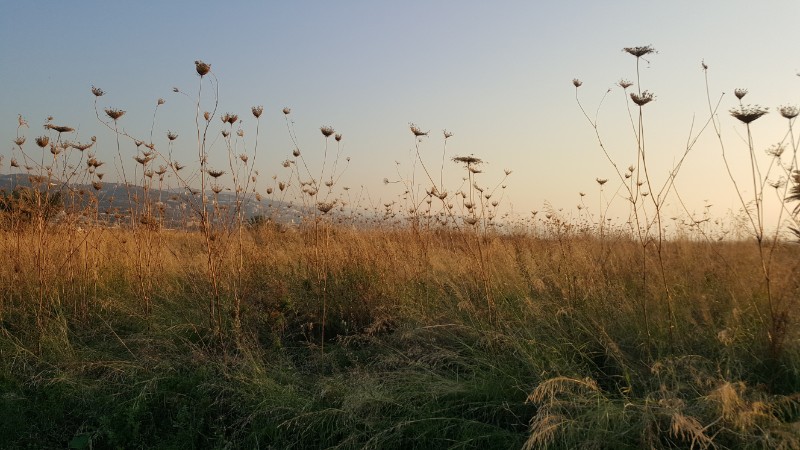
Weird flower field
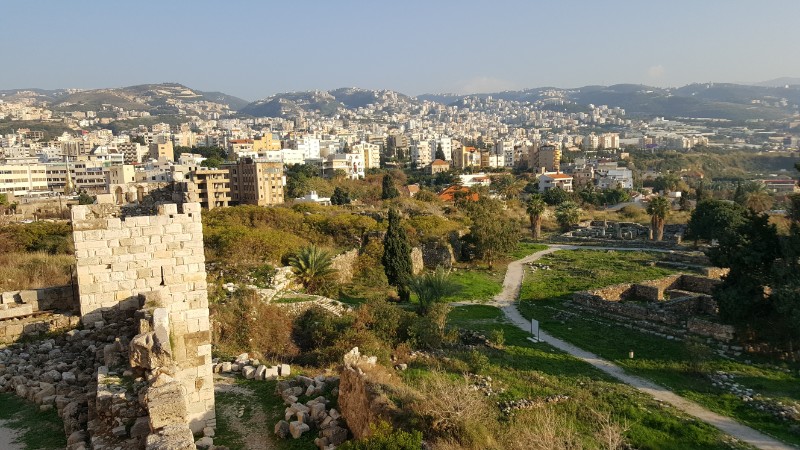
Looking south

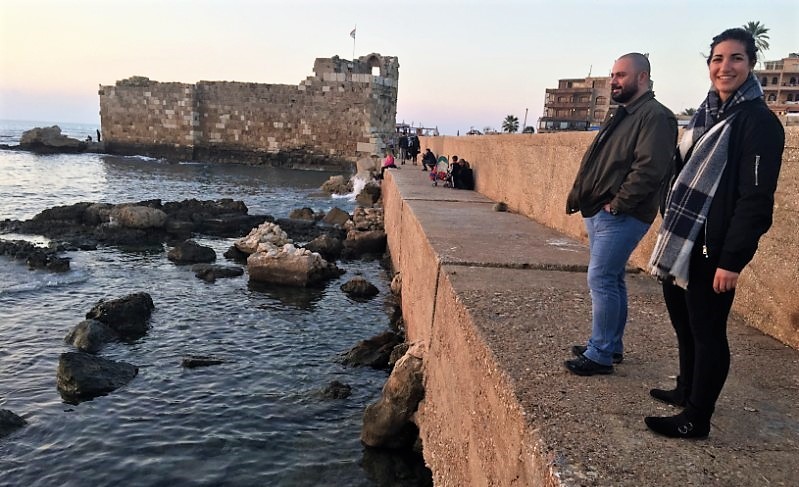
We used the last hour or so of daylight to walk down to the harbor where Hovig was a helpful tour guide by showing me where you can see trash floating in the water. I chose to ignore it, not because I think it’s fine that the water is gross, but because I wanted to enjoy the illusion that the water was blue and pure and that humans weren’t doing what they do best and ruining nature.

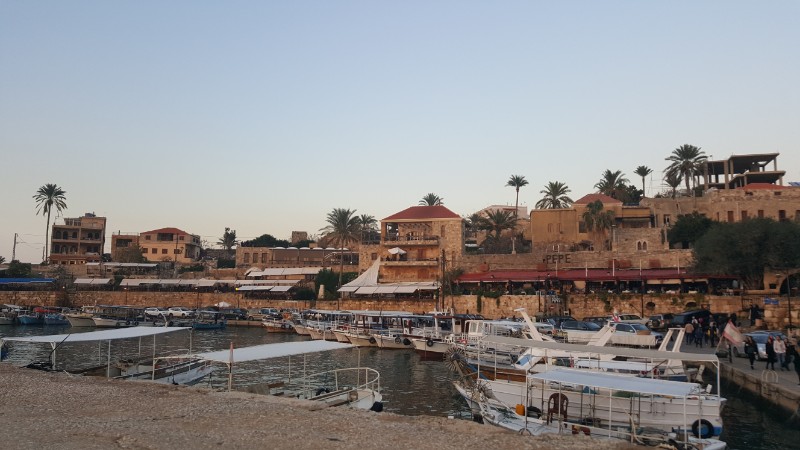
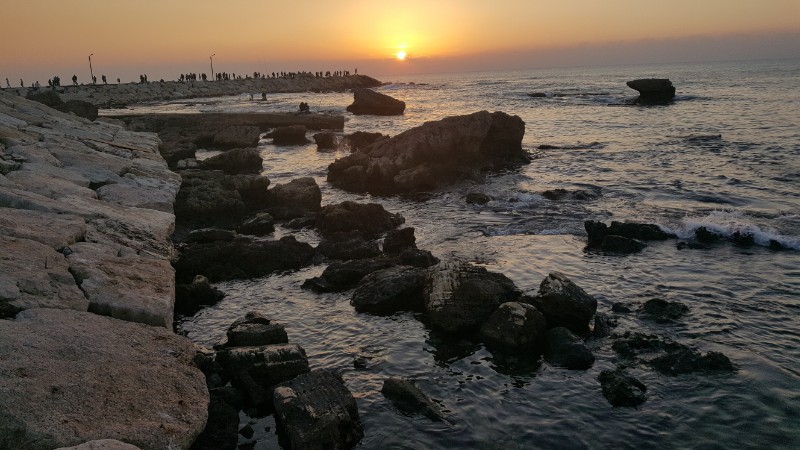
Despite the garbage, it really was beautiful. There were some very nice rocks, and the sun was starting to set. Boats bobbed around in the harbor, surrounded by picturesque buildings. The air was that perfect, comfortable temperature, and a breeze was coming off the sea. We stayed there for a bit, me soaking in the beauty of the moment, Hovig looking in disgust at the dirty water, and Badveli most likely making a fantastic(ly bad) joke (Badveli – by bad I obviously mean good… but if not good, definitely funny… or at least cringe-worthy).

The harbor
Sunset!
Admiring the *clean* water

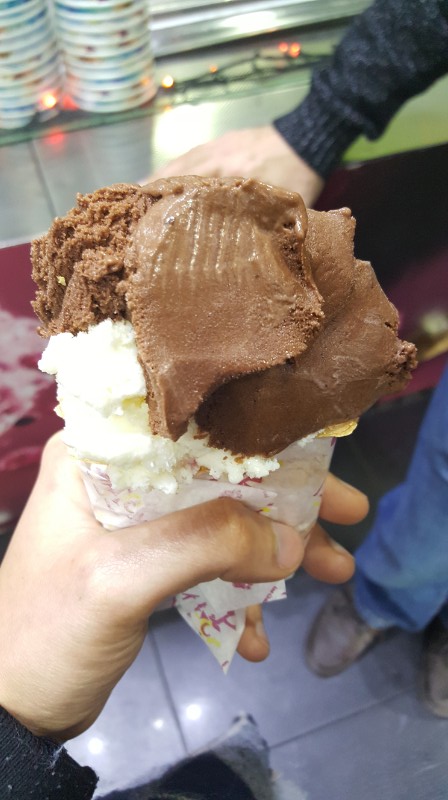
Okay, quiz time. What’s the best way to make a great day into a phenomenal day? The answer is ice cream. Always ice cream. On the ride back to Beirut, we stopped and got Arabic ice cream which is different because it uses flour made from orchids that helps keep it from melting and mastic tree resin to help stabilize it (whatever that all means). I’ll be honest, if you didn’t tell me that it wasn’t normal ice cream, I never would have known. It was delicious. We were supposed to just stop to pick up a container to bring back with us, but we obviously ate some there also (unless Maria is reading this… then that didn’t happen and we just did what we were told because we’re very good at following directions). Then, I ended up eating ice cream TWICE, and that’s how you make a phenomenal day into a historic day that will be remembered forever.

If you remember anything from my blog, let it be this: Ice cream makes everything better.

LOL
Chocolate and vanilla because I’m boring

When I finally awakened from my post-Christmas caroling coma… I wanted to go right back to sleep. But no! I had a set amount of time in Lebanon, and I had to make the most of it. By the time I managed to pull myself together, Maria was home from church with plans for us to check a few more things off our sightseeing list.

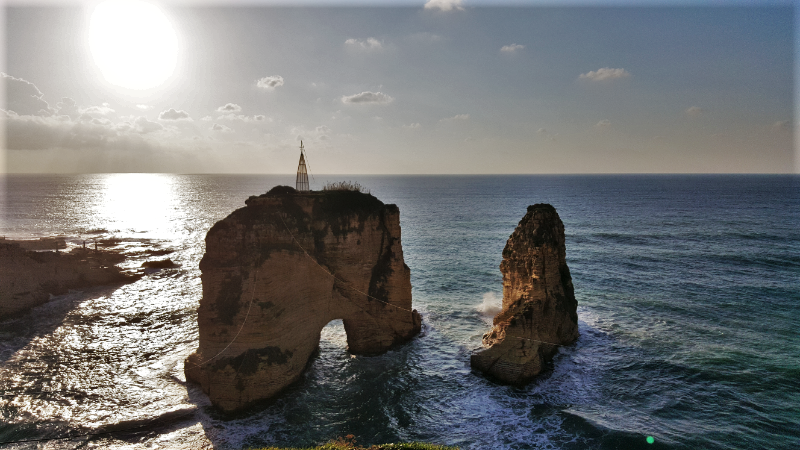
We hopped on the bus and went all the way to the western waterfront of the city where Badveli was waiting to meet us. Our first stop was the famous “Pigeon Rocks.” There isn’t too much to say about these… They’re a couple of big rock formations out in the water. They are definitely cool looking! And it was nice to be by the water. They probably look even cooler during the sunset, but we were there earlier in the day and saw the awesome sunset from elsewhere along the coast.

Apparently, people sometimes try to go through the hole in the big rock in boats. Like… come on. After watching the waves crash against the rocks and the water rush through the hole for about five seconds, I was convinced that that’s a terrible idea. I’m all about adventure and taking risks or whatever, but not when they’re stupid. Sorry, that was strongly worded and full of judgement. Let’s try again… As fun as it sounds to attempt to launch myself through a rocky hole in a little boat while waves try to smash me into tiny pieces, I think I’ll pass. (I don’t think that was any less judge-y… oh well, I tried.)

Pigeon rocks. Aren’t you tempted to brave the tunnel?

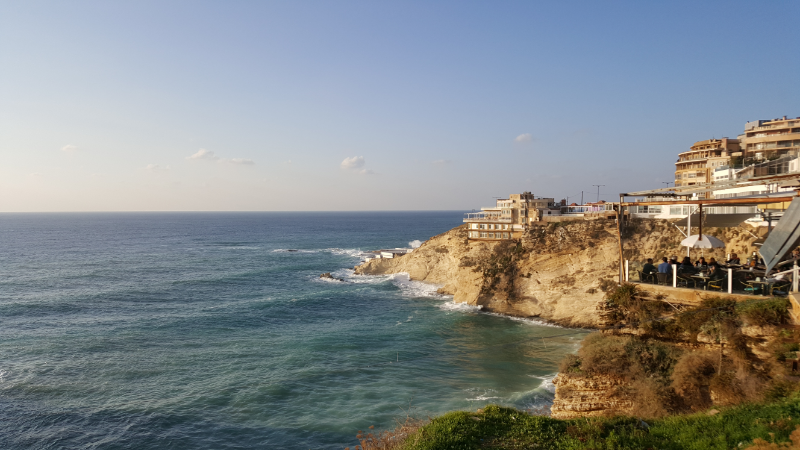
From there, we walked north and went for a nice stroll along the water. The weather, finally after three days of constant rain, was perfect. There’s nothing like the feeling of the sun warming your face, and the smell of the air reminded me of the beach back home. It was a snapshot of summer in the middle of winter, and what’s better than that? I’m sure it gets miserably hot during the summer months, but I was happy to enjoy the warmth while it was juuust right.

I’m sure it’s completely safe…

Our next stop was Luna Park, an amusement park right on the coast. Luna Park isn’t any sort of special name for that particular spot. More like it’s the generic name for “amusement park”. Fun fact: there are a ton of “Luna Parks” in existence. The name originally comes from Luna Park on Coney Island in New York, and it was borrowed by a few other developers who built amusement parks across the world. Now, in more countries than just Lebanon, saying “Luna Park” is the same as saying “amusement park”.

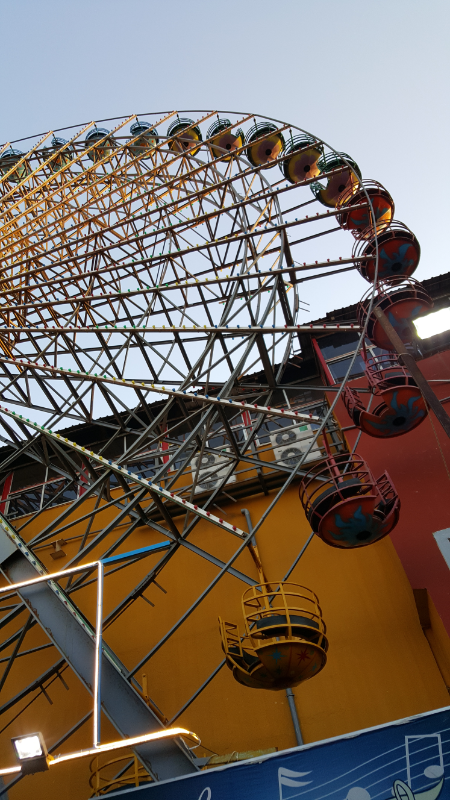
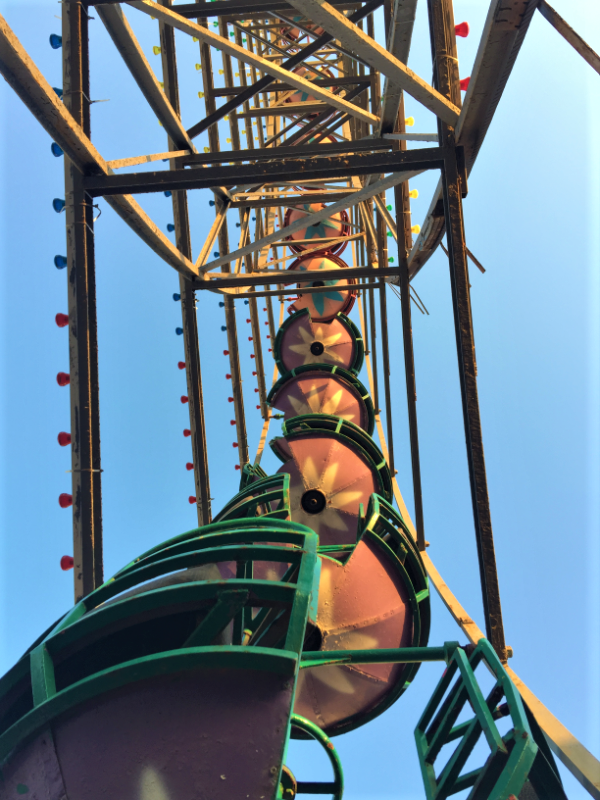
I wanted to go on the ferris wheel, something Badveli and Maria had never done before, probably because it’s another one of those “this ferris wheel has been here since before the beginning of time” situations.  But you know, remember how I was talking about risks and how some are worth taking? Terrifyingly old ferris wheels are almost ALWAYS worth it.

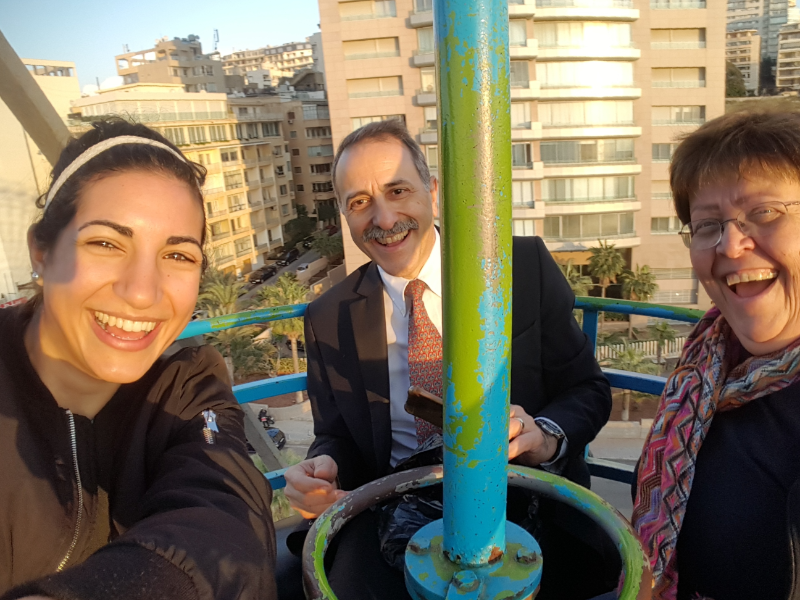
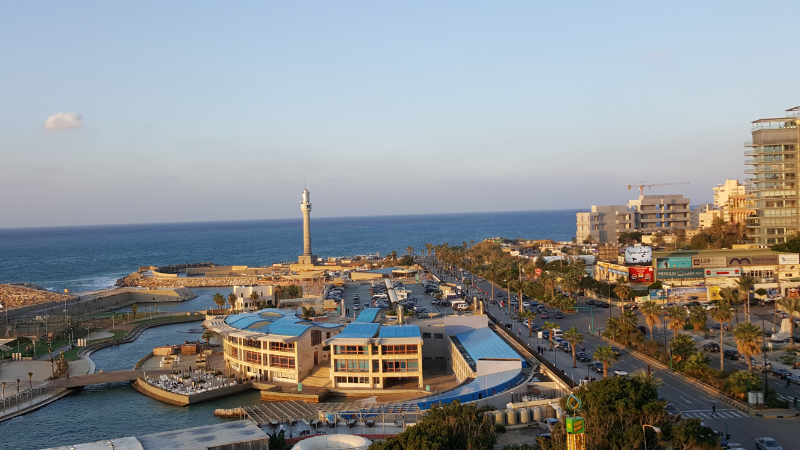
Since this isn’t exactly high season for the ferris wheel, there was no one else riding when we got on. That meant that we got an extended ride and went around like 5 times. I’m fairly certain the operator just started the ride, went and drank a cup of coffee, and then came back to stop it. We got a great view of the city and the water, and the ferris wheel had those cars that you can spin around and around until you feel like you’re going to throw up, so that was fun too. I was just happy that my brothers weren’t there with us because they’re known for spinning those things so fast that you can feel your stomach trying to leap out of your body… and so fast that everyone watching is almost positive that your car is going to disconnect from the ride and spin off into oblivion. Thankfully, our experience was slightly less dramatic than that, though still pretty great.

Ferris wheel party!
Photo credit to Badveli for this cool pic!
View from the ferris wheel

After the park, we kept walking along the water. It was such a pleasant night, and hearing the water crash up against the shore is always so calming. There was a spectacular sunset, and all of that put together was almost enough to make me forget that the first few days were filled with rain and rain and rain.

Can you spot the lighthouse?
Picture perfect!
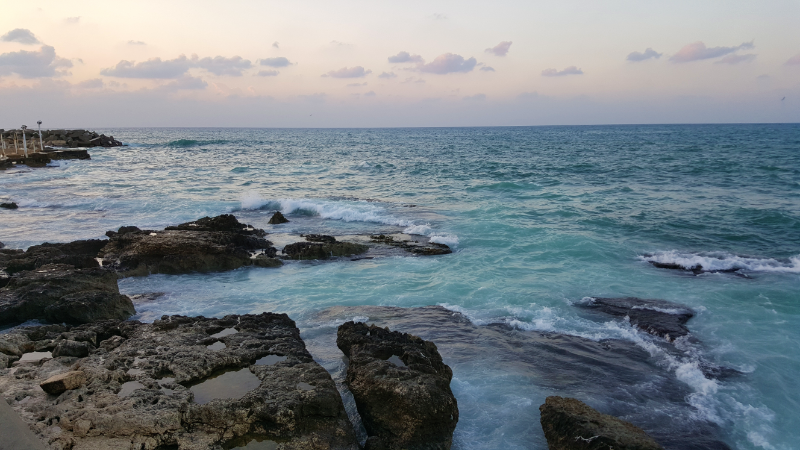
Check out the water!! So blue! <3
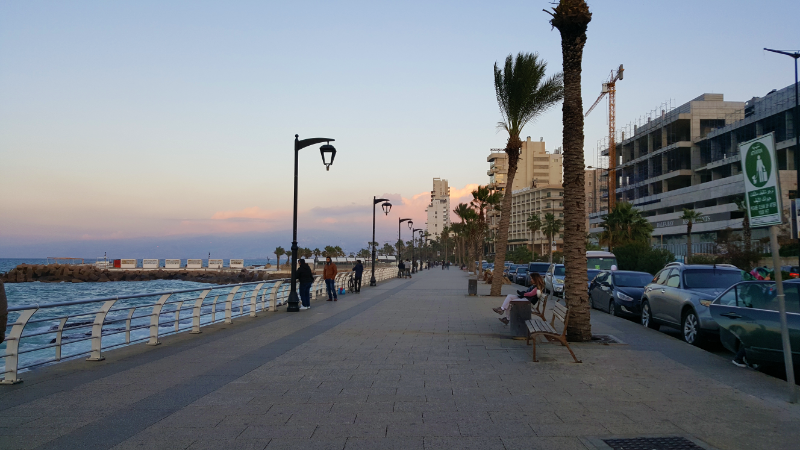
Sunset walk along the water.
Sunset!
It’s almost like the clouds were intentionally and perfectly arranged to make this look as cool as possible.

The next day, Badveli and I braved the rain and walked around downtown Beirut. This was one of those infrequent times when I wished that I had a step tracker or something to know how far we walked because we were on our feet practically the entire day!

This was as much as we could see of the inner part of the museum (I stuck my head through the window in the exterior doors in an effort to see as much as possible)

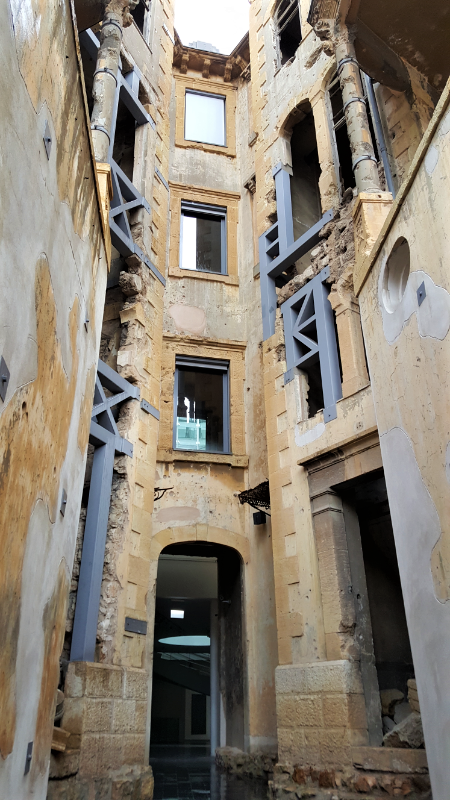
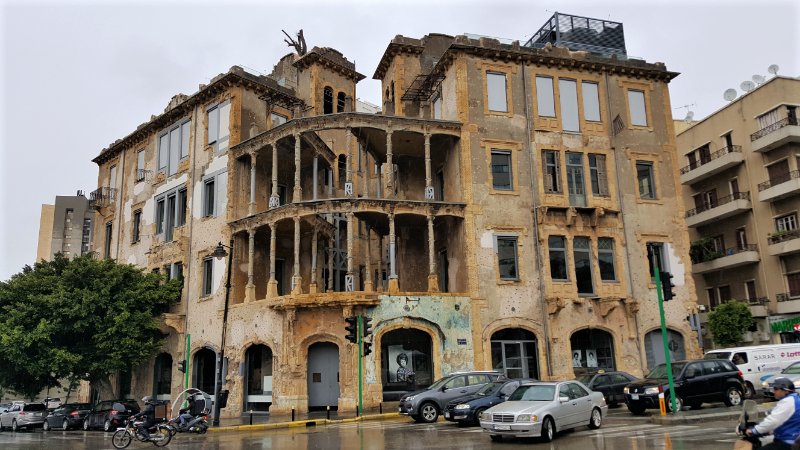
We started off at another museum, Beit Beirut (House of Beirut). Unfortunately, it was closed, but we looked at what we could from the outside, and Badveli explained the story and described the interior to me. The building was built in 1924. It was an apartment building, originally called the Barakat house after the family that commissioned its construction. The building’s architecture was very transparent, connecting the occupants to the city around them with beautiful, unobstructed views. There were eight families, both Muslim and Christian, living in the building when the civil war broke out. They evacuated, and the building was taken over by Christian militias.

It is located along the Green Line, the road that divided the east and west sides of the city during the civil war. There are five major crossings, and the Barakat building is on the corner of one of them. That strategic location, plus the architecture that allowed for such fantastic views, made it into an ideal location for snipers to prevent people from crossing the street.

After the war, it was discovered by a Lebanese architect, Mona Hallak, who became determined to preserve the building and share its history. She said, “To me it represented Beirut: before the war through the archives I found under the dust and debris, during the war through the sniper additions, graffiti and bullet holes covering its walls, and after the war through my fight for the preservation of our heritage, identity and memory against the sweeping amnesia.”

Beit Beirut

It took years of battling with both the Barakat family and the city, but she was eventually successful in ensuring its preservation. It went through a serious restoration process to make sure it was structurally sound while preserving the interior and exterior damage or “war architecture”. There was also an addition to support its new function as a museum.

I would have loved to go inside. It seems like a pretty spectacular and powerful place, and despite the damage, you can still see the beauty and elegance of the building. Welp… guess I’m going to have to go back to Lebanon! Oh darnnnn…

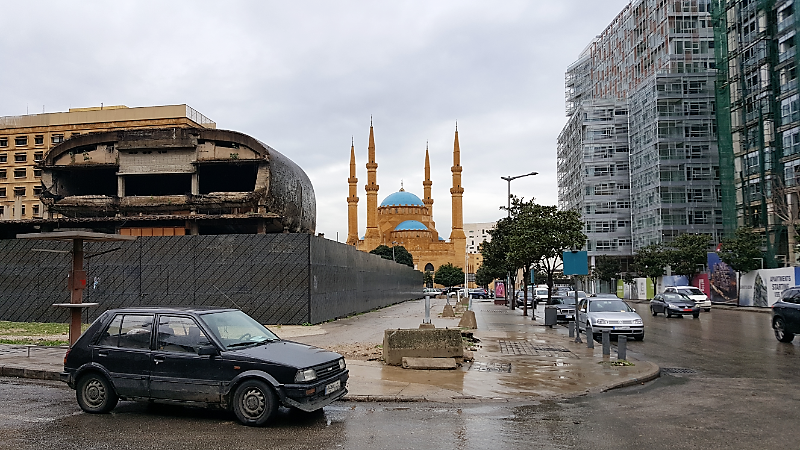
Ruins on the left, shiny new mosque in the back, construction on the right.
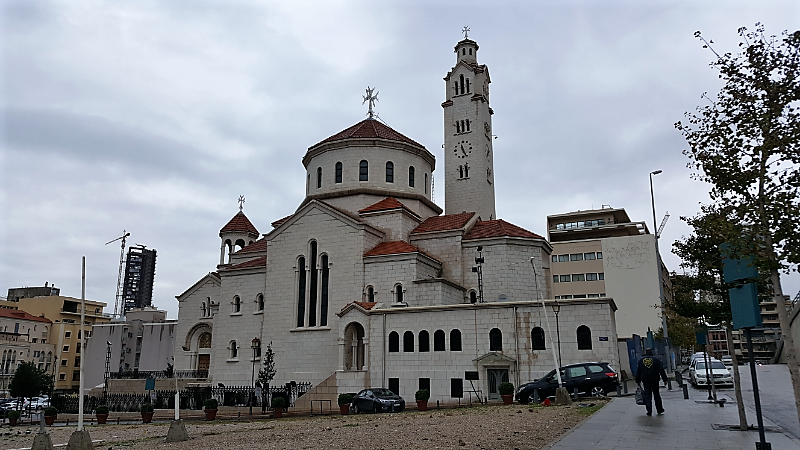
Armenian Catholic Church! It looks exactly the same as every church in Armenia except for the material, doesn’t it?

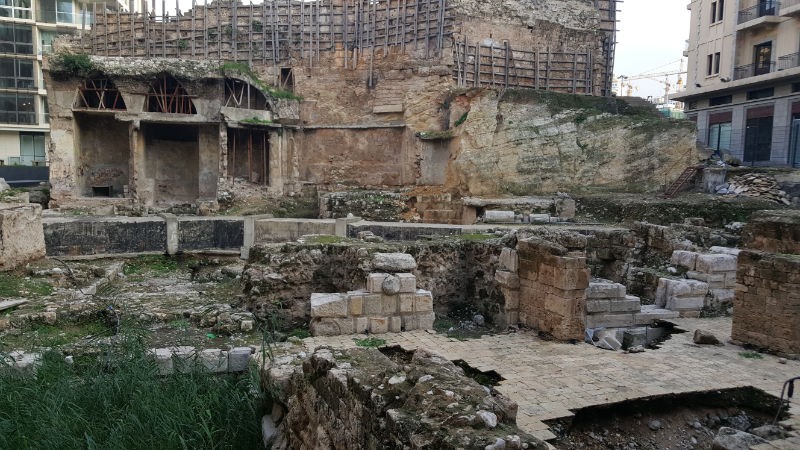
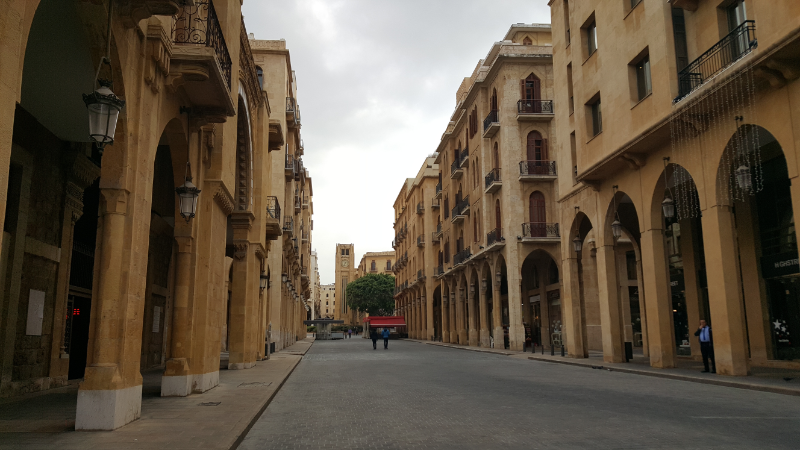
From there, we wandered towards downtown, pausing to observe the absurd amount of construction happening along the way and wonder about the buildings that have gone seemingly untouched since the war. There’s a big developer that has control over practically all of the rebuilding and development in the downtown area. They have compulsory purchase power which means that they can force people to sell their property even if they don’t want to and pay them way less than it’s worth. There’s a weird feeling that you get in a lot of parts of town that they’ve heavily developed. They certainly look nice, but they’re missing personality and life. There’s no color, both figuratively and literally because everything is built out of the same, yellowish stone. The streets look like they should be full of people, but it’s like the city falls asleep as soon as you step into one of the little development pockets.

I kept having these conflicting feelings because often, I thought that the buildings were pretty. But what’s the point of having pretty buildings if no one can afford to use them? Buildings are made to be used. Otherwise, they’re worthless. Yes, architecture is also art, but what makes it such a cool art form is the fact that it needs to be both functional and beautiful. Without function, you have nothing more than a very large sculpture. The city changes from a living, breathing place into an inauthentic, amusement-park-type attraction.

Here’s one of those pretty but deserted streets… See what I mean?

Also, sometimes you have to wonder if more buildings really are better. More buildings means more people. More people means that you need more space for people to do their living. Not just apartment space, but outdoor space. Space for kids to play and people to socialize. A city with only tall buildings quickly turns into a very isolating, suffocating place.

Detailing on the side of Al-Amin Mosque

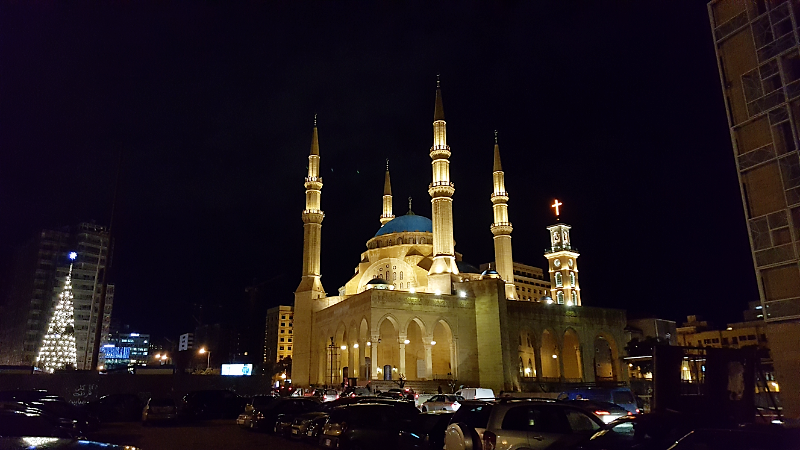
From there, we walked past Al-Amin Mosque. It was built between 2001 and 2008 and is the largest mosque in Lebanon. There’s some controversy surrounding the procurement of the land that it’s on, but I can’t mentally handle learning about more complicated history sooo… here’s the one second summary of what I think I know, and we’ll leave it at that: the prime minister at the time was the one who managed to do the previously un-doable purchasing of land which seems a little questionable. That’s all I’m going to say.

Of course, the controversy doesn’t stop there because why would there ever be a simple story for me to tell you? That would be way too easy. The mosque’s architecture is Ummayyad, Mamluk, and Ottoman-inspired, and many people think that it looks out of place in the center of Beirut. It’s also extremely large which makes it stick out even more. The minarets are 72 meters high!

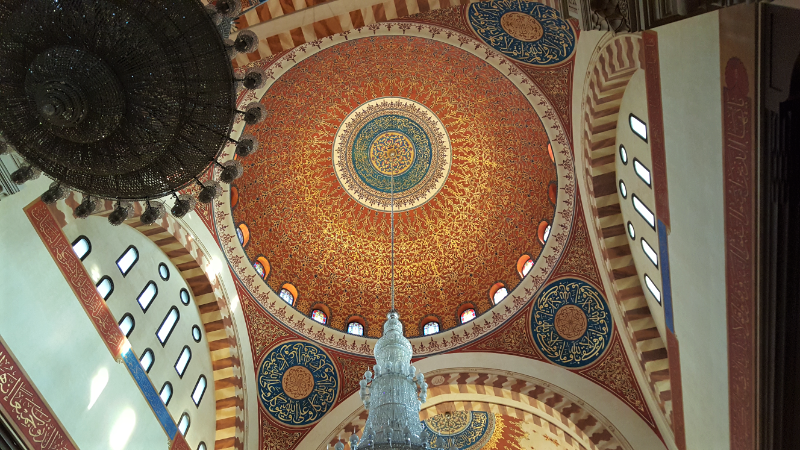
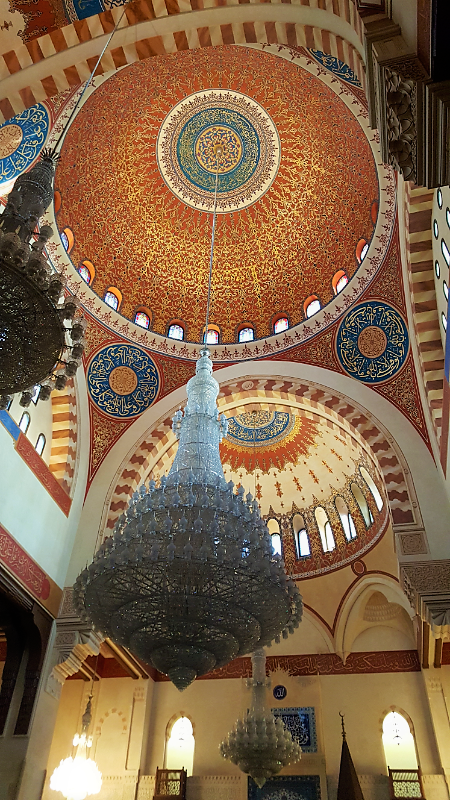
Personally, I didn’t love the exterior. It definitely felt like it was forced and didn’t quite match the other things around it. However, I went back later on my own and went inside… and it was spectacular. The painting, calligraphy, and gilding in the dome were like nothing I’ve ever seen before. I could have stared at the ceiling, marveling at its beauty and complexity, for hours. I kept thinking, “Who the heck can do something like this? And HOW LONG did it take them??”

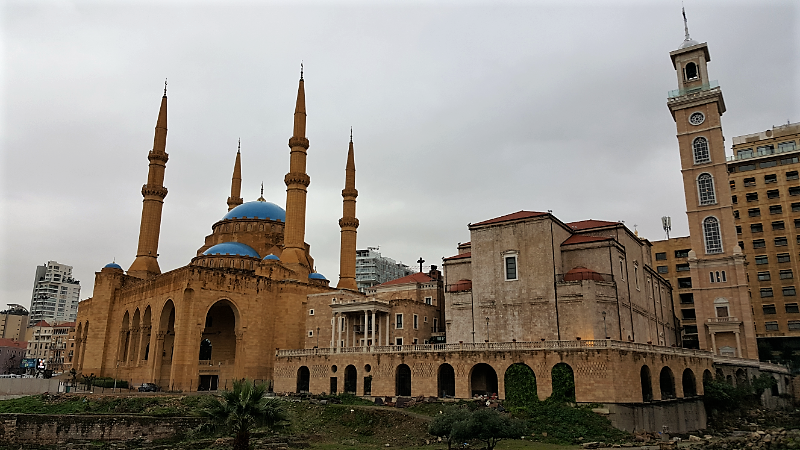
The church and mosque from behind with all of their towering components.

Well, let me just say… the internet, my friends, can be a wonderful thing. Guess what? The dude who did all of that is named Harout Bastajian, aka definitely Armenian. He specializes in the painting of religious buildings, and he says that the painting of Al-Amin Mosque took him and his team ONLY 3 MONTHS. Ummm how.

Obsessed.
IS THIS NOT THE COOLEST THING YOU’VE EVER SEEN??????

My visit to the mosque was also very interesting because they have a guy there just to talk to visitors. I was the only visitor at the time, so I got to ask him anything I wanted about the building or Islam. He was trying to convert me which obviously wasn’t going to work, but I was excited to have someone to answer my many questions. I’ve been getting more and more interested in learning about other religions so that I have a basic understanding of what other people believe, and reading about religion on the internet only leads to headaches. When you’re talking to someone, you can ask them exactly the things you’ve been wondering about and get answers that aren’t written for religious scholars.

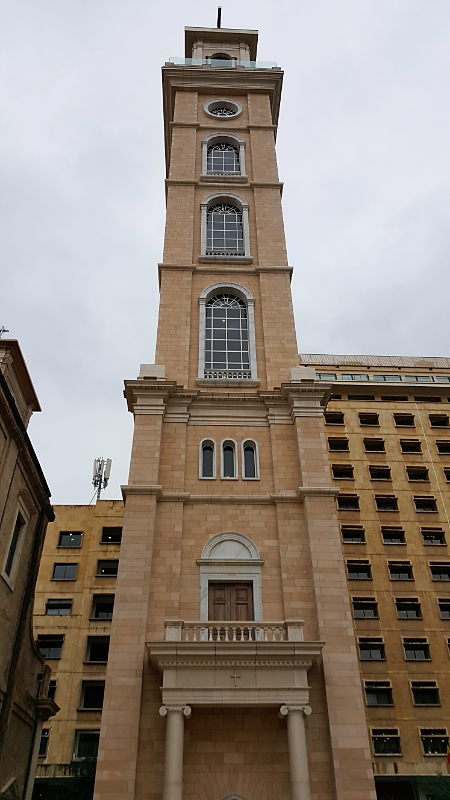
Directly next to the mosque is a church, St. George Maronite Cathedral. One of the complaints about the mosque is that it dwarfs the church, and I guess they decided to deal with that by building a randomly tall clock tower topped with a tacky (in my non-objective opinion) light-up cross. To be honest, I don’t know why they built the clocktower and if it actually had anything to do with the mosque or not, but there is kind of a nice sentiment behind the height they chose for it. It was going to be a bit taller to match the height of this clock tower in Rome, but they decided to cut off a few meters so that it’s the same height as the towers on the mosque to send a message of harmony and solidarity between the religions.

I think that’s enough for now, right? I don’t want to overwhelm you with information all at once… we’ll save more overwhelming for the next post. 🙂

The campanile (aka clock tower)
Night view! You can see my favorite glowing cross.
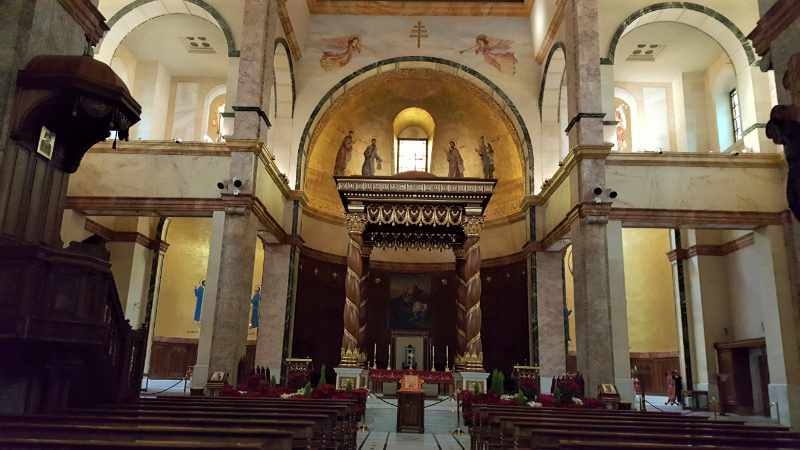
Inside St. George

My first few days in Lebanon were rainy. When I say “rainy”, I’m not talking about just overcast skies and some little showers here and there. I mean that for three straight days, it was like the sky decided to finally unload some serious emotional baggage. I usually don’t believe in umbrellas (don’t bother trying to make sense of me), but no chance was I going out in THAT with just a rain jacket.

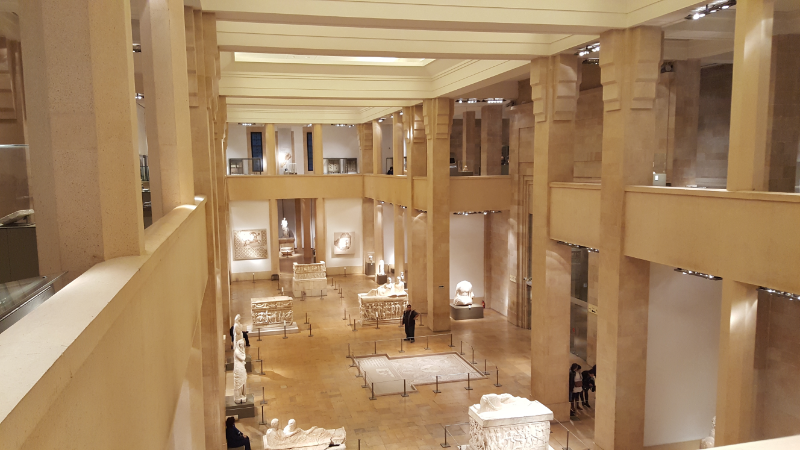
We started out by planning “rainy day activities” and ended by defiantly going outside despite the rain. The National Museum of Beirut was stop #1 on the rainy-day Beirut tour, and it was a great way to start off my time in Lebanon! It’s an archaeology museum, and they have a huge variety of artifacts. There are so many different types of things, and they span thousands of years of history. The museum has over 100,000 artifacts, and about 1,300 of them are displayed. If you think that sounds like they’re kind of gypping you, trust me when I say that 1,300 is more than enough. The museum is incredibly well done with enough stuff to make you feel satisfied but not so much that your brain is mush by the time you leave. I was also impressed with their audio guide… they give you an ipad! And you go around the museum scanning barcodes to bring up more information about certain objects. So high tech!

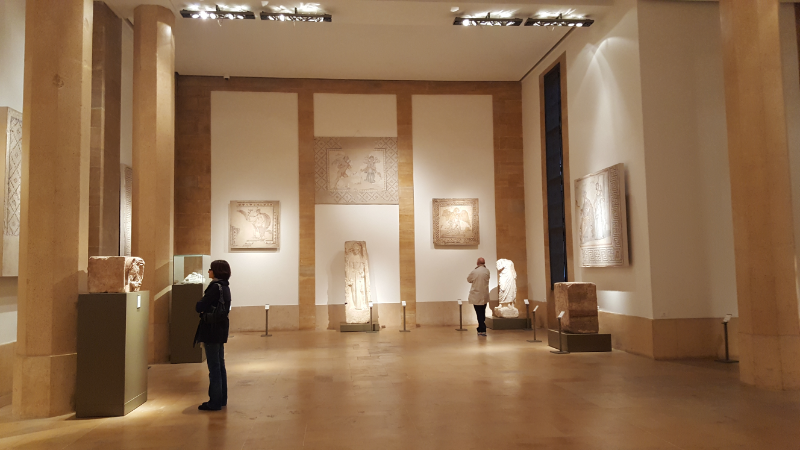
Doesn’t this just look exactly the way you think an archaeology museum should look?

The museum is located right along the road that served as the separating line between the east and west sides of Beirut during the civil war. That meant that there was no chance of the building making it through the war unharmed, so the curator of the museum at the time undertook measures to protect the collection. Some artifacts were relocated to other parts of the country, and other small objects were hidden in the basement. Those storerooms were walled in so that no one even knew they existed, aside from the very few who were involved with the installation. Larger, unmovable objects, such as the mosaics set into the floor and large statues, were encased in wood and concrete and left in place.

Museums are the best.

The war lasted longer than expected, so despite these protection measures, the collection still suffered greatly. The artifacts hidden in the basement storerooms were in an uncontrolled environment for 15 years. Flooding in the museum led to high humidity levels (around 95%). A fire caused by shelling resulted in the destruction of museum records and artifacts. Large objects suffered damage from the salt in the concrete and the lack of ventilation in their emergency casings. Looting scattered the collection across the world. The building itself was covered in shell and bullet holes and graffiti.

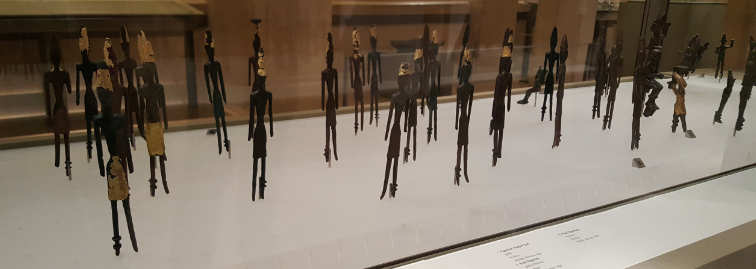
I’ll be honest, I don’t remember what these are. I imagine they’re like the ancient version of little green army dudes (ignore me).

It took 21 years after restoration began for the entire museum to open again. The building needed a serious overhaul, and the collection had to be inventoried and restored. In 1999, four years after restoration efforts began, the museum permanently reopened, but the final floor wasn’t completed until October 2016. The museum is STILL working to track down artifacts that were stolen and sold during the war.

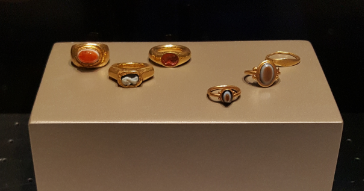
Some cool rings that they found buried with the anthropoid sarcophagi.

I was lucky that the basement was open by the time I visited. It included some of the coolest stuff in the whole museum… there were three naturally mummified people who were found in a cave, a huge collection of anthropoid sarcophagi, and a 2nd-century frescoed tomb that was relocated from Tyre. I don’t have pictures of the people because it seemed disrespectful or of the tomb because photography isn’t allowed, so I guess you just need to visit Lebanon if you want to see them…

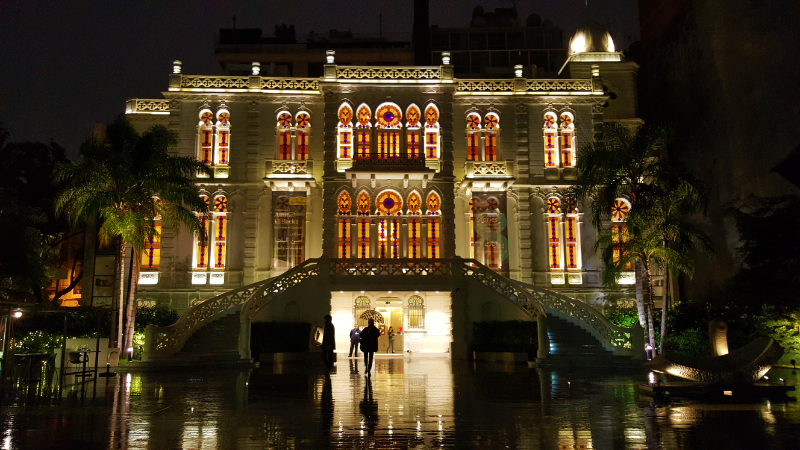
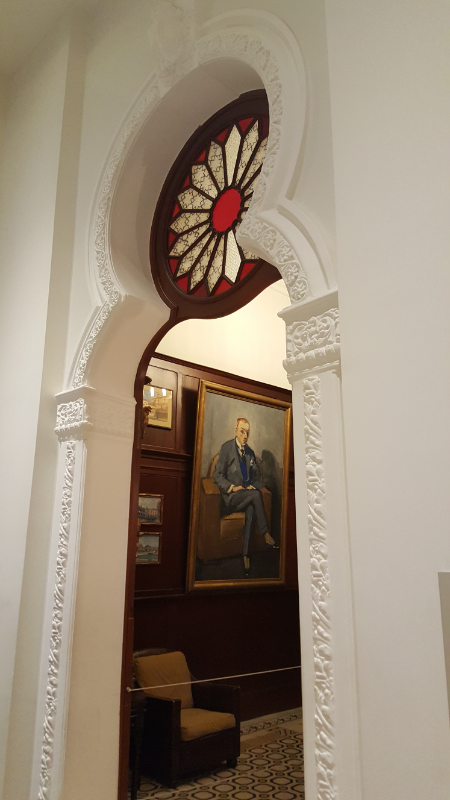
I checked out the National Museum solo, but Badveli and Maria joined me for the next museum on the list, the Nicolas Sursock Museum. During his life, Sursock was an art collector, and his will left his house to the city of Beirut to be converted into an art museum. I’ll be honest, 90% of the reason I wanted to go was just to see the house. It’s a modern/contemporary art museum, and we all know the complicated relationship I have with modern art. I figured that no matter what the art was like, the building would be worth the trip. Badveli was interested in checking out these 19th-century pictures they have of the ruins in Baalbeck, so we made it a family trip!
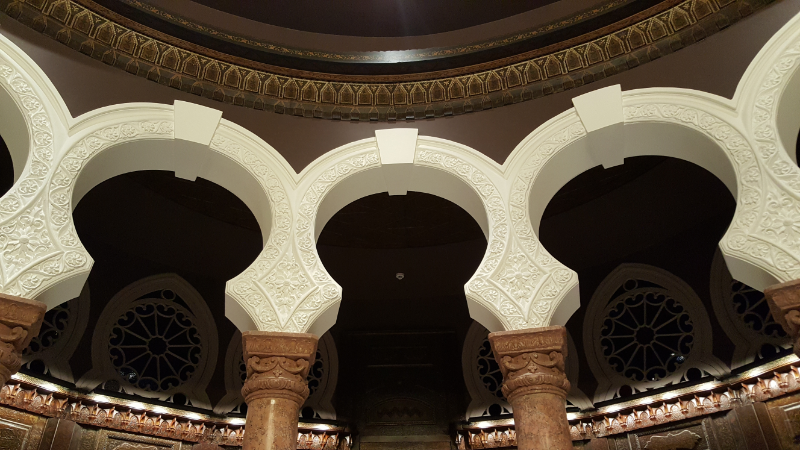
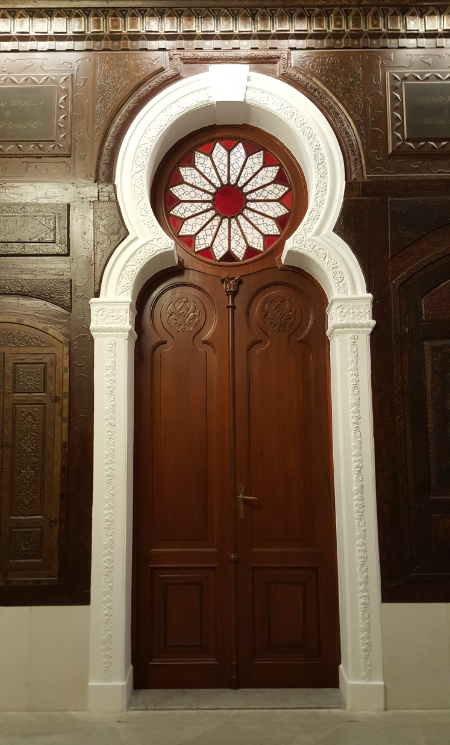
That stained glass though…
Talk about an epic doorway!

The house was built in 1912 and is a cool mix of architectural styles, including some elements inspired by Venetian and Ottoman architecture. It also has a bunch of stained glass which basically guarantees that I’m going to like it. The museum first opened with the house kept in its original condition, and exhibitions were shown in the many rooms of the mansion. Eventually, a project was undertaken to reconfigure some of the rooms into more traditional gallery spaces. Recently, a much larger project was completed that added four underground floors beneath the house and garden. I can only imagine how fun that construction process must have been, figuring out how to levitate a mansion while constructing another building underneath it.
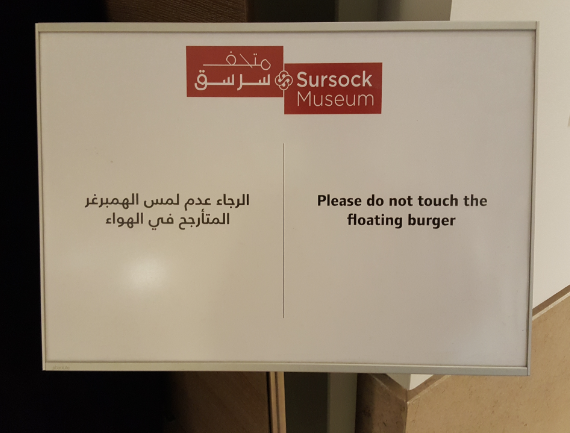
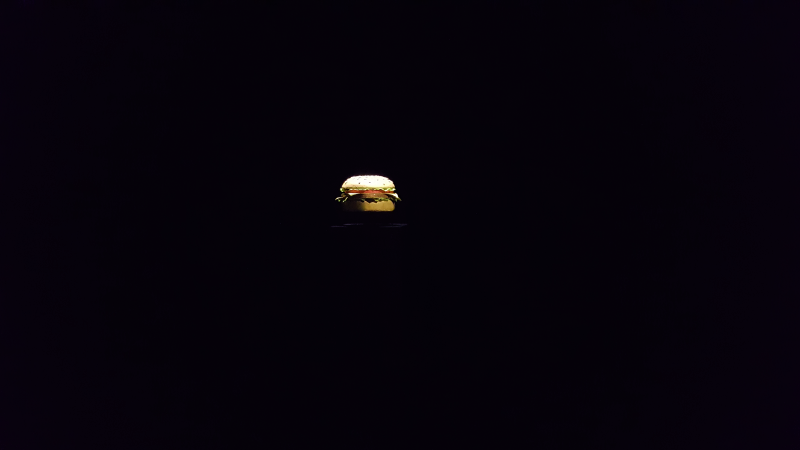
For the most part, the exhibitions were about what I expected… weird. There were a few cool pieces, but it was largely baffling, as is the way with modern art. Don’t get me wrong, I have no issues with weird. I love weird things! But the weirdness of most modern art is a type that must be incompatible with my personal brand of weird. There was one thing though… as we were leaving, we walked past a curtained doorway marked with a sign saying, “Please do not touch the floating burger.” I was intrigued. Burger like hamburger? Why was it floating? What about it made touching it so tempting that they explicitly had to tell people not to? I peeked my head inside, and somehow what I saw was simultaneously exactly what I expected and the last thing that I expected. It was a floating burger. The room was completely dark, a blacker darkness than any I’d ever experienced. The only light shone directly onto a floating hamburger. It was like a beacon, calling you towards it. The burger practically screamed, “TOUCH ME!” I’m not an uncultured scrub… I know that you’re not supposed to touch things at museums, but I’ll be honest. I wanted to touch that burger. HOW DID THEY KNOW?  It was like I was hypnotized. There was also a museum staff woman standing by the entrance, probably making sure that the burger was left untouched because I bet she’s felt the same, inexplicable desire that I felt to touch the forbidden burger.

Like… how could you NOT look after seeing this??
Genius.

I felt like my faith in modern art was restored… until we left the museum and I read the pamphlet that accompanied the piece. It was something about capitalism and blah blah blah profound symbolism blah blah blah. I immediately forgot what I read because I knew that trying to assign too much meaning would inevitably ruin the whole thing for me. Maybe that’s the problem. I want modern art that has no explanation besides “I made this because I thought it was weird and funny.” Otherwise, it gives me flashbacks to university where we’d make a design that we thought looked cool and then go back later to make up some stupid, symbolic meaning because the project required it. What’s wrong with just saying, “I did this because it looked cool”? To be fair, sometimes the explanations feel legitimate, but most of the time they seem like a bunch of hooey.

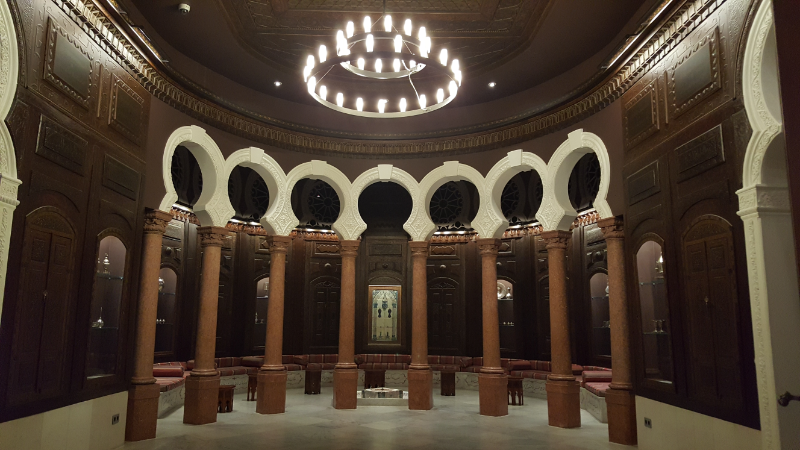
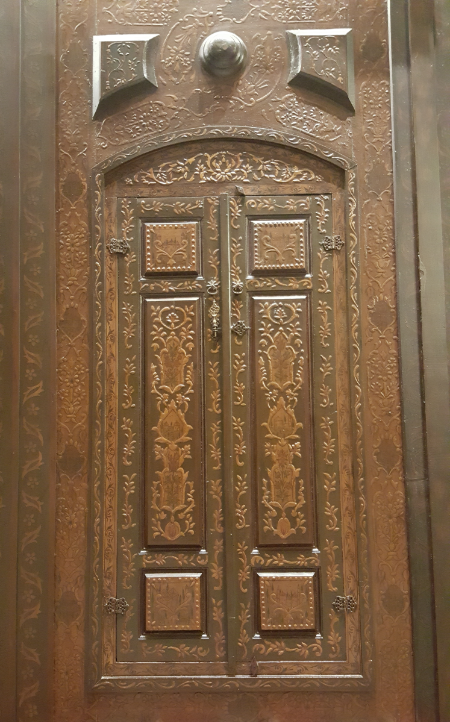
This is the salon where Sursock would entertain guests. It’s a ridiculous room but also kind of awesome.
I couldn’t get over how much detail there was in EVERY aspect of the room.
The wood paneling on the walls was brought in from Damascus.
Geez.

I’ve been trying not to fall into the trap of feeling like I have so much longer to spend in Armenia and getting less aggressive with the sightseeing. I definitely have been failing a little bit, and we’re going to put some of the blame on the cold weather. That’s not much of an excuse though because there are so many things to see within Yerevan that I barely have to go anywhere to see or do something new.

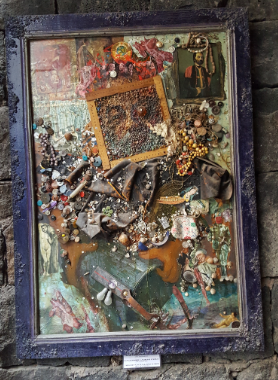
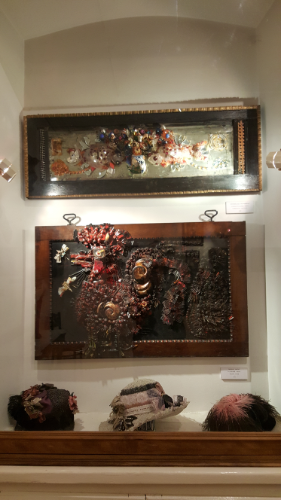
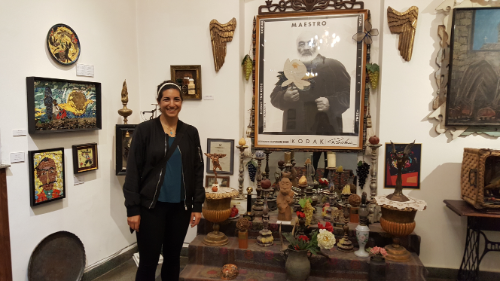
The museum also has collages and artwork made by Parajanov’s friends or just made by people to honor him. The one is called “Parajanov in Prison”.

One Saturday, one of my friends, Tara, asked me if I wanted to go with her to the Sergei Parajanov museum. I didn’t know much about him or about the museum, but I knew that some of my friends had been there before and enjoyed it, so why not? We got there close to closing time but had just enough time to do a tour, and that ended up being a fantastic decision. It seems like that’s kind of a theme here. In a lot of places, I think that you can do just fine in a museum without a tour guide, but there are so many museums that I’ve been to here where your experience is made at least 50x better by going on a tour. Maybe it’s a language thing because there aren’t as many English descriptions of things, but I also think they just do a good job with the tours in general.

Sergei Parajanov was an Armenian director and artist who was alive during the Soviet years. He was born in Georgia to Armenian parents, so if anyone tries to tell you he’s Georgian, ignore them! HE’S ARMENIAN. His given name was Sarkis Parajanyants, and what could be more Armenian than that??

Parajanov was born in 1924 and studied a variety of creative arts including voice, violin, and ballet before finally going to film school. His life was filled with plenty of struggles. In 1948, he was imprisoned for 7 months on homosexual charges. In 1951, he married a Muslim Tatar girl who was murdered within the year by her relatives for marrying outside of her religion. He married again in 1955, at age 31, to a 17-year-old, and they had one child in 1958 before divorcing in 1962.

A rooster made of hair pins

Since he was working during Soviet years, everything he did had to be approved by the authorities. In order for him to create a film, he had to get funding from the government. He started directing films in 1954 and released his first film that achieved worldwide fame in 1964, Shadows of Forgotten Ancestors.  After its release, he was blacklisted by the government for “supporting Ukrainian nationalists”. This put his other projects in jeopardy. His next influential film, The Color of Pomegranates, was released in 1969 and tells the story of Sayat Nova. This film was re-cut by the authorities before its release, and he was punished for speaking out and criticizing Soviet cinema. After that, his projects were all rejected.

In 1973, he was arrested again and sentenced to five years in a Ukrainian prison. People protested internationally, and despite the dangers associated with protesting within the Soviet Union, some people spoke out there as well. He was released after four years and wasn’t allowed to create more films, so he used his creative energy to make collages which he called compressed films. In 1982, he was imprisoned AGAIN, this time for 10 months on bribery charges.

Finally, in 1984, he was allowed to create another film. He was even allowed to leave the Soviet Union, and he attended an international film festival in the Netherlands where he won an award. He was in the middle of working on an autobiographical project when he was diagnosed with lung cancer and died in 1990, right around the collapse of the Soviet Union and at the age of 66. He is considered a genius, and it is unfortunate that he was never able to create free from the constraints of the Soviet system.

The Yerevan museum is in a house that was intended for him, but he passed away before ever living there. It’s filled with a ton of his collages, and they are hilarious. He was one of those people who, if you ever left anything at his house or unattended for a second, you could expect to come back and find it irreversibly altered. He wouldn’t apologize but rather would tell you that he improved it.

There was one collage that the base was a piece of art that was given to him by a friend. Parajanov, of course, thought that it could be better, and so he took it upon himself to improve it. Can you imagine giving someone a painting as a gift and then coming back and seeing that they glued stuff all over it? Or there was another one where he took a cane (that someone left at his house maybe?) and integrated it into a collage.

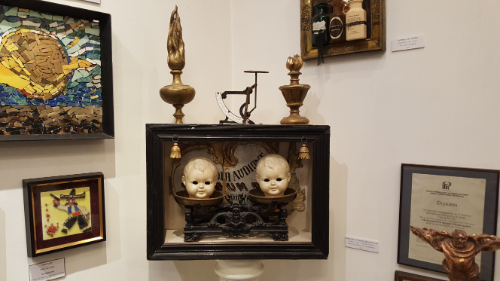
He also used an incredible quantity of baby doll heads. Pretty much all of his art is made from things that he found, but Tara and I were amused anyway at the thought of him going to a toy store, looking at the dolls, and picking one out, thinking, “Ah, yes! This is precisely the type of doll head I need for my next work!” Sometimes things don’t have to be true for them to be funny.

This collage is of Romulus and Remus, the twins from Roman mythology whose story led to the founding of the city of Rome. Romulus is the one with the full torch and Remus is the one with the torch cut off, symbolizing Remus’s death, supposedly at the hands of his brother.
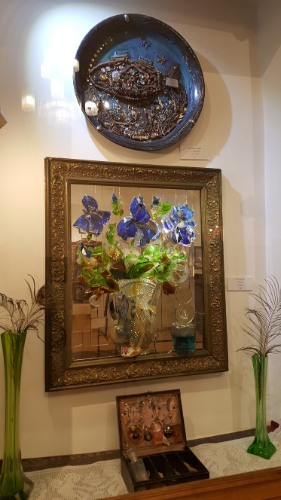
The flower collage with the perfume bottle in the bottom right corner.

I think Tara and I laughed through about 90% of the tour. Parajanov was a funny dude, and our tour guide was also awesome. Sometimes, our guide would explain something, and we would both just look at him like, “You have to be kidding…” For example, there was a glass collage in the shape of a flower, and he said that since flowers are smell good, Parajanov stuck a perfume bottle in the corner of the collage. Almost painfully literal.

There is a bunch of stuff that he created while he was in prison, including dolls, collages, and sketches. Even with incredibly limited resources and resistance from the prison guards, he still kept making things. It’s actually pretty amazing that so many of his creations survived.

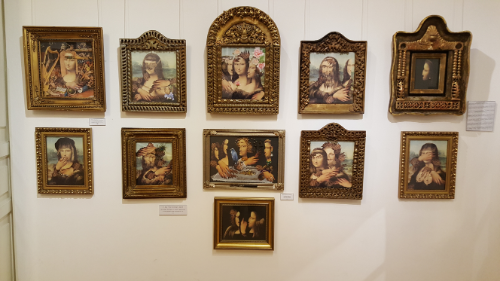
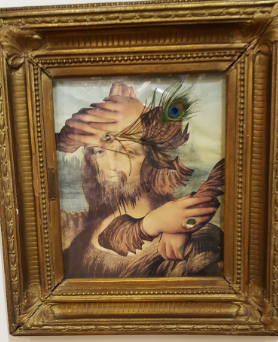
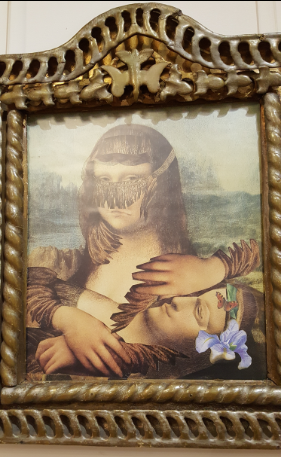
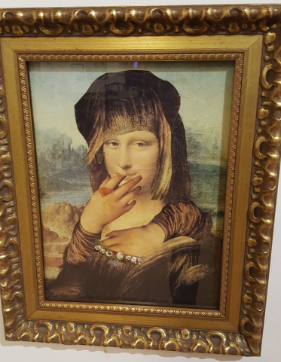
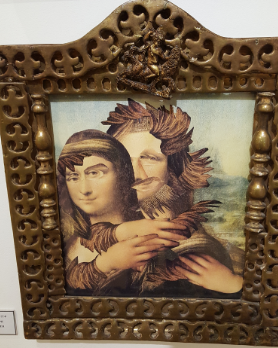
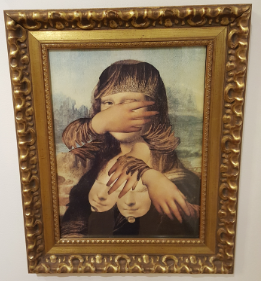
The best part of the whole museum is his Mona Lisa collages. The actual Mona Lisa is, in the opinion of some people, kind of overrated. I don’t know what Parajanov thought of it, but I do know at least that he thought he could make it better. In my opinion, he definitely did. He made a whole series of different Mona Lisas, and they’re all beyond awesome. When we walked into the room with them, Tara called my name and just pointed at the wall… and the second I looked, I completely lost it. They are hilarious. Like this guy was a total genius. Imagine looking at one of the most celebrated works of art and thinking, “That’s nice, I could make it even nicer.” And then he did. Eleven times.

The Mona Lisas
I’ll just let these speak for themselves.

His work is wacky and weird and ego-filled, and I loved it. Tara had a cool story about him too. Her parents got married in Armenia, and afterwards, they went to Georgia for part of their honeymoon. When they were in Tbilisi, they just asked around until they found where he lived, and they MET him! They were with another couple who had also just gotten married, and Parajanov quickly whipped up some earrings for the two women as wedding presents. How cool is that?!?!

If you’re ever in Yerevan and you have the time, you MUST go to this museum. Seriously, it’s one of the best ones I’ve been to in Armenia. I think you can also watch his films on Youtube if you’re interested. I haven’t gotten around to watching any of them yet, but they’re on my list.

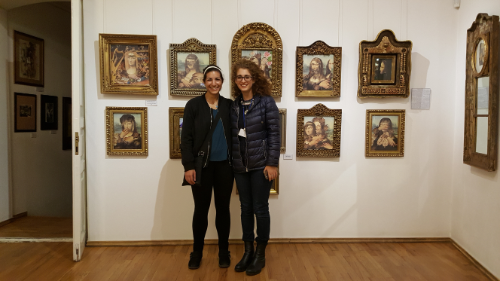
Me and Tara with our favorite wall in the museum
Outside of the museum

Sunday started off with khinkali for brunch. It’s not really a brunch food, but brunch also happened at about 1PM so at that point I don’t think it matters anymore. Khinkali is a classic Georgian food that you can also get in Armenia, and it’s one of my favorites… after I describe it, I’m sure you’ll be shocked. It’s basically a dumpling with any variety of things inside – beef, cheese, mushrooms, other meats, vegetables, etc – and either boiled or fried. They’re folded up to look like little money bags (I’m unfortunately not one of those “take pictures of my food” people, so you have to use your imagination), and you’re supposed to pick them up, bite the side, and drink the broth. Definitely not a first date food. Fried cheese khinkali is the best, in my opinion.

Maybe we didn’t go to the right place (though we did ask a bunch of people for recommendations), but I didn’t think they were much better than the khinkali you can get in Armenia. I mean, they were still great because how can you mess up khinkali, but I assumed that going to the source would result in a superior culinary experience. This is very Armenian of me. “Yes, khinkali is originally Georgian, but in Armenia, we do it better!” Not necessarily better, but about the same. Like I said, maybe we didn’t go to the right place.

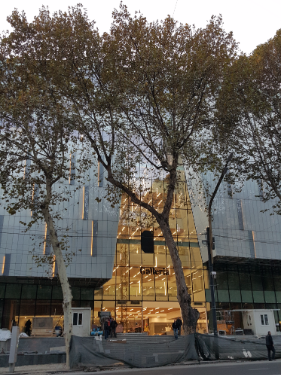
They’re building a new mall, and the lighting is so fun!

The plan for the day was to walk down the main street, Rustaveli Avenue, and take in the sights along the way. The only other thing that I wanted to do was go to the church with the golden top. I had no idea what church it was, but it was bright and shiny, we saw it from every overlook in the city the day before, and I wanted to see it up close.
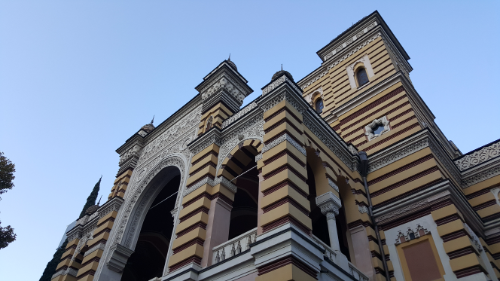
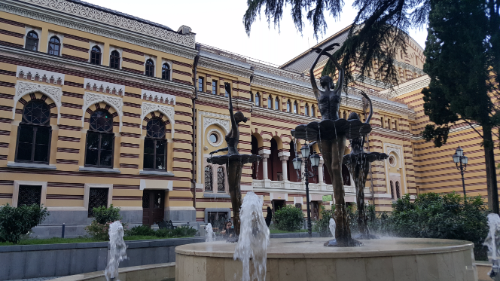
Our walk took us past the Opera and Ballet Theatre, a gigantic, wedding cake-looking building painted in yellow and maroon. The theatre was completed in 1851 and went through its most recent restoration just last year, so it was at its best for us. I wanted to go inside, but the doors were locked… I suppose that means I have to go back and buy some tickets to see a show! We tried to peer in through the windows which didn’t work very well. The glass was too dark to see anything more than the hint of some chandeliers. Darn.

Opera and Ballet Theatre

Movie theatre. Obviously! What else would it be?
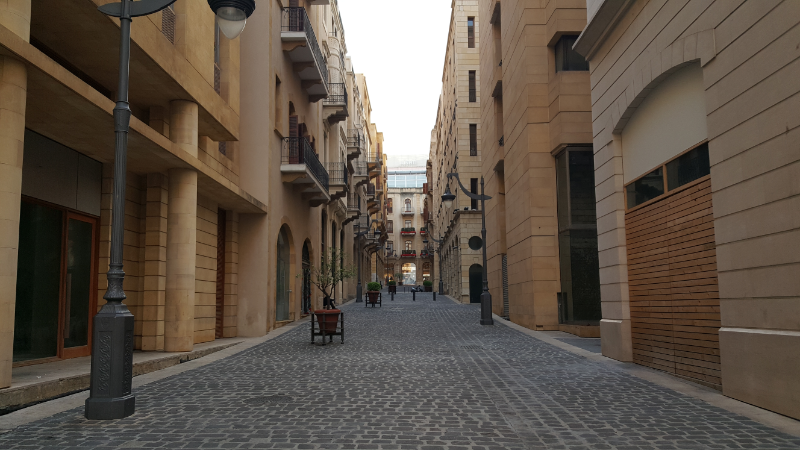
As we continued down the street, we started noticing some interesting outfits. Tara and I were in the middle of a “have you noticed that fashion is way more of a thing here?” conversation when we walked past the building where Tbilisi fashion week was in full swing. Oh. I guess that explains it. We tried to snoop around a bit inside, but we stuck out like sore thumbs in our bland clothing. We couldn’t get a good sense of what was going on before feeling like we should get our boring, regular outfits out of there.
We also saw Parliament, the Georgia National Museum, another church (because you can’t walk 5 feet without hitting another church), and the City Assembly before hopping on the metro to go see the shiny church! Turns out that church is called Holy Trinity Cathedral, and it’s basically the equivalent of St. Gregory the Illuminator Cathedral in Yerevan (with a little bit of Etchmiadzin mixed in). It was built to celebrate 1500 years of the Georgian Orthodox Church, is massive, and is still unfinished despite being “completed” in 2004.

Parliament
City Assembly and Liberty Square

I didn’t know it at the time, but apparently, part of the church complex was built over an old Armenian cemetery, Khojavank. It started out as the site of an Armenian church, built in the mid-1600s, and the cemetery grew around it until the 1920s. It contained more than 90,000 graves and was the largest Armenian cemetery in Tbilisi.

The first destruction happened in the 1930s, ordered by a Georgian Soviet politician. The church on the grounds was demolished, and the church materials plus some gravestones and khatchkars (carved cross stones used for a variety of things including marking graves) were taken and reused in the construction of other buildings.

The Armenian Pantheon was opened in 1962 and contained saved gravestones and khatchkars and the remaining graves. When this new church was designed, it supposedly wasn’t going to touch Khojavank, but that wasn’t true, and a significant part of the park was dug up and destroyed. Armenians obviously weren’t thrilled about this, and during construction, they said that it was horribly disrespected. Bones and tombstones were dug up and scattered by excavators before getting carted off to some unknown location. Protests managed to stop construction for a second, but it soon resumed without any changes.


It’s huge
Inside Holy Trinity Cathedral

Now, a much smaller Pantheon houses the graves of numerous significant Armenians including Hovhannes Tumanyan (a poet/writer who has a lot of roads in Armenia named after him. Not to be confused with Alexander Tamanyan the architect who ruined Yerevan).

It was fairly dark outside by the time we made it to the church, but we still could have checked out the Pantheon had we known it was there. Some prior research in this situation would have been helpful. That’s one of the dangers of just going with the flow… sometimes you miss things. Well, in general, my conclusion after writing about the weekend is that I need to go back to Tbilisi to do the things we didn’t have time for, so I’ll add that to my list of places to visit.

The church, besides being built on the graves of Armenians, is pretty cool. It’s huge. Like super huge. It also has the same number of lights shining on it as the rest of Tbilisi combined. That’s made up, but I do have some night pictures of the city where the church is unarguably the brightest spot. It’s part of a whole complex that also has a monastery, seminary school, and more.

Can you guess where the church is?

I’m a fan of smaller churches because they usually have more personality, but there were definitely some nice features of this church. The carvings were spectacular. The inside was overwhelming, but honestly, it wasn’t my favorite. It was one of those “makes you feel like an ant” churches. I felt like it was too big. That’s okay though. I liked the outside much more.

Holy Trinity Cathedral on the epic approach
You can see that they’re in the middle of doing the carvings on this column. So cool!

After we finished getting lost in the church, we hightailed it back to the hostel to meet our ride. We had the same driver as on the way to Georgia, and it took the same impossibly long amount of time. I don’t know how. We didn’t get a flat tire or anything, and it still took seven hours. HOW?

I passed out in the backseat and woke up to us stopping in the middle of nowhere. No lights. If we were in the States, I would have been sure that he was going to murder us, but this is Armenia so that never crossed my mind. My friend in the front seat said that he wanted to show her some tree. What. I got out with them because that sounded sketchy to me, but he literally just wanted to show her some gigantic, hollowed-out tree that has a church inside (of course). It was supposedly planted by Vartan Mamigonian… he’s an Armenian saint and military hero who was commander of the armed forces in the 5th century. He and his army fought in a battle against the Persians that is credited with leading to religious freedom for the Armenian people. They lost the battle and he was killed, but he “saved Christianity” in Armenia because eventually a treaty was signed allowing Armenians to worship freely. It’s a little depressing that the greatest Armenian military hero both lost and was killed in the battle he’s famous for, but we won’t get into that. Anyway, what everyone DOESN’T know about Vartan is that when he wasn’t fighting battles, he was planting trees in Sarigyugh. I’m sure.

If you look at a map, you’ll probably understand why it took us seven hours to get home because Sarigyugh is absolutely not on the way. Oh well. If it made sense, we wouldn’t be in Armenia.

The famously unknown tree