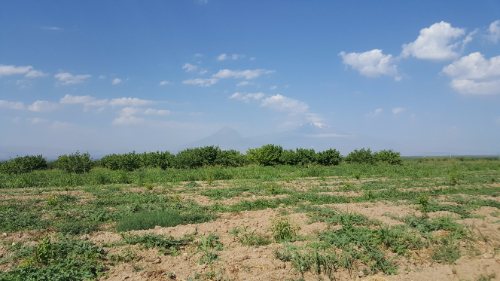
I’m exhausted. The weekend was a whirlwind, and I spent most of it wanting to take a nap. Each day was so ambitiously scheduled that it was literally impossible to get enough sleep, but I survived it and didn’t even get sick! That’s pretty good. I do want to go to sleep ASAP tonight though, and I know I’m going to spend the rest of the week trying to catch up on the hours I should have gotten over the weekend.
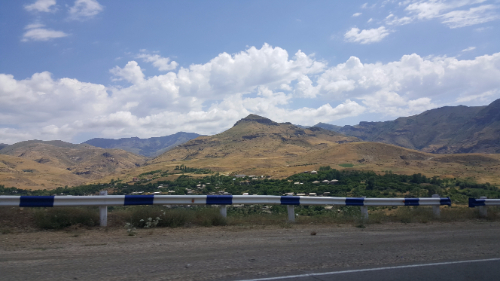
The sleep deprivation started on Friday morning when we had to meet at 5:30AM to go to Yerevan. I somehow managed to drag myself out of bed on time and scored a prime seat in the taxi (we had one packed van and one taxi) where I logged another hour of semi-restful sleep.
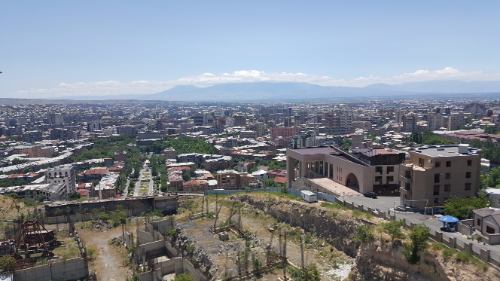
In Yerevan, we joined up with the other volunteers who are living in Yerevan and Vanadzor. Again, I lucked out with the seating and got a spot in one of the two vans rather than in the big bus with most of the volunteers. Perks of the van: no microphone for people to yell into, functional air conditioning, (slightly) less vomit-inducing movements, faster, and fewer people. It was basically paradise.
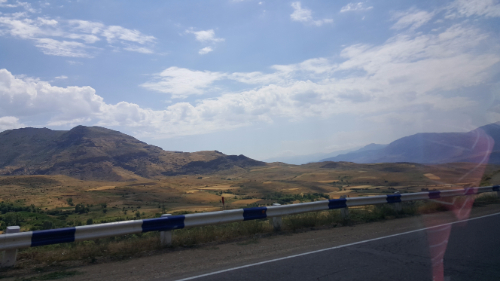
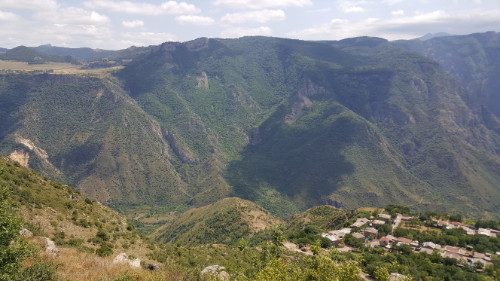
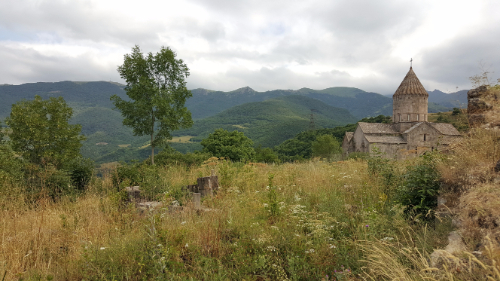
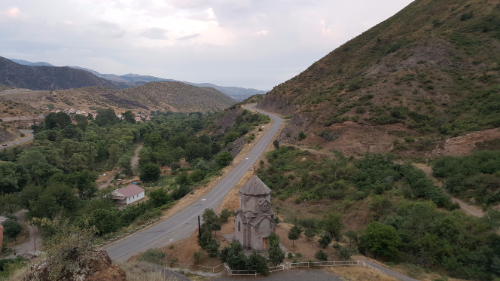
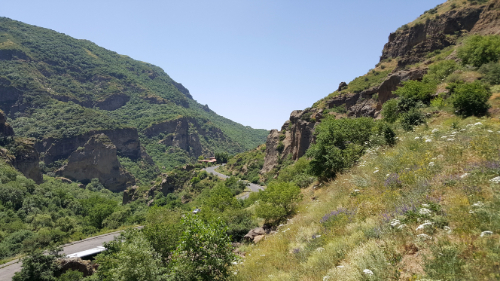
After multiple snack/bathroom stops and about four more hours of driving, we made it to Tatev Monastery. Well, to be accurate, we made it to the town of Halidzor where the end of the cableway that takes you to Tatev is located. The big claim to fame of the cableway is that it’s the longest non-stop double track aerial tramway in the world. It’s 3.5 miles (5.7 km) long, and the ride takes about 10 minutes. It’s in the mountains, so the views along the way to the monastery are incredible. It’s probably the most expensive thing to do in Armenia, with round trip tickets costing 5000 dram for tourists (about USD$11).
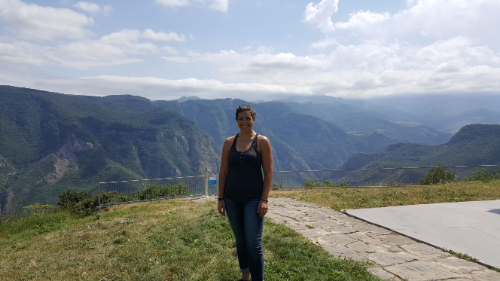
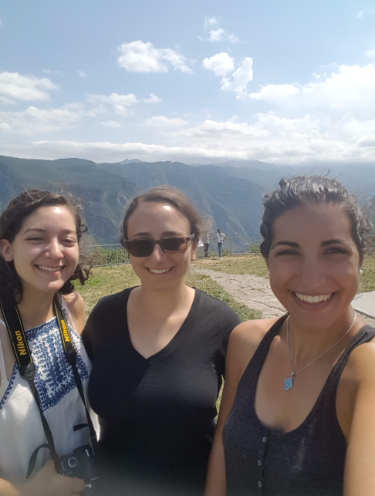
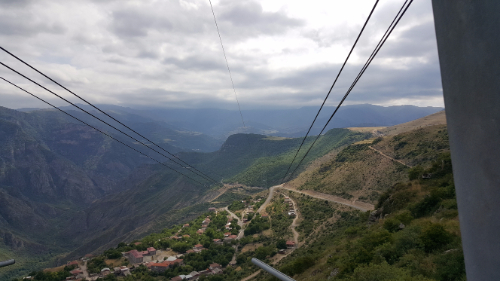
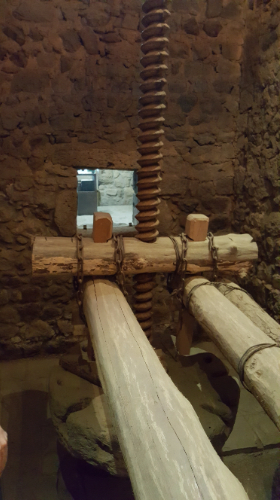
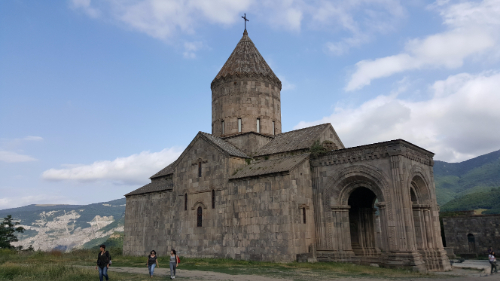
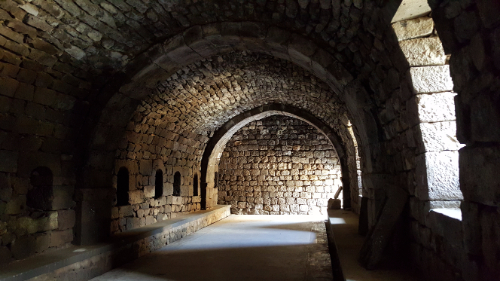
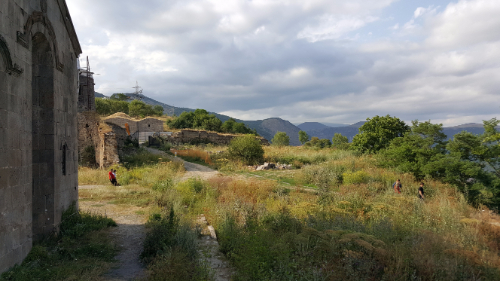
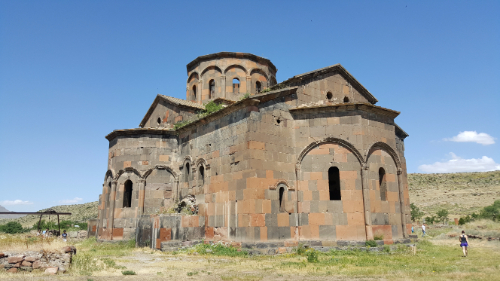
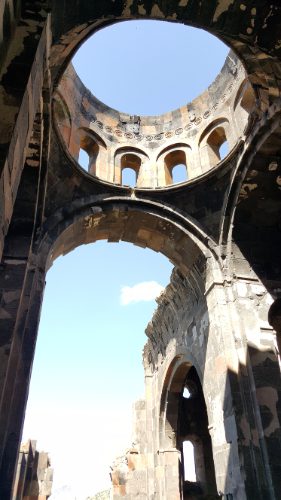
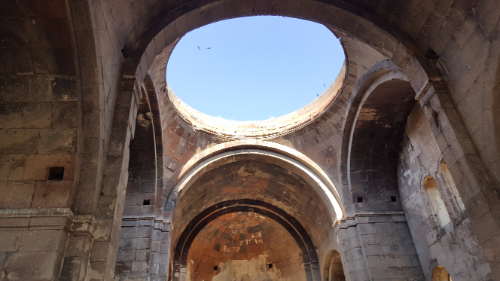
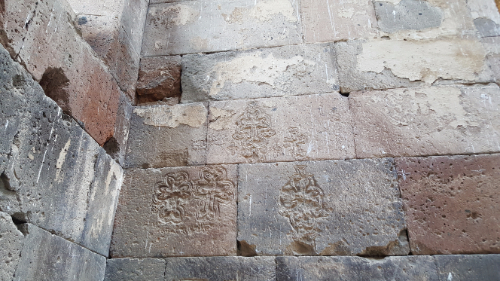
The cableway would have been awesome even if it didn’t lead anywhere, but it’s even better because it gets you to the town of Tatev and the monastery. The complex is pretty extensive. There are multiple churches, residential areas, a library, a dining hall, school buildings, an olive mill, and more. The olive mill is from the Middle Ages, and we visited that first. I can’t tell you any real information about it because I zoned out when the guide was talking. Then, instead of getting facts, I asked people to tell me made up explanations about what the different things there were used for. I definitely had more fun on my made-up tour, but I also definitely left with zero accurate information.
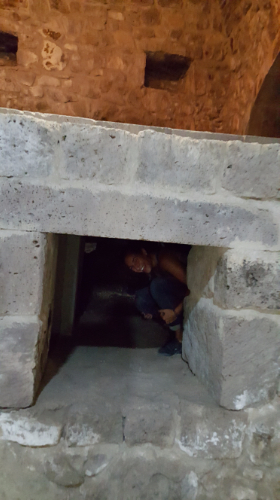
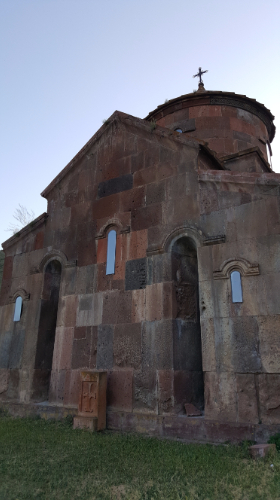
The monastery was built originally in the 9th century on the former site of a pagan temple. There was also an important university there in the 14th and 15th centuries that was a leading cultural and scientific center and trained teachers who then taught across Armenia. After that, the complex was attacked, damaged, and looted multiple times throughout history by different groups as they invaded Armenia. In 1931, there was an earthquake that damaged it even more, and there’s still restoration work going on now.
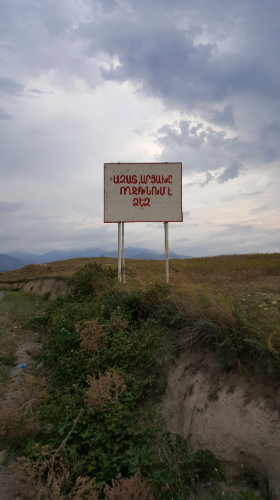
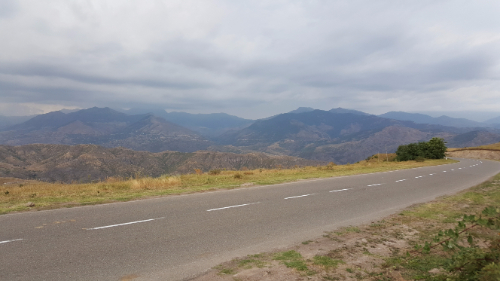
After leaving Tatev and taking another scenic ride through the mountains, we continued our trek to Artsakh. We had a few more hours of driving, and by the time we got to Shushi, the city where we were staying, I was ready to pass out. We were in homestays, and the process of getting everyone where they needed to go was just as much of a mess as you would expect. I fell asleep in the van as we were driving around and then completely ate it on my way out because I was still 95% asleep and my leg collapsed instead of holding me up when I stepped down. Oops. I was fine and too tired to even be embarrassed about it. I think the total drive time for the day was something like 10 hours, though I didn’t keep track so who knows. Whether that’s right or not, it wasn’t a short amount of time. I don’t blame my leg for collapsing because that’s really what my entire body wanted to do!


 Armenia was part of the Soviet Union from 1920-1991. For much of that time, Armenia was very loyal and managed to do quite well under Soviet rule. This is also how Armenia got its current borders; they were determined by the Soviet Union. In 1988, things started to go downhill, and Armenians become disillusioned with the Soviet government. This was mostly due to the territories of Nagorno-Karabakh and Nakhichevan, both historically Armenian territories. Nakhichevan was populated by a majority Azerbaijanis, and it was declared an autonomous region under Azerbaijani jurisdiction by the Soviet Union. The Azerbaijanis then forced out most of the Armenian population in the area. Nagorno-Karabakh, on the other hand, was about 94% Armenian when the Soviets made it part of Azerbaijan. That percentage began reducing, and Armenia petitioned the government to make it officially part of Armenia to protect the Armenian population there and claim the land that was considered rightfully Armenia’s. The government failed to act, and with the crisis escalating, Armenia lost faith in Soviet rule.
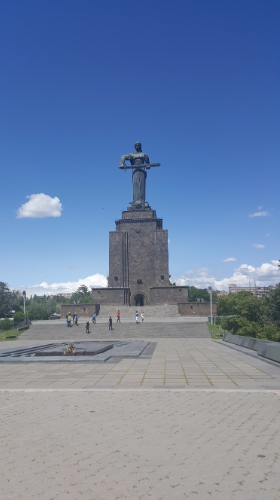 A vote was held in Armenia with 99% of voters electing to leave the Soviet Union, and Armenia declared its independence in September of 1991. This didn’t become internationally recognized until December of that year when the Soviet Union dissolved. So, from the very beginning of independence, Armenia was already involved in a war with Azerbaijan and had to figure out how to build an army without having any money. That was challenge #1. Thousands of Armenians fled into Nagorno-Karabakh from other parts of Azerbaijan, and thousands of Azerbaijanis fled from Armenia. It was like a population swap.
 Challenge #3 was earthquake recovery. There was an earthquake in 1988 that hit the northern part of the country pretty hard. 25,000 people were killed, many were injured, and there was a lot of property damage. There was another massive emigration out of the country due to this and the inability of the government to handle all of the people who were now homeless and the kids who were orphaned.
 Finally, challenge #4 was directly related to the war with Azerbaijan. Azerbaijan closed down the eastern border of Armenia which led to a huge energy crisis. For 3-4 years, people lived with only 1-2 hours of electricity per day, 90% of the natural gas supply was cut off, and on top of all that, there were food shortages everywhere. Turkey closed the western border of Armenia as well, trying to strengthen their relationship with Azerbaijan. These years became known as the “dark and cold years”, and even more people left the country.
 All of these challenges have now been kind of resolved. The war with Azerbaijan is at a bit of a standstill. The Armenian army occupies the region, and Nagorno-Karabakh has declared its independence, but nothing is internationally recognized. A ceasefire was signed in 1994 and has been somewhat followed (there have been a few breaches), but no one has been able to negotiate a peace treaty.
 The economy is much improved but obviously still has a long way to go. It’s past the point of trying to survive though, and now the next step is progress and development. There are a lot of initiatives geared towards trying to educate people into IT and engineering-related fields because those are seen as the future.
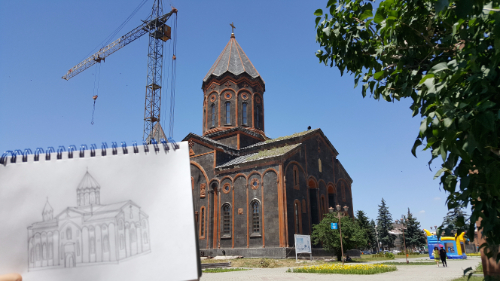
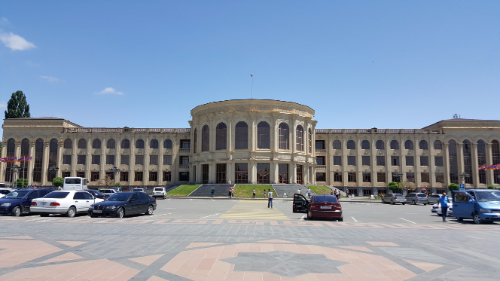
 The earthquake situation also has a long way to go. Gyumri, the city I’m going to be in for rest of the summer, is one of the cities that was affected the most. It’s in waaay better shape than it was, of course, but there are still half-collapsed buildings and random rubble scattered about, especially on the outskirts of town.
 The energy crisis improved after the reopening of a previously shut-down nuclear power plant. Now, the energy supply is about evenly split between nuclear, thermal, and hydroelectric power, and natural gas is supplied from Russia in a pipeline that runs through Georgia. The borders with Turkey and Azerbaijan are still closed.