Sorry for the hiatus! After getting back so late on Monday night, last week was super hectic. I felt like I was constantly running and trying in vain to catch up on all of the things I had to get done. I’ll give you more details later, but first I need to finish talking about Artsakh!
—————–
I almost feel stupid saying this, but the weirdest thing to me about being in Artsakh was how normal everything felt. It’s a land in limbo, but for most people who live there on the day to day, it’s like living anywhere else. At the same time though, if you pay close enough attention, you can kind of feel a cloud looming overhead. Whether it’s the bombed-out buildings that haven’t been rebuilt yet or the moms crying as they send their 18-year-olds off to their mandatory 2-year military service (that’s the case across Armenia, not just in Artsakh), there are reminders that things aren’t completely as they should be.
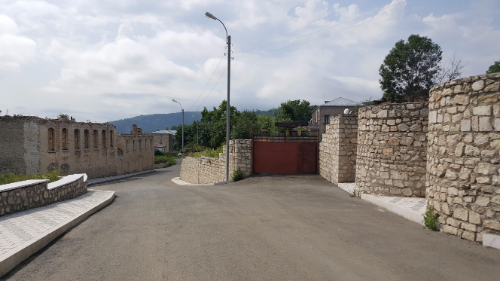
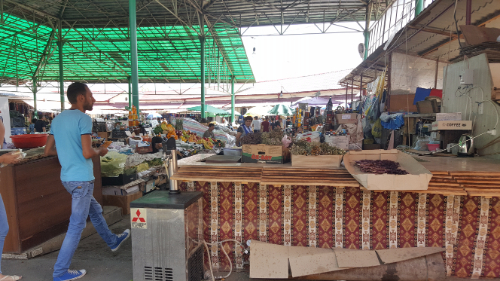
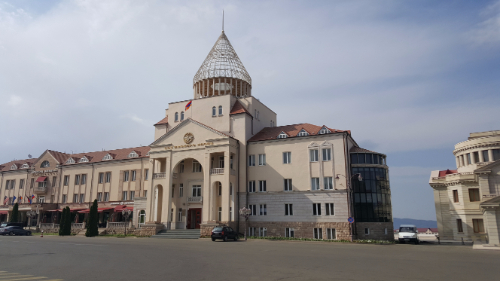
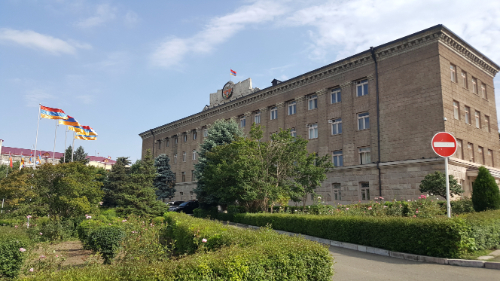
The two main cities that we visited during our time there were Shushi and Stepanakert. Both of those cities were completely or almost completely destroyed during the war. Shushi was one of the main Azerbaijani strongholds, in part because of its strategic location on a mountaintop. From Shushi, Stepanakert was shelled during the war, and it’s said that basically every building in Stepanakert was damaged or destroyed.
Armenian forces eventually captured Shushi in 1992, and that city was 80% destroyed between the fighting and subsequent looting and burning. In 2002, little clean-up progress had been made, and the city was still mostly in shambles.
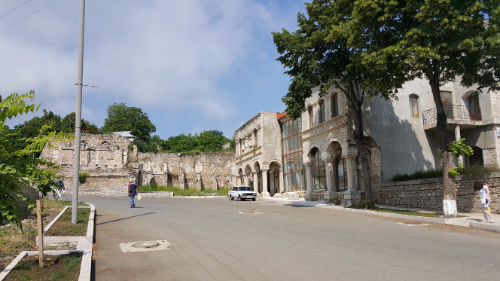
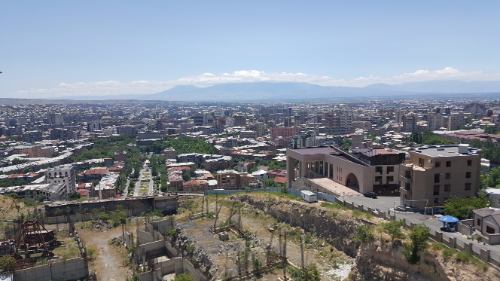
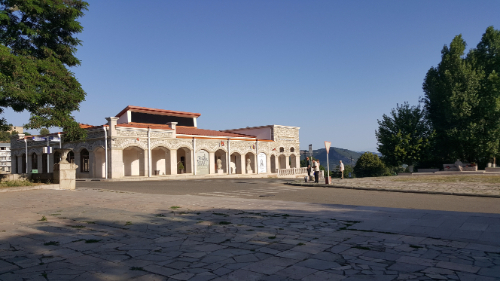
Knowing all of THAT makes visiting Shushi and Stepanakert even more interesting. Now, they look like cities, and nice ones at that. There are still places where you can see damage, but there are way more places where you can see buildings that have been reconstructed. The cities were previously populated with Armenians and Azerbaijanis, so obviously there weren’t even enough people to fill them for a while. They’ve slowly been moving people and repopulating and rebuilding the cities. To me, the progress looked pretty impressive. Then, at the same time, it’s weird because you have to remind yourself that even though all of these cities are being rebuilt, the war technically isn’t over.
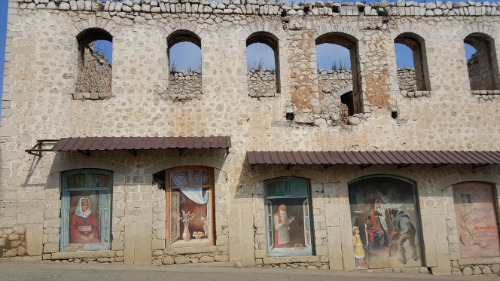
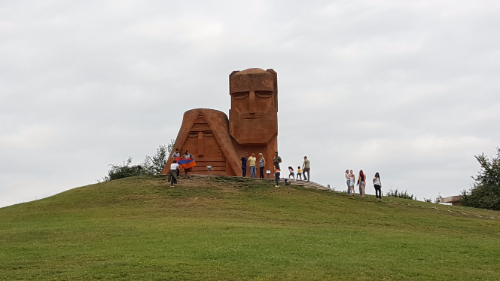
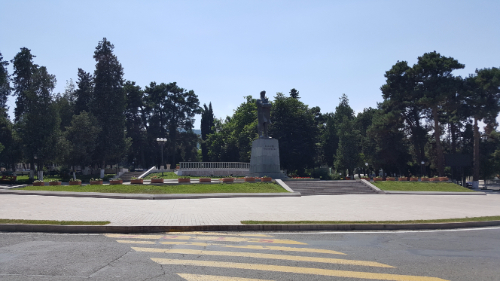
We also had the chance to visit a military base, and that was definitely a reminder that there’s a war going on. The volunteers used to get to visit the front lines on the border, but there was some fighting last April (the Four Day War) and that part of the trip has been nixed since then. It was interesting to see the contrast between the base, where obviously the main thing people are thinking about is the war, and the cities, where it feels so easy to pretend that everything is normal.
Like I said, there is still a heaviness that you can feel if you pay close enough attention. Probably everyone has a relative who is serving in the army, and even though there’s a cease fire and no constant, active fighting, that doesn’t mean nothing ever happens. From what I’ve heard, it seems like breaches of the cease fire are not infrequent.
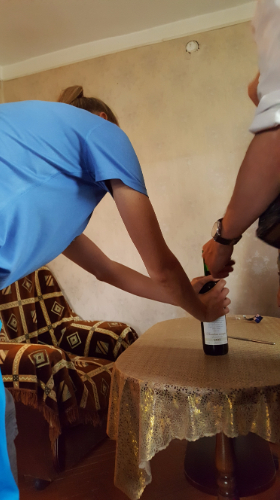
We did a “wine mob” in Stepanakert which means that you split into groups, take a bottle of wine, and knock on people’s doors asking if they want to drink wine with you. Everyone came back with something interesting to say, and some hilarious examples of Armenian hospitality. For my group, even that activity ended up with military connections. We found ourselves in the apartment of a pregnant woman and her two kids (who all obviously didn’t drink any wine) because they were some of the first people we found who owned a corkscrew. Her husband is in the military, and we lucked out and got to meet him when he came home from work a few minutes before we had to leave. Seeing him interact with their kids was awesome, and their reactions were heartbreaking when the fact came up that he’s going away soon for a few weeks for work. For them, the war is very real.
One of the hardest parts (emotionally) of the trip was a visit to the Fallen Soldier’s Museum in Stepanakert. The museum is just rooms and rooms of framed pictures of the soldiers who lost their lives fighting for Nagorno-Karabakh. Looking at the pictures and knowing that each one of them had parents or wives or kids who had to go on without them was almost enough to make me lose it. There’s a wedding dress and a suit that were never used because the groom-to-be was killed before the wedding day.
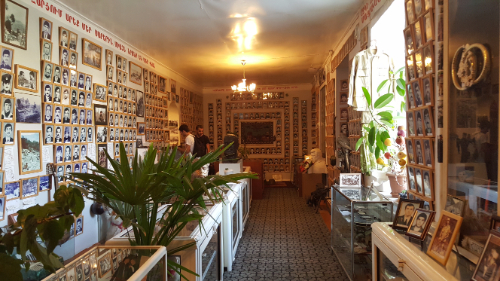
I think that war is one of those things that people like to think about with a censored mind. Like you think about some parts of it but don’t let yourself even begin to fully register what it means because it’s too horrible. Deaths are reported as numbers because that’s easier to take, rather than thinking about each number as a person who is leaving behind a family and friends and people who will never feel the same again. And even though the enemy is the enemy, they’re people too, and they have loved ones who care about them and would do anything for them to come home safely. And now I’m getting upset, and that’s exactly why we don’t like to think about these things.
In all parts of my life recently, I’ve been trying to do a better job of seeing things from all sides and with an unbiased mind. It’s a hard thing to do, but I think I’ve been slowly improving. A lot of times, even if you don’t agree with the “opposing” side, at least you can somewhat understand why they feel the way they do and see them as people instead of faceless enemies. With this war, I can definitely understand both sides, and even though I think that’s good for me, it makes thinking about the situation even more upsetting because I don’t see any potential for a compromised end. War on its own is bad enough, but endless war… talk about depressing.
 Armenia was part of the Soviet Union from 1920-1991. For much of that time, Armenia was very loyal and managed to do quite well under Soviet rule. This is also how Armenia got its current borders; they were determined by the Soviet Union. In 1988, things started to go downhill, and Armenians become disillusioned with the Soviet government. This was mostly due to the territories of Nagorno-Karabakh and Nakhichevan, both historically Armenian territories. Nakhichevan was populated by a majority Azerbaijanis, and it was declared an autonomous region under Azerbaijani jurisdiction by the Soviet Union. The Azerbaijanis then forced out most of the Armenian population in the area. Nagorno-Karabakh, on the other hand, was about 94% Armenian when the Soviets made it part of Azerbaijan. That percentage began reducing, and Armenia petitioned the government to make it officially part of Armenia to protect the Armenian population there and claim the land that was considered rightfully Armenia’s. The government failed to act, and with the crisis escalating, Armenia lost faith in Soviet rule.
 A vote was held in Armenia with 99% of voters electing to leave the Soviet Union, and Armenia declared its independence in September of 1991. This didn’t become internationally recognized until December of that year when the Soviet Union dissolved. So, from the very beginning of independence, Armenia was already involved in a war with Azerbaijan and had to figure out how to build an army without having any money. That was challenge #1. Thousands of Armenians fled into Nagorno-Karabakh from other parts of Azerbaijan, and thousands of Azerbaijanis fled from Armenia. It was like a population swap.
 Challenge #3 was earthquake recovery. There was an earthquake in 1988 that hit the northern part of the country pretty hard. 25,000 people were killed, many were injured, and there was a lot of property damage. There was another massive emigration out of the country due to this and the inability of the government to handle all of the people who were now homeless and the kids who were orphaned.
 Finally, challenge #4 was directly related to the war with Azerbaijan. Azerbaijan closed down the eastern border of Armenia which led to a huge energy crisis. For 3-4 years, people lived with only 1-2 hours of electricity per day, 90% of the natural gas supply was cut off, and on top of all that, there were food shortages everywhere. Turkey closed the western border of Armenia as well, trying to strengthen their relationship with Azerbaijan. These years became known as the “dark and cold years”, and even more people left the country.
 All of these challenges have now been kind of resolved. The war with Azerbaijan is at a bit of a standstill. The Armenian army occupies the region, and Nagorno-Karabakh has declared its independence, but nothing is internationally recognized. A ceasefire was signed in 1994 and has been somewhat followed (there have been a few breaches), but no one has been able to negotiate a peace treaty.
 The economy is much improved but obviously still has a long way to go. It’s past the point of trying to survive though, and now the next step is progress and development. There are a lot of initiatives geared towards trying to educate people into IT and engineering-related fields because those are seen as the future.
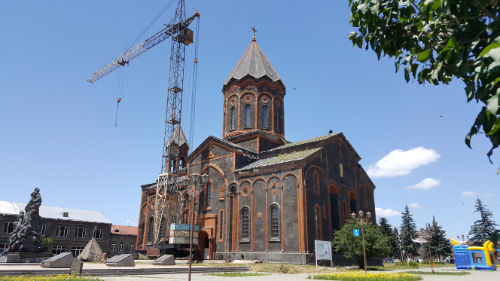
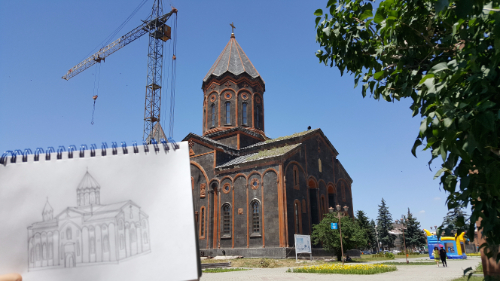
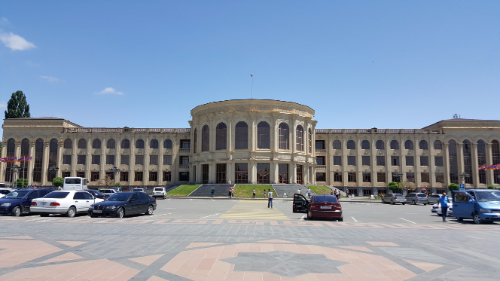
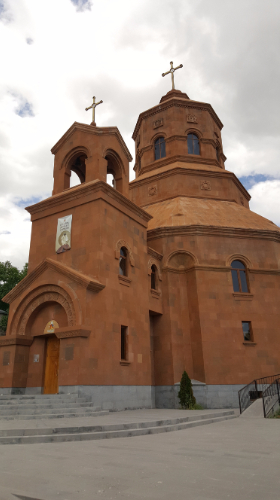
 The earthquake situation also has a long way to go. Gyumri, the city I’m going to be in for rest of the summer, is one of the cities that was affected the most. It’s in waaay better shape than it was, of course, but there are still half-collapsed buildings and random rubble scattered about, especially on the outskirts of town.
 The energy crisis improved after the reopening of a previously shut-down nuclear power plant. Now, the energy supply is about evenly split between nuclear, thermal, and hydroelectric power, and natural gas is supplied from Russia in a pipeline that runs through Georgia. The borders with Turkey and Azerbaijan are still closed.