Since it’s been a while since my last post about Mike’s and my trip to Patagonia/Buenos Aires, let me reacclimate you. We just finished 7 days of hiking, hiking, and hiking, and by some miracle, my feet didn’t fall off (though I did end up losing a few toenails. I’ll spare you the pics but send me a message if you’re interested. Kidding. Kind of. I mean, I do have pictures, and you’re welcome to them if that’s something you’re into. Okay, I’m getting carried away. Back to it).

From El Calafate, we had a bright and early flight to Buenos Aires where we were staying for a couple of days before heading home. We flew into the domestic airport which is conveniently located in the city and then went on a public transit adventure… my favorite. And, a perfect place to start off a list of Buenos Aires first impressions! (Or, you can catch up on the history of Argentina first, HERE and HERE.)

1. Heat/Humidity – Okay, so this has nothing to do with public transit, but I feel like it needs to come first because this was truly my very first impression of the city. When Mike and I flew to Patagonia, we had to change planes in Buenos Aires and walk outside to switch terminals. It was the middle of the night, and the air felt like stepping into a bathroom after someone takes an hour-long, steaming-hot shower. With no ventilation. I have certainly experienced plenty of humidity in my life, but usually the night feels slightly less suffocating! NOPE. I was thankful that, from there, we flew south to cooler temperatures, but that was just delaying the inevitable. This time, we arrived in the morning, and between the humidity and the brutal sun, I was ready to get right back onto the plane.
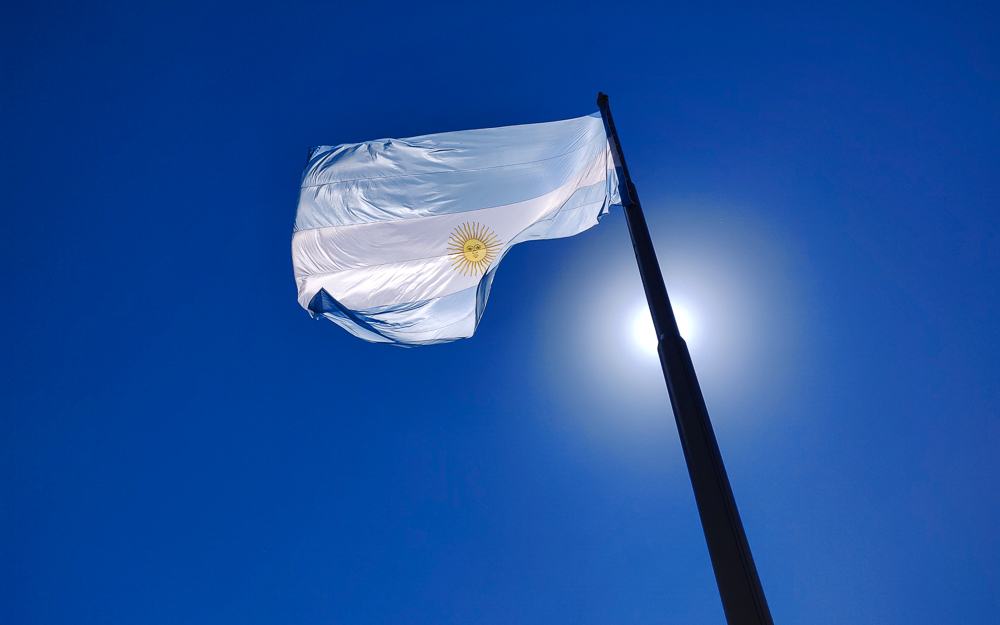
Not a cloud in the sky! Usually this is considered a good thing, but my gosh what I would have paid for a few clouds riiight in front of the sun…

2. Public Transportation – It’s quick. It’s easy. It’s cheap. You can get practically anywhere in the city. Fresh off the plane, we set out to buy ourselves a transit card (I’m developing quite the collection of these) which was fairly straightforward except that you can’t buy the card and add money to it at the same place because that would be too easy. But, at least you were able to do both of those things at the airport! (If that sounds like it should be a given, trust me when I say it’s not.)

We also used the subway later in the day, and I’m a big fan. Partly because I was exhausted and it saved me from 40+ more minutes of walking… but also because it’s great! The line we took was clean and not shady and impressively prompt. Also, fun fact: the Buenos Aires subway was the first in South America! It was built in 1913 which, as you may recall, was during Argentina’s golden age.
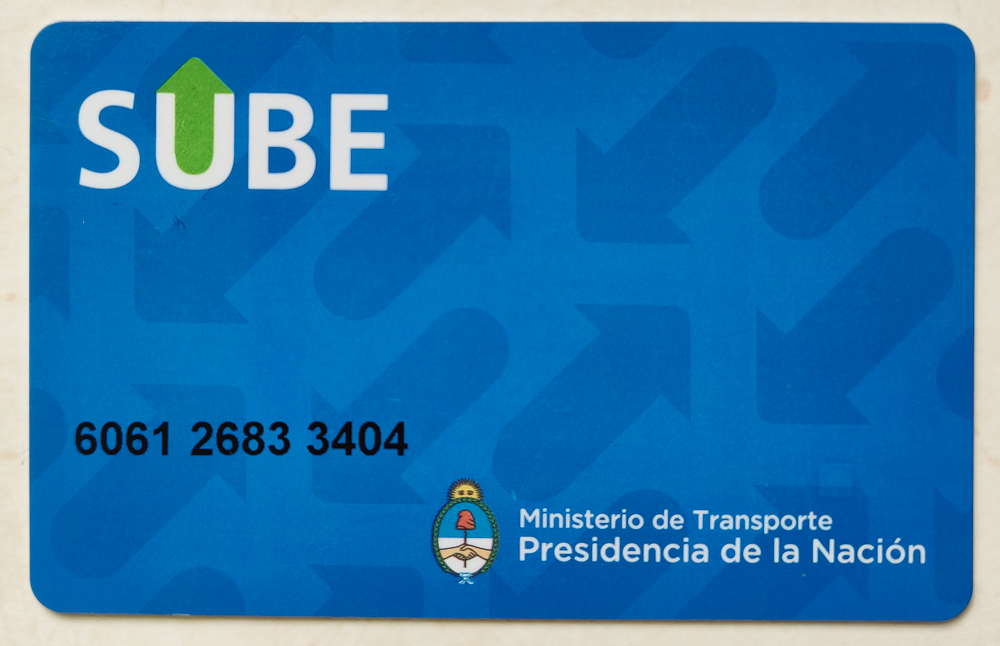
If you need a Buenos Aires transit card, I’m your girl.

3. Bus Lines – I don’t mean bus routes. I mean lines of people WAITING for buses. I’ve never seen anything like this. At rush hour, the sidewalks are full of people lined up like they’re waiting for the latest iPhone. Kidding, there are no tents… but there are seemingly endless lines of people, and they’re just doing their regular commute, waiting for the bus. It’s crazy! And also nice in a way because people aren’t trying to edge you out to get on the bus before you. But, you need to know what you’re doing and start moving as soon as the right bus pulls up because people operate like a well-oiled machine. There’s no time for hesitation.

Also, bus drivers seem to always be in a rush, so be READY when it’s time for your stop. As in, be standing at the door, and start hopping off as soon as the bus slows and the door opens because a “slow”, rather than a stop, might be all you’re getting.
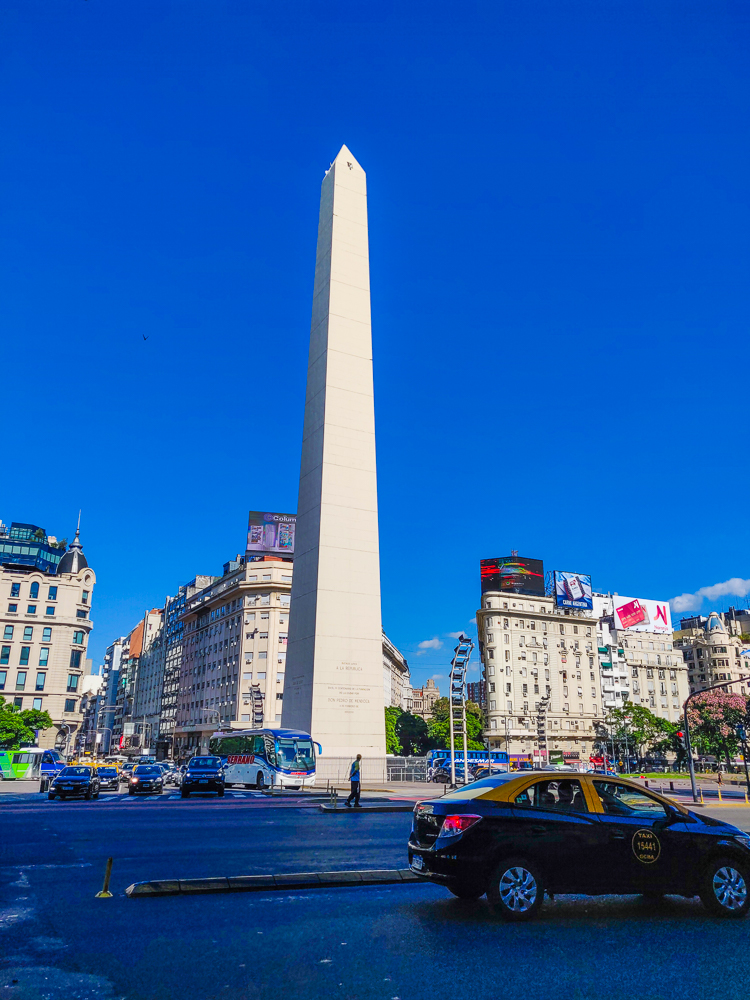
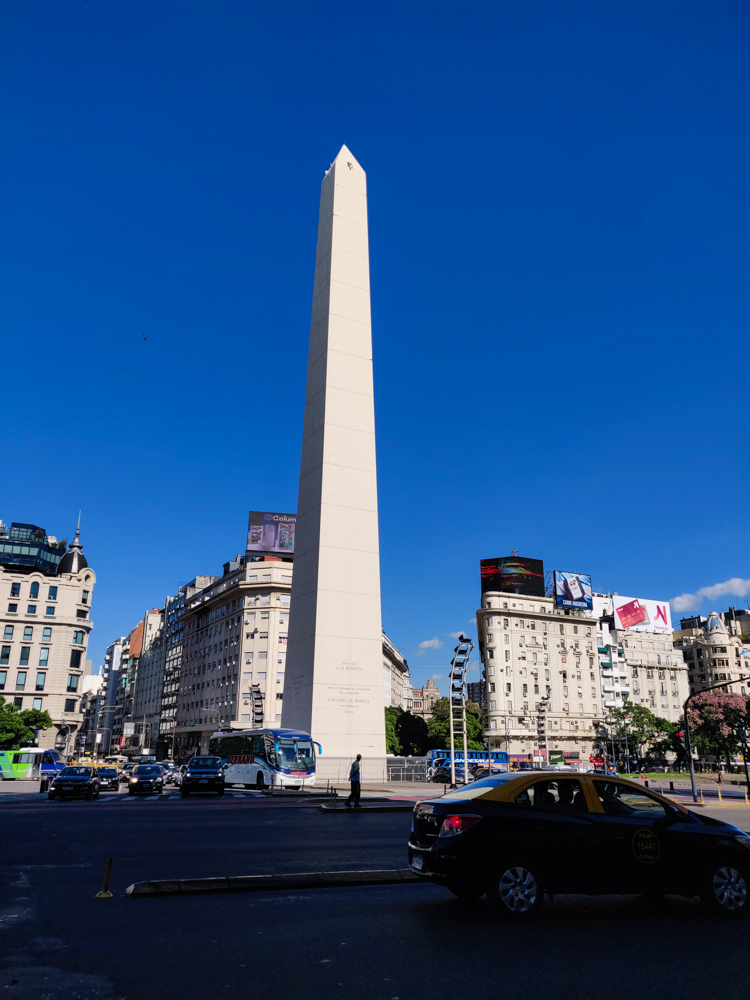
I know you’ve seen this picture before, but it’s the only one I have that even kind of shows the crazy width of the road. Since the obelisk is here, the big medians I mentioned have been replaced by the obelisk island. But, those buildings alllll the way across show where the street finally ends (and it doesn’t get wider here because of the obelisk… it’s this wide everywhere).

4. Avenida 9 de Julio – This is the major north/south boulevard in town, and I don’t even know how to begin explaining this street to you. Mike and I got to enjoy its dedicated bus lanes on the ride to our hostel. Not having to share space with the other traffic probably cut our travel time nearly in half.

How do they have space for these dedicated bus lanes? WELL. It’s the widest avenue in the world, and for maybe the first time after hearing a “most/best/biggest/etc. ___ in the world” claim, I immediately believed it. It’s literally an entire city block wide. Like if you built a city on a grid and then removed the buildings between two of the streets and paved the whole thing, this avenue would be the result. There were something like 16 lanes before the middle was blocked off for buses in 2013. (This is one of those times when I really wish I had thought to take a good picture, but alas, I’ve failed you all. I’m sorry. You can google it, though.)

Crossing it is no simple task and takes far too long. There are multiple traffic lights along the way and no chance of getting across on a single green. First, you cross three lanes of traffic. Then, there’s a “median” with a width equivalent to maybe seven lanes. Next, you cross six lanes, a small divider separating the bus lanes, and two dedicated bus lanes. Okay, now you’re in the middle of the street/where you need to be in order to get on a bus. But, if you’re just trying to get across, you still have two bus lanes, four lanes of traffic, another large median, and three more lanes of traffic before you’re safely to the other side. It’s at least as exhausting as it sounds, plus there’s not much shade which means you’re simultaneously getting fried by the sun. We avoided crossing whenever possible.

5. Drivers – In classic South American fashion, the roads are terrifying, and you couldn’t pay me enough to drive on them. Everyone drives like they’re in a massive hurry (which is funny because probably no one actually is… the pace of life is SLOOOOW), the road rules are mere suggestions, and the lines on the road are for decoration. Defensive street-crossing is required as a pedestrian unless you have a death wish (aka don’t assume that anyone is going to stop for you, even if you have right of way).

6. Money/ATMs – After we made it to our hostel/took some time to chill (literally… I felt like I was going to pass out), we headed back out to find somewhere to exchange money. This turned out to be a much more challenging task than expected. Normally, I would just use an ATM to get local currency, but the fees in Argentina were the highest I’ve ever experienced. For a single withdrawal, the fee was at least $10! (For reference, many ATMs will charge you nothing, or fees are usually in the $1-3 range.) My US bank reimburses ATM fees to a point, but we figured we’d just exchange money because I had some cash and we didn’t need much, making the high fee seem even more ridiculous.

WELL, that was a mess, too! I mean, there are plenty of shady dudes on the street yelling, “CAMBIO! CAMBIOCAMBIOCAMBIO!” (exchange) but forgive me if I didn’t have much confidence in their legitimacy. All of the legit exchange places would only change more than US$100, and we didn’t need even close to that for our last couple of days in the country. So, after all that, we ended up exhausted and frustrated… and getting money from an ATM (after googling to find out who had the least-unreasonable fees. Side note, the best ATM we found in Argentina was, shockingly, in the main airport. It had the lowest fees and the highest allowable withdrawal amount. Go figure).
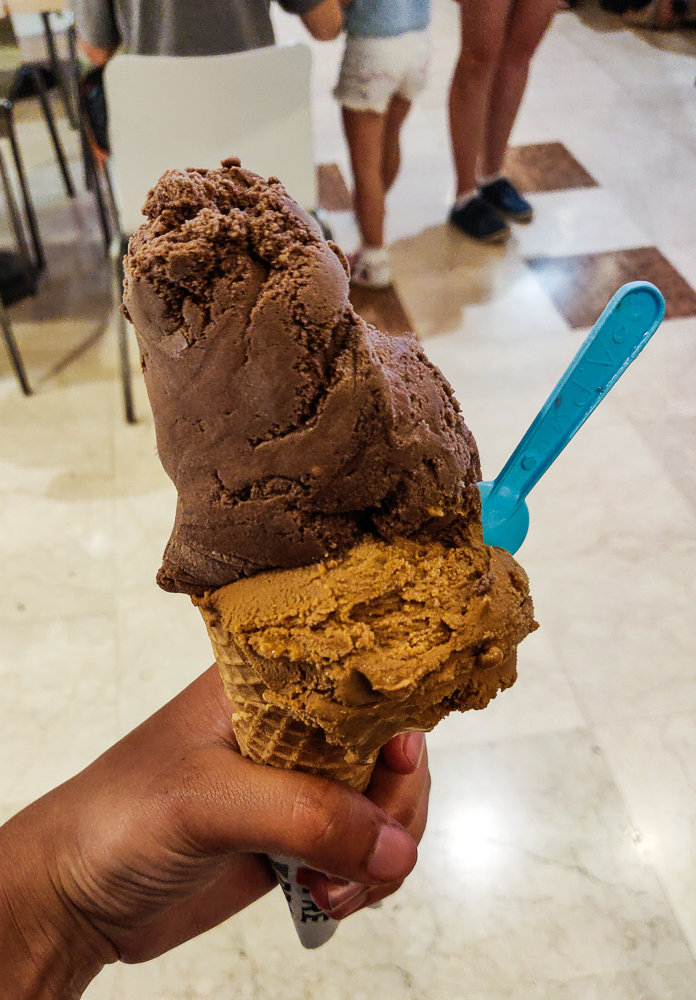
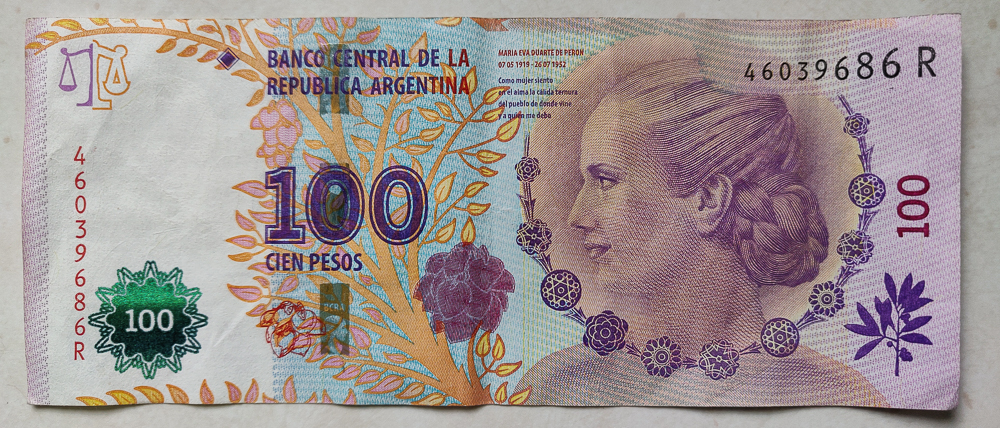
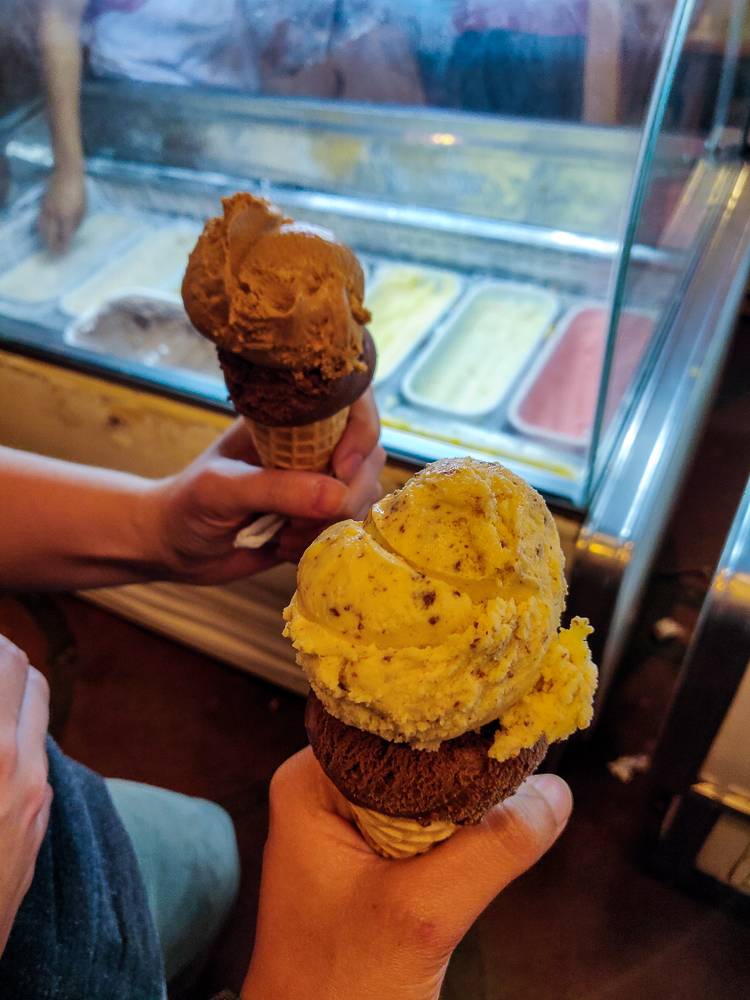
Mike and I took a break from our exchange adventure to get some ice cream. This heaping cone gets all the credit for carrying me through the day.
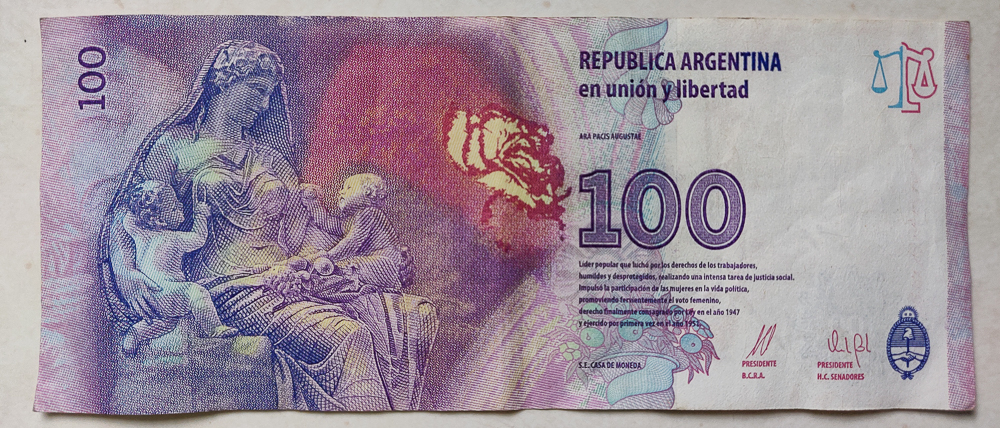
That’s Eva Perón, former first lady of Argentina.
Can someone please explain to me why every other country in the world has prettier money than the US?

7. Exchange Rate – Besides the complexity of simply getting money, there’s the added confusion of the constantly-fluctuating exchange rate. When I was doing research and trying to figure out how much things cost, every piece of information I found seemed to be conflicting… unless the price was listed in USD. Since the value of Argentina’s currency is so unstable, many tourist attractions simply list prices in US dollars so that they don’t have to keep changing them.

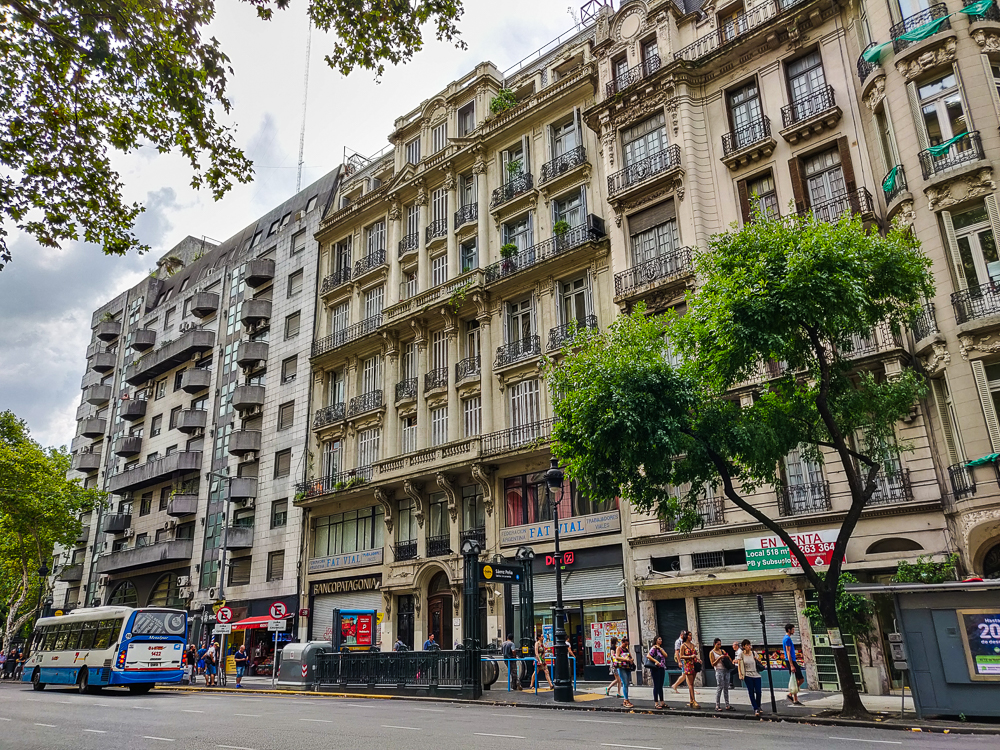
8. “The Paris of South America” – NO, NO, NO. This is just the kind of ridiculous claim that I despise and immediately dismiss. While I refuse to accept this as an even remotely valid comparison, I will say that the architecture of the city has a very European vibe to it, more than Lima and Quito (the only other South American capitals I have personal experience with). If wrought-iron balconies and café culture were all there is to Paris, then sure. However, you could absolutely NOT go to Buenos Aires and then be like, “Well, guess I don’t need to go to Paris anymore because I’ve basically already been there!” NO.
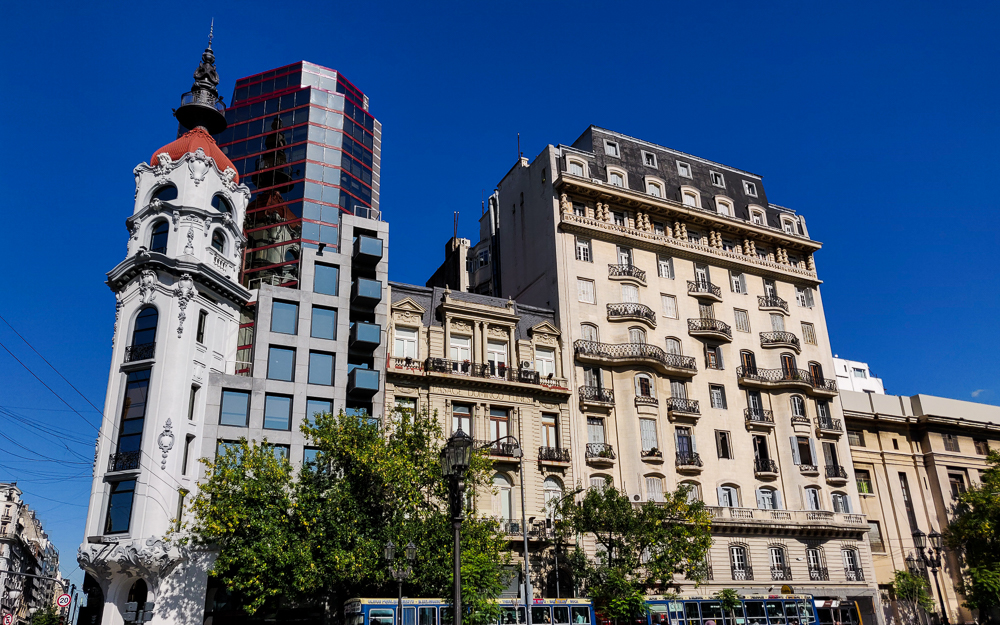
Welcome to Paris!
Those balconies are fab, but get that glass monstrosity outta here. Paris of the South? Psh!

9. Accents – Every Spanish-speaking country has its own dialect and accent (just like US vs. British vs. Australian English), but Argentina takes it to another level. It’s like Spanish with an Italian accent and then some random Italian words sprinkled in for good measure. They refer to Argentinian Spanish there as “castellano”, and instead of saying that “cas-teh-yano” like you would in normal Spanish, you say “cas-teh-shano”. The “y” and double-L (usually pronounced “y”) take on more of a “sh” or soft “g” (like in “mirage”) sound. There are plenty more differences, but I’ll leave you with just that. We had no problem with people not understanding us, but my gosh it was hard to get used to understanding them!

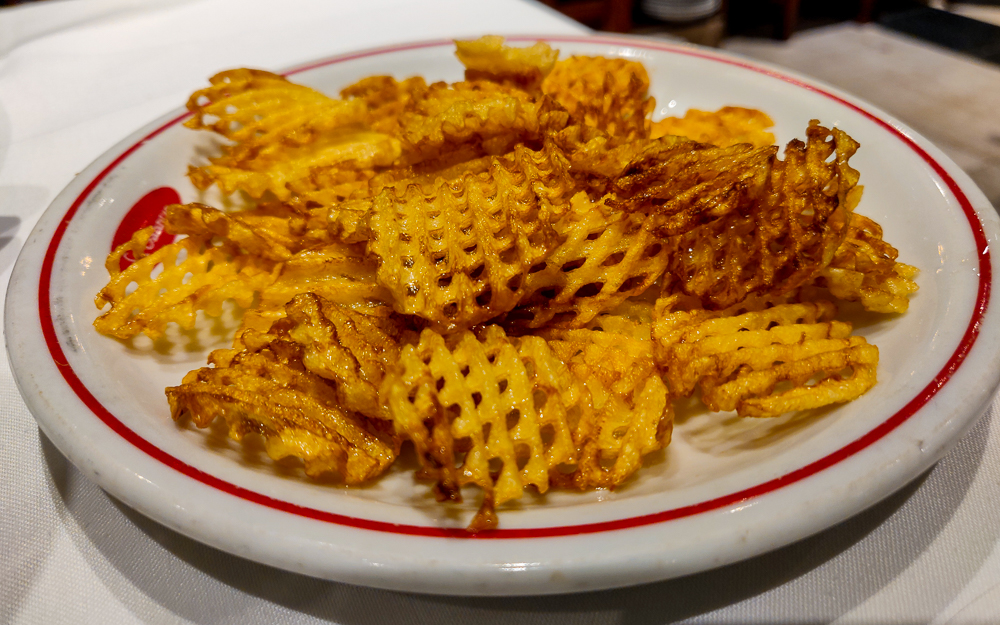
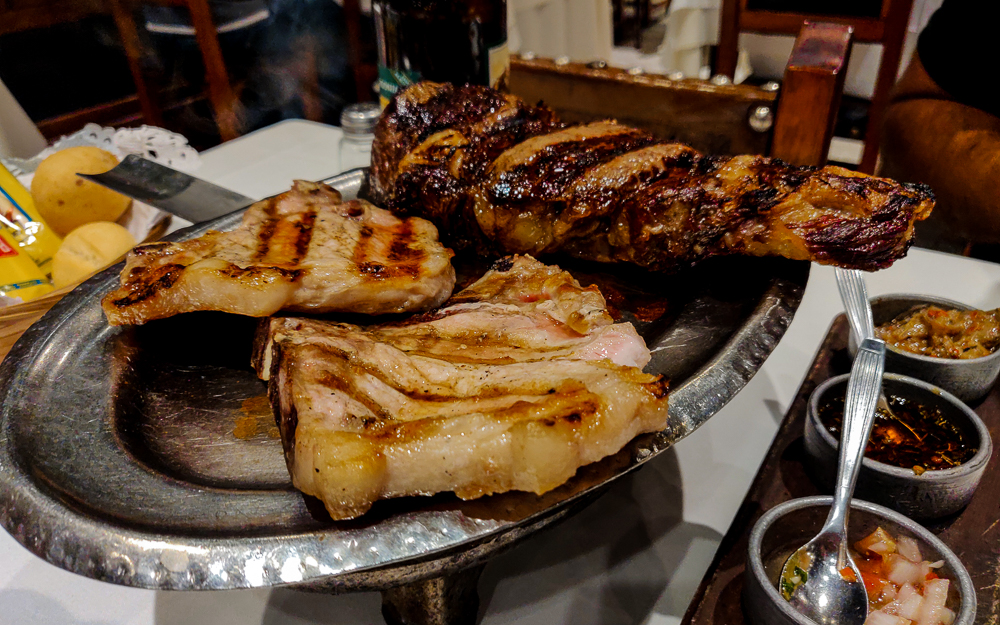
10. Argentinian BBQ – You can’t go to Argentina without eating Argentinian barbecue (so I’ve been told). After primarily subsisting on ravioli, protein bars, and dried Ramen noodles (okay, that one was just me) during our time in Patagonia, Mike was VERY excited about this. On our first night in the city, we went to a place recommended by the receptionist at the hostel. I put him in charge of ordering since his excitement level far outweighed mine, and so, we split pork chops, a steak, and a plate of crispy waffle fries. What a balanced meal, right? A more thorough commitment to the cultural experience of barbecue would have included some intestines, but for some reason, he decided to skip those.

Mike raved about how inexpensive it was, while my eyes bugged out at the prices when I opened the menu. This is the difference between someone used to NYC restaurant prices and someone used to eating 50-cent-a-bag pasta in a hostel kitchen. (In this case, I’m sure Mike was right, that it was inexpensive for what we got. I’ve also never ordered a steak in a restaurant before, so I had no reasonable reference point.)
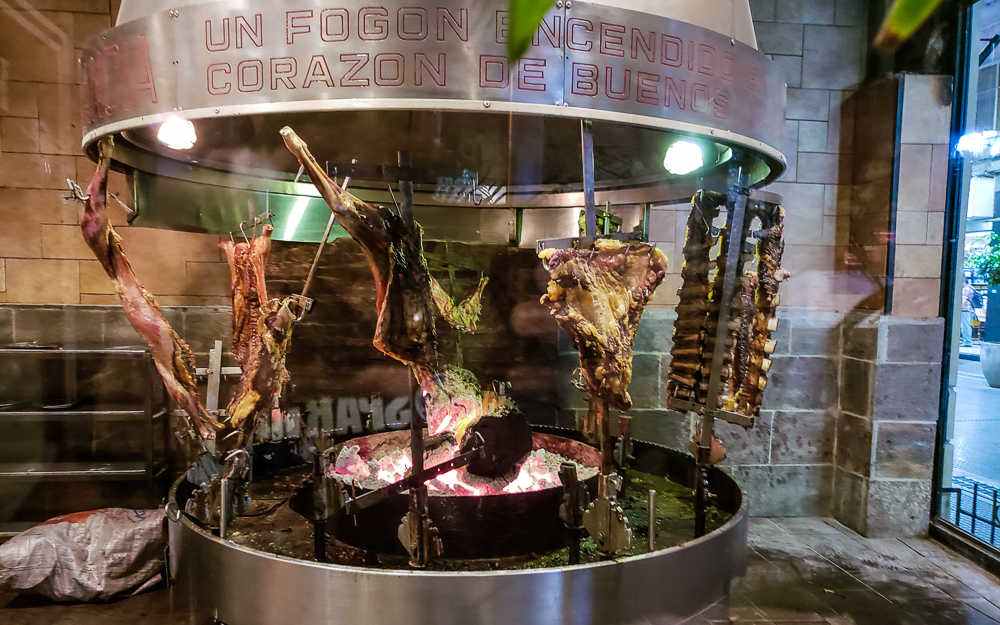
They’re not messing around. At the top, it says, “A burning stove is the heart of Buenos Aires.”
Protein, anyone?
There’s actually nothing better than waffle fries. Between these and the ice cream, this was really an ideal Lara food day.

After our protein- and carb-laden dinner, we jetted back to the hostel, courtesy of the subway system, and totally crashed (us, not the subway). Whew! Heat and humidity really take it out of you! Thankfully, we had a functional air conditioner in our room, saving us from the choice between a million mosquito bites from keeping our windows open or potentially dying of heatstroke from keeping them closed. Talk about luxury living!
Last time, we talked about Argentina’s transformation from a land of indigenous tribes to a Spanish colony to an independent republic. It entered the 20th century in the middle of a very prosperous golden age. During WWI, it remained neutral which allowed it to export goods to countries on both sides of the conflict.

Unfortunately, in 1929, the global depression reached Argentina, and things took a downward turn. The president’s policies accelerated unemployment, and he was removed from office by a 1930 coup d’état, the first of SIX coups in the 20th century. The years after were filled with electoral fraud, persecution and execution of the opposition, and general government corruption. Abroad, WWII was brewing, and Argentina did its best to stay neutral again, mostly for strategic reasons as it was a major food supplier to Great Britain, and joining the Allies would put its cargo ships at risk. Due to mounting international pressure, Argentina did declare war on the Axis powers in 1944, though the majority of citizens supported continued neutrality.

A 1943 military coup brought in a new era. Various leaders took power over the following years, the most influential of whom was Juan Domingo Perón. He was appointed Minister of Labor after the coup which helped to build his popularity with the lower class. He used his position to strengthen unions, raise the minimum wage, and improve working conditions. After he was elected president in 1946, he became a dictator, increasing the powers of the president, censoring the media, appointing friends as advisors, and imprisoning rivals… but also working towards economic independence and for social justice. His wife, Eva, was very popular with the working class as well and led a great deal of charitable work to their benefit. Together, they were a political power couple. During his presidency, there were improvements in infrastructure, education, and social programs… and with that came increased spending and national debt. The peso’s value plummeted.

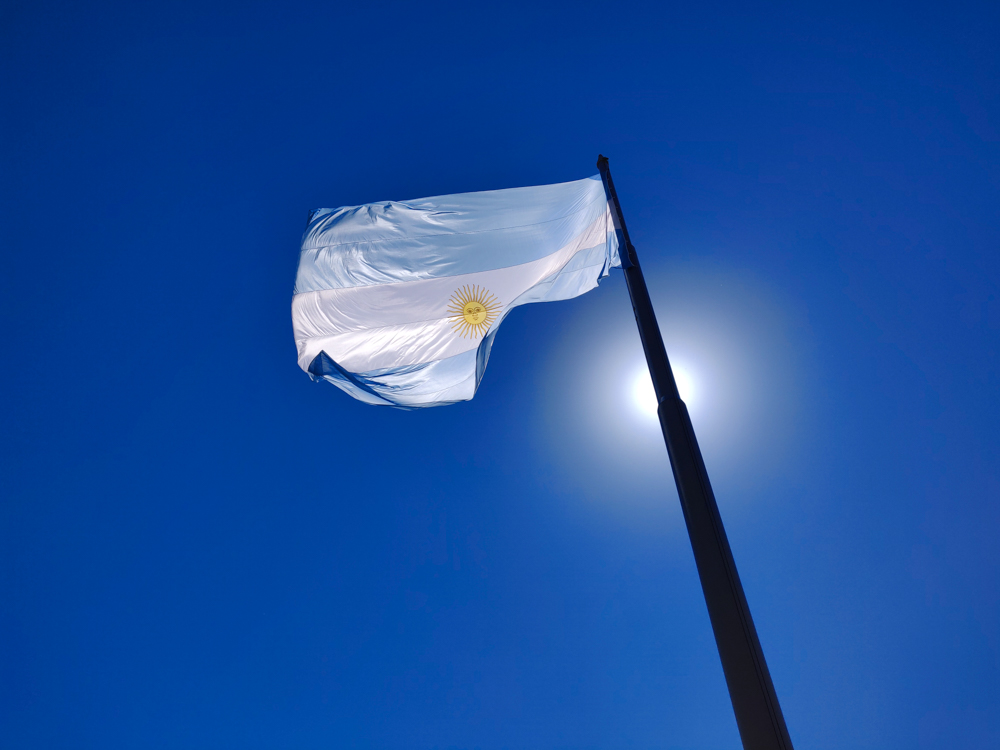
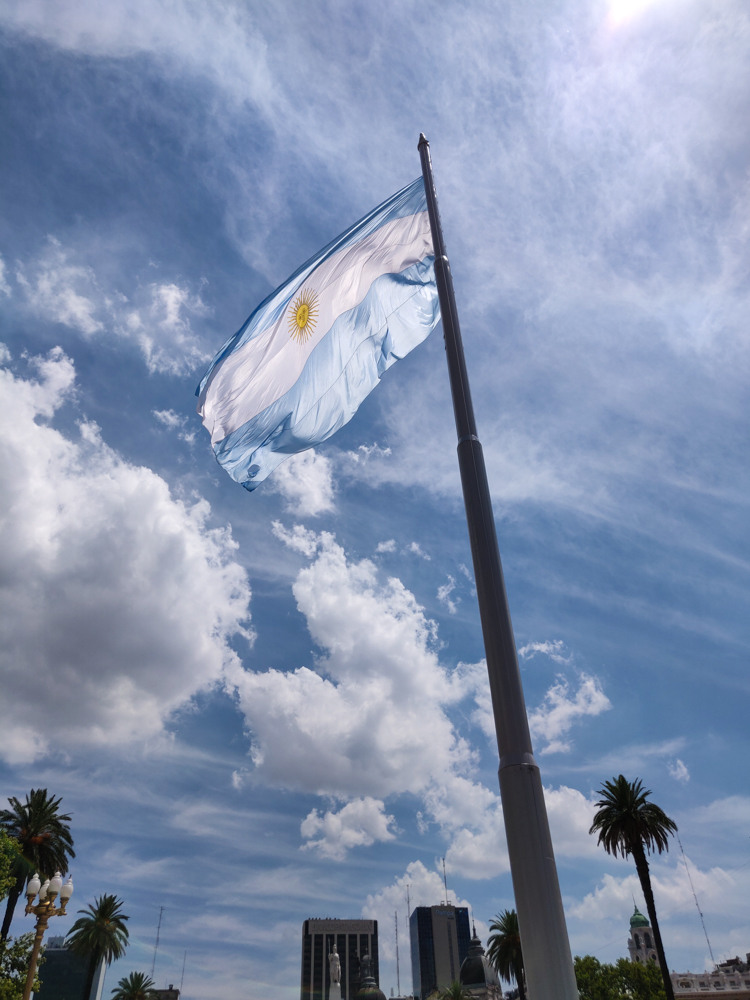
What a fab flag.
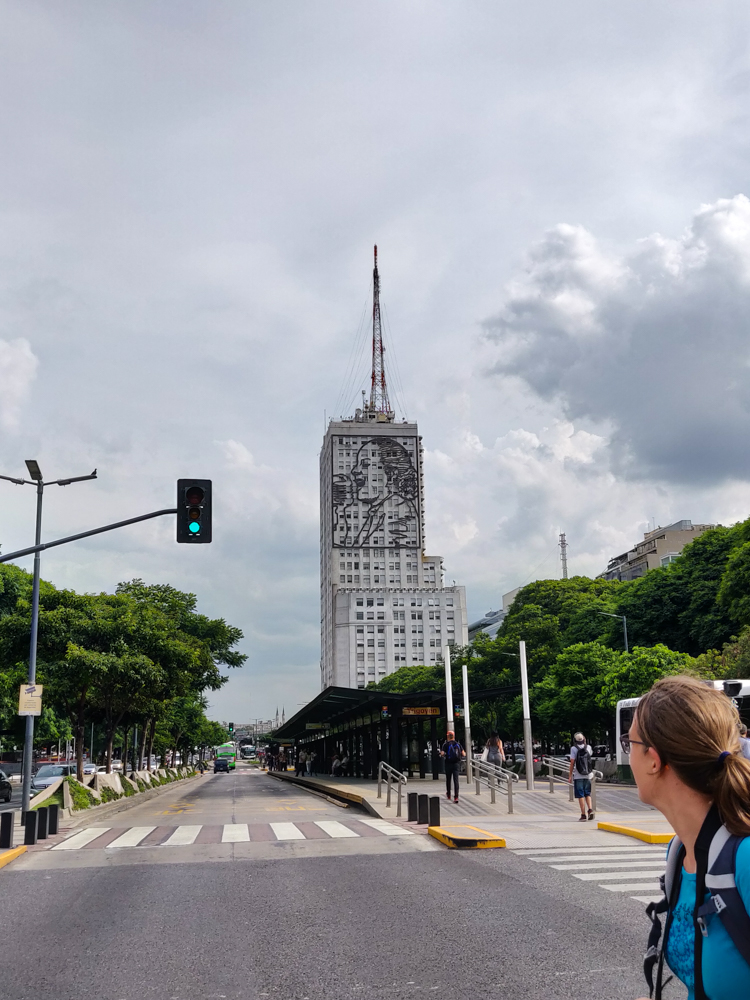
That’s Eva Perón painted on the side of that building. The last president, Cristina Kirchner, erected a lot of monuments during her term. This one was added in 2010 on the side of the Ministry of Health and Social Development as a nod to Eva’s charitable work.

Perón’s presidency had a rough end. Eva died from cancer in 1952. A coup removed Juan from office and forced him into exile in 1955. For 20 years, the leadership was primarily unstable military dictatorships. The people were dissatisfied, the government weak and unreliable. There were two more coups.

In 1973, Juan Perón was once again elected president and came out of exile. This time, his goal was political peace, and he worked to promote harmony and rebuild the country with his new wife, Isabel, as vice president. After only a year, he died in office from a heart attack, leaving Isabel as president and grossly unprepared for the job. After an economic collapse, she lost the people’s confidence and, in 1976, was removed by the sixth military coup in 50 years.

This began the final military dictatorship with a government that sought to destroy the populism that developed under Perón by whatever means. The subsequent years became known as the Dirty War. Anyone suspected of holding contrary views was an enemy, and over seven years, 9000 – 30000 people disappeared. The numbers are so uncertain because no lists of those arrested have been found. Many of them were young, from high school age to young professionals. They vanished without a trace, taken from their homes at night. They were held in concentration camps, tortured, raped, and murdered. Many were killed by being thrown out of planes over the Atlantic. Despite knowing full well what was happening, the US sent millions of dollars in aid to the provisional government during this period. Later, it was also discovered that an estimated 500 babies were kidnapped from prisoners and given to military families.

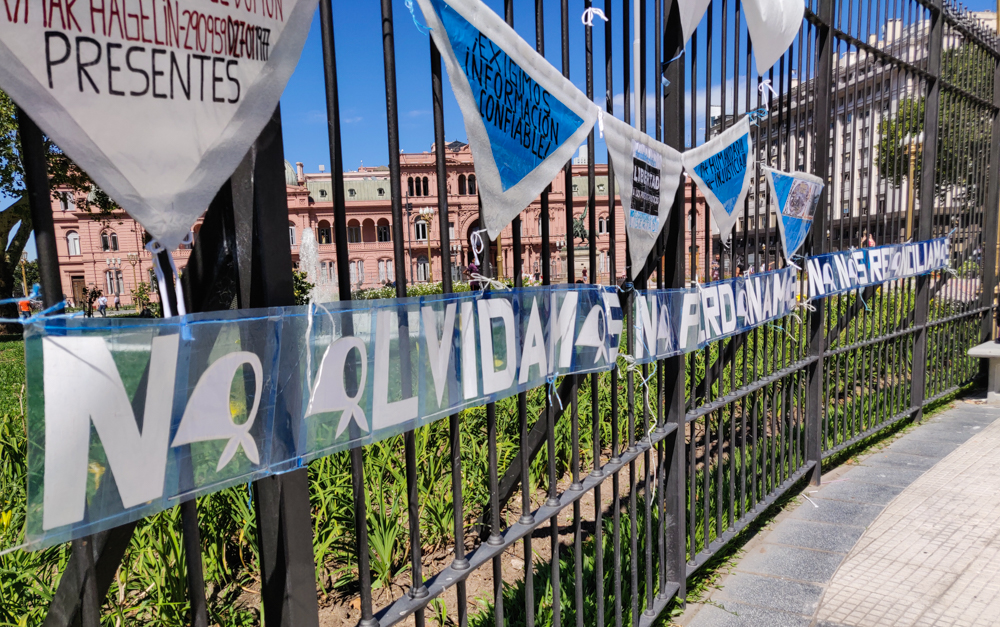
Starting in 1977, mothers of “los desaparecidos” (the disappeared) marched weekly around the main plaza in protest, demanding to know the fates of their children. By walking instead of standing in protest, they avoided breaking laws against congregating. At first, they were largely ignored by police, seen as a harmless group of old women. However, in 1978, they managed to spread awareness of their plight when the World Cup came to Argentina and brought international journalists with it.

The dictatorship finally ended in 1983, but it took years for justice to truly be served. At first, the new president, Raúl Alfonsín, aggressively investigated the military government and quickly put the leadership on trial for their crimes. He also decreased general government corruption by half. However, fearing justice, the military threatened another coup unless Alfonsín pardoned them. He gave in to their demands to preserve democracy, signing a law that he disagreed with and that was unpopular with the people, and granted amnesty to all others involved in the Dirty War crimes.

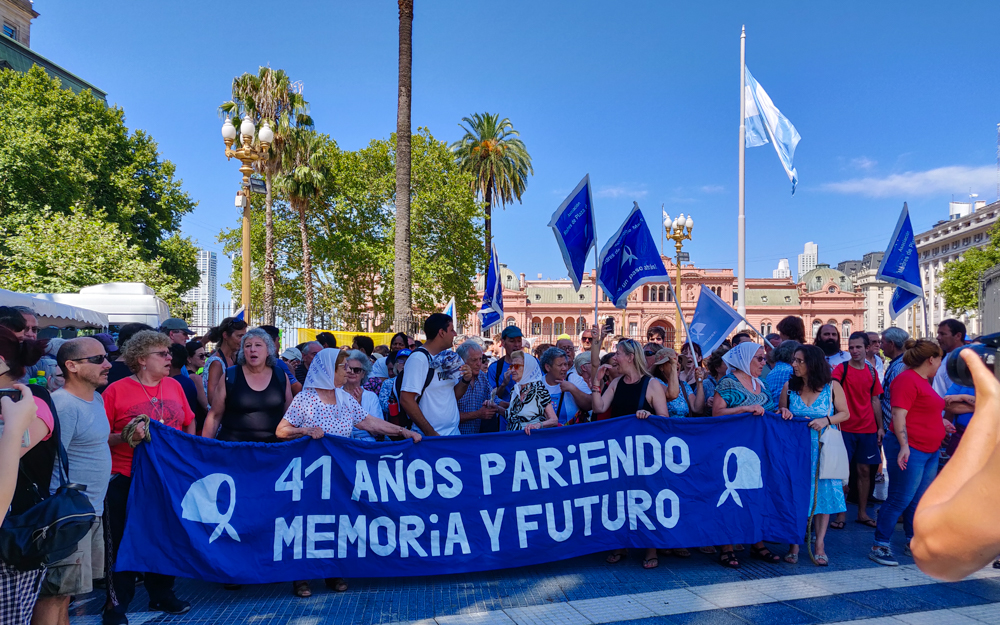
Headscarves are a symbol of the Madres de Mayo. They wore headscarves from the beginning, embroidered with the names of their lost kids. This sign says, “We don’t forget, we don’t forgive, we don’t reconcile.”

In 2005, the amnesty laws were finally revoked, and investigations resumed. The Grandmothers and Mothers of the Plaza de Mayo never stopped protesting, and they continue to march every Thursday to raise awareness, demand answers and justice that still have not come, and keep the memories of their children alive. The Grandmothers of the Plaza de Mayo encourage people born during this time period to get DNA tested to learn if they were among the kidnapped.

Madres de la Plaza de Mayo protest. As you can see, it’s more than just mothers now. Many other family members protest too, for various reasons. For example, there are people whose parents were abducted while their mothers were pregnant, and they are hoping to find a long-lost brother or sister (often, babies would be delivered by c-section before the mothers were killed and then given away to military families).

Otherwise, the major issue remained Argentina’s economy. The next president, Carlos Menem, privatized many industries made public during Perón’s presidency. Despite efforts to get the government debt under control, the economy collapsed in 1999, and Argentina entered another depression. The peso was incredibly devalued. People panicked and tried to withdraw all of their money from banks until withdrawals had to be limited. By mid-2002, the peso was at 25% of its former value.

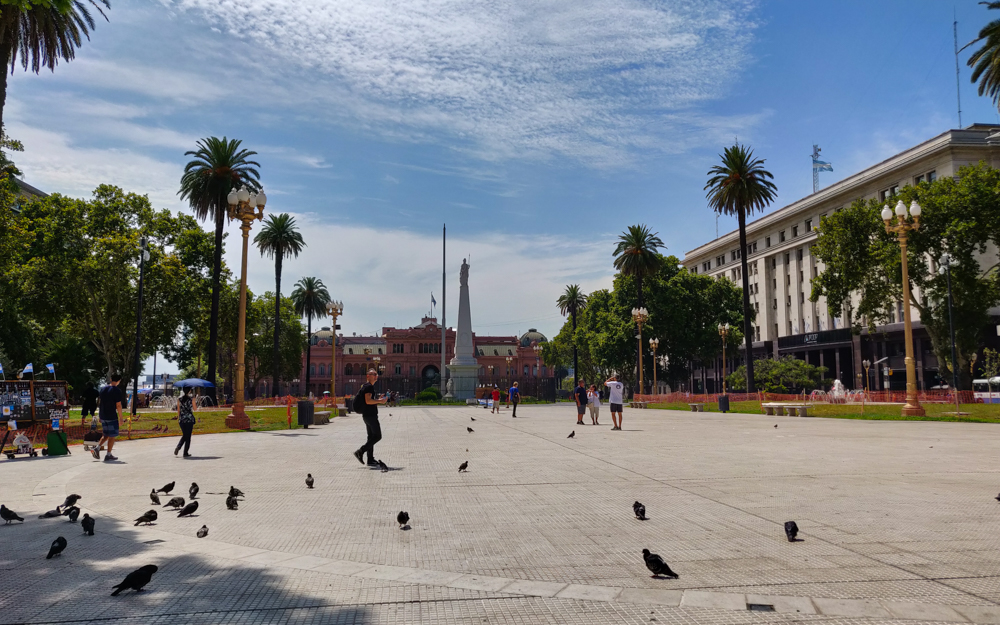
The Plaza de Mayo, the central square in Buenos Aires, is surrounded by the President’s offices, the old cabildo (town hall), and the Cathedral of Buenos Aires. It’s a popular gathering spot for both people and, apparently, birds.

Finally, things started to take a turn for the better. President Eduardo Duhalde appointed Roberto Lavagna, a moderate economist, as Minister of Economy. Lavagna’s reforms brought inflation under control, and in 2003, with the economy on an upswing, the president deemed his work complete and called for elections.

Since then, the economy has continued to have ups and downs. The peso’s value is still constantly in flux, to the point where prices are sometimes listed in US dollars (especially for tourist-type things) to avoid having to change them all the time. I don’t know enough about economics to really understand what’s happening, but the short version is that the economy is still a bit of a mess.

Final fun fact – President Néstor Kirchner was elected in 2003 and his wife, Cristina Fernández de Kirchner, was elected after him in 2007. I don’t have much more to say about them… I just think it’s interesting that there have been multiple husband-wife duos involved in the leadership of Argentina.

And there you have it! The (very abridged) history of Argentina, from the 1400s to now. Is your head spinning? My head is spinning. Next time I promise more pictures! But context is always good for helping to understand a country. When we meet again, be ready to explore Buenos Aires!

Welcome back to Argentina! I know it’s been a while… I’ve put off this post because I had to do some research, and that’s always a bit more time-intensive than when I primarily have pretty pictures to show. Once I get going, I enjoy researching and learning new things, but why is it always so hard to get started? Anyway, you’ve already waited long enough, so let’s get to it! It’s time for some Argentina History!

Like elsewhere in the Americas, Argentina started off with small settlements of various indigenous people groups. Most of these were in the southern part of the country, in what’s now called Patagonia. There were a few different ethnic groups, one of which I’ve mentioned before, the Tehuelche people who were responsible for the name of the park Mike and I visited in Chile, Torres del Paine.

The largest empire of pre-Spanish America was the Inca Empire, but it only crept into a small part of northwestern Argentina in the late 1400s, lasting about 50 years until the Europeans arrived in the early 1500s. Portuguese explorers Gonçalo Coelho and Amerigo Vespucci landed in Brazil in 1502. The Spanish arrived in Argentina in 1516, and the first explorer was killed by tribespeople. Twenty years later (1536), they returned to start a small settlement in the current location of Buenos Aires. It lasted just five years.

The Spanish didn’t give up, though, and in 1542 formed a colony called the Viceroyalty of Peru which included the majority of South America. The main port of this colony was Lima (Peru) on the Pacific side, and there was no Atlantic port. This was great for Lima but bad for everywhere else as it added months to the transport of goods.

The obelisk was built in 1936 as a monument to the 400th birthday of Buenos Aires.
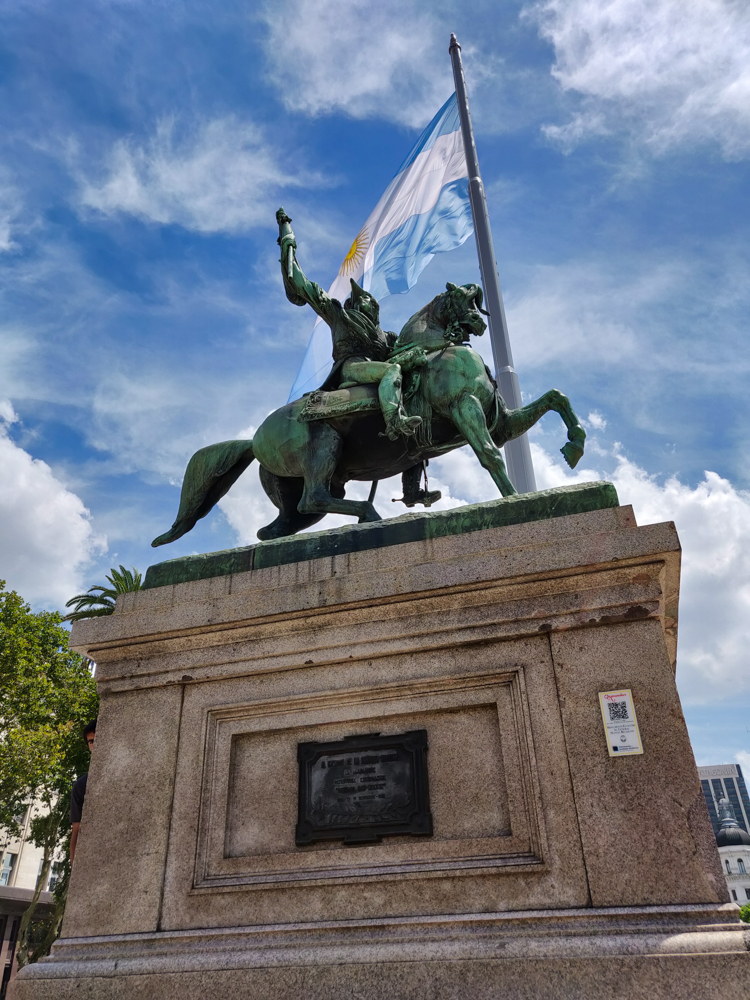
This statue in the main square (Plaza de Mayo) in Buenos Aires depicts Manuel José Joaquín del Corazón de Jesús Belgrano y González… aka Manuel Belgrano (gotta love those Spanish names). He was one of the liberators during the Argentine War of Independence and created the new country’s flag in 1812!

Finally, 1776 saw the reorganization of the colonies and formation of the new Viceroyalty of the Rio de la Plata which included Argentina, Chile, Bolivia, Paraguay, and Uruguay. Free from the control of Lima, Buenos Aires became a bustling port and was set up for a prosperous future. (Crazy side note – the Spanish colonies were considered the king’s personal possessions. Can you imagine claiming ownership of half a continent??? That’s absurd!)

Elsewhere in the world, the Spanish were struggling. With the king distracted by the Peninsular War in Spain, the colonists were forced to fend for themselves. They held off two British invasions in 1806 and 1807 and grew confident in their ability to survive apart from Spain. This fed a growing desire for independence as the colonists were already frustrated with underrepresentation in Spanish politics and bans on trade with any country besides Spain. When King Ferdinand VII was captured in 1808, the colonists decided it was time for the Americas to be left to self-rule.

In May of 1810, the colonists overthrew the viceroy, kicking off the Argentine War of Independence. After declaring independence in 1816, Argentina simultaneously entered a civil war as the new country disagreed on whether there should be a strong, centralized government (the Unitarians) or a federation of autonomous provinces like the USA (the Federalists).

Finally, a constitution was signed in 1853, forming the Argentine Republic. It created a government with three branches (legislative, executive, and judicial) and divided power between them, creating a strong executive government with representation from every province. Buenos Aires was the last province to join the new republic and became part of Argentina in 1862.

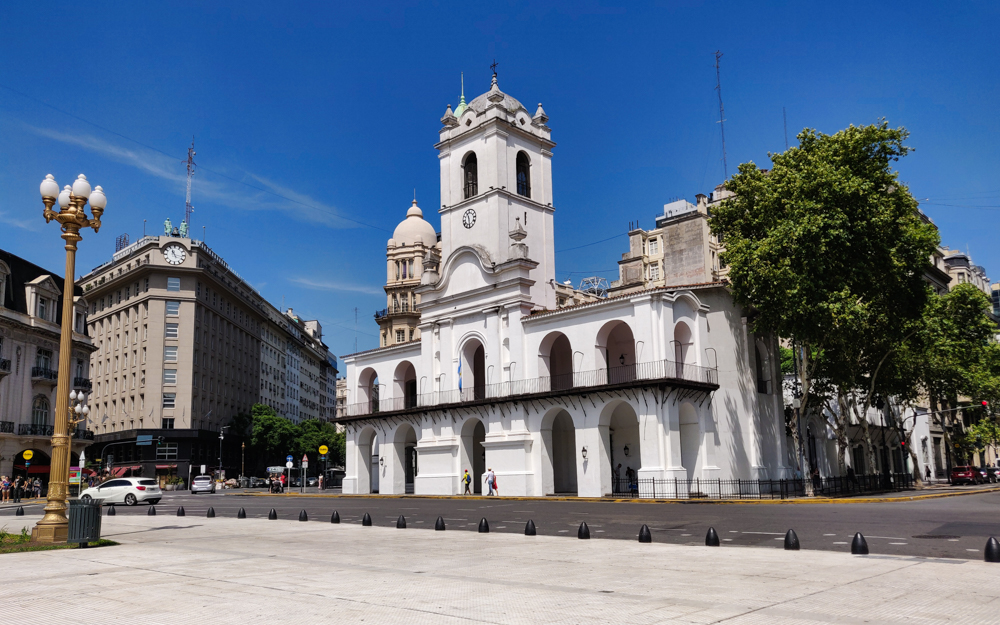
The Buenos Aires Cabildo housed the town council during colonial times and was the government house of the Viceroyalty of the Rio de la Plata. Our tour guide said that this is where the colonists gathered in 1810 and decided to seek independence from Spain (that’s my disclaimer that this may or may not be correct haha. Tour guides say a lot of things…).
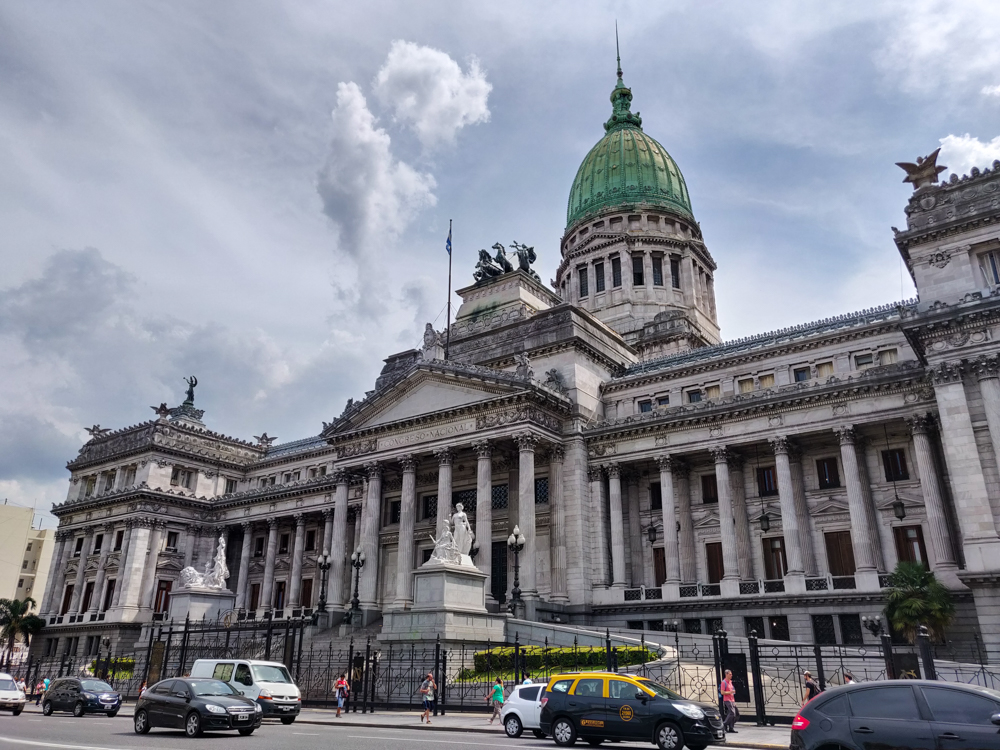
The Argentinian Parliament. Fun fact it apparently has the largest bronze cupola in the world (a category which I’m sure has a lot of stiff competition) at 18m tall. The building was inaugurated in 1906 but wasn’t finished until about 40 years later.

Finally, Argentina had some stability! The country prospered thanks to Buenos Aires’s position as a major South American port and became a diverse cultural center. Unfortunately, this golden age only lasted about 50 years. Next time, we’ll talk about Argentina’s tumultuous 20th century. Get ready for coup d’états galore!

The Argentine flag

As well as I slept during our first night in Canta, that’s how poorly I slept the second night (despite having an exhausting day). The major issues were 1. Jocelyn coughed at 1AM, and then I was awake when 2. a marching band started playing around the same time. You may be wondering, why did Jocelyn’s cough wake me up? Am I really THAT light of a sleeper? The answer is no, I’m not, but Jocelyn coughed IN MY FACE. Yes, that’s right. I woke up, completely confused. I mean, I knew what happened, but I didn’t understand why our faces were so close together and why we were facing each other. I made a sound like, “ehhuw”, rolled over, and pulled a blanket up to block her face in case she coughed again. Then she coughed, definitely woke up, realized what happened, gave a sleepy/embarrassed, “oh,” and rolled over as well so we were back to back. At the time, I was VERY irritated because that’s what happens when I get woken up in the middle of the night (PSA: steer clear of sleeping Lara), but when we talked about it in the morning and confirmed that yes, it did happen, and yes, we were both aware of it, the whole situation was just funny. On the topic of the marching band, I don’t know anything more than what I already said. The constant questions of international living: “Huh?” and “But… why?”

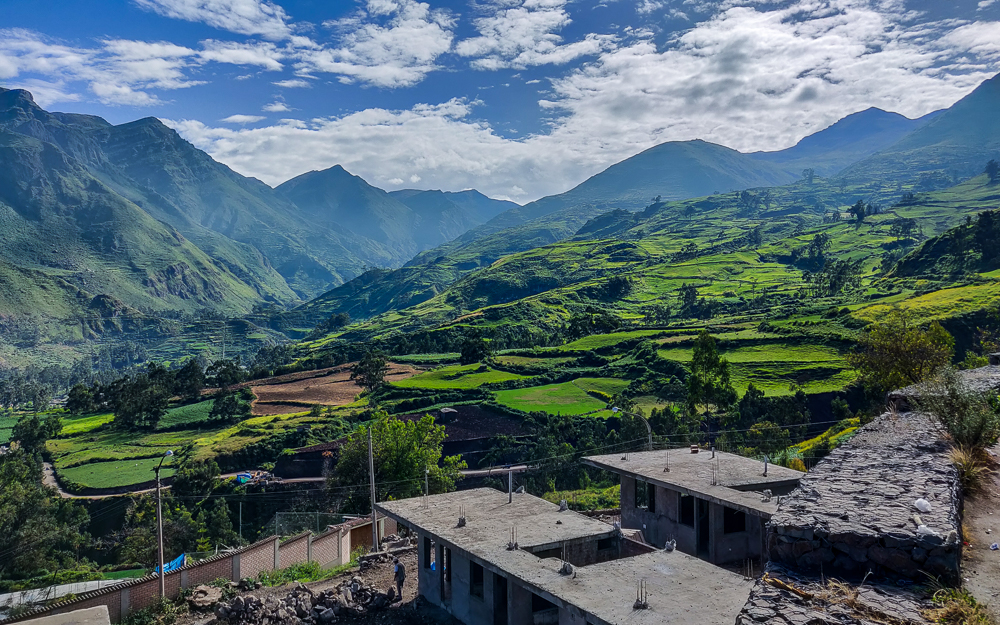
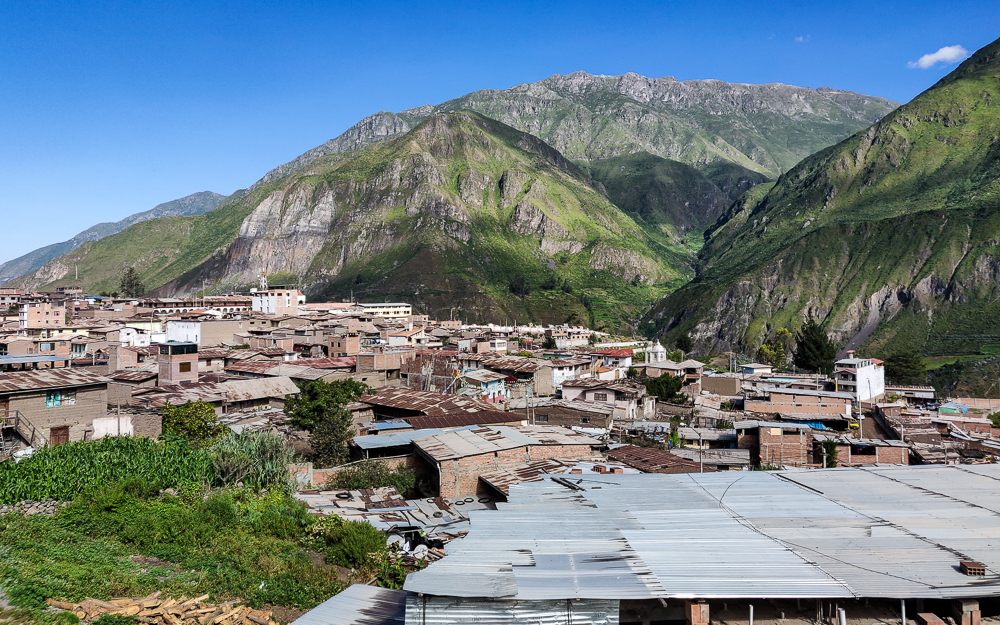
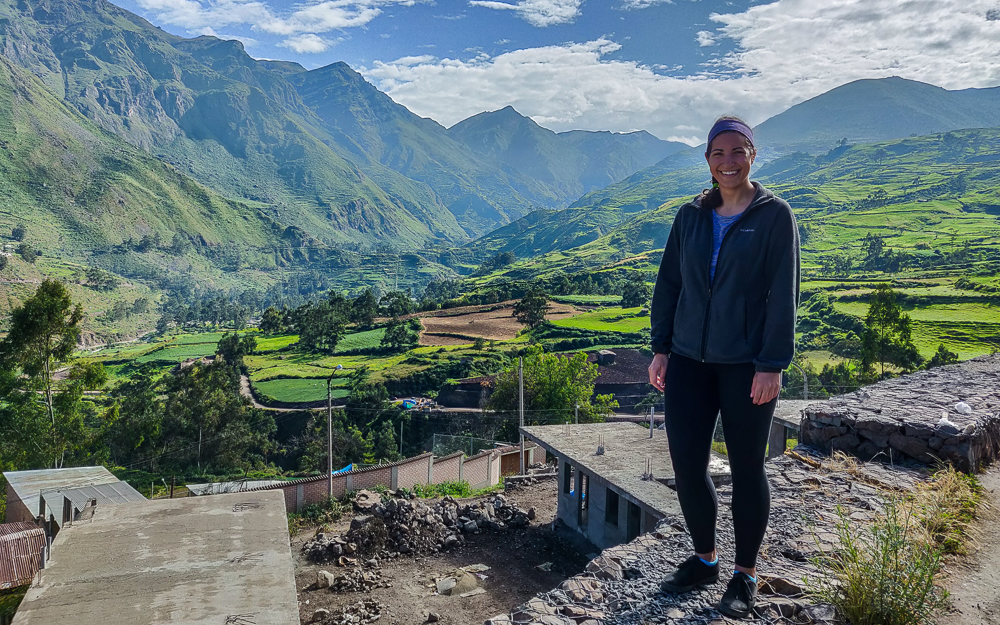
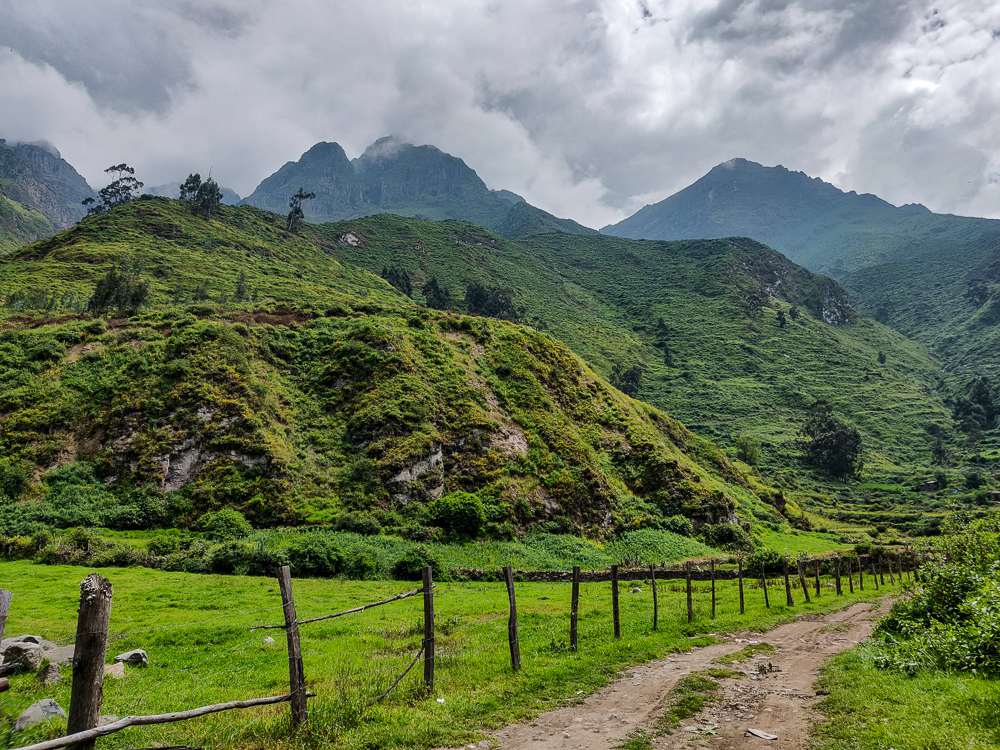
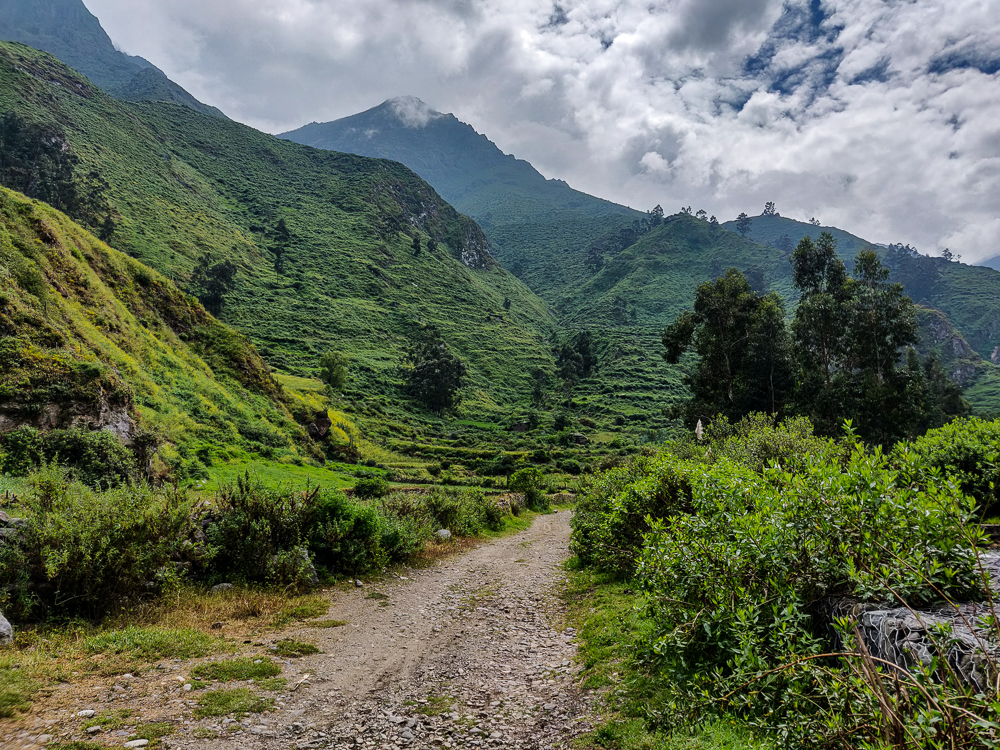
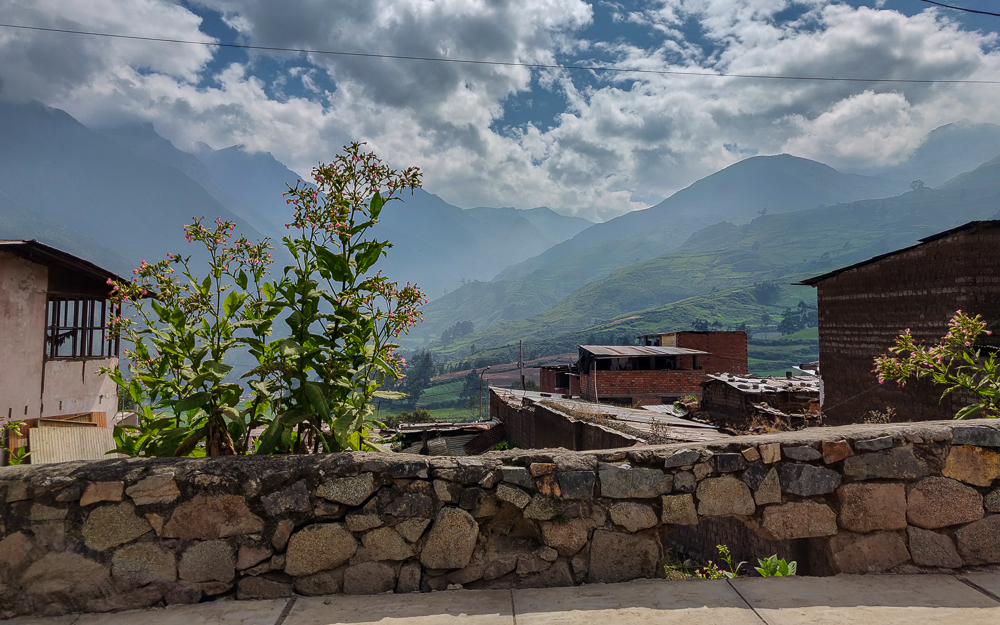
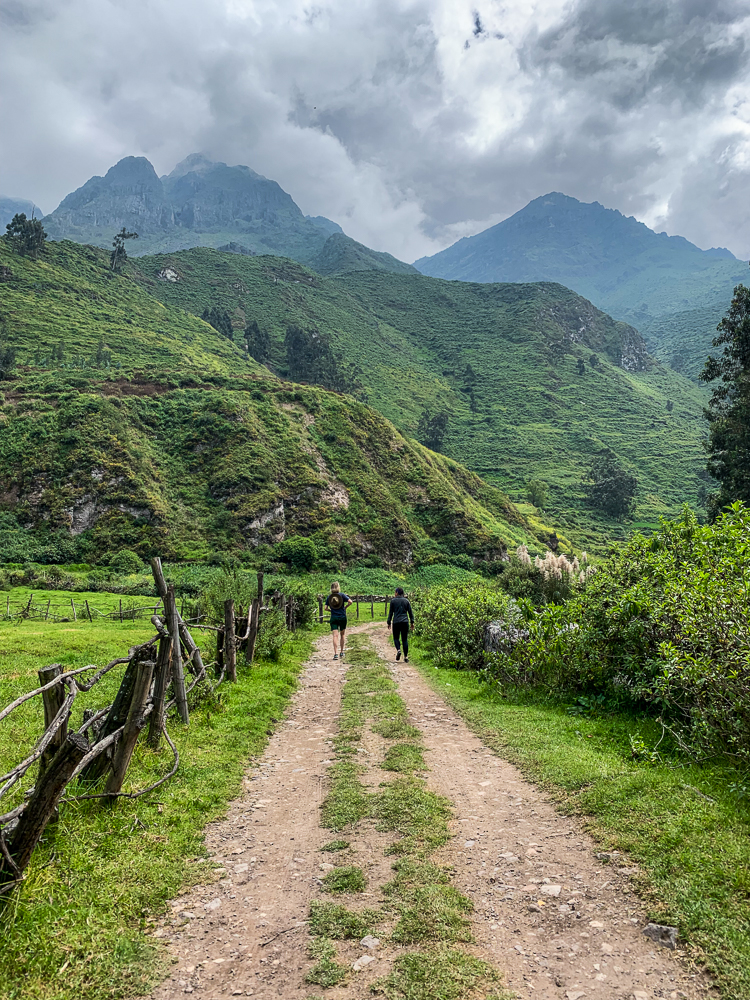
In the morning (aka at an acceptable time for being awake), we decided to get moving quickly to avoid the traffic. We were headed home, so we packed up the car and headed to Obrajillo for breakfast. Before leaving Canta, I walked with Jocelyn and Kylie up a little hill nearby where we had an awesome view of the mountains. It had rained the night before, so the air was clear and the greens were extra vibrant.

Can you believe this view?? The greens are practically glowing
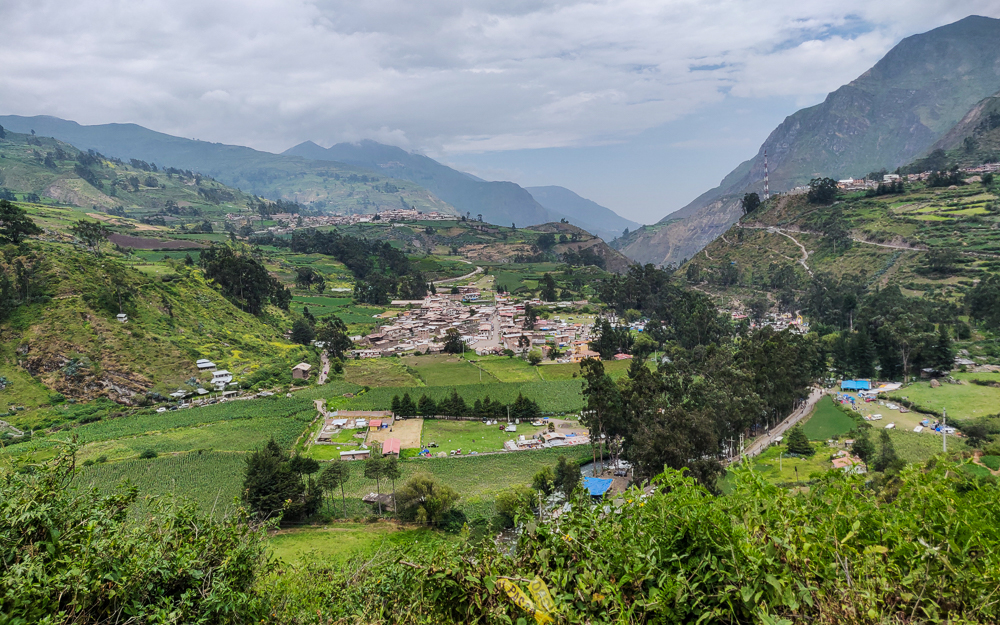
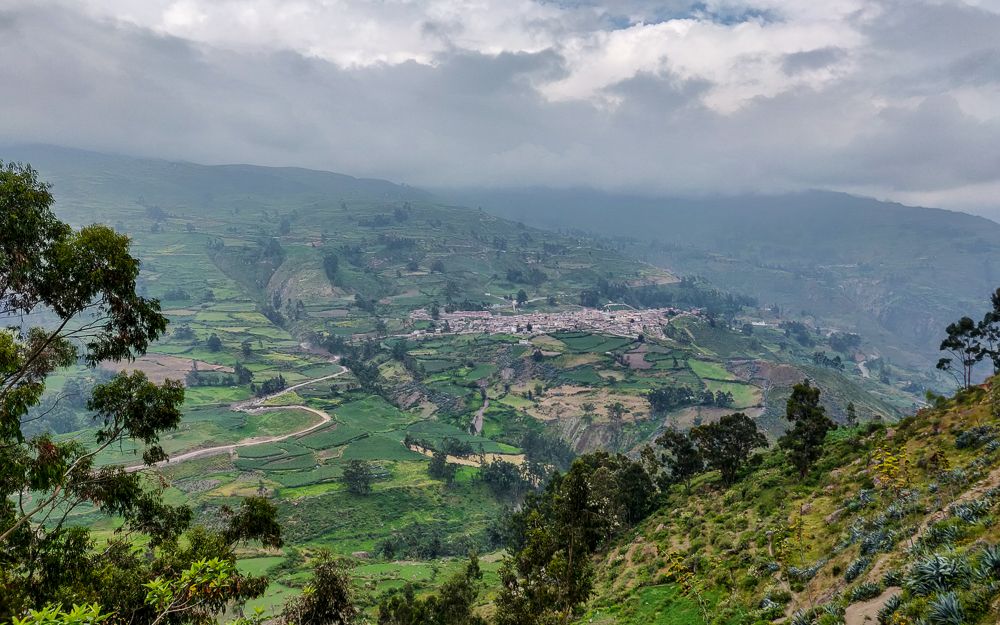
Looking back over Canta
Definitely worth the 2-minute walk to this view.
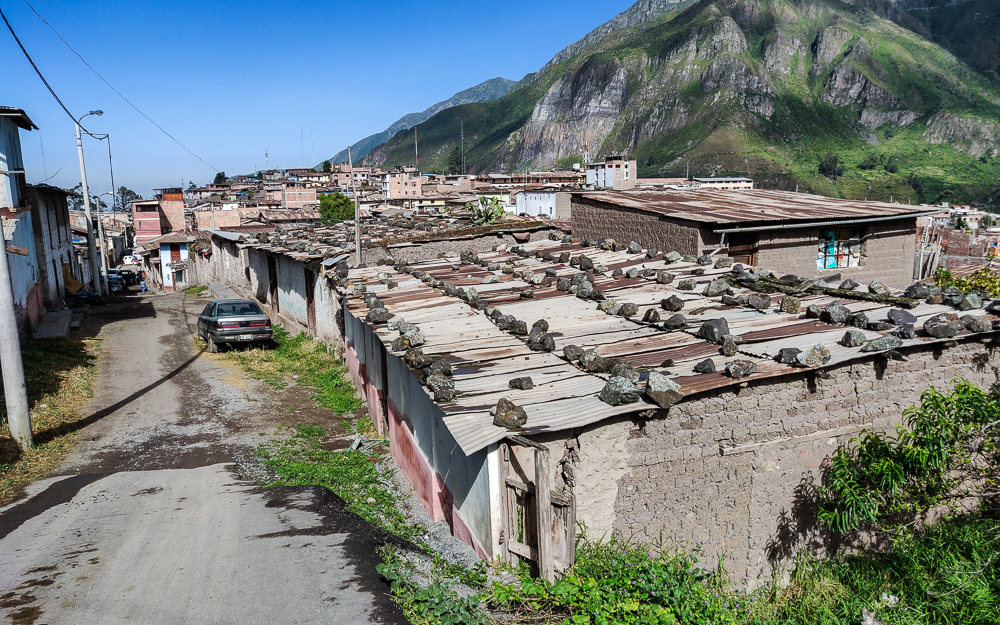
What do you think of this roof-fastening method? It seems effective (at least until a rock shifts and falls through your roof).

Amazingly, we made it to Obrajillo without any traffic delays. We all ate our daily egg sandwiches and then piled back into the van to make one more stop before starting the trek home. Kylie wanted to visit this other little town, Aqochaka, that was supposed to be really pretty and had a “famous” bridge. The road to get there from Obrajillo is nice and skinny and winds up and around the mountains, giving us some breathtaking views… and also some heart attacks because it’s one of those roads where, if someone’s coming the other way, you need to back up until you find a little pull-off and it seems inevitable that someone is going to end up tumbling down the side of the mountain. But, we survived, and I wasn’t driving, so it was all good.

Down time before breakfast
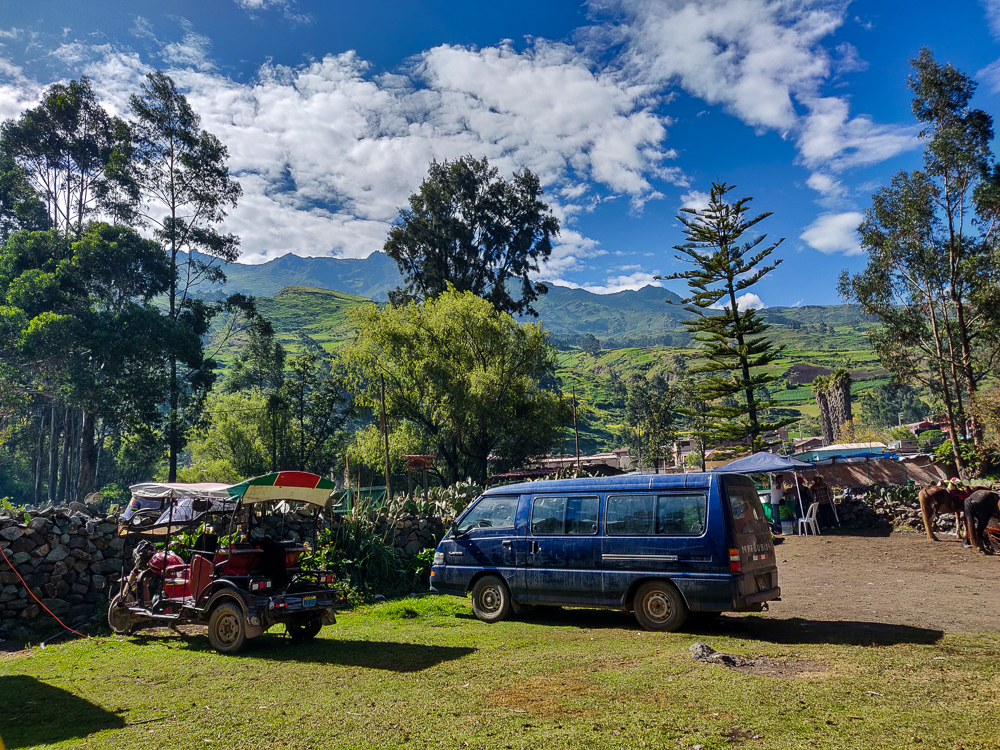
The trusty van in the most attractive surroundings of its life. Look at those blue skies!
Looking towards Obrajillo on the road to Aqochaka

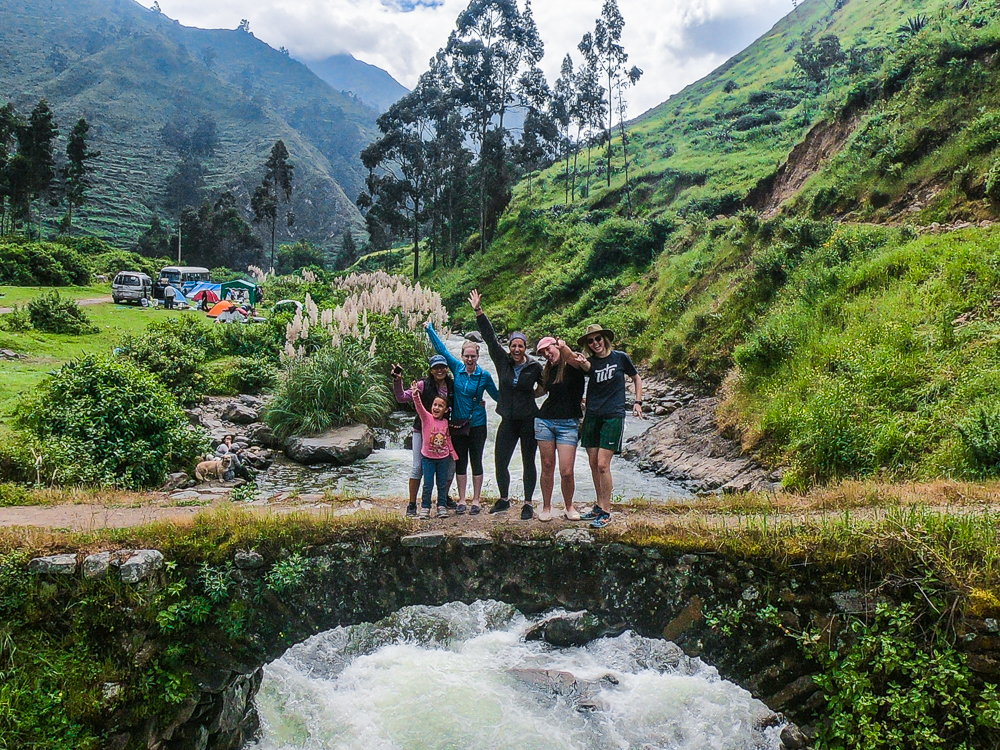
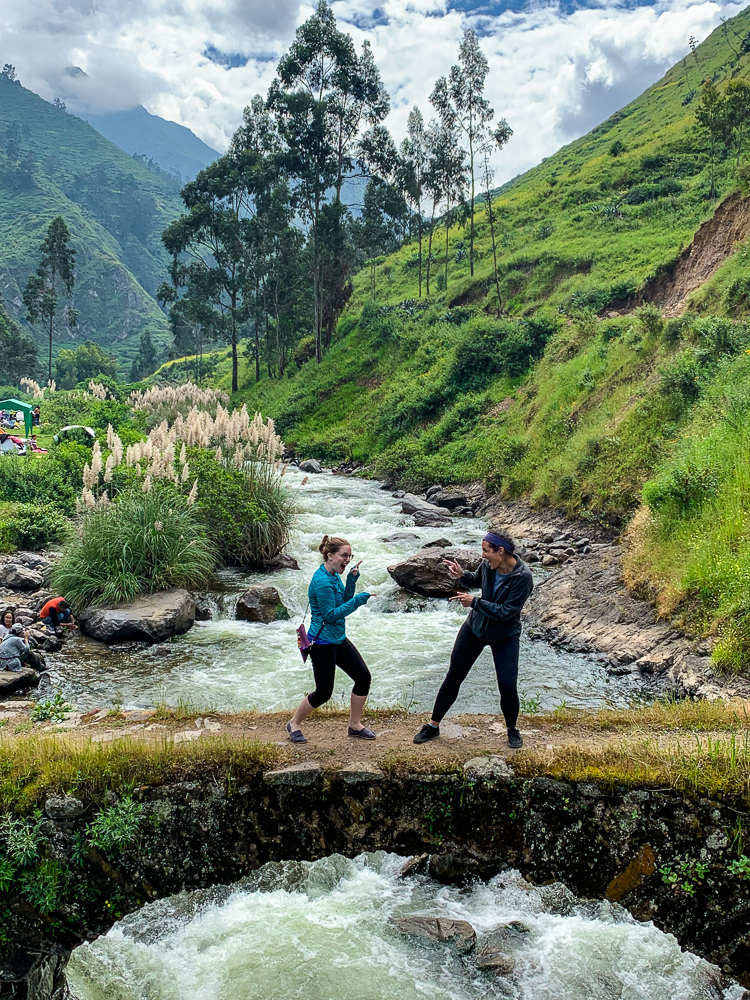
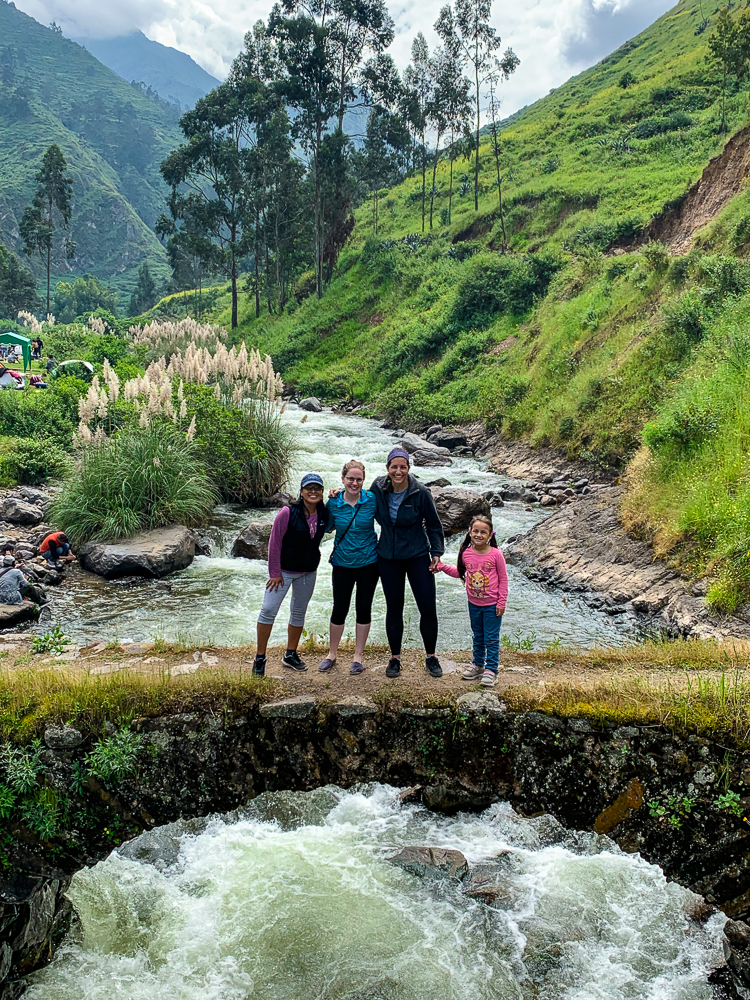
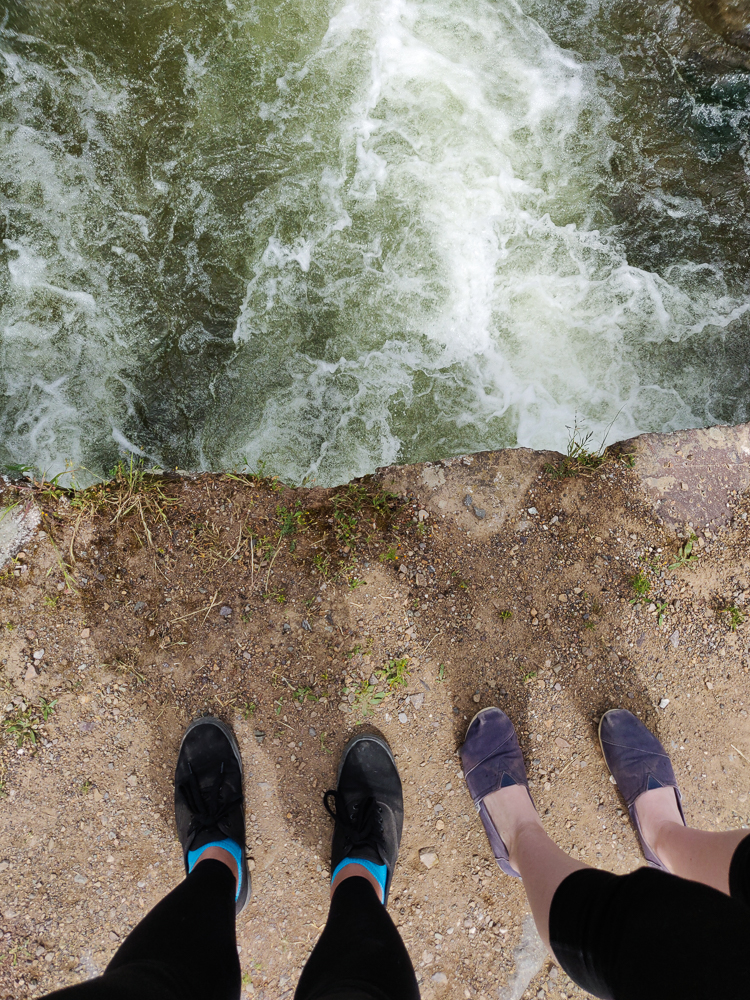
Once we got to the town, no one was really sure what we were supposed to do there. We checked out the “famous” bridge… I don’t know how many people have to know about something in order for it to be famous, but I have my doubts about the famousness of that bridge (if this is any indication, the bridge doesn’t even have a marker on Google maps). Either way, it was interesting and kind of terrifying and obviously we walked across it because what else do you do with a famous bridge? (Well, we also posed on it and tried very hard not to fall into the water and die.)

Standing on the modern/stable bridge next to the old/mildly terrifying/famous stone bridge
Took this from atop the stone bridge with a death grip on my phone
Probably loading this bridge to its limits… Even though it’s really not THAT narrow and it’s relatively stable-looking, I was still ready to get off of it ASAP. Like, how much confidence do I really want to put in this old stone bridge in middle-of-nowhere Peru?
Pretending that we’re not terrified of falling in…
The most awkward posing as everyone was trying to keep from throwing someone else off balance.
Not an especially comforting view
Happy to be in the mountains!
Pleeease don’t make us go back to the desert
Now, THIS is where I would choose to camp for the weekend. These people know what’s up.
Lone horse

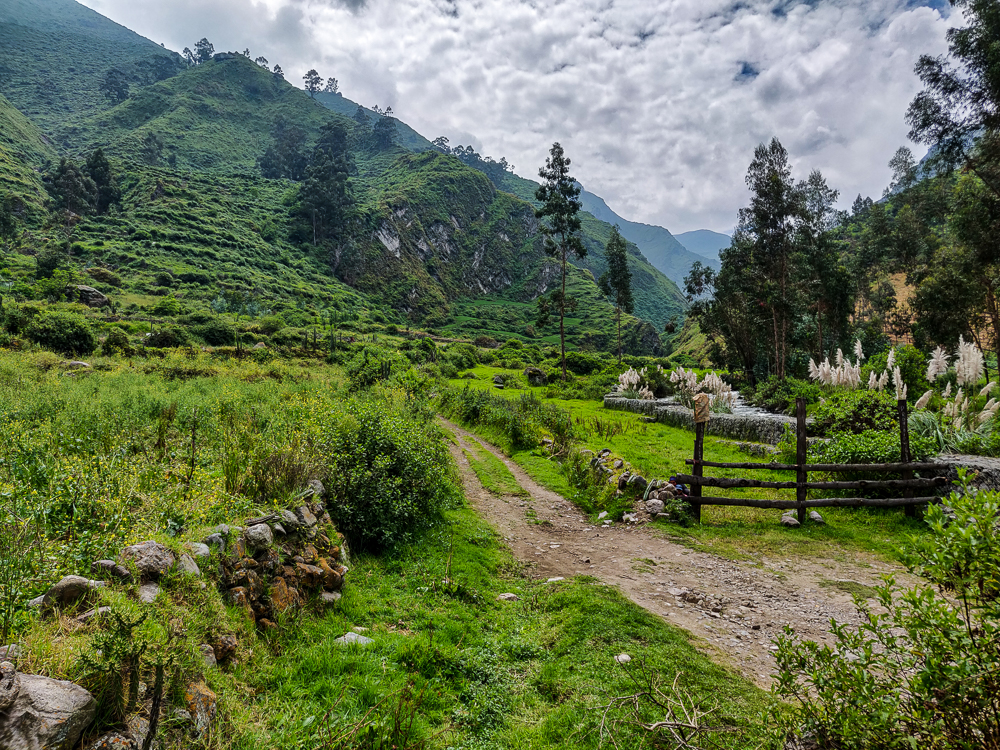
Then, we wandered a bit, and the farther we got from town, the more spectacular the scenery became. I wish we had more time because I would have been happy to just keep going and see where we ended up… but we did need to go home eventually (psh).

These mountains feel very abrupt… it’s flat, flat, flat and then BAM you hit a wall of green.
Savoring our last minutes of green landscapes
Can you find Dina’s daughter and me? Hehehe good luck.
Kylie and me
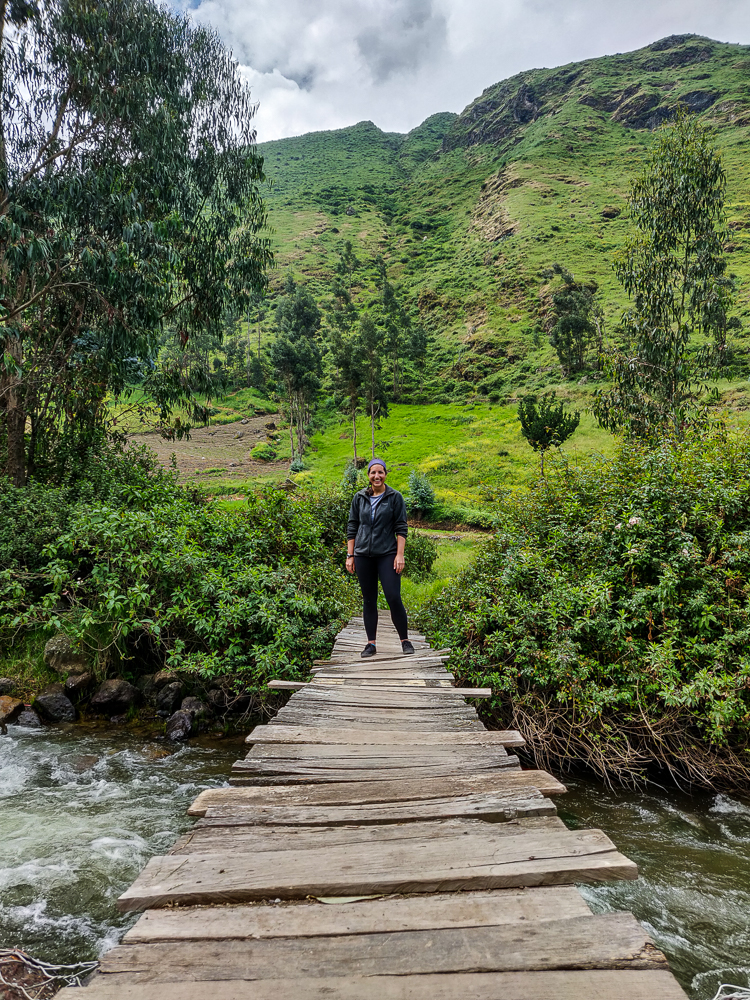
I must have been feeling pretty good about my luck that day because this bridge was even more questionable than the first. I did walk with my feet over the two beams running underneath, though, instead of trusting the integrity of the individual boards (because they were NOT trustworthy).
The girls!
I know I was making fun of Aqochaka and its probably-not-very-famous bridge, but like… can I please move here?
Love!

The ride home wasn’t as traffic-free as the ride there. We hit our first spot of traffic on the road between Aqochaka and Obrajillo, though thankfully not on the “tumble down the mountain” part of the road. I know I’ve complained about Peruvian traffic before, but here’s the major problem: there’s this Peruvian phenomenon where as soon as there’s traffic, everyone becomes a traffic conductor. Everyone knows the best way to end the traffic jam, and they all get out of their cars to put in their two cents. In reality, no one knows what they’re doing. And then there are going to be at least five people trying to do the same job, all recommending different courses of action. And the drivers are still doing whatever the heck they want. The whole thing is doomed to failure before it even starts. It’s the same story every single time, and it actually might be contagious because every time it happens, I find myself wanting to get out and direct traffic because I’m SURE that I know better.

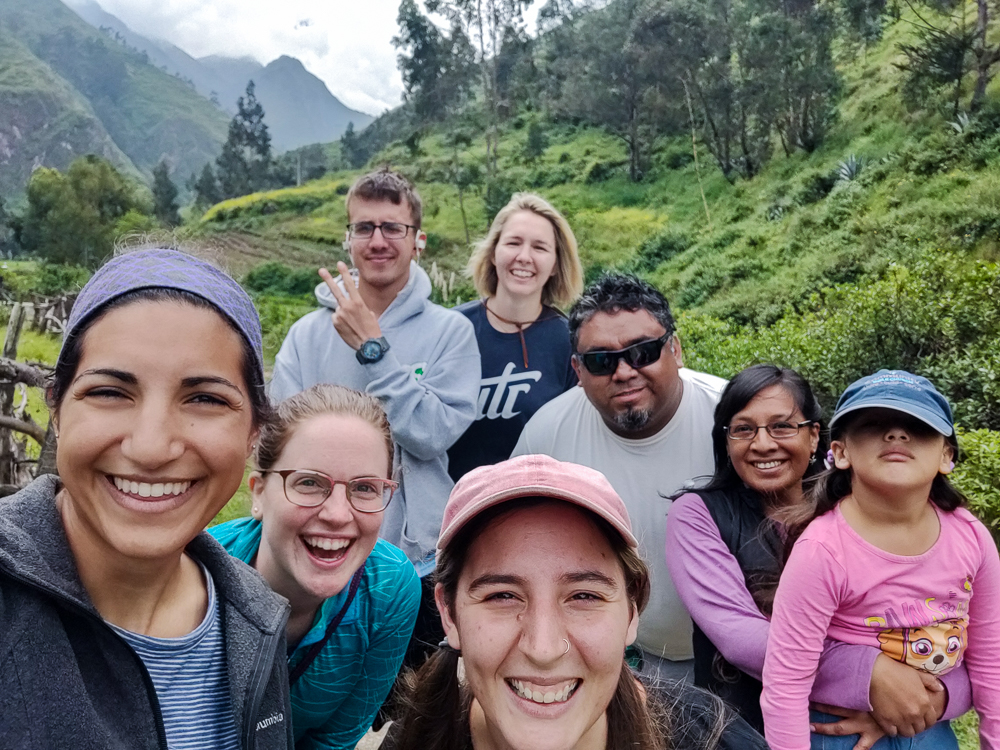
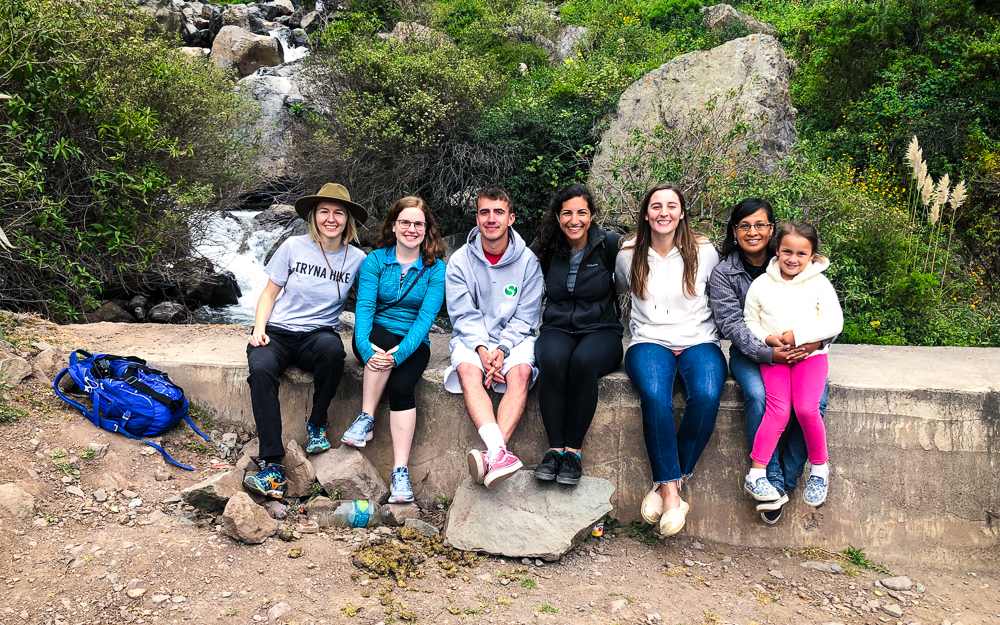
The weekend squad… in the front: me, Jocelyn, Julie, Dina, and her daughter, and in the back: Paul, Kylie, and David

Anyway, once we got through that, we were fine until we got back to Lima. It was good, actually, because most of the drive was downhill which meant that we weren’t as worried about the car breaking down. Worst case, we could just coast back to the city (kidding… mostly).

The final event of our trip was a stop at the car wash. The van was a disaster, and since we had borrowed it from EA, we wanted to return it looking like it hadn’t just come out of a dust bowl. So, we stopped at a car wash off the highway near home.

Now, don’t be thinking that this is a drive-thru style car wash. It’s one dude with a powerful hose, a sponge, and some towels. The Peruvians got out and waited in this little seating area outside. The Americans were all lazy and said we’d just stay in the car. That would have been fine… except that apparently, the van isn’t even CLOSE to watertight. Kylie got blasted with some dirty water through a gap between the sliding glass windowpanes. There was water running along the edges of the floor and draining out the trunk. The metal above the sliding doors is literally rusted through, so yeah, those aren’t sealed anymore. Paul found that out the hard way with a nice dirt-water shower when the hose blasted by.

The good news is, Julie took a video so you can feel like you’re right in the middle of the action.

The perfect end to a very strange/wonderful weekend, don’t you think?

**This is my final post about volunteering in Peru. Next time, we’re headed back to Argentina! We left off at the end of Mike’s and my time in Patagonia and the beginning of our visit to Buenos Aires. For those of you (the majority, I’m sure) who have been missing my history lessons, get excited because we’re about to dive into some Argentina history.

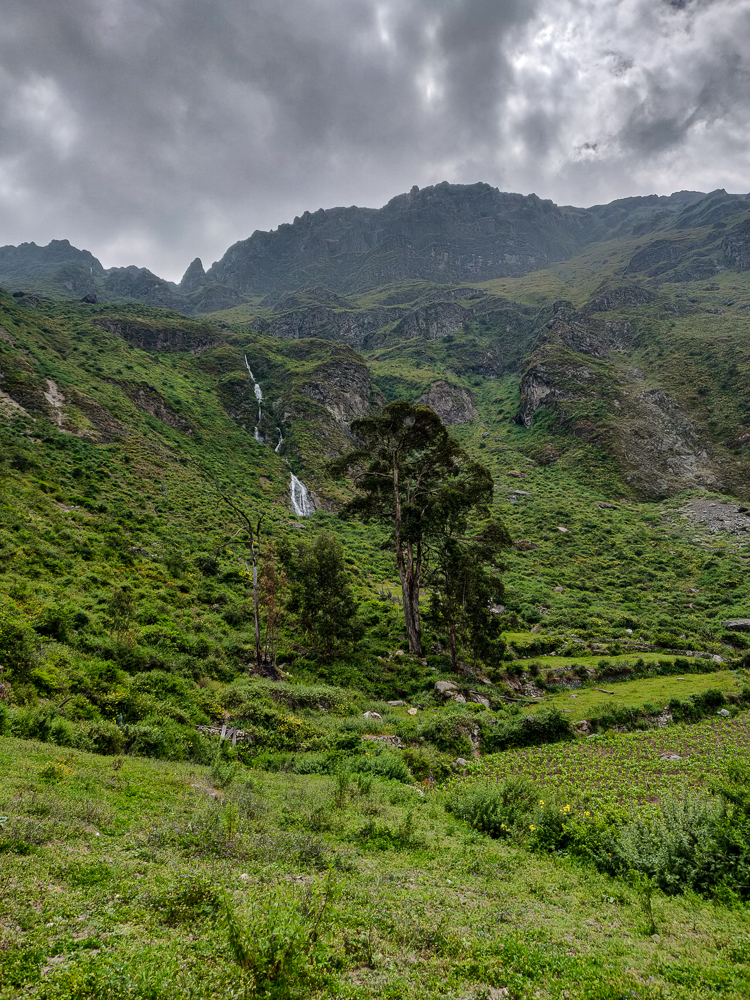
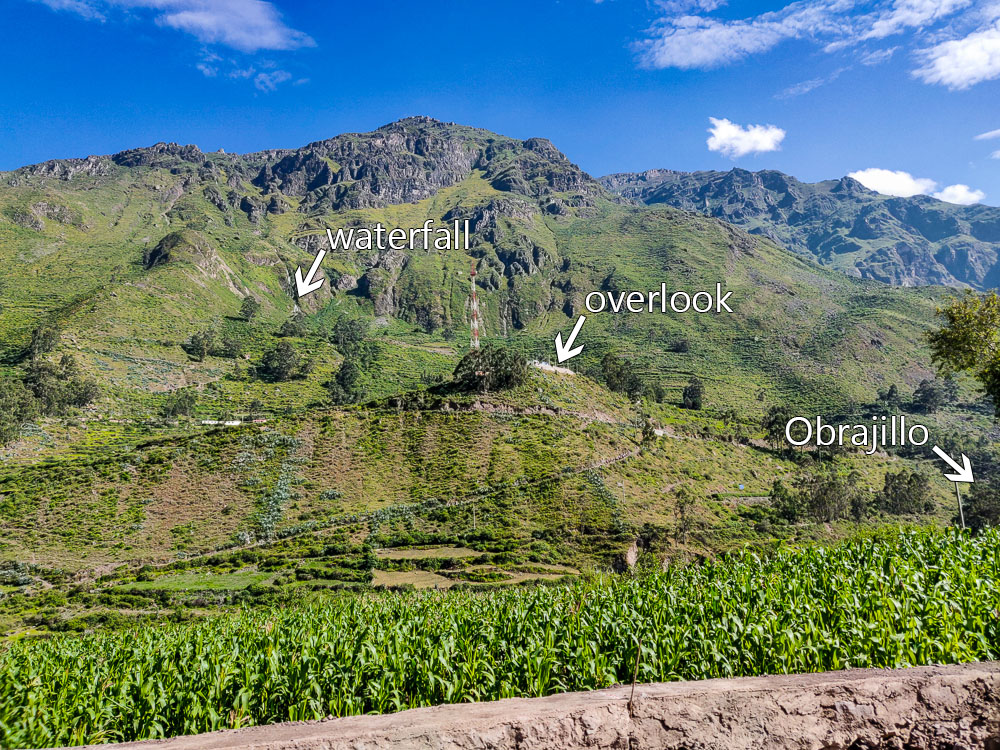
After winging it on our first day in Canta, we started off Day #2 with a very well-defined plan: hike to “that” waterfall. See photo below for details… (Can you find the waterfall?)                                         

Took this picture while speeding down the road between Canta and Obrajillo (David was appreciating the open road after we got past a spot of traffic). Have you located the waterfall? Scroll down for help…
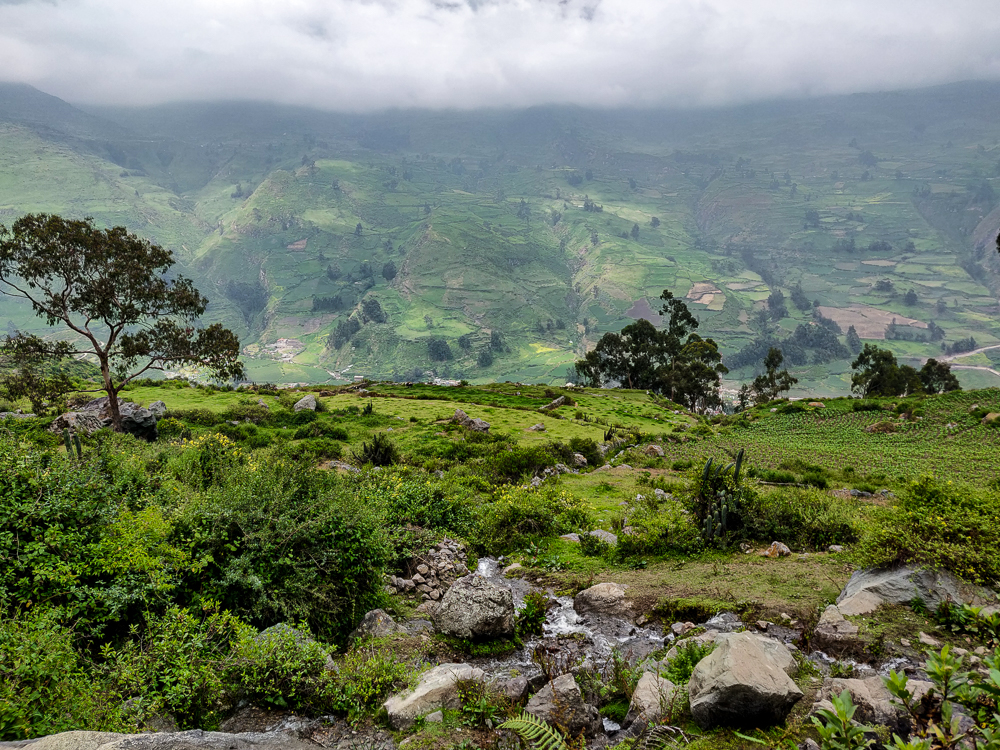
To orient you, Obrajillo is in the valley to the right, the overlook is at the edge of a village, San Miguel, and we hiked up to the waterfall trickle that you can barely see (which seems kind of close to San Miguel, but I promise you that it’s not).

Okay, so the plan was vague, but Julie did some research and came away with the conclusion that it’s definitely possible to hike there (probably). The directions, as far as she could find, were to start by walking up to a popular viewpoint overlooking Obrajillo. Okay, easy enough. And then, walk to the waterfall. Hm. Welp, at least we knew the beginning part! We could figure things out from there, right?

The good news is, I love to overpack for hikes which means I was already prepared for uncertainty. My formula for day hikes is roughly: (day hike + 4 days) x # of people… and then I pack snacks and water accordingly, as though no one else is bringing anything (even though they are). It’s good to be prepared! What if someone else is underprepared? What if we get lost? What if someone gets hurt? What if there’s a mudslide and we get stranded and don’t want to resort to cannibalism? No one ever says, “I wish we had less food.” Worst case, you don’t need it all and get stronger from carrying the extra weight.

Once we were ready for anything, we walked to get breakfast sandwiches before heading out. This was our staple meal for the weekend (literally 3/5 meals in Canta): a fried egg on a roll. After you eat approximately four, you’re good to go! Then, we piled into the van and drove down to Obrajillo. There was traffic because of course there was. As soon as there are two cars on the road, it seems to be inevitable (I think it’s because Peruvian are so proud of their traffic, they need to make sure it’s always living up to its terrible reputation).

After we parked, we located the path to the viewpoint, and David, Dina, and her daughter split off to do other things… apparently the idea of a potentially endless hike didn’t appeal to them. Sorry, I mean “adventure walk”. Julie doesn’t like “hiking”, so we rebranded the activity. That ended up being a much more appropriate name in this instance anyway. “Hike” implies order, a defined path. “Adventure walk” says “I don’t know where we’re going, but that’s part of the fun!”

At the viewpoint
I can’t get over the greens! Maybe if they knew THIS was the view they were missing out on… nah, they still would have ditched us.

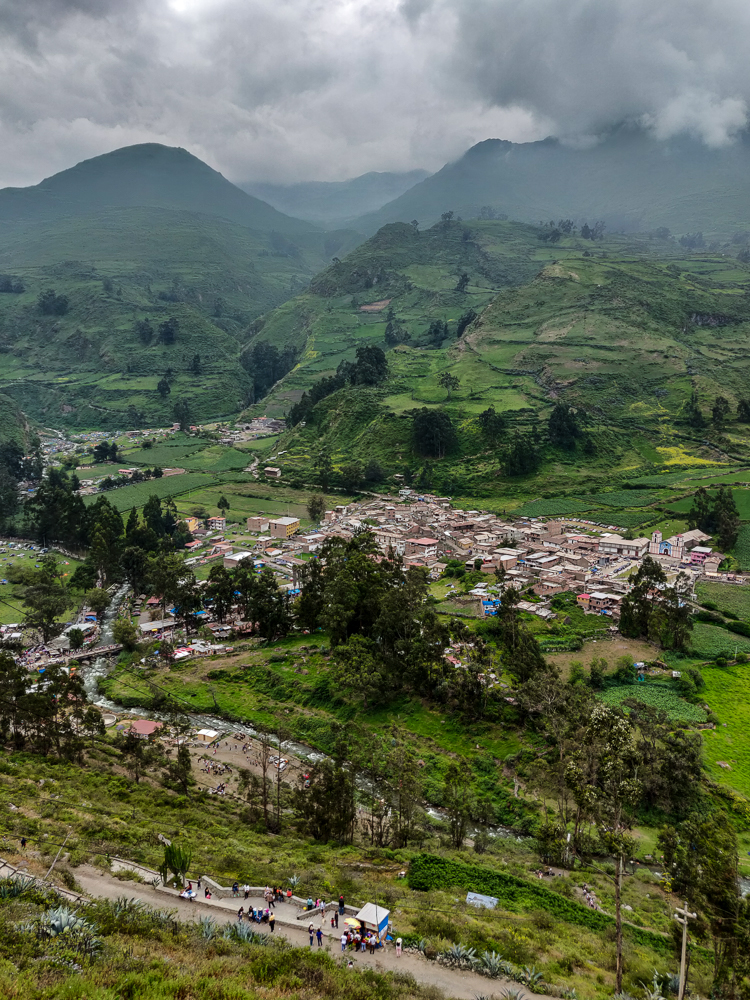
Anyway, the path to the overlook was easy enough to follow. Maybe that could be called a hike. From there, it was inarguably an adventure walk. After the viewpoint, we started asking every person we met for directions. That may sound like overkill, but it was a necessity. When people don’t know the answer to your question, they don’t say, “I don’t know.” They say, “Oh, it’s that way!” and point and say it with full confidence and make you think they have a clue. So, the only way to be safe is to ask as many people as possible, rate their trustworthiness, compare answers, pick a direction, and remind yourself that not knowing where you’re going is part of the fun.

Another album cover option
I love these mountains.
Like seriously. (Also, that’s Canta on the left.)
HOW ARE THERE SO MANY GREENS? Also, fun fact did you know that the human eye can differentiate more shades of green than any other color?

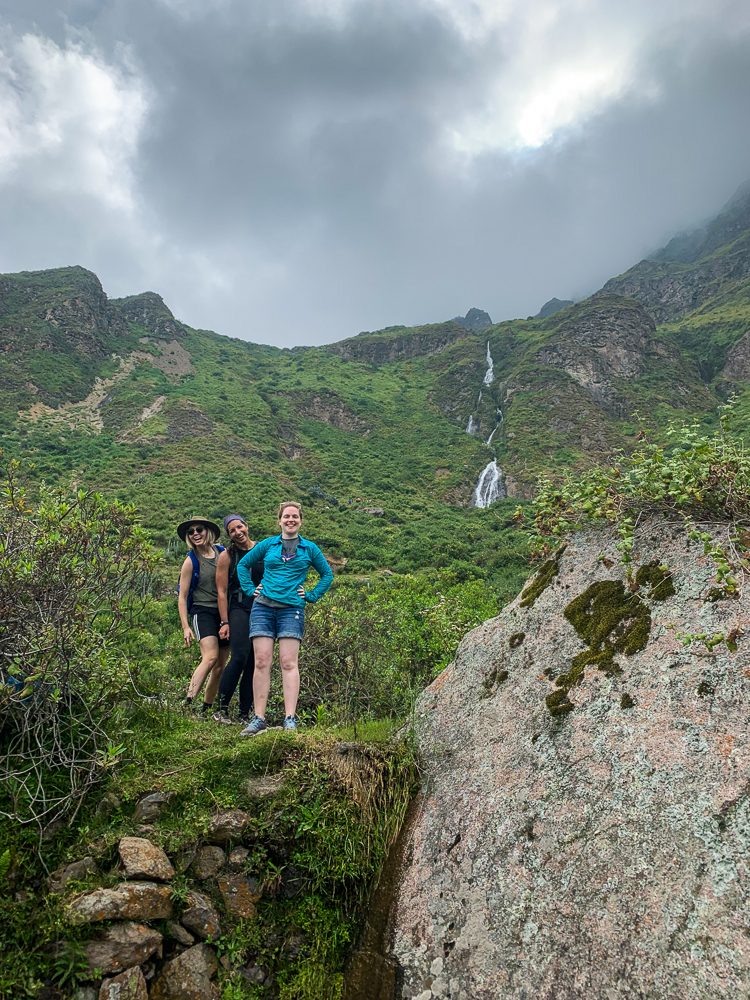
The good news was that we could see the waterfall, Catarata de Shupucro, in the distance. The bad news was that it wasn’t clear how to get there. Even now, the only thing of which I’m certain is that our beginning route was NOT right… because there was no path, and we ended up inside the locked gates of a school. So, thanks for nothing, people who gave us directions up until that point.

Okay, let’s try again with the directions. We asked the school groundskeeper (who looked confused about why we were on the school property… yeah, same) and he unconvincingly pointed us in a direction. A few steps later, a woman vaguely motioned that was as well. Finally, we found a guy who confidently pointed at a path and said it would take us 2 hours to get there. He had the highest trustworthiness ranking. Welp, nothing left to do but cross our fingers and start walking!

Obrajillo. And some fab mountains
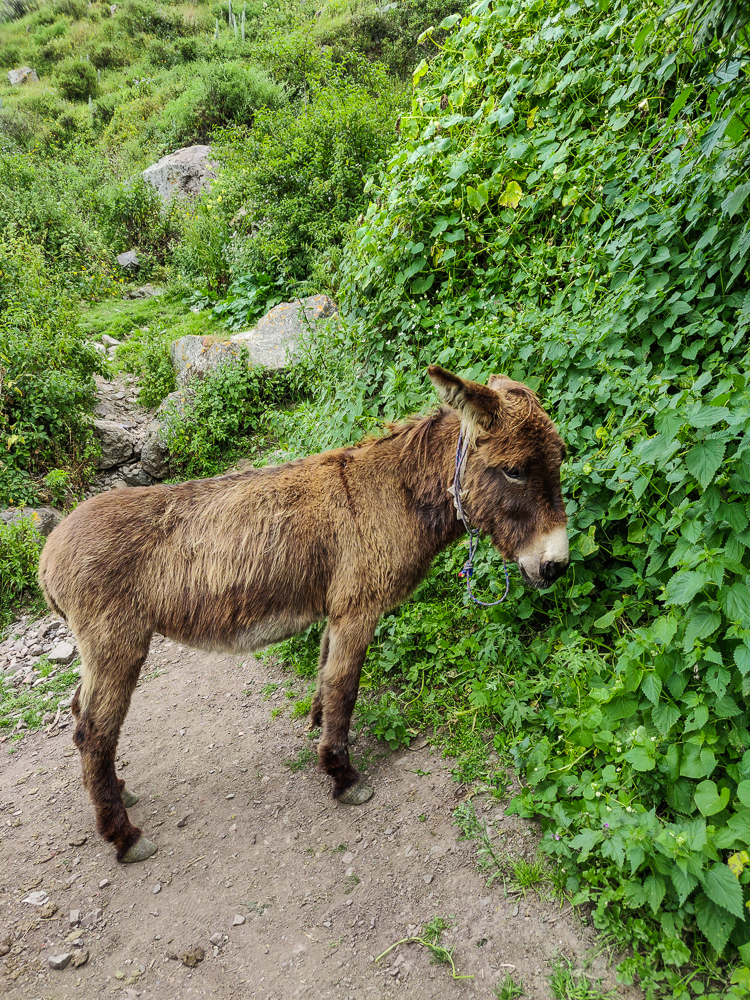
Despondent donkey on the path. He was probably trying to find the waterfall as well.
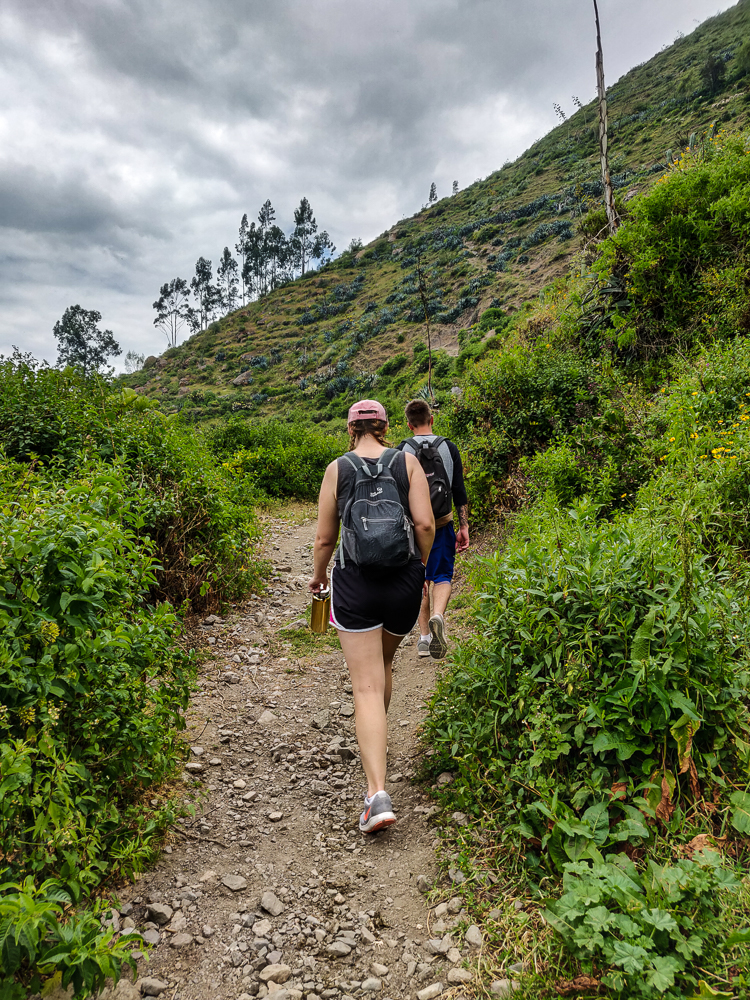
Just starting out, back when we were so young and naive
I mean, it’s kind of like being in an airplane… The earth looks like a patchwork quilt.

Our biggest mistake was asking for more directions after trustworthy-guy. Right as we started up the path, we saw a few people coming down. Julie asked how far it was to the waterfall, and the guy said 20 minutes (LIES) and then gave some directions for how to get there. They seemed trustworthy… I mean, they had just come from there, so you’d think they’d know something. YOU WOULD BE WRONG.

The way up was unpleasant. The path was well-defined but also steep and rocky, and we were all feeling the effects of the altitude. Eventually, Jocelyn tapped out and told us to pick her up on our way back down. I felt bad leaving her, but she clearly wasn’t going to change her mind. We left her just before a fork in the path where we started following the directions of the guy we saw coming down.

Taking a breath before scaling these rocks…
Trail friends

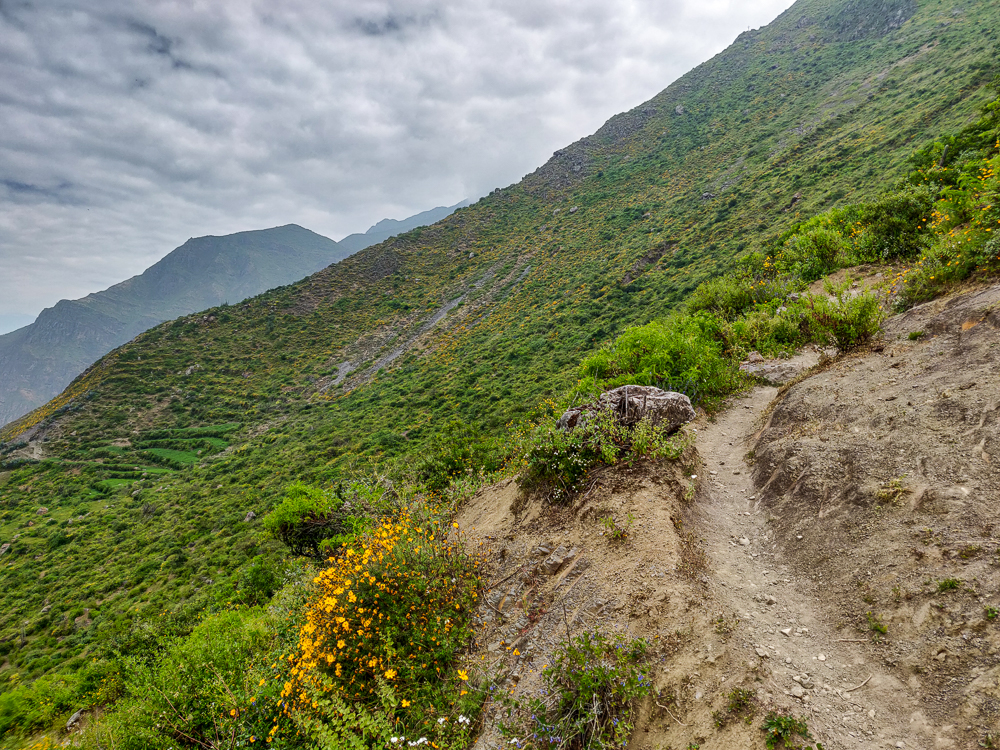
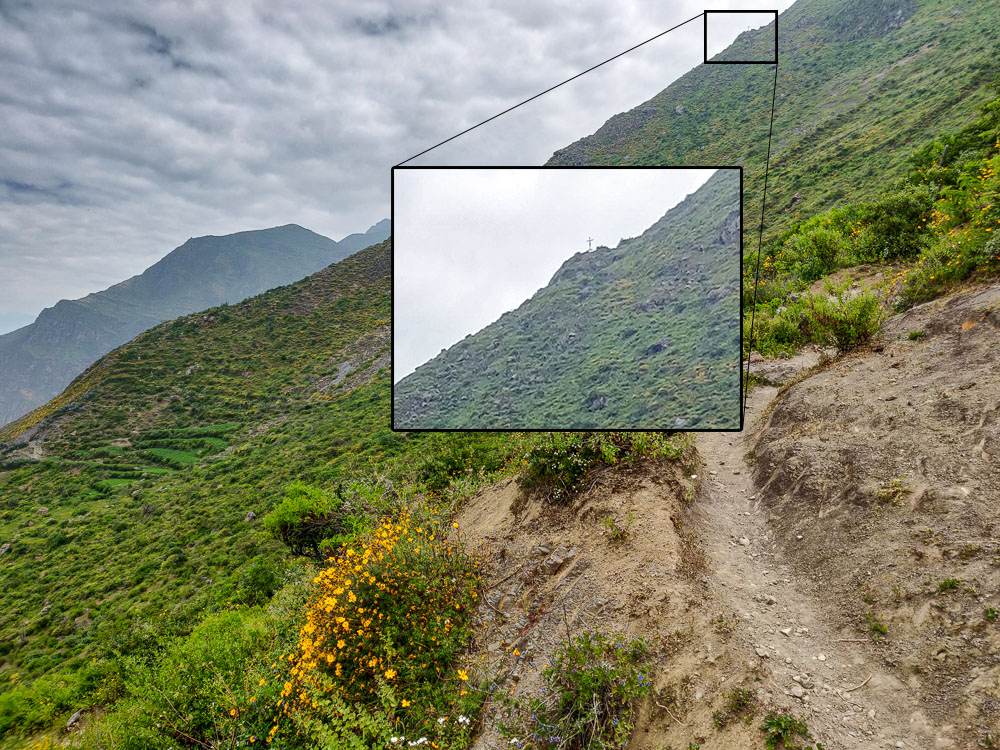
Wrong choice. Very, very wrong. I still don’t know what we should have done, but definitely not that. We ended up on the wrong side of the mountain, and after maybe 30 minutes of walking up the worst ever uphills, we bumped into a couple coming down. Julie asked if we were going to the waterfall, and they said, “No, this is the path to the cross!” And then they pointed at this teeeeeny tiny cross at the top of a mountain in the distance. Can you spot the cross?:

(Scroll for assistance hahaha)
THERE it is. My gosh. Is there anything about this picture that makes you want to walk to that cross??? It looks like torture.
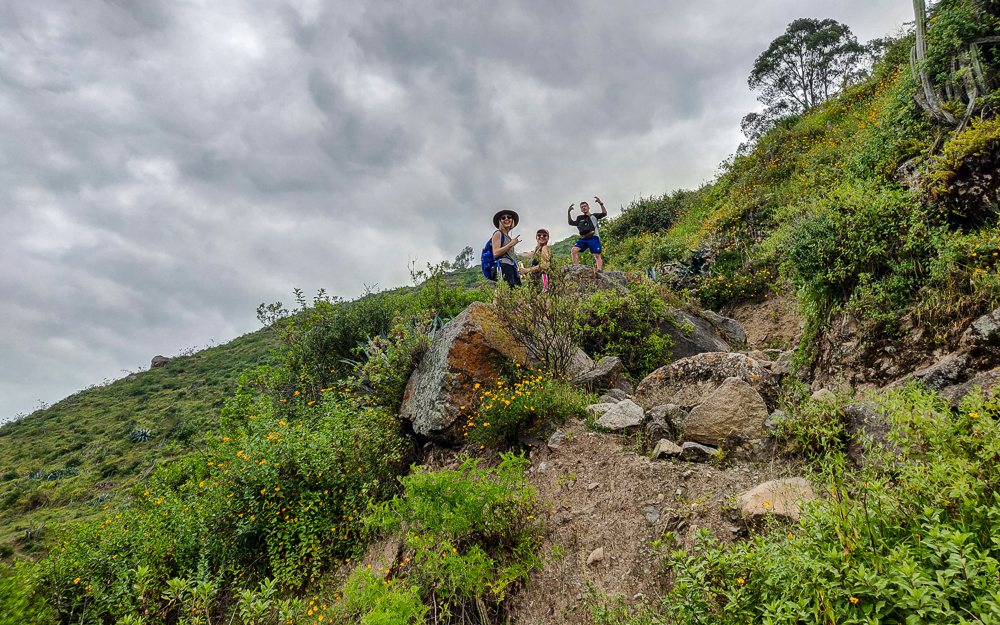
This is me, standing on the path to the cross, looking up at the trail ahead, zig-zagging up this steep mountainside. No, thank you.
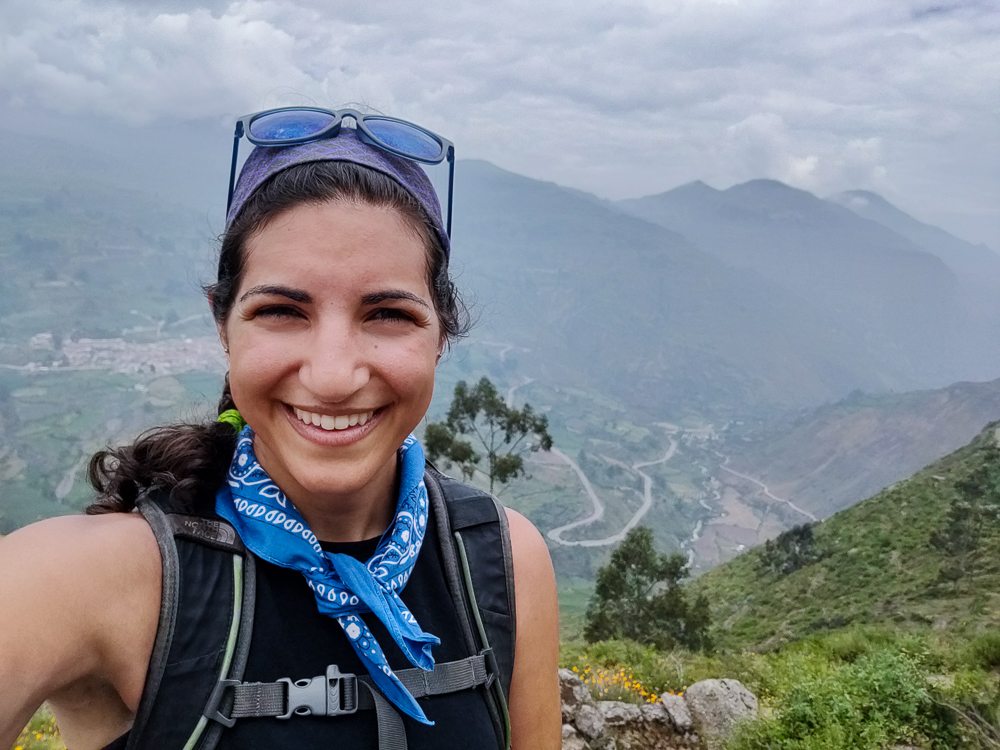
Happy because we were taking a break
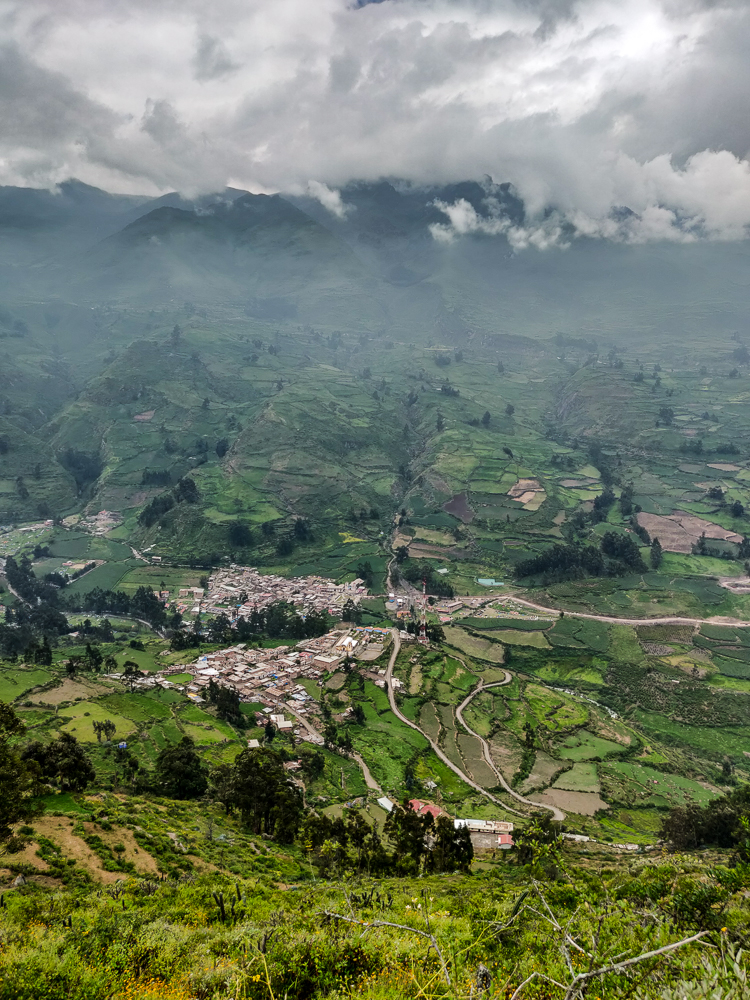
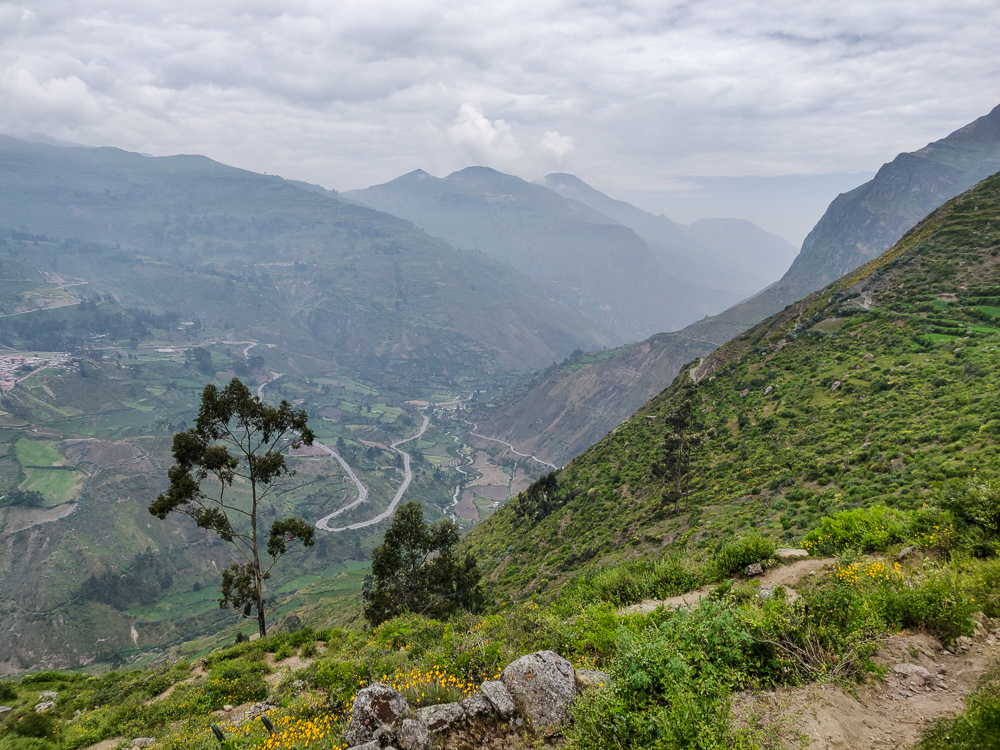
The only benefit of going the wrong way was getting this view of the valley
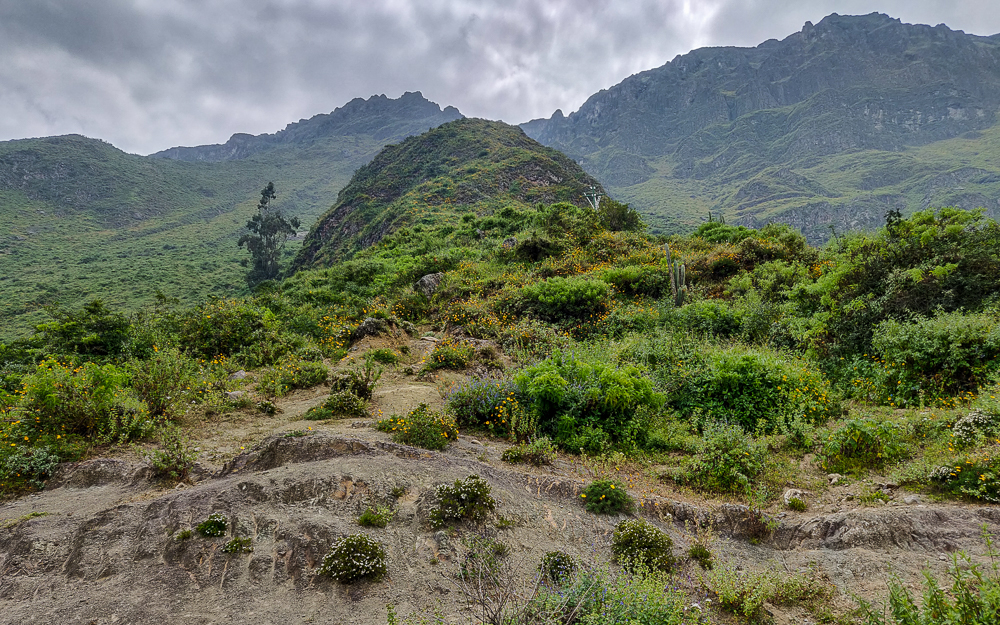
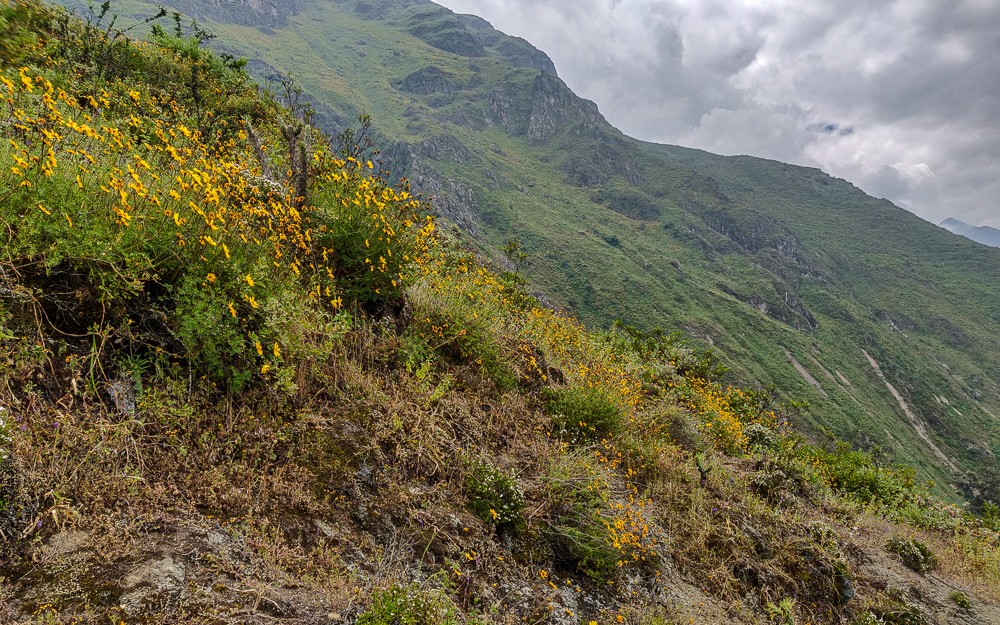
Flowery mountainsides

Yeah, no thank you. So, we turned around and tried to find where we went wrong. At this point, we also realized that we were almost all the way back to Jocelyn, so we sent Paul to bring her to meet us. She was nice and rested after her 40-minute break, and we were exhausted after our spirit-crushing uphill climb to nowhere.

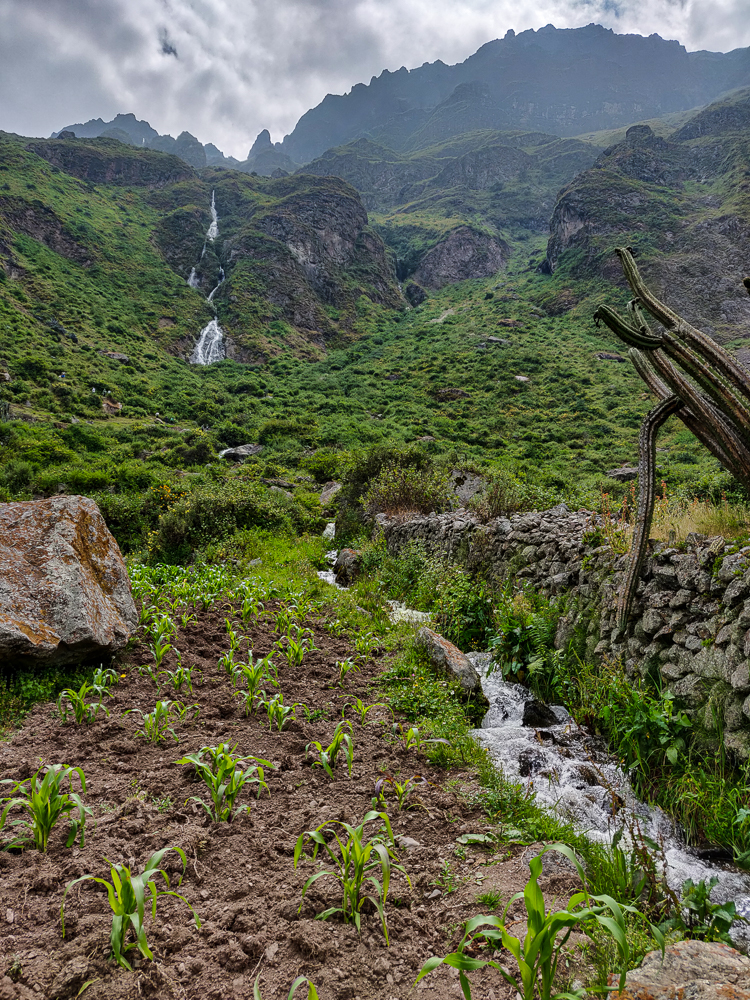
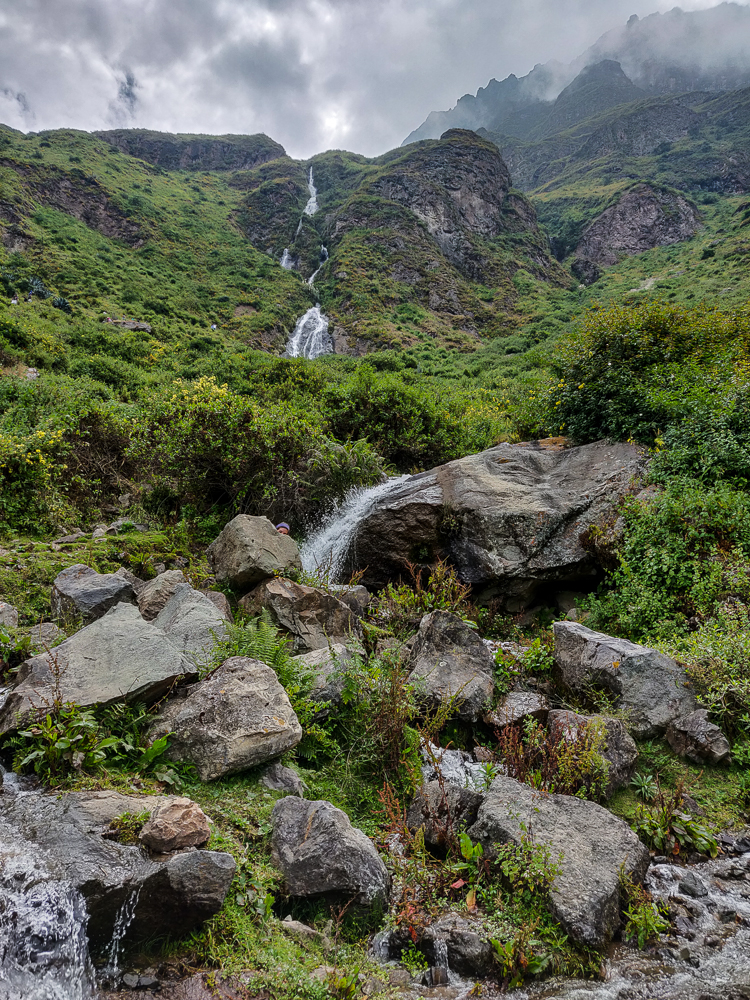
Time to change strategies. We could see the waterfall, so instead of looking for the “right” path, we decided to walk towards it until we got there. I’m Peruvian-giving-directions confident that we took the proper route, and I will now describe it here, just in case you ever find yourself hiking in Canta: when you get to the fork in the path, don’t go left. Also, don’t go right. Instead, walk across the poop-covered field, following no path. Jump down the 5’ wall into the cornfield. Cross the field and climb over the short wall at the other side, taking care to avoid the cacti on top (nature’s barbed wire). Cross the river. Walk along the river until you reach a big rock and little waterfall. Cross the river again. Climb up the 7’ rock wall. Continue to walk towards the waterfall until you see a path. Follow the path to the waterfall.

Walking through the poop-filled field
Keeping our eyes on the waterfall while hopefully not destroying this cornfield
Can you spot the Lara? I’m hiding somewhere in this picture!
Exhaustion break disguised as a photo op
Wildflowers
Climbing up the final stretch

Got that? I couldn’t have made it any clearer. No wonder no one could give us directions!

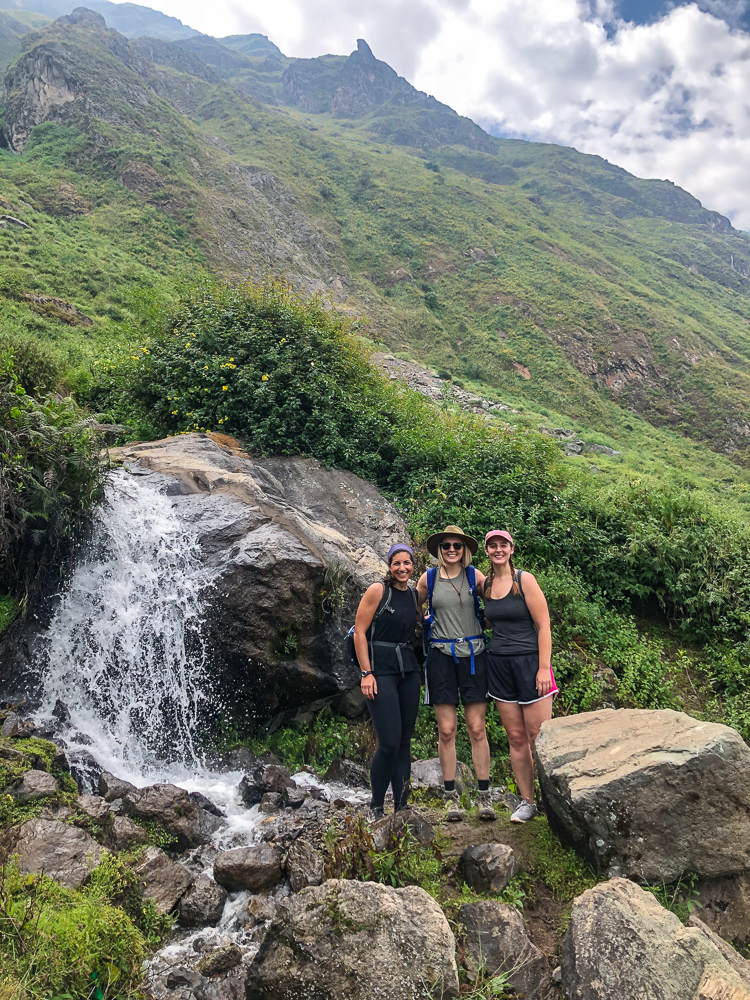
As is generally the case with waterfalls, the view of the actual waterfall wasn’t great from up close. We did, however, get a better view of the valley and took a moment to pat ourselves on the backs because we made it!

Almost there! Almost there!
Sliding my way towards the waterfall
We made it, we made it!!
A little delirious
Waterfall view from the top

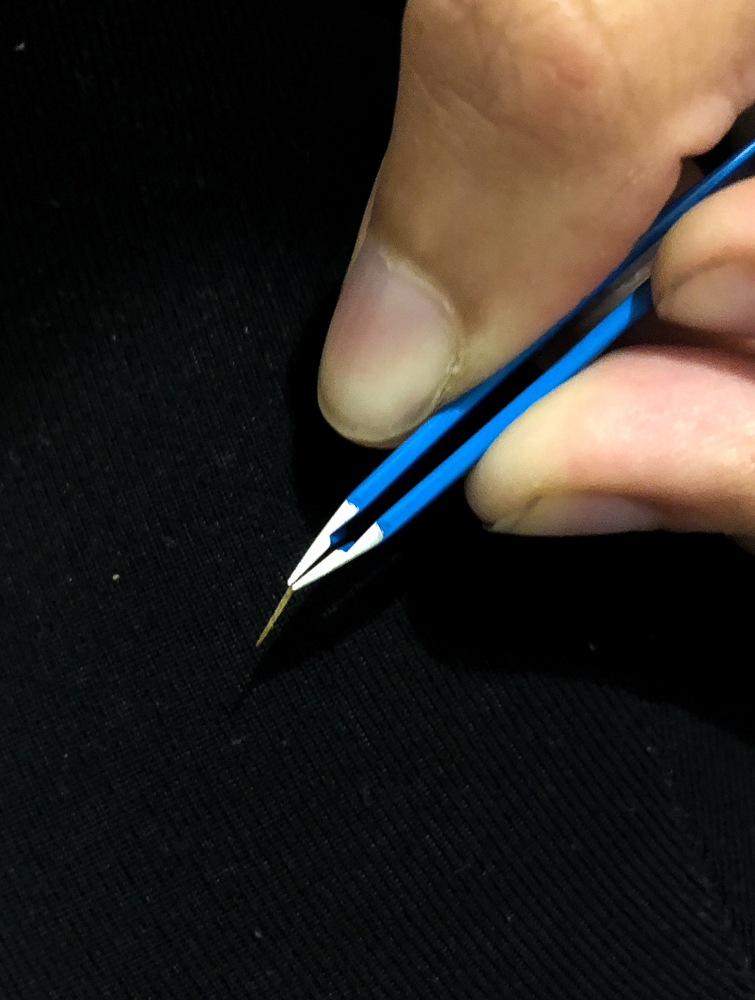
The hike up had been steep and tiring, but the way down was brutal. Lots of slipping and sliding with a few falls. Jocelyn had the worst luck. On one of her falls, she caught herself on a cactus and got a cactus spine stuck in her finger. We tried to pull it out on the trail but couldn’t get a good grip or tell how deep it went. I had tweezers at the hotel, so she decided we should just leave it until we got back.

Finally getting back to flat ground!
Can’t believe we were at that waterfall…

The layers in this picture are crazy… the bright green foreground, the hazy green middle (thank you, smog), and the low clouds above, chopping off the mountain tops.

Once we got past the steep part, the rest of the return trip was easy. Well, there was one part where a rock wall collapsed beneath me, but it’s fine because Kylie caught me by the backpack and saved me from disaster. It’s good to have friends with quick reflexes!

Kylie, me, and Julie


Going down
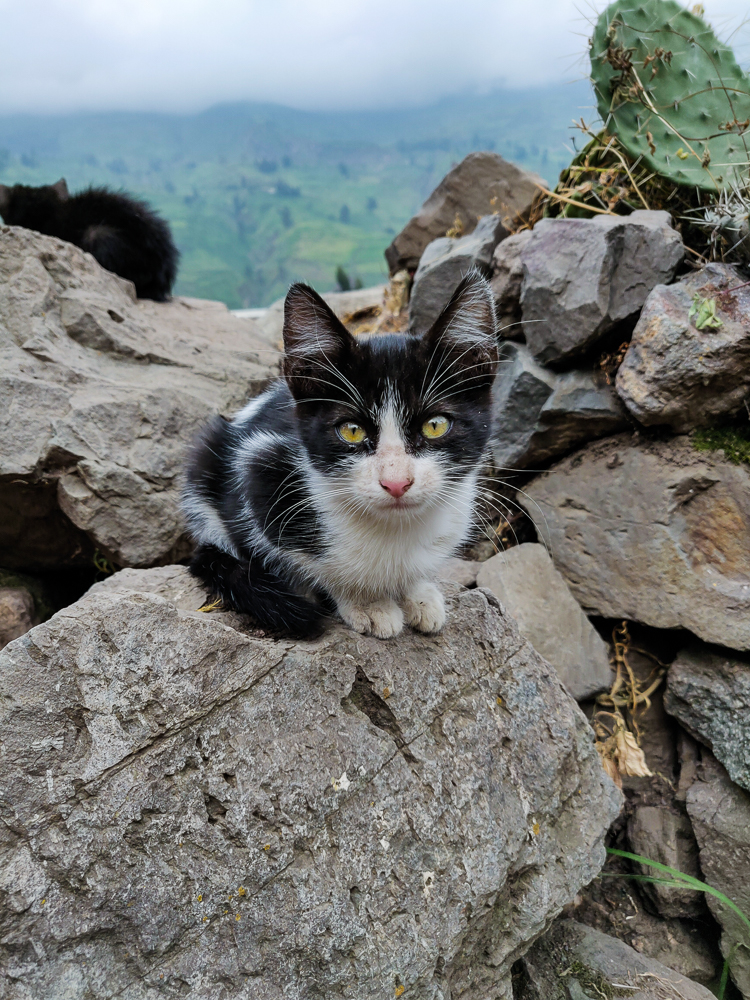
Found this kitten model on the way back to town
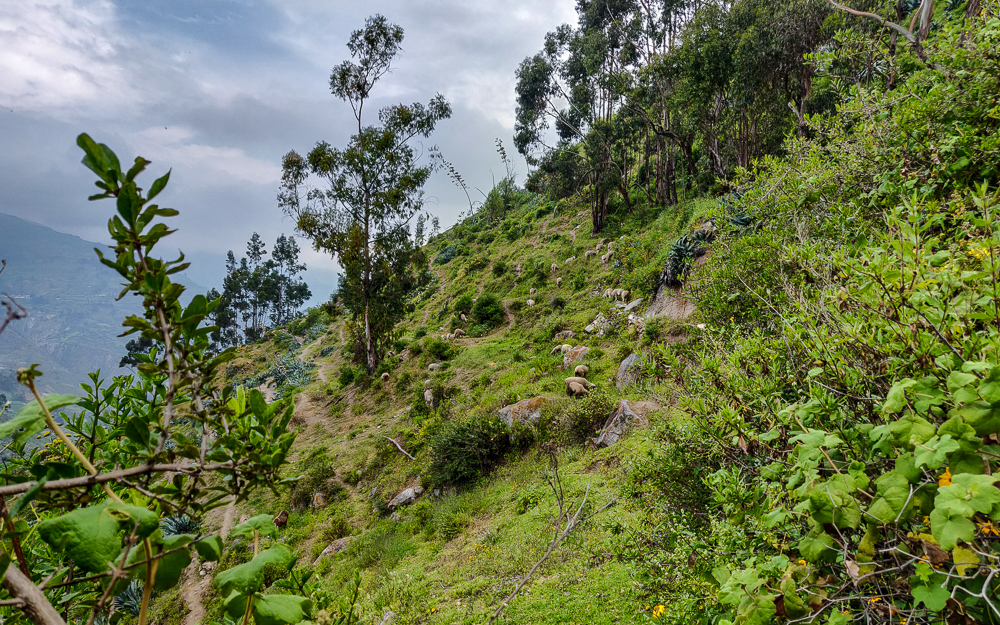
Shepherd keeping an eye on his sheep
Spot the sheep!

Back in town, we met up with David, Dina, and her daughter and drove back to Canta. Our first order of business was getting the spine out of Jocelyn’s finger. I got my tweezers and tried to ease it out, thinking it might be short. That did nothing, so Jocelyn braced herself and I pulled as hard as I could until it came out. It felt like I was going to pull her finger off! When it finally gave, we all freaked out because it was SO much longer than we thought. I can’t believe she walked around with that thing stuck in her finger for like 4 hours! And I can’t imagine how much the extraction hurt. Geez! Jocelyn wins the pain tolerance award.

We headed to dinner after the drama and devoured our food, only slightly hampered by the nightly power outage. It’s clearly not an uncommon occurrence because the waitress was prepared, bringing in an emergency light. And then the power came back on… and went out, and came on, and went out. Geez, just leave it off.

Back at the hotel, we made a solid effort to stay awake a little longer (it was only like 7:30PM) and eventually gave up and passed out. What a day!

The cactus spine

Now that you’ve seen the final building pictures, you’re probably thinking that we’re finished with Peru and Esperanza de Ana and ready to move on to the next thing, right? Well, yes, we probably should be, but I realized while writing about our Ica weekend that there was another trip I briefly mentioned, said I would write about in more detail later… and then never did. *sigh* We’ll give last-year-Lara a break because she was a little overwhelmed, but now is the time to right that wrong and tell you about our Easter trip to Canta! (Hehehe better late than never, right?)

The week before Easter was a short one, and the break came at just the right time… approximately one second before I lost my mind or collapsed in a puddle of my own tears (to set the scene, I had only been in Peru for about a month and a half and was feeling the pressure of the work + unfamiliar working/living conditions + wrapping my head around having committed to a year in Peru when the first six weeks had already been a rough adjustment period). The major motivations for the weekend getaway were 1. Everyone else felt similarly exhausted and wanted to escape from EA for a few days, 2. We were sick of the brown desert-ness of Chilca and were craving green landscapes, and 3. Julie’s friend Kylie was visiting from the States, and there’s nothing like a guest to motivate action!

And so, a trip was inevitable. But, to where? One of the staff suggested Canta because it’s not too far away, but the mountains are green and there are outdoor activities. That was enough to sell me! Julie also convinced David and Dina, the two Peruvian missionaries at EA, to come with us, and besides adding more fun to the group, David can drive which saved us from the mess of navigating the public buses. Thank goodness. And so, we had quite the travel crew: Jocelyn, Julie, Kylie, Paul (the intern from the beginning of the year), David, Dina, Dina’s daughter, and me. Can you say “party”?

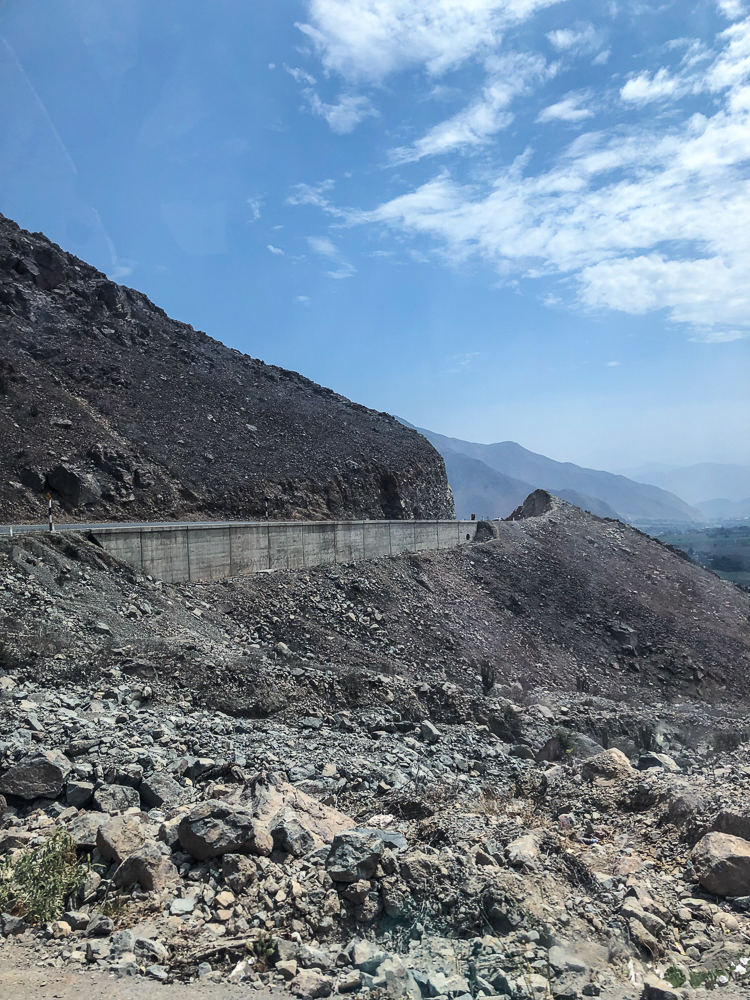
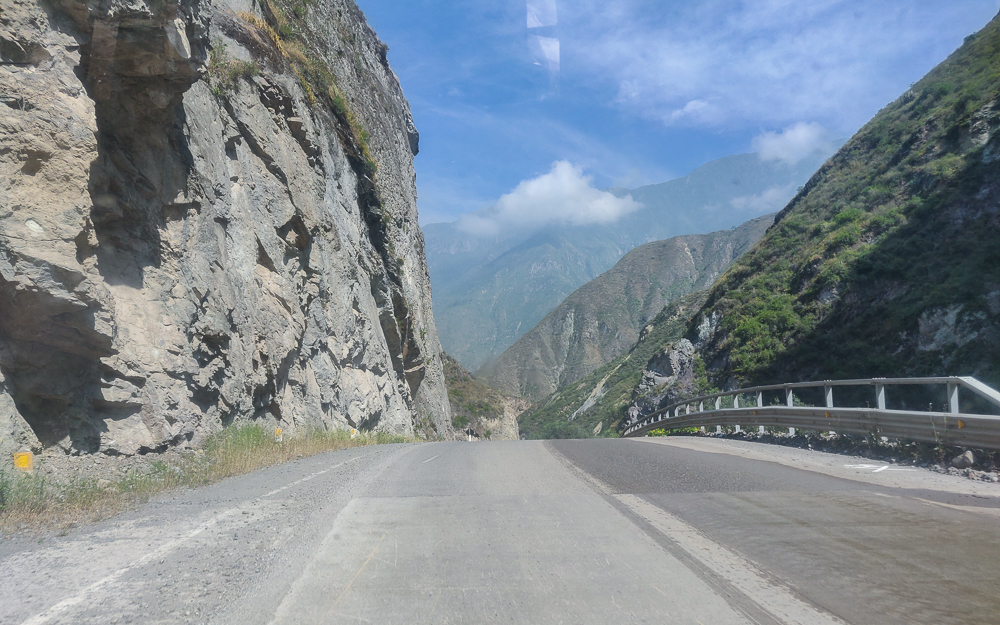
I think mountain roads are amazing. They must have been such a pain in the butt to build! For this one, whenever a hill got in the way, they were like, “NOPE you’re going to have to move” and just cut a chunk out.
Green!! Teeny little hints of life!

Canta is northeast of Lima, so we left at 5:15AM to avoid the horrible Lima traffic. Yuck. The good news is that it worked! The anticipated six-hour drive only took four! I can’t give all the credit to the lack of traffic, though. It’s also because David drives, well, fast. Even on windy mountain roads. Even in the 12-person EA van that’s poised to rust apart at any moment. BUT, we were so distracted by the sight of real mountains flecked with green that it almost didn’t matter that we all thought we might throw up with each turn and that I bounced off my seat and headfirst into the ceiling with each bump. As we got closer, the surroundings got greener, and we got more excited.

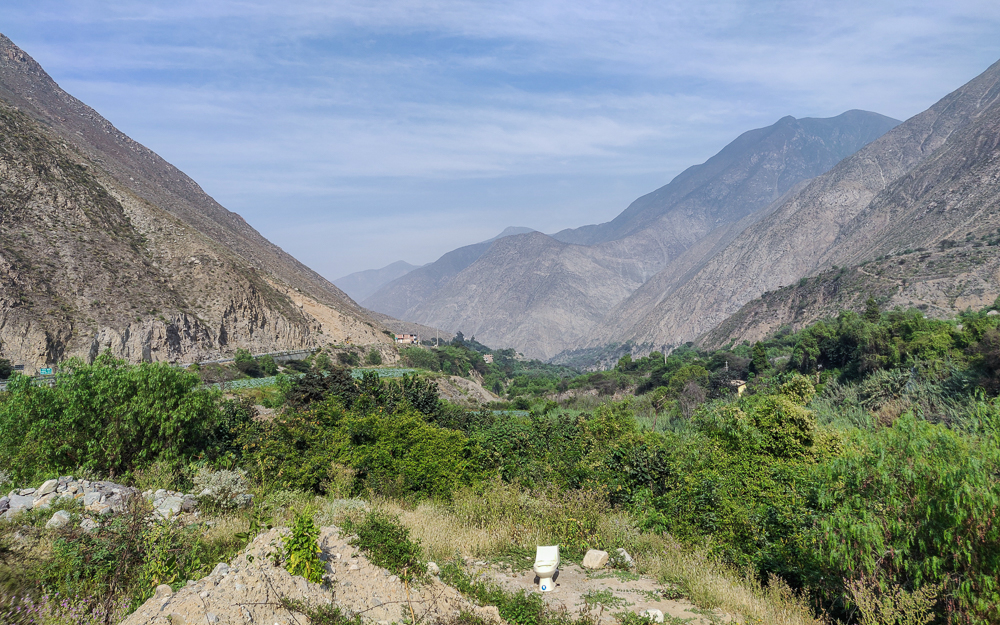
View during a stretch break along the drive. Spot the toilet! (Why???)
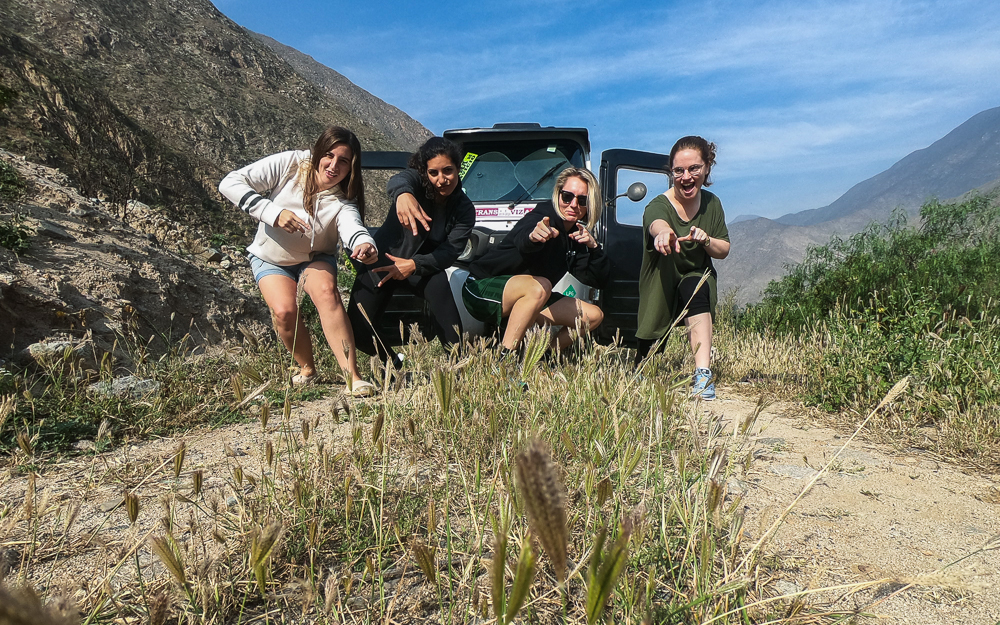
We found this random moto-taxi on the same stretch break as the random toilet. Julie and I had a dream of recording a stereotypical reggaeton-pop music video. They’re all essentially the same… some dramatic shots by the ocean, people partying in the streets of a village, and a fancy car. But instead of a fancy car, we’d use a moto-taxi because they’re way cooler. Anyway, we’re weird, and this was meant to be our album cover.

We made it to the hotel around 9:30AM, and everyone felt like we had already lived a whole day. I was sure it was 2PM. None of us felt capable of existing without a nap, so we all passed out and moaned and groaned when it was time to get up, only managing to do so because we were starving.

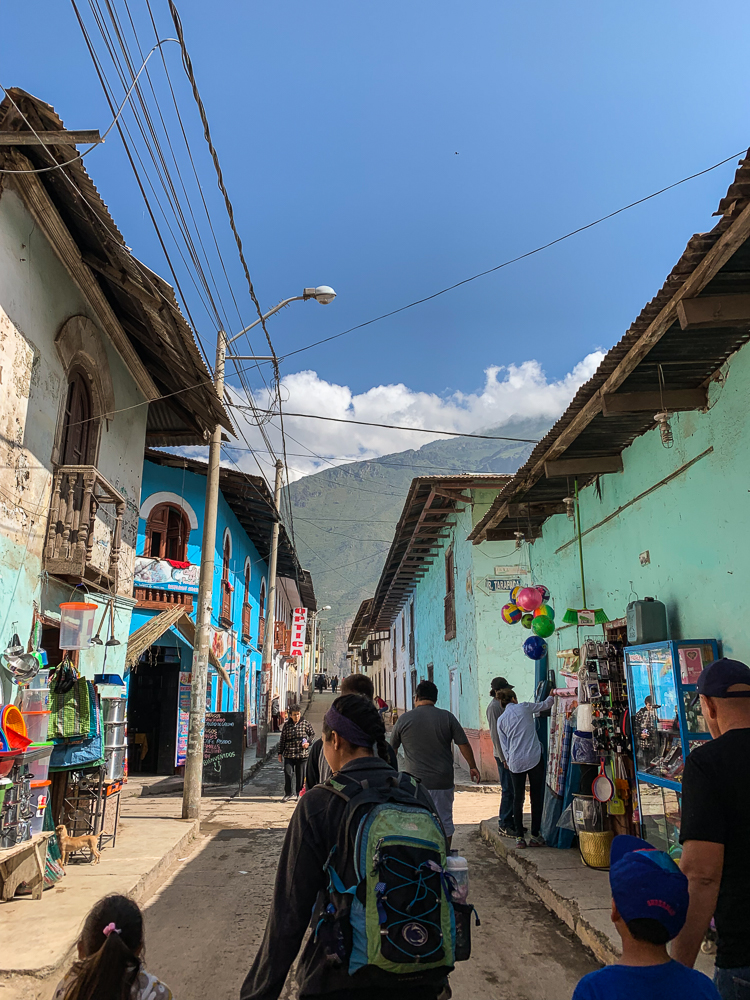
Walking through the streets of Canta
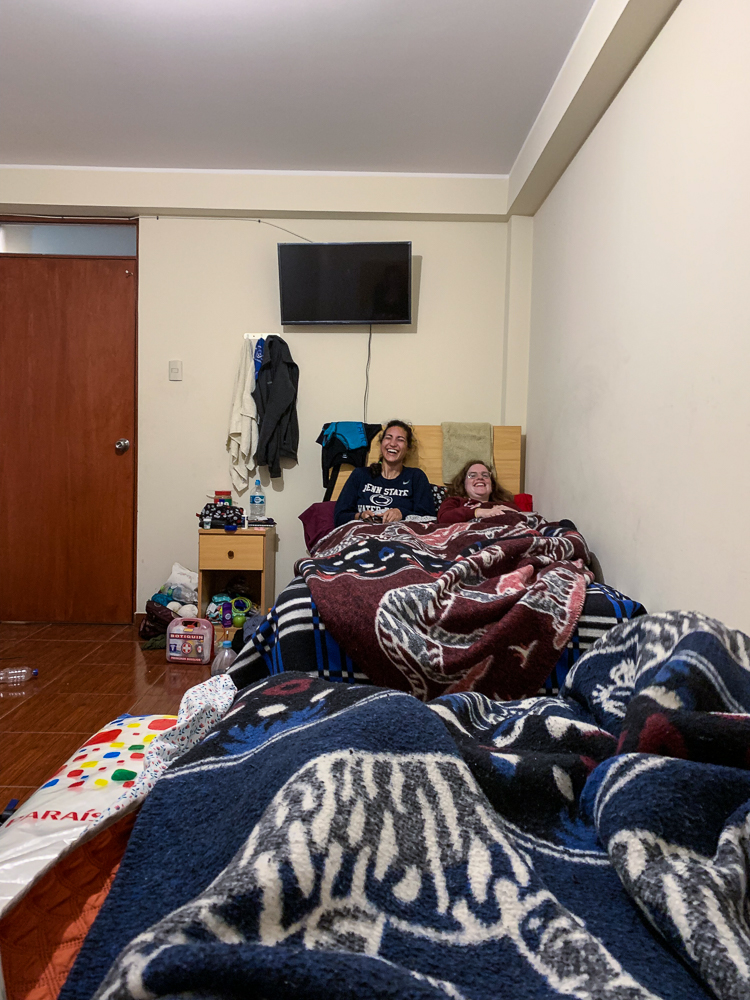
Jocelyn and I shared a twin-sized bed, and Kylie and Julie shared a full-size bed with a mattress covered in plastic (see colorful plastic in the bottom left). This is truly the height of luxury.

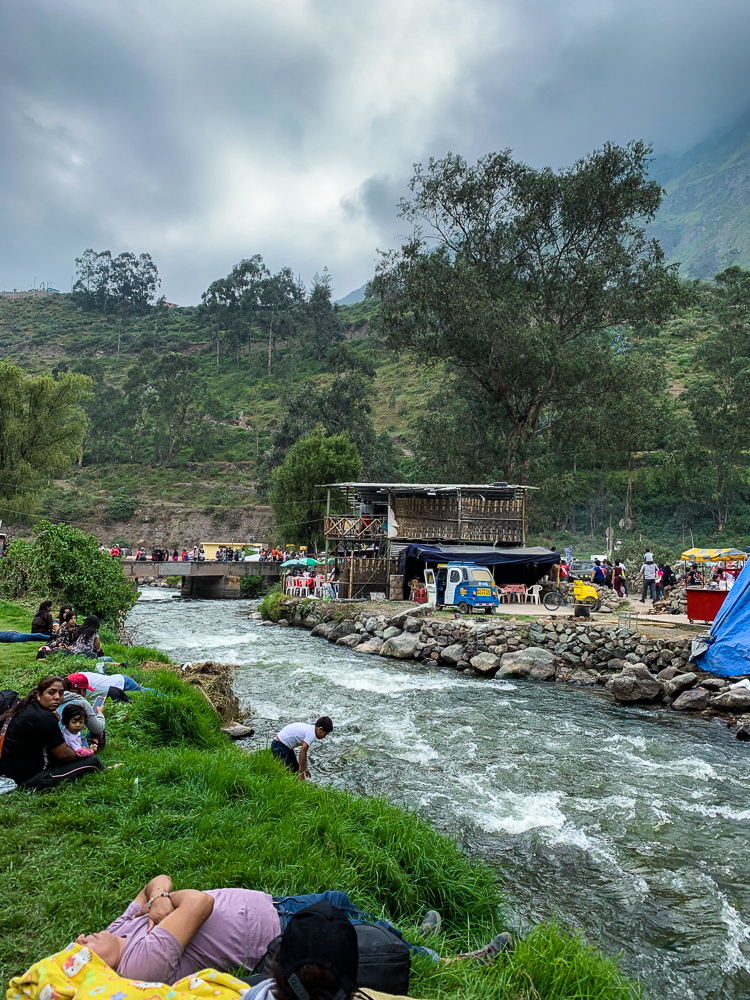
We piled in the car and drove down to Obrajillo, a small town in the valley nearby. It’s gorgeous! There are mountains all around, a river running through the center of town, a bunch of waterfalls… and approximately a bazillion Peruvians who were also escaping Lima for the long weekend. We saw no other non-Peruvians, but apparently, Canta is a hot vacation spot for people who live in Lima.

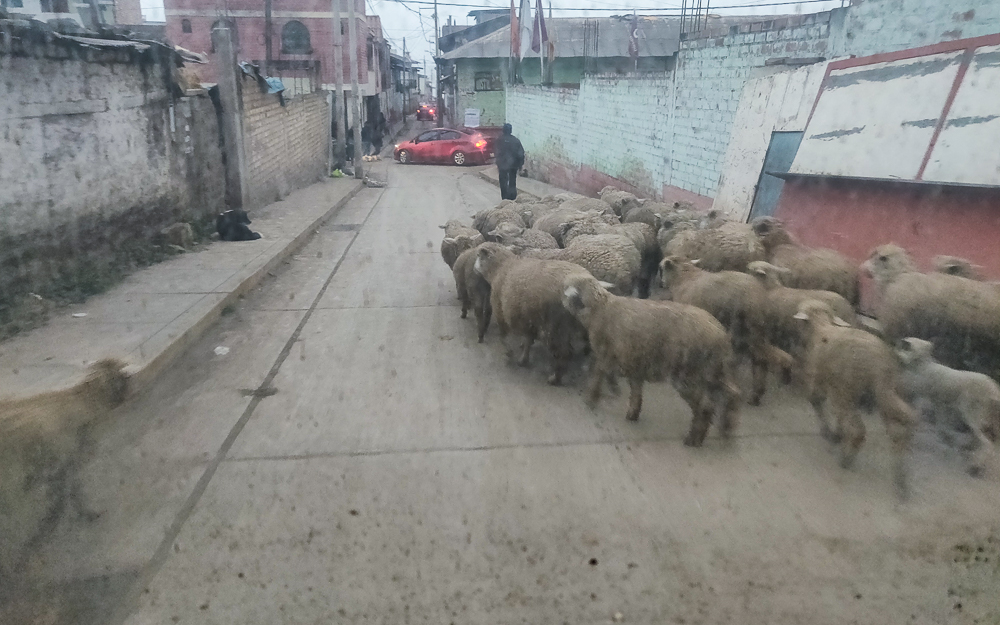
We had a brief delay while driving through the streets of Canta, thanks to this herd of sheep hehehehe. Why is it that animals in the street never get less funny?? Where are they going?
Driving out of Canta towards Obrajillo
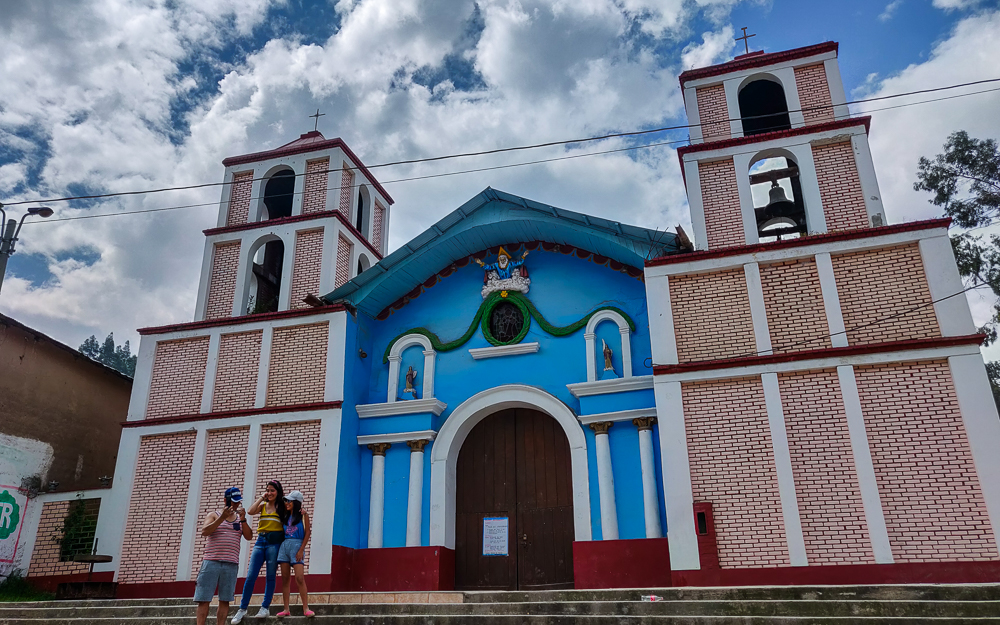
This is the church in Obrajillo, and we were entertained every time we drove past. I assume that’s supposed to be God popping out above the doors like a jack-in-the-box? Interesting architectural decision. (This is why I generally like mosque decor better… geometric patterns never look so unsettling.)
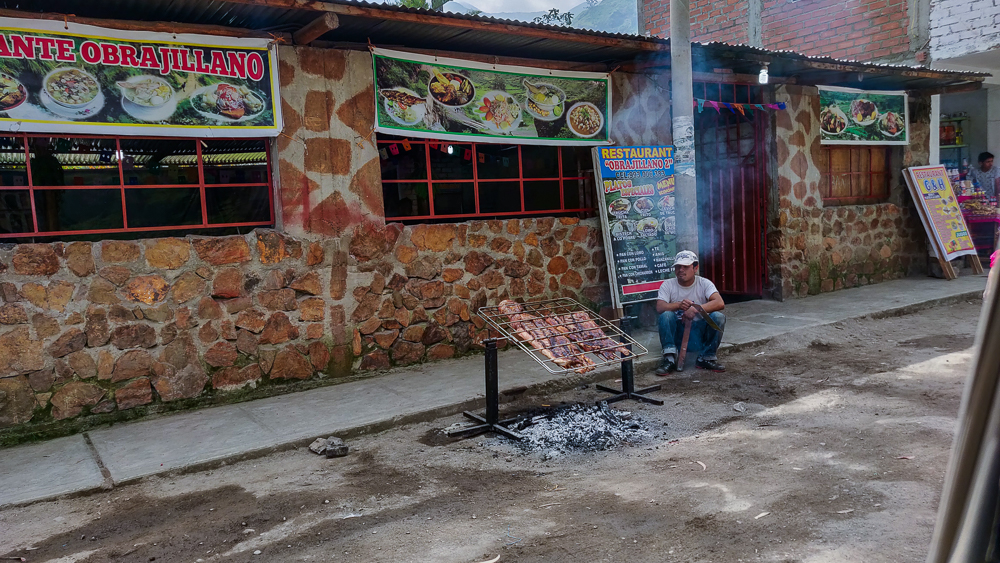
Lunch, anyone? Just casually cooking some flattened meat in the street.
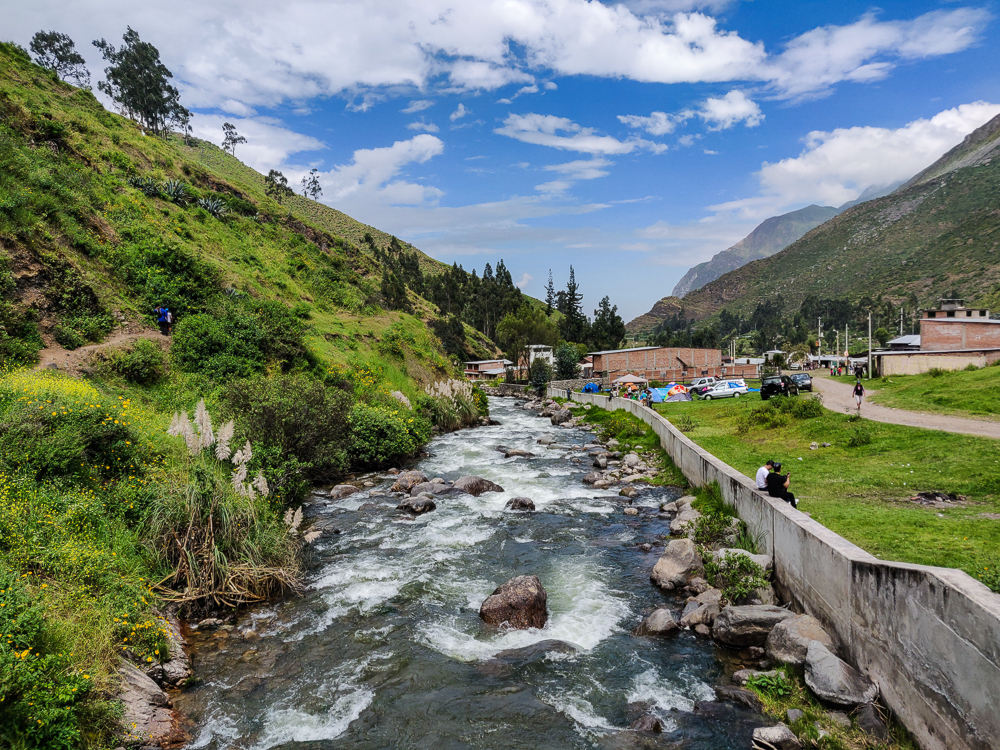
The Chillón River, running through the center of Obrajillo
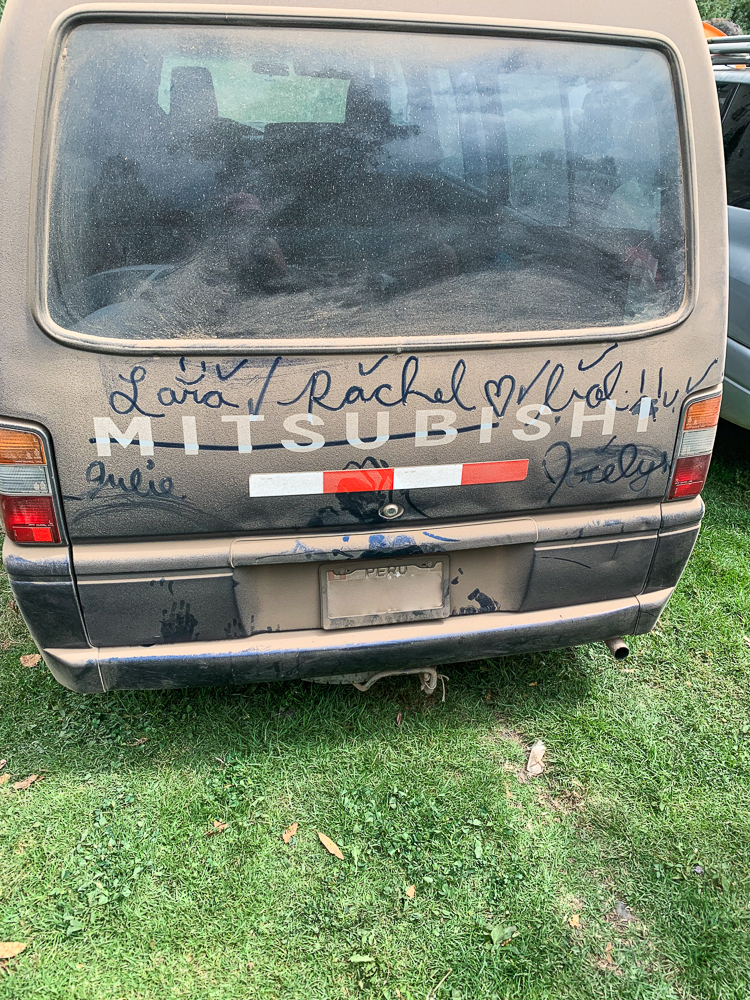
Our clean van. Dina’s daughter practiced her finger-cursive by writing our names in the dirt. Ew.

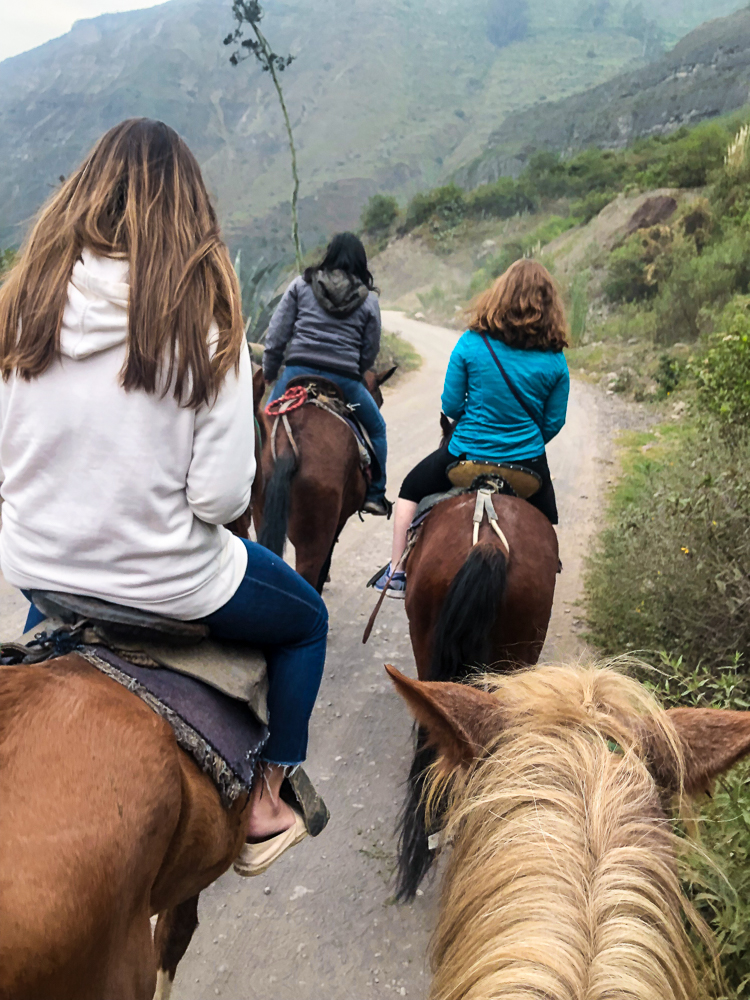
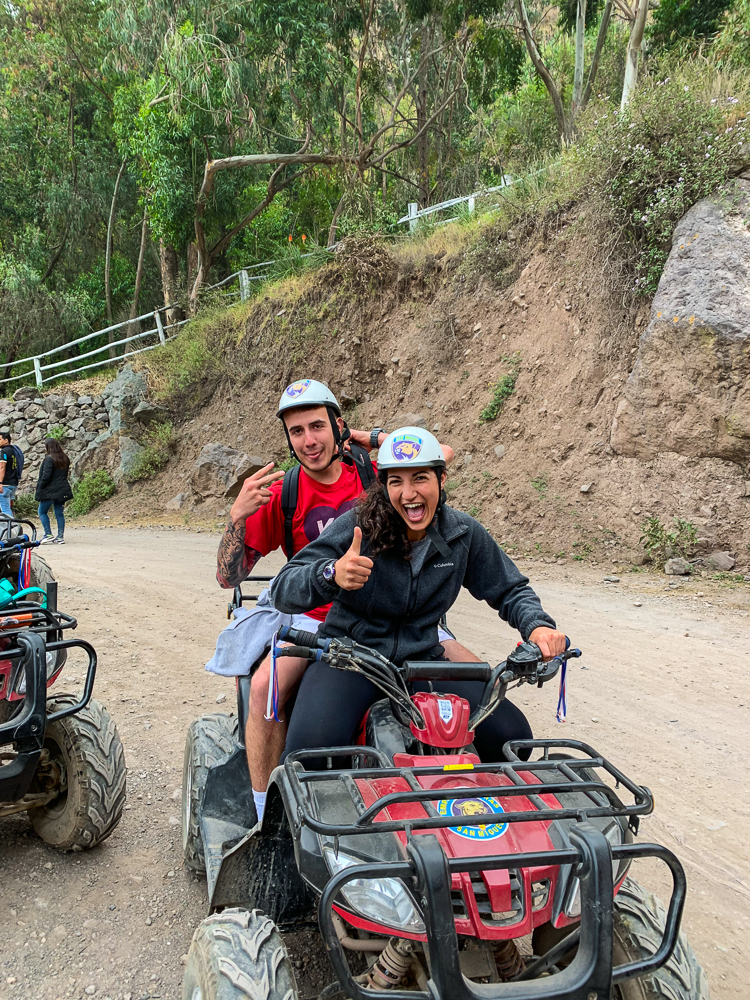
After we ate and felt semi-human again, the group decided to go horseback riding to a nearby waterfall. I decided that I didn’t want to ride a horse and instead opted to ride ATVs with David and Paul! There were only two ATVs, though, and when we asked if two of us could share, the woman said, “el joven y la chiquita pueden compartir.” The youth and the little girl can share. Little girl? 😂 Hey, I’ll take it.

Paul drove on the way there. The ATV rental man rode along with David and was very concerned that we were going to be reckless and fall off a cliff. “DESPACIO!” (Slowly!) was his constant call, and Paul mostly pretended he couldn’t hear/understand him. I think that the only speed slow enough for the ATV man to be assured of our safety was 0 mph.

The horseback riding crew on the way to the waterfall
Don’t we look like we can be trusted? (Also, LOL at the helmets they gave us. Regulation ATV helmets for sure.)

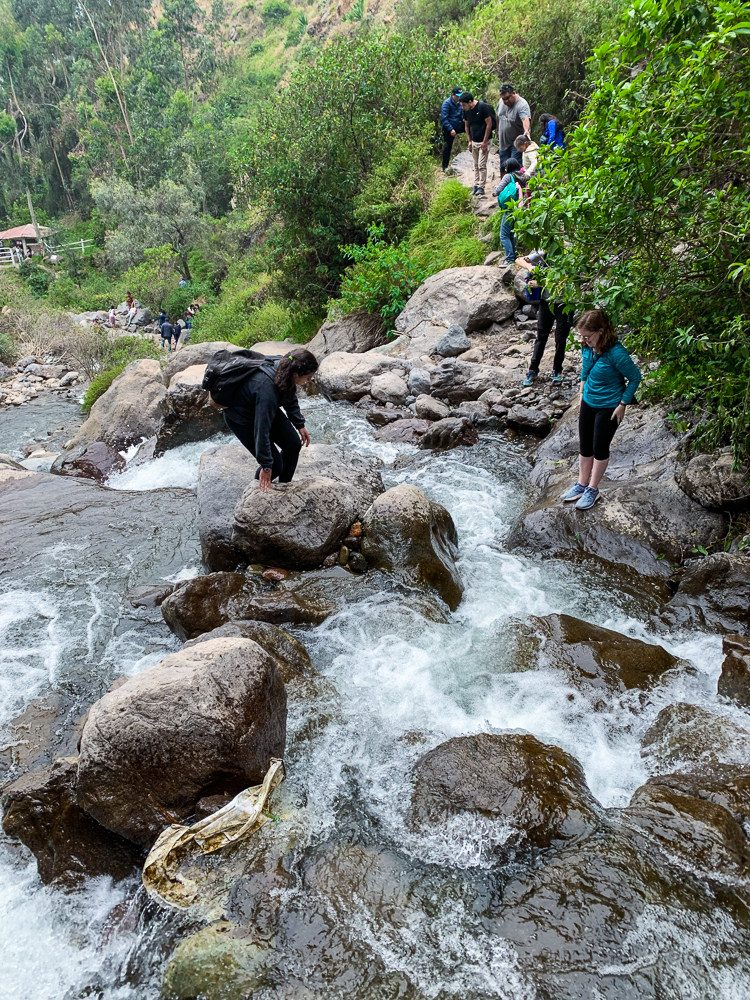
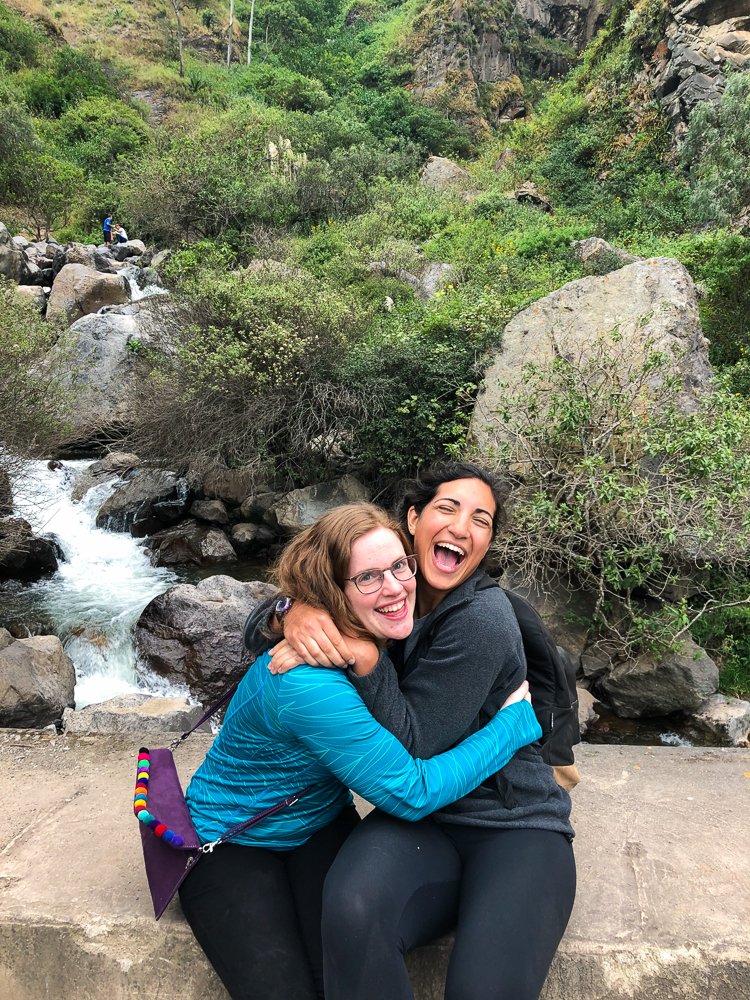
The waterfall at the end, Cascada de Huamanmayo, was just a little thing, but I’m not hard to please. I thought it was great! There was a trail up to the waterfall from the road, and when we reached a point where the trail was flooded, we scrambled our way across the rocks in the river, doing various gymnastic maneuvers to get a closer look. It was kind of like a team-building challenge. We all worked together to strategize the best route and help each other across. I loved it. Also, the water was FREEZING, so there was plenty of motivation to stay dry.

Travel friends! Except for David because he was taking the picture. This is at the first waterfall… just pretend that you can see up, up, up the hill behind us because that’s where the waterfall is. Also, ignore all of the horse poop on the ground in front of us hahaha.
Me and Jocelyn, finding a way across
The grand Cascada de Huamanmayo

When we’d had our fill, we headed back to our horses/ATVs. I got to drive on the way back! It was my first time driving an ATV, a fact of which Paul was apparently unaware until we were already on our way. Hehe. But I’m sure I did a fabulous job. And the ATV man was far behind us, so there was no one to cramp my style as I whipped around the corners. Kidding! Kind of… All that matters is, I didn’t fall over the edge, and I didn’t have any close calls. Nothing to worry about! Plus, we were wearing helmets (that would have been completely worthless had we fallen off the cliff), and I was totally a natural.

Jocelyn and I really started to cement our friendship on this trip (she clearly loves me).
Born for this.

We hit some heavy traffic on the way back, something that became an ongoing theme during our trip. How is there traffic in the middle of nowhere? Well, when you have a single-lane, two-way road (as in, a single lane for both ways to share, not for each way) being used by cars, buses, horses, ATVs, and motorcycles, how could there NOT be traffic?

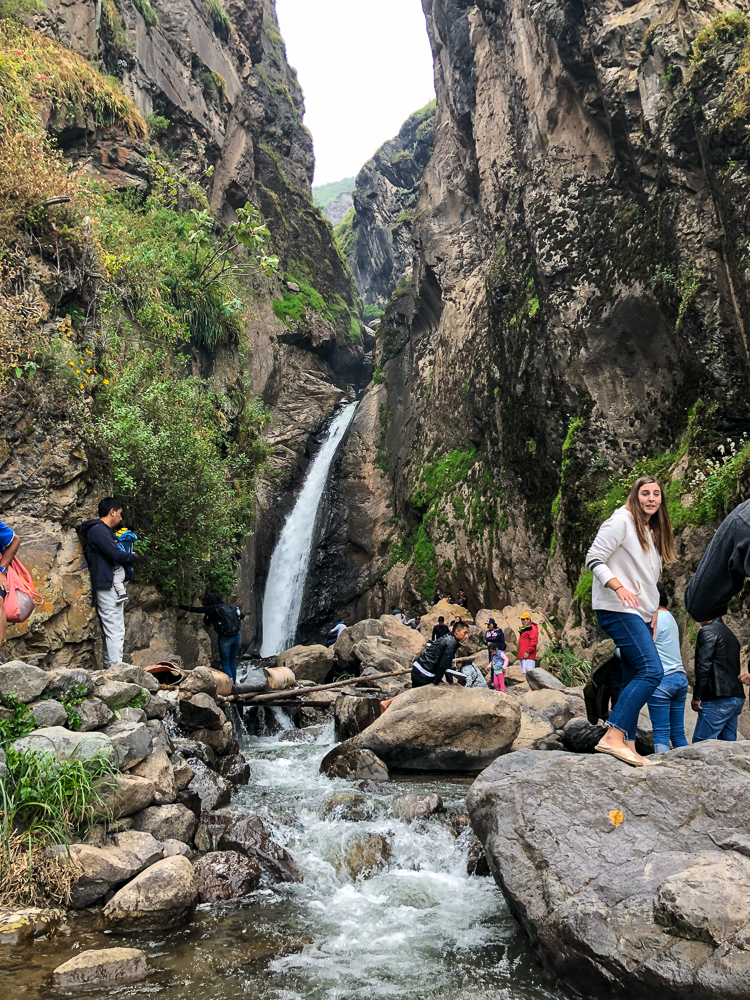
Cascada de Lucle

We were all tired after that mess but decided to walk across town to see one more waterfall, Cascada de Lucle, before heading back to Canta. This one is in a campsite, and it was so crowded that it was like a music festival campground but without the music. Definitely not the place to go to if you want to commune with nature for the weekend!

And yet, it was still absolutely beautiful. We walked uphill for a better view of the valley. So green! I didn’t realize how starved I was for green until we were surrounded by it and my heart was jumping for joy. It may sound stupid, but living in a brown wasteland takes a mental toll.

Finally, it started to get dark (I say “finally” because we spent the whole day just trying to survive until it was time to sleep again). We stopped for dinner at another generic restaurant on our way back to the hotel, and the power went out/came back like 12 times while we were there. Oh, the joys of rural living! I awed the group with the classic water bottle lantern trick (shine a phone flashlight up into a water bottle to diffuse the light). We unquestionably had the best-lit table in the restaurant. Mom and Dad will be happy to hear that I’m still putting that lighting design degree to good use!
Waterfall adventures!
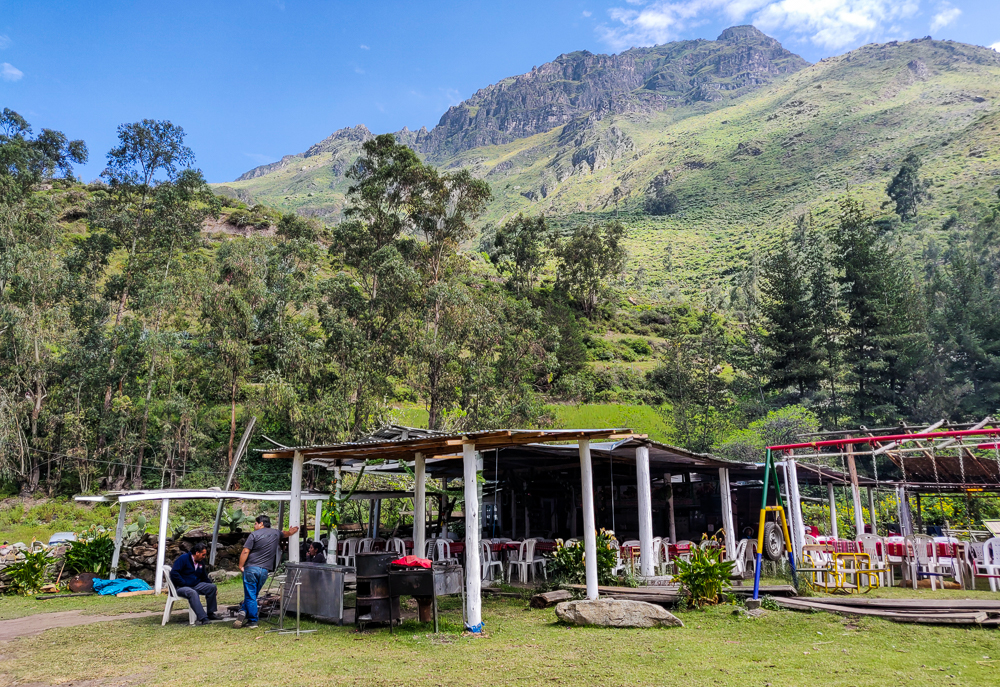
A picture of one restaurant in Obrajillo that might as well be every restaurant in Obrajillo. They’re all the same.

From there, it was back to the hotel, and even though it was dark outside, it was only about 7:30PM… so we stayed awake for a few more hours and then completely crashed.

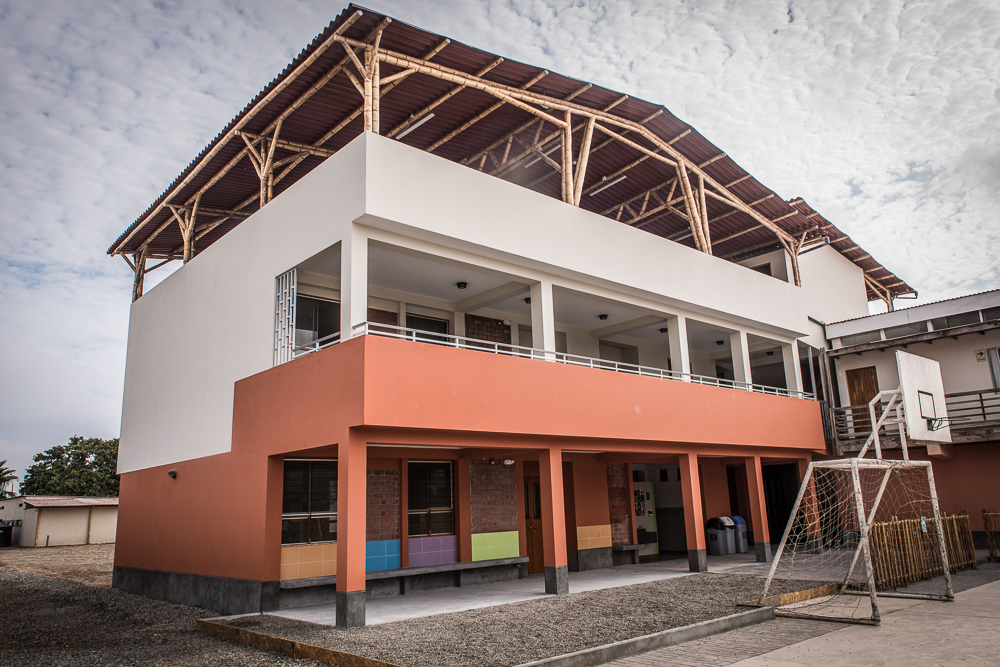
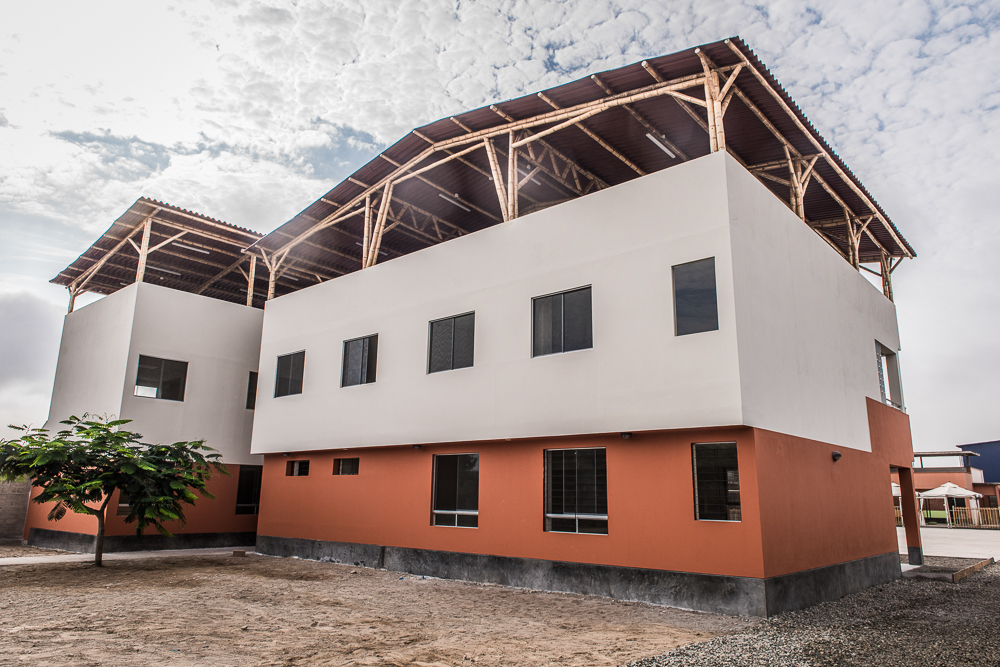
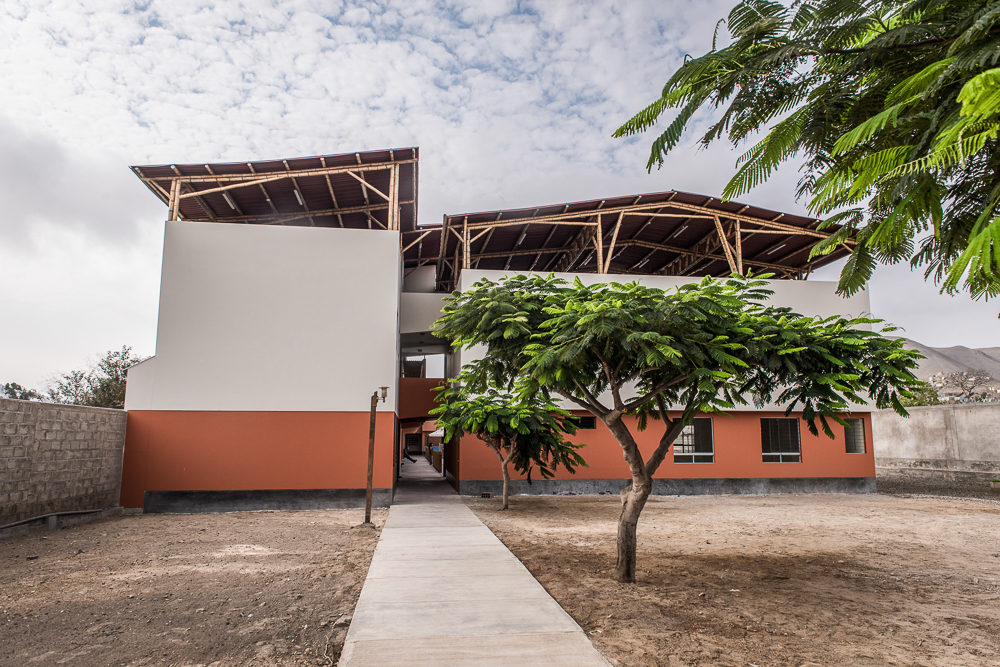
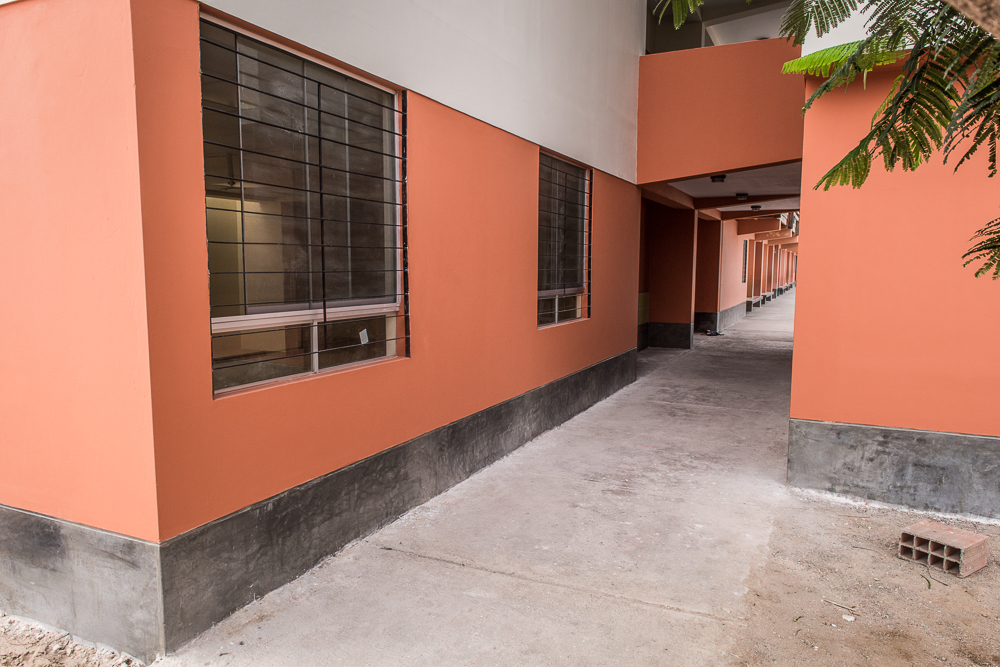
That’s right, folks. It’s the moment you’ve all been waiting for, the moment we’ve all been working towards for over a year now. I could ramble and make you wait even longer, but I think we’ve all waited enough already. And so, now I’m going to do my very best to give you a virtual tour of the completed school building! (Note: a big thank you to David Espinoza for taking these pictures!)
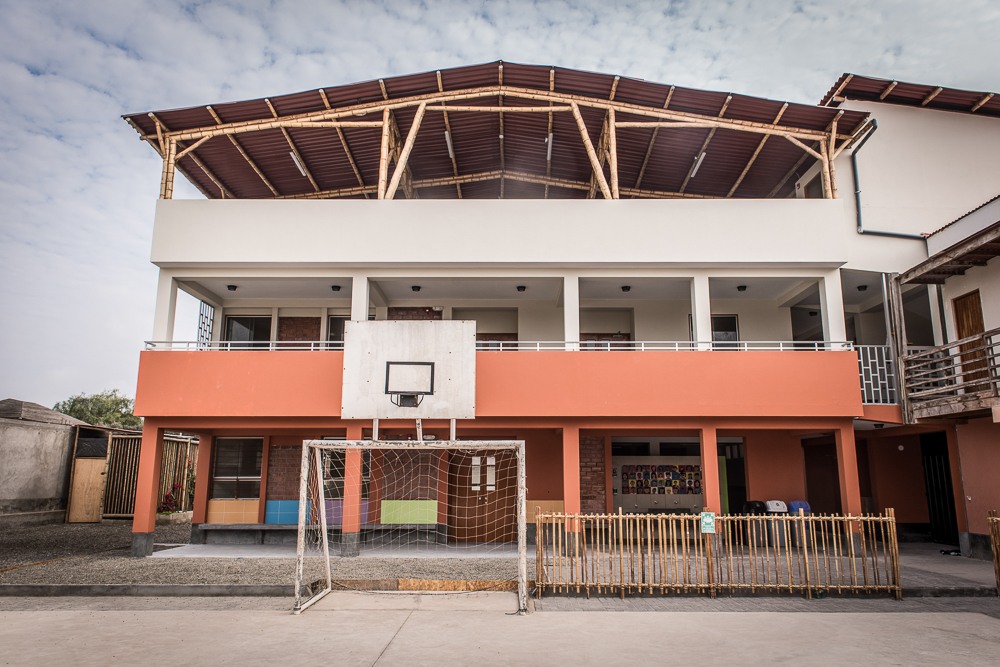
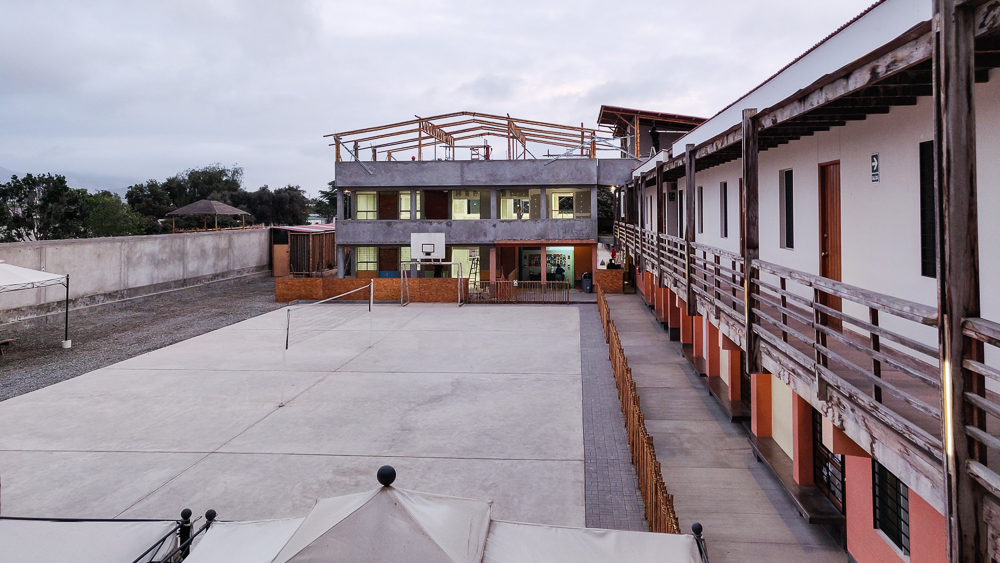
LOOK AT IT! (Ignore the fact that it’s orange and focus on the fact that it exists and is finished and that’s amazing!) This is the view from the “front”, as viewed from the soccer court (I say “front” because when you enter the property, you’ll see the other side of the building first because of how the property is set up… but this is the functional front of the building).
If it looks ginormous in this picture… well, that’s also how it looks in real life. The other buildings on the property are only two stories, so this one really does stand out.
Back view. You can see the small side of the building better from this angle… there’s the big part with the gabled roof and the smaller part with just a single sloped roof surface.
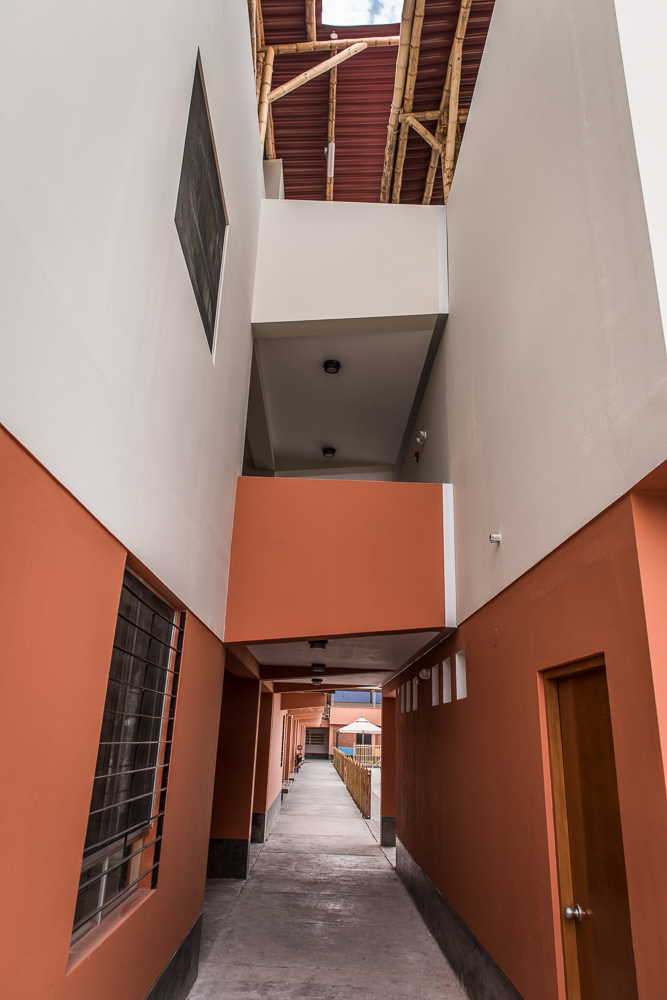
This is the first view of the building that you get when walking into the property. It’s not especially thrilling, but the side of the left building has no windows because the thought is that there will be more buildings along the left side of the sidewalk someday, as the school grows and needs more space.
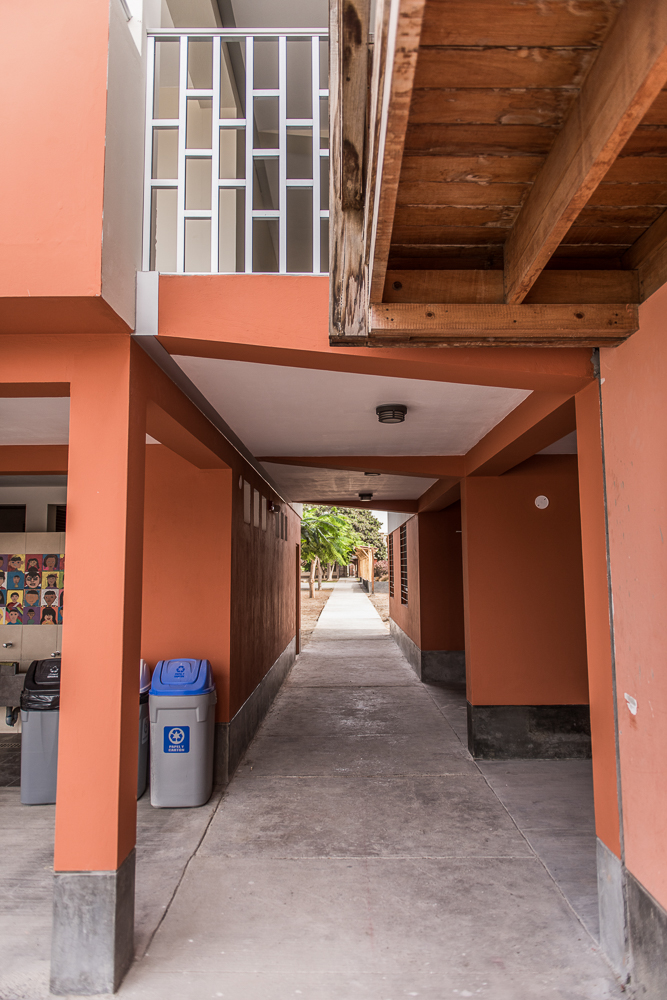
Approaching the building… Thanks to this “tunnel” and the walkway above, the two sides of the building can be accessed by a single staircase.
The building is actually designed as two separate structures. The left side and the walkways are one, and the right side is another. You can see the joint between the two really clearly in this picture, at the right side of the second-floor walkway.
Looking back through the tunnel towards the property entrance from the soccer court.
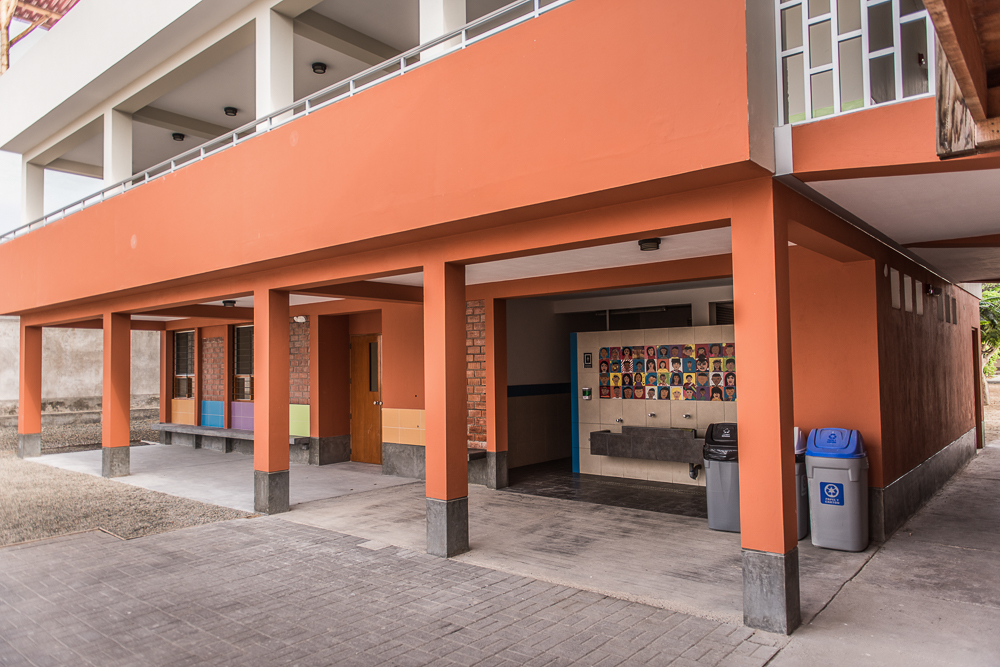
Do you remember how the building was constructed around an existing bathroom structure? That’s what you see on the right side of this picture, with the decorated tiles at the entrance. To the left of it, there’s a big, new classroom.
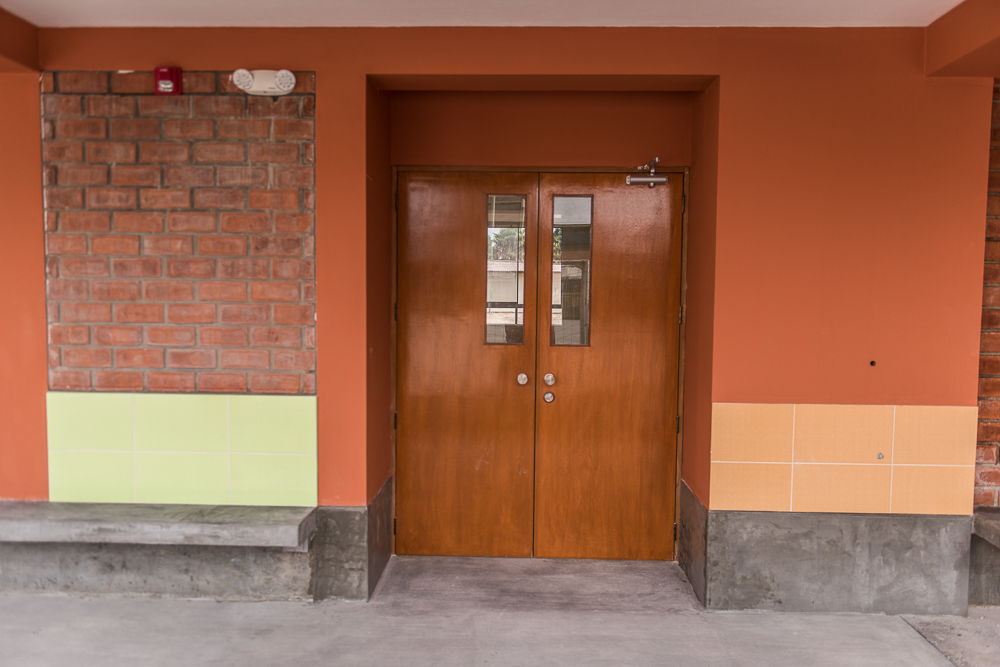
These are the doors into the classroom by the bathroom. Debbie had the doors custom-made, like many other things in the building. That may sound fancy and unnecessary, but there’s not the same selection of standard doors, windows, etc. as we have in the States.
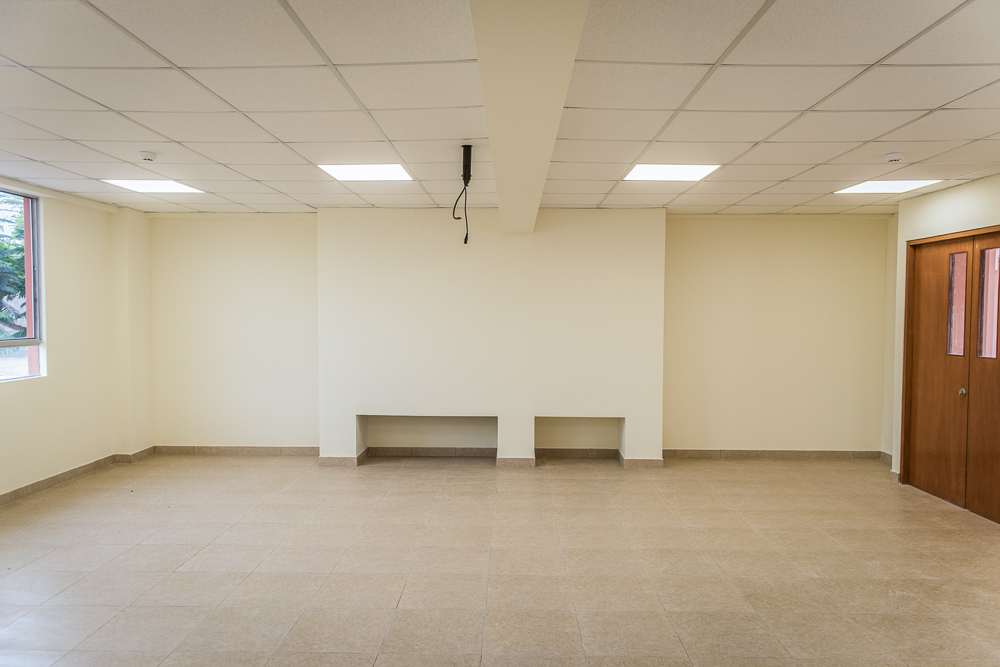
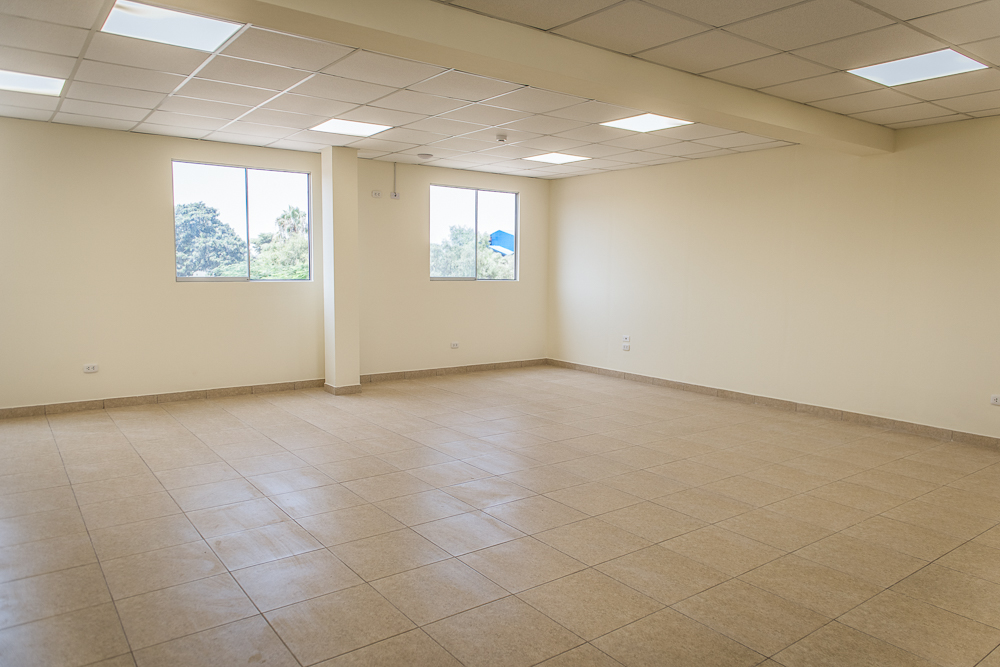
Inside the classroom! The mounting post for the projector is the thing sticking out of the middle of the ceiling (the thing that’s not a beam, I mean). I am so happy with how bright the rooms are, especially compared to the old classrooms! These lights are each more than twice as bright as the old fixtures, and their layout and design are far more efficient. The weird bump-out in the front wall is to create a flat surface for the whiteboard (with some storage space underneath, interrupted by a column).
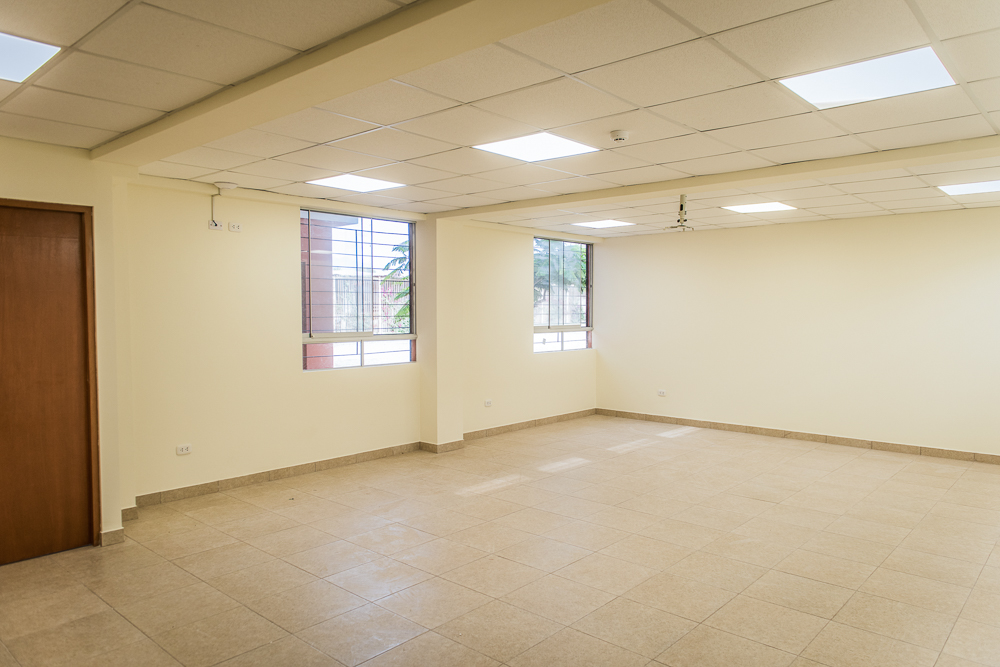
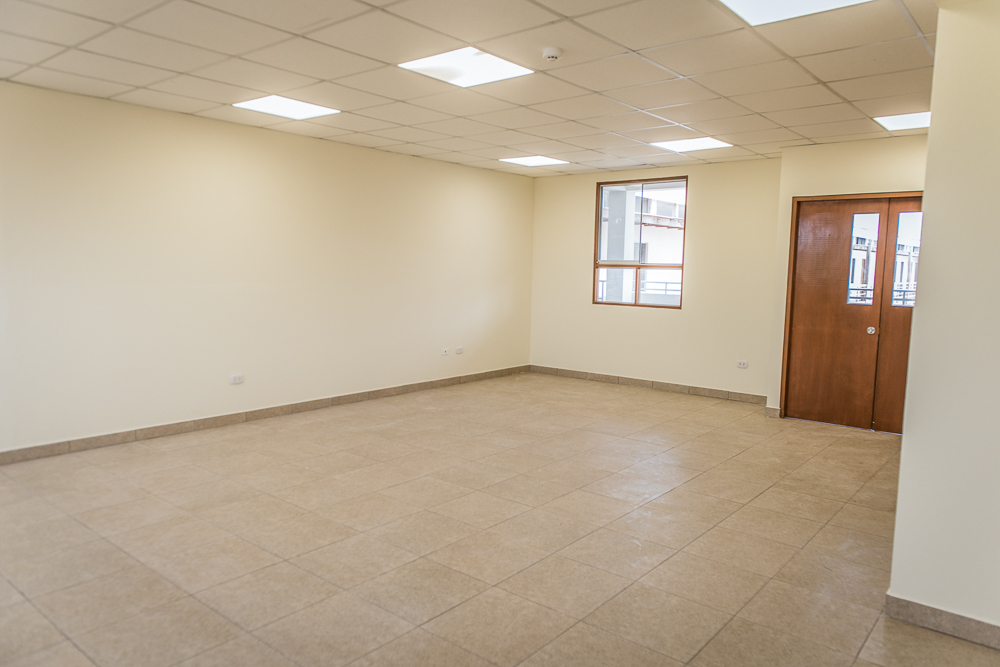
Here’s the other first-floor classroom, located in the other “side” of the building, across the tunnel from the bathroom. Things really came together! You can see a smoke detector for the fire alarm system on the ceiling, and at the top of the wall between the door and first window, the internet system is connected!
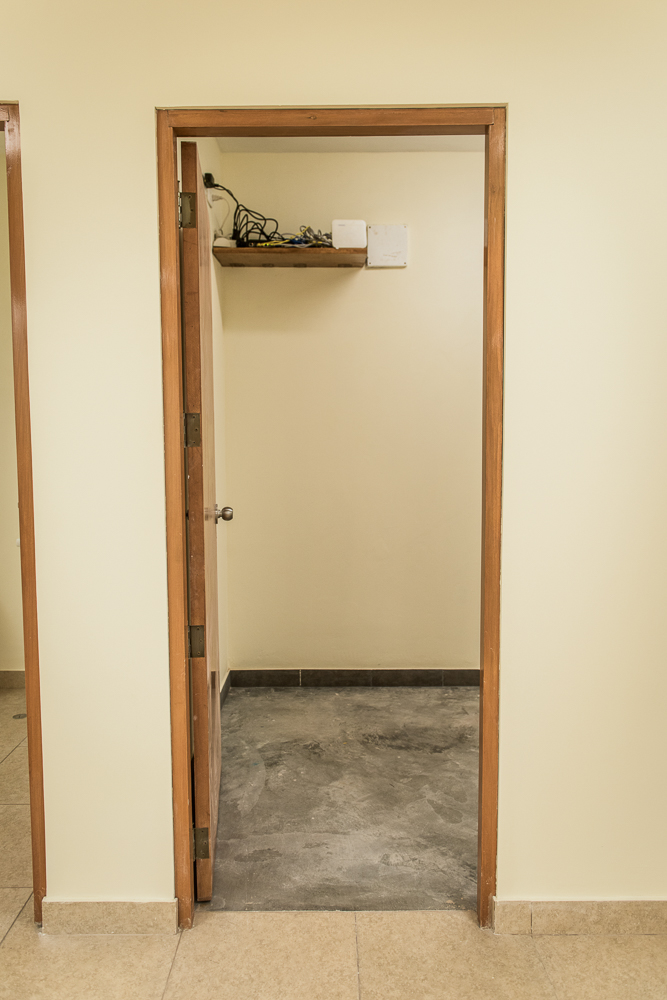
There are a lot of nice, big closets in this building! It may sound lame, but it’s very necessary. Schools have a lot of supplies to store! That mess you see on the shelf is the internet equipment. The internet cabling goes from this point to each of the classrooms.
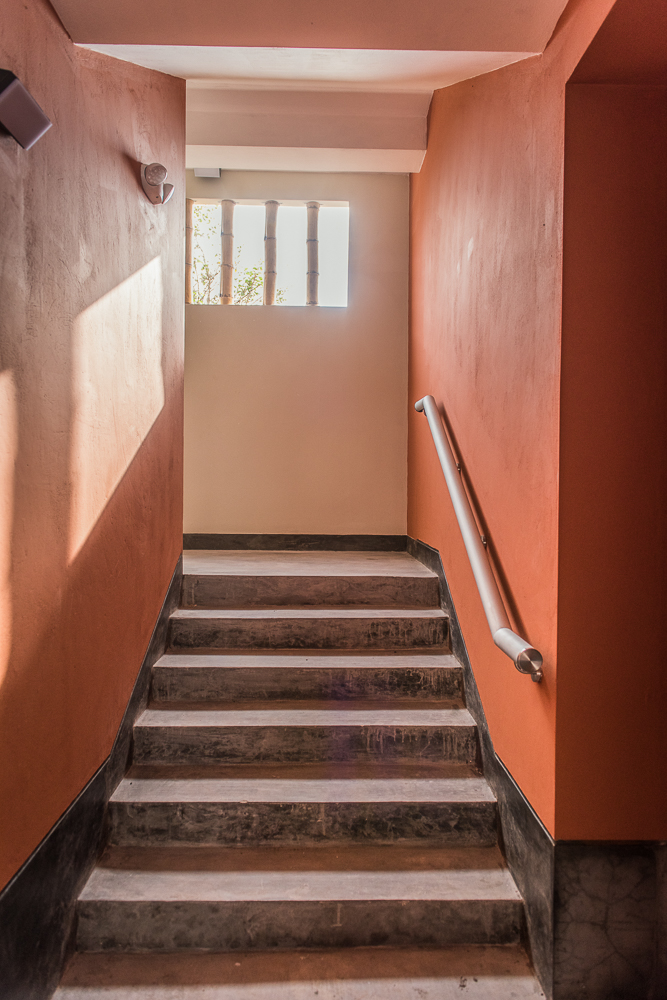
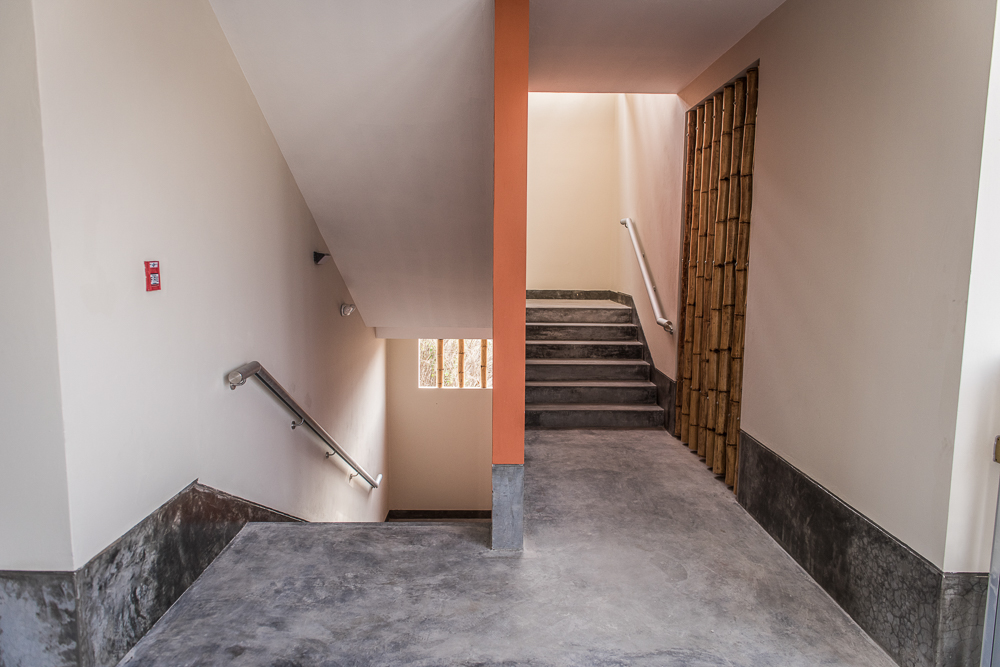
Staircase from the first floor to the second.
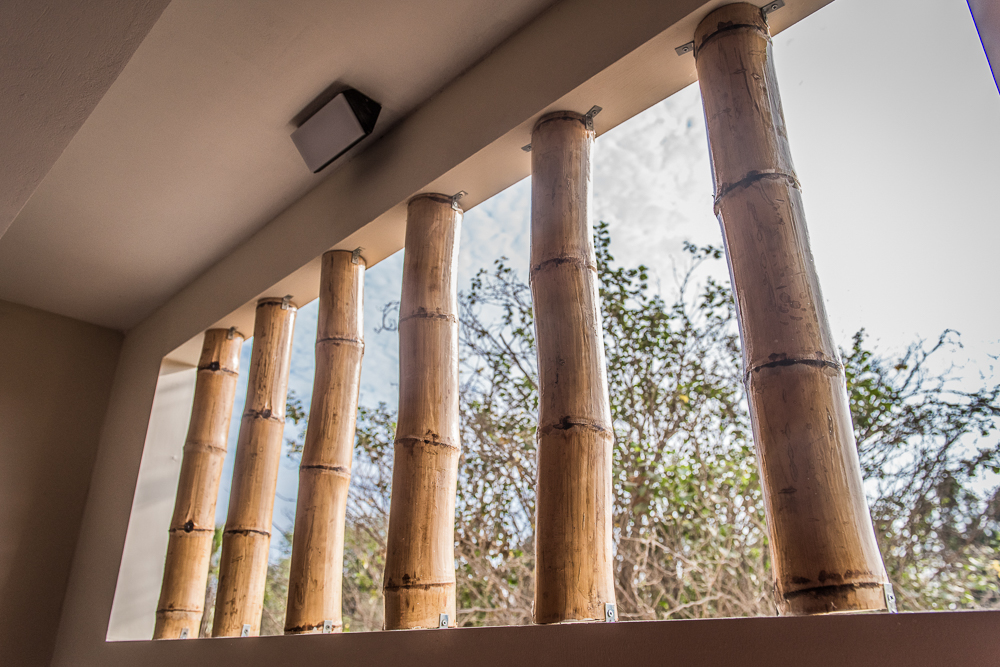
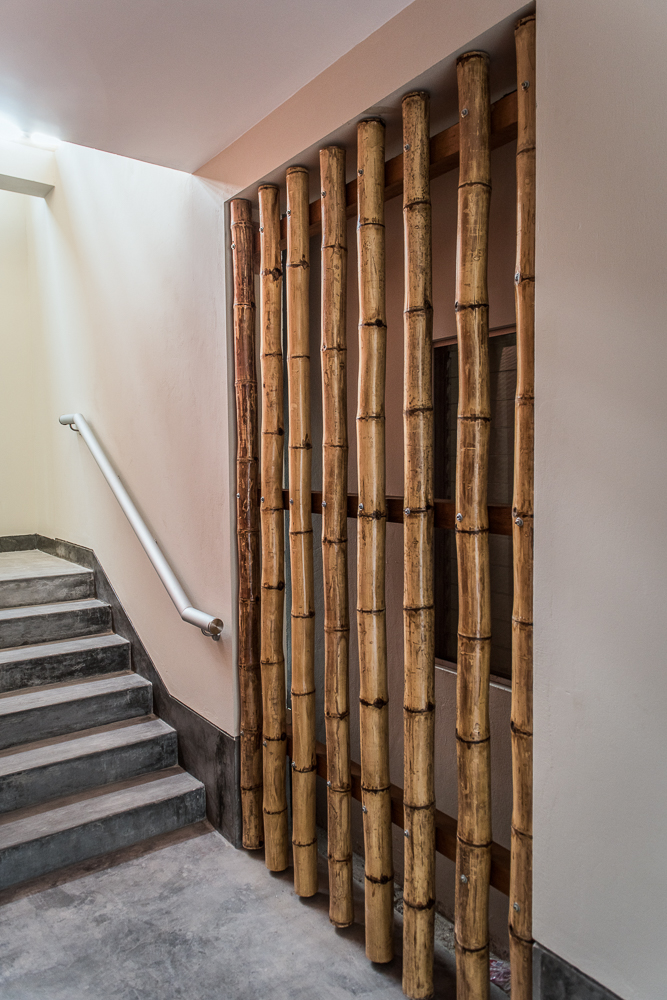
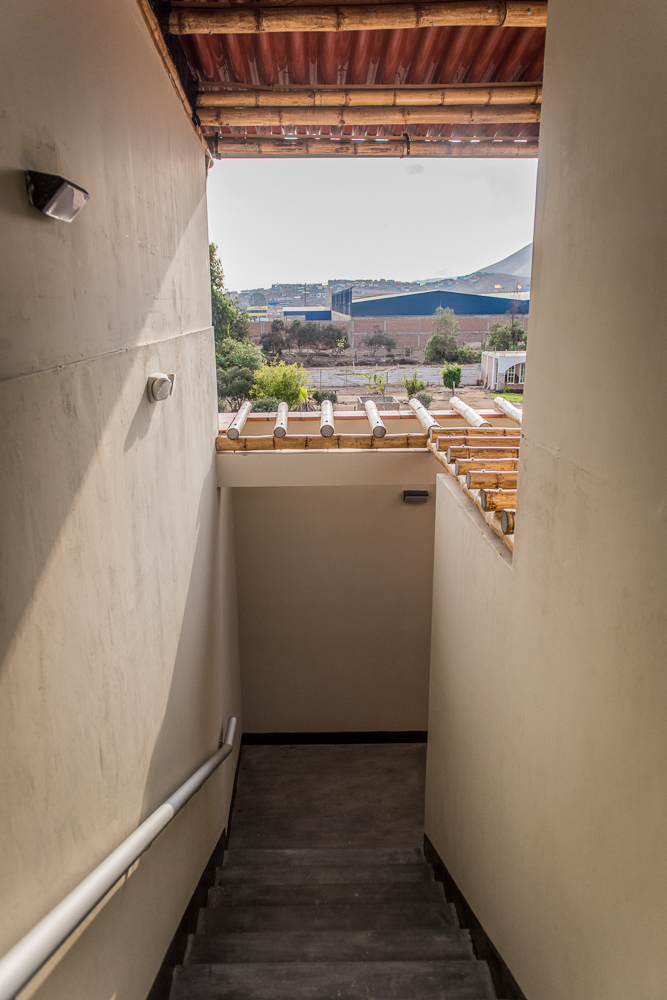
There are a bunch of cool bamboo details like this throughout the building. Also, admire that nice, sleek outdoor fixture that took us way too many hours to find.
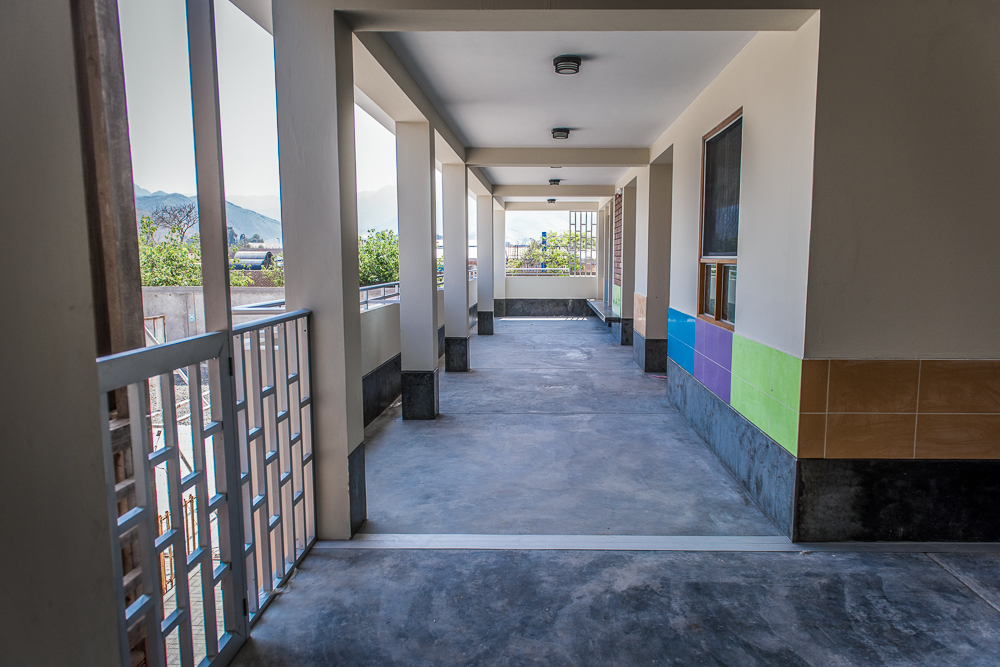
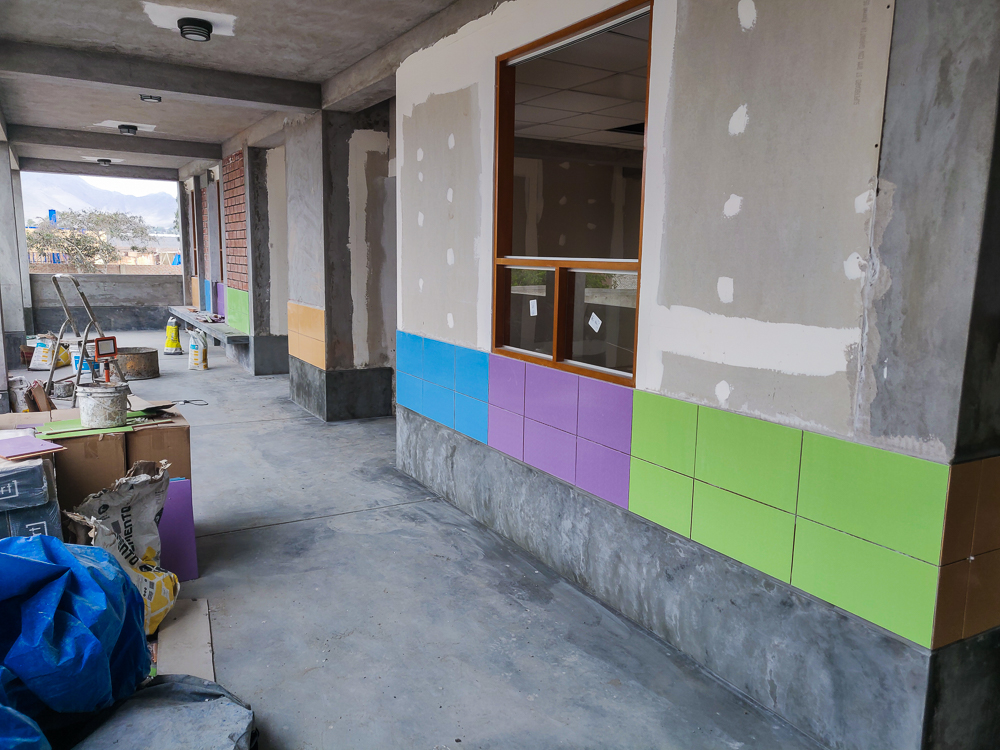
Second-floor hallway. This is the view from the staircase. You can see the joint between the two buildings in the walkway. Also, remember how worried you were that the transition between the brick structural wall and the cement board/drywall wall would be ugly? WELL, check it out! (The structural wall is the one facing us, with orange tiles on it. Around the corner, the green-tiled area is cement board (starting after the thickness of the brick wall). Seamless!
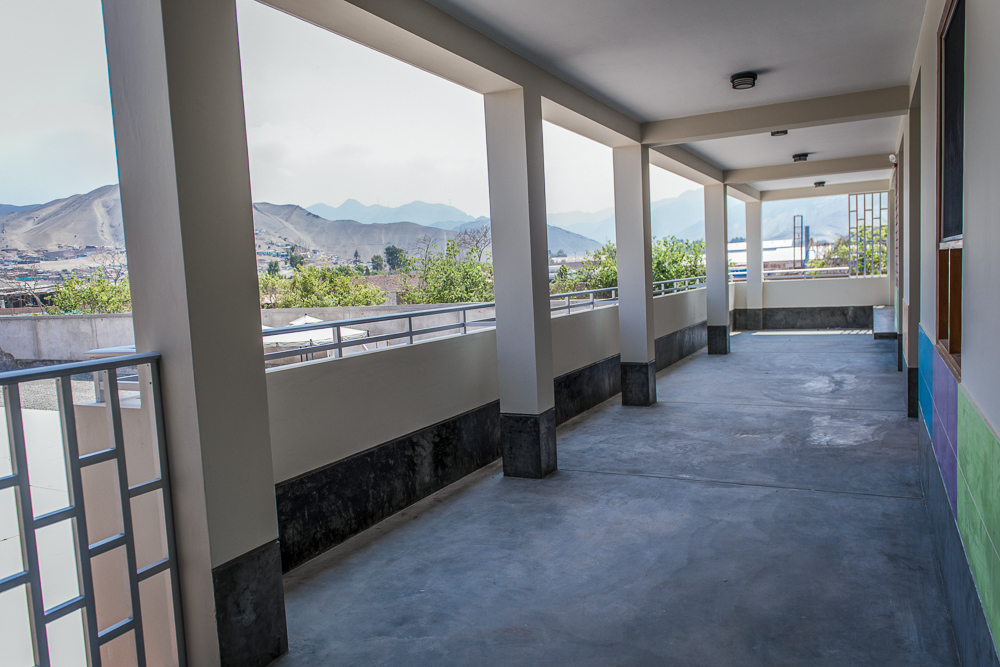
I do love that mountain view! Even if they are mostly brown mountains. The walkway is super wide, but the thought is that they’ll put low lockers/cubbies between the columns for the kids to store their stuff.
Now we’re all the way at the end of that long hallway. These are the windows outside of the classroom above the big first-floor classroom. Please, take a moment to appreciate these windows. This is really the only building on the campus that has windows on both sides and can (hopefully) get a cross-breeze going to keep the classrooms cool. These windows also slide open, unlike most of the existing windows which are louvered and the worst thing ever… If you’ve never seen windows like that, it’s similar to Venetian blinds. They have a bunch of long, narrow horizontal panes of glass that are either rotated open to let air in or closed. I suppose it works, but my gosh those windows are a PAIN to clean.
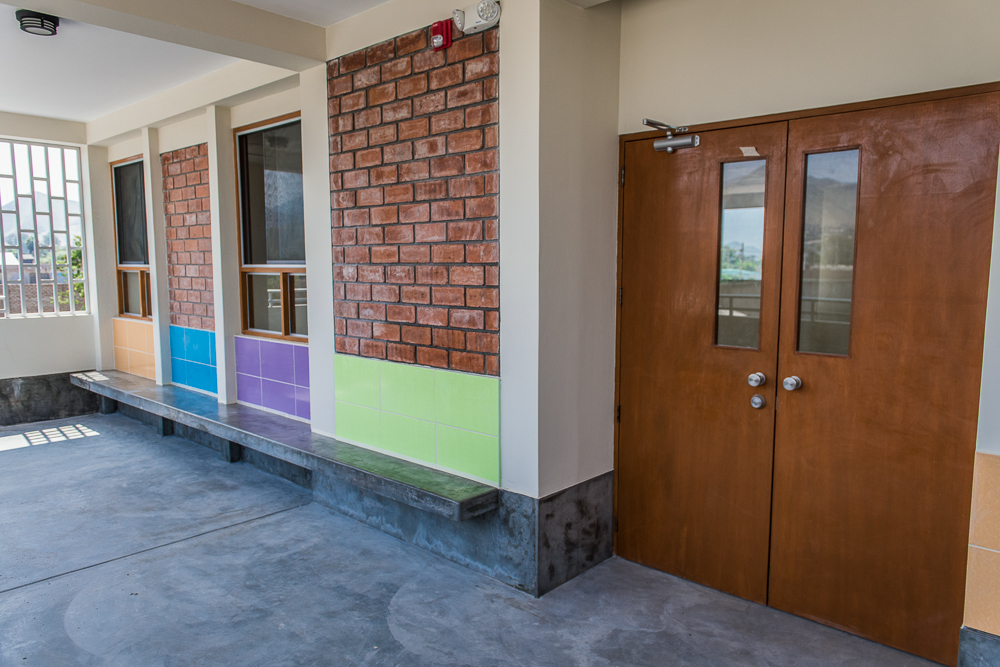
The entrance into that same classroom. The exposed brick is pretty cool, especially on this floor where the paint isn’t orange (bit of a color overload when there’s orange paint + exposed bricks + colored tiles).
Inside. Check out all of that natural light! And the artificial lighting, of course. I’m just so happy with how they turned out. And we have acoustic ceiling tiles which I used to think were super boring but now appreciate for the acoustic marvel that they are. Without those ceiling tiles, every single surface in this room would be primarily reflecting sound, whereas the ceiling tiles help to absorb sound. As soon as multiple people are talking, that adds up to a very noisy room. Not good for learning!
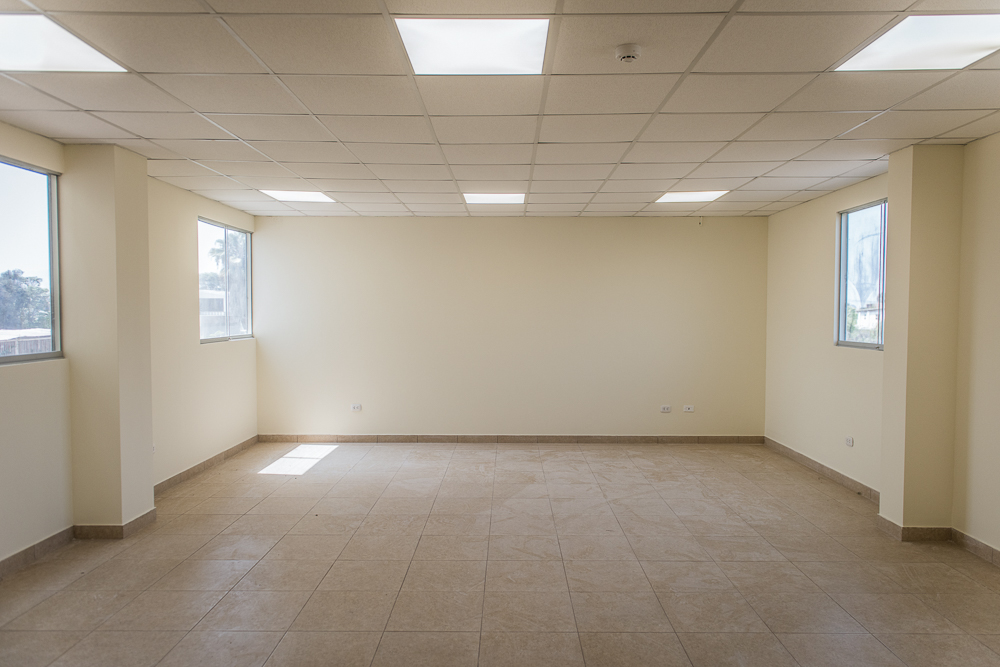
This is the classroom next door, right above the bathrooms. It’s the most awkward one because of where the columns had to be placed (you can see one on the right side of the picture), but it’s still huge compared to the old rooms.
Okay, now we’ve left the above-the-bathroom classroom and have walked back towards the stairs. In this picture, the stairs are to our right, the other classrooms/hallway to our left. We’re standing on top of the tunnel.
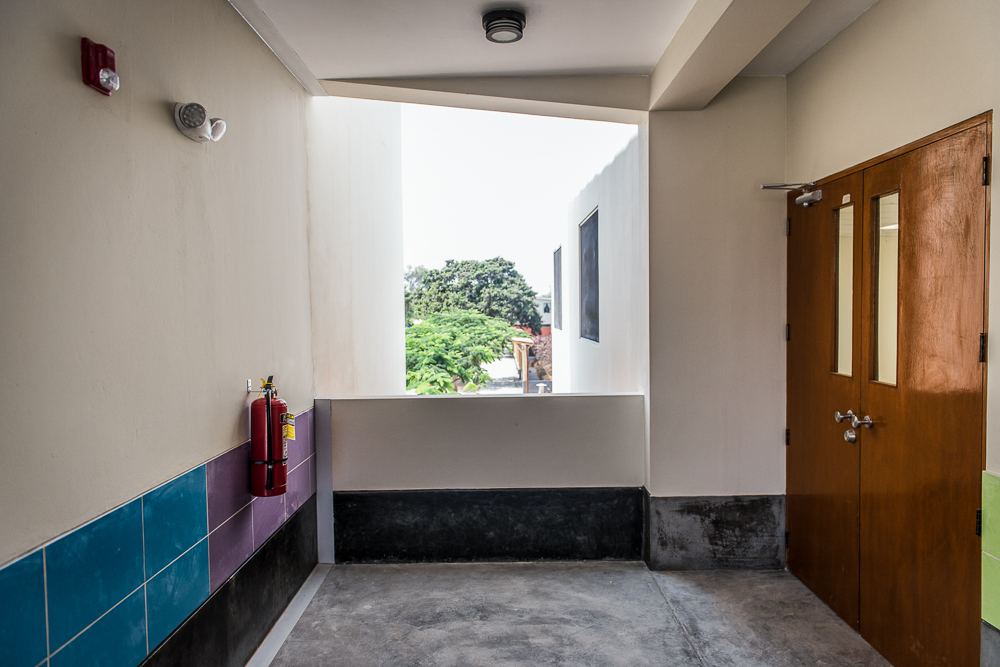
Here we also have all of those not-so-attractive-but-necessary building elements, like the fire extinguisher, emergency light, and siren/strobe for the fire alarm system. I’m just happy that the fire alarm system came together!
The final second-floor classroom (through the doors on the right in the previous picture).
Staircase down to the first floor or up to the third.
Here’s another bamboo screen. It may seem kind of weird, but it’s there because the old building has a window on the other side. Rather than closing it in permanently, they made it so that there can be some flexibility in the future. They could replace the window with a door and connect the two buildings, or something else. Who knows? But that’s exactly why there’s a bamboo wall instead of a concrete one.
Going up the stairs to the third floor (standing on the landing and looking back the way you just walked). These bamboo pieces add some funky shadows!
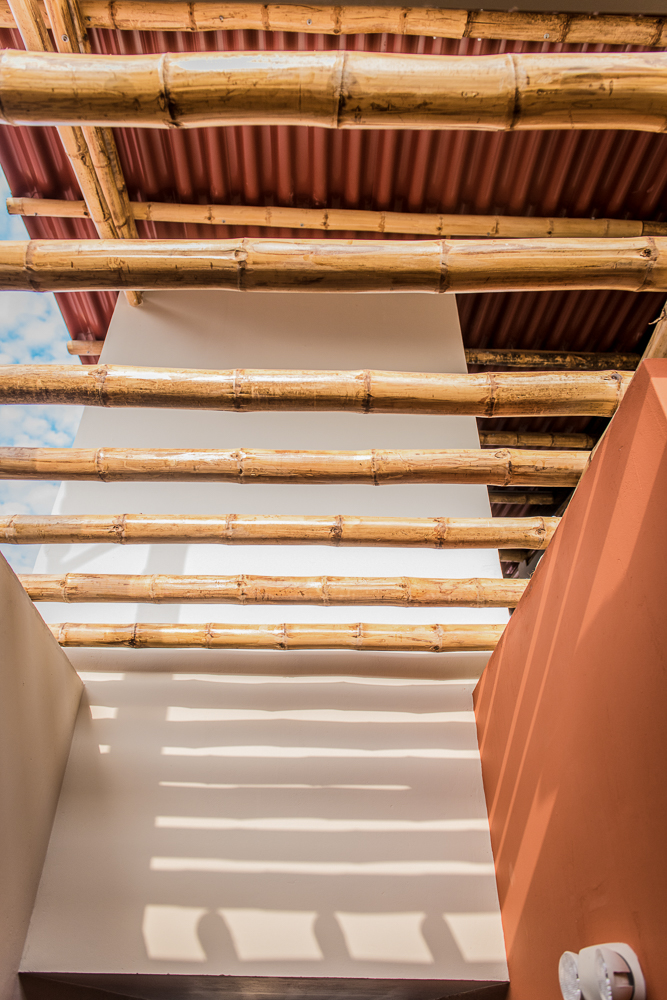
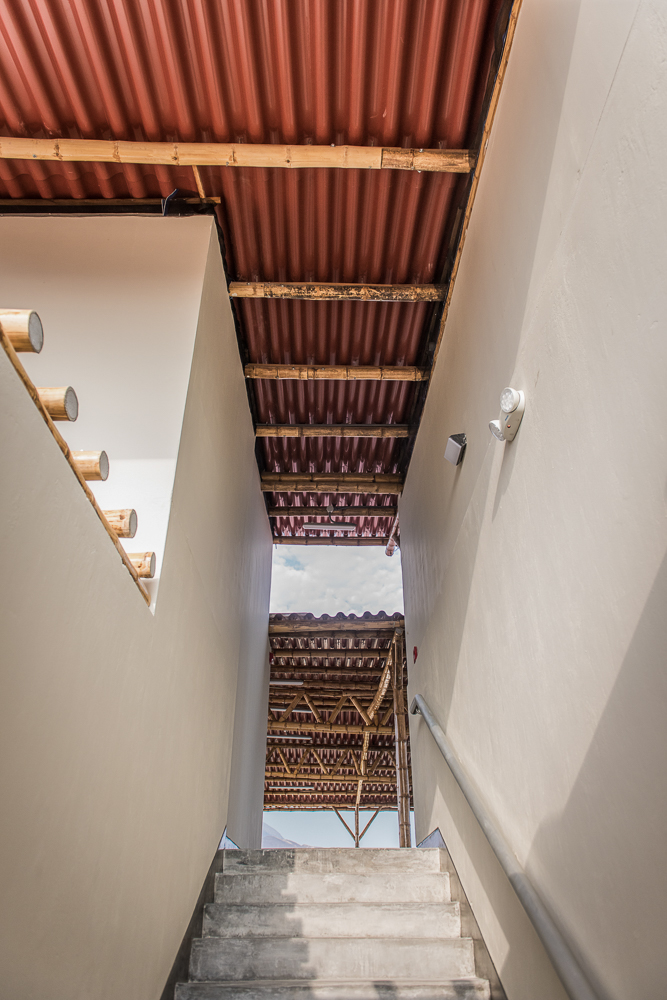
The rest of the way up to the third floor… with your first glimpses of the bamboo roof!
Looking back from the top of the stairs, here’s a better view of the bamboo above.
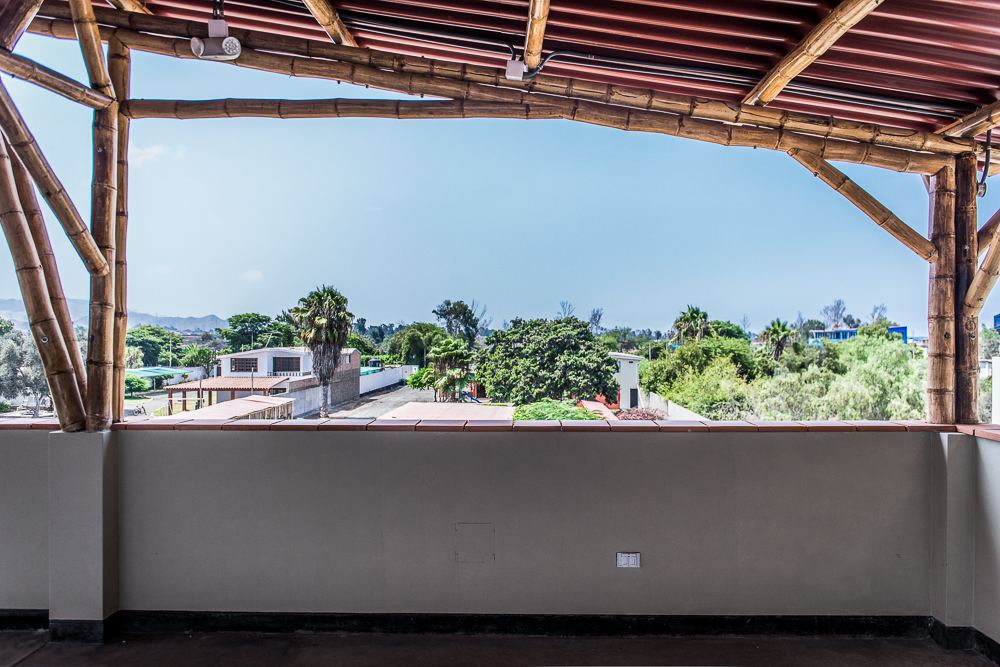
Another mountain view!
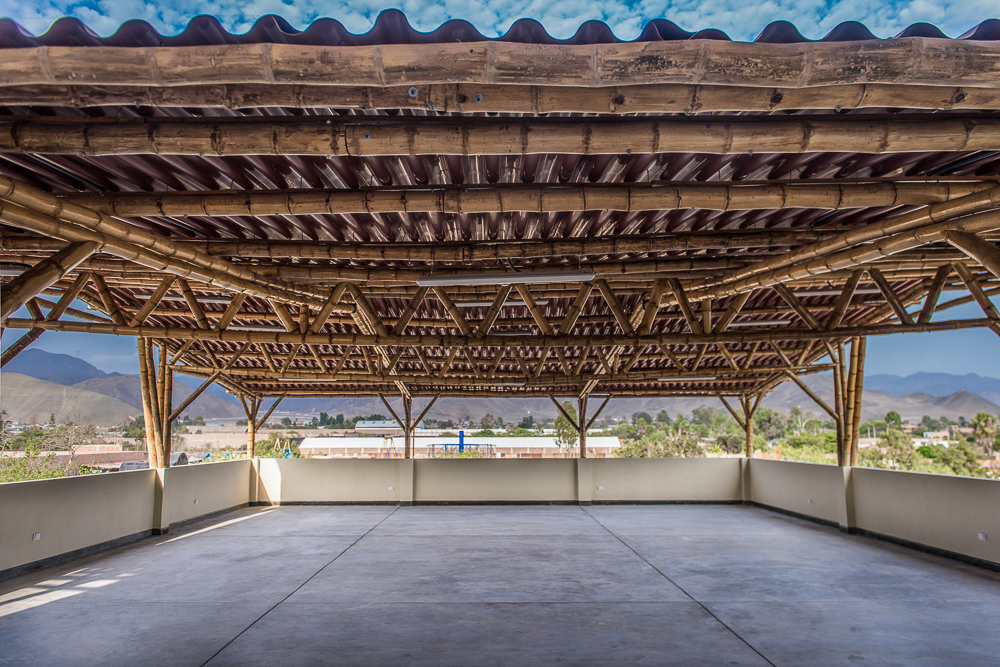
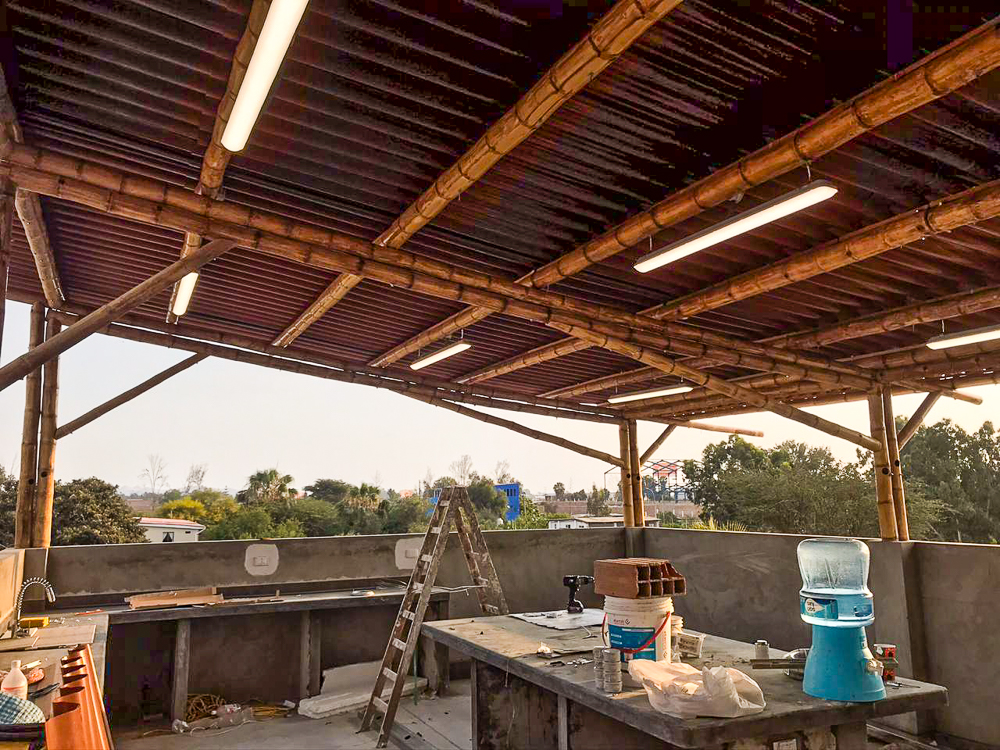
Check. Out. That. Roof.
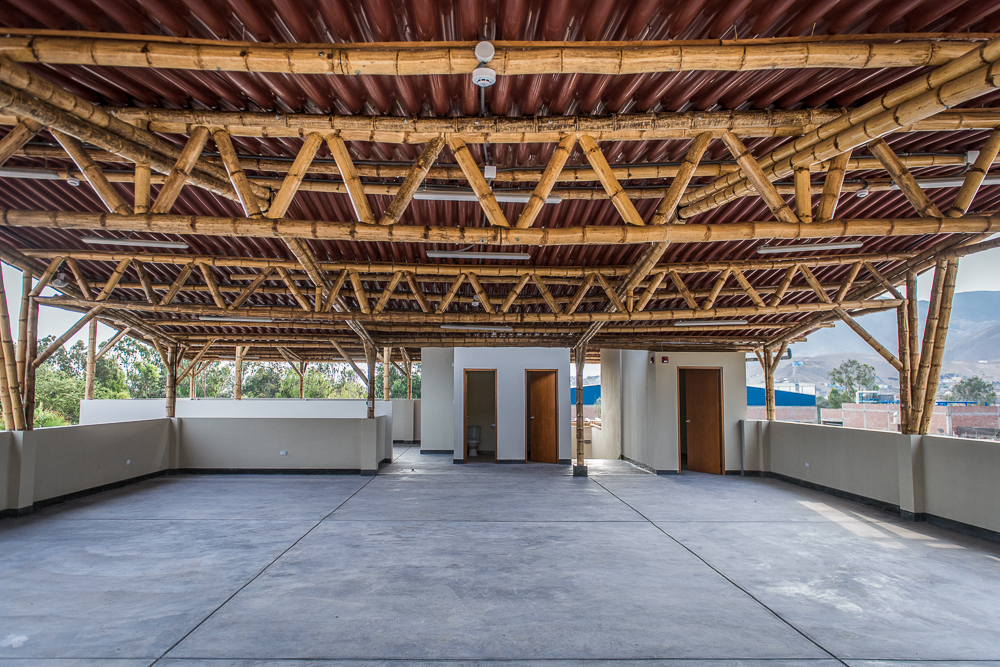
This is a “multipurpose” space aka who knows what it will be used for but probably lots of things.
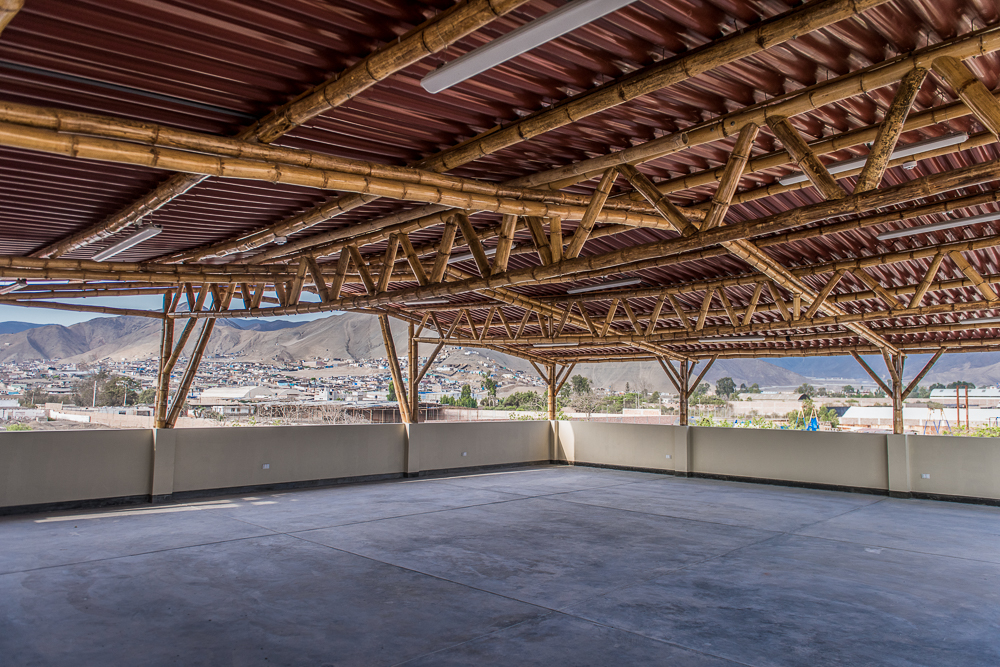
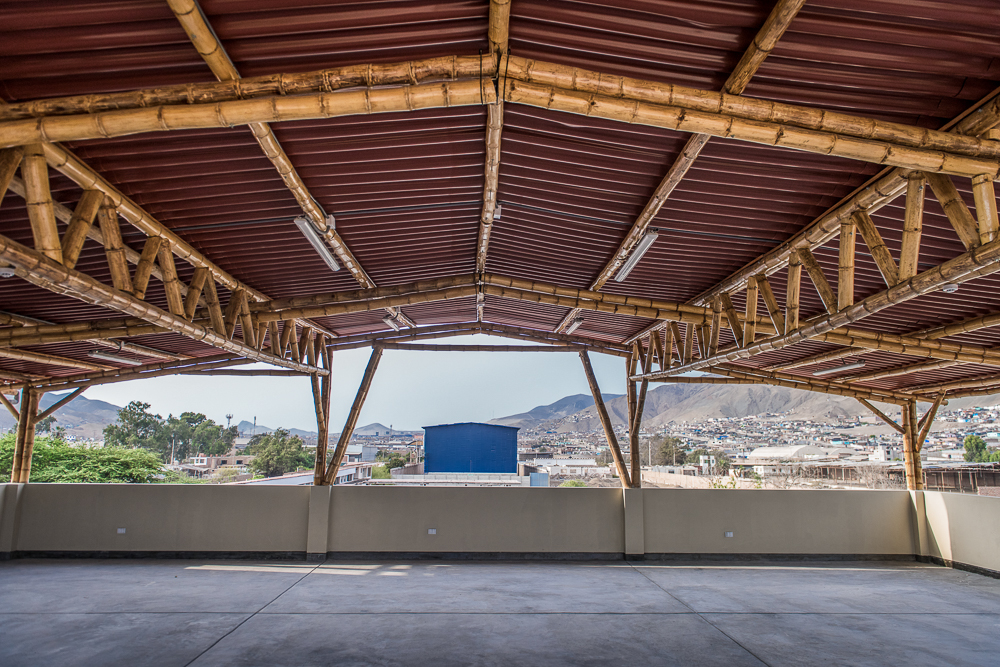
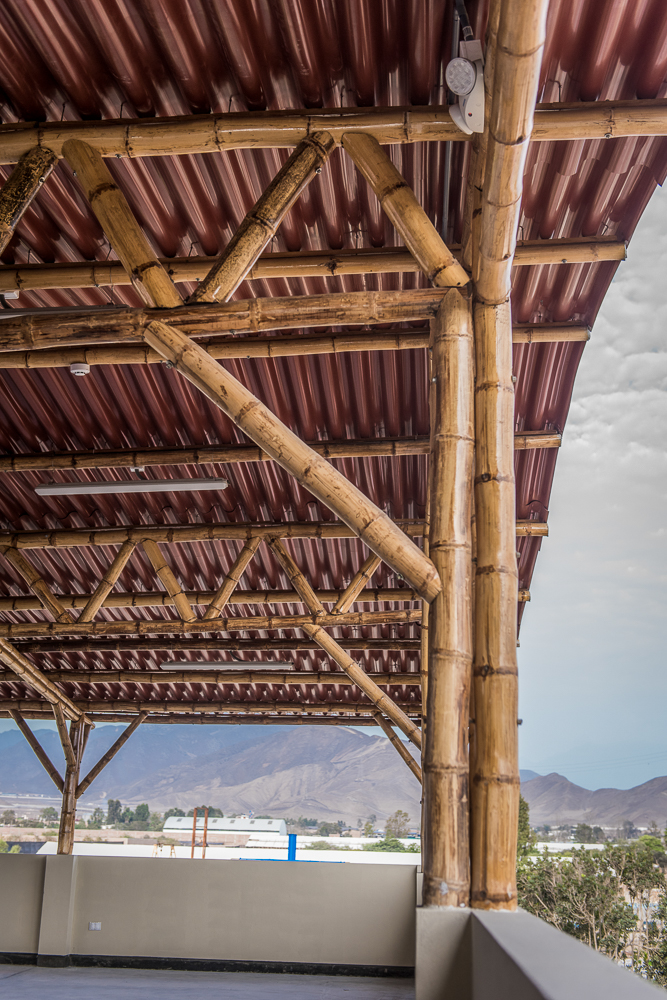
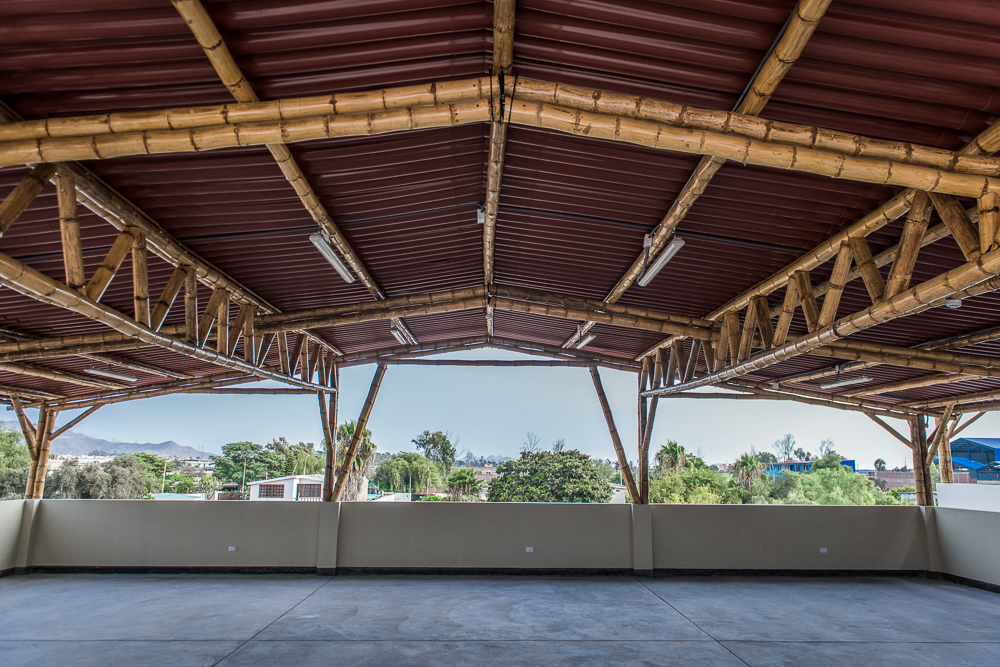
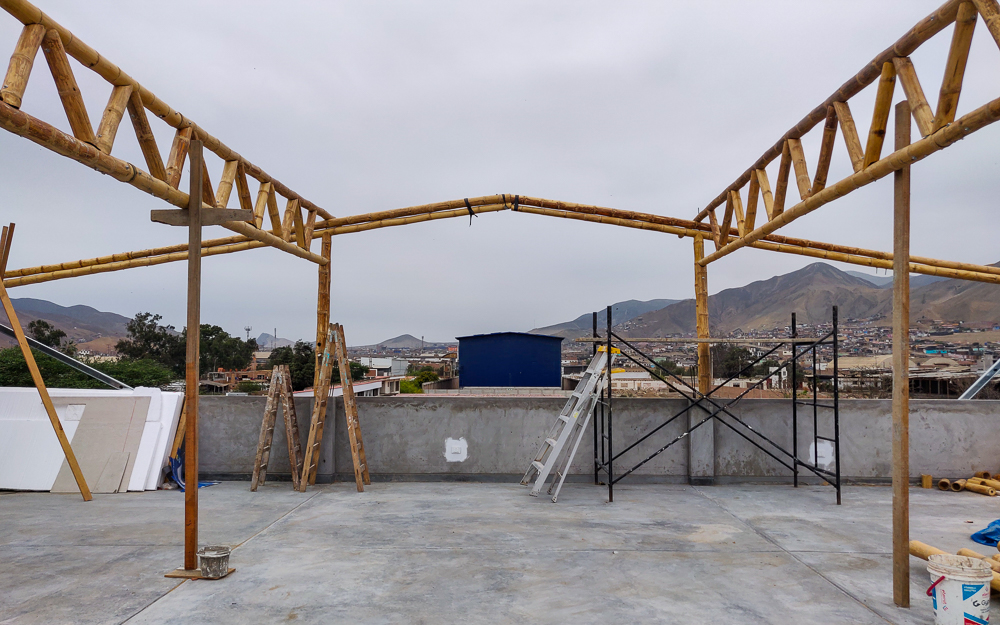
The big challenge for Debbie and the structural engineer was creating a design that would span the entire space without needing any columns in the middle. It took some creativity (and a couple of crazy trusses), but they did it! And it looks awesome, at least in my opinion.
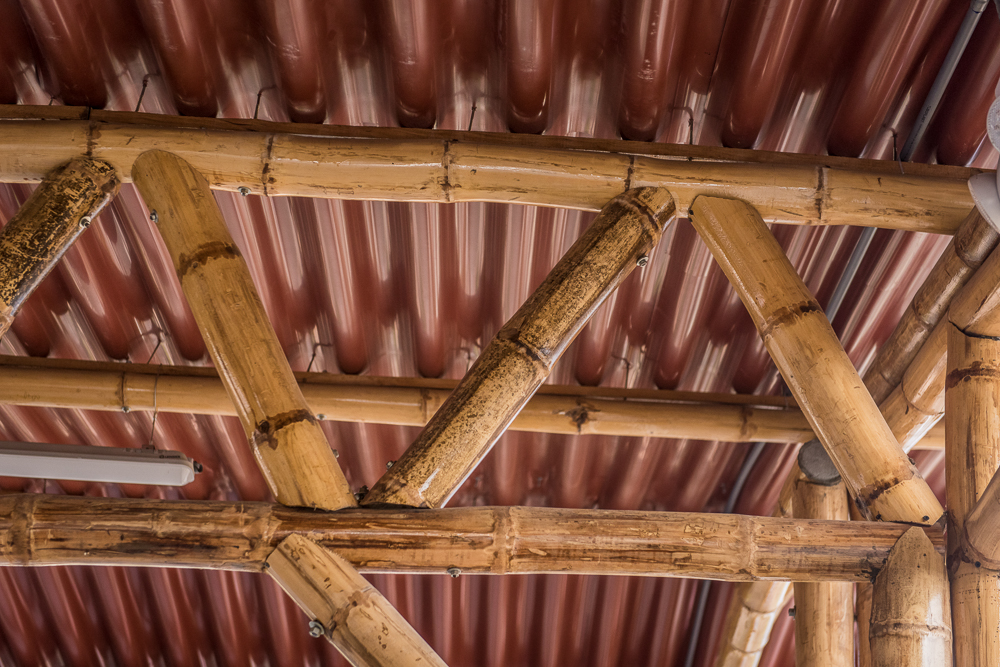
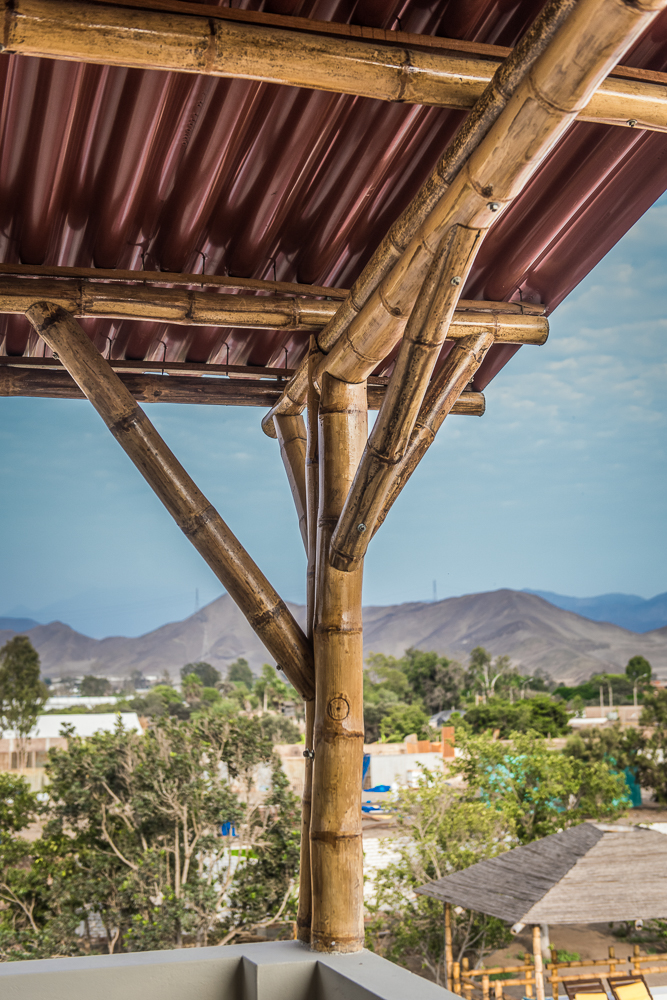
You can see how the bamboo pieces were all custom cut to fit together snugly. Those trusses were a big job!
This gives a good view of the trusses, plus some of the light fixtures! And that gorgeous blue box in the background is the neighborhood quinoa factory (obviously).
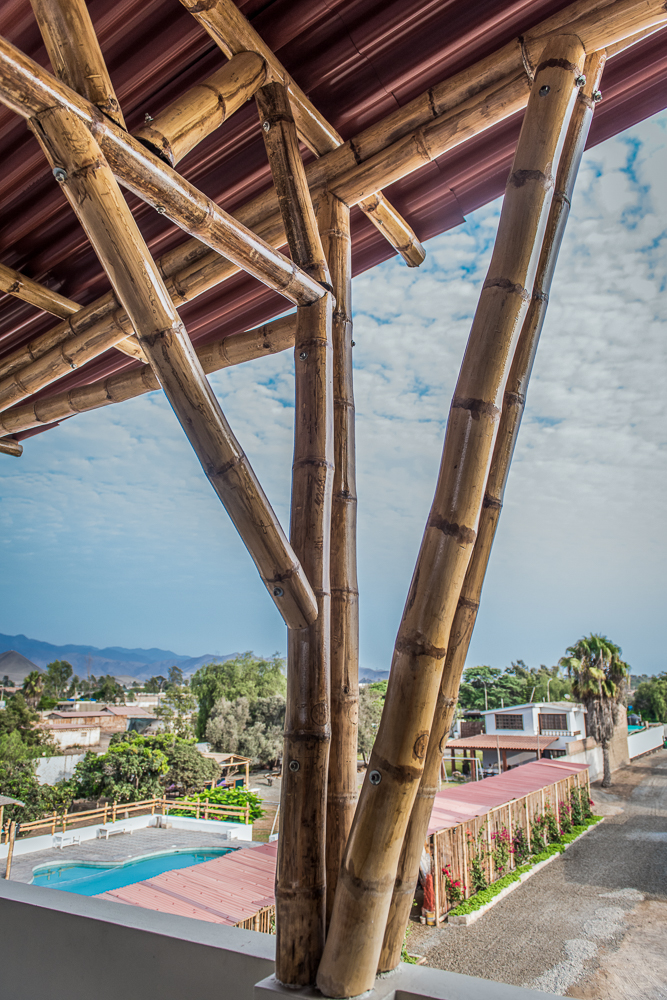
These columns are all crazy… #1
#2
#3
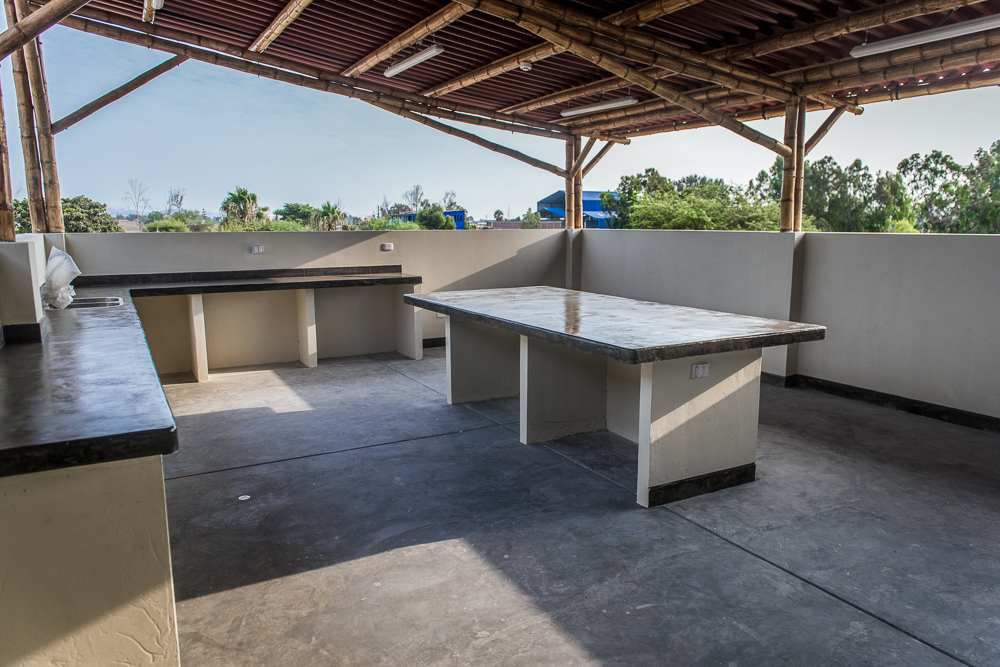
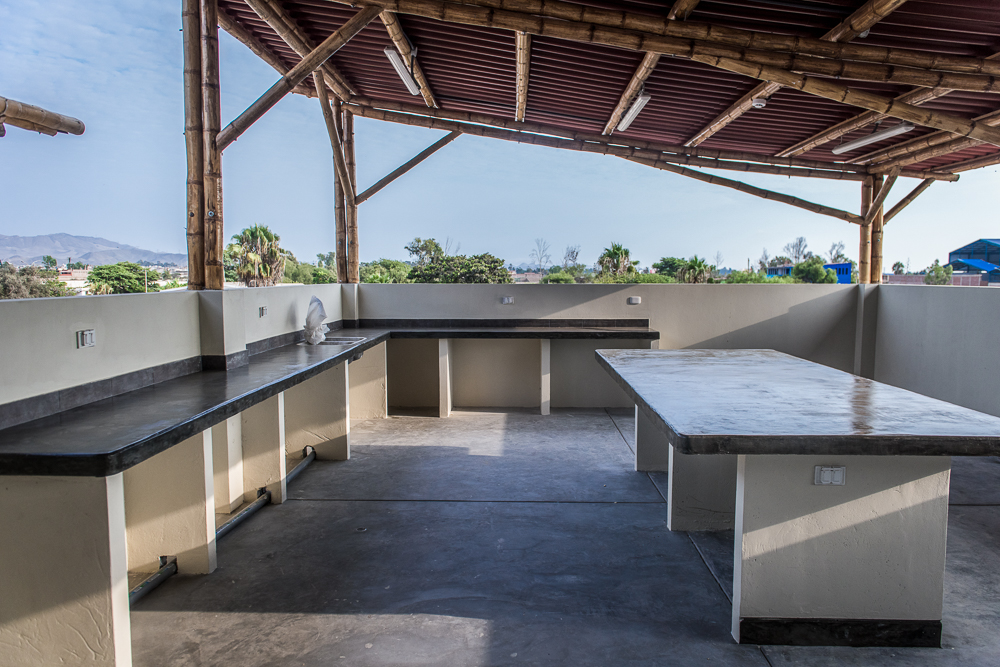
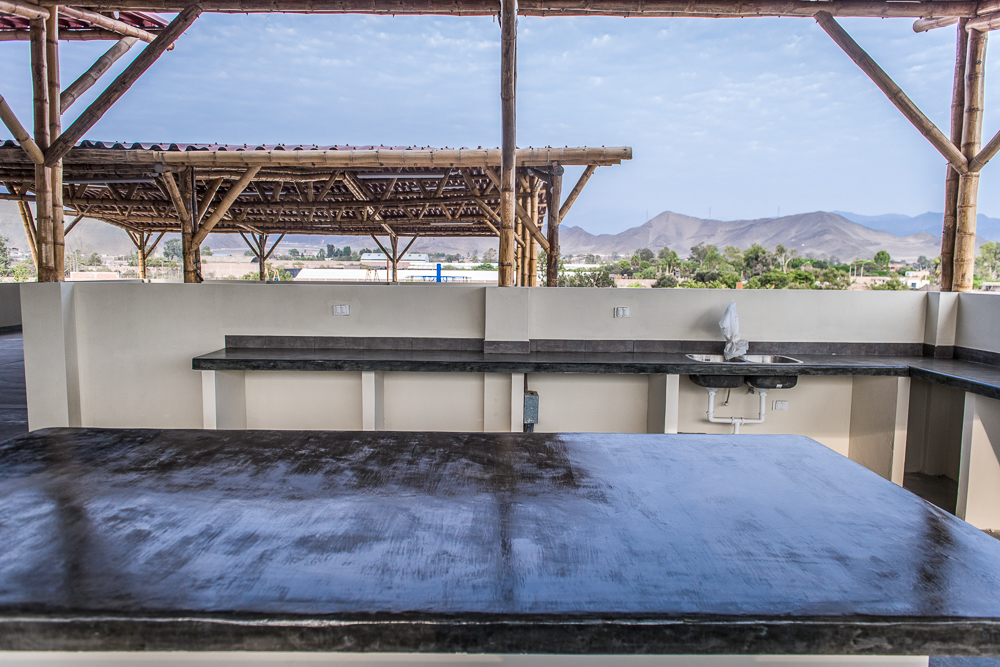
Looking back towards the stairs. In the back left is the kitchen/lab space, then there are two little bathrooms, the opening for the stairs, and a closet to store the plastic tables and chairs that they’ll someday use for multipurpose things.
And if you’re wondering what those pimples on the bamboo roof structure are, I’m afraid I’m responsible for all of them (this is why engineers and architects have problems… I know my stuff is ugly, but they don’t make invisible boxes yet). In the front, we have a smoke detector prominently featured, and then all of the lights have bright white junction boxes because that’s the only color they sell.
View facing towards the front of the property.
With all that green in the background, it almost looks like a lush and pretty place to live… Don’t be fooled, that’s just because the brown ground is cut out of the picture.
Also, a thrilling outdoor electrical outlet is visible in this picture. And an even more thrilling emergency light. Bonus points if you can spot the electrical box on the wall… it’s painted the same color, so it’s actually not the eyesore that all the rest of my stuff is.
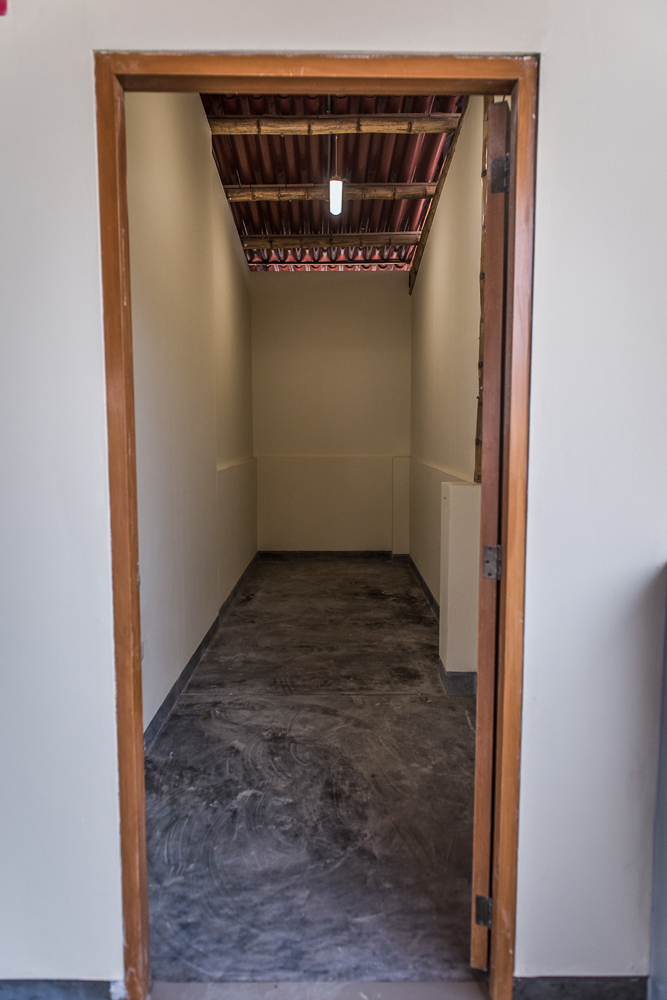
Here’s the table/chair closet. Most exciting closet you’ve ever seen, isn’t it?
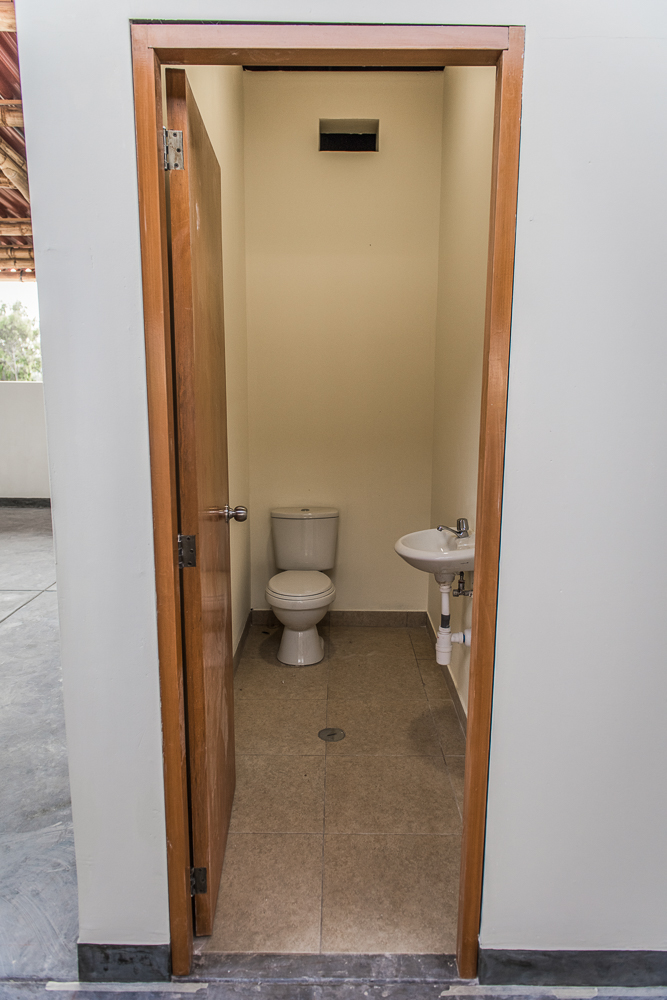
And don’t even get me started on the bathrooms! Can you say “gorgeous”? (hehehe)
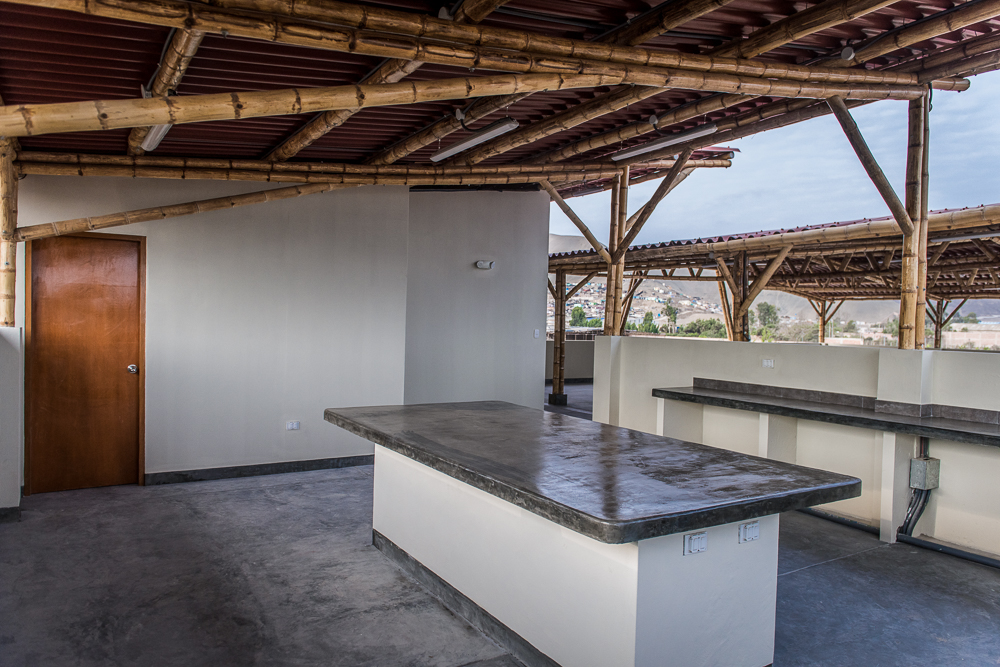
Walking into the kitchen/lab
It looks so nice and neat from this angle…
…and then you look at it from here, and you’re like, “Ew, what is that mess of a box on the right side underneath the counter?” And the answer is, of course, an electrical box. Let’s all just pray that they add cabinets underneath the countertops someday so it’s hidden.
I like how you can see the other part of the roof from here. I just think it looks so cool! (Just telling you one more time, in case that hasn’t come across yet.)

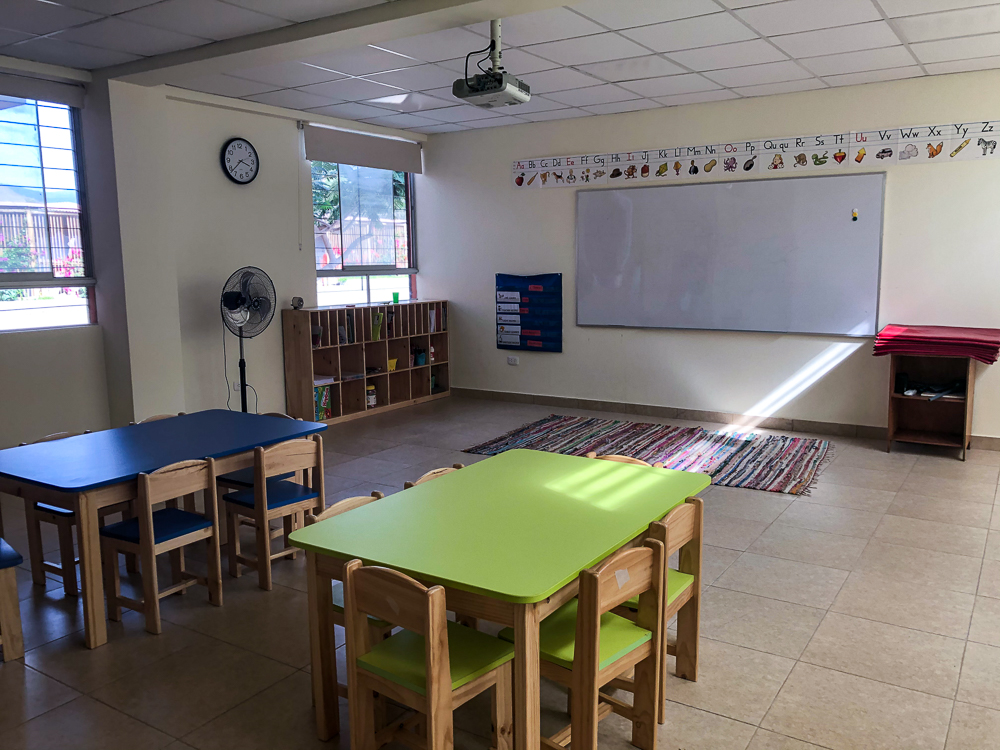
So, there you have it!! What do you think? I know that it can be hard to get a feel for the building when there’s no furniture, so I have one more picture. Jocelyn’s classroom is all set up, and she sent me this after she moved in…

It looks so nice!!! I know you don’t have any concept of how small the old classrooms were, but this one is nearly twice the size. There’s still about a third of the classroom behind where this photo was taken.

I hope you find these pictures as satisfying as I do! It’s been a long year and a long project… we deserve a little satisfaction!

If you think we’re all finished now with blog posts, don’t get ahead of yourself. The building may be finished, but the blog action is just getting started! Next time, we’re off to Canta, a town in Peru that we visited for a long weekend (don’t ask me how long ago we went there… you’ll find out the embarrassing truth soon enough). From there, we’re off to do some more South America exploring! So really, the fun has only just begun.
My final days at EA were full of fun holiday activities, but I had to balance those with the work that was still going on. The construction was in full swing, and I wasn’t going to be around through completion which meant I REALLY had to make sure I had my ducks in a row before leaving.

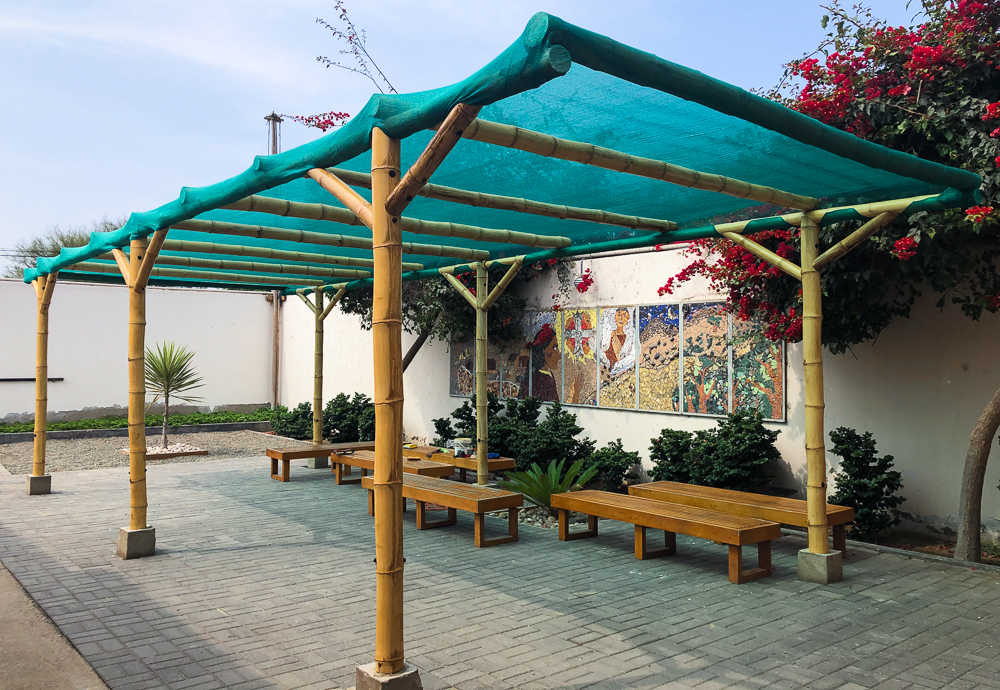
This actually didn’t get finished until after I left, but this is that shade structure we were working on for approximately an eternity! (aka 4 months)

About one second after reviewing my to-do list, I gave up on the nice idea that I could get everything done before leaving Peru. There was simply too much to do, between finishing the drawings and organizing the documents/construction pictures/files in a somewhat intuitive way for someone else to be able to find information in the future. Instead of rushing to get it done and doing a mediocre job after working so hard to do a great job on everything else, I decided to leave the things that could be done remotely to the future… a big ‘ole gift from past-Lara to future-Lara (that present-day-Lara has been ignoring… I know, I know. I’m going to get it all done, I promise! I just know that it’s going to be a pain in the butt, and I haven’t built up the courage to face it yet. Past-Lara is always sending me the absolute worst presents. It kind of makes you want not to open them, you know?).

So, I made the electronic work second priority because I could technically do it from anywhere. That freed me up to focus on the things that I could only do while in Peru and onsite. I gathered info sheets/manuals/etc. for the products we used and scanned/filed them. I took pictures of the light fixture boxes to document exactly what was installed. I sketched a diagram to further detail the fire alarm system installation because it was happening after I left, and I was worried that the drawings alone were confusing.

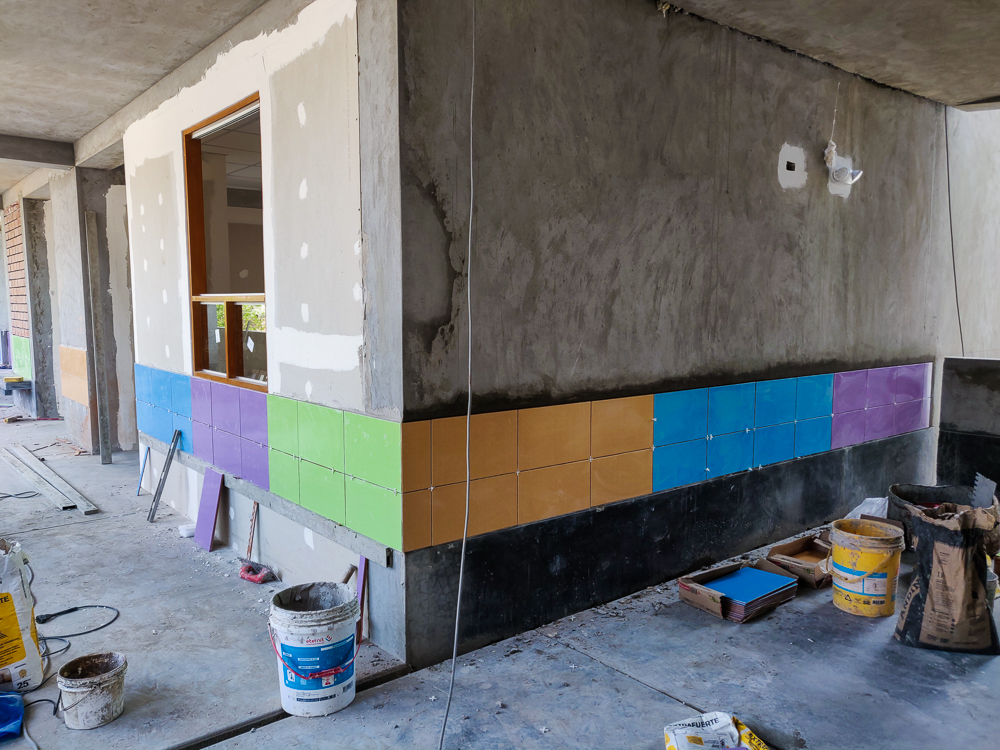
These are some electrical-unrelated pictures, but enjoy anyway… They decided to put a band of colorful tiles to brighten things up and also to help protect the walls. The old building doesn’t have tiles like this, and the bottom part of the wall is covered in pencil marks and marker lines, plus it’s just really dirty from people touching it. So this should hopefully help and is easier to clean than paint. Also, check out that gorgeous emergency light above the blue/purple tiles to the right! And that black hole next to it is for a siren/strobe for the uninstalled fire alarm system. AND this is a good picture to see how the wall facing us is structural – it’s made of bricks and then stuccoed – and the one containing the window isn’t. That wall is metal framing with drywall on the inside and cement board on the outside. They look pretty different now, but the goal is for them to look the same after the building is finished. WILL THEY? That’s the real question. Tune in next time to find out! (Wow, what suspense!)
Check out those pretty windows! Debbie found some window builders in the neighborhood, and while they did a bit of prep work ahead of time, when it was time to install the windows, they were cutting glass and assembling the frames and everything onsite to make sure they fit perfectly. This one is still missing the glass on top… it’s two sliding panes so the windows can be opened.
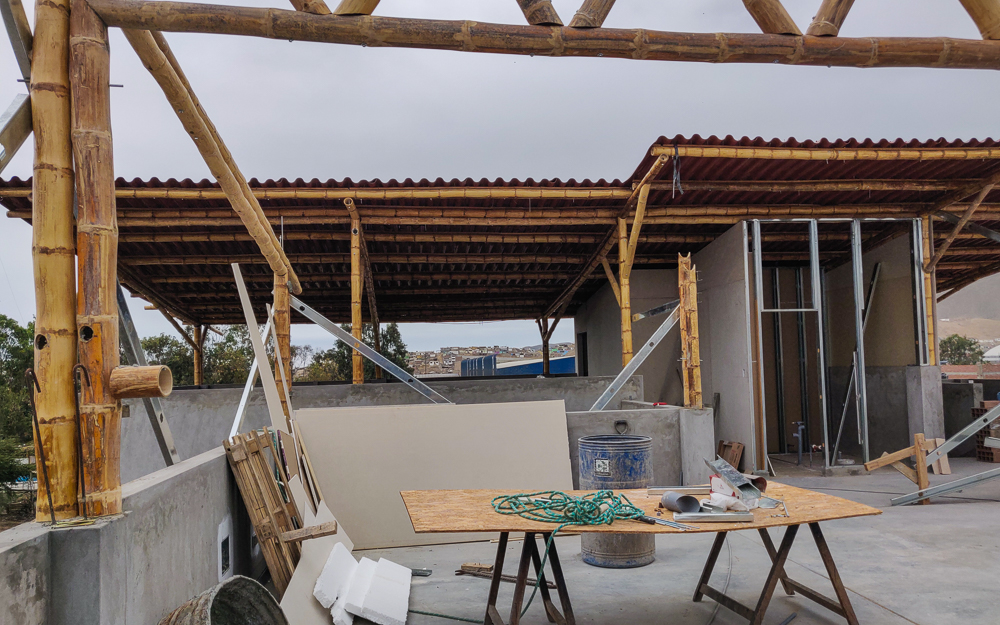
The roofed area to the left is the kitchen/lab, and to the right with the drywall-in-progress is two bathrooms (in the front) and a storage closet (behind).
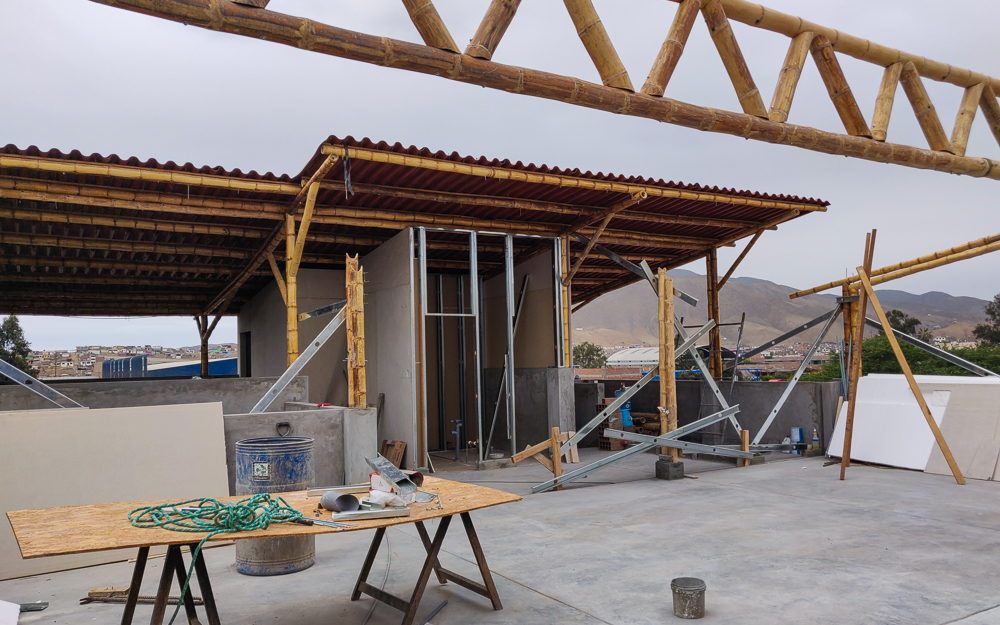
Another view of the completed part of the roof. And you can also see the only column that’s freestanding in open space. Pretty impressive that they made a bamboo design to span the entire multi-purpose space without any columns in the middle!
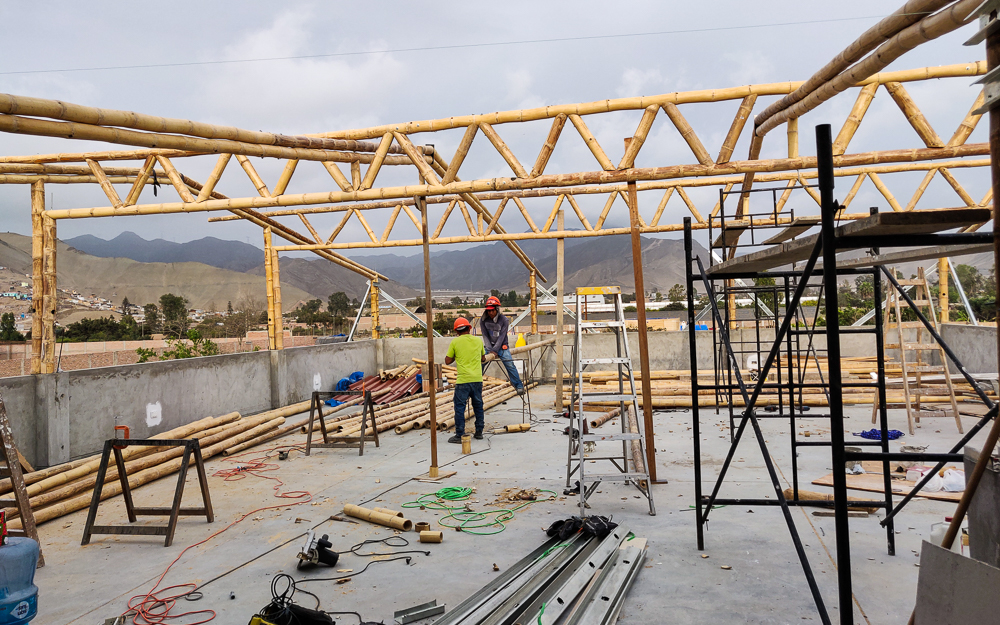
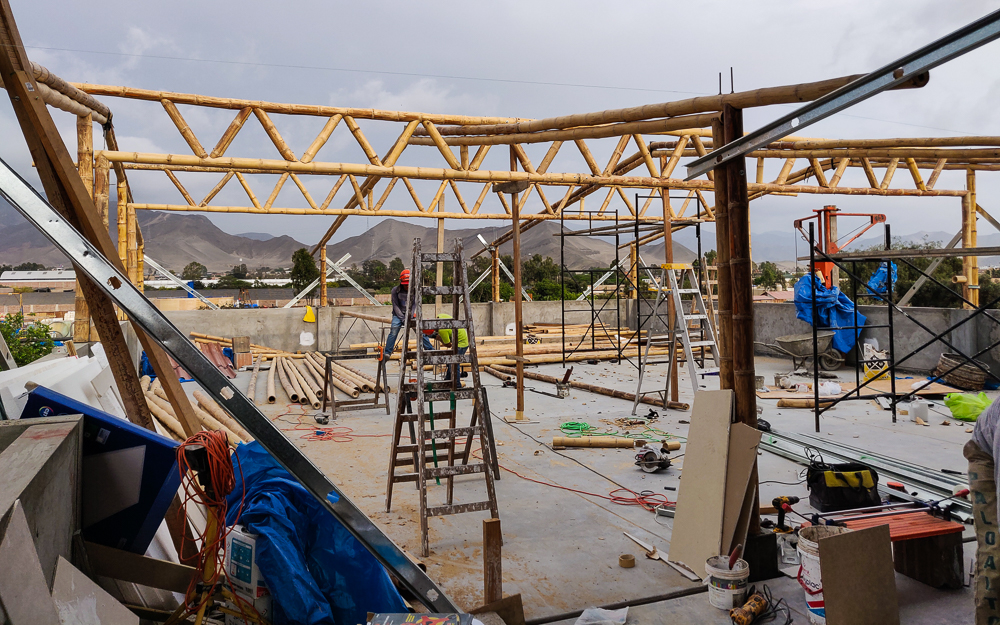
Second side of the roof finally taking shape! Those trusses are crazy. Also, I know I just made a big deal about no columns in the middle… Those are temporary supports.
Teamwork! One guy is sitting on a piece of bamboo while the other cuts it. Strenuous work
This is standing under the already roofed area. You can see that the other side of the roof comes in below the finished roof… which meant that a gutter was extra necessary to keep water from dripping inside… which I suppose sounds basic, but you’re not guaranteed a gutter on these buildings, and the ones that exist are basically half of a PVC pipe running along the edge of the roof.

My electrician best friend, Hector, and I strategized a few things that weren’t totally worked out during the design phase. I’ll admit that I was kind of hoping they would vanish or solve themselves, but that’s generally not how things work, especially when you’re the only one responsible for that aspect of the project.

I learned the most during this phase of the project. As I spent more time with Hector and understood more about how everything fits together, I realized where I should have designed things differently or been more particular about their installation. If I ever design a building in Peru again, I will do a MUCH better job!

One of the things I had been avoiding was figuring out the internet situation, but this was mostly because I knew it was going to be a mess. Let me try to explain, and if it sounds totally ridiculous, you’re understanding it correctly. The property has four phone lines used for internet. Ideally, we would get a new line for the new building, so we called the internet company to ask about doing this and they sent a guy to talk through it with us. Here’s the gist of the conversation:


Me and Hector!

Internet man: Well, we aren’t selling new phone lines for internet because we’re focusing on fiber.
Me: Okay, then can we get a fiber connection?
Internet man: No, it’s not yet available here.
Me: When will it be available?
Internet man: Sometime this year. Maybe. We hope. (Our translator Dina was there and said not to put much faith in this claim because they’ve been saying the same thing for years.)
Me:
Internet man: There’s also another option! This is good for businesses and other clients who need more reliable service. It’s better than fiber and comes with any service or troubleshooting included.
Me: Okay, can we get that?
Internet man: No, it’s not yet available here.
Me: Soooo… what do you suggest we do?
Internet man: Wait for fiber to get here. It should be this year. Probably. I think.

Promising (not). I did at least get him to help me decide what to do for the cabling within the building. My goal was for it to work well whether it’s connected to a phone line or (maybe someday eventually) fiber and won’t be immediately outdated. Then, Hector helped to ensure that we were buying the right cables and connections and such.

To give you some context… The building along the right is the current classroom building, and the second floor has rooms where teams stay when they visit.
Our new building is straight ahead (obviously), and the already-roofed part is somewhat hidden behind the existing building.
And… we have lights on the roof! I actually didn’t get to see this… Debbie sent me this picture a few days after I left. But it’s very exciting!!

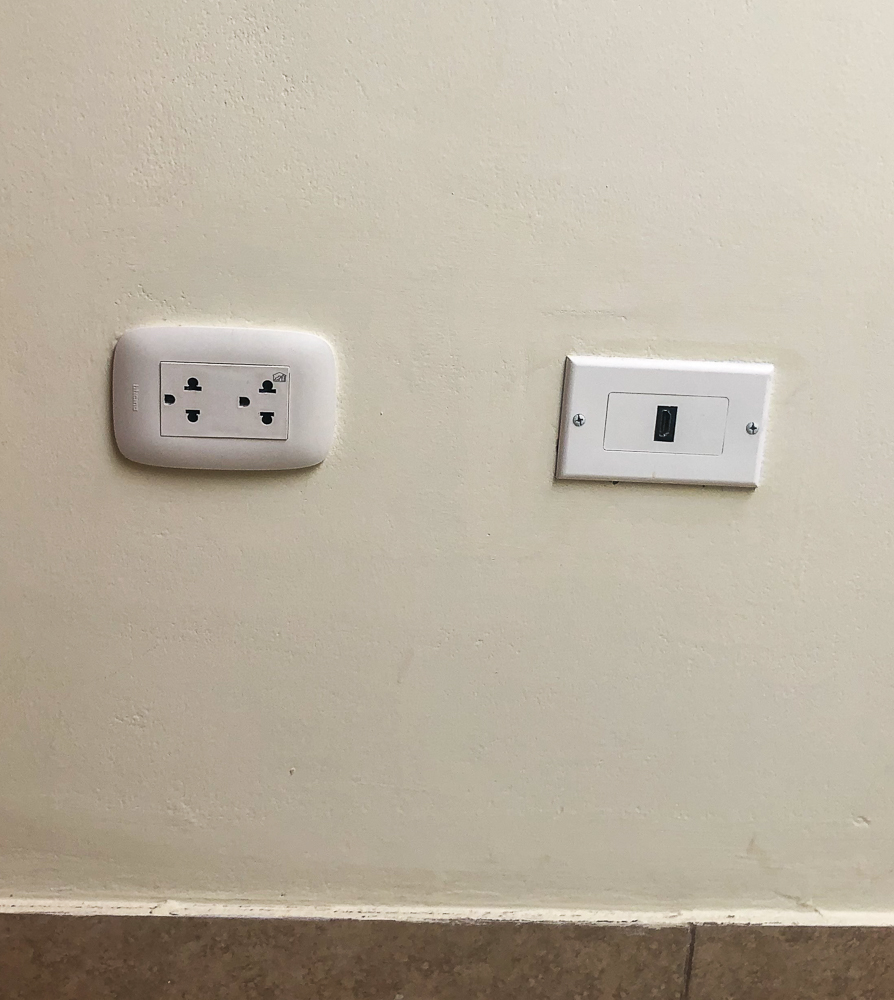
Hector also installed the projector mounts, ran an HDMI cable from each projector location to a wall box at outlet height, and installed the HDMI outlets so there’s not just a cable sticking out of the wall. We didn’t order these outlets until later in the construction process, and I didn’t realize that they’d need more space in the wall than a typical outlet… so Hector literally drilled through the backs of the boxes into the brick wall to make extra space. I’ll admit, sometimes Peruvian construction methods frustrate me, but the “make it work” attitude came in handy in this situation!

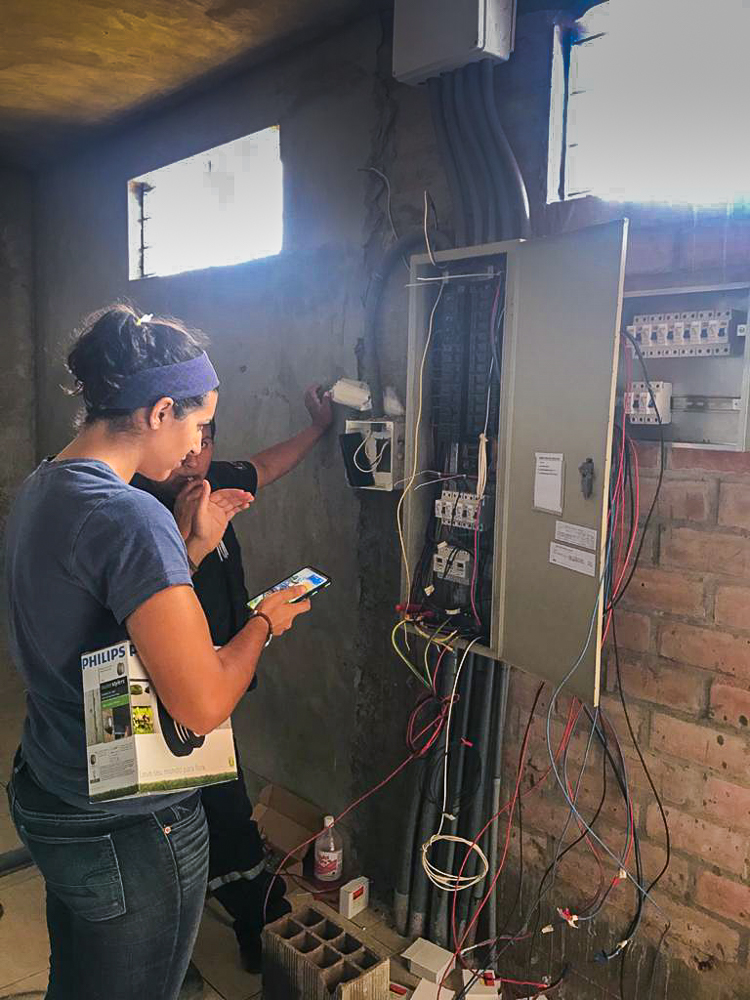
I also made a teeeeny mistake with the wire colors. Basically, you’re supposed to use three colors in a certain order in the panel, and I mixed up the order. Luckily, Hector realized it before he connected the wires, and after a brief panic, I realized that it could be fixed by moving the circuits around in the panel. Phew! But, that changed the circuit numbers which meant that every single drawing had to be updated to match… it was a big headache, but crisis (mostly) averted!

The HDMI outlet is to the right, looking all nice and clean and not indicating in the least the chaos happening behind. So you plug another HDMI cable into your computer and then into the wall, and you’re connected to the projector!
Debbie took this picture while walking by at the beginning of the wire color crisis, not realizing that at this moment, my brain was turning into dust and I was trying to disappear into the ground. Clearly it wasn’t going well.

The building still had a ways to go when I left. The major things: the roof wasn’t finished yet, and they weren’t planning to paint until January which meant that neither Debbie nor I have seen the actual completed building. It’s a little funny.

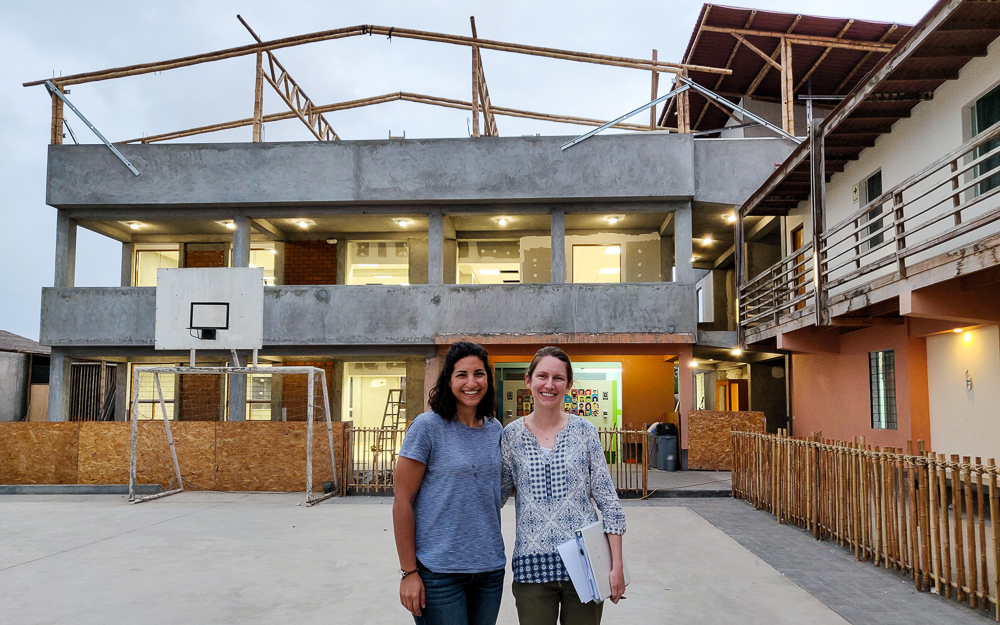
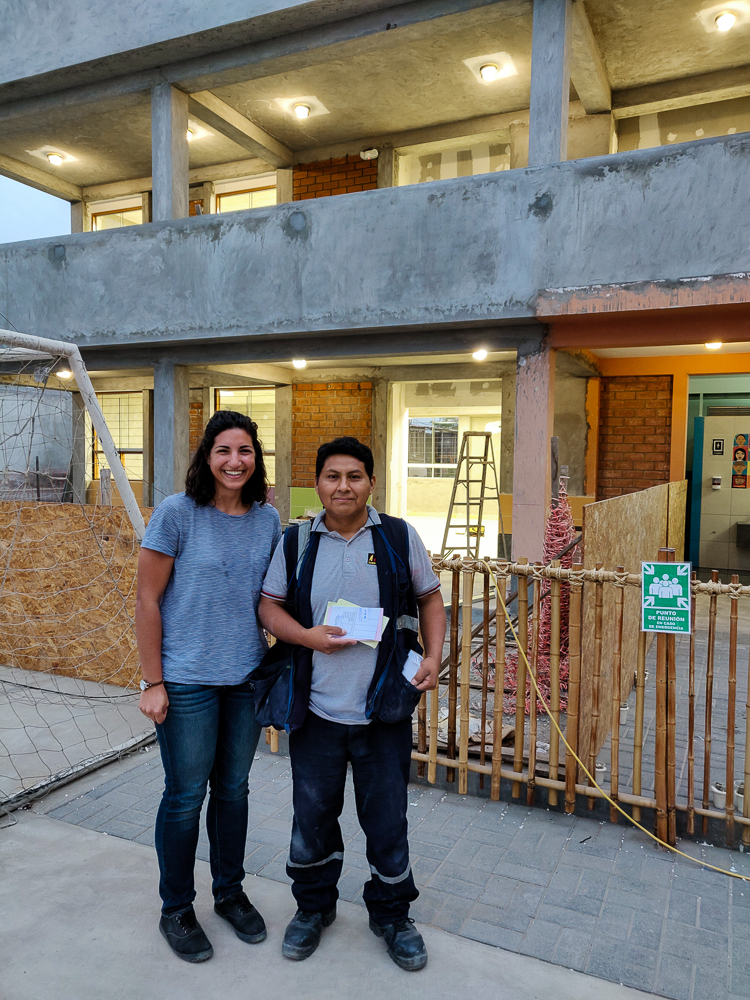
Me and Debbie with our building on the day that I left! I think this is actually the only picture we ever took of the two of us with the building.

NEXT TIME… completed building pictures coming your way!! I’m VERY excited about this.

After our weekend of fun in Ica, I only had nine more days before I was leaving Esperanza de Ana! Since we were nearing the end of the year, not only was work busy, but there were special programs with the kids and families to celebrate the holidays. I didn’t want to miss out on experiencing any of that because I was overwhelmed with work, so I tried extra hard to plan out my schedule, blocking out the special programs and being extra productive during my work times.

I’m going to focus this post on the non-work events of my final days, and next time, I’ll talk about work. Even though I was only around for 10 days of December, I think those days were more eventful than any other month in terms of the electrical work!

Sunset!

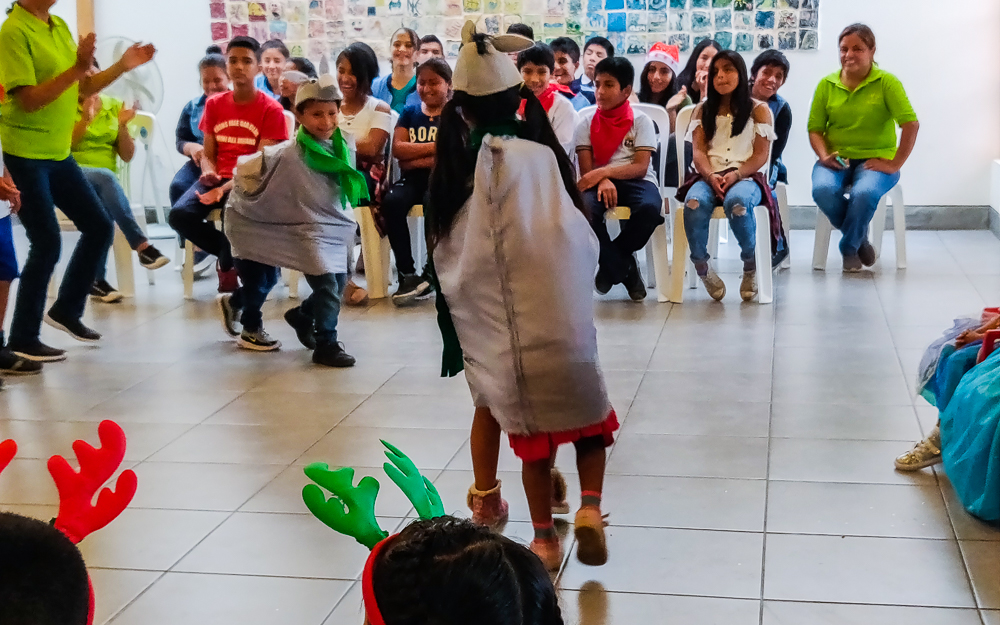
With the Christmas season and the end of the school year approaching, there was a lot of fun happening during my last week. We had two Christmas events, one with just the kids and one with the entire families. At the kids’ event, each class performed a dance or song, and it was so fun to watch! The age 2-3 class is all girls, and they danced to Spanish “Let It Go” while wearing Ana and Elsa dresses (yes, the Frozen craze is international) and looking like it was the best day of their lives. It was adorable. After all the classes performed, they got their Christmas presents. Each teacher picked a boy gift and girl gift for her class, and I was amazed by how well they did at picking things everyone would like. That’s a hard job!

Sometimes, I think the teachers have their kids do things for their own entertainment. One of the teachers had a couple of “donkeys” dancing during their performance. The girl in the caboose of the front donkey is the sister of the girl in the front, and she was doing the BEST little prancing feet. Like I said, no idea how necessary this actually was for the performance, but I certainly appreciated it.

The next day, we celebrated family Christmas. You know how, when you’re used to seeing someone in one context, it’s disorienting to see them in another? Like when you see your elementary school teacher at the grocery store or a coworker outside of the office. Seeing the kids with their siblings and parents felt like that. Of course, I knew their parents existed, but I never had any reason to meet them because my job was separate from that part of the ministry. I loved getting to see another side of the kids and pick out which ones are like exact mini-replicas of their parents. We sang some Christmas songs, and then things got competitive. Each teacher planned a game for her class, and the kids played with a parent as their partner.

Ready for family Christmas!
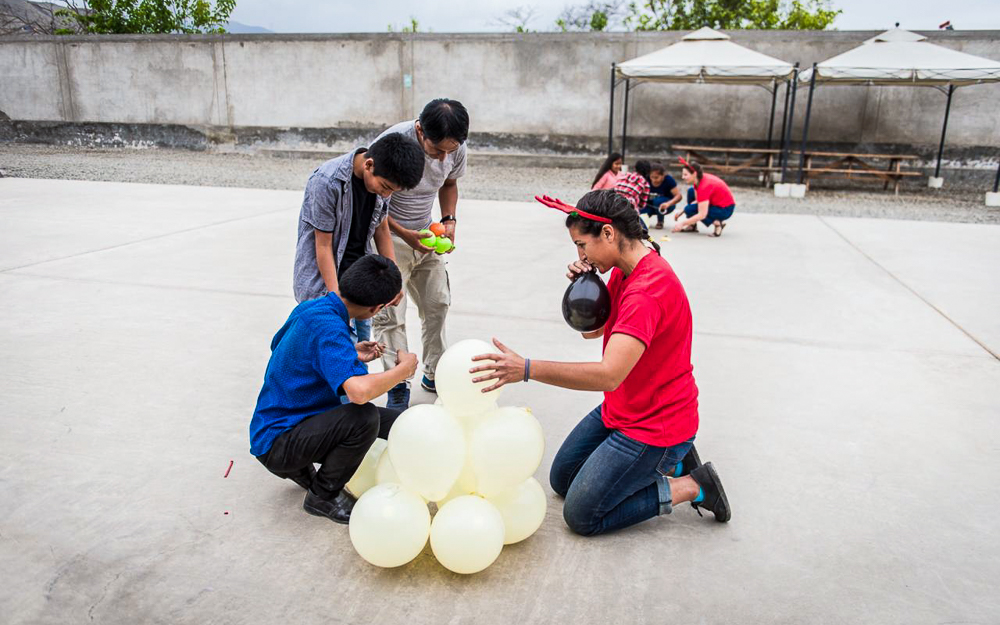
Building a balloon snowman… and struggling.
They needed an extra person for a few of the games, and I quickly volunteered myself as a stand-in (because who doesn’t like games?!).
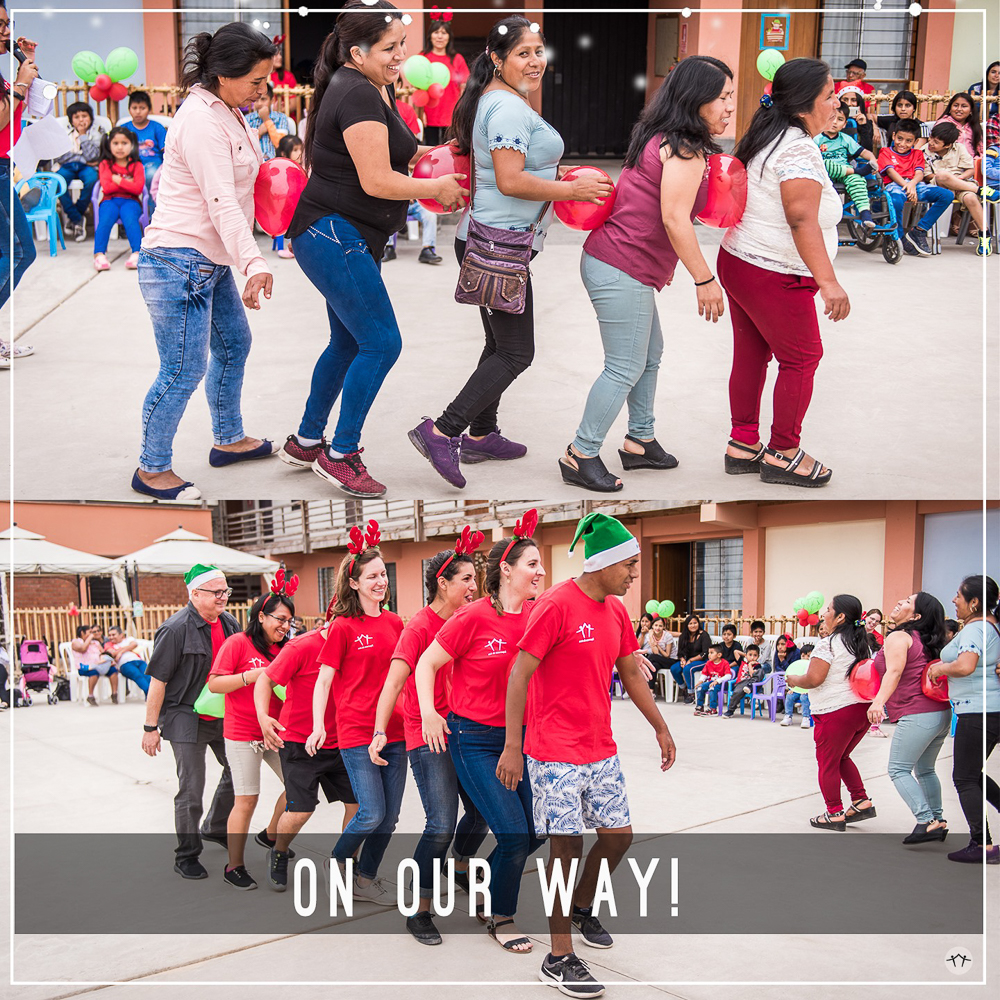
This is my favorite team-building challenge… you’re supposed to walk and keep the balloons between you without holding them in place, and you do laps while adding a person and a balloon each time. It’s hilarious. We did EA staff vs. some of the moms, and we were like a well-oiled machine. It wasn’t very fair. Also, I don’t understand why my focus face is me sticking my tongue out, but clearly I was VERY focused when this photo was taken.

After the games, everyone crammed into the cafeteria for a Chocolatada, a Peruvian Christmas tradition where people gather together to enjoy panetón and Peruvian hot chocolate. Panetón is similar to a fruit cake and originated in Italy. Now, it’s been co-opted as the official Peruvian Christmas bread. The classic has dried fruit inside, or there are variations like one that replaces the fruit with chocolate. Now, that sounds like something I could get behind… but the bread itself is orange-flavored! I despise oranges, so as you can imagine, I can’t quite get into panetón. Peruvians looove panetón and everyone buys them (I don’t think anyone makes them) and gives them to everyone else for the holidays. It’s kind of like Christmas cookies in the States but not homemade and not delicious (in my personal opinion, at least, which clearly isn’t that of the majority).

Anyway, part two of this tradition is hot chocolate, but it’s like no hot chocolate you’ve ever experienced. It’s made with evaporated milk and special chocolate bars (rather than powder), so it’s incredibly thick. Then, you add cloves and cinnamon and BUTTER because obviously the evaporated milk wasn’t thick enough. And then you drink this with your panetón and feel like you’ll never eat again. Don’t get me wrong, it was good… but one cup was enough to hold me over for the rest of my life. Oh yeah, and remember that Christmas is during Peruvian SUMMER, so you’re drinking this world’s thickest hot butter-and-chocolate while also sweating. WHY.

Pancho, Dora, me, and Delia. The three of them work in the kitchen together, and they’re a super fun bunch! They were also the ones responsible for the buttery hot chocolate preparation.
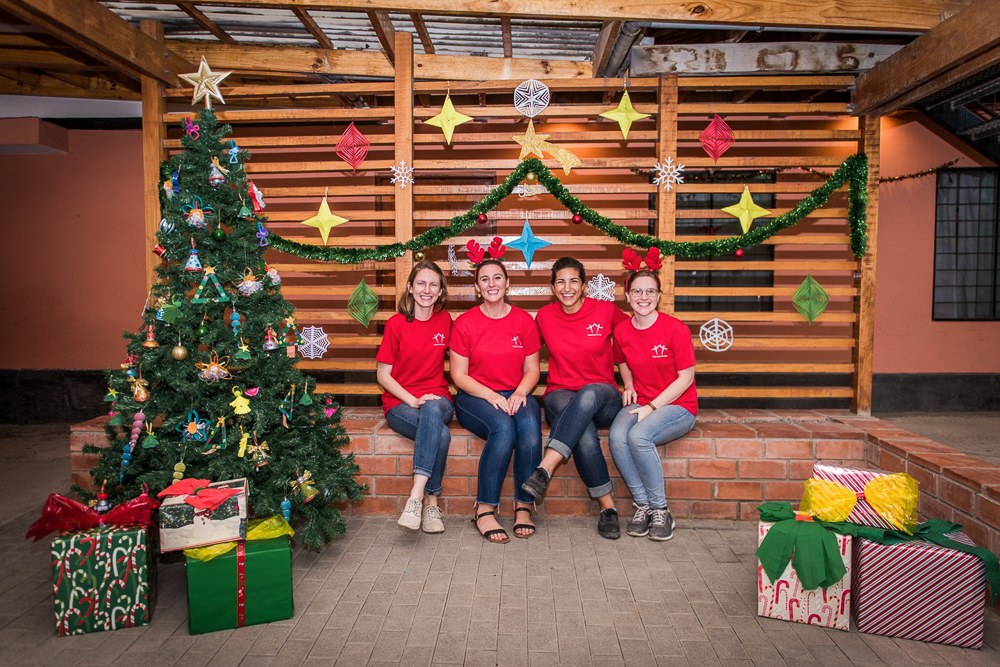
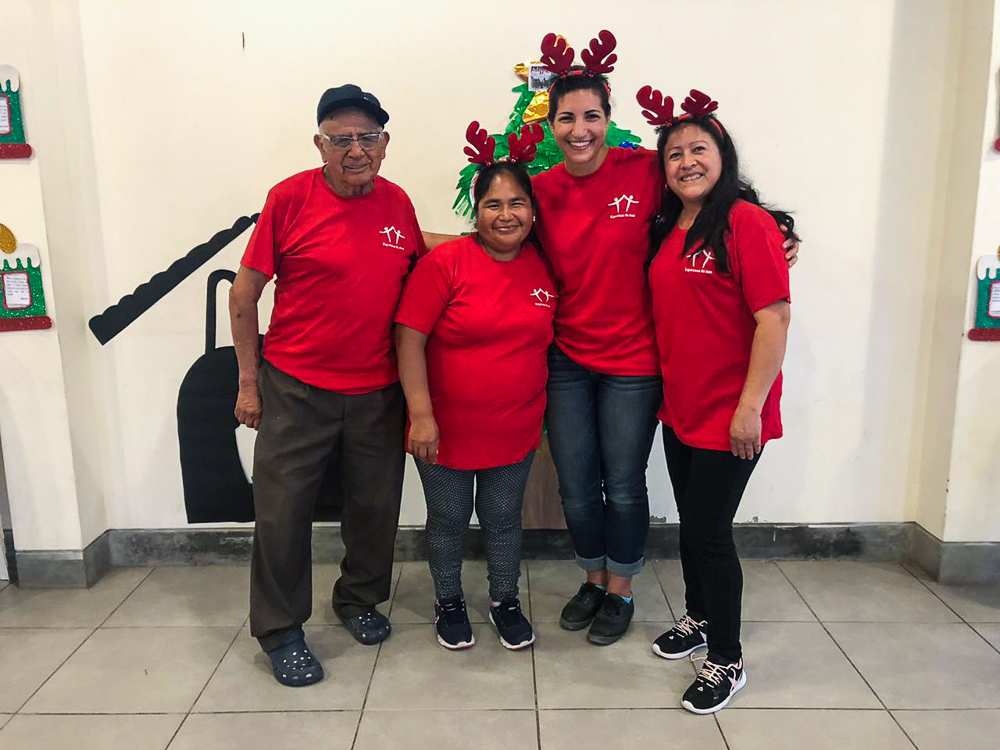
Family Christmas photo! (pic by David, the EA photographer)

My second-to-last day of work was an in-service day. The EA program directors presented their 2020 action plans, and each planned a game to help break up the day. And that’s how I found myself playing musical chairs with my coworkers. I started next to Jim and told him “fair warning but I get a little competitive” which is true, but I was mostly kidding! He apparently took it as a threat. WELL, in the end, it was Jim, me, and one chair. When the music stopped, I was in position for a win. I committed to the sit… and Jim pulled the chair out from under me! He immediately felt guilty because I was clearly going to fall and tried to catch me which ended with both of us on the ground. I declared myself the winner because he had clearly cheated, and there were not only multiple witnesses, but video evidence! (Side note: I need to get myself a copy of that video…)
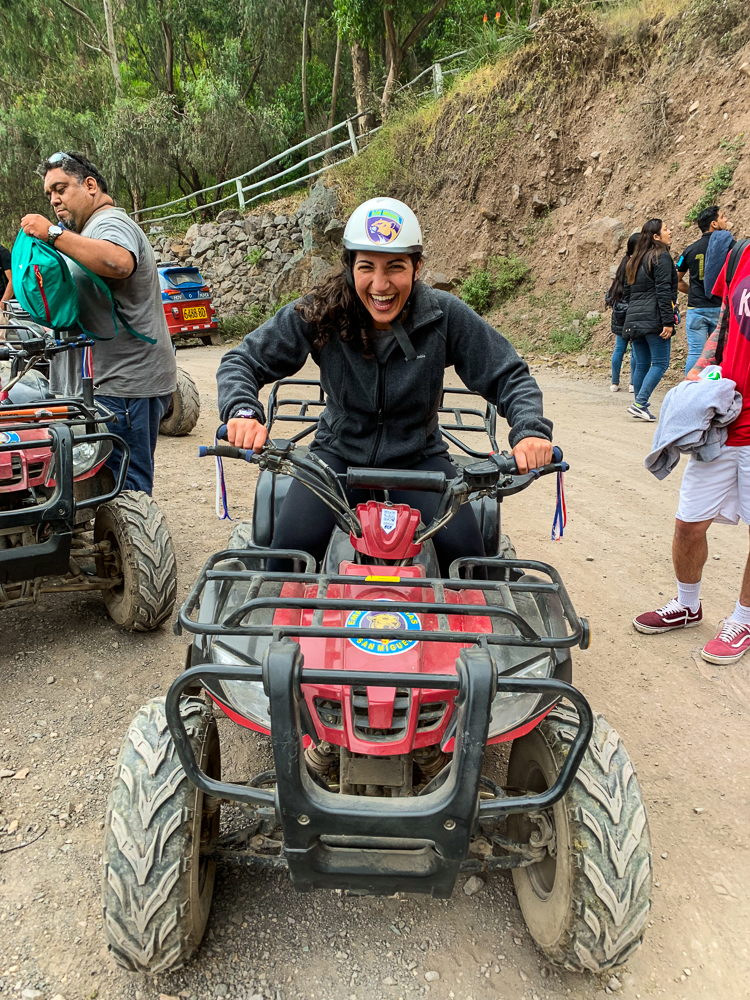
I tell you this story not because I want justice for this outrageous act but because it provides important context for what comes next. After this musical-chairs sabotage, Tony (Jim’s wife) approached me about being part of Jim’s birthday surprise. You see, it’s a Peruvian birthday tradition to crack an egg on the birthday person’s head. They were planning to sing for the three December birthday people, Jim, Julie, and me, so I would be in the perfect position to avoid raising suspicion. Previously, I had said I would never participate in a birthday egging because I would hate to have it done to me, but I felt like Jim had it coming! And so, this is the story of how I got my revenge on Jim but also a lesson about how vengeance is never the answer. Enjoy this video:
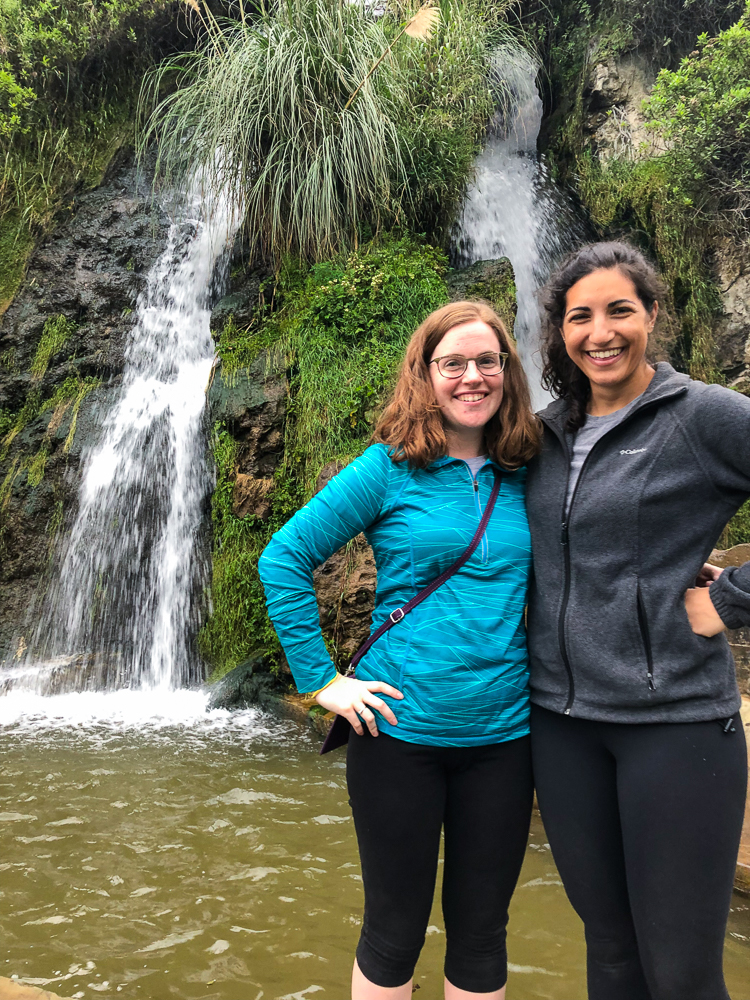
I’ll explain a couple of things:
The singing you hear is the tail end of the THREE birthday songs that are sung: Happy Birthday in English, Happy Birthday in Spanish, and Spanish Christian Happy Birthday. It’s endless.
I have the eggs stored in the waistband of my leggings so that I can clap along and keep Jim from getting suspicious (note for the future: pants with pockets recommended).
During the songs, he’s trying to tell Julie to get an egg to crack on MY head (rude, Jim), and she refuses (what a good friend)… and as the song ends, he pretends to crack one on me. Little does he know… Ha! Gotcha, Jim! But while he’s trying to wipe his egg residue on me (and I try to guilt him out of it because I had literally just showered), Eddy and Brenda run into the kitchen and get two eggs to crack on my head! Karma. And then Eddy chases Julie around the kitchen, she dodges one attack (the egg ends up on the floor), and after the video ends, she runs outside and he eventually gets her too.
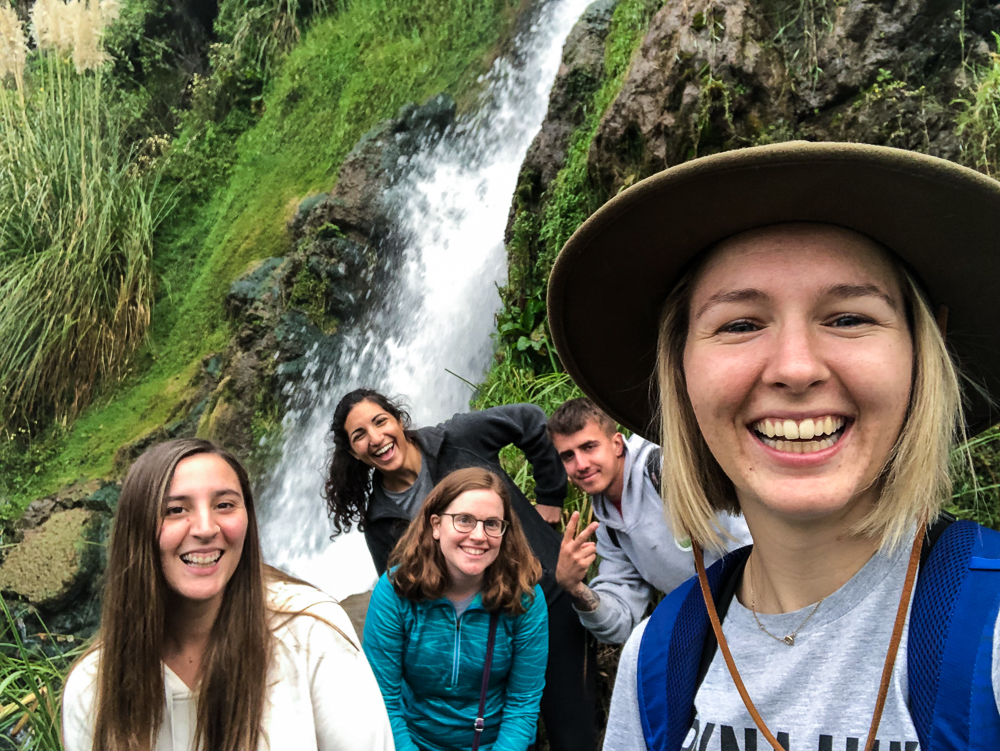
Lessons learned: never celebrate a birthday in Peru, what goes around comes around, and hot water is not recommended when washing egg out of your hair.

Me, attempting to protect my clothes from the eggs, before I stole Julie’s strategy of rinsing my hair in the kitchen sink (with the help of Jocelyn… at least SOME PEOPLE are good friends). Note the egg white glistening on my arm -_-

Freedom! Jocelyn, Julie, and I walked out of EA and practically skipped down our street towards the bus stop, ready for our weekend of fun to commence. Living and working within the walls of EA can feel a bit containing, and sometimes, even just stepping out onto the smelly, dirty street is enough to make you feel liberated.

We were headed to Ica, a town about three hours south of Chilca by car. Julie said the bus took five hours, and I was foolishly optimistic when maps said it would only take three. I thought, “So maybe it’s four on the bus. How could the bus add TWO hours to the time?” Well, I still don’t know the answer to that, but I can confirm that it took the full five hours to get there. The bus wasn’t very crowded, so we stretched out in the back row and made the most of it.

By the time we reached the bus station in Ica, we were exhausted. I think that the definitive crushing of my hope for a shorter bus ride really took it out of me. We decided to walk the 15 minutes to our hotel to stretch our legs out, and walking through the streets of Ica, I felt like a small-town girl in the big city. I don’t know why exactly, but I think that in my mind, Peru only consists of Lima and Cusco and then tiny towns like Chilca. Ica is by no means big, but it is definitely a city. The streets were bustling, and it made me feel like I could really enjoy living in Peru if I was somewhere like that (aka a real city) instead of in the boonies.

This is the Catedral de Ica, right off the main square. It was damaged in a nearly 8.0-magnitude earthquake in 2007, and the restoration work is still “in progress”… but probably mostly waiting for more money.

Saturday was our big day of fun! Julie had been to Ica before and had done a day tour that included a bunch of little stops and then, the main event, a dune buggy ride and sandboarding. This was the primary motivation behind our trip. I had learned only a few months before arriving in Peru that sandboarding was a thing there (thank you, Instagram), and when I committed to serving at EA, I decided that was my sole tourism goal for the year. And so, with time running out, off to Ica we went!

Our strategy for finding a tour was to go to the main square. That was the extent of the plan, and that was all we needed because the moment we crossed the street into the square, a guy came over trying to sell us a tour. Annoying, unless that’s what you’re looking for. We went to the tour office, checked out what was included, signed up, and paid 35 soles each (about $11). Does an $11 day tour sound too good to be true? Well, it was in Spanish… but we knew that going in. I wasn’t too concerned because for me, everything beyond sandboarding was secondary.

Casual dinosaur sighting on the streets of Ica… Also, I made a silly mistake and had gunk all over my phone’s camera lens until halfway through our tour day… so excuse the blurry pictures and give credit for any not blurry ones to Julie and Jocelyn who contributed their photos to the cause (thank you!)

The tour started with a cathedral in town named after the patron saint of Ica, Señor de Luren. The church that stands there now was just completed in 2019! So, we got to see it when it was still hot off the presses. The original church was heavily damaged in the 2007 earthquake, and the new one is, according to our guide, made entirely of concrete. No bricks. This is supposedly an “anti-seismic” design.

Señor de Luren Church
Side note, look at how pretty the courtyard in our hotel was! A little spot of green in the desert.

I wasn’t totally sold on that… I’m no structural expert and maybe it is an anti-seismic design, but she was saying it like the fact of it being concrete automatically made it anti-seismic. I don’t know that I believe her about any of it, actually. First of all, what an expensive way to build a church! Second, it seems like a strong enough earthquake would still crack the concrete. Third, what a crazy heavy roof! Bricks are usually used not just to save money but also to reduce weight. It seems silly to use all concrete. And I don’t think I was misunderstanding her because of the language barrier (especially since construction/building material vocabulary is my specialty).

This seems like a good place to make a disclaimer that I’m going to say all sorts of things in this post (like “the entire church is made of concrete”), and I make no promises about accuracy. Between the fact that guides make things up all the time and that I could only kind of understand our guide, I actually promise that some things are wrong… count it as a cultural experience because international living is primarily composed of getting things wrong and having no idea what is going on.

Inside the church. It was PACKED… it seemed like maybe they were having First Holy Communion because there were a bunch of girls in white dresses. But maybe not.

We made two food/drink stops that weren’t my favorite, but I’d say that liking 5/7 things on an $11 tour is pretty good. We ate “paciencias” at a bakery. They’re these traditional crunchy cookie things, but they flavor them with oranges which, in case you didn’t know, I despise. Later, we went to a winery, and since I don’t drink, the prospect of “free” wine and Pisco (a traditional Peruvian brandy made by distilling fermented grape juice… yum…) wasn’t particularly exciting. I sniffed all of the wines as part of my campaign to develop sommelier powers without ever actually drinking… and well, they all smelled like wine. I guess I need to keep training. Pisco is one of those things that burns your nose when you sniff it, and to really savor the flavor, you’re supposed to swish it around in your mouth, coating every surface, before you swallow. Julie followed directions, and based on her face and my still-tingling nose, I don’t think I missed out on much.

The other stops were much more my style… weird and quirky. There was a 7-headed palm tree which I don’t quite know how to explain. It’s like the palm tree split from the roots into seven different trunks that are all running along the ground like serpents.

Panoramic view of the seven-headed palm tree. Is this not the weirdest thing?? Running along the bottom, you can see one of the trunks. The root system is behind that green area in the middle-ish of the photo.
So strange to see them snaking all over the place. You can see that one of them even goes underground and comes back up… there’s a gravel path running over the underground part.

The palm tree technically is in Cachiche, a teeny town right near Ica. Cachiche is “famous” for the witches who sought refuge there after escaping the Inquisition in Europe.

Legends say the tree is so messed up because it was cursed by a witch who was sacrificed there. The last known witch died in the 1980s, and before she did, she predicted that when the palm tree’s seventh head sprouted, Ica would sink. It sprouted in 1998, and that same year, a nearby river overflowed, flooding Ica. Now, the seventh head is trimmed every so often to make sure it doesn’t happen again.

Loving our weird tour

Our next stop was fitting after the visit to the palm tree. We went to the Cachiche “Witch Park” which was just completed in early 2019. It has seven statues of witches, each representing one area of witchcraft: health (medicinal herbs), wisdom (palm and card readings), love (bring a picture of your desired beau, and in three days you’ll be inseparable), money (amulets to bring fortune and find jobs), virility (for man problems, or if a woman couldn’t have kids, she could take a potion and have up to 17! geez), nature (white magic to remove negativity), and huarango (evil and sorcery).

Health Witch with her bird and cauldron
Wisdom Witch with a book and an owl
Love Witch with some flowers growing out of a skull. Not sure what that means but it seems ominous.
Money Witch with a cauldron of gold coins that will give you good fortune if you touch them (the sign on her also literally says “Don’t Touch”… but the guide offered us all the chance to claim our fortune despite the rules)
Virility Witch showing us how to best accessorize with skulls
Nature Witch looking fabulous in her leaf dress
Huarango Witch wearing a strangely pleasant expression for being the witch of evil and sorcery
I appreciated the themed trash cans… cauldron, anyone? Also, this is functionally how most public trash cans work in Peru – they’re suspended and can be flipped over to dump the trash out when someone comes around to collect it.
Gargoyle protector of the park

I’m not sure why the evil and sorcery witch is called huarango, but that’s the name of a tree that grows in desert climates, like in Ica. There are huarango trees in the park, some as old as 400 years, and they’re important for preventing erosion in a place where not much else can grow. One of the ones in Witch Park is extra special – you can hug it to make your dreams come true (and then you’re supposed to come back with a thank you offering once it works… the guide gave an example, “like a bracelet!” Very affordable, these witches).

Jocelyn hugging the Dream Tree
This statue is of the “last known witch” who died in the 80s. There’s a story that she helped a boy who had a speech problem when he was young, and he grew up to be a politician and commissioned this statue as a thank you.
Satyr/faun in a tree. Because why not?
There was also this bas-relief at the park, showing the seven-headed palm tree with a bunch of skulls (I’m seeing a theme) and a lady who I assume is a witch. So maybe this is her cursing the tree? Maybe she’s just inspecting a skull she found there? Who knows?
Me, Jocelyn, and Julie on the gargoyle bridge, nice and blurry (oh, silly Lara)

Finally, we were off to the main event of the day – the dune buggy ride and sandboarding!!! I didn’t have any expectations for the dune buggy, but it was so much fun!! We got strapped in, and our driver went zooming up, down, and around the dunes. Julie took a picture of me where I look so happy that I might explode, and that’s pretty much how I felt.

If this face doesn’t scream, “Best day of my life,” I don’t know what would.
I promise this corny pic wasn’t our idea. The driver insisted, “Trust me, it will be a great picture!” (and then he cut off the front of the dune buggy *shaking my head*)

That was even before the sandboarding! We got to do two sandboarding runs each, and Jocelyn and I both spun out on the first one. You’re supposed to put your legs behind you in a V to help you go straight, but I thought it was to slow you down and I didn’t want that! Oh well, live and learn. The second run went better, and even though I was totally coated in sand at the end, it’s possible that I’ve never been happier. My journal that night said it was “literally the best thing of my entire life”. That might be an overstatement. But it also might not be. I can say for sure, at least, that it was absolutely worth the 1-year build up, the 10 hours of round-trip bus ride, and the $11 tour! It would have been worth more than $11 to me standalone, honestly.

Sunglasses and mouth covers strongly recommended for the dune buggy and especially the sandboarding… unless you like sand in your eyes, nose, and mouth. It’s going to end up everywhere else, I promise you, so better to at least protect your face.
Because apparently it’s normal to take pictures on top of the dune buggy?
Also recommend a headband if you ever find yourself sandboarding… unless you’re going for the lion’s mane look, then you’re good without one.
Spot the sandboarders
Sand, sand, nothing but sand as far as the eye can see.
Huacachina is a desert oasis… a little spot of green (including the water… eek!) in a sea of sand. Despite being in the middle-of-nowhere Peru and being VERY far from Lima, it’s actually a very popular stop for international tourists, especially backpackers.
The dune buggy fleet
Still on a high from the dune buggy ride. We’re also fully sand-saturated at this point. I had about a bucket of sand in each sneaker and my pant pockets. Gross.

That was the end of our tour, and when we got dropped back in Ica, we decided to make one final stop at the Regional Museum of Ica, an archaeology and history museum. They had some cool stuff there, including a whole strange tribute exhibit to my favorite bean, the pallar (pai-ar) (butter bean), but the most interesting was the exhibit about mummies. There were some actual mummies there, and the signs explained how archaeologists can sometimes use the mummies’ bones to determine a person’s cause of death or to learn things about their culture. It was cool and disturbing, which I think is what they’re going for.

Behind the museum, they have a scale model of the Nazca Lines. The model is, of course, still HUGE. I’m a horrible estimator, but I’d say it was at least 20x20m (or more??). And there’s a tower that you can climb up to view it. Since I don’t know if I’ll ever see the actual Nazca Lines, it was fun to experience them on some level.

The Nazca Lines. If you’ve never heard of them, it’s like Peruvian crop circles. Sometime between 500BC and 500AD (probably the whole 1000 years because 1. there are SO MANY lines and 2. what other activities did people have to entertain themselves?), people dug shallow depressions into the soil to form lines, geometric shapes, and animals! They’re so big that the best way to see them is by airplane… or in the backyard of the Regional Museum of Ica. To get a sense of scale, there’s a tower shown in the top right of the picture that’s 42 feet tall at full scale.
I’m actually more intrigued by the construction of the replica than I am about the actual Nazca lines. Whose idea was this?? Was the idea person also the one who executed the project, or did they make someone else carry the burden of their crazy dream? How long did it take them? And why??
Bird!
Monkey!

And that was basically the end of our Ica adventures! We stuffed our faces with pizza and ice cream that night, and the next morning, we headed back to Chilca. The return trip was mostly uneventful, until we had to switch from a bus to a combi (van) for the final leg of our journey. We took the last three available seats, and at the next stop, at least 10 more people loaded on. They were headed to the beach and were carrying coolers and pitchers of ice and other beach paraphernalia. We reasonably had space for maybe four people, so it was like being in a clown car. I haven’t been in such a crowded van since Armenia, and from the way the Peruvians were reacting, it clearly wasn’t a common occurrence for them either. Everyone was thrilled to see us go when we squeezed our way out at our stop, and I’ve never been so happy to see the barren brownness of our neighborhood. Home sweet home. What a way to end the weekend!

60-cent ice cream cones
The main plaza is a happening place on Saturday nights! We took a digestion lap after pizza and before ice cream